Showing posts with label brass. Show all posts

Saturday, June 6, 2009

Tine Thing Helseth and the Mystique of Circular-Tone Trumpet

 Helseth
A    way of describing the difference is that the [geometric bore profile of the—] American instrument produces a ‘circular’ tone with a lot of brilliance, while the German trumpet [bore profile is—] a more ‘oval’ one: the German tone is ‘wider’ and less brilliant... In Scandinavia we have mostly made use of the American trumpet. Its brilliance is part of the so-called Scandinavian sound.”
  —  Tine Thing Helseth, interview in MIC Norsk musikkinformasjon, APR-2009.
T he Norwegian trumpeter Tine Thing Helseth does miraculous things. I especially admire her treatment of Johann Baptist Neruda’s concerto—which Tine manages in a way that is both elegant and viceral. Her playing of all of the brass war-horses is wonderful, but this Neruda piece for her especially epitomizes the concept of ‘circular’ tone.

 Neruda Concerto, Largo

    [50-sec clip, Tine Thing Helseth & Norwegian Chamber Orchestra, Johann Baptist Neruda, ‘Concerto in E-flat – II – Largo’, 1.6MB MP3]

 Neruda Concerto, Vivace

    [50-sec clip, Tine Thing Helseth & Norwegian Chamber Orchestra, Johann Baptist Neruda, ‘Concerto in E-flat – III – Vivace’, 1.6MB MP3]

 Helseth

    [50-sec clip, Tine Thing Helseth & Norwegian Chamber Orchestra, Johann Baptist Neruda, ‘Concerto in E-flat – III – Cadenza’, 1.6MB MP3]

H    ave we ever before heard this level of melancholia, such as what we heard in the Andante movement, or in the flowing and lively dance of the finale movement? When have we ever heard anyone run that brilliantly up and down along the scale? And that, on a trumpet! On this instrument that was formerly used to open splendid doors and gates for worldly rulers and clerics...”
  —  Lippische Landzeitung, DEC-2007.
T he effortlessness and honesty of Tine’s articulation... The weightlessness of her breathing... The decisions about the emphasis of each note, including sweet little appoggiaturas... Interpretations filled with emotional depth as well as cerebral insight, musical body in harmony with musical mind in harmony with well-matched musical instrument. Bak skyene er himmelen alltid blå!

J ohann Baptist Georg Neruda (Czech: Jan Křtitel Jiří Neruda) is curiously obscure, and even the dates of birth and death for him are not clear (given as ca. 1707 and sometime in 1780 in Dresden by the Grove Dictionary). Raised in a musical family in what’s now the Czech Republic, Jan/Johann spent some years as a violinist and conductor in Prague and Germany, after which he became Konzertmeister of the court orchestra in Dresden. His works include 18 symphonies, 14 instrumental concertos, plus several sonatas, sacred works and an opera.

N eruda composed this virtuosic concerto for the valveless ‘corno da caccia’ in the clarino register, which requires “hand-stopping” and other tricks to manage the tessitura and chromatics. And there are a number of historical trumpet players who do perform the piece on baroque-design instruments.

B ut playing it on a modern, valved trumpet—American or otherwise—presents a different set of challenges, for fingers, tongue, embouchure, and lungs. And valves enable a wider latitude of interpretive choices—ones that Tine explores beautifully.

S    he plays with radiance strong enough to light up the entire hall. Her embouchure is light and her technique impressive. Each note is marvellous and her dynamics are based on natural and deeply felt musicality. ...she showed us just how wonderfully a trumpet can sing... It sounded like a song, but there was no need for words.”
  —  Zürcher Landzeitung, JUN-2008.
T ine was born in 1987 and started to play trumpet at age 7. She is currently studying at Barratt Due Music Institute in Oslo with Arnulf Naur Nilsen. She has appeared as a soloist with, among others, Wiener Symphoniker, Vienna Chamber Orchestra, Zürcher Kammerorchester, Zürcher Kammerorchester, Staatsphilharmonie Rheinland Pfalz, Cappella Cracowiensis, Shanghai Symphony Orchestra, Camerata Nordica, Nordwestdeutsche Philharmonie and all the major Norwegian symphony orchestras. Tine’s website chronicles her many performance awards and contest victories. She has performed at SHMF and other festivals. Tine is also leader of the brass ensemble, tenTHING. Every opportunity to hear this fine artist perform is magic. Check out her website for current performance schedule.

S    he [has] calmness, balance, musicality and technical mastery. She has vigour, confidence and natural authority—and her instrumental ‘nerve’ commands the attention of listeners...”
  —  Aftenposten, JUL-2006.


Friday, March 6, 2009

Chugach Brass: Chamber Music for Sugpiaq (‘Real Persons’)

 Chugach Mountains, view from Anchorage, AK, in 1930/32, photo: Walter Hodge, Elmer E. Rasmuson Library, University of Alaska Fairbanks
T he Chugach Brass Ensemble delivered a wonderful performance at University of Alaska Anchorage on Thursday evening to an enthusiastic audience. About 120 people braved the cold, the thick snowfall, and the icy roads to attend.

 Chugach Brass: Sweeney, Weeda, Pierce, Epperson
  • Christopher Sweeney, trombone
  • Linn Weeda, trumpet
  • Cheryl Pierce, french horn
  • Dean Epperson, piano (guest)
T he program was widely-varied, including early music, Weeda’s arrangement of Bach’s Contrapunctus 16, a romantic piece by Debussy’s colleague Paul Dukas, and several new compositions.
  • A Philharmonic Fanfare (2003)….Eric Ewazen
  • Be My Love, A Suite of 16th Century French Chansons (2000)…. arr. Linn Weeda
         Tru, tru, tru avant il fault boire!....Jean Richafort
         Au joly boys je rencontray m’amye….Clemens (non Papa)
         Jouyssance vous donneray….Antonine Gardane
         Baises moy tant, tant….Adrian Willaert
  • Folksong (1972)….Bruce Broughton
  • Trio for Brass (1961)….Robert Sanders
  • Villanelle (1906)….Paul Dukas
  • Recreation for Trumpet, Horn, Trombone and Piano (1958)…. Pierre Gabaye
  • Contrapunctus XVI (inversus), Art of the Fugue, BWV 1080 (1745)….J.S. Bach (arr. Weeda)
  • Sonata for Trombone and Piano (1951)….George Frederick McKay
  • Fumeux fume (ca. 1380)……..Solage (arr. Weeda)
  • Trio for Brass (1996)….Anthony Plog
T he Ewazen ‘Fanfare’ is predominantly consonant triads interspersed with more dissonant harmonies (Copland-esque). The overall quality is assertive, gregarious, and extroverted—not frivolous, but intensely convivial. Very ‘brass-like’ in idiom.

W eeda’s beautiful 5-minute-long arrangement of French chansons illustrated the diversity of brass orchestration and textures. Also, a wide range in composerly ‘stance’—from the ribald ‘Tru, tru, trut’, to the tender ‘Au joly boys’ with Weeda’s mellow flugelhorn, to the exuberant horn-trombone duet ‘Jouyssance’, to the high-tessitura ‘Baises moy tant’ with Weeda’s brilliant piccolo trumpet. The brightness of the ensemble timbre is made even more dramatic by adding the piccolo trumpet on the top end. It lends a paradoxical impression of yet-wider harmonies—the as-written intervals do not have such wide spreads.

T he Broughton ‘Folksong’ was rendered with great empathy—lyrical and legato articulation without sentimental excess. Copland-esque. Sharp staccato trumpet stabs moderate the dark tones of the piano part. Weeda’s control of extended diminuendos was masterful and delicious.

O ne of the other salient musical features of this work include the frequent inclusions of slurred passages. Slurs throughout the work are used in two ways: 1) to move from one clear chord/pitch to another or 2) to move to indeterminate pitches as a gesture. In the simplest sense, slurs and legato playing provide a kinesthetic indication of fluidity within the work.

T he several Weeda arrangements showed off Weeda’s skill in orchestrating nuances that differ between the instruments. Low fifths thicken the sound.When the trumpet could otherwise be too strident, he softens the effect with the horn and trombone. Very nicely written and performed.

T hemes in much brass literature tend to maintain consistent relationships between pitches, often arranged in ascending or descending patterns. Both linear and vertical dimensions exist, of course, but can have different functions in brass works, compared to string ensemble lit. In the linear dimension, a theme is repeated, and the melodic contour varies according to the registral placements. Sometimes it is presented as an ostinato figure with a consistently repeated ascending contour and a recurring rhythmic pattern. This theme can also be combined with other elements to form a longer melodic line. Weeda handles these aspects with great skill.

T he other pieces were also new to me and interesting as a ‘casebook’ of recent writing for small chamber brass ensemble. Harmonies that are, in many places, ‘choral’ in texture.

I n the Sanders piece, the cadential formulae arise mostly from modern added-tone extensions beyond the tonic scale. Some modal intervals of fourths and fifths. By placing the “chorale material”, Sanders creates a sense of latent energy, even during the Adagio. Since we are expecting 8th note groupings in 4 (and the quarter-note pulse), the irregular feel of the rhythm in this movement gives a disruptive energy.

I n all, it was a wonderful evening—an intriguing sampling of recent chamber compositions for brass, and a fine introduction to Weeda’s abilities as an arranger. Wonderful, too, to experience such cultural diversity in the depths of winter in Anchorage.

T he ensemble takes its name from the Chugach (‘sugpiaq’) tribe that is indigenous to the Prince William sound area. Besides their roles teaching at University of Alaska Anchorage and playing with the Anchorage Symphony Orchestra, each of the performers is involved with local outreach and community music education efforts.

B esides his position as Principal Trumpet with ASO, Weeda is Music Director of the Anchorage Youth Symphony. His M.M. was from Boston University. Pierce received her M.M. from Temple University and performed French horn for 15 years in the U.S. Air Force prior to her current role in the horn section with ASO. Sweeney has M.M. and Ph.D. Mus. Ed. degrees from University of Miami and is currently Asst. Prof. of Music at UAA. Epperson was honored in 2005 as an MTNA Foundation Fellow, in recognition of distinguished service to music teaching. He has performed with Anchorage Chamber Symphony and Kenai Peninsula Orchestra.

T    he incisiveness [of the bright timbre] must be used advisedly. However, this property can be used to make a theme salient. The attack can have an equally pointed, even dissonant, effect. One sees the extent to which the problem of balance is complex and difficult...”
  —  Charles Koechlin, ‘The balance of sonorities’, in Mathews, ed., Orchestration, p.142.

T    he following five values operate through and with texts:
  • Will-to-Image: includes, at a minimum, images of past events and selves, as well as the inclination to move between several disparate worlds, what exists and what does not exist; what is real and what is not real... ;
  • Will-to-Improvise: includes not only how to invent in connection to the kairotic moment, but also how to confront failure and play within the dark spaces of the unknown, the unuttered, the ineffable;
  • Will-to-Intuit: the ability to disregard Reason, encouraging the role of emotions and feeling; the basis for inquiry and investigation; the curiosity-maker; the hunter; the willful accident;
  • Will-to-Juxtapose: the ability to contrast images and thoughts with one another, let them interact, cause them to conflict; the Bakhtininan 'centripetal force of language’; the power of metaphor;
  • Will-to-Integrate: includes synthesis, connection, parallelism, coherence; the beginning of transition to discourse; the Bakhtinian ‘centrifugal force of language’.”
  —  Joddy Murray, Non-Discursive Rhetoric, p. 140 [viz., the ‘assertiveness’ of brass players].
 ANLC map


Wednesday, October 1, 2008

Chamber Music for Rome Burning: Brass Band and Pacifism

Foden’s Richardson Band
T he earth died screaming,
While I lay dreaming—
Dreaming of you.”
  —  Tom Waits, ‘Earth Died Screaming’.
I f you’re standing ‘outside’ [the community of brass-band players] looking in, [brass band] music could be misread as being aesthetically naïve. But those composers are fulfilling a function by providing well-crafted scores for a community that really wants them.”
  — Philip Clark, Review of Foden’s Brass Band ‘New Music for Brass Band’ CD, Gramophone, OCT-2008.
You may wonder what exactly Nero played while Rome burned. You may equally well wonder why he played it and what he was thinking and feeling as he did so. Sometimes there’s nothing that one can do. Never mind Nero and his nonfeasance. As the financial markets continue on their incendiary way, may I suggest that you will enjoy the unusual collection of ‘new music’ on the CD just released on NMC Records, by the Foden’s Richardson Brass Band, conducted by Bramwell Tovey? The 30-member ensemble explores fascinating territory that goes far beyond the idioms normally associated with ‘brass band’. And, in a way that I can only regard as ironic or clairvoyant or both, the music is perfectly matched to the ‘tropes’ that are in-play in the world of financial markets and central banking. Here on this superb CD is a kind of emotional catharsis that can only be found in brass band repertoire.

Bramwell Tovey
  • ‘While Rome Burns’ trope
    Something awful is happening. The world is ending, there’s an earthquake, there’re people leaping from buildings, there’s rioting in the streets. The ‘While Rome Burns’ person couldn’t care less. You’re still reading a book, playing or listening to music, posting and looking at blogs, whatever. Not that you approve of what’s going on—far from it; you just see the situation as futile. ‘While Rome Burns’ is the supertrope of ‘Dissonant Serenity’. Compare with ‘Holding Out For A Hero’ trope.
  • ‘Dissonant Serenity’ trope
    There’s maiming and killing afoot. Screaming and cursing, clatter of swords, bang of guns. Faces distorted with pain and hate, collective despair, fear and loathing. It’s terrifying, but it is to be expected. But you see peace in the middle of horror. You are smiling; not vicious, not insane, not stoic—but calm, gentle—almost enlightened. As the throats are slit left and right, you are in the eye of the storm, the calm center of destruction, and your serenity is so ‘off’ that it’s more terrifying than any fury. Villains and heroes can be dissonantly serene in battle mode, but it’s rarely the main character who does that. A closely related state of mind: the uncomprehending ‘Psychopathic Man-child’. The ‘Tranquil Fury’ trope seems similar but is very different in practice.
The Foden Motor Works Band was founded in 1902 and, phoenix-like, it has endured over the years under various and changing sponsorships, including Morris Motors, Overseas Technical Services Ltd., Britannia Building Society, Antoine Courtois Company, and Richardson Developments of Oldbury. To date, the illustrious Foden’s band has won the U.K. National Brass Band Championships twelve times.

This new CD has 14 wonderful tracks, with compositions by Richard Bennett, Kenneth Hesketh, and George Benjamin, Philip Wilby, Elgar Howarth, Michael Ball, Edward Gregson, plus Judith Bingham’s character pieces on Prague (St. Wenceslas Chapel, Wenceslas Square, Charles Bridge, Rabbi Low Creates the Golem). Righteous antidotes to our present societal terror.

Foden’s Richardson Band: New Music for Brass Band
Most interesting to me are the 6 variations on a theme by Michael Tippett—pieces composed by Philip Wilby, Elgar Howarth, Michael Ball, Edward Gregson, and Bramwell Tovey. These meditations reveal the astonishingly wide range of timbres and expressions of which brass band is capable. They reveal a surprising variety of communitarian and pacifistic views, for which Tippett was famous and which the composers of these variations/meditations here have honored. They additionally reveal a phlegmatic, unflappable attitude toward adverse events and toward authorities and elites that resonates deeply with the current state of affairs in the world. Having played in a brass band many years ago, I feel this is characteristic of idiomatic brass band literature—and of brass band members’ sociology and musicianship in-ensemble. Foden’s display this to the nth degree.

N o one could have guessed from looking at the score—and thinking of the thing [dismissively] as a ‘toccata’ for brass band—how beautiful and serious this work is, as abstract music.”
  — George Bernard Shaw, remark to Edward Elgar, upon hearing Elgar’s Severn Suite in competition on 27-SEP-1930.
So turn off the sound on your CNBC or BBC or whatever, and put on this disc at high-volume as you watch the financial catastrophe ‘crawl’ across the bottom of your television screen. Foden’s Richardson Brass Band is just the thing to ‘buck up’ your spirits.

Rome, Burning
During his lifetime Sir Michael Tippett (1905–1998) composed 5 string quartets, 4 piano sonatas, a sonata for 4 horns, and several other chamber works. He also composed a number of oratorios and cantatas. As a composer, Tippett was a late bloomer; he completed his compositions slowly. At age 30, he studied composition with Reginald Owen Morris at the Royal College of Music (after Morris’s return to London from his stint at Curtis Institute in Philadelphia).

Tippett was imprisoned as a conscientious objector/pacifist in WWII. Tippett’s mother was a charity-worker; her influence led him to have a lifelong identification with oppressed people and suffering. Tippett’s gayness probably figured in there as well...

Melismas—ones more ornate than are reasonable or practicable for voice, but entirely feasible for brass—plus rapid mensural/rhythmic changes where the metre is continually cast and recast—outside the norms that are set up in the rest of the work: these are here in abundance.

Mikhail Bakhtin’s dialogical conception of language—conceits like a ‘polyphonic novel’ and ‘double-voiced discourse’? In this wonderful Foden’s Richardson Brass Band CD we find that all of our utterances must be polyglot—syncretisms of every language that we’ve assimilated since birth. Just as the least stable kind of tonality has the strongest anti-tonal tendencies, so the least stable atonality is the kind that’s most inclined to abandon sound-mass totality in favor of a lyrical, neo-tonal individualism. Redefinition, deconstruction, and reconstruction of language out of its ashes. Bingham’s apocalyptic ‘Prague - St Wenceslas Chapel’; Wilby’s elegiac ‘Shadow Songs’.

Brass band repertoire is, I have felt, frequently conflictual—at the boundary of ‘us’ and ‘the other’; the music often explicitly points out this boundary. But brass band music is also frequently pacifistic or communitarian—displaying the emblems of class identity and ‘tutti’ solidarity with community. (Frank Bridge; Benjamin Britten; other pacifists? Granville Bantock; Harrison Birtwistle; Arthur Bliss; Derek Bourgeois; Arthur Butterworth; Simon Dobson; Edward Elgar; Edward Gregson; Hans Werner Henze; Gustav Holst; Herbert Howells; George Lloyd; William Mathias; John McCabe; Edmund Rubbra; Robert Simpson; Phyllis Tate; Ralph Vaughan Williams?) The ensemble may be ‘instrumental’, but its gestures and social behaviors are essentially ‘choral’

T ippett has everyday words ‘Let’s go!’, sung by the disenfranchised Man and Woman characters, interrupting the madrigalian setting of lines borrowed from Milton’s Paradise Lost (‘This was the everlasting place of dreams.’). [And Tippett’s compositions for brass came from the same pen and they manifest this same world view. dsm].”
  — David Clarke, Music and Thought of Michael Tippett, p. 162.
As Julian Johnson has written, the Enlightenment, which conferred autonomy on humans, also produced a “model of man that was cut-off from the world around him,” alienated “by the mechanistic and atomistic implications of Enlightenment theory.” Was Tippett cut off? (Am I feeling [financially] ‘cut off’? Is brass band repertoire necessarily the language of aesthetically capable phlegmatic stalwarts?)

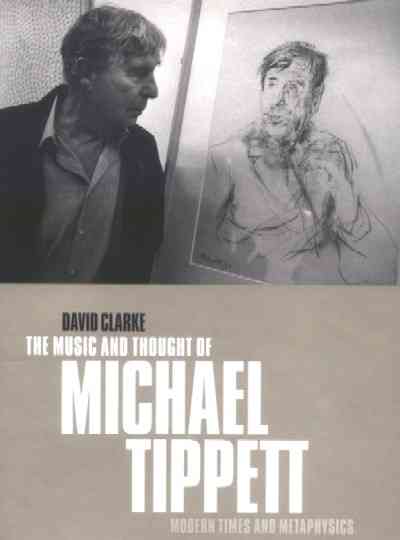
David Clarke (see book links below) holds that Michael Tippett was composing in a post-Enlightenment mode, embracing a ‘romantic, humanistic agenda’ not unlike that of Kant, Hegel, and other philosophers who aimed to restore a oneness with Nature. But Tippett, according to Clarke, also engaged in life-long relentless self-criticism and, in his operas and other compositions, created parts that enabled ‘post-humanist’ voices to speak—uniquely highlighting the limitations and failures of romanticism. Tippett repeatedly collides classical ideals with materialist realities.

Music historian Arnold Whittall once referred to Tippett as a ‘post-romantic modern’ (‘Is there a choice at all?: King Priam and motives for analysis,’ in Tippett Studies, Cambridge Univ, 2006, p. 77). But, in this Foden’s-Bramwell Tovey outing, maybe Tippett is closer to a ‘post-modern anti-romantic’. Yes, that is why this music feels so compelling, so poignant and timely right now.

W   hile we would need to be cautious about positing a postmodern dimension to Tippett’s thinking, the kind of connections I have been exploring [in this book] suggest that the aesthetic mutations of his late works are not unrelated to certain of the more radical and fruitful avenues of that problematic cultural paradigm.”
  —  David Clarke, Music and Thought of Michael Tippett, p. 269.
What especially pleases me in listening to this CD during this awful, catastrophic week are these works’ expression of an ineffable soundworld that is simultaneously tonal and post-tonal—full of melodic tonal writing, but with fragmentation, textural strata, and purpose-built melodic disjunctions that match my dark mood—miraculously healing it. There are ruptures with the premises of tonality, but the departures from tonality turn out not to be permanent—they eventually return us to orderly, diatonic lyricism. So, by implication, we sense that, regardless what happens to our collieries in one decade, our motor works in another decade, our financial institutions and markets in this decade, our cities, our governments, our environment, and so on in future decades—human beings (and brass bands, and the arts, and civilized culture in general) will somehow survive.

Up-coming performances by Foden’s Richardson Brass Band include:
David Clarke, Tippett book

Emperor Nero (U.S. Treasury Secretary Henry Paulson, after The Fall?)


Friday, March 14, 2008

Horn Trio: Ian Dakin and Brahms’s Fractured Family, Fractured Idea of Requiem

 Johannes Brahms, Christiane’s son
H  orn: the perfect emblem of distance and disembodiment.”
  —  John Daverio.
Ian Dakin (French horn), Elaine Clark (violin), and David Clark (piano) will perform horn trios by Brahms and Wood on Sunday, 30-MAR, at 12:00 noon at Hugh Lane Gallery in Dublin. The Brahms Horn Trio in particular merits more frequent performance than it receives. And it merits more analysis too, I think, along the lines Daverio pursues in his recent book.

Brahms’s Horn Trio Op. 40 in E-flat major (1865) was composed in memory of Brahms’ mother. She had been an older mom: at her death following a stroke in January, he was 32; she was 76.

As a child, Johannes had spent lots of time with his mother. Too much probably, to the exclusion of his developing other social skills and relationships. The maternal bond was maybe excessive: Christiane obsessed over him, broke into tears when reading newspaper accounts of his successes, and eventually despaired of the idiosyncrasies of her husband, Jakob, 17 years her junior. Jakob and Christiane separated in mid-1864, and Johannes got his father to move in with him. Try as he might, Johannes was unable to patch up his parents’ relationship. Christiane died 18 months later.

Brahms wrote the Trio for natural horn rather than valve horn despite the fact that the modern valve horn was already common. The natural horn has a frailer personality more given to intimating mourning: it lends a darker timbre than could reasonably be achieved with a valve horn. Of course! Natural horn: perfect choice!

But timbre was not the only reason. As a child Brahms had learned natural horn from his father. In view of the associations of the horn with his early life, Brahms’s choice of this instrumentation for the Horn Trio is symbolic as an autobiographical elegy for a mother by her son. It is also uniquely evocative in view of what is known of their relationship—and the disparity between their temperaments (her kindness, admixed with Lutheran piety, simplicity and logorhea; his sensitivity, admixed with a bit too much intellect and reticence; his father’s impulsiveness and incontinence, running roughshod over everything and everyone).

The work’s four movements:
  • Andante
  • Scherzo (Allegro)
  • Adagio mesto
  • Allegro con brio
carry the constitutional earnestness and cheerfulness of the tonic E-flat. But Brahms dispenses with sonata form and substitutes rhapsodic essay sections. Brahms also uses Early Baroque ‘church’ [chiesa] sonata form with the movements sequenced slow-fast-slow-fast. To me, this alternation has a gestural automaticity or reflexive ‘masking’ quality, like the ‘going-through-the-motions’ dynamic of one who has lost a loved one and is distracted by interior thoughts about that person and who manages to get through the passing days by putting on a stoic ‘front’ and going about the daily routine, no matter how incongruous the somber thoughts and the cheerful tempo might be.

 John Daverio, Crossing Paths
Or maybe the interpolation of the disparate tempi is an ‘unpacking’ of Brahms’s pent-up feelings about the disparities between himself and Christiane—her cloying, kind-but-obsessive ways; her focus on superficialities and her inability to comprehend what really made him ‘tick’—disparities that were now things of the past, to be sorted and registered as part of his life’s experience and to be honored in memory.

The Scherzo is contemplative but still cheerful, in the way that E-flat characteristically is. Do we hear Kübler-Ross’s stages of mourning embodied in these four movements? Only as refracted by family dynamics!

The playfulness of the Scherzo tempo is maybe the most schizoid, mendacious, dissembling part of this Trio. Or, no, it’s the Adagio mesto, which opens with four measures of solo piano in the low register. Solemn, yes, as the violin and horn guilefully confirm. The Adagio: impassioned and genuine, but as if at arms’ length—as if Brahms is idealizing or mythologizing something that was never quite so, not really; brooding: as if he is still resisting the mother’s overt efforts to control his identity, to say through her praise and fawning what he was and what he was not. The Finale, incarnate in E-flat major, again up-tempo. Strange for a Requiem! The Finale—exuberant, joyful E-flat—gives us acceptance, the End of Mourning? Or is it instead the end of a life of masked conflict between pious mother and diverging son: an inescapable incompatibility of temperaments chronically collided under the compulsion of 19th-Century familial sense of duty, now finally over?

Fascinating drama. We look forward to Ian Dakin’s and the Clarks’ account of this beautiful, mysterious Trio-Riddle later this month.

[FYI, Kourakata and colleagues at Niigata University published an interesting paper in 2001 about dynamic perioral muscle biomechanics in French horn players. The lip valve function was studied by measuring contact pressure at the teeth-buccal interface during playing. Elite players used the depressor angulioris and levator angulioris muscles extensively, especially for high notes. The contraction of these muscles achieves smaller lip aperture, facilitating accuracy in high-register passages and enabling greater endurance control during long performances.]


Sunday, November 26, 2006

Gendered Musical Practices, Feminine Styles

Alison Balsom
CMT: My young niece has recently decided to begin studying trumpet. I told her about how exotic and novel this choice is, and gave her copies of the recent CDs of Amanda Pepping and Alison Balsom to give her a sense for what’s possible—how mastery of that instrument can be cool for a girl.

DSM: Coincidentally, I was recently reading a medical journal article about cerebrovascular events in musicians, such as cerebral embolism due to a patent foramen ovale and spinal epidural hematoma during trumpet playing. Do you imagine that the phenomenally high intrathoracic and subsequent intrapharyngeal pressure associated with brass playing contributes to why there are so few women brass players in orchestras and other classical music groups?

CMT: I can’t imagine it. There surely isn’t any relevant physical difference between the genders with regard to brass playing—with the possible exception of tuba and lung capacity. Women are able to generate and sustain pressures in Valsalva maneuvers that are as high as men. There isn’t any gender-based anatomical difference that would differentially affect brass playing compared to other wind instruments. Mouthpiece pressure, tooth displacements, and so on. The intrathoracic pressures in double-reed playing can be higher than those for brass instruments—but there’s no barrier for women oboists and bassoonists and so on. So surely the rarity of women brass players just reflects the impact of entrenched cultural notions about what’s “feminine”—the tide of what’s culturally permissible for womanly playing.

DSM: So this is really about whether or not there’s such a thing as feminine musical style or styles. Stereotypes—like the notion that women’s music production should be fluid, should appear as playful regardless of how much exertion is involved, should be hyperexpressive and emotional and dialogical, should be pliant and enabling of others, should be acrobatic or balletic, should have great dramatic moments, should exude a certain jouissance, should be atmospheric, should refer to life events and relationships, should have wide and demonstrative ties between thematic elements, and should overtly draw attention to and emphasize the differences in the movements of women from those of men. The whole bit.

CMT: Well, yes. And how do these things replicate societal norms for gendered musical practices and experience gendered musical meanings? How do these affect women’s expectations and the specific practices and products of their composing and performing?

DSM: As you know, historically, relatively few women have been composers. Equally few are brass players. Shall we think about these correlations? Musicologists and sociologists have only in the last twenty years or so begun to study the situation, and there’s still a lot of work to be done (see Bowers & Tick, 1986; Citron, 1993; Marshall, 1993; Cook & Tsou, 1994; Halstead, 1997; Green, 1994, 1997).

CMT: Regarding primary music education, the majority of gender-related research has been on instrument choice (Bruce & Kemp, 1993; Green, 1997), with relatively little research so far on gender and music in relation to children’s compositions (Green, 1994, 1997; Charles, 2001). The children in Charles’ research carried on ideological assumptions that’re passed down through history about what girls/women and boys/men ought and ought not to do and what they’re like as musicians. She found that children have gendered expectations in relation to music and have strong ideas about the differences between girls’ and boys’ musical practices, even at an early age. She calls these ‘ideologies of gendered musical practices’. Charles found that in general children acted out gender roles in relation to compositional practices. But the most interesting findings were contradictions between the ways that children talked about things (their discourse) and how they operated in practice—contradictions they didn’t seem to notice themselves. And that is, in itself, a chink in the tyrannical cultural armor.

DSM: The teachers in Charles’ study did display many entrenched, gendered assumptions about boys’ and girls’ musical practices and products. And so there’s a summary in Charles’ paper—about girls’/women’s musical subculture—a concept of ‘female musical subculture’.

CMT: About 10 years ago, Lucy Green also worked out a model of gendered musical meaning and experience. Green argues that we must keep open some level of pure musical meaning that’s free from symbolic content. When heard, it’s affected by the values that exist outside the musical notes themselves. In relation to her model, Green says that ‘musical composition requires knowledge of the technology of voices, instruments or other sound sources, and this knowledge implies masculine delineation of mind which conflicts with patriarchal constructions of femininity’. She describes the concept as ‘twofold’ because it’s not only about the cognitive control over knowledge and technique but also because history—which is itself patriarchal—results in an assumption that the authorship behind a piece of music is male. The delineation of masculinity in the construction of musical meaning is associated with the public sphere—the mind, technology and non-conformity—whereas the delineation of femininity is associated with the private sphere—the body, emotions and conformity. It’s an excellent encapsulation of the preconceptions that girls and women in music face.

DSM: Yes, but boys are just as constrained and inscribed by cultural gender norms. Yes, they appear to have a more positive relationship to technology than did most girls, and this was in Charles’ study reinforced by boys’ choice of abstract compositional titles (‘Loud and Soft’; ‘Heavy and Light’; ‘Wooden and Metal’; and so on; see also Armstrong, 2001). But that also means that boys are culturally enjoined against being free to choose other things—they are not at liberty to choose less technically-bound, abstract, objectified, power-conscious forms. Charles finds that more girls chose compositional titles associated with emotion and nature rather than objectivity (‘Happy and Sad’; ‘Rain and Sunshine’). The findings strongly suggest that girls in their discourse and to some extent in their practice were acting as members of a female musical subculture. No surprise there. Discouraging but not surprising.

CMT: So girls reproduced traditional gendered musical practices and carried out ‘expected’ or ‘culturally constructed and sanctioned’ roles connected with the conventional private sphere that is reserved to them. The term ‘subculture’ rather than ‘culture’ is used because women’s experiences have been marginalized by male culture, and this leads to a location where commonalities emerge. Marginalization in turn discourages them, to a greater degree anyhow than boys. The concept of female musical subculture is used to explain women’s musical practice within the context of patriarchy and does not imply anything that is essentially female. It acknowledges the category of ‘woman’ as a social construction (see Nash, 1994) and is about women perpetuating traditional musical practices for social/historical reasons.

DSM: This suggestion of feminine perseverance and conformity bugs me. By ‘being girls’, by describing their music as soft and slow and having a preference for soft and slow music, they are ‘against themselves’—or so Charles interprets it. Thank goodness some music education programs are smashing these barriers.

CMT: In light of Citron’s recent writing, it could be said that the girls experience a sense of Other and ‘an anxiety of authorship’. Their sense of Other is another dimension to the concept of female musical subculture. McClary locates ‘semiotic codes’ in sonata form and argues that music participates ‘actively in the social organization of sexuality’ (1991, p. 9). Similarly, Citron identifies ‘codes of gendered representation’ in sonata form and maintains that the codes ‘tell us a lot about the representation of women and men in society, how ideologies affected how music itself was conceptualized and described, and how music had close ties with ideals and processes in society’ (1993, p. 137).

DSM: So children’s and teachers’ discourse on the musical practices of boys and girls in the primary classroom reflect views about gendered musical behavior that have been socially and historically constructed within the larger society. Microcosmic meaning drawing from macrocosmic meaning concerns larger totalities of history and humanity (where past and present connect) that are unifying patterns of beliefs. In the case of this study, in their discourse children defined their being and consciousness in relation to the social world, to others and to the system of beliefs and values that is already in existence about gender and gender and musical practice. This was then reinforced by teachers’ views about boys’ and girls’ composition.

Alison Balsom
CMT: Chamber music becomes just one more discursive field within which meanings are produced about social relations . . . the discourses will include and be drawn from those current in broader society.

DSM: Yes. Kids quickly learn the discourse of how to represent gendered musical practice that conforms to adult expectations—and this fits in with the wider social organization of music. But the taboos on gendered musical behavior are not so strong at younger ages. The discourse on musical practice has more power over their thinking than over the nature of the music they produce. Ideology quickly dominates their conscious thinking and affects their interpretation of what’s actually happening in their musical training. Would you contend that the social system of gender relations is both a cause and an effect?

CMT: Although imposed externally by outside social forces, it does arise out of self-imposed boundaries. But I think the evidence indicates that in their musical practice kids don’t consistently reproduce ideologies. Thank goodness! My niece, the iconoclast, and her supportive music teacher and parents. All things are in a continuous process of change and humanity is always, whenever it participates in social relationships, open to continual socialization. It’s only a matter of time, once kids are in secondary school, before the strength of ideology becomes greater and contradictions between musical discourse and practice decrease. Iconoclasm gets more difficult between age 14 and 20, say.

DSM: Another icon/iconoclast to tell your niece about is Ellen Zwilich. Ellen is the recipient of numerous prizes and honors, including the 1983 Pulitzer Prize in Music (the first woman ever to receive this coveted award), the Elizabeth Sprague Coolidge Chamber Music Prize, the Arturo Toscanini Music Critics Award, the Ernst von Dohnányi Citation, an Academy Award from the American Academy of Arts and Letters, a Guggenheim Fellowship, 4 Grammy nominations, and, among other distinctions, she’s been elected to the Florida Artists Hall of Fame and the American Academy of Arts and Letters. In 1995, she was named to the first Composer’s Chair in the history of Carnegie Hall, and she was designated Musical America’s Composer of the Year for 1999. Her chamber works have been commissioned by the Boston Musica Viva, the Abe Fortas Memorial Fund of the John F. Kennedy Center for the Performing Arts, 92nd Street Y and San Francisco Performances (Piano Trio), Chamber Music Northwest (Clarinet Quintet), the Chamber Music Society of Lincoln Center (Double Quartet), and Carnegie Hall (String Quartet No. 2). Ellen was named to the Carnegie Hall Richard and Barbara Debs Composers’ Chair in 1995, the first such position in the Hall’s history. And, in addition to Alison Balsom and Amanda Pepping, you might hook your niece up with Marie Speziale or Susan Slaughter, another couple of excellent women brass artists.


Ellen Taaffe Zwilich