W ell, I wrote a couple of good poems on them—with mescaline, acid [LSD], nitrous oxide, marijuana, and amphetamines. So, yes, those are direct influences on my writing. But aside from 60 or so pages [that I wrote when I was intoxicated and which would not probably have been possible for me to write had I not been intoxicated], the spiritual effect of drugs was not extensive in creation of my texts.”
— Allen Ginsberg, responding to a question about how psychedelics and alcohol affected his writing, interview with David Jay Brown, ‘Mavericks of the Mind: Conversations for the New Millennium’, 1993.
L ike [Walt Whitman’s] ‘Leaves of Grass’, ‘Howl’ was an experiment with language. Ginsberg combined the vernacular with the lexicon of holy men; mixed obscenities with sacred oaths; linked the slang of the day with the rhetorical flourishes of the founding fathers of the Republic... As he wrote ‘Howl’, he becomes [and, on listening to it, we become— ] intoxicated with words and the sounds of words... the words produce an electrical ‘charge’ that is exhilarating.”W hat do Lee Hyla’s ‘Howl’ for string quartet with narrator (composed in 1993 and premiered at Carnegie Hall by Kronos Quartet with Allen Ginsberg on 20-JAN-1994) and Robert Schumann’s String Quartet in A Major, Op. 41, No. 3 (composed in 1842) have in common, other than that they are both string quartets and they were both performed by the Brentanos, in a performance for the Friends of Chamber Music series at the Folly Theater in Kansas City last night?
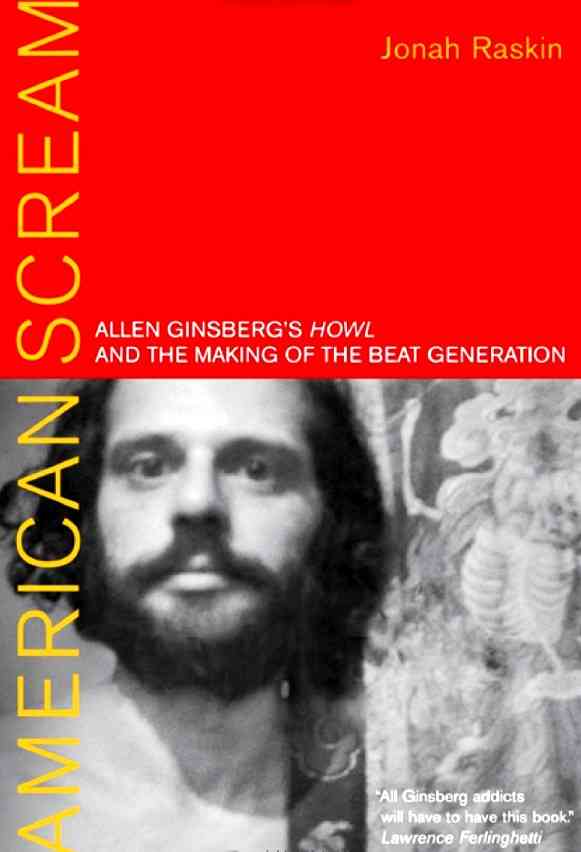
— Jonah Raskin, American Scream, p. 225.
Quite a few things!
Both are musical essays having to do with struggles with inner unrest, with intoxication (Allen’s; Robert’s), and with the existential pain of creativity. Both utilize ‘metrical dissonance’ as a compositional device to say what they have to say on those subjects. Both are, in their own ways, ‘experiments’ with musical language. And both are about the plight of oneself and one’s friends, about the suffering of family and friends of people who have mental illness.
Op. 41 was written, at least in part, while the then-32-year-old Schumann was ‘high’ on champagne. Robert was less than 2 years into his marriage to Clara, during a period when the couple was having some difficulties. ‘Howl’ was written, at least in part, while the then-29-year-old Ginsberg was ‘high’ on peyote. [Composer Lee Hyla was not ‘under the influence’ while composing, but he nonetheless gives an inspired, realistic rendering of Ginsberg’s hallucinatory rhythms and taut imagery in this composition for string quartet.]
Like the lines in Ginsberg’s poem, the voice-leading lines in Hyla’s quartet are long—several measures, mostly 5 seconds or longer. Hyla’s paratactic rhythms —choppy, short, dissimilar phrases juxtaposed without a logical or rhetorical connection—are faithful to Ginsberg’s diction. Schumann’s lines in Op. 41 No.3 are also pretty long…
I deally, each line of Howl is a single breath unit. My breath is long—that’s the measure, one physical-mental inspiration of thought contained in the ‘elastic band’ of one breath.”S chumann’s and Ginsberg’s experimentation with intoxicants: was it aimed at achieving an esoteric, transcendent spiritual experience; calming their over-active, troubled minds; suppressing internal psychological controls that inhibited their creativity; obliterating their depression? Listen for hints of these in these two pieces!
— Allen Ginsberg, in Deliberate Prose: Selected Essays 1952-1995. William Morgan, ed. Harper, 2000.

Hyla synchronizes the beat in the string parts with the ‘Who’, ‘Denver’, ‘Moloch’, ‘Rockland’, and ‘Holy’ clauses in the narration of the Ginsberg poem. Hyla also honors the poem’s ‘pyramidal’ (graduated longer response to the fixed base) rhythmic structure in Part-3. But he does these things with deliberate rhythmic variances (micropulse inter-part asyncrohony) that create a wonderful edginess, fitting for Ginsberg’s poetics. (Hyla must be a fine actor as well as a fine composer, so sensitive is he in this composition to nuances of timing!) And Schumann does these things as well in Op.41 No.3—especially in the first movement. Rhythmic skew between the parts; micropulse asynchrony, one of the types of ‘metrical dissonance’, to use Harald Krebs’s term. The Brentano Quartet members exhibited superb timing in their performance to the recording of Ginsberg’s reading of the poem, exciting the members of this Kansas City audience attending last night’s opening concert in the Friends of Chamber Music season. The theme for the evening was ‘The Art of Unrest’, and the concert was accompanied by an exhibit of art works pertaining to societal and personal strife in the concert hall’s foyer and commons areas.

So here’s the deal: Robert Schumann’s String Quartet in F Major, Op. 41, No. 3 simultaneously embodies struggles in love, in compositional method, and in depression—ameliorated by recreational chemicals. Schumann was clinically depressed that year, and was frequently drinking to the point of intoxication during two months’ separation from wife Clara. A couple of Robert’s letters allude to this; one of his published essays of the time expounds on the merits of champagne over schnapps, as aids to creativity.
During the middle of the year, Clara was nominally away from home traveling and concertizing; however, there is evidence that the ‘separation’ was more than merely an interval of performance-related travel. And Robert’s frenzied creativity during her absence may have been motivated by his hopes of redemption and reconciliation? There is scanty evidence to go on. And, understandably, the biographies portray this period in a perfunctory way, stating that he was ‘intensively studying counterpoint and Haydn’s quartets’ and so on. But these superficialities, while they are no doubt true so far as they go, have the effect of obfuscating more than they illuminate. Would those superficialities be plausible or sufficient to explain these compositions by a manic-depressive person, produced in a period of a few weeks? There must be a back-story, one that the biographies don’t provide—and that Robert’s correspondence provides only glimpses of.
S chumann’s] fascination with the effects of alcohol cannot be taken as a paean to insobriety, when he writes: ‘The intoxication that often accompanies geniality [ingeniousness] must be brought on by champagne, not schnapps.’ ‘Knillität’ [tipsiness, but not falling-down-drunkenness] is neither more nor less than an emblem for the heightened awareness associated with the act of creation.”During Robert’s waking hours over the course of those frenzied weeks in 1842, he found that writing string quartets helped relieve his distress regarding Clara and their separation. The writing made his manic episode worse, but he quenched the mania with champagne. Robert shared the string quartet sketches and etudes with Clara when she returned home. The 2 months’ separation had given both of them time to think. She recognized the risks that accompanied his episodes of mental illness and recreational intoxication; but she also recognized the therapeutic and transcendent artistic effects that were achieved through those episodes. The music he produced during those episodes was deeply expressive; confessional; autobiographical, in a way that art so frequently is. In her personal correspondence, she also expressed a reluctance to arrange medical intervention to treat his condition; she expressed skepticism that any benefit would come from psychiatric interventions that were available in those years.
— John Daverio, quoting Schumann’s essay of 1828 on the anatomy of creative genius, in ‘Schumann: Herald of a New Poetic Age’, p. 46.
O f course [Ginsberg] had read Buddhist texts while he was writing ‘Howl’, and, with Kerouac as a spiritual guide, he took on the persona of the Buddhist holy man, a persona that helped infuse the poem with a sense of the absurd, inherent suffering of Life.”Robert’s music—this Op.41 No. 3 string quartet itself—is capable of producing a state of musical intoxication in its performers and listeners—more than merely ‘representing’ the mental states that had affected Schumann as he composed it, it can ‘project’ them. Clara recognized the tragic beauty and aesthetic value in this. And Clara’s generosity toward Robert and her discretion/valor may have led her to hold inside herself any misgivings she might have had about the ‘chemical’ provenance of Robert’s creativity. She had a lot of tolerance for people who used alcohol or were half-mad—her decision resembled children of alcoholics, who in order to maintain a balance clean up after others and compensate by maintaining order in their lives. To her, being a composer was a ‘sacramental’ vocation—and others around the gifted person were obliged (in her view) to compensate for and cope with and help that person actualize their artistic potential.
— Jonah Raskin, American Scream, p. 228.
C omposing gives me great pleasure... There is nothing that surpasses the joy of creation, if only because through it one wins hours of self-forgetfulness [and communion with the Divine/Universe], when one lives in a world of sound.”Moreover, Clara recognized that conservative, bourgeois ‘Biedermeier’ culture was likely to destroy creative people like Robert, whose needs or behavior fell outside of accepted social norms. She probably saw that, in the ‘manic’ phases of his bipolar illness, Robert was calmed by alcohol. It enabled him to sleep and to function in the company of friends and associates and to keep his episodic dysfunctional behavior within acceptable bounds.
— Clara Schumann, Diary entry, 1841.
Might not Robert Schumann’s creation of these quartets have been propelled by not just one thing (“I shall study Haydn and then I shall write string quartets that are not at all like Haydn’s.”) but by two or more motivations (including a wish to redeem himself and recover ‘face’ from a previous disagreement with Clara)? Might not Allen Ginsberg’s creation of ‘Howl’ have been propelled by more than one thing as well? Might not some of the ‘metrical dissonance’ features we hear in Op.41 No.3 (esp. in the first movement) have arisen because of the ‘phonological buffering’ and ‘working memory’ in Robert’s brain, which likely differed from the neurophysiology of working memory in ordinary people’s brains? Ginsberg, too. He was not bipolar, but was he maybe experiencing episodes of unipolar depression? Unipolar depression, Holy! Some of his writing, Denver stinking Rockland, Depressed! Concreteness abounding! Filth! Angels! The howling psychiatric panopticon! Punctate synoptic synapses! Fire, holy!
Harald Krebs discusses ‘metrical dissonance’ in his book (link below) as though it were entirely textual—‘in’ the literal musical text as-composed, and not influenced by performers’ interpretations or by variability in listeners’ cognitive and emotional states. I think the metrical dissonance was in the composers’ heads, and on the page, and now in the heads of the performers and the listeners. I think that the peculiar micropulse effects in Schumann’s Op.41 No.3 and in Hyla’s ‘Howl’ in fact manifest an abnormal 2-back and/or 3-back neurophysiological performance status—probably a correlate of anxiety, stress, and depression. These metrical dissonances we experience are The Art of Unrest. And many of us who experience these effects as intensely moving and ‘true’ do so because these timings are familiar to us—from our own previous experiences of internal unrest, or from our vicariously witnessing abnormalities in buffering and working memory and response-times/asynchrony that we’ve observed in depressed/stressed friends or loved ones—or, if you are a physician or nurse, observed in patients.
Consider the phrase repetitions in these pieces: how oblivious they are to the short-term history of utterances in the parts! How vividly they portray the anxiety/stress inside [the poet, the composer]! They feel like (are intended by the composer to feel like—) the expressions of individuals whose attentional systems have a diminished capacity due to stress. It feels like the brain’s episodic buffer in working memory has diminished capacity—else how to explain the involuntary repetitions and and reversals and intrusions and micropulse asynchrony? These pieces seem to me to be vivid expressions of the mental state and neuroanatomy of the composer/poet in a state of unrest.

Clara Schumann’s caregiving may have been a bit like Allen Ginsberg’s caring for Carl Solomon. Both were nurturing troubled loved ones; coping with the suffering; writing vehemently about the injustice of it all. Ginsberg’s friend, Surrealist artist Carl Solomon (who is one of the main subjects of ‘Howl’), had bipolar depression, as did Robert Schumann. Solomon wanted to commit suicide (as did Robert Schumann, later), but Solomon thought that a suitably surreal, aesthetically-coherent suicide would be to ‘go to a mental hospital and demand a lobotomy’. The institution he presented himself to refused to comply, but instead undertook electroshock therapy (ECT) and treatment with various powerful antipsychotic/neuroleptic drugs. Much of the final section of the first part of ‘Howl’ is Ginsberg’s long rant about the horrors and irreversible injury these ‘treatments’ caused to his friend.
[50-sec clip, Lee Hyla, ‘Howl—Footnote’, Kronos Quartet, 1.2MB MP3]
H oly! Holy! Holy! Holy! Holy! Holy! Holy! Holy! Holy!
Holy! Holy! Holy! Holy! Holy! Holy!
The world is holy! The soul is holy! The skin is holy!
The nose is holy! The tongue and cock and hand
and asshole, holy!
Everything is holy! Everybody’s holy! everywhere is
holy! everyday is in eternity! Everyman’s an
angel!
The [sera-] bum’s as holy as the seraphim! the madman is
holy, as you my soul are holy!
The typewriter is holy the poem is holy, the voice is
holy the hearers are holy the ecstasy is holy!
Holy Peter holy Allen holy Solomon holy Lucien holy
Kerouac holy Huncke holy Burroughs holy Cassady Holy, the unknown buggered and suffering
beggars holy the hideous human angels!
Holy, my mother in the insane asylum! Holy, the cocks
of the grandfathers of Kansas!
Holy the groaning saxophone! Holy, the bop
apocalypse! Holy the jazzbands marijuana
hipsters peace & junk & drums!
Holy the solitudes of skyscrapers and pavements! Holy
the cafeterias filled with the millions!
Holy the mysterious rivers of tears under the streets!
Holy the lone juggernaut! Holy the vast lamb of the middle class!
Holy the crazy shepherds of rebellion! Who digs Los Angeles IS Los Angeles!
Holy New York Holy San Francisco Holy Peoria &
Seattle Holy Paris Holy Tangiers Holy Moscow
Holy Istanbul!
Holy time in eternity holy eternity in time holy the
clocks in space holy the fourth dimension holy
the fifth International holy the Angel in Moloch!
Holy the sea holy the desert holy the railroad holy the
locomotive holy the visions holy the hallucinations holy the miracles holy the eyeball holy the
abyss!
Holy forgiveness! mercy! charity! faith! Holy! Ours!
bodies! suffering! magnanimity!
Holy the supernatural extra brilliant intelligent
kindness of the soul!”
— Allen Ginsberg, Howl, Footnote.

In listening to the Brentanos perform these two works back-to-back, it occurs to me that the psychology and the rhythmicity and the ‘metrical dissonance’ between the parts are all comparable: there are parallels between the Schumann Op. 41 No.3 quartet and the Hyla quartet, ones that can be recognized by techniques pioneered by music theorist Harald Krebs. In Krebs’s metrical analysis, the sense of meter emerges when we identify rhythmic ‘layers’. The rhythmic layers in a piece can be classified into three types: the ‘pulse’, ‘micropulse’, and ‘interpretive’ layers.
The ‘pulse’ layer is the fastest-moving pervasive series of pulses, usually arising from a prolonged series of attacks in the parts’ surface. In the several-bars example below from the second movement of Op.41 No.3, the pulse layer is the one comprised by the eighth notes—these are the quickest-moving and pervasive of the pulse series that are in there.

An ‘interpretive’ layer is defined by Krebs as “a layer of motion that moves more slowly than the pulse layer and allows the listener to ‘interpret’ the raw data of the pulse layer by organizing its pulses into larger units.” In the top violin part of the few bars example from movement 2, the interpretive 6-layer is generated by the new-event accent on the downbeat of each new measure.
The so-called ‘micropulse’ layer—more rapid than the pulse layer—in Schumann’s string quartet Op.41 No.3 is accentuated by written asynchrony and also by rubato timing that’s skewed between the parts. It’s most evident in the first movement, but it’s present in the other movements as well. By contrast, in Hyla’s ‘Howl’, the micropulse layer is provided mainly by the narrator’s voice and its disparate timing with respect to the string parts. The narrator’s voice is just another ‘part’, after all.

W ith the various layers we also get interweaving tonics occuring in connection with Schumann’s tonal delays and blurred phrase boundaries in this quartet. (Peter Smith of the University of Notre Dame presented a paper at last year’s Society for Music Theory meeting concerning Schumann’s use of key-specific tonal pairs such as A-minor/F-major in the Op.41 No.1 string quartet; G-minor/E-flat major (e.g., Piano Quartet); and so on. But I don’t think ‘tonal pairs’ figure in Hyla’s design for ‘Howl’ and its tonal delays and phrase structure. The parallels drawn between the Hyla and the Schumann pieces must dwindle off somewhere!)

In summary, I am grateful for the technically flawless, beautiful Brentano String Quartet performance last night. Grateful for the excitement they created with this unusual program. And grateful, too, for the ‘epiphany’ that happened for me (why I wrote the paragraphs above) about the art of chamber music programming itself, in this program, The Art of Unrest. By that I mean that I am thankful for the novel ideas that can come from bold ensembles’ performing seemingly disparate pieces on a single program and for bold presenters’ sponsoring them. Last night, we got to hear and understand things [for example, inter-piece correspondences that shed new light on personal motives and human nature] that we would never otherwise have heard or understood. Cynthia Siebert’s introductory remarks to the audience before the performance helped everyone to understand how the human impact of unrest—personal strife; war and social strife—is revealed and explored by these pieces. A coherent package, affirming why serious music is exciting and relevant to all thoughtful people everywhere. Thank you, Brentano String Quartet!
— Clara Schumann, letter to Martha von Sabinin, APR-1854.
Since the time of its founding in 1992, the Brentano String Quartet has appeared throughout the world to popular and critical acclaim. Over the years, the Quartet has been privileged to collaborate with such artists as soprano Jessye Norman, pianist Richard Goode, and pianist Mitsuko Uchida. Champions of new music as well as the traditional classical canon and early music, the Quartet has recorded the music of Steven Mackey, Bruce Adolphe, Chou Wen-chung, and Charles Wuorinen, and has commissioned many pieces as well, including works from Wuorinen, Adolphe, Mackey, David Horne and Gabriela Frank. Besides their busy travel and concert schedule, the Quartet’s duties as Resident String Quartet at the Princeton include workshops with graduate composers, coaching undergraduates in chamber music, and assisting in musicology, music theory, and other courses. The Quartet is named for Antonie Brentano, whom many scholars believe to have been Beethoven’s ‘Immortal Beloved’.
I ’m with you in Rockland [Columbia Presbyterian Hospital]
where you bang on the catatonic piano the soul
is innocent and immortal it should never die
ungodly in an armed madhouse
I’m with you in Rockland
where fifty more [ECT] shocks will never return your
soul to its body again from its pilgrimage to a
cross in the void.”
— Allen Ginsberg, Howl.

- Brentano String Quartet website (Princeton Univ)
- Lee Hyla website
- Lee Hyla page at BMOP
- Lee Hyla page at New England Conservatory
- Rose G, Nessinger M, BMOP. Hyla: Lives of the Saints. (BMOP, 2008.)
- Hyla L. Howl score at Boosey & Hawkes.
- AllenGinsberg.org
- Brentano String Quartet performance at Friends of Chamber Music, 03-OCT-2008, Folly Theater, Kansas City
- Brown D. Interview with Allen Ginsberg, ‘Mavericks of the Mind’, 1993.
- DSM. Composing as a symptom and a health outcome. CMT blog, 11-DEC-2007.
- DSM. Zehetmair Quartet's Schumann. CMT blog, 11-NOV-2007.
- MoodGarden.org online discussion ‘safe haven’ forums for people with depression and bipolar disorder and related conditions
- Alsop M. Robert Schumann: Music amid madness. NPR, 21-JUN-2008.
- Allen Ginsberg Howl text and Markov-chain convolution permutor Howler java app
- Frank L, ed. The Electroshock Quotationary. [1MB pdf]
- Harald Krebs page at Univ Victoria
- Daverio J. Robert Schumann: Herald of a New Poetic Age. Oxford Univ, 1997.
- Ginsberg A. Howl: Original Draft Facsimile, Transcript, and Variant Versions. Harper, 2006.
- Krebs H. Fantasy Pieces: Metrical Dissonance in the Music of Robert Schumann. Oxford Univ, 2003.
- Kronos Quartet. Howl. (Nonesuch, 1996.)
- Millett K. The Politics of Cruelty. Norton, 1995. [Kate is survivor of ECT and ‘medicalization’ of mental problems]
- Raskin J. American Scream: Allen Ginsberg's Howl and the Making of the Beat Generation. Univ California, 2006.
- Szasz T. Psychiatry: The Science of Lies. Syracuse Univ, 2008.
- Szasz T. Coercion as Cure: A Critical History of Psychiatry. Transaction, 2007.
- Szasz T. The Medicalization of Everyday Life: Selected Essays. Syracuse Univ, 2007.
- Szasz T. The Myth of Psychotherapy: Mental Healing As Religion, Rhetoric, and Repression. Syracuse Univ, 1988.
- CognitiveAtlas systems biology wiki at UCLA
- Baddeley A. Working Memory, Thought, and Action. Oxford Univ, 2007.
- Franssen V, Vandierendonck A, van Hiel A. Duration estimation and the phonological loop: articulatory suppression. Psychol Res. 2006 ; 70:304-16.
- Gray J, Braver T, Raichle M. Integration of emotion and cognition in the lateral prefrontal cortex. PNAS 2002; 99:4115-20.
- Harvey P, Fossati P, Pochon J, Levy R, et al. Cognitive control and brain resources in major depression: an fMRI study using the N-back task. Neuroimage 2005; 26:860-9.
- Marquand A, Mourão-Miranda J, Brammer M, Cleare A, Fu C. Neuroanatomy of verbal working memory as a diagnostic biomarker for depression. Neuroreport. 2008; 19:1507-11.
- Romani C, McAlpine S, Martin R. Concreteness effects in different tasks: implications for models of short-term memory. Q J Exp Psychol (Colchester). 2008;61:292-323.
- Rose E, Ebmeier K. Pattern of impaired working memory during major depression. J Affect Disord. 2006; 90:149-61.
- Sacks O. Musicophilia: Tales of Music and the Brain. Vintage, 2008.
- Schaefer A, Braver T, Reynolds J, Burgess G, Yarkoni T, Gray J. Individual differences in amygdala activity predict response speed during working memory. J Neurosci. 2006; 26:10120-8. [1MB pdf]
- Schoofs D, Preuss D, Wolf O. Psychosocial stress induces working memory impairments in an N-back paradigm. Psychoneuroendocrinology. 2008;33:643-53.
- Smith J, Wilson M, Reisberg D. The role of subvocalization in auditory imagery. Neuropsychologia 1995; 33:1433-54.