Showing posts with label brentano. Show all posts

Tuesday, April 28, 2009

Outer Surfaces of Seemingly-Simple Things: Lansky’s Complexity-Hiding

 Paul Lansky
I    ’m no longer comfortable with the ‘network’ model [of music structure, including synth and programmatic/aleatoric elements that are not under total human control]. There was an implicit assumption in my [earlier] topology that technology was acting as an equalizer between people... I [now] think that’s a slippery assumption. While I still think that the topology I described is interesting and suggestive, I’ve become a bit more skeptical … I regard listening to a piece of music or reading a book as an intensely interactive activity, a communication between minds. I’m a little more hesitant these days about elevating the ‘sound-giver’ too much, in that there are a lot of blurry boundaries between that node and the listener. I don’t want to regard the ‘sound-giver’ as a node with equal weight to the performer or composer. ‘Instrument builder’, however, is another matter. The design of an instrument will very often involve compositional decisions.”
  —  Paul Lansky, interview with Jeff Perry, Perspectives New Music 1995.
T  he way to make something seem simple is, often, to hide the complexity that it contains—to make a ‘black box’ out of it. (In my day-job, I am currently working on a healthcare information exchange architecture. As I do so, sometimes at night, naturally I listen to music. Inevitably, odd reveries and correspondences between composing music and writing software percolate up. Whether these are (will be—) spurious or useful, I cannot say. But to preserve the memory of them, I sometimes capture them here, in a CMT post…) [Returns to writing code, listening to Paul Lansky CD.]

F  or me, Paul Lansky is the go-to guy… a true master of complexity-hiding. Paul Lansky turns 65 in a couple of months. Once a student of George Perle… student, too, of Milton Babbitt (with whom I myself attended lectures back in the early 1980s) and Edward Cone, Paul is currently professor of composition at Princeton. He has for forty years been prominent in electroacoustic and computer music, including language development for algorithmic composition (Real-Time Cmix). [‘Enjoying’ is different from ‘revering’. I look across the room into the darkness and wonder which it is that I am feeling as the Lansky CD continues to play.]


    [Brentano Quartet, Lansky, ‘Ricercare’, 7.6MB MP3]


    [50-sec clip, Paul Lansky, ‘Idle Chatter Junior’, 2.0MB MP3]

T  he phrasing of the ‘Idle Chatter’ creates a sonic ‘surface’ that’s built-up out of microsound samples—a tonal ‘whole’ that’s astonishingly comprehensible, even if the objects out of which it’s constructed are not… The ‘Ricercar’ montage resembles—to me—the object-code output of a software object-oriented compiler, with object class hierarchies and inheritance and message-passing among instantiated class members…

I  have enjoyed Lansky’s compositions for years but now begin to try to analyze why that is—why is it that they seem to me to be so deliciously elegant? [This extraneous thought occurs to me as I examine some Java debugger output in my supposedly day-job now turned to night…]

I  should look—look under the ‘veneer’ of Lansky’s music—I must look carefully to see what complexity-hiding and abstraction methods his writing and microsound collocations implement. Maybe you will, too…

A  s with complexity-hiding methods in software in general, Paul’s musical complexity-hiding composition techniques assure that ‘users’ (performers; listeners) are not unduly burdened by issues of internal music representation or execution. To a non-programmer, deliberate complexity-hiding may seem a somewhat ‘maternal/paternal’ stance [toward the performers; toward the audience], I guess. But to a software-developer/composer, complexity-hiding is not laden with questions of asymmetrical autonomy of different parts/players. It just represents a set of ‘engineering’/‘compositional’ choices, nothing more. There are philosophically and psychologically more parallels between a software-developer and a composer than most would care to admit...

F  or example, to create a software functional specification, we make a process diagram that hides the complexity of certain parts of the operating system or services internals or end-user workflow from the developer of a particular subsystem, or hides the model-checking output from the process-modeller, or hides other things that are irrelevant to the authority and responsibility of other constituencies. To create a system technical design, we make an Application Programming Interface (API) that hides the complexity of software module internals from the system integrator and external application developers. It has been second-nature to do these things in structured software engineering for more than 30 years, but especially in the past 15. Why is it that music composition courses—even ones in computational music—neglect the applicability and relevance of these ideas to music? Probably the answers are that there are just (a) not enough people who are comfortable with and knowledgeable about the computational music software tools that have become available in the past 15 years and (b) not enough hours in the curriculum. If only they knew that inhaling that stuff could help them to make new, more novel, more beautiful, more elegant and surprising compositions! They would make more curriculum hours then, I bet…

M  y impression of ‘Ricercare’ and other pieces is that they resemble so-called ‘autonomic’ computing (see links below)—systems that are [by definition] self-configuring, self-healing, self-optimizing and self-protecting, all mostly reflexive, without extensive human deliberation but instead carried out according to pre-defined policies. The road map culminating in autonomic computing architectures encompasses the following five levels of extent or ‘maturity’:

  • Basic: The product and environment expertise resides entirely in human minds, requiring detailed rehearsal, gestures, messaging, and consultation on even routine procedures.
  • Managed: Scripting and logging tools automate routine execution and reporting. Individual specialists review information as it comes in, to make plans and decisions.
  • Predictive: Early warning flags are raised as preset thresholds are tripped. The knowledge base recommends appropriate actions. The proposed resolution of events is leveraged by a centralized storage of common occurrences and experience.
  • Adaptive: Building on the predictive capabilities, the adaptive system takes action itself based on the situation.
  • Autonomic: Autonomous algorithm-based policies drive system activities such as allocation of resources within a prioritization framework.
T  o allow system components, whether infrastructure or application software, to predict when they are on the verge of violating a threshold, ‘sensors’ must be built-in. Timers or code-instrumentation to monitor software runtime execution are built-in. [Similar monitor structures are present in the compositions of Paul Lansky—I am sure I am not crazy in inferring that they are there in these pieces I am listening to tonight.] In other words, the ‘adaptive’ maturity level of autonomic computing systems calls for the creation of a process that monitors resources, defines a systematic reaction to a set of indicators, and the automation of procedures that alleviate the underlying problem. For example, just as RAID arrays of fault-resilient disk drives can be configured to automatically ‘mirror’ a failed drive to a spare drive, members performing Lansky’s ‘Ricercare’ can be configured automatically to gracefully respond to a situation involving one member of the string quartet…

T  he automatic aspect of the response is one guideline for determining whether a given system has matured to the ‘predictive’ level or gone beyond it to become ‘adaptive’. Lansky’s music is at least ‘adaptive’; it remains an open question as to whether some of it goes yet further, into the realm of fully ‘autonomic’…

T  he threshold levels defined as part of predictive systems management are not discarded as the [software-engineering/music-composition] ‘environment’ matures. These metrics are captured and analyzed, with the resulting action expressed as ‘recommendations’ and [execution-runtime/performance-practice] ‘options’. As the [system-managers/ensemble-members] gain confidence in the ability of the ‘system’ to monitor and flag events, revised response levels are defined, and first-line ‘defense’ activities are enacted by the system. In this way, the services can be considered to be ‘maturing’ to the adaptive level of an autonomic computing system.

A  daptive’ and ‘autonomic’ levels of software systems maturity require systems’ infrastructure to be integrated, to allow ‘smart’ components to recognize when an impending challenge/risk is going to affect them, or where an escalation in technical demand puts their ‘service level agreement’ (SLA) at risk. Dare I say that the same thing inheres in serious music—serious music both composed and improvised? In software, adaptive components can take advantage of alternate infrastructure to ensure uninterrupted operation and uncompromised performance in conformity with the SLA. In music, adaptive components like Lansky’s accomplish the logical equivalent. (What I mean is, after all, are there not implicit SLAs in music? Both in good composition methods and in good performance methods?)

A  daptive tools … such as balancing the ‘least recently used’ (LRU) and ‘least frequently used’ (LFU) pages of a memory ‘cache’ or a persistent-message ‘store’ gives better performance than relying on either LRU or LFU strategy alone. It becomes possible to set policy for dynamically responding to situations as they arise. For example, where a key line of motivic development in tonal music requires more resources or more emphasis to achieve the cognitive impact intended, it might prove better to temporarily pull resources from one task to assist a higher priority task than impinge on the service levels defined for that server. Sometimes I get the feeling that Lansky’s minimalist compositions are using a combined LRU-LFU regime to communicate as much as he does, using only relatively modest materials…

  • Problem management
  • System/motif availability
  • Security
  • Performance and dynamic/adaptive capacity management
T  opology hiding: It is possible to hide (e.g. encrypt or mask) information when ‘domain borders’ (administrative or technological or semantic/expressive) are crossed. Hiding of rhythmic or flow-of-control detailed information is different from hiding structural or topological information. Topology hiding is something Lansky does very elegantly, especially in his sampled montage works…

I  f a software hacker wants to attack an enemy ‘target’, the target usually must be visible or exposed. To defend a target, you need to obscure it from public view, obscure it from hackers and would-be intruders. By hiding an object, you reduce the attack ‘surface’. In computers, only the part of a progam that is accessible to an attacker can be a target of attack. The pieces of code that’re exposed to public view are usually called APIs (Application Programming Interfaces). The ‘attack surface’ is the union of the code, the interfaces, the services, the protocols, and the processes that are exposed to the system’s users. In software security design, you analyze the attack surface and minimize that surface, sometimes by putting a ‘wrapper’ around it, or placing it in a ‘package’ such that only those entities who have access to the package are exposed to the variables that are within the scope of that package. I think I hear more correspondences—between what Lansky is doing acoustically, and what I am doing writing this Java code here on this laptop…

  • Is this feature really necessary [in this string quartet movement]? If no, it should be hidden by default.
  • Is it necessary to offer this feature remotely? If yes, then determine what locations it needs to be accessed from and via what media.
  • Which users or user-types have ‘need-to-know’ justification for accessing this feature? [The viola? The cello?] Legitimacy of usership needs to be authenticated.
  • What privileges are required to use this feature? If it needs elevated privilege, how long [How many bars?] does the elevated privilege or access persist before it needs to be renewed?
V  irtualization’ is a term that I think deserves to cross-pollinate to music theory and composition, from computer engineering. In computer science, ‘virtualization’ is a design philosophy where the operating environment abstracts the resources involved in its realization. Much virtualization involves abstraction through isolation and ‘hiding’. It’s not only a way to hide the fact that resources/possibilities are limited, but also a way to hide the fact that resources/possibilities may be arbitrarily large, far greater than what is apparent in minimalist evidence from what's happening in the current performance.

N  on-disclosure cuts both ways: withholding details may create a credible impression of scarcity, or it may foster an impression that resources may be boundless.

H  olger Schmidt’s paper in the Massacci-Redwine-Zannone book (link below) addresses encryption accomplished by a combination of ‘relational renaming’ and ‘hiding’. Disclosures not only happen by way of a process that unfolds publicly; they can also happen via a process’s failing to unfold because of deadlocks, livelocks, or balking, where the failures can imply information about the respondent—especially revealing the limits of virtuosic technical capacity. So Schmidt develops a pattern-based method for encryption that protects against unwanted disclosures, including preventing disclosures through slips or failures. Analogous phenomena (deadlocks, etc.) occur in music—in the score [deliberately], not just [inadvertently] in performance. [Decides to play around with that sometime in the future, in my own composing…]

I  n music composition as in computing infrastructure, I look to RT-Cmix and Rubato and PWGL and other algorithmic composition software tools to mature along autonomic computing lines, including the ability to predict and adapt can ensure that the most important systems/motifs are ‘up and running’. Complexity-hiding in Paul Lansky’s writing: great examples to learn from and excellent use-cases to drive software requirements specs for autonomic composition software. Thank you for your interest/indulgence during the foregoing—computer/music fusion reverie with an uncertain [but decidedly autonomic] future.


Saturday, October 4, 2008

Brentano String Quartet: The Art of Unrest, Expressed and Relieved through Metrical Dissonance and Pharmacology

Brentano String Quartet
W   ell, I wrote a couple of good poems on them—with mescaline, acid [LSD], nitrous oxide, marijuana, and amphetamines. So, yes, those are direct influences on my writing. But aside from 60 or so pages [that I wrote when I was intoxicated and which would not probably have been possible for me to write had I not been intoxicated], the spiritual effect of drugs was not extensive in creation of my texts.”
  —  Allen Ginsberg, responding to a question about how psychedelics and alcohol affected his writing, interview with David Jay Brown, ‘Mavericks of the Mind: Conversations for the New Millennium’, 1993.
L ike [Walt Whitman’s] ‘Leaves of Grass’, ‘Howl’ was an experiment with language. Ginsberg combined the vernacular with the lexicon of holy men; mixed obscenities with sacred oaths; linked the slang of the day with the rhetorical flourishes of the founding fathers of the Republic... As he wrote ‘Howl’, he becomes [and, on listening to it, we become— ] intoxicated with words and the sounds of words... the words produce an electrical ‘charge’ that is exhilarating.”
  —  Jonah Raskin, American Scream, p. 225.
W hat do Lee Hyla’s ‘Howl’ for string quartet with narrator (composed in 1993 and premiered at Carnegie Hall by Kronos Quartet with Allen Ginsberg on 20-JAN-1994) and Robert Schumann’s String Quartet in A Major, Op. 41, No. 3 (composed in 1842) have in common, other than that they are both string quartets and they were both performed by the Brentanos, in a performance for the Friends of Chamber Music series at the Folly Theater in Kansas City last night?

Quite a few things!

Both are musical essays having to do with struggles with inner unrest, with intoxication (Allen’s; Robert’s), and with the existential pain of creativity. Both utilize ‘metrical dissonance’ as a compositional device to say what they have to say on those subjects. Both are, in their own ways, ‘experiments’ with musical language. And both are about the plight of oneself and one’s friends, about the suffering of family and friends of people who have mental illness.

Op. 41 was written, at least in part, while the then-32-year-old Schumann was ‘high’ on champagne. Robert was less than 2 years into his marriage to Clara, during a period when the couple was having some difficulties. ‘Howl’ was written, at least in part, while the then-29-year-old Ginsberg was ‘high’ on peyote. [Composer Lee Hyla was not ‘under the influence’ while composing, but he nonetheless gives an inspired, realistic rendering of Ginsberg’s hallucinatory rhythms and taut imagery in this composition for string quartet.]

Like the lines in Ginsberg’s poem, the voice-leading lines in Hyla’s quartet are long—several measures, mostly 5 seconds or longer. Hyla’s paratactic rhythms —choppy, short, dissimilar phrases juxtaposed without a logical or rhetorical connection—are faithful to Ginsberg’s diction. Schumann’s lines in Op. 41 No.3 are also pretty long…

I deally, each line of Howl is a single breath unit. My breath is long—that’s the measure, one physical-mental inspiration of thought contained in the ‘elastic band’ of one breath.”
  —  Allen Ginsberg, in Deliberate Prose: Selected Essays 1952-1995. William Morgan, ed. Harper, 2000.
S chumann’s and Ginsberg’s experimentation with intoxicants: was it aimed at achieving an esoteric, transcendent spiritual experience; calming their over-active, troubled minds; suppressing internal psychological controls that inhibited their creativity; obliterating their depression? Listen for hints of these in these two pieces!

Lee Hyla
Hyla synchronizes the beat in the string parts with the ‘Who’, ‘Denver’, ‘Moloch’, ‘Rockland’, and ‘Holy’ clauses in the narration of the Ginsberg poem. Hyla also honors the poem’s ‘pyramidal’ (graduated longer response to the fixed base) rhythmic structure in Part-3. But he does these things with deliberate rhythmic variances (micropulse inter-part asyncrohony) that create a wonderful edginess, fitting for Ginsberg’s poetics. (Hyla must be a fine actor as well as a fine composer, so sensitive is he in this composition to nuances of timing!) And Schumann does these things as well in Op.41 No.3—especially in the first movement. Rhythmic skew between the parts; micropulse asynchrony, one of the types of ‘metrical dissonance’, to use Harald Krebs’s term. The Brentano Quartet members exhibited superb timing in their performance to the recording of Ginsberg’s reading of the poem, exciting the members of this Kansas City audience attending last night’s opening concert in the Friends of Chamber Music season. The theme for the evening was ‘The Art of Unrest’, and the concert was accompanied by an exhibit of art works pertaining to societal and personal strife in the concert hall’s foyer and commons areas.

Robert and Clara Schumann, 1942
So here’s the deal: Robert Schumann’s String Quartet in F Major, Op. 41, No. 3 simultaneously embodies struggles in love, in compositional method, and in depression—ameliorated by recreational chemicals. Schumann was clinically depressed that year, and was frequently drinking to the point of intoxication during two months’ separation from wife Clara. A couple of Robert’s letters allude to this; one of his published essays of the time expounds on the merits of champagne over schnapps, as aids to creativity.

During the middle of the year, Clara was nominally away from home traveling and concertizing; however, there is evidence that the ‘separation’ was more than merely an interval of performance-related travel. And Robert’s frenzied creativity during her absence may have been motivated by his hopes of redemption and reconciliation? There is scanty evidence to go on. And, understandably, the biographies portray this period in a perfunctory way, stating that he was ‘intensively studying counterpoint and Haydn’s quartets’ and so on. But these superficialities, while they are no doubt true so far as they go, have the effect of obfuscating more than they illuminate. Would those superficialities be plausible or sufficient to explain these compositions by a manic-depressive person, produced in a period of a few weeks? There must be a back-story, one that the biographies don’t provide—and that Robert’s correspondence provides only glimpses of.

S chumann’s] fascination with the effects of alcohol cannot be taken as a paean to insobriety, when he writes: ‘The intoxication that often accompanies geniality [ingeniousness] must be brought on by champagne, not schnapps.’ ‘Knillität’ [tipsiness, but not falling-down-drunkenness] is neither more nor less than an emblem for the heightened awareness associated with the act of creation.”
  —  John Daverio, quoting Schumann’s essay of 1828 on the anatomy of creative genius, in ‘Schumann: Herald of a New Poetic Age’, p. 46.
During Robert’s waking hours over the course of those frenzied weeks in 1842, he found that writing string quartets helped relieve his distress regarding Clara and their separation. The writing made his manic episode worse, but he quenched the mania with champagne. Robert shared the string quartet sketches and etudes with Clara when she returned home. The 2 months’ separation had given both of them time to think. She recognized the risks that accompanied his episodes of mental illness and recreational intoxication; but she also recognized the therapeutic and transcendent artistic effects that were achieved through those episodes. The music he produced during those episodes was deeply expressive; confessional; autobiographical, in a way that art so frequently is. In her personal correspondence, she also expressed a reluctance to arrange medical intervention to treat his condition; she expressed skepticism that any benefit would come from psychiatric interventions that were available in those years.

O f course [Ginsberg] had read Buddhist texts while he was writing ‘Howl’, and, with Kerouac as a spiritual guide, he took on the persona of the Buddhist holy man, a persona that helped infuse the poem with a sense of the absurd, inherent suffering of Life.”
  —  Jonah Raskin, American Scream, p. 228.
Robert’s music—this Op.41 No. 3 string quartet itself—is capable of producing a state of musical intoxication in its performers and listeners—more than merely ‘representing’ the mental states that had affected Schumann as he composed it, it can ‘project’ them. Clara recognized the tragic beauty and aesthetic value in this. And Clara’s generosity toward Robert and her discretion/valor may have led her to hold inside herself any misgivings she might have had about the ‘chemical’ provenance of Robert’s creativity. She had a lot of tolerance for people who used alcohol or were half-mad—her decision resembled children of alcoholics, who in order to maintain a balance clean up after others and compensate by maintaining order in their lives. To her, being a composer was a ‘sacramental’ vocation—and others around the gifted person were obliged (in her view) to compensate for and cope with and help that person actualize their artistic potential.

C omposing gives me great pleasure... There is nothing that surpasses the joy of creation, if only because through it one wins hours of self-forgetfulness [and communion with the Divine/Universe], when one lives in a world of sound.”
  —  Clara Schumann, Diary entry, 1841.
Moreover, Clara recognized that conservative, bourgeois ‘Biedermeier’ culture was likely to destroy creative people like Robert, whose needs or behavior fell outside of accepted social norms. She probably saw that, in the ‘manic’ phases of his bipolar illness, Robert was calmed by alcohol. It enabled him to sleep and to function in the company of friends and associates and to keep his episodic dysfunctional behavior within acceptable bounds.

Might not Robert Schumann’s creation of these quartets have been propelled by not just one thing (“I shall study Haydn and then I shall write string quartets that are not at all like Haydn’s.”) but by two or more motivations (including a wish to redeem himself and recover ‘face’ from a previous disagreement with Clara)? Might not Allen Ginsberg’s creation of ‘Howl’ have been propelled by more than one thing as well? Might not some of the ‘metrical dissonance’ features we hear in Op.41 No.3 (esp. in the first movement) have arisen because of the ‘phonological buffering’ and ‘working memory’ in Robert’s brain, which likely differed from the neurophysiology of working memory in ordinary people’s brains? Ginsberg, too. He was not bipolar, but was he maybe experiencing episodes of unipolar depression? Unipolar depression, Holy! Some of his writing, Denver stinking Rockland, Depressed! Concreteness abounding! Filth! Angels! The howling psychiatric panopticon! Punctate synoptic synapses! Fire, holy!

Harald Krebs discusses ‘metrical dissonance’ in his book (link below) as though it were entirely textual—‘in’ the literal musical text as-composed, and not influenced by performers’ interpretations or by variability in listeners’ cognitive and emotional states. I think the metrical dissonance was in the composers’ heads, and on the page, and now in the heads of the performers and the listeners. I think that the peculiar micropulse effects in Schumann’s Op.41 No.3 and in Hyla’s ‘Howl’ in fact manifest an abnormal 2-back and/or 3-back neurophysiological performance status—probably a correlate of anxiety, stress, and depression. These metrical dissonances we experience are The Art of Unrest. And many of us who experience these effects as intensely moving and ‘true’ do so because these timings are familiar to us—from our own previous experiences of internal unrest, or from our vicariously witnessing abnormalities in buffering and working memory and response-times/asynchrony that we’ve observed in depressed/stressed friends or loved ones—or, if you are a physician or nurse, observed in patients.

Consider the phrase repetitions in these pieces: how oblivious they are to the short-term history of utterances in the parts! How vividly they portray the anxiety/stress inside [the poet, the composer]! They feel like (are intended by the composer to feel like—) the expressions of individuals whose attentional systems have a diminished capacity due to stress. It feels like the brain’s episodic buffer in working memory has diminished capacity—else how to explain the involuntary repetitions and and reversals and intrusions and micropulse asynchrony? These pieces seem to me to be vivid expressions of the mental state and neuroanatomy of the composer/poet in a state of unrest.

CognitiveAtlas.org—system biology of neuropsychiatric disorders and cognitive function tests, like 3-back working-memory task
Clara Schumann’s caregiving may have been a bit like Allen Ginsberg’s caring for Carl Solomon. Both were nurturing troubled loved ones; coping with the suffering; writing vehemently about the injustice of it all. Ginsberg’s friend, Surrealist artist Carl Solomon (who is one of the main subjects of ‘Howl’), had bipolar depression, as did Robert Schumann. Solomon wanted to commit suicide (as did Robert Schumann, later), but Solomon thought that a suitably surreal, aesthetically-coherent suicide would be to ‘go to a mental hospital and demand a lobotomy’. The institution he presented himself to refused to comply, but instead undertook electroshock therapy (ECT) and treatment with various powerful antipsychotic/neuroleptic drugs. Much of the final section of the first part of ‘Howl’ is Ginsberg’s long rant about the horrors and irreversible injury these ‘treatments’ caused to his friend.


    [50-sec clip, Lee Hyla, ‘Howl—Footnote’, Kronos Quartet, 1.2MB MP3]
H oly! Holy! Holy! Holy! Holy! Holy! Holy! Holy! Holy!
     Holy! Holy! Holy! Holy! Holy! Holy!
The world is holy! The soul is holy! The skin is holy!
     The nose is holy! The tongue and cock and hand
     and asshole, holy!
Everything is holy! Everybody’s holy! everywhere is
     holy! everyday is in eternity! Everyman’s an
     angel!
The [sera-] bum’s as holy as the seraphim! the madman is
     holy, as you my soul are holy!
The typewriter is holy the poem is holy, the voice is
     holy the hearers are holy the ecstasy is holy!
Holy Peter holy Allen holy Solomon holy Lucien holy
     Kerouac holy Huncke holy Burroughs holy Cassady Holy, the unknown buggered and suffering
     beggars holy the hideous human angels!
Holy, my mother in the insane asylum! Holy, the cocks
     of the grandfathers of Kansas!
Holy the groaning saxophone! Holy, the bop
     apocalypse! Holy the jazzbands marijuana
     hipsters peace & junk & drums!
Holy the solitudes of skyscrapers and pavements! Holy
     the cafeterias filled with the millions!
Holy the mysterious rivers of tears under the streets!
Holy the lone juggernaut! Holy the vast lamb of the middle class!
Holy the crazy shepherds of rebellion! Who digs Los Angeles IS Los Angeles!
Holy New York Holy San Francisco Holy Peoria &
     Seattle Holy Paris Holy Tangiers Holy Moscow
     Holy Istanbul!
Holy time in eternity holy eternity in time holy the
     clocks in space holy the fourth dimension holy
     the fifth International holy the Angel in Moloch!
Holy the sea holy the desert holy the railroad holy the
     locomotive holy the visions holy the hallucinations holy the miracles holy the eyeball holy the
     abyss!
Holy forgiveness! mercy! charity! faith! Holy! Ours!
     bodies! suffering! magnanimity!
Holy the supernatural extra brilliant intelligent
     kindness of the soul!”
  —  Allen Ginsberg, Howl, Footnote.
Harald Krebs
In listening to the Brentanos perform these two works back-to-back, it occurs to me that the psychology and the rhythmicity and the ‘metrical dissonance’ between the parts are all comparable: there are parallels between the Schumann Op. 41 No.3 quartet and the Hyla quartet, ones that can be recognized by techniques pioneered by music theorist Harald Krebs. In Krebs’s metrical analysis, the sense of meter emerges when we identify rhythmic ‘layers’. The rhythmic layers in a piece can be classified into three types: the ‘pulse’, ‘micropulse’, and ‘interpretive’ layers.

The ‘pulse’ layer is the fastest-moving pervasive series of pulses, usually arising from a prolonged series of attacks in the parts’ surface. In the several-bars example below from the second movement of Op.41 No.3, the pulse layer is the one comprised by the eighth notes—these are the quickest-moving and pervasive of the pulse series that are in there.

Schumann, String Quartet Op. 41 No. 3, Mvt. 2, mm. 193-196
An ‘interpretive’ layer is defined by Krebs as “a layer of motion that moves more slowly than the pulse layer and allows the listener to ‘interpret’ the raw data of the pulse layer by organizing its pulses into larger units.” In the top violin part of the few bars example from movement 2, the interpretive 6-layer is generated by the new-event accent on the downbeat of each new measure.

The so-called ‘micropulse’ layer—more rapid than the pulse layer—in Schumann’s string quartet Op.41 No.3 is accentuated by written asynchrony and also by rubato timing that’s skewed between the parts. It’s most evident in the first movement, but it’s present in the other movements as well. By contrast, in Hyla’s ‘Howl’, the micropulse layer is provided mainly by the narrator’s voice and its disparate timing with respect to the string parts. The narrator’s voice is just another ‘part’, after all.

Krebs book
W ith the various layers we also get interweaving tonics occuring in connection with Schumann’s tonal delays and blurred phrase boundaries in this quartet. (Peter Smith of the University of Notre Dame presented a paper at last year’s Society for Music Theory meeting concerning Schumann’s use of key-specific tonal pairs such as A-minor/F-major in the Op.41 No.1 string quartet; G-minor/E-flat major (e.g., Piano Quartet); and so on. But I don’t think ‘tonal pairs’ figure in Hyla’s design for ‘Howl’ and its tonal delays and phrase structure. The parallels drawn between the Hyla and the Schumann pieces must dwindle off somewhere!)

Clara Schumann, letter to Martha von Sabinin, APR-1854

  —  Clara Schumann, letter to Martha von Sabinin, APR-1854.
In summary, I am grateful for the technically flawless, beautiful Brentano String Quartet performance last night. Grateful for the excitement they created with this unusual program. And grateful, too, for the ‘epiphany’ that happened for me (why I wrote the paragraphs above) about the art of chamber music programming itself, in this program, The Art of Unrest. By that I mean that I am thankful for the novel ideas that can come from bold ensembles’ performing seemingly disparate pieces on a single program and for bold presenters’ sponsoring them. Last night, we got to hear and understand things [for example, inter-piece correspondences that shed new light on personal motives and human nature] that we would never otherwise have heard or understood. Cynthia Siebert’s introductory remarks to the audience before the performance helped everyone to understand how the human impact of unrest—personal strife; war and social strife—is revealed and explored by these pieces. A coherent package, affirming why serious music is exciting and relevant to all thoughtful people everywhere. Thank you, Brentano String Quartet!

Since the time of its founding in 1992, the Brentano String Quartet has appeared throughout the world to popular and critical acclaim. Over the years, the Quartet has been privileged to collaborate with such artists as soprano Jessye Norman, pianist Richard Goode, and pianist Mitsuko Uchida. Champions of new music as well as the traditional classical canon and early music, the Quartet has recorded the music of Steven Mackey, Bruce Adolphe, Chou Wen-chung, and Charles Wuorinen, and has commissioned many pieces as well, including works from Wuorinen, Adolphe, Mackey, David Horne and Gabriela Frank. Besides their busy travel and concert schedule, the Quartet’s duties as Resident String Quartet at the Princeton include workshops with graduate composers, coaching undergraduates in chamber music, and assisting in musicology, music theory, and other courses. The Quartet is named for Antonie Brentano, whom many scholars believe to have been Beethoven’s ‘Immortal Beloved’.

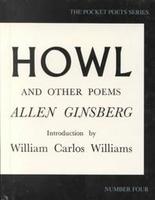
Howl, first edition cover, 1956, with introduction by William Carlos Williams
I ’m with you in Rockland [Columbia Presbyterian Hospital]
     where you bang on the catatonic piano the soul
     is innocent and immortal it should never die
     ungodly in an armed madhouse
I’m with you in Rockland
     where fifty more [ECT] shocks will never return your
     soul to its body again from its pilgrimage to a
     cross in the void.”
  —  Allen Ginsberg, Howl.
Ginsberg Howling, photo © Dale Smith

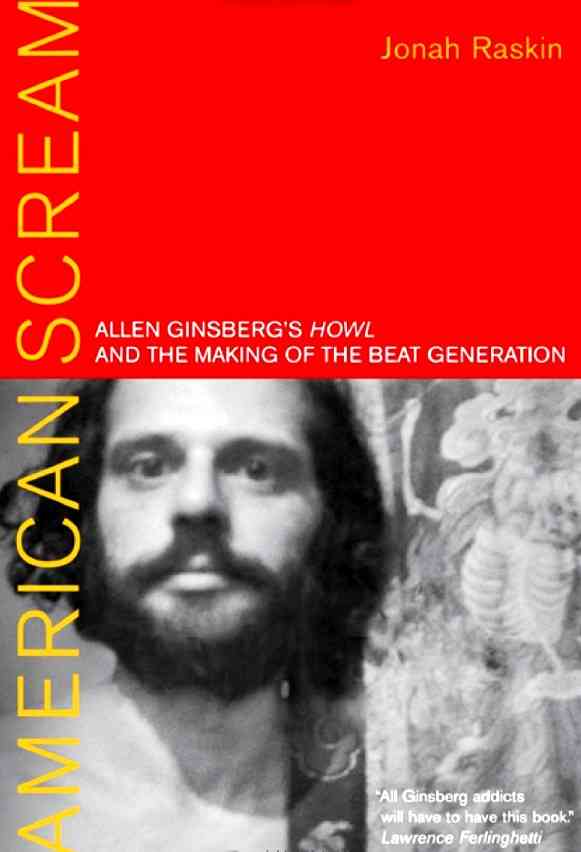
Raskin book