Showing posts with label community. Show all posts

Monday, January 23, 2012

Communion with the Audience: Encores taken from Bach’s Solo Cello Suites

Yo-Yo Ma
M    any movements from Bach’s unaccompanied string works contain implied polyphony. Although earlier approaches describe this technique as a way of using arpeggiation to embellish a melodic line, to disguise an otherwise unacceptable melodic progression, to delay the resolution of dissonance, or to create underlying voice-leading patterns, these descriptions cannot account for the variety and complexity of the implied polyphony in these pieces. ...[using analysis based on auditory stream-segregation techniques, I come to the conclusion that—] Bach did not treat implied polyphony as solely a melodic feature. He instead used implied polyphony to apply irregular accent patterns to the otherwise ‘isochronous’ surface of the music, thereby creating perceived rhythmic variety at the fastest levels of the metric hierarchy.”
  — Stacey Davis.
I n the sarabandes of Bach’s cello suites, the second beat can be risky, easy to miscalculate. If you start the bow at the frog, instead of towards the middle, you’ll run out of bow on the two-beat upbow. The planning about distribution or budgeting of the bow is critical. You must maintain the pulse on the larger beats... this is far harder to do if you’ve chosen too slow a tempo. Difficult for the cello to maintain a steady pulse because of the many stops in these movements, especially the D major sarabande!

D ouble and triple and quadruple stops: a single part expressing several voices—and the registral placement of these voices doesn’t necessarily duplicate their placement in the underlying voice-leading. Dissonant, tension-creating intervals come from octave displacements in the voice-leading; notes out of the key of the piece to invoke/allude-to/tonicize another key before returning to the home key. And the bass line is not continuous! There are gaps, suspensions, and resumptions that take an eternity to arrive. The continuity of the voices the cello is speaking is tenuous, vulnerable, intermittent, waiting to be confirmed—even if the vulnerability only lasts a few beats. So much risk!

I n the D major sarabande, keep the high C in measure 13 in your mind throughout this and the following measure. The C returns in measure 14, and must sound as if it had been held throughout both measures, like loving parent returning to worried child left briefly alone.

Y o-Yo Ma’s beautiful sarabande-as-encore: dark; warm; transparent. Cello emulates the human voice; proposes spiritual communion between people. Communes with them—as close as a single body; reaches out and touches with sound. Generously melds with the strangers; friends them; speaks as if you and they had known each other for a long time—like kin, like lovers. Remember that small actions that may be heard clearly in a small venue may not communicate to an audience in a larger auditorium. You must not worry that large actions are maybe likely to be construed as ‘false’ or ‘suspicious’ ones. Acting is believing! Honest human behavior is sometimes enormous! And so long as you conduct yourself truthfully in imagined circumstances, no matter how large your expressions, the audience will believe you.

S uch intimacy and risk-taking and bigness-of-spirit are surely the essence of a perfect encore, whether from a student or from a master! And that—a perfect encore—is precisely what we received on Saturday night...

Yo-Yo MaYo-Yo Ma

Sunday, November 14, 2010

Faster than Sound: Acoustic-Electronic Compositions and Combined Visual-Music Performance at Aldeburgh

 UVA LED tower array
M   usical sound is too limited in its quantitative variety of tones. The most complex orchestras boil down to four or five types of instrument… This limited circle of pure sounds must be broken, and the infinite variety of ‘noise-sound’ conquered. ”
  —  Luigi Russolo, The Art of Noises, 1913.
T he ‘Faster Than Sound’ program was held at Snape Maltings in the Britten Studio last Friday (12 November), one of Aldeburgh Music’s events. The performance was preceded by a 10-day composing workshop led by composers Milton Mermikedes (Univ Surrey and Royal College of Music, London), Martin Suckling (Somerville College, Oxford), and Ted Machover (MIT and Royal College of Music, London).

T he compositions each involved either one or two performers and utilized a combination of conventional acoustic (‘analog’) and signal processing software (‘digital’) idioms.
  • Adrian Gierakowski – Unitas Multiplex (eDrum tablets and software DSP)
  • David Ibbett – Impulse Imagined (miked and processed cello and software)
  • Charlie Williams – e to one million pieces (miked and processed piano and video)
  • Gregor Riddell – Skyfish (miked and processed cello and software)
  • Enrico Bertelli – Drumactica (eDrum tablets and software DSP)
  • Tod Machover – Michael’s Dream (K-bow processed cello and software with lights)
  • Tod Machover – Spheres and Splinters (K-bow processed cello and software with lights)
A  pre-performance talk was given at 6 p.m. in the Jerwood Kiln Studio at Snape. Among the 5 panelists, Ash Nehru (Software Director) from United Visual Artists (UVA) explained the multiple ways in which the 25-pole LED tower array is engineered to respond to inputs from the various sensors on the K-bow and on the cellist’s body. Ben Bloomberg (MIT student) explained some aspects of the Max/DSP and related software that controls the array of 16 loudspeakers positioned around the performance hall. The pre-performance talk was attended by an SRO crowd of about 70 people on this damp, dreary Friday evening in November. The performance itself was attended by about 150. Aldeburgh is famous, but such a turn-out is pretty remarkable given the considerable distance from Cambridge or London in darkest Suffolk on a Friday night. Fantastic to see!

 UVA’s Chris Bird and Ash Nehru
T he gist of Tod Machover’s preconcert remarks was that electronic and multimedia technology can lead ‘classical’ music into new, financially viable markets and young audiences who are not now disposed to spend money consuming classical music. For my part, I strongly doubt this will happen. I have attended concerts of electronic chamber music for years and occasionally write about them in this blog, but see no evidence of market ‘traction’ or audience growth, certainly not among the youth segments Machover was referring to. The affinities, such as they are, are among those who already are devoted to serious music, new or otherwise. That and things like Classical Spectacular, which is about as far from ‘chamber music’ as one can get.

A nd, honestly, the capital expense for acquiring all the gear required—and the expense to ship it and set it up and tear it down for each performance, and the technical complexity of managing it—are out-of-reach for all but a very few classical musicians. The ‘Faster Than Sound’ faculty do not acknowledge this.

T he financial growth opportunities are considerable, though, for combined electronic-acoustic and multimedia compositions in film or recorded on-demand HD downloadable media that are not ‘live’ performances. Home theatres with synths and lights?

T he Ibbett and Riddell e-cello compositions were the ones that I found most accessible and compelling. Gregor Riddell’s cello performances were passionate and elegant, and the use of electronic DSP software effects was tasteful. The textures and timbres provided by the DSP contributed meaningfully to the compositions’ narrative arc and lent extra emotional tension and complexity to the pieces.

 Gregor Riddell
I n other pieces on the program the DSP effects proliferated. Sometimes ‘less’ really is more?

O    ne begins with a mark, another mark, a third mark, a splash, a smudge, a drip—until the whole work energetically completes itself and the artists can then see [hear] what has been achieved [if anything]. It is not something in which all of the planning and decisions are made beforehand with ‘the execution a perfunctory affair’! How could Pollocks’ ‘Autumn Light’ have been planned? Or de Kooning’s ‘Woman I’? In Abstract Expressionism, hand and eye were everything, and for those who can remember that era, the intellect could hardly have been more suspect. The painter’s studio and the philosophy seminar room were at one in repudiating the ‘ghost in the machine.’ ”
  —  Arthur Danto, Unnatural Wonders, p. 98.
T he quality of some of this was a bit like Abstract Expressionistic painting, with cascades of disparate effects—ones that are responsive to telemetered measurements of the performers or their instruments, yes, but not ones that are intentional or deliberated, anymore than Pollock’s dribbles were deliberated in detail. There is an aleatoric, ambient ‘found’ quality to such music, though, and that ain’t a bad thing...

 Jackson Pollock, Free Form, 1946
O    rson Welles once said, that a movie studio was ‘the biggest electric train set a boy ever had.’ I think [McMillen’s] TrioMetrik® [software] just may be the modern composer’s ‘electric train set.’ ”
  —  Jay Cloidt, Composer.
B y far the most inspiring aspect of the performance, in my opinion, was the United Visual Artists light installation that accompanied the Machover ‘Spheres and Splinters’ composition. The equipment consisted of 25 poles about 3 meters tall equipped with high-intensity LED lamps from top to bottom. The poles were arrayed in two concentric rings (6-meter and 10-meter diameter) about cellist Peter Gregson who was seated on the darkened stage in the middle of this forest of light-poles. The signals from his K-bow and instrumentation that measured his muscle tension, arm gestures, and other physiological variables were processed by software that then controlled the dynamic geometrical 3-D patterns and changing colors on the light-poles.
 K-bow
 K-bow
H ow much ‘control’ or ‘reproducibility’ there may be to this spectacle from performance to performance is anybody’s guess. But there is no doubt that the combination of light and sound can be emotionally engaging and genuinely moving.

I n the pre-performance Q&A session, one professional cellist inquired as to what, if any, of the DSP and lighting is amenable to ‘notation’ in the conventional sense of musical scores and orchestration. ‘How much of what comes out is a surprise to the performer? How much of it is, shall we say, improvisational and how much of it is explicitly notated?’

T he responses of the panelists were, frankly, unconvincing. If graphical scoring methods à la Stockhausen and Xenakis and others are used, they did not say so. Instead they insisted that everything is exquisitely ‘controlled’ by the performers.

N otwithstanding the fact that the patches and loops and software init parameters and so forth constitute a network of procedural and declarative code, it should be confessed that these bricoleurs’ constructions of dozens of disparate elements and subsystems must be documented, in a manner that can not only be replicated and performed by others (not just by the original composer and collaborators) but can be performed by others in decades yet to come, on future equipment and software that can emulate the equipment and software used today. The equipment and software you are performing on will be obsolete in 2 years! In 15 years you won’t be able to boot one of those things you are performing on today or find replacement parts for it when it fails—they will be inoperable ‘antiques’ by then! You must have a notation and waveform specs and filter specs and patch specs, or your ‘composition’ will be like so much disappearing ink!

A rchival characterizations of current system and DSP object-classes and instances? [Crickets chirping] MusicXML representations, with extensions to MusicML? [More crickets]

T he cellist and I were disappointed with the ‘Faster Than Sound’ faculty members’ answers. But we (and, I think, the rest of the audience, based on their enthusiastic applause) were delighted with the performances, regardless whether they prove to be one-of-a-kind, ambient, impossible-to-replicate, incompletely-documented ‘improvisations’ or installation-art ‘happenings’. These were wonderful new works (works-in-progress), composed, engineered, and produced under the duress of a 10-day-long workshop. Bravo to one and all!
C   ombining the visual and classical is not as blasphemous as many would think. More than a century ago Alexander Scriabin notated his 1909 symphonic poem ‘Prometheus, the Poem of Fire’ for the Luxe, a custom designed light projector built by Russian physicist Alexander Moser. In the mid-20th century, as a biography explains, conductor Leopold Stokowski often had lights set up for concerts to cast huge shadows of him on the walls of the concert hall. In the 21st century we maintain the visual convention of dimming the auditorium lights to provide engagement betwen audience and musicians. Light installations such as the one that accompanied Spheres and Splinters at Snape yesterday simply strengthen this engagement... Combining visual and classical could press the important hot button for funders, and a little bird tells me UVA may have some speculative work waiting to be picked up by someone quick off the mark in the classical field. Bring on music and movement.”
  —  On an Overgrown Path blog, 13-NOV-2010.


Saturday, November 13, 2010

Britten’s ‘St. Nicolas’ Cantata Op. 42 in Aldeburgh: The Importance of ‘Place’

 Boy Nicolas: ‘God be glorified!’
I    believe in roots, in associations, in backgrounds, in personal relationships. I want my music to be of use to people, to please them, to enhance their lives. My music has its roots in where I live and work.”
  —  Benjamin Britten, 1964, remarks upon receiving the Aspen Award.
I    want to write for people... There is something very fresh and unrestrained in the quality of the music produced by amateurs. What annoys me more is the ineptitude of some professionals who don’t know their stuff. I have no patience with that.”
  —  Benjamin Britten.
B etween the two World Wars, composers like Ralph Vaughan Williams, Gustav Holst, and others fostered a kind of pre-WWII musical Renaissance. But in the 1940s, a new generation of artists began to differentiate themselves from the previous generation.

I   t is encouraging that you too sense that something in the air that heralds a ‘renaissance’. I feel terrifically conscious of it—so do Peter [Pears], & Clifford [Curzon], & Michael Tippett & so many that I love & admire it—[and it] is good to add you to the list! Whether we are the voices crying in the wilderness or the thing itself, it isn’t for us to know, but anyhow it is so very exciting. It is of course in all of the arts, but in music, particularly, it’s this acceptance of freedom without any arbitrary restrictions, this simplicity, this contact with the audiences of our own time, & of people like ourselves, this seriousness, & above all this professionalism. One mustn’t and can’t deny the many heavenly genius[es] of the last century, but it is also a greater sympathy with the earlier centuries that marks this thing perhaps the most clearly.”
  —  Benjamin Britten, letter to Imogen Holst, OCT-1943.
T here is little doubt that Britten and his generation were ‘the thing itself’. Their sounds were not only ‘new’ but were emblematic of their nation and their generation. Britten’s Op. 42, the ‘St. Nicolas’ Cantata, represents one important embodiment of that.

O ne might think that a nationally and generationally emblematic sound would require in each performer a fully developed timbre and musical maturity to pull it off. But that is not so.

I  heard a rehearsal yesterday (Saturday, 13-NOV) afternoon in Aldeburgh, and the choirs and the boy singing the part of young Nicolas are mightily motivated from their pure love of music. They simply and obviously love making music happen. Their upcoming performance of ‘St. Nicolas’ next Saturday will not only be really special in regard to the historic setting and all that; it will also be most consonant with Britten’s original intentions and ethos for this piece. This semi-staged production celebrates the 100th anniversary of the birth of Sir Peter Pears, who sang the part of Saint Nicolas in the work’s première in Aldeburgh Parish Church in 1948, as part of the very first Aldeburgh Festival.

T he Solstice String Quartet will lead the other performers from the front desks (a string quartet at the front, leading the rest, is a feature that Britten himself suggested). Andrew Staples (tenor) will perform the part of the adult Nicolas. The Jubilee Opera Chorus and the Britten-Pears Chamber Choir, along with members of local boys’ and girls’ choirs complete the ensemble, antiphonally positioned in the church sanctuary. The conductor will be Steuart Bedford.

S teuart’s conducting during the rehearsal last evening indicated that, apart from his great renown as a Britten scholar, he has a special talent for teaching youngsters. He communicates every bit of the excitement and humor in this score to the youngest of choristers in a very engaging manner.

T    he conductor should be cool-headed...”
  — Benjamin Britten, conductor’s notes for Op. 42.
  • Introduction
  • The Birth of Nicolas
  • Nicolas Devotes Himself to God
  • He Journeys to Palestine
  • Nicolas Comes to Myra and Is Chosen Bishop
  • Nicolas from Prison
  • Nicolas and the Pickled Boys
  • His Piety and Marvellous Works
  • The Death of Nicolas
W    ithin the second movement are mischievous musical inventions, as when Nicolas swims in the bath, percussion imitating the water’s bubbling and splashing. During ‘He Journeys to Palestine’ all the musical components swirl into the tempest that threatens the voyager, and the melodic line becomes more dissonant as a storm approaches, silencing the male chorus. The children’s chorus, singing from the back gallery, rises like the flickering of lightning: ‘Winds and tempests howl their cry of battle through the raging sky! Ah!’ and the men plead for safety. As the storm subsides, the soloist emerges; his prayer is musically direct: ‘Pity Our Simplicity’ underlined by the hum of the tympani. The stars now visible in the clear sky twinkle in the light fingering of the pianist in the instrument’s upper octaves.”
  —  Jaime Robles, review of Chora Nova performance, November, 2007.
T he second movement (The Birth of Nicolas) initiates the account of Nicolas’ life, recounting the story of his miraculous birth, when “...from his mother’s womb he sprang and cried, ‘God be glorified!’” The tone of the boy treble singing the part of young Nicolas in this production—tender, flutey, and high, a clarion-call on high-E (E4) without vibrato or other world-wise colorings—is superb. The boy wanders through the sanctuary taking up various stations—from a back pew, to up front by a column, to the pulpit, to the chancel—emitting this high-pitched proclamation.

A ndrew Staples’ tenor voice has substance and a jaunty worldliness but is sweet as well—conveying that this is who the child grew up to become. When well-sung, these two parts are credibly the same person, heard across time. After six ‘stations’ or strophic episodes, the transformation of boy into the man is complete. When at the end of these the boy becomes a man, the movement closes with the full-voiced adult tenor singing the refrain. At the moment that Nicolas becomes a man, the supporting harmonies become dissonant, creating a sizzling semitone frisson symbolically marking the end of childhood.

I n the third movement, which features the tenor soloist exclusively, Nicolas sings of his experiences after his parents’ deaths. In “the wider world of man” he finds hopelessness, faithlessness, and poverty, which made him angry and heartsick.

N icolas is ordained as bishop in the fifth movement, at the conclusion of which the audience joins in singing a familiar hymn, the Old 100th [Psalm]. Using the audience to sing the familiar Nunc dimittis in the ninth movement is likewise very atmospheric and powerfully evokes memories of remote childhood church experiences for adults. Scary engagement of primal, limbic emotions—in the face of which our ‘adult’ reason is quite helpless.

A    new and important element in Saint Nicolas was the inclusion of the congregation in the musical action. These hymn tunes were familiar to a generation educated in English public schools, where chapel and hymn singing were daily events. It drew them back to their own childhood, at the same time demanded a level of participation beyond passive listening. This remarkable layering of musical elements . . . provides no small part of the pleasure we have in listening to this work. And the humility of a great composer writing serious music within the capabilities of ordinary people explains the continuing favor this music finds half a century after its composition. Britten was always a very practical composer who was equally at home whether writing for modest amateur performances or for international occasions with virtuoso professional soloists… Saint Nicolas was Britten’s first large-scale work written with mainly amateur performers in mind, and is a wonderful example of his outstanding ability to capture the essence of his subject-matter with a series of dramatic yet essentially simple ideas to which performers and audiences can immediately relate.”
  —  John Bawden, Musical Director (1994 - 2006), Fareham Philharmonic Choir.
T he seventh movement has tremendous drama and pathos. Here we have Nicolas as patron saint of children in the story of an innkeeper/butcher who robs and murders three young students, preserving and hiding their remains in a pickling tub. ‘Pickled Boys’: what a perfect gnarly image for all 9 year-old boys! Nicolas miraculously resuscitates the pickled kids, who then proceed to sing an enthusiastic Alleluia!

N   o question: there’s something unmistakably ‘fresh and unrestrained’ about Britten’s score, something that comes directly from the pleasure he took in writing for these performers. From the dizzy waltz that underscores ‘The Birth of Nicolas’, through the powerfully dramatic tenor numbers to the resounding final chorus, Saint Nicolas unerringly hits its mark. Understandably enough, Crozier’s libretto glosses quickly over Nicolas’s role as protector of prostitutes and pawnbrokers – but the extended, deliciously macabre episode of ‘Nicolas and the Pickled Boys’ (added at Britten’s own suggestion) shows a gleefully Roald Dahl-like understanding of the less-than-wholesome tastes of the young ‘little blighters’.”
  —  Richard Bratby, program notes, Barbican 2008.
T he eighth movement is sung by the choirs alone, as they recall the kindness of Nicolas, keeping “his memory alive in legends that our children and their children’s children treasure still.”

T he ending, including the audience, singing “God moves in a mysterious way his wonders to perform” is staggeringly moving, even for non-Christians, whipping up a transgenerational cosmic universality of the human condition and commending the moral necessity of our behaving civilly and charitably toward each other—toward our children and grandchildren, and toward our parents and grandparents. Heard in its original setting here in Aldeburgh Parish Church, the piece evokes a powerful sense of the importance of ‘place’—of how important our local culture and situatedness are, to the project of creating and conserving deep meaning in our lives.

I n all, it is ‘so very exciting’, just as Britten once wrote! Consider yourself very lucky to be able to attend next Saturday afternoon’s performance of ‘St. Nicolas’ in its ur-venue, the ancient and atmospheric church in Aldeburgh, and performed by local artists with audience participation. Tickets are nearly sold-out and, judging from the rehearsal, this performance will be fully up to the historic, ‘jubilee’ anniversary billing.

 Bridcut book
N   icolas was born in answer to prayer,
in answer to prayer, in answer to prayer,
And leaping from his mother's womb he cried-
GOD BE GLORIFIED!

Swaddling bands and crib awaited him there,
awaited him there, awaited him there,
But Nicolas clapped both his hands and cried-
GOD BE GLORIFIED!

Innocent and joyful, naked and fair,
naked and fair, naked and fair,
He came in pride on earth to abide-
GOD BE GLORIFIED!

Water rippled Welcome! in the bathtub by his side,
bathtub by his side, bathtub by his side.
He dived in open-eyed, he swam, he cried-
GOD BE GLORIFIED!

When he went to Church at Christmastide,
at Christmastide, at Christmastide,
He climbed up to the font to be baptized.
GOD BE GLORIFIED!

Pilgrims came to kneel and pray by his side,
to pray by his side, to pray by his side.
He grew in grace, his name was sanctified.
GOD BE GLORIFIED!

Nicolas grew in innocence and pride,
in innocence and pride, in innocence and pride, in pride....
His glory spread a rainbow round the countryside, round the countryside.
‘Nicolas will be a Saint! Nicolas will be a Saint! Nicolas will be a Saint!’ the neighbors cried.
GOD BE GLORIFIED!”
  — Op. 42, ii.


Friday, December 5, 2008

Lionheart’s ‘Tydings Trew’—Normative Acoustic Truth, Burdens Borne Collectively

 Lionheart, photo © William Wegman
T    hese carols and the braided interrelationships of the parts—with a soloist prominent at times, and every individual dissolving his individuality into the sound of the ensemble at other times—vividly remind us of the spirit of this holiday season, which has everything to do with community, sharing, and giving thanks.”
  —  Cynthia Siebert, CEO, Founder and Artistic Director, Friends of Chamber Music, remarks introducing Lionheart, 04-DEC-2008.
C arols received an inspired work-out last night in Lionheart’s recital last night in Kansas City, as part of the Friends of Chamber Music Early Music series.


    [50-sec clip, Lionheart, Tydings Trew, ‘Carol: As I Outrode this Endres Night’, 1.2MB MP3]

A    s I outrode this endres night,
Of thre ioli sheppards I saw a sight,
And all abowte there fold a star shone brite—
They sange ‘Terli, terlow!’,
So mereli the sheppards there pipes can blowe.

Doune from heaven, from heaven so hie,
Of angeles ther came a Great Companie,
With mirthe and ioy and great solemnitye,
They sange ‘Terli, terlow!’,
So mereli the sheppards there pipes can blowe.”
  —  Medieval English Carol.
This carol was placed 7th in the program of 22 pieces (carols, motets, canticles, antiphons, chants) and was sung last night as a trio. The tenor, baritone, and countertenor voices were deliciously intertwining, the openness of the harmonic textures contrasting wonderfully with the close-harmony, denser textures of much of the five-part and six-part singing earlier and later in the program.

  • Lawrence Lipnik, countertenor
  • John Olund, tenor
  • Michael Ryan-Wenger, tenor
  • Jeffrey Johnson, baritone
  • Richard Porterfield, baritone
  • Kurt-Owen Richards, bass
Lionheart’s conception of ‘Tydings Trew’ traces the origins of modern Christmas to the efforts of monks in medieval England, essentially to the Franciscans’ arrival in England in 1224. They note that caroling is far older than its co-optation by Christianity. The carol was originally a dance where participants held hands in a ring or in a line, and as they moved they sang a refrain. During several of the pieces in last night’s concert, members of Lionheart moved in a circular pattern around the altar, which stands in the center of the Cathedral of the Immaculate Conception sanctuary under the barrel-shaped ceiling. The antiphonal effects with the advance and recession and recurrence of each individual part as its singer moved in this 10-meter circle were ethereal—adding extra poignance and spatial color to the beautiful textures and harmonies. And the ‘collectivity’ or ‘group-normativity’ of the expressions conveyed by each part—to which Cynthia Siebert had alluded in her introduction—was especially apparent at these moments as well. The bodies of the singers move fluidly, as if held in orbit around a collective ‘center’—by centripetal force? by the force of gravity? by the force of shared spiritual belief associated with the carol/chant texts? by the force of secular belief in the power of music? Whatever! The effect is positively spell-binding. Or, at times, tear-making. Extraordinarily moving, at any rate.

Interestingly 14th- and 15th-Century English society engaged in caroling not only at Christmastime but also for nearly all other of the Church feastdays. According to historical research that Lionheart’s members cite, the musico-poetic form of the ‘missionized’ carol remained basically the same as that of the profane carol forms that had gone before. The chorus sings the refrain (called the ‘burden’) before and after each verse. Between repetitions of the burden, a soloist or a subset of the ensemble members sings one or more additional verses to a variation of the main melody, usually more embellished and virtuosic. Lionheart notes that the English carol therefore resembles the form and function of the Italian lauda spirituale, which was also Franciscan in its origin.

As an encore, Lionheart delivered an especially rich and touching account of the Gustav Holst – Christina Rosetti carol, ‘In the Deep Midwinter’. T’was a feast for the packed Cathedral-full of people attending. First-rate early music—and vocal music in general—bring Kansas Citians out in enthusiastic droves, and this event was no exception. Thank you, Lionheart!

 Lionheart CD

N    otre Dame organum, which employs a rhythmic notation, seems to modern ears much more evolved than its stylistic predecessors. Notre Dame organum employs three distinctive rhythmic styles: organum purum in which both the upper voice and the lower voice move freely without a specified rhythm, copula in which the upper part moves in a strict rhythm while the bottom voice moves freely, and discant in which both parts move in strict rhythm. In all three styles, the lower voice, known as the tenor (from ‘tenere’, to hold), tends to move more slowly than the top voice; in organum purum or copula, the top voice can have thirty or more notes for each note of the tenor. The notation for the rhythmic sections is based on a group of patterns known as rhythmic modes; once a pattern is selected (e.g. short-long, short-long, short-long), it continues until a new pattern is adopted. The writer of Anonymous IV (named for its order among the anonymous treatises contained in Coussemaker’s nineteenth-century ‘Scriptorum de musica medii aevi’, 1864-1876) discusses six rhythmic modes, and describes the effects that composers were able to achieve with them.”
  —  Cynthia Cyrus, Vanderbilt University.
  • Long-short (trochee)
  • Short-long (iamb)
  • Long-short-short (dactyl)
  • Short-short-long (anapest)
  • Long-long (spondee)
  • Short-short (pyrrhic)


Wednesday, October 1, 2008

Chamber Music for Rome Burning: Brass Band and Pacifism

Foden’s Richardson Band
T he earth died screaming,
While I lay dreaming—
Dreaming of you.”
  —  Tom Waits, ‘Earth Died Screaming’.
I f you’re standing ‘outside’ [the community of brass-band players] looking in, [brass band] music could be misread as being aesthetically naïve. But those composers are fulfilling a function by providing well-crafted scores for a community that really wants them.”
  — Philip Clark, Review of Foden’s Brass Band ‘New Music for Brass Band’ CD, Gramophone, OCT-2008.
You may wonder what exactly Nero played while Rome burned. You may equally well wonder why he played it and what he was thinking and feeling as he did so. Sometimes there’s nothing that one can do. Never mind Nero and his nonfeasance. As the financial markets continue on their incendiary way, may I suggest that you will enjoy the unusual collection of ‘new music’ on the CD just released on NMC Records, by the Foden’s Richardson Brass Band, conducted by Bramwell Tovey? The 30-member ensemble explores fascinating territory that goes far beyond the idioms normally associated with ‘brass band’. And, in a way that I can only regard as ironic or clairvoyant or both, the music is perfectly matched to the ‘tropes’ that are in-play in the world of financial markets and central banking. Here on this superb CD is a kind of emotional catharsis that can only be found in brass band repertoire.

Bramwell Tovey
  • ‘While Rome Burns’ trope
    Something awful is happening. The world is ending, there’s an earthquake, there’re people leaping from buildings, there’s rioting in the streets. The ‘While Rome Burns’ person couldn’t care less. You’re still reading a book, playing or listening to music, posting and looking at blogs, whatever. Not that you approve of what’s going on—far from it; you just see the situation as futile. ‘While Rome Burns’ is the supertrope of ‘Dissonant Serenity’. Compare with ‘Holding Out For A Hero’ trope.
  • ‘Dissonant Serenity’ trope
    There’s maiming and killing afoot. Screaming and cursing, clatter of swords, bang of guns. Faces distorted with pain and hate, collective despair, fear and loathing. It’s terrifying, but it is to be expected. But you see peace in the middle of horror. You are smiling; not vicious, not insane, not stoic—but calm, gentle—almost enlightened. As the throats are slit left and right, you are in the eye of the storm, the calm center of destruction, and your serenity is so ‘off’ that it’s more terrifying than any fury. Villains and heroes can be dissonantly serene in battle mode, but it’s rarely the main character who does that. A closely related state of mind: the uncomprehending ‘Psychopathic Man-child’. The ‘Tranquil Fury’ trope seems similar but is very different in practice.
The Foden Motor Works Band was founded in 1902 and, phoenix-like, it has endured over the years under various and changing sponsorships, including Morris Motors, Overseas Technical Services Ltd., Britannia Building Society, Antoine Courtois Company, and Richardson Developments of Oldbury. To date, the illustrious Foden’s band has won the U.K. National Brass Band Championships twelve times.

This new CD has 14 wonderful tracks, with compositions by Richard Bennett, Kenneth Hesketh, and George Benjamin, Philip Wilby, Elgar Howarth, Michael Ball, Edward Gregson, plus Judith Bingham’s character pieces on Prague (St. Wenceslas Chapel, Wenceslas Square, Charles Bridge, Rabbi Low Creates the Golem). Righteous antidotes to our present societal terror.

Foden’s Richardson Band: New Music for Brass Band
Most interesting to me are the 6 variations on a theme by Michael Tippett—pieces composed by Philip Wilby, Elgar Howarth, Michael Ball, Edward Gregson, and Bramwell Tovey. These meditations reveal the astonishingly wide range of timbres and expressions of which brass band is capable. They reveal a surprising variety of communitarian and pacifistic views, for which Tippett was famous and which the composers of these variations/meditations here have honored. They additionally reveal a phlegmatic, unflappable attitude toward adverse events and toward authorities and elites that resonates deeply with the current state of affairs in the world. Having played in a brass band many years ago, I feel this is characteristic of idiomatic brass band literature—and of brass band members’ sociology and musicianship in-ensemble. Foden’s display this to the nth degree.

N o one could have guessed from looking at the score—and thinking of the thing [dismissively] as a ‘toccata’ for brass band—how beautiful and serious this work is, as abstract music.”
  — George Bernard Shaw, remark to Edward Elgar, upon hearing Elgar’s Severn Suite in competition on 27-SEP-1930.
So turn off the sound on your CNBC or BBC or whatever, and put on this disc at high-volume as you watch the financial catastrophe ‘crawl’ across the bottom of your television screen. Foden’s Richardson Brass Band is just the thing to ‘buck up’ your spirits.

Rome, Burning
During his lifetime Sir Michael Tippett (1905–1998) composed 5 string quartets, 4 piano sonatas, a sonata for 4 horns, and several other chamber works. He also composed a number of oratorios and cantatas. As a composer, Tippett was a late bloomer; he completed his compositions slowly. At age 30, he studied composition with Reginald Owen Morris at the Royal College of Music (after Morris’s return to London from his stint at Curtis Institute in Philadelphia).

Tippett was imprisoned as a conscientious objector/pacifist in WWII. Tippett’s mother was a charity-worker; her influence led him to have a lifelong identification with oppressed people and suffering. Tippett’s gayness probably figured in there as well...

Melismas—ones more ornate than are reasonable or practicable for voice, but entirely feasible for brass—plus rapid mensural/rhythmic changes where the metre is continually cast and recast—outside the norms that are set up in the rest of the work: these are here in abundance.

Mikhail Bakhtin’s dialogical conception of language—conceits like a ‘polyphonic novel’ and ‘double-voiced discourse’? In this wonderful Foden’s Richardson Brass Band CD we find that all of our utterances must be polyglot—syncretisms of every language that we’ve assimilated since birth. Just as the least stable kind of tonality has the strongest anti-tonal tendencies, so the least stable atonality is the kind that’s most inclined to abandon sound-mass totality in favor of a lyrical, neo-tonal individualism. Redefinition, deconstruction, and reconstruction of language out of its ashes. Bingham’s apocalyptic ‘Prague - St Wenceslas Chapel’; Wilby’s elegiac ‘Shadow Songs’.

Brass band repertoire is, I have felt, frequently conflictual—at the boundary of ‘us’ and ‘the other’; the music often explicitly points out this boundary. But brass band music is also frequently pacifistic or communitarian—displaying the emblems of class identity and ‘tutti’ solidarity with community. (Frank Bridge; Benjamin Britten; other pacifists? Granville Bantock; Harrison Birtwistle; Arthur Bliss; Derek Bourgeois; Arthur Butterworth; Simon Dobson; Edward Elgar; Edward Gregson; Hans Werner Henze; Gustav Holst; Herbert Howells; George Lloyd; William Mathias; John McCabe; Edmund Rubbra; Robert Simpson; Phyllis Tate; Ralph Vaughan Williams?) The ensemble may be ‘instrumental’, but its gestures and social behaviors are essentially ‘choral’

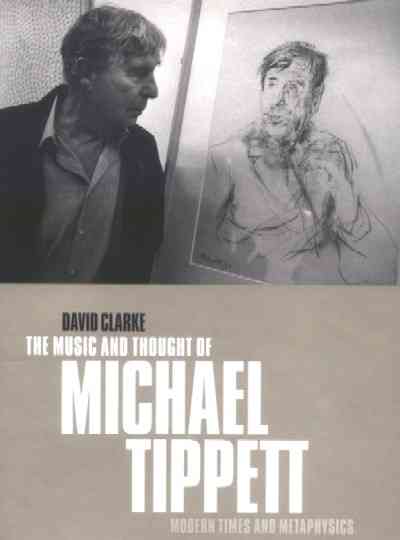
T ippett has everyday words ‘Let’s go!’, sung by the disenfranchised Man and Woman characters, interrupting the madrigalian setting of lines borrowed from Milton’s Paradise Lost (‘This was the everlasting place of dreams.’). [And Tippett’s compositions for brass came from the same pen and they manifest this same world view. dsm].”
  — David Clarke, Music and Thought of Michael Tippett, p. 162.
As Julian Johnson has written, the Enlightenment, which conferred autonomy on humans, also produced a “model of man that was cut-off from the world around him,” alienated “by the mechanistic and atomistic implications of Enlightenment theory.” Was Tippett cut off? (Am I feeling [financially] ‘cut off’? Is brass band repertoire necessarily the language of aesthetically capable phlegmatic stalwarts?)

David Clarke (see book links below) holds that Michael Tippett was composing in a post-Enlightenment mode, embracing a ‘romantic, humanistic agenda’ not unlike that of Kant, Hegel, and other philosophers who aimed to restore a oneness with Nature. But Tippett, according to Clarke, also engaged in life-long relentless self-criticism and, in his operas and other compositions, created parts that enabled ‘post-humanist’ voices to speak—uniquely highlighting the limitations and failures of romanticism. Tippett repeatedly collides classical ideals with materialist realities.

Music historian Arnold Whittall once referred to Tippett as a ‘post-romantic modern’ (‘Is there a choice at all?: King Priam and motives for analysis,’ in Tippett Studies, Cambridge Univ, 2006, p. 77). But, in this Foden’s-Bramwell Tovey outing, maybe Tippett is closer to a ‘post-modern anti-romantic’. Yes, that is why this music feels so compelling, so poignant and timely right now.

W   hile we would need to be cautious about positing a postmodern dimension to Tippett’s thinking, the kind of connections I have been exploring [in this book] suggest that the aesthetic mutations of his late works are not unrelated to certain of the more radical and fruitful avenues of that problematic cultural paradigm.”
  —  David Clarke, Music and Thought of Michael Tippett, p. 269.
What especially pleases me in listening to this CD during this awful, catastrophic week are these works’ expression of an ineffable soundworld that is simultaneously tonal and post-tonal—full of melodic tonal writing, but with fragmentation, textural strata, and purpose-built melodic disjunctions that match my dark mood—miraculously healing it. There are ruptures with the premises of tonality, but the departures from tonality turn out not to be permanent—they eventually return us to orderly, diatonic lyricism. So, by implication, we sense that, regardless what happens to our collieries in one decade, our motor works in another decade, our financial institutions and markets in this decade, our cities, our governments, our environment, and so on in future decades—human beings (and brass bands, and the arts, and civilized culture in general) will somehow survive.

Up-coming performances by Foden’s Richardson Brass Band include:
David Clarke, Tippett book

Emperor Nero (U.S. Treasury Secretary Henry Paulson, after The Fall?)