Showing posts with label dialogue. Show all posts

Friday, December 5, 2008

Lionheart’s ‘Tydings Trew’—Normative Acoustic Truth, Burdens Borne Collectively

 Lionheart, photo © William Wegman
T    hese carols and the braided interrelationships of the parts—with a soloist prominent at times, and every individual dissolving his individuality into the sound of the ensemble at other times—vividly remind us of the spirit of this holiday season, which has everything to do with community, sharing, and giving thanks.”
  —  Cynthia Siebert, CEO, Founder and Artistic Director, Friends of Chamber Music, remarks introducing Lionheart, 04-DEC-2008.
C arols received an inspired work-out last night in Lionheart’s recital last night in Kansas City, as part of the Friends of Chamber Music Early Music series.


    [50-sec clip, Lionheart, Tydings Trew, ‘Carol: As I Outrode this Endres Night’, 1.2MB MP3]

A    s I outrode this endres night,
Of thre ioli sheppards I saw a sight,
And all abowte there fold a star shone brite—
They sange ‘Terli, terlow!’,
So mereli the sheppards there pipes can blowe.

Doune from heaven, from heaven so hie,
Of angeles ther came a Great Companie,
With mirthe and ioy and great solemnitye,
They sange ‘Terli, terlow!’,
So mereli the sheppards there pipes can blowe.”
  —  Medieval English Carol.
This carol was placed 7th in the program of 22 pieces (carols, motets, canticles, antiphons, chants) and was sung last night as a trio. The tenor, baritone, and countertenor voices were deliciously intertwining, the openness of the harmonic textures contrasting wonderfully with the close-harmony, denser textures of much of the five-part and six-part singing earlier and later in the program.

  • Lawrence Lipnik, countertenor
  • John Olund, tenor
  • Michael Ryan-Wenger, tenor
  • Jeffrey Johnson, baritone
  • Richard Porterfield, baritone
  • Kurt-Owen Richards, bass
Lionheart’s conception of ‘Tydings Trew’ traces the origins of modern Christmas to the efforts of monks in medieval England, essentially to the Franciscans’ arrival in England in 1224. They note that caroling is far older than its co-optation by Christianity. The carol was originally a dance where participants held hands in a ring or in a line, and as they moved they sang a refrain. During several of the pieces in last night’s concert, members of Lionheart moved in a circular pattern around the altar, which stands in the center of the Cathedral of the Immaculate Conception sanctuary under the barrel-shaped ceiling. The antiphonal effects with the advance and recession and recurrence of each individual part as its singer moved in this 10-meter circle were ethereal—adding extra poignance and spatial color to the beautiful textures and harmonies. And the ‘collectivity’ or ‘group-normativity’ of the expressions conveyed by each part—to which Cynthia Siebert had alluded in her introduction—was especially apparent at these moments as well. The bodies of the singers move fluidly, as if held in orbit around a collective ‘center’—by centripetal force? by the force of gravity? by the force of shared spiritual belief associated with the carol/chant texts? by the force of secular belief in the power of music? Whatever! The effect is positively spell-binding. Or, at times, tear-making. Extraordinarily moving, at any rate.

Interestingly 14th- and 15th-Century English society engaged in caroling not only at Christmastime but also for nearly all other of the Church feastdays. According to historical research that Lionheart’s members cite, the musico-poetic form of the ‘missionized’ carol remained basically the same as that of the profane carol forms that had gone before. The chorus sings the refrain (called the ‘burden’) before and after each verse. Between repetitions of the burden, a soloist or a subset of the ensemble members sings one or more additional verses to a variation of the main melody, usually more embellished and virtuosic. Lionheart notes that the English carol therefore resembles the form and function of the Italian lauda spirituale, which was also Franciscan in its origin.

As an encore, Lionheart delivered an especially rich and touching account of the Gustav Holst – Christina Rosetti carol, ‘In the Deep Midwinter’. T’was a feast for the packed Cathedral-full of people attending. First-rate early music—and vocal music in general—bring Kansas Citians out in enthusiastic droves, and this event was no exception. Thank you, Lionheart!

 Lionheart CD

N    otre Dame organum, which employs a rhythmic notation, seems to modern ears much more evolved than its stylistic predecessors. Notre Dame organum employs three distinctive rhythmic styles: organum purum in which both the upper voice and the lower voice move freely without a specified rhythm, copula in which the upper part moves in a strict rhythm while the bottom voice moves freely, and discant in which both parts move in strict rhythm. In all three styles, the lower voice, known as the tenor (from ‘tenere’, to hold), tends to move more slowly than the top voice; in organum purum or copula, the top voice can have thirty or more notes for each note of the tenor. The notation for the rhythmic sections is based on a group of patterns known as rhythmic modes; once a pattern is selected (e.g. short-long, short-long, short-long), it continues until a new pattern is adopted. The writer of Anonymous IV (named for its order among the anonymous treatises contained in Coussemaker’s nineteenth-century ‘Scriptorum de musica medii aevi’, 1864-1876) discusses six rhythmic modes, and describes the effects that composers were able to achieve with them.”
  —  Cynthia Cyrus, Vanderbilt University.
  • Long-short (trochee)
  • Short-long (iamb)
  • Long-short-short (dactyl)
  • Short-short-long (anapest)
  • Long-long (spondee)
  • Short-short (pyrrhic)


Wednesday, July 23, 2008

Segmentation and the Limits of Representational Art: Elliott Carter Centenary at Tanglewood

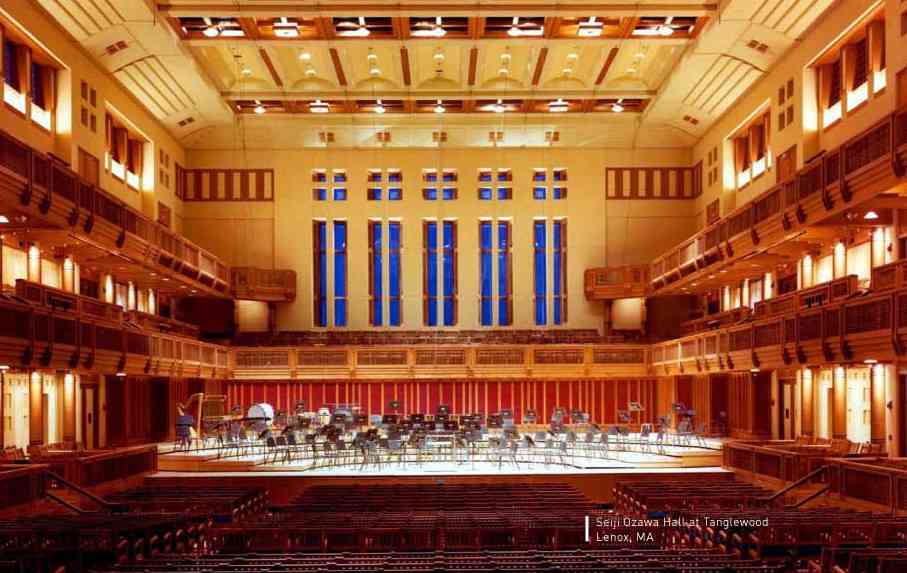
 Seiji Ozawa Hall, Tanglewood, Wm. Rawn Architects
H  ow are we to build emotional expression into music criticism? The new way is not to amplify criticism by adding interpretation to analysis but, rather, by amplifying analysis itself. For once one ceases to see expressive properties of music as semantic or representational properties, it becomes clear that they are simply musical properties ... and as such a proper subject of musical analysis.”
  —  Peter Kivy, Fine Art of Repetition, p. 316.
The BSO’s Festival of Contemporary Music at Tanglewood (Elliott Carter Centenary) on Tuesday had a diverse program of smaller pieces representing various phases of Carter’s career, performed by members of the New Fromm ensemble.

  • Enchanted Preludes
  • Figment I
  • Figment II
  • Esprit doux I & II
  • Au Quai [To the quay; quant ‘à [pour-]quoi’ c’est que nous allons ‘au quai’ je ne savons pas. Pour découvrir un mot français ironique?]
  • Trilogy
  • Two Thoughts about the Piano (Intermittences; Caténaires)
The thematic and compositional diversity in this program was delightful—warmly received by the audience filling the 1,200-seat Ozawa Hall. (A steady Berkshires rain beat down outside throughout the performance, but the acoustic baffling between the barrel-shaped roof and the ceiling of the hall prevented any acoustic interference. The sound engineering in the Ozawa Hall is really quite nice. The architects at Boston-based William Rawn Associates, Inc. who designed this performance hall are to be commended for their excellent design and engineering.)

Each of the pieces epitomizes the narrative and intimate dialogical idiom of chamber music. And each calls into question the conventional dictum that musical dialogue lacks specific semantic reference to the external world. Here, for example, ‘Caténaires’ has phrase-structure and lines between left-hand and right-hand that are clearly arcs—representational of curves draped in mid-air, in some parts with descender cables attached to the pylon-to-pylon catenaries, such as we see in bridge designs. You do not need to see the title of the piece to have the clear impression of the pendency, the evocation of gravity creating catenary curves in pendant strands.

 catenary curves Representational acoustic art! Pianist Sandra Gu performed this with intensity and grace. Likewise, ‘Intermittences’, performed with much feeling by pianist Jacob Rhodebeck, is an exposition of intermittent effects and an extended meditation on human expectations—the decay of notes once struck; the reverberation and decay in the Hall; the intermittency of rhythms, of textures, of harmonies that come, go, and reappear. We anticipate things as we do, for reasons we don’t fully understand. Carter’s ‘Two Thoughts about the Piano’ helps us not only to understand the instrument and the character of pianists who express themselves through it, but also helps us to understand ourselves—and our relations to those pianists, the composer, and the music.

The music on Tuesday’s program was full of internal references, linkages, and interactions among individual segments, lines, and parts. ‘Trilogy’ (Nick Stovall, oboe, and Megan Levin, harp), ‘Enchanted Preludes’ (Brook Ferguson, flute, and David Gerstein, cello), and ‘Esprit doux’ (Brook Ferguson, flute; Brent Besner, clarinet; Nick Tolle, marimba) are, essentially, reflection pieces on musical segmentation.

 Kivy book
We listen and answer these questions:
  1. Do individual segments form primarily within one part or across two or more?
  2. Do associations among segments develop within a part or between parts?
  3. How many distinct streams of association are active simultaneously?
  4. How do the segments, associations, and streams evolve over time?
In each piece a dialogue develops among the parts’ personae. At times, we have a collection of individuals, each with her/his own characteristic rhythms, articulations, and intervals; at other times, we have an ensemble in which the meaning-generating harmonic and motivic features emerge only as a group. Surprising how this can happen in an ensemble of only two people—a duet—or between the diverging-converging left-hand and right-hand of a single pianist.

In these Carter pieces there are diverse changes in the segmentation. These changes in segmentation are vehicles for changing modes of interaction among the parts. In ‘Esprit doux’, the dialogue between the clarinet and flute gives way to the trio section, in which the marimba is not so much a co-equal voice as it is an omniscient narrator—functioning much as the piano part often does in piano trios. The marimba ‘explains’ the context within which the segmentation and trill-swapping exchanges between the flute and clarinet parts makes ‘sense’.

We get what amounts to a series of shifts from individualism to ensemble collectivism, and from predominantly contrapuntal textures to predominantly harmonic textures. In the duets and trio, the interplay among individual personae is internal to the group. In the solo pieces (Figments I & II; Two Thoughts), the interplay references the soloist’s relation to the external world.

 Kivy book
Figment I, with its double-stopped figures, one note held constant and the other sliding up in pitch, evokes things suspected and feared true. It is the essence of anxiety, distilled. It conveys ‘anxiety-as-process’, not as ‘symptom’. Anxiety (and the troubling figments of imagination that accompany it) is, you see, not a ‘state’ or ‘condition’ but a succession of thoughts and events that, together, comprise the anxious self—alienated from comforts and reassurances, isolated existentially. Segmentation in the cello part, superbly played by Kathryn Bates, propels our understanding this existential discomfort. Beautiful, iconic, elegant, credible.

Have a look at Peter Kivy’s books, for detailed discussions of texuality and the limits of the representational in music—not in Elliott Carter’s music per se, although Carter’s music does illustrate or embody many of Peter’s arguments.

 Pople book

 Elliott Carter, ©2008 Boston Globe
I  love Elliott, but I loved his music first. (I can’t do this in reverse; I can’t love the music just based on a rapport with the composer.)”
  —  Conductor James Levine.


Thursday, November 29, 2007

Chasalow’s Piano Trios: Exploring Torts in Ensembles

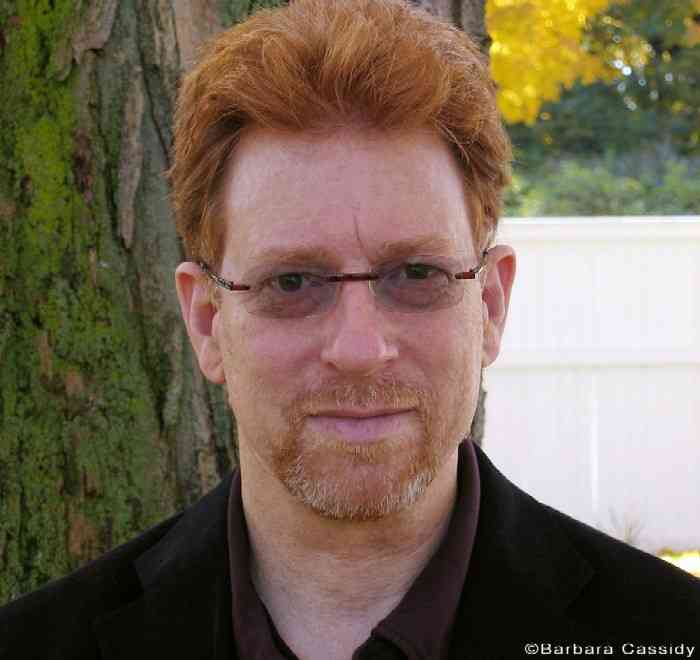
Chasalow, photo by Barbara Cassidy
W  hile my studio technique derives from Davidovsky, the musical character is quite different. My instrumental writing is often at an energy level drawn from my experience with improvised jazz. My recent electronic music reflects this as well. By adding layers of manipulated recordings of spoken or sung text, the sound of the human voice often emerges in surprising ways.”
  —  Eric Chasalow.

Chamber musical dialogue usually lacks textual reference to tangible things, but it abounds in internal references: expressions by each ensemble member directed toward the other members; associations among individual segments, lines, and instruments.

Look at the musical dialogue among ensemble members through the lens of musical segmentation and voice-leading. The approach to any given passage can be characterized by our answers to four questions:
  1. Do individual segments form mostly within one instrument’s part or across two or more?
  2. Are the strongest associations between segments mostly individual and ‘longitudinal’—within each part over the course of the composition—or sectional and ‘transverse’—between instruments on a shorter timescale?
  3. How many distinct streams of association are active simultaneously? and
  4. How do the answers to (1), (2), and (3) change over time?
Chasalow’s piano trio ‘Yes, I Really Did’ (1998) is a great case for studying this—in part because it totally violates our conventional expectations for normal narrative and dialogue among the ensemble members. Characterized by the composer himself as a dialogue that develops among three instrumental personae, this trio at times seems a collection of individual voices—inadvertent, unwitting or unwilling acquaintances who are distinguished by characteristic rhythms, articulations, and intervals. At other times, it’s an ensemble whose members acknowledge the fact of their mutual situation and the impossibility of turning back the clock to undo the reality that has materialized, the predicament in which they find themselves together—and in which significant harmonic and motivic features emerge in the totality of the parts’ interactions.

Much has been written about the dialogical nature of string quartets and other chamber music genres, yet the dialogue itself is seldom subjected to a detailed analysis. Chasalow’s own comments on pitch structure in the trio give us clues as to what an analysis of dialogue of this piece ought to include or directions that such an analysis might ought to take. Subtle changes in the structure of voice-leading, cadences, and segmentation manifest cumulatively as changing modes of interaction among the parts and produce a series of shifts from instrumental individualism to integrated ensemble—and from contrapuntal to sculptural, texture-oriented writing. This is not your grand-daddy’s piano trio.

Note too that these aspects are not merely matters of form and compositional technique. They hint at Chasalow’s deep views on the nature of interpersonal dignity and respect, and at his philosophy regarding what it means to pick up an instrument and behave like a decent human being. These aspects are also consistent with the ‘moral’ qualities that arise in other of his compositions. Eric Chasalow compositions from the early 80s through 1992 are on his CD, ‘Over the Edge’, with Speculum Musicae String Quartet; Fred Sherry, cello; Patricia Spencer, flute; Christine Schadeberg, soprano; Bruno Schneider; horn; Amy Knoles, Arthur Jarvinen, percussion. Each piece is in the style of a character piece. For example, The Furies, consists of four pieces for soprano and electronica that set texts from Anne Sexton’s ‘The Death Notebooks’. It may require a bit more imagination on the listener’s part to ascertain the moral content of these musical essays, compared to apprehending the moral implications of Chasalow’s piano trio ‘Yes, I Really Did’. But the moral thread that runs through much of Chasalow’s writing is there if you look for it.

Chasalow: Left to His Own Devices
Chasalow’s ‘Yes, I Really Did’ (composed in 1998; performed by Christopher Oldfather, piano; Andrea Schultz, violin; Michael Finckel, cello) takes Beethoven’s techniques for orchestrating and voice-leading in Piano Trios (Op. 1, Nos. 1-3 (1792-4); Op. 38 (1802-3); Op. 44 (1792); Op. 63 (1796); Op. 70, Nos. 1-2 (1808); Op. 97 (1810-15); Op. 121 (1803-16) ) as a point of departure. There are ‘avoided cadences’ and other deceptions, sleights, and feints—standard stuff in composition and analysis textbooks. But here they are employed to call into question what the nature of dialogue among ensemble members is really about. This piano trio questions whether any member of the ensemble has any moral duty to the other members, what the limits of that duty might be, whether breaches of duty cause pain or injury, and what the value and remedies of these might be. Torts!

Musical drama like this naturally intrigues us. The drama arises from tonal relations that elicit our expectations, and proceed to subtly manipulate and subsequently fulfill or frustrate them. This happens regardless whether we’re Schenkerians or not. But contextual processes may elicit expectations of their own, producing allusive effects that contribute to the work’s fascination. Formed from ordered sequences of evocative events existing within Chasalow’s tonal fabric, these successions of distinct-but-similar moments are unique and present a narrative that complements the unfolding of the piece. These processes gradually reveal their goals as they unfold—they’re dynamic, progressive systems of organization.

M  usical ideas are … combinations of tones, rhythms, and harmonies that require a treatment like the main theses of a philosophical subject. [The musical idea] raises a question, puts up a problem, which in the course of the piece has to be answered, resolved, carried through. It has to be carried through many contradictory situations, it has to be developed by drawing consequences from what it postulates, it has to be checked in many cases and all this might lead to a conclusion, a ‘pronunciamento’… The furtherance of the musical idea... may ensue only if the unrest—the problem—[that is] present in the Grundgestalt or in the motive (and formulated by the theme or not, if none has been stated) is shown in all its consequences… Every succession of tones produces unrest, conflict, problems... Every musical form can be considered as an attempt to treat this unrest either by halting or limiting it, or by solving the problem.”
  —  Arnold Schoenberg, The Musical Idea, and the Logic, Art and Technique of its Presentation.

Schoenberg once suggested that a musical idea, by nature, embodies some sort of conflict. Such an idea—which Schoenberg regarded generally as a unified combination of tones, durations, and harmonies, and sometimes also referred to as a Grundgestalt, or basic shape—expresses a musical ‘problem’ that demands a contextually coherent ‘solution’. For Schoenberg, a musical idea is a discrete entity that can be recognized and agreed upon by a majority of listeners, often as a component of a theme. The ‘problem’ that corresponds to a musical idea, in turn, entails/requires a motivic ‘force’—one that, if it is sufficiently effective at pushing or pulling us, stimulates meaningful collateral response(s) within the unfolding music, within the performers, and within the listeners.

Ensemble balance is a fundamental feature of ‘conventional’ trios, quartets, quintets, etc.—and Chasalow’s work does not dispute this. But traditional chamber musical texts seldom create situations where the composer deliberately intends that one or more players should exchange the honorable role of respectful discussants for that of virtuoso-narcissist, bully, or other deviant character. In ‘Yes, I Really Did’ we do not have banal theatrics. Instead, we get an 8-minute dialogue that suggests that ‘established’ Truth must be continually open to honest dissent, self-doubt, and Schoenbergian inter-voice drama and conflict. Chasalow’s composition asserts that such openness and healthy tension are fundamental to a civil society in which the dignity of the individual, the dignity of the group, and the dignity and moral standing of the environment (or other species) are all respected.

Chasalow and Striped Bass, Conomo Point, Essex/Gloucester, Massachusetts, 2004.
In the liner notes for the ‘Left to His Own Devices’ CD, Chasalow says that ‘Yes, I Really Did’ is about “misdirection ... [and] withholding [by ensemble members, from each other].” Listening to this wonderful piano trio, we cannot doubt the authenticity of this remark. In a genre that routinely and implicitly exalts the virtues and satisfactions of mutual ‘words’ and ‘deeds’ between ensemble members or pits a righteous ensemble in solidarity against external conflict and politics, here is a deeply meaningful piece that explores the nature of discord, admissions of wrongdoing, breaches between the ensemble members, redress, and forgiveness. The work achieves a remarkable textual plausibility that is a credit to Chasalow’s writing and to the skill and empathy of Oldfather’s, Schultz’s, and Finckel’s playing. We trust that they are all still friends and that no real torts were involved in the creation of this fascinating trio.

O’Dea, Ethics of Musical Performance