Showing posts with label integrity. Show all posts

Sunday, October 10, 2010

Renée Fleming Sings Brad Mehldau’s ‘Rilke: Book of Hours’

 Renée Fleming R enée Fleming’s performance last night in Kansas City was excellent.


    [50-sec clip, Renée Fleming, Brad Mehldau, ‘Rilke: Stundenbuch’, ‘Ich liebe dich, du sanftestes Gesetz’, 2006, 1.8MB MP3]

T he singing was gorgeous. The piano accompaniment by Bradley Moore was superb.

I  had not previously heard the Brad Mehldau composition, “Songs from Rainer Maria Rilke’s ‘Book of Hours’.” The ‘Love Sublime’ CD on which these were recorded was released in 2006. A disturbing thing for those familiar with Rilke’s poetry is the Anita Barrows-Joanna Macy Rilke translation used by Mehldau for these texts. Barrows and Macy convey mainly adulation and bended-knee piety, and strike out Rilke’s struggling with the problem of theodicy and anger towards a God who allows/causes suffering.

I n the first song (Mönchischen Leben #18, ‘Ich liebe dich, du sanftestes Gesetz’), Rilke’s God as ‘the [maleficent] forest from which we never escape’ is transmuted by Barrow and Macy into a uterine ‘forest that always surrounded us’.

T hroughout Barrow’s and Macy’s “translation” there is wholesale, highly-politicized editing going on. They delete major portions of some stanzas (?where they find that Rilke’s original text does not jibe with their own church’s teachings or their own personal religious views), as in the second song (from Pilgerschaft #3, ‘Ich bin nur einer deiner Ganzgeringen’). Likewise in the third song sung by Fleming last night (Pilgerschaft #31, ‘Und seine Sorgfalt ist uns wie ein Alb’). The fourth song (Pilgerschaft #32, ‘Lösch mir die Augen aus: ich kann dich sehn’) completely renovates Rilke’s sense of God as an insurmountable, lethal burden... into a maniacal, martyrous masochist-terrorist’s self-immolation ritual, suicide-bomber-style. Yikes!

 Rilke, Stundenbuch, Mönchischer Leben, #18 L ike all good art songs, Mehldau’s writing affords the vocalist wide latitudes for rhythmic phrasing and melodic interpretation, and Fleming does not disappoint. Her ear ‘colonized’ by the buggy Barrows-Macy translation, she is compelled to become a ‘medium,’ clairvoyantly assaying what Rilke meant. She takes the words she is given, and turns them musically into something far closer to authentic Rilke. To hear her sing this is like hearing an alchemist at work, changing base metals into gold.

O f course, there can be no ‘last word’ in translation or poetical hermeneutics, and, equally well, there can hardly be a ‘first word’ either. Hermeneutics is a process, an ongoing reaction to questions about the subjectivity and finiteness of understanding. Mehldau’s composition, then, amounts to an elaborate invitation—to the singer, to the pianist, and to the audience—to (re-)examine the text and decide for themselves what it means, or whether this account of what Rilke wrote is authentic or not.

M any years ago, Gadamer came up with the term ‘philosophical hermeneutics’; here, Mehldau leaves it to Fleming and to us to resolve. Faced with an English translation so very far from what Rilke actually wrote, Fleming concentrates on the question of what happens to us when we ‘understand’. Suffice to say, very few singers are up to a challenge of this sort...

W hat I mean by all this is: hearing Rilke ‘in his own voice’ is important. An honest and genuinely gifted translator can achieve this, even with poetry. It is an altruistic act, this setting aside of one’s own prejudices and temptations in devotion to a poet’s own unique (and sometimes disagreeable—) expressions.

A  translator should never be an ‘editor’ in the way that Barrows and Macy allowed themselves to be, co-opting a text and bollocks with the truth. It’s about ‘transparency’.

W hat else? Mehldau offers an imaginative, dramatic, and widely-varied use of sound and silence, which Fleming takes full advantage of. Some links below, on sound art and acoustic ‘territories’ as compositional devices, may interest you in this regard.

 Brad Mehldau


Wednesday, July 2, 2008

West Cork Chamber Music Festival: Intensive Week of (Life) Experiences

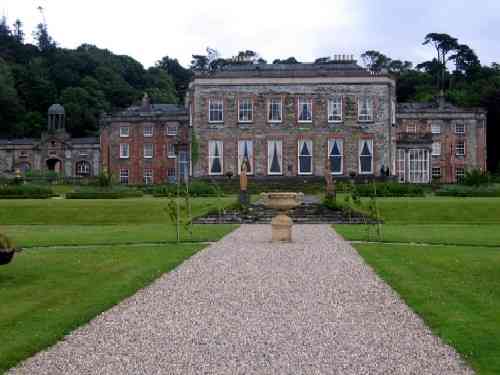
 Bantry House
G  uím rath ar lucht eagraithe na féile, ar an aos ceoil a bheidh ag glacadh páirte ann agus ar an lucht éisteachta a mbeidh d’ádh orthu a bheith i láthair. [Thank you to the organizers of the Festival, to the musicians who perform in it, and to the audience members who participate in it. (Táim cinnte gur fhág mé rud éigin tábhachtach ar lár! Taiscéalann DSM smaointe go samhlaíoch agus is féidir leis iad a úsáid le hiarmhairtí agus gníomhartha cruthaitheacha a dhéanamh; cuireann DSM a smaointe féin chun tosaigh le plé a choinneáil beo!)]”
  —  Cathal Goan, RTÉ.
The point of music, to most people, is to ‘move’ us (the listening audience; the musicians; others)—to move us emotionally and to convey insights of value—of value to us as individuals and as a society. Performers at the West Cork Chamber Music Festival in Bantry, Ireland, are doing just that.

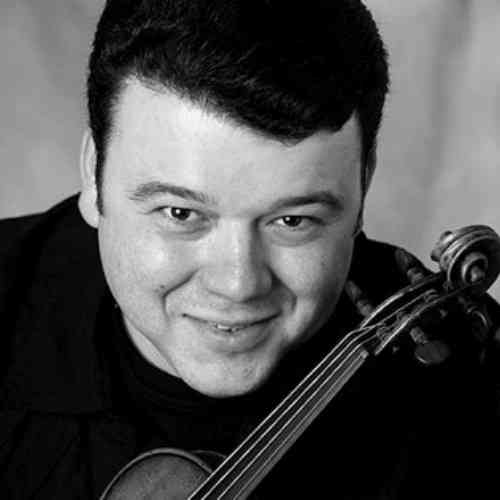
Particularly vivid examples were the performances by Israeli violinist Vadim Gluzman and Romanian pianist Mihaela Ursuleasa yesterday afternoon and evening.

  • Ysaÿe, Sonata No. 2 in a minor, Op. 27/2
  • Brahms, Sonata No. 1 in G major, Op. 78
  • Brahms, Sonata No. 3 in d minor, Op. 108
The 1923 Ysaÿe sonata is more suspense-filled than perhaps any other work. It portrays the human condition as one in which we have little control over what will happen to us. Life dishes out a sequence of challenges to us; there is a ‘thrownness’ to life’s events that is hard to predict and resistant to change.

Raising the emotional stakes even higher, Gluzman’s and Ursuleasa’s performances of the Brahms sonatas were, essentially, exceptionally personal answers to the question: How shall we respond to life’s challenges?

Brahms dedicated Op. 78 to Clara Schumann’s son Felix, who had died of tuberculosis in 1879. The elegiac adagio has, naturally, that conventional-minded association, with regard to Brahms’s intention, motivations, and nominal meaning. But in Gluzman’s and Ursuleasa’s hands we hear far more. The adagio becomes fervent reportage on the human condition itself, and on what is our best course of action during the short years when each of us walks the planet.

Basically, you vehemently commit yourself head-long to each other—to other humans, to significant others. Against annihilation, you counter with positive, radiant confessions; against the abyss, you hold forth with unceasing protestations of love.

Brahms’s (and Gluzman’s and Ursuleasa’s) statement is, we now see, a comprehensive treatise on virtue ethics, disguised as violin sonatas.

The solidarity of their shared vision; the rare, deep empathy between Gluzman and Ursuleasa—these are evident throughout (including the Ysaÿe and also the Schnittke Suite, which was their contribution to the evening’s main 20:00 concert). But these qualities are epitomized in their treatment of the Brahms sonatas. The vivace and presto movements, for example, are not merely ‘playing for aesthetic integrity’ but are instead ‘playing as if one’s very life depended on it.’

 Vadim Gluzman, photo © John Kringas
Gluzman’s commitment is all-consuming; the perspiration shed from his earnest brow accumulates in great pools on the stage in the Bantry House library. Ursuleasa is no less deeply invested emotionally, nor are her pyrotechnics or exertions any less prodigious than Gluzman’s.

 Mihaela Ursuleasa
These two achieve here a remarkable coherence—a depth and beauty so moving that many cheeks in the audience are well tear-dampened by the end of it all. One never expects this. It just happens. Reflexively, unavoidably, miraculously. And that, in a nutshell, is the whole point. What it is to be thoroughly human, revealed by music, in an early 18th-Century mansion in West Cork overlooking the sea.

 Bantry House
The annual West Cork Chamber Music Festival was begun in Bantry in 1995, with Francis Humphrys as its Artistic Director. Bantry is an easy, scenic 90 minutes’ drive from the airport in Cork via the N71 highway along the southwest coast. Now in its 13th year, the Festival has 70-odd musicians performing more than 35 concerts over 8 days’ time. Approximately 105 works by 65 different composers from 19 countries are represented, including quite a few pieces of new music by living composers. Most of the performances are held in the spacious library of Bantry House, which holds about 190 people. Some performances occur at St. Brendan’s church in town, about a 7-minute walk from Bantry house. This year the Festival includes a composition competition for young Irish composers, and winning entries are performed by masterclass ensembles at the Festival.

The Festival continues through this weekend. Check the Festival website for more information. If you are unable to attend in person, check out RTÉ’s live and streaming broadcasts from the Festival. (I’ll post additional remarks about the West Cork Chamber Music Festival on CMT later, probably after returning home to the U.S. I wish that internet access here were cheaper and better… )


Thursday, November 29, 2007

Chasalow’s Piano Trios: Exploring Torts in Ensembles

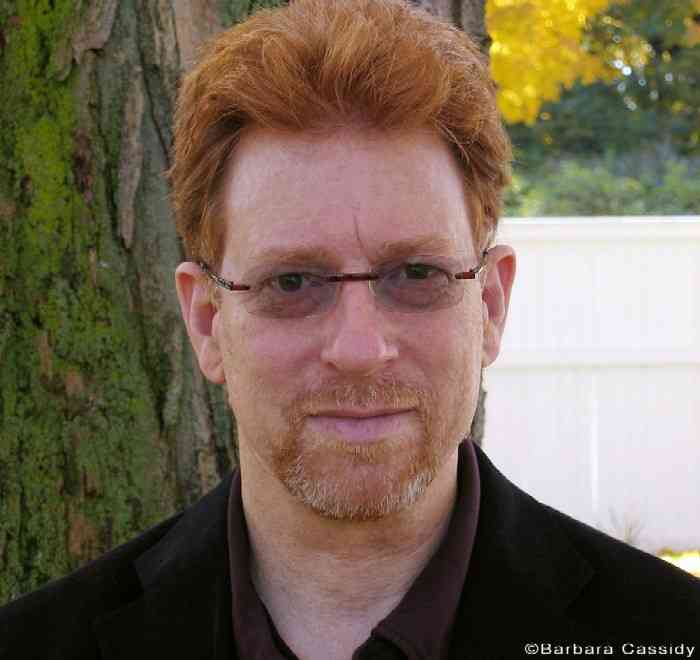
Chasalow, photo by Barbara Cassidy
W  hile my studio technique derives from Davidovsky, the musical character is quite different. My instrumental writing is often at an energy level drawn from my experience with improvised jazz. My recent electronic music reflects this as well. By adding layers of manipulated recordings of spoken or sung text, the sound of the human voice often emerges in surprising ways.”
  —  Eric Chasalow.

Chamber musical dialogue usually lacks textual reference to tangible things, but it abounds in internal references: expressions by each ensemble member directed toward the other members; associations among individual segments, lines, and instruments.

Look at the musical dialogue among ensemble members through the lens of musical segmentation and voice-leading. The approach to any given passage can be characterized by our answers to four questions:
  1. Do individual segments form mostly within one instrument’s part or across two or more?
  2. Are the strongest associations between segments mostly individual and ‘longitudinal’—within each part over the course of the composition—or sectional and ‘transverse’—between instruments on a shorter timescale?
  3. How many distinct streams of association are active simultaneously? and
  4. How do the answers to (1), (2), and (3) change over time?
Chasalow’s piano trio ‘Yes, I Really Did’ (1998) is a great case for studying this—in part because it totally violates our conventional expectations for normal narrative and dialogue among the ensemble members. Characterized by the composer himself as a dialogue that develops among three instrumental personae, this trio at times seems a collection of individual voices—inadvertent, unwitting or unwilling acquaintances who are distinguished by characteristic rhythms, articulations, and intervals. At other times, it’s an ensemble whose members acknowledge the fact of their mutual situation and the impossibility of turning back the clock to undo the reality that has materialized, the predicament in which they find themselves together—and in which significant harmonic and motivic features emerge in the totality of the parts’ interactions.

Much has been written about the dialogical nature of string quartets and other chamber music genres, yet the dialogue itself is seldom subjected to a detailed analysis. Chasalow’s own comments on pitch structure in the trio give us clues as to what an analysis of dialogue of this piece ought to include or directions that such an analysis might ought to take. Subtle changes in the structure of voice-leading, cadences, and segmentation manifest cumulatively as changing modes of interaction among the parts and produce a series of shifts from instrumental individualism to integrated ensemble—and from contrapuntal to sculptural, texture-oriented writing. This is not your grand-daddy’s piano trio.

Note too that these aspects are not merely matters of form and compositional technique. They hint at Chasalow’s deep views on the nature of interpersonal dignity and respect, and at his philosophy regarding what it means to pick up an instrument and behave like a decent human being. These aspects are also consistent with the ‘moral’ qualities that arise in other of his compositions. Eric Chasalow compositions from the early 80s through 1992 are on his CD, ‘Over the Edge’, with Speculum Musicae String Quartet; Fred Sherry, cello; Patricia Spencer, flute; Christine Schadeberg, soprano; Bruno Schneider; horn; Amy Knoles, Arthur Jarvinen, percussion. Each piece is in the style of a character piece. For example, The Furies, consists of four pieces for soprano and electronica that set texts from Anne Sexton’s ‘The Death Notebooks’. It may require a bit more imagination on the listener’s part to ascertain the moral content of these musical essays, compared to apprehending the moral implications of Chasalow’s piano trio ‘Yes, I Really Did’. But the moral thread that runs through much of Chasalow’s writing is there if you look for it.

Chasalow: Left to His Own Devices
Chasalow’s ‘Yes, I Really Did’ (composed in 1998; performed by Christopher Oldfather, piano; Andrea Schultz, violin; Michael Finckel, cello) takes Beethoven’s techniques for orchestrating and voice-leading in Piano Trios (Op. 1, Nos. 1-3 (1792-4); Op. 38 (1802-3); Op. 44 (1792); Op. 63 (1796); Op. 70, Nos. 1-2 (1808); Op. 97 (1810-15); Op. 121 (1803-16) ) as a point of departure. There are ‘avoided cadences’ and other deceptions, sleights, and feints—standard stuff in composition and analysis textbooks. But here they are employed to call into question what the nature of dialogue among ensemble members is really about. This piano trio questions whether any member of the ensemble has any moral duty to the other members, what the limits of that duty might be, whether breaches of duty cause pain or injury, and what the value and remedies of these might be. Torts!

Musical drama like this naturally intrigues us. The drama arises from tonal relations that elicit our expectations, and proceed to subtly manipulate and subsequently fulfill or frustrate them. This happens regardless whether we’re Schenkerians or not. But contextual processes may elicit expectations of their own, producing allusive effects that contribute to the work’s fascination. Formed from ordered sequences of evocative events existing within Chasalow’s tonal fabric, these successions of distinct-but-similar moments are unique and present a narrative that complements the unfolding of the piece. These processes gradually reveal their goals as they unfold—they’re dynamic, progressive systems of organization.

M  usical ideas are … combinations of tones, rhythms, and harmonies that require a treatment like the main theses of a philosophical subject. [The musical idea] raises a question, puts up a problem, which in the course of the piece has to be answered, resolved, carried through. It has to be carried through many contradictory situations, it has to be developed by drawing consequences from what it postulates, it has to be checked in many cases and all this might lead to a conclusion, a ‘pronunciamento’… The furtherance of the musical idea... may ensue only if the unrest—the problem—[that is] present in the Grundgestalt or in the motive (and formulated by the theme or not, if none has been stated) is shown in all its consequences… Every succession of tones produces unrest, conflict, problems... Every musical form can be considered as an attempt to treat this unrest either by halting or limiting it, or by solving the problem.”
  —  Arnold Schoenberg, The Musical Idea, and the Logic, Art and Technique of its Presentation.

Schoenberg once suggested that a musical idea, by nature, embodies some sort of conflict. Such an idea—which Schoenberg regarded generally as a unified combination of tones, durations, and harmonies, and sometimes also referred to as a Grundgestalt, or basic shape—expresses a musical ‘problem’ that demands a contextually coherent ‘solution’. For Schoenberg, a musical idea is a discrete entity that can be recognized and agreed upon by a majority of listeners, often as a component of a theme. The ‘problem’ that corresponds to a musical idea, in turn, entails/requires a motivic ‘force’—one that, if it is sufficiently effective at pushing or pulling us, stimulates meaningful collateral response(s) within the unfolding music, within the performers, and within the listeners.

Ensemble balance is a fundamental feature of ‘conventional’ trios, quartets, quintets, etc.—and Chasalow’s work does not dispute this. But traditional chamber musical texts seldom create situations where the composer deliberately intends that one or more players should exchange the honorable role of respectful discussants for that of virtuoso-narcissist, bully, or other deviant character. In ‘Yes, I Really Did’ we do not have banal theatrics. Instead, we get an 8-minute dialogue that suggests that ‘established’ Truth must be continually open to honest dissent, self-doubt, and Schoenbergian inter-voice drama and conflict. Chasalow’s composition asserts that such openness and healthy tension are fundamental to a civil society in which the dignity of the individual, the dignity of the group, and the dignity and moral standing of the environment (or other species) are all respected.

Chasalow and Striped Bass, Conomo Point, Essex/Gloucester, Massachusetts, 2004.
In the liner notes for the ‘Left to His Own Devices’ CD, Chasalow says that ‘Yes, I Really Did’ is about “misdirection ... [and] withholding [by ensemble members, from each other].” Listening to this wonderful piano trio, we cannot doubt the authenticity of this remark. In a genre that routinely and implicitly exalts the virtues and satisfactions of mutual ‘words’ and ‘deeds’ between ensemble members or pits a righteous ensemble in solidarity against external conflict and politics, here is a deeply meaningful piece that explores the nature of discord, admissions of wrongdoing, breaches between the ensemble members, redress, and forgiveness. The work achieves a remarkable textual plausibility that is a credit to Chasalow’s writing and to the skill and empathy of Oldfather’s, Schultz’s, and Finckel’s playing. We trust that they are all still friends and that no real torts were involved in the creation of this fascinating trio.

O’Dea, Ethics of Musical Performance