Showing posts with label appropriation. Show all posts

Monday, October 18, 2010

Borromeo String Quartet: eBach

 BSQ
T    his program is about the greatness and the ‘open-endedness’ of Bach’s music, and about letting Bach’s music meet a new set of tools... When Bach played the organ, he was known for making beautiful and unexpected combinations of stops (the sets of pipes that make a certain sound). With this electronically-processed string quartet arrangement, we are going to bring a new set of ‘stops’ into play.”
  —  Nicholas Kitchen, @TheGardner interview with Isabella Stewart Gardner Museum staff, OCT-2010.
T he Borromeo String Quartet’s [Mai Motobuchi, viola, Yeesun Kim, cello, and Nicholas Kitchen and Kristopher Tong, violins] performance tonight at New England Conservatory’s Jordan Hall included Bartók’s String Quartet No. 6 and Beethoven’s String Quartet in E-flat Major, Op. 127.

B ut the sheer novelty of this program was embodied by ‘Bach’s Electric Chords’, Nicholas Kitchen’s string quartet arrangement of Bach’s ‘Passacaglia and Fugue in C Minor’, BWV 582, with electronic processing. Warning: If novel reworking of Bach inherently offends you, then read no further.

T he passacaglia consists of twenty variations on a theme that Bach famously co-opted from André Raison’s Premier Livre d’orgue of 1688. Many have said that the double fugue in BWV 582 is really a twenty-first variation on that theme—a variation of prodigious, surreal length.

B ach plumbed the limits of the bass melody in BWV 582, to the point where he was able abandon the melody itself from time to time and yet the beautiful mechanism does not quit or fall apart. Emulating Bach’s exploratory spirit, Kitchen pushes the discursive, contrapuntal ‘envelope’ even further. This arrangement is like a string quartet conversation that ranges from one topic to others, to the point where the thread of the conversation matters less than than the flow itself—matters less than the continuation of the self-propelled cameraderie of the celebrants. The piece becomes an expansive meditation on the joy of playing together. There are moments when it is possible to believe in the abrogation of the Second Law of Thermodynamics, energy for free, perpetual motion, and Eternal Return. The nature of bowing—as contrasted with keyboards and pedaling—also lends new dimensions to the piece, ones that likely would have pleased Bach himself.

F    enner Douglas groups French registrations into four texture-based categories: broad textures [plein jeu (principal chorus, upwards from 16'); grand jeu; fond d’orgue (all principals and flutes at 16', 8', and 4')]; contrapuntal textures [esp. reeds]; melodic textures [cornets; tierces; nazard; voix humane; etc.]; and composite textures... In the Fugue of BWV 582 easily the most interesting is the cross-beat slurring of the first countersubject [in m. 169]... If Bach had asked his [organ] pupils to phrase the countersubject across the beat, some indication of this would have been needed in the score, for it goes against the Baroque practice of placing ‘downbows’ on the ‘good’ notes.”
  — Peter Le Huray, p. 104.
 BWV 582, m. 169
T he organ offers a wide range of colors and textures, and so, of course, does the string quartet. The range can be substantially extended when mics and electronic processing are applied. To my taste, Kitchen’s orchestration makes good sense—it is empathetic, not ‘indulgent,’ and the electronic processing does not draw undue attention to itself.

T he chords themselves are intriguingly different when played by a string quartet instead of an organ. For example, the Neapolitan sixth near the conclusion of BWV 582 is not like a C-major chord transposed up a semitone but is instead a dramatic new color, in part because stringed instruments are not confined to equal temperament (12-TET). Unfretted instruments and singers are free to conform their tuning closer, say, to 18th-Century well-temperaments. Then, instead of congenial key-independent uniformity of sound as in ET, with well-temperaments each key has its own distinctive qualities, tensions, dissonances—tensions that would not be evident when playing this Passacaglia and Fugue on a modern organ.

T he tailpiece miking of each of the Borromeos’ instruments was excellent. Each quartet member’s Line6 POD® effects modeler output was routed to a powered QSC K-8® monitor positioned on the stage directly facing the audience. (In the future, I hope that a larger array of more speakers directed in a variety of directions may be possible for BSQ, or, better still, get a sound engineer and a mixing console and adjust the delays properly for the size of the hall.) The succession of effects patches in each part was switched via the foot stomp switches on the Line6 POD®s, in a pattern reminiscent of an organist changing ‘stops’. Each instrument’s soli passages involved switching to a brighter ‘reed’ patch and increasing the volume with the pedal on the right-hand side of the POD® modeler. Other organistic effects included divide-by-two and divide-by-four frequency-division patches that transformed the cello’s signal into 16' and 32' thundering contrabass pipe organ sounds. Light chorusing effects and, toward the end, increasing reverb were among other effects that Kitchen scored in this arrangement.

 BSQ
T he use of the 4 Macintosh laptops and Bili Inc. Footime® digital Page/Score Turners was interesting from another perspective as well. The profile of these is far smaller and lower than standard music stands filled with sheet music. As a result, the laptops on their stands do not present such a big acoustic obstruction between the performers and the audience members as conventional music stands. The cello and the viola are far clearer-sounding compared to normal string quartet configurations. Absolutely beautiful.

 BSQ
I n summary, we were thrilled by a superb performance and by an arrangement of BWV 582 that sheds exciting new light on an old subject.


Sunday, October 10, 2010

Renée Fleming Sings Brad Mehldau’s ‘Rilke: Book of Hours’

 Renée Fleming R enée Fleming’s performance last night in Kansas City was excellent.


    [50-sec clip, Renée Fleming, Brad Mehldau, ‘Rilke: Stundenbuch’, ‘Ich liebe dich, du sanftestes Gesetz’, 2006, 1.8MB MP3]

T he singing was gorgeous. The piano accompaniment by Bradley Moore was superb.

I  had not previously heard the Brad Mehldau composition, “Songs from Rainer Maria Rilke’s ‘Book of Hours’.” The ‘Love Sublime’ CD on which these were recorded was released in 2006. A disturbing thing for those familiar with Rilke’s poetry is the Anita Barrows-Joanna Macy Rilke translation used by Mehldau for these texts. Barrows and Macy convey mainly adulation and bended-knee piety, and strike out Rilke’s struggling with the problem of theodicy and anger towards a God who allows/causes suffering.

I n the first song (Mönchischen Leben #18, ‘Ich liebe dich, du sanftestes Gesetz’), Rilke’s God as ‘the [maleficent] forest from which we never escape’ is transmuted by Barrow and Macy into a uterine ‘forest that always surrounded us’.

T hroughout Barrow’s and Macy’s “translation” there is wholesale, highly-politicized editing going on. They delete major portions of some stanzas (?where they find that Rilke’s original text does not jibe with their own church’s teachings or their own personal religious views), as in the second song (from Pilgerschaft #3, ‘Ich bin nur einer deiner Ganzgeringen’). Likewise in the third song sung by Fleming last night (Pilgerschaft #31, ‘Und seine Sorgfalt ist uns wie ein Alb’). The fourth song (Pilgerschaft #32, ‘Lösch mir die Augen aus: ich kann dich sehn’) completely renovates Rilke’s sense of God as an insurmountable, lethal burden... into a maniacal, martyrous masochist-terrorist’s self-immolation ritual, suicide-bomber-style. Yikes!

 Rilke, Stundenbuch, Mönchischer Leben, #18 L ike all good art songs, Mehldau’s writing affords the vocalist wide latitudes for rhythmic phrasing and melodic interpretation, and Fleming does not disappoint. Her ear ‘colonized’ by the buggy Barrows-Macy translation, she is compelled to become a ‘medium,’ clairvoyantly assaying what Rilke meant. She takes the words she is given, and turns them musically into something far closer to authentic Rilke. To hear her sing this is like hearing an alchemist at work, changing base metals into gold.

O f course, there can be no ‘last word’ in translation or poetical hermeneutics, and, equally well, there can hardly be a ‘first word’ either. Hermeneutics is a process, an ongoing reaction to questions about the subjectivity and finiteness of understanding. Mehldau’s composition, then, amounts to an elaborate invitation—to the singer, to the pianist, and to the audience—to (re-)examine the text and decide for themselves what it means, or whether this account of what Rilke wrote is authentic or not.

M any years ago, Gadamer came up with the term ‘philosophical hermeneutics’; here, Mehldau leaves it to Fleming and to us to resolve. Faced with an English translation so very far from what Rilke actually wrote, Fleming concentrates on the question of what happens to us when we ‘understand’. Suffice to say, very few singers are up to a challenge of this sort...

W hat I mean by all this is: hearing Rilke ‘in his own voice’ is important. An honest and genuinely gifted translator can achieve this, even with poetry. It is an altruistic act, this setting aside of one’s own prejudices and temptations in devotion to a poet’s own unique (and sometimes disagreeable—) expressions.

A  translator should never be an ‘editor’ in the way that Barrows and Macy allowed themselves to be, co-opting a text and bollocks with the truth. It’s about ‘transparency’.

W hat else? Mehldau offers an imaginative, dramatic, and widely-varied use of sound and silence, which Fleming takes full advantage of. Some links below, on sound art and acoustic ‘territories’ as compositional devices, may interest you in this regard.

 Brad Mehldau


Thursday, April 17, 2008

What Is It? : John Zorn, Genre-Belongingness, and the Relational Algebra of Chamber Musical Genre Boundary Transgressions

 Zorn and ensemble, performing Masada
A  modern musical counterpart to baroque music’s deployment of grounds can be found in teh improvisational qualities of jazz. Jazz riffs, themselves models of repetition with variation, frequently make reference or pay homage to base canonical works ... a benign form of appropriation.”
  —  Julie Sanders, Adaptation and Appropriation, p. 40.
M  ost complicating of all is the problem of discerning the actual intentions ... intentions that were as often obscured as revealed in the texts ... Voltaire fixed his residence near the French border so that he could escape capture and imprisonment if any of his works proved too offensive to the French government ... Enlightened esotericism entailed explicitly stating ‘acceptable’ positions that were then undermined by adducing arguments that surreptitiously implied variant, often contrary, conclusions. As a result, any attempt to limn the politics of The Enlightenment encounters difficulties precisely because the line between sincerity and obfuscation was, by intention, difficult to mark.”
  —  Darren Staloff, The Politics of Enlightenment and the American Founding, p. 290.
Tonight’s NewMusicNow program series at Boston’s new Institute of Contemporary Art has John Zorn and his ensemble performing pieces from the Masada series, starting with Silvie Couvoisier (piano) and Mark Feldman (violin). The evening concludes with Masada Book of Angels, where John Zorn (alto sax) is joined by Greg Cohen (bass) and Ken Wollesen (drums).

Zorn has created a prolific body of work that draws on a variety of genres including jazz, classical, rock, punk, klezmer, film, cartoon, and other ‘pop’ music, and defies traditional academic categories. A native of New York City, he has been a ‘character’ in the Manhattan scene since 1975, incorporating a wide range of musicians in various orchestrations/ensembles. Some of Zorn’s inspirations nominally include Ives, Varèse, Cage, Carter, Partch; Berg, Stravinsky, Boulez, and Kagel, although he also acknowledges soundtrack composers Herrmann, Morricone and Stalling. His writing is what could fairly be said to be ‘transtextual’.

As such, it’s music that’s inherently difficult to classify, precisely because it is difficult to know the intentions that underly the work, and the transtextuality may in fact obfuscate those intentions.

F  ormal organisation ... rhetorical structure ... and thematic content: genres are always complex structures which must be defined in terms of all three of these dimensions. The thematic content of a genre can be thought of as the shaped human experience that a genre invests with significance and interest. In formal terms, this shaping is expressed as a set of topoi, recurrent topics of discourse, or as recurrent forms of argumentation. In music we might say that it is expressed as the emotional tone characteristically carried by the musical forms [that are members of the genre at hand]: quietly meditative in the nocturne or the evening raga; plaintive in the ballad; triumphant in the march; drivingly energetic in techno.”
  —  John Frow, Genre, p. 75.
 John Zorn
Transtextuality is Gerard Genette’s term for all of the relationships between texts. Genette identifies five relational subcategories: inter-, hyper-, para-, meta-, and archi-texts.

  • Intertextuality: direct presence of one text in another through allusion, quotation, plagiarism.
  • Hypertextuality: the relation between a text and a preceding ‘hypotext’, a text or genre on which it is based and refers to but which it transforms, modifies, elaborates or extends (including parody, spoof, sequel, translation).
  • Paratextuality: the relation between a text and that which surrounds the main body of the text, such as titles, headings, illustrations, covers, etc.
  • Metatextuality: explicit or implicit critical commentary of one text on another text.
  • Architextuality: formal designation of a text as part of a genre or genres.
For the variance of a sum of random variables X and Y, we have the variance:

 var(X + Y) = E( X + Y - E(X + Y) )2 = var(X) + var(Y) + 2E((X - µX)(Y - µY)).

The last term is called the covariance and, if the two variables are completely statistically independent and the sum is merely a comingling (in our case, of genres), then the (linear) association will be nil and cov(X,Y) will be zero. In such a case var(X + Y) = var(X) + var(Y). Codings of pieces that are members of genre X (in MusicXML or other MIR format) have a distinctive variance, as do codings of exemplars of genre Y.

 Zorn book
So it’s possible for some bi-genral mixtures (segments of pieces, encoded) to ascertain by programmatic/algorithmic inspection what genres they are likely comprised of. This has been done for more than 20 years, for example, in signal-processing software used in rights management and broadcast royalty compliance, for ASCAP and other agencies. IRCAM has maintained a special interest group (SIG) working on this for many years as well. [Bi-genral “two-at-a-time” deconvolution: tractable, with current technology. It’s still difficult, however, to algorithmically classify and accurately decompose works that are composites of three or more genres, even with long samples. Cryptomusicology! Intentional obfuscation! ]

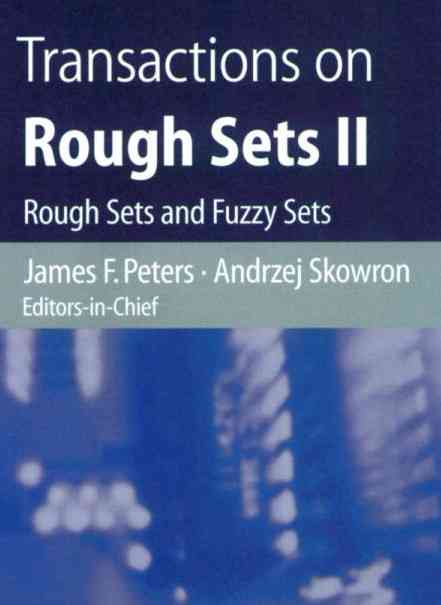
Incidentally, Bozena Kostek, Piotr Szczuko, Pawel Zwan, and Piotr Dalka have an excellent paper in the Transactions on Rough Sets, Vol. 3, edited by James Peters, Andrzei Skowron, and Dick van Albada (pp. 112-34), just published this year. Classification of musical styles based on a training/calibration set of 162 exemplars was presented, with neural network classifier algorithms compared against a rough-set algorithm RSES—both yielding about 80% classification accuracy for pieces subsequently submitted to the classifier algorithms. The Kostek-Szczuko-Zwan-Dalka paper (and book) may be useful for those of you who are interested in Zorn, Zorn’s compositions and compositional methods, and MIR in general.

 Kostek et al., Table 14, in Peters-Skowron-van Albada
The mathematics of ‘rough sets’ (see links below) is very promising, for MIR and quantitative analysis of compositional methodological similarities.

 Peters, Skowron, van Albada book
If you’re in Boston tonight and are feeling transtextual, come to the ICA and give Zorn and his collaborators a listen. It’s a sunny 20 °C April day here, and it should be a beautiful evening down at the harbor.

 Institute of Contemporary Art, Boston Harbor
O  ne whose merit surpasses his iniquity is a ‘tzadik’.”
  —  Maimonides, Tractate Yevamot of the Babylonian Talmud, 49b-50a.

 Gorbunov book