Showing posts with label venues. Show all posts

Thursday, April 17, 2008

What Is It? : John Zorn, Genre-Belongingness, and the Relational Algebra of Chamber Musical Genre Boundary Transgressions

 Zorn and ensemble, performing Masada
A  modern musical counterpart to baroque music’s deployment of grounds can be found in teh improvisational qualities of jazz. Jazz riffs, themselves models of repetition with variation, frequently make reference or pay homage to base canonical works ... a benign form of appropriation.”
  —  Julie Sanders, Adaptation and Appropriation, p. 40.
M  ost complicating of all is the problem of discerning the actual intentions ... intentions that were as often obscured as revealed in the texts ... Voltaire fixed his residence near the French border so that he could escape capture and imprisonment if any of his works proved too offensive to the French government ... Enlightened esotericism entailed explicitly stating ‘acceptable’ positions that were then undermined by adducing arguments that surreptitiously implied variant, often contrary, conclusions. As a result, any attempt to limn the politics of The Enlightenment encounters difficulties precisely because the line between sincerity and obfuscation was, by intention, difficult to mark.”
  —  Darren Staloff, The Politics of Enlightenment and the American Founding, p. 290.
Tonight’s NewMusicNow program series at Boston’s new Institute of Contemporary Art has John Zorn and his ensemble performing pieces from the Masada series, starting with Silvie Couvoisier (piano) and Mark Feldman (violin). The evening concludes with Masada Book of Angels, where John Zorn (alto sax) is joined by Greg Cohen (bass) and Ken Wollesen (drums).

Zorn has created a prolific body of work that draws on a variety of genres including jazz, classical, rock, punk, klezmer, film, cartoon, and other ‘pop’ music, and defies traditional academic categories. A native of New York City, he has been a ‘character’ in the Manhattan scene since 1975, incorporating a wide range of musicians in various orchestrations/ensembles. Some of Zorn’s inspirations nominally include Ives, Varèse, Cage, Carter, Partch; Berg, Stravinsky, Boulez, and Kagel, although he also acknowledges soundtrack composers Herrmann, Morricone and Stalling. His writing is what could fairly be said to be ‘transtextual’.

As such, it’s music that’s inherently difficult to classify, precisely because it is difficult to know the intentions that underly the work, and the transtextuality may in fact obfuscate those intentions.

F  ormal organisation ... rhetorical structure ... and thematic content: genres are always complex structures which must be defined in terms of all three of these dimensions. The thematic content of a genre can be thought of as the shaped human experience that a genre invests with significance and interest. In formal terms, this shaping is expressed as a set of topoi, recurrent topics of discourse, or as recurrent forms of argumentation. In music we might say that it is expressed as the emotional tone characteristically carried by the musical forms [that are members of the genre at hand]: quietly meditative in the nocturne or the evening raga; plaintive in the ballad; triumphant in the march; drivingly energetic in techno.”
  —  John Frow, Genre, p. 75.

 John Zorn
Transtextuality is Gerard Genette’s term for all of the relationships between texts. Genette identifies five relational subcategories: inter-, hyper-, para-, meta-, and archi-texts.

  • Intertextuality: direct presence of one text in another through allusion, quotation, plagiarism.
  • Hypertextuality: the relation between a text and a preceding ‘hypotext’, a text or genre on which it is based and refers to but which it transforms, modifies, elaborates or extends (including parody, spoof, sequel, translation).
  • Paratextuality: the relation between a text and that which surrounds the main body of the text, such as titles, headings, illustrations, covers, etc.
  • Metatextuality: explicit or implicit critical commentary of one text on another text.
  • Architextuality: formal designation of a text as part of a genre or genres.
For the variance of a sum of random variables X and Y, we have the variance:

 var(X + Y) = E( X + Y - E(X + Y) )2 = var(X) + var(Y) + 2E((X - µX)(Y - µY)).

The last term is called the covariance and, if the two variables are completely statistically independent and the sum is merely a comingling (in our case, of genres), then the (linear) association will be nil and cov(X,Y) will be zero. In such a case var(X + Y) = var(X) + var(Y). Codings of pieces that are members of genre X (in MusicXML or other MIR format) have a distinctive variance, as do codings of exemplars of genre Y.

 Zorn book
So it’s possible for some bi-genral mixtures (segments of pieces, encoded) to ascertain by programmatic/algorithmic inspection what genres they are likely comprised of. This has been done for more than 20 years, for example, in signal-processing software used in rights management and broadcast royalty compliance, for ASCAP and other agencies. IRCAM has maintained a special interest group (SIG) working on this for many years as well. [Bi-genral “two-at-a-time” deconvolution: tractable, with current technology. It’s still difficult, however, to algorithmically classify and accurately decompose works that are composites of three or more genres, even with long samples. Cryptomusicology! Intentional obfuscation! ]

Incidentally, Bozena Kostek, Piotr Szczuko, Pawel Zwan, and Piotr Dalka have an excellent paper in the Transactions on Rough Sets, Vol. 3, edited by James Peters, Andrzei Skowron, and Dick van Albada (pp. 112-34), just published this year. Classification of musical styles based on a training/calibration set of 162 exemplars was presented, with neural network classifier algorithms compared against a rough-set algorithm RSES—both yielding about 80% classification accuracy for pieces subsequently submitted to the classifier algorithms. The Kostek-Szczuko-Zwan-Dalka paper (and book) may be useful for those of you who are interested in Zorn, Zorn’s compositions and compositional methods, and MIR in general.

 Kostek et al., Table 14, in Peters-Skowron-van Albada
The mathematics of ‘rough sets’ (see links below) is very promising, for MIR and quantitative analysis of compositional methodological similarities.
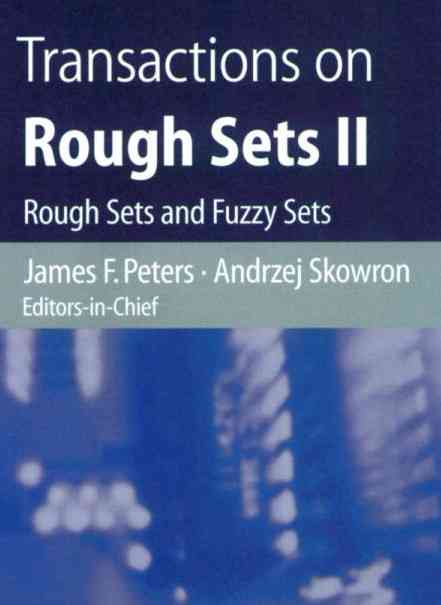
 Peters, Skowron, van Albada book
If you’re in Boston tonight and are feeling transtextual, come to the ICA and give Zorn and his collaborators a listen. It’s a sunny 20 °C April day here, and it should be a beautiful evening down at the harbor.

 Institute of Contemporary Art, Boston Harbor
O  ne whose merit surpasses his iniquity is a ‘tzadik’.”
  —  Maimonides, Tractate Yevamot of the Babylonian Talmud, 49b-50a.

 Gorbunov book


Thursday, March 27, 2008

Dave Moulton: Golden Ears and Just-in-Time Spectral Management for Chamber Musicians

 Dave Moulton
M  astering [engineering recordings] is an art, not a science. It involves a lot of technical craft and control, plus practice.”
  —  Dave Moulton.
Your plane is delayed by bad weather, and you land in late afternoon at the airport of the city where your performance tonight is to occur. The taxi whisks you to the performance hall where you greet the presenter and observe the production people busily getting the stage ready. You have less than 2 hours before the performance begins. You should be focusing, centering, warming up, getting your game-face on. You should be taking deep breaths.

But wait! The house has a much taller ceiling than you thought it would have. The acoustic reflective panels on-stage are adjustable, but at the moment they seem to be in a perverse flat configuration that lets a lot of sound leak out into the wings. What was the last gig played in here anyway, some break-away faction from Cirque du Soleil? The whole acoustic ‘feel’ of the place is horrifically drier than your ensemble is used to. And there’s an odd acoustic ‘sweet spot’ slightly to the left of center-stage. What the hell! Where in this catastrophe of a venue is the best location for the harpsichord? Precisely where should the other ensemble members be placed, so that the solo passages of each will be heard and so that the balance of the group will have some hope of realizing your artistic vision?

Very few musicians receive any formal training in how to cope with this part of performance. As a result, it’s an incredibly stressful and agonizing thing for most ensembles and individual musicians. And yet it’s possible for you to systematically acquire skills that will help you make accurate acoustics decisions confidently and quickly. How do you train your ears to immediately recognize what you and your ensemble members need to do to deliver your best?

Golden Ears is one way—Dave Moulton’s CD-based audio ear-training course. It’s not perfect pitch or interval training. Instead, it aims to teach your ears to hear the frequencies, the signal processing, the compression, the left-right stereo imaging, the distortion, and the amplitudes in acoustic media. The course is self-paced and available as a set of eight audio CDs. To use it properly, you’ll need a set of good speakers or headphones. I use the Bose noise-cancelling headphones, to make sure that ambient noise around my house doesn’t confuse my ears when I’m practicing with the Golden Ears CDs.

 Moulton book
Moulton basically puts forty years of his recording studio, performance and teaching experience on these CDs. There are hundreds of exercises on the CDs that systematically take you through different dimensions of acoustic spectrum and timbre and electronic equalization (EQ) and processing of sound. While the main purpose of the course is to help recording engineers and producers to understand and be able to describe the elements that recorded tracks contain—their spectrum, dynamics, reverb and other audio qualities—with the goal of insightfully adjusting them in recording gigs or in post-production, the course is just as relevant for sound-reinforcement engineering in live performances and for classical musicians and presenters who work in traditional non-reinforced acoustic settings.

In a way, Moulton’s educational process is a little like a culinary course for chefs—helping them to quickly assess deficiencies in a dish, and equipping them with the ability to know instantly how to salvage a dish that suffers from imbalances in flavor.

Once you get a feel for the acoustic ‘ingredients’, you can take better control of the weird performance hall you find yourself in, take control of the hall’s sound-reinforcement control board, take charge with the presenter’s or the hall’s sound engineering staff, or take control and better utilize your own recording gear and approach the process of tracking, mixing and engineering with more confidence and less time consumed in trial-and-error. You can consistently ‘cook’ a better ‘dish’.

 Golden Ears audio course
How does the course work? There are four volumes, with two CDs per volume, each covering different components of the recording process. In Volume 2, after you’ve followed instructions for optimizing your listening set-up, you go through a series of A/B drills using excerpts of recorded music. The first recording (A) is the reference piece and the second (B) is a clone of the first with an applied amount of as-yet-undisclosed signal processing, frequency boost, delays, etc. Your task is to learn to identify the difference between the two recordings. To assist you, Moulton limits the number of options and groups them into six families of effects: amplitude change, distortion, compression, equalization, stereophony, time-delay, and reverberation. The drills are progressively more difficult. After you’ve completed your first pass through them, you can do the drills in random order to practice and improve your skills. The course materials are automatically randomized so you can’t identify any drill until it’s over. Golden Ears teaches you:

  • to recognize the effects of compression on a various music signals;
  • to identify fast and slow compressor attack and release times;
  • to correctly identify musically important EQ problems;
  • to recognize when loudness is the only difference between two signals;
  • to distinguish ranges of 1 - 10% and 10 - 30% Total Harmonic Distortion (THD) in recorded music or in sound reinforcement rigs used for live performances in larger chamber music venues;
  • to recognize abnormalities in stereo imaging (reverse image, mono summation, polarity reversal, pseudo-stereo, etc.) ;
  • to identify channel-to-channel time differences over a 1 to 50 msec range; and
  • to correctly recognize and manage gated and ungated reverb.
Moulton is a pro engineer and producer. He holds degrees from Bard College and The Juilliard School of Music. In the 1960s and 70s, he owned and operated his own commercial recording studio in New York. Previously at SUNY and the University of Massachusetts at Lowell, he was in the 1980s and early 1990s Chairman of the Music Production and Engineering Dept. at Berklee College of Music in Boston. He is now teaching privately and at the Museum of Fine Arts in Boston. He has worked as a studio designer and has designed playback room configurations for recording studios and wide-dispersion acoustic lens arrays for performance venues. In 2000 he (with Curt Wittig) received a Grammy nomination for the CD recording of music by George Crumb performed by the Philadelphia-based ensemble, Orchestra 2001. Dave wrote and produced Golden Ears in 1994, based on traditional music school ear-training techniques.

 Orchestra 2001 CD
The first two CDs each have a series of 14 EQ drills, each drill consisting of ten short bursts of sound with EQ applied and cancelled as you listen. First there is a warm-up for each drill, where Moulton describes what’s coming. Then the drill begins. For example, drillset_1/example_1 has ten seconds of pink noise, and for a few seconds an octave band centered around 500 Hz is boosted by 12 dB. Drillset_1/example_2 does the same thing to an octave centered around 63 Hz, and so on, until all of the octaves of the human hearing range from 31 Hz to 16 KHz have been covered—all ten octaves in random order. The manual is well-written. The comprehensiveness of the drills enables you to discover and make note of your own hearing deficits in a systematic way. If you do this with other members of your ensemble, you can identify certain aspects where one or another ensemble member has particular strengths. More likely, doing this together will confirm in an objective way which one of you is actually the most skillful and accurate acoustician (for purposes of reconnoitering with venue engineers and production people), rather than who merely has the strongest opinions and the most insistent expression of them.

After the pink noise drills, Moulton conducts more exercises involving applications of EQ, except this time they are done to musical excerpts. Next, there are more reps of EQ apps, this time with octaves being cut instead of boosted. Vol. 2 also has two CDs, this time with a wide variety of signal processing applied to a vast number of musical selections and styles. You can assess and practice your perceptions of things like amplitude changes, distortion, compression (including recognizing slow and quick attack and release times), some different examples of EQ, stereo/mono/pseudo-mono switching, time delays (including time differences over a 1 – 50 msec range), and reverbs. Vols. 3 and 4 extend the skillset into progressively more detailed and exotic effects that are important for performance and for recording/engineering.

Some effects are simple and easy to recognize, like a 3 dB amplitude boost. Yet, depending on the texture and timbre of the music, even something so simple as this may be difficult to hear. It may be even more difficult in high or low registers. Other effects are more obvious—clipping distortion, long reberbs, etc. But most are somewhere in the middling range of subtlety, like ‘left channel mids (1 KHz) boosted by 6 dB while right channel highs (10 KHz) cut by 6 dB.’ You can refine your ears to hear subtle EQ cuts and boosts within narrow intervals of a fourth or a fifth, and to readily hear multiple frequency bands at once. After 20 or so hours with these CDs, you’ll be able to quickly diagnose what’s going on acoustically in any performance venue and intelligently strategize what to do about it—to make the best of the situation you’re in.

In summary, all the hundreds of drills on these CDs train you to hear and to recognize problems in all these areas and across the whole span of registers—before you go on-stage or before you exit the recording studio. By revisiting the CDs before you travel to give a concert in an unfamiliar hall, or by revisiting the CDs a few days before you start a recording gig, you can refresh your familiarity and refresh your confidence to be able to quickly amend and improve the acoustics that will affect the music you make.

In effect, for those of us who are not recording engineers or conductors in our day-jobs, rehearsing our ears to recognize and thoughtfully manage these ‘macro’ acoustics effects is a very important yet under-recognized aspect of our art. The Moulton CDs are an efficient way to establish and maintain a mastery of this.

 iZotope sound 2hrs ago

 Prosser book


Saturday, May 12, 2007

Unplugged Folias & Romanescas: Acoustics Très Tendrement, Finances Très Tendres

Jordi Savall Trio
The viola da gamba is a chamber instrument with a soft, sweet tone, incapable of the dynamic extremes and brilliance of the violin. This helps to account for its decline.”

  —  Columbia Encyclopedia, 6th Edition

CMT: During the interval I had a chance to glance at some of the music that Jordi had left on his music stand and on the floor. Beautiful hand-prepared manuscripts! Based on some idiosyncrasies in his scores, he seems to have intended to maximize exploiting the possibilities presented by the viola da gamba’s extended range. The gamba’s seven-string guitar-like tuning allows the performer a range of almost three octaves without shifting or changing positions (compared to two octaves plus a step on the cello). And its seven-string setup is conducive to virtuosic, arpeggiated passages. In one of the Marin Marais muzettes last night where a range of four octaves is spanned in only a few bars, Jordi demonstrated the flexibility the instrument allowed the composer. Phenomenal! The extended range of the viola da gamba is an “enabling technology” for a really dramatic melodic lyricism.

DSM: Together with Montserrat Figueras, Jordi Savall has founded three ensembles—Hespèrion XX, La Capella Reial and Le Concert des Nations. Each has in its own way charted new waters in terms of expressive beauty and lyricism. Savall’s performance in Alain Corneau’s film Tous les Matins du Monde (All the Mornings of the World), which won a César award for the best soundtrack, also charted new waters.

Jordi Savall
CMT: Sitting just 3 meters from Jordi at last night’s Friends of Chamber Music concert allowed me to observe his technique in detail. I was especially fascinated by his dramatic treatment of these pieces. According to Stowell’s Cambridge Companion to Cello, among the viola da gamba players of the 17th Century vibrato was associated with a tender, passionate or wailing quality. Jordi seems to favor a ‘flattement’ style of vibrato—one that’s extremely moving in tender pieces and on long notes. There is an intimate, introspective, confessional aspect to Jordi’s rendering of the Ortiz Folias—a storyteller’s sentimentality in his account of the Marais pieces. Almost autobiographical, when you are in the front row in a stone cathedral like this.

  • Diego Ortiz—Recercadas sobre tenores (Folias, Passa mezzo moderno, Romanesca)
  • Tobias Hume—Musickal Humors (Whope doe me no harme)
  • Gaspar Sanz—Piezas para la Guitarra (Jacaras-Canarios)
  • Marin Marais—La Viole de Louis XIV (Prelude-Le Labyrinthe)
  • Mr. De Sainte-Colombe de Fils—Fantasie en Rondeau
  • Mr. De Sainte-Colombe de Fils—Les pleurs
  • J.S. Bach—Bourrèe
  • J.S. Bach—English Suite in A minor
  • Antoine Forqueray—La Marella
  • Antonio Martin y Coll—Diferencias sobre las Folias
  • Jean-Baptiste Forqueray—La du Vaucel (Très Tendrement)

DSM: The movement of playing should serve to illustrate the music. Jordi does this superbly and consistently. These scores read as though they had a verbal text—well, in some cases they did have a verbal text, since much consort music was vocal in conception. But to see and hear Jordi Savall play is to believe that the entirety of the music is vocal in conception! The player must be ready to use a light, heavy or medium bow stroke according to the demands of the music. The melancholic music should be bowed lightly and evenly, while the left hand can use a tasteful amount of ‘tremolo’ to enhance the melancholy. Cheerful music requires the bow to animate the instrument and animate the music. You can only really see this adequately in live performance, close up! These pieces make you wonder for whom were the pieces written. Just who were the viola da gamba players and cellists capable of playing these pieces? Whoever the original dedicatees were, the performers must have been ones of great talent in order to do justice to this music.

Jordi Savall
CMT: You’re referring to the fact that every one of these pieces reveals big biomechanics issues, for the performer? These issues arise not only with the viola da gamba but basically with all other fretted stringed instruments that have more than four strings. Gambas and lutes and are tremendously delicate instruments. The bridge curvature on the gamba is pretty modest, and this makes it very difficult to apply bow pressure on a single string without touching off adjacent strings. Jordi is a phenomenal gymnast when it comes to expert bowmanship in the face of such risks. In the 16th Century, the necks of viols had very little backward tilt, making it necessary for the necks to be thick, to withstand the string tension. They were also narrow at the nut, bringing the strings very close together. There’s tremendous difficulty with chords and double-stops, especially for a player with a large hand or thick fingers, who would have difficulty in holding chords without overlapping other strings.

DSM: Compared to a modern cello, the absence of an endpin also makes the gamba awkward to play—hard to stabilize and hold between your gambas, I imagine. This physical precariousness of the gamba accentuates the delicacy of the sound, I think. For audience members who are in close proximity to the performer, the precariousness is visually captivating—somewhat in the way that we are captivated by watching a tight-rope walker—or a gymnast, as you put it. I was wondering in one of the Marais pieces whether Jordi had alternate-tuned one of the strings—scordatura? By the way, the fretted members of the string family, like the viola da gamba, came to be regarded as musical relics by the mid- to late-18th Century and were way out of fashion by the 19th Century, didn’t they?

CMT: Well, yes. The dark timbre and limited volume were the main reasons why, I suppose, given the acoustic demands of larger concert halls. Notably, the bright tone of gifted harpsichordist Pierre Hantaï achieved a volume perfect for balance between the instruments last night. Theorboist-guitarist Xavier Diaz delivered an exquisite offering as well. The full-to-capacity audience at Grace & Holy Trinity Cathedral responded enthusiastically—an appreciative standing ovation for the deeply moving and technically superb performance.

DSM: But the acoustical properties of the viola da gamba and theorbo and harpsichord still have consequences in terms of the economics of live performance then, don’t they? It’s unreasonable to program this Trio into a venue with an audience of more than a few hundred—with an unamplified sound so delicate as this Trio has. And, after all, how much can you charge per seat? So it’s hard for the presenter to gross more than $20,000 for this kind of program. Therefore, for the artists the financial viability of this delicate music really depends upon CD sales and paid digital downloads—to augment the proceeds from performance fees. And for the presenters, the financial viability of this delicate music really depends upon interested donors/patrons and upon grants from public-sector agencies, foundations, and commercial benefactors—to augment the proceeds from ticket sales/subscriptions.

CMT: You were speaking of ‘physical precariousness’ of the instrument earlier. I suppose a correlate of that is the ‘financial precariousness’ of the artform itself. Just as there is an appreciation of beauty created against all odds by artists like Jordi and Pierre and Xavier—the adversity and risk that their chosen instruments present to them—there’s also an appreciation of beauty and rarity—conservation of endangered early music and chamber music species against all odds, by chamber music presenters and other organizations around the globe. Attending concerts or supporting organizations that nurture these species in the Arts, don’t we participate in a kind of beauty that’s somewhat like observing a rare orchid?—contributing to habitat preservation for the spotted owl? Aren’t the gesture and its internal rewards a little like supporting Nature Conservancy?

Jordi Savall

Jordi Savall