Showing posts with label audiences. Show all posts

Friday, March 30, 2012

Kinesthetics/Biomechanics of Instrument Design governs the music that comes out

Zankel Hall – Partch instruments
S  ome works begin their performance life in a shocking way but, with further performances, come to feel ‘more normal’. Not so with David Del Tredici’s ‘Syzygy’. It was composed in 1966, yet it retains all of its novelty and magic. It continues for me to be a source of wonder … and terror…”
  — Michael Tilson Thomas, introductory remarks, Zankel Hall, 29-MAR-2012.
A  fine program at Zankel Hall last night! Excellent New York premiére of Mason Bates’s 2011 ‘Mass Transmission’ for choir, organ, and electronica. A chamber orchestra comprised of members of San Francisco Symphony members gave a stirring account of Lou Harrison’s 1973 ‘Concerto for Organ and Percussion Orchestra’. And Del Tredici’s 1966 ‘Syzygy’ was just as disturbing as Michael Tilson Thomas promised (esp., the pyrotechnics by soprano Kiera Duffy and Nicole Cash, French horn).

B ut the highlight of the program for me was the 8-person ensemble who performed Harry Partch’s 1958 ‘Daphne of the Dunes’, using Partch’s original one-off, home-made instruments that had been shipped cross-country in two semi tractor-trailers for Carnegie Hall’s ‘American Mavericks’ programs. (Performed by Dean Drummond, harmonic cannon & spoils-of-war; Joe Bergen, harmonic cannon & chromelodeon; Charles Corey, kithara, surrogate-kithara, harmonic cannon; jeffery irving, surrogate-kithara & harmonic cannon; Jared Soldiviero, boo, spoils-of-war, kithara; Bill Ruyle, diamond marimba; Joe Fee, cloud chamber bowls; Greg Hesselink, tenor violin, gourd tree, missile-cone gongs, pre-recorded tape.)


T he spatial arrangements of the instruments’ parts give rise to a spectrum of motions that lie well under the human hand. The physical distances between the strike-positions that produce the notes; the non-monotonic relationship of the parts’ positioning to their pitches; the practical biomechanics of what it is feasible for human arms, and fingers, and feet to do; the sensitivity of the parts, namely, how much force is required to generate a particular sound intensity: all of these contribute to the sonic qualities and musical tendencies of each instrument. The geometries of each instrument are associated with patterns and playing motions and sounds that are natural or characteristic for the instrument and the music to which it contributes. This is true of all instruments, of course; but we tend to under-recognize the fact when we listen to or observe performers of ‘normal’ instruments. With Partch’s compositions, the kinesthetics and biomechanics of the user interface are in our face.

F or example, plucking vertical strings that descend down by your knees, where you have difficulty seeing the strings in the shadows—leaning forward, bending down, and plucking them while standing, perched on a tall, narrow, possibly-catastrophically-tippy bench—while the music is located on a frail, kludgy stand way up above your head—these features impart an inherent, peculiar urgency and anxiety to the playing, which on account of these reasons is very different from the sound of a harp played by a performer who is comfortably and safely seated. The emotional quality of the sound is dramatically different, despite the fact that the mechanism of sound production is substantially the same in the two instruments.

W hat an evening!—showcasing compositions that have their own internal reasons for being, mostly refusing to cater to any external audience! And, with the exception of the Mason Bates piece (commissioned by San Francisco Symphony, with support of Michele and Laurence Corash), innovating things with slim expectation of popularity or compensation within the composer’s lifetime. Price of vision.

Sunday, November 18, 2007

Opposing Throw-away Culture: Future of Program Notes

Fawcett-Tang, Experimental Formats
I wish program notes could be more like:
  • the ‘extras’ that we get on DVD videos, with panel discussions and out-takes, trailers, rehearsal miscellany, biographical and historical documentary collateral;
  • liner notes in CD and MP3 albums—less expository than conventional program notes and more expansive;
  • art exhibit catalogues—nice coffee-table books, objets d’art in their own right and iconic souvenirs that we treasure and display in our houses/apartments.
Program notes form the core of many classical music presenters’ marketing materials. But most printed literature today is disposable: today’s hot communication document is tomorrow’s landfill. Presenters and their donors and the authors of program notes devote huge amounts of time and money to make their material as informative and attractive as it can be. But many audience members treat it as though it were a cheap gew-gaw to divert them from their abject boredom while waiting for the performance to begin. They discard it after the performance, pitch it out without a second thought. This is really, really unfortunate.

The best programs should have a permanence and organic completeness that counters the ephemeral, and increasingly electronic, world of instant communications. A presenter’s program book should embody the best of contemporary printed literature or multimedia design. And I think it should drive the same kinds of revenue and cross-merchandising opportunities that, say, exhibit catalogues provide to museums and art galleries. It shouldn’t be a ‘throw-away’. It shouldn’t be so chock-full of advertising that it can’t function as a coffee-table book or iconic catalogue.

What we need are new formats, new and changing formats and new media—multi-media program note formats that offer the content that we are used to receiving but that also offer critical surveys of current work by leading practitioners from the U.S., Europe and Asia. Arranged performer-by-performer, composer-by-composer and accompanied by interviews, the kinds of new media program notes formats I wish for would offer a more complete and informative picture of the presenter’s programs, artists, and subjects—a more extensive invitation to the readers’ own further thoughts and enjoyment.

What we need, too, are new styles of writing and new, unconventional tone. The tone should be generous. The essays should not try to score ‘points’ (in the way, for example, that Richard Taruskin’s and Bernard Holland’s writing sometimes tries to do). The style should be engaged and engaging, not pedantic.

One of the champions of such writing is composer Robert Kirzinger, who is publications associate and author of program notes for the Boston Symphony Orchestra. By concentrating on the overlooked, and by transforming and manipulating his texts-as-objects into works of art in their own right, Kirzinger both subverts their nominal function and challenges existing systems of classification and modes of discourse. Playful, often fantastic, his work reveals an acute intelligence alloyed to an irreverent and mischievous sense of humor. His are not ordinary program notes or liner notes, to be read and discarded. They are painterly essays filled with exciting imagery. They are adventure stories filled with the suspense of exploration. They are letter-like program notes that have an intimacy, and are written in a conversational style as if to a friend or a family member.

Handsomely illustrated, Kirzinger’s writing is straightforward, readable, and agreeably jargon-free. He can be didactic without being pedantic. Full, traditionally-placed footnotes and URL links make it easy for the reader to pursue particular topics. His critical judgments are often less ‘ends’ in themselves than jumping off points for explorations of particularly vexing problems in composing and performance practice. And, more to the point, general readers, who have perhaps had simplistic ideas of the scope of the music or the composers or the performers, will find themselves reconsidering and re-reading Kirzinger’s program notes. These are not Alex Ross or John Rockwell journalistic essays conglomerated into a book-of-days. These are art objects that have a certain timelessness. They read like Natural History.

Listening cannot be hurried: you have to allow enough time for it. You have to ask yourself how the piece is put together, how it is like other pieces you know and how it is different, and how it fits into the traditions you are familiar with, the works that you enjoy. Kirzinger writes in such a way that readers are not rushed or coerced. Instead, readers are tantalized as well as reassured of the legitimacy of their own independent ideas.

Good program note authors remember that the music itself is more important than all the talk about it, even what is said by esteemed experts. They try not to approach a piece through the fog of what others have said about it, for much of what’s said and written about music can be misleading until you experience the music itself. Good program note authors write without displaying their egos much. Cases in point are Kirzinger’s program notes for Wes Matthews’s ‘Terraces’ (Minnesota Orchestra Composer Institute, 20-27 OCT-2007) or his liner notes [1MB pdf] for Eric Chasalow’s ‘Left to His Own Devices’ CD, an homage to composer Milton Babbitt. Plenty of ‘light’ with no gratuitous ‘heat’ or ’tude.

T aruskin’s points are eminently worth making—but they’re drowned out by the irresistible lure of the lapidary put-down.”
  —  Matthew Guerrieri.

S  tarry-eyed critics of the 1930s and ’40s predicted that by 2007 we would be singing Schoenberg’s ‘Moses und Aron’ in the shower. Most of us still lean toward ‘Embraceable You.’ I hope it is not unreasonable to suggest that composers, not listeners, are the servants here, and that every new opera or orchestral piece they write should be brought in on a tray with hopes that it has something substantial to say that we can like. When Haydn worked for the Esterhazys, he wore a uniform. That’s not a bad idea for our premiere-givers too. They can also tend bar at intermission. How do I prepare for premieres? I read about the people and the circumstances, where the piece came from and what the composer eats for breakfast. If I have a score, I look at the orchestration. It’s nice to know how many crayons are in the composer’s coloring box. I don’t listen to anything [recordings of the composer’s or artist’s work, before attending the performance]. Surprise me.”
  —  Bernard Holland, New York Times, 04-NOV-2007.

A proper note should follow up on points made by the music, the performers, the composers, and their lives and times. Often, music is influenced by or connected with political events of the day, by music of other composers, or other artists (painters, poets, authors). A good note may touch on such aspects of the music. Notes or reviews may discuss your impressions of the music as you listened, but should not lapse into a running commentary on how the music made you feel as you listened or what you did as a result of your internal feelings, nor should they be a medium for public ventilation of some private beef.

J  ust as some chefs excel at seafood and struggle to make a good porterhouse, musicians have strengths and weaknesses, which are often related to temperament, intellect and taste. The all-Brahms first half of pianist Markus Groh’s recital Friday had refinement and clarity of texture but was so stuffy and colorless that I went out onto 12th Street at intermission gasping for air.”
  —  Paul Horsley, Kansas City Star, 20-OCT-2007.

This review may be of use to arts journalism students, as an illustration to prove that images and sentences do not automatically add up to a real review or a real program note. In short, I wish more people who write classical music program notes and reviews would write in good faith and good humor, like Arthur Danto writes about art. If they did, their work would not end up thrown into a rubbish bin.

L et us consider a painting once described by that cheerful Dane, Sören Kierkegaard. It was a painting of the Israelites crossing the Red Sea. Looking at it, one sees something very different from what a painting with that subject would have led one to expect, were one to imagine, for example. what an artist like Poussin or Altdoerfer would have painted: troops of people, in various postures of panic, bearing the burdens of their dislocated lives, and in the distance the horsèd might of the Egyptian forces bearing down. Here, instead, was a square of red paint, the artist explaining that ‘The Israelites had already crossed over, and the Egyptians were drowned.’ Kierkegaard comments that the result of his life is like that painting. All the spiritual turmoil, the father cursing God on the heath, the rupture with Regina Olsen, the inner search for meaning, the sustained polemics of an agonized soul, meld in the end, as in the echoes of the Marabar Caves, into a mood, a single color. So next to Kierkegaard’s described painting let us place another, exactly like it, this one, let us suppose, by a Danish portraitist who, with immense psychological penetration, has produced a work called ‘Kierkegaard's Mood.’ And let us, in this vein, imagine a whole set of red rectangles, one next to the other. Beside these two and resembling each as much as they resemble one another (exactly), we shall place ‘Red Square,’ a clever bit of Moscow landscape. Our next work is a minimalist exemplar of geometrical art which, as it happens has the same title, ‘Red Square.’ Now comes ‘Nirvana.’ It is a metaphysical painting based on the Artist’s knowledge that the Nirvanic and Samsara orders are identical, and that the Samsara world is fondly called the Red Dust by its deprecators. Now we must have a still-life executed by an embittered disciple of Matisse, called ‘Red Table Cloth.’ We may allow the paint to be somewhat more thinly applied in this case. Our next object is not really an artwork, merely a canvas grounded in red lead, upon which, had he lived to execute it, Giorgione would have painted his unrealized masterwork, ‘Conversazione Sacra.’ It is a red surface which, though hardly an artwork, is not without art-historical interest, since Giorgione himself laid the ground on it. Finally, I shall place a surface painted, though not grounded, in red lead: a mere artifact I exhibit as something whose philosophical interest consists solely in the fact that it is not a work of art, and that its only art-historical interest is the fact that we are considering it at all: it is just a thing, with paint upon it. This completes my exhibition. The catalogue for it, which is in full color, is monotonous, since everything illustrated looks the same as everything else, even though the reproductions are of paintings that belong to such diverse genres as historical painting, psychological portraiture, landscape, geometrical abstraction, religious art, and still-life. It also contains pictures of something from the workshop of Giorgione, as well as of something that is a mere thing, with no pretense whatsoever to the exalted status of art... Meanwhile, I can only observe that, though J has produced a (pretty minimal) artwork, not to be told by naked inspection from a bare red expanse of paint, he has not yet made an artwork out of that bare red expanse. It remains what it always was, a stranger to the community of artworks, even though that community contains so many members indiscernible from it. So it was a nice but pointless gesture on J’s part: he has augmented my little collection of artworks while leaving unbreached the boundaries between them and the world of just things. This puzzles J as it puzzles me. It cannot be simply because J is an artist, for not everything touched by an artist turns into art. This leaves then only the option, now realized by J, of declaring that contested red expanse a work of art. Why not? Duchamp declared a snowshovel to be one, and it was one; a bottlerack to be one, and it was. I allow that J has much the same right, whereupon he declares the red expanse a work of art, carrying it triumphantly across the boundary as if he had rescued something rare. Now everything in my collection is a work of art, but nothing has been clarified as to what has been achieved. The nature of the boundary is philosophically dark, despite the success of J’s raid.”
  — Arthur Danto, Transfiguration of the Commonplace.


Tuesday, July 3, 2007

Second Life: Chamber Music Mixed Reality and Virtual Reality

A nshe Chung has all the elements of a good prospect for your nonprofit board – she’s a millionaire, a real estate mogul, and an innovative entrepreneur with an eye for design and aesthetic value. While ‘Anshe’ [is] an avatar—an on-line character in the virtual world of Second Life—her influence and her money [are] real [because there is a real human being behind the ‘Anshe’ character, spending real dollars and controlling real assets in real life (IRL) ].”
  — Andrew Taylor, TheArtfulManager, ArtsJournal.

CMT: Cruxy, the media management company, has a new capability for serving up music on the virtual reality metaverse, Second Life (SL). Musicians who sign up for an account with Cruxy can embed MP3 tracks of their music into a player widget that will play ‘in-world’, promoting their work. If someone decides to buy your tracks in SL, they’re automatically redirected to your online Cruxy space where they complete their purchases and downloads. There’s a caveat, though: the Cruxy player widget is only installable on Second Life virtual land that you yourself own in SL or that’s owned by a group to which you belong. You can’t just hang it on your SL profile. You have to have ownership rights and privileges to add and edit items on the owned SL property. But with the exchange rate for Linden-dollars currently at about L$270 per US dollar, the cost of buying some SL property and setting yourself up is small. All things considered, this is a pretty cool widget that offers an advantage for the musicians who have a ‘presence’ in SL, to share their compositions or performances with others. The Cruxy widget would be helpful also, I think, for chamber music presenters and for musicians’ agents who establish SL islands or retail/promotional venues on the SL mainland or existing islands in SL.

Cruxy SL Player widget and dataflows
DSM: As we’re speaking just now, there are more than 48,000 people logged into SL worldwide. Some of those people undoubtedly like classical music and buy classical music recordings and attend classical music events—or would do if they had more opportunities! This spring saw the first American classical orchestra performance in SL, simulcast with the actual concert, performed by Red {an orchestra}™ , conducted by Jonathan Sheffer in Cleveland. The concert was well attended, achieving its goal of expanding the classical music audience to a market segment who do not typically choose this genre. And Lang Lang debuted his new album in SL in May (see Second-Life Blog, 15-MAY-2007).

CMT: Second Life is a 3-dimensional, immersive, multiuser virtual environment where the entire world (meta-earth in meta-verse) is created by the participants (‘residents’). To date, almost 8 million people have joined and become residents—and have created virtual characters, or avatars, who can buy and sell property and create islands. What’s on the islands? Everything you can imagine - retail shops, casinos, libraries, movie theatres, university distance learning programs, municipal Chambers of Commerce, government agencies, even virtual refugee camps. If you’ve never tried it, Second Life can be an interesting experience. Second Life players can pretty much be lumped into two categories: Role Players, and Virtual Utopians. The Role Players are ones who come into the game preferring to pretend to be someone or some ‘thing’ other than they are In Real Life (IRL). It could be as simple as a change of race or gender, or as complicated as an alter ego or an animal or other lifeform, ordinary or fantastical. This is what Second Life was designed to be. There are lots of people who play as mythological creatures (there is a large Vampire subculture) or warrior like characters. There are also accompanying SL parameter settings and motion/gesture scripts that define role-localized animations for these various fantasy creatures.

DSM: Unfortunately, besides the fantasy role play, there’s also a subculture of sexual role play in SL. A lot of people who are probably decent upstanding citizens IRL like to role play all sorts of sexual fantasies in SL. Escorts and strippers are pretty frequently seen if you roam around in-world. You have of course your garden-variety sexual role players, types who are prevalent enough so that—even if you’re just a casual explorer in SL—you’ll run into various props and nude residents engaged in various physically intimate acts. Another related subculture is the Goreans or ‘master-slave’ role players. Yet another sub-subculture related to these is ‘ageplay,’ where a submissive SL player takes the role of a child. This is disturbing stuff, and it’s deservedly receiving increasing attention from law enforcement organizations.

CMT: By contrast, the Virtual Utopians in SL portray themselves in-world more or less as they are IRL—or, more typically, as idealized versions of their real selves. Among the current ‘residents’ of SL, they are mostly 20-somethings with SL avatars with idealized bodies, hair, makeup and clothing. Virtual Utopians often use Photoshop CS3 and Blender or Maya or Avimator or other software tools to create an avatar for themselves that closely resembles their appearance IRL. They buy virtual clothing to match their real-life tastes and personalities. They may use CyberExtruder or one of the other services that can apply a head-on, frontal ‘face’ jpeg photograph of themselves to the face of their SL avatar, so their entire appearance in SL is consistent with who they are IRL.

DSM: And Virtual Utopians tend come to SL for serious, real and durable reasons, mostly to meet people, or make money, or collaborate on charitable activities, or engage in conversations and shared experiences with other real people. Like the Red classical concert in April or the Magnatune classical music domain—they login to SL to listen together with friends to the same concert at the same time and then chat about it afterward, even though they’re hundreds or thousands of kilometers apart from each other and many kilometers from where the performance was taking place.

CMT: The sound quality in SL and the Cruxy add-in widget is pretty decent. Not equal to SACD discs or the highest bitrate MP3 sampling, but pretty decent. And the experience is much more participative than streaming video or webradio. You can see and interact with the other attendees. Whispering, for example, is audible within a certain range to other users in SL, so you have people ‘shushing’ other people who make noise during the in-world SL performances, just like you have IRL. A reasonably wide (and growing) range of real-world behavior occurs . . .

DSM: The fact that the BVH avatar scripting and the simulated 3D physics of the gestures and motions are still so rudimentary in SL means that it’s obvious when you’re interacting with another real human being. The human ‘presence’ is obvious, and it’s clear that you’re interacting with another human and not a scripted ‘bot’.

CMT: From the standpoint of someone like a musician or a chamber music presenter who’s interested in building and maintaining a mainstream metaverse in SL for sales/marketing purposes, it’s the Virtual Utopian view that should be emphasized. The Role Players don’t have to be persuaded to use a ‘metaverse’ like SL. But the vast majority of the population are not Role Player types. And the vast majority of the people who you want to attract to your SL site—the people from whom you have a reasonable chance of converting ‘hits’ to ‘orders’—are Virtual Utopians. And therein lies the ‘rub’ for all organizations who want to be successful virtual world companies in SL. If you really want to see growth and significant revenues, you have to sell your classical music content/product to the Virtual Utopian users out there in SL.

DSM: Yes. It’s one thing for big employers and universities to use SL for recruiting and for distance learning courses and so on: they have a large demand; far more people who ‘need’ what they have than there are seats to fill. But classical music artists and agents and presenters will be addressing a much lower-demand market: people don’t ‘need’ what there is on-offer; there are more classical music performance seats to fill than butts willing to fill them; and people must be wooed and enticed to allocate some of their time and money to choose the product/experience.

Example SLurl, Virtual Butt in Seat, in Magnatune Classical salon, Kula 1 island
CMT: Well, although the ‘search’ capabilities in SL are adequate, I wouldn’t count on ‘active user searching’ to drive adequate volume toward your classical music SL store-front or island. And, in order to provide your classical music friends and customers with a convenient way to teleport directly to your location (and be spared the annoying encounters with the gamers and possible exposure to unwelcome sexual content), you want a direct link. You probably should utilize direct links into your SL location from your other media—your website, your blog, your other online sites and ads, SMS, and your print and broadcast media. A ‘SLurl’ is a direct SL teleport link to your location in Second Life. If your audience members have Second Life installed on their PCs, then clicking on the SLurl link that you embed in your website or blog or publish in your hardcopy advert will automatically teleport them directly to that SL location in-world. Why use a SLurl? In addition to allowing customized control over mapping locations in Second Life, a SLurl also provides a better experience for web users who don’t (yet) have Second Life. Instead of getting an error when clicking on web links that begin with ‘secondlife://’, visiting a SLurl link gives the non-SL user a chance to sign up for a free SL account and see and hear and buy your content or a ticket to your event, either in-world or IRL.

DSM: I agree. By using a SLurl, you can insure that your classical music image and brand remain classy, and are not marred by the extraneous and sleazy stuff in SL areas that are far away from your domain. And the instant teleporting to your location in SL is a major time-saving ‘ease-of-use’ convenience for your visitors—particularly ones who are new or who don’t use SL frequently and are not very quick or efficient in navigating SL. But, more than that, it’s important to note that even many of the large commercial companies and mega-popular brands and retailers are not getting many hits in SL yet—so there’s no basis for any classical music organization or artist to expect that establishing a presence in SL will, in and of itself, bring in a large volume of visitors. Unless you’re already experiencing thousands of hits per day on your regular website and seeing moderately good rankings of your content in Technorati and Del.icio.us and Digg, then you won’t probably have many people seeking you out in SL. So, to get visit volume and conversions in your SL domain ‘destination’, you’re going to have to escort your visitors there from your website or your other ‘origination’ media. A SLurl link is the simplest way to do that. Alt-Zoom!

DSM Auer on SL mainland, visiting Beethoven region

CMT: This is a situation not unlike brick-and-mortar companies putting up websites in 1996, say. Those companies (or their ad agencies and web developers) thought that all they needed to do was give the user something pretty to look at. Most of them merely replicated much of the imagery and text content from their existing ads and brochure/catalog copy. They didn’t do much that was valuable or interactive. They didn’t use their websites to offer the user capabilities that the user couldn’t get elsewhere. Eventually, many of them ‘got it’ and began to use their websites to leverage the capabilities of the Web to provide value to visitors to their site that could not be had elsewhere. So now we see the same thing happening again in SL: companies think they will benefit from an SL presence, but their previous experience gives them no guide as to what such a presence requires of them. They come into it as a ‘Corporation’ that has a presence in SL, not as SL ‘Residents’ who work for a company. They put up lame, passive adverts, basically. People who’ve been residents of SL for a while—and even newbies—don’t and won’t go to go to SL to passively listen. In fact, if you do go to SL and sit around or stand around not doing anything and not interacting, SL will time-out and log you off.

DSM: The people who are residents of SL expect and demand to interact with other real residents’ avatars in dynamic, realistic ways! Chamber music presenters and artists who decide to establish a presence in SL need to understand this! And they should specifically avoid contracting with the dinosaur ad agencies to help them create their SL domain. The traditional ad agencies don’t understand SL—they will burn through your money and give you a lame, passive SL experience that’s as bad as what they did for your website in 1996. The only way for an organization to succeed in a sustainable way in SL is to offer actual, personal interaction—instead of just plunking down a passive 3D billboard or store-front. You need to vet your SL consultant or web developer carefully, to be sure they understand what delivering value in SL really means.

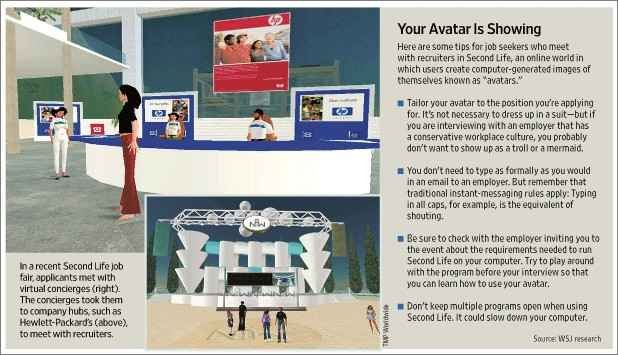
Wall Street Journal article on SL, 20-JUN-2007
T he dead might as well try to speak to the living as the old to the young.”
  —  Willa Cather.


Sunday, June 24, 2007

GoldStarEvents: Successfully Vying for Thinly-Spread Attentions of Young Market Segments

Jim McCarthy, CEO GoldStar Events
W  e have to have a [reduced] price that is behavior-changing.”
  —  Jim McCarthy, CEO, GoldStar Events.

CMT: More diverse classical music marketing matters more than ever in a crowded market filled with competing leisure activities and ever more cultural product. Because classical music doesn’t fit the demands of the construction of the culture of youth and fashion, it’s inevitably marginalized in a culture that’s obsessed with youth and fashion. So what’s a presenter to do, to sustain or improve revenue? GoldStar is clearly one good, rational answer. It’s been reasonably successful for presenters in 8 U.S. metropolitan markets for about 3 years now . . .

The feeling of danger is a fact to be reckoned with. The problem is perhaps less economic or demographic than it is cultural, less a question of the music’s survival than of its role. The days when listening to classical music could feel like an integral part of cultural life are long gone. One reason why is the loss of a credible way to maintain that people ought to listen to this music, that the music is something that should not be missed. Our growing reluctance or inability to impose prescriptive ‘shoulds’ has obscured the power of the ‘should’ that says, ‘Don’t deprive yourself of this pleasure.’ . . . There is nothing anymore that one just has to hear.”
  —  Lawrence Kramer, 2007.

DSM: Yes. I like your point about youth and fashion, by the way. I don’t believe anybody’s chamber music programming is overtly elitist. But, in general, it’s not fashion-generating or fashion-responsive. Most chamber music performers don’t have the financial wherewithal to be fashionistas! But, more than clothing or other surface elements, chamber music is, with the exception of Kronos and a handful of others, not transgressive enough to capture the imagination of the under-40’s. The idea of transgression, of breaking rules, is as important in classical music as it is in popular music. But in classical music, it’s essentially an inward, musical matter, while in popular music it is mostly an outward, performative, public display. Classical music infrequently shows outwardly transgressive moments. But inwardly, within the discourse of a string quartet, say, it’s frequently based on the idea of transgressing its own formal boundaries, of breaking prior conventions, of radically recasting its materials and methods. It just isn’t packaged with physical transgressions on the surface, which would be essential for pop cross-over—the daring costumes of Sophie Mütter notwithstanding.

If you [classical music presenters] want to keep your doors open in the 21st century, you’d better scrap the cultural entitlement mentality that has long dominated the marketing of the Arts in America and start trying out new business models that make sense to postmodern audiences. When it comes to the fine arts, young people want what they want when they want it—and if they can’t get it, they’ll go see a movie instead.”
  —  Terry Teachout, 2007.

CMT: Remember, too, that classical music is generally made as art but serves the function of entertainment. And, for many people, the discretionary spending is limited and is already committed to other activities. So classical music on the whole tries to market itself as art, but, by doing so, it becomes progressively more and more expensive and more and more elitist—inadvertently elitist; backhandedly elitist. GoldStar Events reverses this. Goldstar Events puts classical music and chamber music events back into the realm of ‘entertainment’ and prices the events at 50% or less of the full-price ticket. Transgressive or not, it suddenly becomes more affordable. And the internet-based social-networking and push-marketing enables GoldStar members to be notified of just those events that they have interest in. It’s not a panacea, but GoldStar’s “rush” tickets are one way for chamber music presenters to build audiences and market diversity. Ticket-drop and ‘buzz’! More butts in seats!

C   lassical music ... is no less concerned with individuality, radical difference, and expansive energy [than popular music], but it does not restrict these qualities to the image of a merely physical youthfulness.”
  —  Julian Johnson, p. 45.


Lawrence Kramer, Matters


Saturday, May 12, 2007

Unplugged Folias & Romanescas: Acoustics Très Tendrement, Finances Très Tendres

Jordi Savall Trio
The viola da gamba is a chamber instrument with a soft, sweet tone, incapable of the dynamic extremes and brilliance of the violin. This helps to account for its decline.”

  —  Columbia Encyclopedia, 6th Edition

CMT: During the interval I had a chance to glance at some of the music that Jordi had left on his music stand and on the floor. Beautiful hand-prepared manuscripts! Based on some idiosyncrasies in his scores, he seems to have intended to maximize exploiting the possibilities presented by the viola da gamba’s extended range. The gamba’s seven-string guitar-like tuning allows the performer a range of almost three octaves without shifting or changing positions (compared to two octaves plus a step on the cello). And its seven-string setup is conducive to virtuosic, arpeggiated passages. In one of the Marin Marais muzettes last night where a range of four octaves is spanned in only a few bars, Jordi demonstrated the flexibility the instrument allowed the composer. Phenomenal! The extended range of the viola da gamba is an “enabling technology” for a really dramatic melodic lyricism.

DSM: Together with Montserrat Figueras, Jordi Savall has founded three ensembles—Hespèrion XX, La Capella Reial and Le Concert des Nations. Each has in its own way charted new waters in terms of expressive beauty and lyricism. Savall’s performance in Alain Corneau’s film Tous les Matins du Monde (All the Mornings of the World), which won a César award for the best soundtrack, also charted new waters.

Jordi Savall
CMT: Sitting just 3 meters from Jordi at last night’s Friends of Chamber Music concert allowed me to observe his technique in detail. I was especially fascinated by his dramatic treatment of these pieces. According to Stowell’s Cambridge Companion to Cello, among the viola da gamba players of the 17th Century vibrato was associated with a tender, passionate or wailing quality. Jordi seems to favor a ‘flattement’ style of vibrato—one that’s extremely moving in tender pieces and on long notes. There is an intimate, introspective, confessional aspect to Jordi’s rendering of the Ortiz Folias—a storyteller’s sentimentality in his account of the Marais pieces. Almost autobiographical, when you are in the front row in a stone cathedral like this.

  • Diego Ortiz—Recercadas sobre tenores (Folias, Passa mezzo moderno, Romanesca)
  • Tobias Hume—Musickal Humors (Whope doe me no harme)
  • Gaspar Sanz—Piezas para la Guitarra (Jacaras-Canarios)
  • Marin Marais—La Viole de Louis XIV (Prelude-Le Labyrinthe)
  • Mr. De Sainte-Colombe de Fils—Fantasie en Rondeau
  • Mr. De Sainte-Colombe de Fils—Les pleurs
  • J.S. Bach—Bourrèe
  • J.S. Bach—English Suite in A minor
  • Antoine Forqueray—La Marella
  • Antonio Martin y Coll—Diferencias sobre las Folias
  • Jean-Baptiste Forqueray—La du Vaucel (Très Tendrement)

DSM: The movement of playing should serve to illustrate the music. Jordi does this superbly and consistently. These scores read as though they had a verbal text—well, in some cases they did have a verbal text, since much consort music was vocal in conception. But to see and hear Jordi Savall play is to believe that the entirety of the music is vocal in conception! The player must be ready to use a light, heavy or medium bow stroke according to the demands of the music. The melancholic music should be bowed lightly and evenly, while the left hand can use a tasteful amount of ‘tremolo’ to enhance the melancholy. Cheerful music requires the bow to animate the instrument and animate the music. You can only really see this adequately in live performance, close up! These pieces make you wonder for whom were the pieces written. Just who were the viola da gamba players and cellists capable of playing these pieces? Whoever the original dedicatees were, the performers must have been ones of great talent in order to do justice to this music.

Jordi Savall
CMT: You’re referring to the fact that every one of these pieces reveals big biomechanics issues, for the performer? These issues arise not only with the viola da gamba but basically with all other fretted stringed instruments that have more than four strings. Gambas and lutes and are tremendously delicate instruments. The bridge curvature on the gamba is pretty modest, and this makes it very difficult to apply bow pressure on a single string without touching off adjacent strings. Jordi is a phenomenal gymnast when it comes to expert bowmanship in the face of such risks. In the 16th Century, the necks of viols had very little backward tilt, making it necessary for the necks to be thick, to withstand the string tension. They were also narrow at the nut, bringing the strings very close together. There’s tremendous difficulty with chords and double-stops, especially for a player with a large hand or thick fingers, who would have difficulty in holding chords without overlapping other strings.

DSM: Compared to a modern cello, the absence of an endpin also makes the gamba awkward to play—hard to stabilize and hold between your gambas, I imagine. This physical precariousness of the gamba accentuates the delicacy of the sound, I think. For audience members who are in close proximity to the performer, the precariousness is visually captivating—somewhat in the way that we are captivated by watching a tight-rope walker—or a gymnast, as you put it. I was wondering in one of the Marais pieces whether Jordi had alternate-tuned one of the strings—scordatura? By the way, the fretted members of the string family, like the viola da gamba, came to be regarded as musical relics by the mid- to late-18th Century and were way out of fashion by the 19th Century, didn’t they?

CMT: Well, yes. The dark timbre and limited volume were the main reasons why, I suppose, given the acoustic demands of larger concert halls. Notably, the bright tone of gifted harpsichordist Pierre Hantaï achieved a volume perfect for balance between the instruments last night. Theorboist-guitarist Xavier Diaz delivered an exquisite offering as well. The full-to-capacity audience at Grace & Holy Trinity Cathedral responded enthusiastically—an appreciative standing ovation for the deeply moving and technically superb performance.

DSM: But the acoustical properties of the viola da gamba and theorbo and harpsichord still have consequences in terms of the economics of live performance then, don’t they? It’s unreasonable to program this Trio into a venue with an audience of more than a few hundred—with an unamplified sound so delicate as this Trio has. And, after all, how much can you charge per seat? So it’s hard for the presenter to gross more than $20,000 for this kind of program. Therefore, for the artists the financial viability of this delicate music really depends upon CD sales and paid digital downloads—to augment the proceeds from performance fees. And for the presenters, the financial viability of this delicate music really depends upon interested donors/patrons and upon grants from public-sector agencies, foundations, and commercial benefactors—to augment the proceeds from ticket sales/subscriptions.

CMT: You were speaking of ‘physical precariousness’ of the instrument earlier. I suppose a correlate of that is the ‘financial precariousness’ of the artform itself. Just as there is an appreciation of beauty created against all odds by artists like Jordi and Pierre and Xavier—the adversity and risk that their chosen instruments present to them—there’s also an appreciation of beauty and rarity—conservation of endangered early music and chamber music species against all odds, by chamber music presenters and other organizations around the globe. Attending concerts or supporting organizations that nurture these species in the Arts, don’t we participate in a kind of beauty that’s somewhat like observing a rare orchid?—contributing to habitat preservation for the spotted owl? Aren’t the gesture and its internal rewards a little like supporting Nature Conservancy?

Jordi Savall

Jordi Savall