Showing posts with label alternative venues. Show all posts

Saturday, May 31, 2008

Four Hands On-Deck: Peloquin-Hidalgo Duo at Bargemusic

 Bargemusic
The pianists, Marc Peloquin and Roberto Hidalgo (a.k.a. ‘Split-Second Piano Ensemble), gave an imaginative and exciting recital last night at Bargemusic at Fulton’s Landing in Brooklyn, to an enthusiastic audience of about 120 people.

 Paul St George’s Brooklyn – London ‘telectroscope’, open thru 15-JUN
  • Thomson—Synthetic Waltzes (1925)
  • Lavista—Simurg (1980)
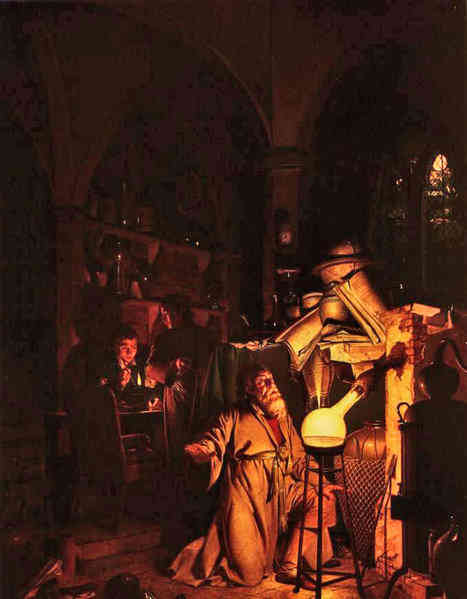
  • Burke—Alchemy (2007)
  • Crumb—Makrokosmos IV (1979)
  • Barber—Souvenirs (1952)
 Bargemusic programs, historical percentages by genre, on Instant Encore
Bargemusic is a vintage-1900 boat moored just south of the Brooklyn Bridge that is the venue for an extensive program of chamber music that runs year-round. Violinist-violist Olga Bloom and her supporters present more than 200 chamber music performances on the boat each year in the main salon, which has a seating area about 15 x 9 meters in size and a 5 meters-deep stage on the outboard/stern side.

 Bargemusic
The Virgil Thomson duet is a character piece, with abundant evocations of Americana; post-World War I moods; descriptive specificity of a self-prepossessed nationalism; and the supremacy of ‘idea’, in a way that seems sweet and untenable these days.

Simurg is Mario Lavista’s solo piano work that is a meditation on ideas in author Jorge Luis Borges’s Book of Imaginary Beings. In the book, the simurg is the ‘king’ of all birds. (From Lavista’s composition, we must conclude that the simurg is a raptor of unusual size. The simurg spends much of its pianistic time waiting, 13 minutes of atonal, percussive lurking-for-something-to-kill. It is obvious Hidalgo inhabits this creature with gusto; the piece provides an opportunity for aggression, indulging in acting-out that must ordinarily be kept in-check in normal civil society. I suspect the simurg may be the urbane Hidalgo’s alter-ego… ) The indolence of this piece accurately replicates the milieu in the Borges chapter on the simurg. Some imaginary beings are sentient, perhaps more so than many humans. But, by contrast, the imaginary simurg seems to have difficulty imagining its own purpose, other than doing what it does—lurking and killing, manifesting and preserving its malevolent power. It is anti-sentient: unfeeling, uncaring, destructive. (In Iranian legend, the simurg is so old that it has seen the destruction of the world three times already. The frightening timeliness and cautionary political relevance of this nihilistic image in today’s world could not have been clearer.)

 Roberto Hidalgo
Peloquin’s world-premiere performance of Stephen Burke’s Alchemy revealed this post-atonal piece to be a sculptural essay in chromatics—ethereal, with no clear time-signature. The sustained pedal caused some of the passages to be pretty muddy, although the geometry/acoustics of the barge performance salon did Peloquin no favors in this regard. Alchemists notoriously search and search and fail to ‘find’ [the method to transmute lead into gold], a failure for which Burke takes them to task. The succession of Burke’s sculptural ‘mass-of-sound’ gestures reveals the quixotic nature of alchemical self-deceptions—truthy assertions of dubious trajectory, hermetical inquiries without a discernable rationale or story, abstruse but diverting exercises that, in the end, disserve humankind. (Stephen is a 1984 graduate of The Juilliard School, not the Steve Burke who is a prodigious video-game composer, including the score for Kameo: Elements of Power (Xbox-360).)


 Wright, Alchemist
The Crumb piece was superb. Makrokosmos IV is a 28-minute tour-de-force in 4 movements, for 4 hands playing a miked-amplified prepared piano (3 stainless steel rulers inside, laying on the tuning pins). Prolific sonic textures involving both pianists repeatedly up and off the bench and reaching inside the piano to pluck, damp, de-tune, thump upon, and otherwise tamper with the inner workings of the instrument to create myriad effects.

 Four Hands
At one point, even the page-turner was engaged to knock on the cast-iron armature of the Steinway and assist in evoking imagery of super-nova celestial processes. The emulation of stellar coronal flares was particularly impressive. It’s a violent-but-beautiful universe according to Crumb, and Peloquin and Hidalgo gave a faithful rendering of that naturalistic/pantheistic viewpoint, assisted with a single cardioid dynamic mike running into a 60-watt Roland guitar amp with a little bit of added reverb. (In a way, the Crumb piece was a continuation of the anti-anthropocentric political re-calibration that was introduced in the Lavista piece, Simurg. It is a universe in which humankind does not have a pre-designed, God-given place; indeed, in which humankind has no cosmic friend at all; beauty in the here and now, with difficulty and no possibility of redemption. )

 Marc Peloquin
The Samuel Barber piece, Souvenirs, is an amusing 4-handed character piece that is seldom performed in public settings—receiving here on the barge a convincing reincarnation in the hands of Hidalgo and Peloquin. (Barber evidently had a sardonic fit at the age of 42 when he composed this duet, a critical comment on the esoteric/illogical quality of what is collected: the very nature of what it is to be a ‘souvenir’ and what it means to ‘collect’ such things are lampooned. The ‘Hesitation Tango’ is itself worth the price of admission.)

 Peloquin (left) and Hidalgo (right) at Bargemusic
Peloquin and Hidalgo performed a wry, over-the-top Brahms Hungarian folkmusic send-up as a dazzling-humorous encore, as the barge swayed gently in the East River chop. One of the nicest chamber music outings ever for a delighted crowd ranging from 8 to 80 years old, in a charming, unusual venue. The illustrious and extroverted Olga Bloom gave warm, personal thank-yous to each of us as we departed via the gang-plank. Bravo!

 Brooklyn Bridge

 Olga Bloom, Mark Peskanov


Friday, December 28, 2007

Humidity and Performance Venue Timbre

Bohn, Fig. 6
How might chamber music presenters adjust their HVAC systems to optimize the acoustics of the performance hall?

This question occurred to me when I attended an ‘early music’ concert in Minneapolis. The humidity in the church was very low, probably because of the wintry air temperature outside—and the fact that the church heating plant and thermostats were set so as to conserve energy. Too, there probably was no humidifier in the airflow ducting of the furnace, although I don’t know for certain whether this was the case or not. Within 10 minutes of taking my seat, my eyes felt dry. The performance was delayed because of snowy road conditions (much like the situation on 13-DEC-2007 in Boston). Within 40 minutes, still waiting for the performance to begin, the inside of my nose was crispy and sore. The room was like the Sahara, maybe 5% to 10% relative humidity!

But eventually the concert started. And, oh, the acoustics! The acoustics were unusually crisp. Scintillating! The extraordinary timbre of the room was all the more noticeable because I was seated about 30 meters from the performers—far enough away for the reverberation and acoustic absorption properties of the arid air between the performers and my ears to have a big effect on the sound waves.

By contrast, Boston and Kansas City and New York are temperate cities and always fairly humid (40% to 100% relative humidity outdoors, and 30% to 70% humidity indoors). The altitudes of all of the cities where I’ve ever attended performances or played are low, so I think we can safely exclude barometric pressure differences as the source of the differences I’m referring to.

Chamber music performance venues in these humid cities all sound warm and ‘liquid-ey’. There’s a high-frequency ‘roll-off’ on everything—starting, I think, at about 1 KHz (C6) and dropping maybe 3 dB per octave above that.

The warming, fluid effect at increased humidities that I’m referring to is not a pan-spectrum ‘deadening’ of the sound. (The effect of new-fallen snow, like we have in K.C. today, is deadening—a severe attenuation across all frequencies; no distinct low-pass cut-off frequency or ‘shoulder’—and that’s not what I’m talking about at all. ) The high-humidity timbre is just sweet and warm.

Reverberation is actually enhanced in humid environments. The reflected sounds are louder. And this enhanced sound pressure level of the reflected sounds seems to be what is mostly responsible for the warmer sound in a humid environment.

I  retrieved the papers by Harris and Bohn, extracted the data contained in them, and performed log-normal statistical regressions on the data. (The data are for ‘direct’ reception of ‘flat’ wavefront sound propagating horizontally from a single localized sound source to a receiver at the same elevation above the floor as the source. In other words, the data—and my regressions—do not consider any reflections/reverberation, do not take into account the height difference between the performers and the listener, and do not make any assumptions about hall dimensions, geometry, wall-coverings, etc.) For your interest, I’m making the results of the regressions available in the following spreadsheet.


Spreadsheet to Calculate Sound Pressure Loss Spectrum as a Function of Relative Humidity
If you download the spreadsheet and play with it (adjust the relative humidity and your distance from the performers with the scroll-bar control sliders), you’ll find that the low-pass shoulder frequency shifts to the right (to higher frequencies) as the humidity increases. You’ll find that the slope of the sound pressure level (SPL) roll-off in dB/octave is maximum around RH=25%. You’ll find that the slope is about 2 dB/octave at very low and very high humidities, but can be 7 dB/octave or more (for listeners seated far from the stage in a typical-size chamber music concert hall) when RH is between 20% and 30%.

What this suggests to me is that, to optimize the listening experience for as many concert-goers as possible, presenters should try to avoid humidities in the 20% to 30% range—tough to do in wintertime in climates with outdoor ambient temperatures below –10 ºC.

Hypothetically, it would be wonderful to perform in very low-humidity air—say, chamber music festivals in the mountains at 4,000 meters or higher; or venues (Arizona? New Mexico? inland California? Alberta?) having peculiarly dry air like what I encountered in Minneapolis. Or, conversely, the timbre could be similarly sweet at low altitudes, in air that has been conditioned to between 55% and 70% relative humidity.

(For humans, relative humidity less than 25% feels too dry. The normal recommended comfort range is 25% to 65%. Above 65% many people feel clammy or uncomfortably moist. Many concert halls and other public buildings are conditioned so as to stay close to 45% relative humidity.)

An unexpected surprise from my statistical modeling and analysis is that tropical locations with relative humidity in the 70% to 90% range should have even sweeter, more lively timbres. Yes, such high humidity levels would have some adverse effects on tuning for stringed instruments and pianos, but the liveliness of the sound might be pretty interesting—noticeably warmer than usual, especially for listeners 20 meters or more away from the stage. And, of course, choral and wind instrument performance—no problem at all at such high humidities.

I’d be grateful to hear from you regarding your own acoustical experiences in unusually dry or unusually humid indoor performance venues. If you live or perform in equatorial locations, your impressions would be especially interesting. Any chamber music presenters or organizers of festivals in warm, humid locations out there with comments to share? Do any architects out there reading this blog post have advice based on your concert hall design projects?

With global warming, I suppose the future for most of us will tend to be more humid on average, compared to conditions to which we’ve been accustomed…


NOAA Natl Climate Data Center


Tuesday, November 20, 2007

La Catrina Quartet and Àlvarez: Collage Against Nationalism

La Catrina String Quartet
J avier Àlvarez reveals influences of popular cultures that go beyond the borders of our own time and the place.”
[beyond the Borders of
Time
  and place;
     of anyone’s time
        and place — beyond
our ‘own’ ]
  —  John Adams.

Javier Álvarez combines conventional instrumental idioms with the acuteness of technology, elaborating an eclectic vision that originates as much from various non-musical disciplines as from music collected from other parts of the world.

At present Álvarez lives and works in Mérida, Yucatan. Born in Mexico City in 1956, he studied composition with Mario Lavista before coming to the United States in 1980 where he studied with John Downey at the University of Wisconsin-Milwaukee. Subsequently Álvarez moved to the U.K. where he continued his studies at the Royal College of Music with John Lambert. His first electroacoustic works were composed then—for example, Temazcal (1984). Mannam (1992) uses cítara, mixing rhythmic elements of traditional Korean music with materials and techniques of Mexican harp—this won second place in the Prix Ars Electronica in Austria in 1993. Most of his works incorporate sonic elements of other music, such as mambo (Mambo a la Braque, 1991). Papalotl (1987) combines piano and electroacoustic sounds.

This is not novelty for novelty’s sake. Álvarez’s textures are not ‘merely’ interesting or seductive: Their appeal for our attention is not strident. They have a point. He creates collages of vernacular music that emulate a folklore—a Borges-like abcediary of imaginary creatures—a factitious folklore so fantastical that it calls into question our notion of folklore itself. Álvarez’s transgressive textures work to undermine the very notion of cultural identity and ownership. In the process, he demolishes the exclusionary and disenfranchising politics of nationalism and tribal culture—affiliation and disaffiliation.

Metro Chabacano (1991), performed by La Catrina in Albuquerque on Sunday, is a case in point. Derived from Álvarez’s 1986 piece for string orchestra, Canción de Tierra y Esperanza, the composition was created to accompany sculptor Marcos Limenez’s kinetic installation art, to be displayed in Mexico City’s biggest and busiest subway station, Metro Chabacano. The piece was subsequently performed on tape there for a period of three months during 1991. Metro Chabacano has a continuous eighth-note ground from which short lyrical passages appear in each of the parts. The repeated notes confer a deceptive minimalistic simplicity, out of which the organic, unstoppable, inevitable individuality of each voice in the quartet flourishes. The effect is, on balance, an optimistic world view—albeit an elemental, fatalistic or ‘vegetal’ one, on a par with the experience of watching a garden grow or watching children grow up. La Catrina Quartet’s account of Metro Chabacano was simultaneously inspiring and poignant, in precisely that elemental way.

Because of La Catrina Quartet’s profile, they are well-positioned to facilitate Latino and minority students’ progress—students who might otherwise fall through the cracks of the educational system. It also is consistent with their devotion more towards ‘nurture’ rather than ‘nature’ in their teaching. As a Latino string quartet, they strive to offer young minority audiences positive role models in opposition to gangs and negative stereotyping, corrosive influences in youth culture.

I n a country where the ‘melting pot’ phenomenon is all but unavoidable, it is essential to show the younger generations of today that immigration can be a positive force, one that enriches our culture rather than impoverishes our society.”

  —  La Catrina Quartet.

As to the Quartet’s name, according to Mexican Folklore, ‘La Catrina’ is a name for Death. La Catrina can show herself in many different ways. Sometimes she is dressed in a elaborate, festive clothes. Sometimes she appears as just a skeleton, to take us away when we least expect it. Generally, though, in Mexico death is thought of as a natural guest on certain occasions, such as the Day of the Dead, or Día de los Fieles Difuntos. The memory of one’s “fieles difuntos” (‘faithful departed’) is the source of familial and cultural identity. La Catrina, with her mischievous smile, exhorts the living to seize the moment and, through music, to find life’s meaning.

Founded in 2001, the La Catrina String Quartet frequently performs new music by living composers and promotes and performs Mexican and Latin American art music in Mexico as well as in the United States and abroad. This summer La Catrina was string quartet in residence in San Miguel de Allende, México, where they collaborated with the Brentano Quartet for a performance of the Mendelssohn octet and the Brahms sextet Op. 36. Their residency duties included giving private instruction to string students from Mexico and the United States and teaching chamber music and strings masterclasses, as well as their collaboration with the Brentanos.

In the current season, the Catrinas will be featured in concert series in the United States and México. Currently, the quartet is working on developing an exchange program between the Conservatorio de Las Rosas, where they will be the Quartet-in-Residence beginning in Summer 2008, and Kent State University. This Fall the quartet relocated to Hickory, NC, where they continue developing their repertoire as well as commissioning new works and continuing with their commitment to bringing the string quartet out of the concert hall and into alternative venues.

[Daniel Vega-Albela was born in Mexico City and earned his Master of Music degree in violin performance from Western Michigan University, where he studied with violinist Renata Artman Knific. He holds a Master of Music degree in chamber music performance from Kent State University. From 1994 to 1997, he was instructor of violin at the Academia Yuriko Kuronuma in Mexico City, and in 1997, he joined the Conservatorio de las Rosas to teach violin performance and to play with the new music ensemble, the Ensamble de las Rosas.

New York native George Anthony Figueroa earned his Bachelor Degree from the University of Florida at the New World School of the Arts in Miami and currently holds a Master’s degree in violin performance from the University of Oklahoma. Figueroa has studied with Cathy Meng-Robinson, Ivan Chan, Yair Kless, Diane Pascal, Lucie Robert and Felicia Moye. He has participated in master classes with Monica Hughes, Charlie Castelman, Yuval Waldman, Fredell Lack and Lucie Robert. Mr. Figueroa holds a Master of Music degree in chamber music performance from Kent State University.

Born in Torreón, Coahuila, Mexico, Jorge Martínez studied viola at the Conservatorio de las Rosas where he graduated with honors, under the tutelage of professor Gela Dubrova. In 2003, he completed his Master of Music degree in Viola Performance at Western Michigan University. Mr. Martínez has been a faculty member of the Conservatorio de las Rosas in Mexico, as well as instructor of violin and viola at Crescendo Academy of Music in Kalamazoo, Michigan. Martínez holds a Master of Music degree in chamber music and vocal performance from Kent State University.

Born in Mexico City, Alan Daowz started the cello with José Luis Gálvez at the Escuela Nacional de Música and the Conservatorio de las Rosas in Morelia, Michoacán, where he obtained his Bachelor degree in cello performance. He received his Master of Music degree in cello performance from Western Michigan University, where he studied with Professor Bruce Uchimura. Mr. Daowz holds a Master of Music degree in chamber music performance from Kent State University. ]

La Catrina, José Guadalupe Posada (1851-1913)


Saturday, November 10, 2007

Chiara String Quartet & Jefferson Friedman: Creative Symbiosis

Chiara String Quartet
The Chiara String Quartet gave a nice reprise tonight of their March appearance at TheBrick in Kansas City. As before, the house was packed during both sets.

Let’s set the record ‘straight’: club venues can be excellent for chamber music performances. An expert sound engineer and excellent gear can make the club nearly the acoustic equal of a recording studio or a fine small concert hall. And the audience who shows up is often more engaged and appreciative than most conventional classical music presenters are accustomed to. No rustling paper programs, no premeditated conditioning to a familiar, comodified repertoire. Just attentive immersion in the music. (Note to presenters: to keep your chamber music audience from coughing, just serve them cocktails.)

The Chiaras’ set-list included movements from Brahms’ Quartet in A Minor Op. 51 No. 2; selections from their CD of Gabriela Lena Frank compositions, ‘Leyendas: An Andean Walkabout’; plus movements from Beethoven’s Quartet in E-flat Major Op. 127 and Jefferson Friedman’s String Quartet No. 2. (The Chiara Quartet’s previous appearance here had included parts of Friedman’s Quartet No. 3.)

Chiara String Quartet
The Chiaras’ interpretive skills and aesthetic intuition find perfect application in rendering the music of composer Jefferson Friedman. Friedman’s Quartets Nos. 2 and 3 have been acclaimed by various critics, but some reviewers have also opined about certain shortcomings and problematic sections. Some commenters, such as David Salvage of Sequenza21, have impugned some aspects of the Quartets’ craftsmanship while simultaneously praising other aspects.

Be that as it may, the expressive language in the No. 2 and No. 3 Quartets is reasonably forgiving, and the Chiaras are empathetic and insightful executants. This situation is, I think, not too different from an author having a skillful translator to render the original work into another language.

Without a doubt, the concept of expressive fidelity and authenticity operates on many levels—in musical texts as well as literary ones. One level is vocabulary—mapped as precisely as possible, even in cases where this requires using unfamiliar expressions or inventing new words in the target language: ‘neologisms’ that somehow convey the intent of the original text. In music, this can entail unusual articulation to get unfamiliar timbres; unusual orchestration; unusual voice-leading.

Ultimately, the most important question regarding translatorly fidelity is ‘meaning’. If the words (notes) and syntax and rhythm and style are carried through to the target language (musical performance), the meaning will follow. Even if the original is ambiguous, or even if it has multiple meanings, a skillful translation will replicate that ambiguity/multiplicity of meanings.

There are times, though, when circumstances force the translator—here, the Chiaras—into a particular interpretation. In that case, it’s important to take full advantage of every available clue, including syntactic details, motif usage, and the relationship to preceding and succeeding sections—i.e., the flow. What shouldn’t factor into the interpretation is the translator’s preconceived notions of what the author/composer “must have been talking about.” [Considering David Salvage’s criticisms of Friedman’s work, it seems that Salvage was taking issue with what Friedman was “saying”, not with the Chiaras’ interpretation of Friedman.]

Language is central to any discussion about translation. But there are elements involved in the process of translation that go beyond this conventional area. Literary translation involves a good deal of interpretation about intent and effect. Likewise in music performance practice. On the other hand, a good literary translator is often not as much interested in explicit transliteration as in finding an accurate mood, tone, voice, sound, response, and so forth. Music, the same. Once upon a time, Petrarch said the goal is similarity but not sameness:

A n imitator must see to it that what he writes is similar, but not the very same; and the similarity, moreover, should not be like that of a painting or statue to the person represented, but rather like that of a son to a father, where there is often a great difference in the features and body shape, yet after all there is a shadowy something—akin to what the painters call one’s ‘air’—hovering about the face, and especially the eyes, out of which there grows a likeness ... We writers, too, must see to it that along with the similarity there is a large measure of dissimilarity; and furthermore such likeness as there is must be elusive—something that it is impossible to seize except by a sort of hunt, a quality to be felt rather than defined.”
  —  Petrarch, Familiar Letters, The Young Humanist of Ravenna, to Boccaccio, 287-293.

So, contrary to some critics’ contention that poetry ‘loses’ in translation or that poetry is deeply ‘untranslatable’, there are others who hold that it must be illustrated and illuminated—who hold that the essence that matters most does transcend culture- and linguistic- and generational localizations. To them, poetry is always ‘found again’ and re-created by the translator—even in successive generations of people in the language and culture in which the work originated. Everything is hermeneutics! Of course, the original poetics can’t be ‘transcribed’!—they must be ‘arranged’! The new ‘arrangements’ may be even more fully realize the composer’s aspirations than the original score with its instructions and annotations.

In other words, the translator is not merely a special sort of ‘reader’. She/he is that, yes—but she/he is also vicariously a writer and performer. The translator needs to project herself/himself into these roles and consider translation from the perspective of the culture and linguistic heritage of the readers and audience. In this sense, the Chiaras are especially deeply “invested” in their roles as active musical translators/arrangers/readers/writers, not “only” performers. (Their investment style? High-risk musical growth equities! High-volatility, large alpha stocks, like Friedman!)

Chiara String Quartet
Good translators discover the dynamics of the work, and don’t allow its literal mechanics to trump every other card. This is what the Chiaras do so well. They take what Friedman wrote and add value to it. They make it their own. But they are also like specialists on the trading floor of a stock exchange—they “make a market” in Friedman.

A  bout two-thirds of the way through, something special happens: the instruments climb into their highest registers, start playing quick glissandos and unisons of varying vibrato widths, and, for a few breathless moments, break into birdsong. When the music returns to Earth again, the resolution is beautiful, and one realizes one has just heard something a little amazing.”
  —  David Salvage, Sequenza21, 27-APR-2005, on String Quartet No. 3.

Friedman’s writing is full of non-standard things. ‘Non-standard’ language may be used by an author/composer for other reasons than simply to make character speak in a more realistic way. Non-standard language is incorrect not only from a grammatical point of view, but also from an ethical stance. This sets non-standard language in stark contrast with standard language, which can be seen as representing the Establishment. Great move for a Young Turk composer like Friedman!

‘Non-standard’ language can be a sort of symbolic protest against the prevailing culture and society. For example, it can describe an underprivileged/overprivileged social context from the inside, through the language it uses. Non-standard language may in fact constitute ‘profanity’ against standard forms/norms even if it isn’t inherently profane. As a result, the use of non-standard language may help to make a musical, novelistic, or cinematic work more accessible to a target audience, in a provocative way. [And this Friedman Quartet No. 2 is positively cinematic, by the way.] Translating non-standard expressive language is therefore a hard task—harder than translating ordinary texts. Even when a skilled translator has understood the author’s original motives, the cultural background, the social level(s) referenced, and the intended effect, the problem remains of how to emulate the peculiar flavor and intent in another language.

There’s no easy solution. In theory the reader/hearer of the translated version should be able to intuit the same information the reader/hearer of the native text acquired. But this is tough. Shades of meaning do get lost in translation. So a really good translation is, and must be, a balance between what gets ‘lost’ and what can be ‘found’. The translation of non-standard language, even if it’s a difficult task, can be extremely fascinating and rewarding. Here’s where the Chiaras excel. They muster a hefty dose of creativity, and find ways of making sure that as little as possible is lost and as much as possible is found in their ‘translation’ or ‘arrangement’. Friedman wins; the Chiaras win; we win!

The No. 3 Quartet’s brief movements (first and third) enclose a longer central movement entitled ‘Act’. Both the first and third movements open with long, insistent, crescendo phrases. But while the first movement is “in your face” with aggressive ostinatos, the third movement is quiet, eventually settling on a major triad.

T he content of the middle movement is more varied. Ranging from close Ligeti-like chromatic counterpoint to spacious Copland-esque chorales, ‘Act’ doesn’t quite reconcile its contrasting materials satisfactorily. Particularly disappointing is the easy major resolution that concludes the movement.”
  —  David Salvage, [Sequenza21, 27-APR-2005]

T his No. 3 Quartet is uneven. The first movement never quite emerges. There are passages of ostinato that feel like un-melodied accompaniments. There are too many broad crescendos that terminate in sudden pianos.”
  —  David Salvage, [Sequenza21, 27-APR-2005]

T his young wine may have a lot of tannins now, but in five or 10 years it is going to be spectacular. You know this is how it is supposed to taste at this stage of development.”
  —  Itzhak Perlman.

Is Friedman’s C major resolution in this movement of the No. 3 quartet a ‘mistake’? Why does Salvage think it is ‘too easy’? Does Friedman regret the decision to resolve in this way? Should we accept Salvage’s assessment and feel embarrassment at preferring the C major choice that has been deprecated? Is Salvage a ‘pump-and-dump’ day-trader in Friedman? I, for one, do not think it is ‘easy’ or a ‘mistake’ any more than I think the major-key resolutions in much baroque music were ‘easy’ or ‘mistakes’. Think of Bach’s Concerto in D minor (BWV 974) –the nuances of Glenn Gould’s rendering of it, for example. There’s a poignancy in the major-key resolution that coheres with every minor-key thing that has gone before. There’s a restraint, there’s a backing-off of key attack velocity—many cues in the composition that add depth and complexity to an ‘easy’ major triad.

The Chiaras’ performance of parts of the No. 2 quartet at The Brick tonight was also illuminating—thoughtful without being self-conscious, erudite-but-never-scholastic. Mr. Friedman composed his String Quartet No. 2 for the Chiara String Quartet in 1999 while under the guidance of John Corigliano at Juilliard. The first movement opens with strident rhythms that deliberately shift in and out of sync. The lyrical second movement is a déjà vu view of someone’s secret reveries—either Friedman’s, or your own. In the dance-like third movement, rippling trills lead to a passage of muted longing and a revivified finale.

Quartet No. 2 does not have the first violin or any other part predominating unduly. No part merely ‘fills in’. The string writing deals far less in outlines than in harmonic blocks. The effect is exhilarating and gripping.

Friedman’s writing is contrapuntal and closely-packed—there’s far more texture in it than many ‘new music’ compositions. The excellent sound engineering at TheBrick did justice to the Chiaras’ rendering of this.

Jefferson Friedman
Born in 1974, Jefferson Friedman is American, the winner of the 2004 Rome Prize Fellowship in Musical Composition from the American Academy in Rome. His commissions include two orchestral pieces for Leonard Slatkin and the National Symphony Orchestra, works for the Yesaroun’ Duo, two string quartets for the Chiaras, and a chamber piece for the Utah Arts Festival. His music has been performed at the Kennedy Center for the Performing Arts, Lincoln Center’s Alice Tully Hall and Avery Fisher Hall, Carnegie Hall’s Weill Recital Hall, and the American Academy in Rome. Mr. Friedman received his M.M. degree in music composition from The Juilliard School where he studied with John Corigliano. He lives and composes in Long Island City, NY.

W   e know it’s great music. We also know that people who have never heard it before have very strong, visceral feelings and connections with the music. But barriers (have to be) broken down for them. I think a lot of our generation is working to take down those barriers that say classical music is elitist, or only for old people or only for rich people. We play all over the place - in schools, in nursing homes, in urban settings, in rural settings. We’ve really played for any audience that you can imagine. That really has to be an m.o. for any group starting out now.”
  —  Jonah Sirota, Chiara String Quartet, 2006.

S uits and tuxedos are designed explicitly to prevent blood from reaching the brain and to prevent audience members from feeling comfortable. We’ve done our best within the conventions of the concert hall to relax this feeling, but in the concert hall there is no easy way to duplicate the freedom of just being yourself you have when playing in a club.”
  —  Greg Beaver, Chiara String Quartet, 2007.


Engineer, TheBrick