Showing posts with label diaspora. Show all posts

Thursday, January 22, 2009

Santa Fe Guitar Quartet and Rahim al Haj: Hermanos, Caminando por el Mundo

 Santa Fe Guitar Quartet, photo © Diana Molina
M    usic is like a clock—it moves around in a circle.”
  —  Rahim al Haj, interview in Roots World, Bill Nevins, 2006.
E    l flamenco parece moverse en un mundo oscuro, cargado de sobreentendidos accesible sólo para un reducido círculo de iniciados—hasta ahora. El cuarteto guitarra Santa Fe explica el lenguaje y los detalles del flamenco, junto con un poco de contexto histórico para que gocemos la total experiencia de este estilo musicál. Las guitarras cuentan siempre una historia de las penas y alegrías, la pasión, la rabia y el amor que se viven…
[Until now, flamenco seemed to me to function in a private, covert, highly-implicated world accessible only to natives and ‘initiates’. The SFG4 explain to us the intimate details of flamenco, along with historic context so that we gringos can finally grasp and enjoy the total experience of this musical style. The guitars emit always a living history of griefs and happinesses, passion, rage and love…]”
  —  DSM, blown away by SFG4 concert in Albuquerque on 18-JAN-2009.
S ome things passively happen; other things you actively and collectively/collaboratively ‘make happen’. It’s nice when you are able to enjoy and derive joy and satisfaction from both.

T he four members of the Argentinian group, Santa Fe Guitar Quartet (SFG4), performed last Sunday with special guest, the Iraqi émigré oud artist Rahim al Haj, as part of this season’s international program by Chamber Music Albuquerque at the Simms Center recital hall of the Albuquerque Academy, to an appreciative audience of more than 600. Their stage manner was notable for its ‘inclusiveness’ and the warmth and humor of the artists’ remarks, punctuating and interleaved between each piece… shades of Sandow’s admonishments about making classical music accessible in the Age of Pop.

C ombining the individual talents of two Argentineans and two North Americans, the group has been touring internationally since 1989. Santa Fe Guitar Quartet’s members are Miguel Piva, Mariano Fontana, Eric Slavin, Christopher Dorsey—“two Argentinians and two gringos,” as Mariano puts it in his introductory words to the audience.

T he program began with ‘Three Latin Dances’, composed by the Cuban clarinetist Paquito d’Rivera in 2000. In ‘Wapango’, d’Rivera references the rhythm of the Mexican dance called ‘huapango’, exploring relationships between traditional and new, masculine and feminine.


    [50-sec clip, D’Rivera, ‘Wapango’, Santa Fe Guitar Quartet, 1.2MB MP3]

P iazzolla’s ‘Cuatro Estaciones’ was composed between 1965 and 1970. Originally written for his quintet of violin, bandoneón, electric guitar, piano, and contrabass, the transcription performed by the Santa Fe String Quartet was filled with rich, homogenized sonorities—made more intense by the familial timbres of the guitars. Tango was transformed by Piazzolla’s writing, and this piece is the pinnacle of that influence, as SFG4 member Eric Slavin told the audience. Baroque counterpoint is obvious in ‘Invierno porteño’, and a fugue-like section begins the last movement, ‘Primavera porteña’.


    [50-sec clip, Piazzolla, ‘Invierno porteño’, Santa Fe Guitar Quartet, 1.2MB MP3]

A lbeníz’s ‘Iberia-Almería’ was, for me, a high-point in the SFG4 performance—‘backhandedly’ so, because of my acquaintaince with it as a piano composition. I admit that the depth of my prior experience of ‘Iberia’ has been limited by my modest abilities as a pianist. In fact, hearing SFG4’s arrangement of it for guitar quartet made me think that one brain operating ten fingers and pedals at a keyboard is actually seriously suboptimal—too little grey matter ‘computing power’, to adequately render all of what ‘Iberia’ has to offer.

 Albeníz, Iberia-Almería, mm. 1-4

    [50-sec clip, Albeníz, ‘Iberia-Almería’, Santa Fe Guitar Quartet, 1.2MB MP3]

Y es, there is a certain amount of ‘parallel processing’ that each brain is capable of on its own. But with respect to muscle motor activity—fine control of fingers, etc.—and with respect to attending to and coping with ‘affective’ and expressive ‘emotional’ content, the parallelism any person’s one-brain, ‘single-core’ architecture can support is limited, no matter how virtuosic she/he may be. Neural structures in the brain that mediate our ‘active’ (versus passive) emotional coping have been identified anatomically and are located within distinct, longitudinal neuronal columns of the midbrain [the periaqueductal gray (PAG) region]. Active coping is associated with activation of either the dorsolateral or lateral columns of the PAG; whereas passive coping is triggered by activation of the ventrolateral PAG. In each one of us, these brain areas generally attend to one trigger or evoking event at a time. But with SFG4 we have a ‘four-core’ massively-parallel multiprocessor, with an extremely high-bandwidth bus for interprocessor communication. The musical/expressive effect is impressive—as staggering as, say, moving to a supercomputer, after having experienced the execution of a program on a smaller, slower computer.

T he ‘Iberia’ that I thought I ‘knew’ and understood suddenly, in SFG4’s hands, has tremendous new depth. My mouth had already been agog at the beauty and technical virtuosity of their playing. But during their rendering of the Albeníz my jaw was on the floor. [And now that I am back home from Albuquerque I will get out my copy of ‘Iberia’ Books 1 and 2 and try to figure out what else I can learn, about the deep structure of these pieces and about how they work… regardless that my single-core mind could never play them like what the four-core SFG4 has done.]

 Albeníz, Iberia-Almería, mm. 53-56, bass melody
O ne example that epitomizes the flavor of SFG4’s interpretation: in ‘Almería’, the 2-vs-3 polymeter (lower parts’ timesignature is 3/4 against 6/8) imbues it with a collaborative ‘caminando’ urgency that completely betrays the ‘dolce’ marking. ‘Caminando’—driving forward, together and urgently, on the road of Life; requiring only the most abbreviated signals amongst yourselves, because you each know so very well what your companions on the journey are thinking and feeling, and you are all simultaneously hearing and seeing the same ‘scenery’.

T he ‘copla’ (melodic line) does not inhibit the other parts from elaborating their own ideas and personalities. Dense, intricate textures; impressionistic, forward-looking but honoring the past. Domestic, not courtly. Exuberant, not brooding. The textural and interpretive diversity here can be understood in terms of notions of authority and autonomy, as Coelho has done. ‘Authority’ refers to the performer’s reliance on the score—the musical text—and established tradition as to performance style. ‘Autonomy’ refers to latitudes taken in animating and interpreting the score in performance. The artistic license they take is in their transcriptions, their mark-ups of the scores; the re-contextualizations of the music, to their own situations and experiences. The pieces are open to interpolation, extension, repetition, suppression, elaboration—the performers’ autonomy is not separable from the composers’ authority. Compositional style is [mathematically, processually] convolved with performance style.

T he ‘middle ground’/’foreground’ structures... pedal tones have their equivalent here, especially (but not exclusively) in the bass guitar part. These generate cues to digressions and returns—the role which otherwise would be borne by transitions involving tonic and dominant. Use of the subdominant as a secondary key and elided/synoptic restatement of the primary theme on its return ... are essentially co-optations of sonata form.

T he tonic pedal tones unite the thematic content—the themes exhibit small but perceptible mutations and modal inflections but are glued together by the tonic pedal tones. But the bass part is not accompaniment, nor is it directorial in its gestures. It's an equal among brothers. In mm. 53-55, for example, the bass part introduces a new melody. The other parts listen, take it into account, acknowledge it without mimicking it. It reappears briefly, in mm. 83-84, which gives way to a (Mixolydian mode?) copla/theme in mm. 87-100 where the tonic and subtonic harmonies alternate, followed by Phrygian-mode designs. These lend a distinctive ambiguity—one that only sinks in over dozens of bars. Probably it would be more accurate to think of the effect as a coloristic, context-imparting device, rather than an ambiguity-inducing one.

A ll of this is distinctly ‘fraternal’ in character. It is far beyond folkloric or nationalistic. And the rhythmic accents (compás) are similar to that of siguiriyas, which are the most ‘jondo’ (deep) of all flamenco rhythms.

I n fact, the entire SFG4 program has what could fairly be called ‘jondo’ spirit. The encore—a quartet composed by Paris-based guitar master, Roland Dyens, was superb. Visit SFG4’s website and buy their CDs. Better, attend their concerts if you possibly, possibly can.

T he concert was notable also for the captivating performance by oud artist Rahim al Haj. Rahim, an Iraqi who was imprisoned by Saddam Hussein’s regime and who emigrated to the U.S. in 2000, played a requiem that he recently composed for an Albuquerque friend of his who had passed away. He joined SFG4 members on the performance of his piece entitled ‘Fly Away’, which was commissioned by SFG4. Phenomenal! Al Haj’s playing deserves a blog post all by itself—something I’ll set myself to in coming weeks.

 Rahim al Haj, photo © Douglas Kent Hall

 Cosquín festival


Sunday, January 18, 2009

Chen Yi: Design as Narration, Narrative as Totem

 Stone Totem, Sanya, Hainan, China
T    he quest for music that elevates the mind is an essential part of the mainstream of Chinese music. Over 8,000 years of the Chinese musical civilization, all types of influences have been experienced... These include the adoption and jettisoning—of various temperament systems, of a wide range of formal designs, and of wide ranges of acoustics. Global consumerism, however, is one influenc it had never encountered [before the 20th Century.”
  —  Sin-Yan Shen, Chinese Music in the 20th Century, p.189.
T    o my mind, the origin of music should not be sought in linguistic communication. Of course, the drum and song have long been carriers of linguistic meaning. But there is no convincing theory of music as language. The attempts that have been made in that direction are no more than camouflages for a kind of naturalism or the most mundane kind of pedantry. The musical message has no meaning, even if one artificially assigns a (necessarily rudimentary) signification to certain sounds, a move that is almost always associated with a hierarchical discourse.”
  —  Jacques Attali, Noise, p. 25.
I    t is true that I use compositional techniques from all of the cultures I have experienced and all the teachers I have learned from—Russian, French, German, Chinese, American. I do adapt Western classical techniques to express Chinese [sensibilities] and so on. ‘From the Path of Beauty’ does take Chinese folk songs as its primary material, but it [secondarily/indirectly] generates ideas that are universal. Music is, I think, a universal language.”
  —  Chen Yi, 17-JAN-2009, Friends of Chamber Music Concert.
I suppose that the main controversy has perennially been not whether music may evoke substantially the same emotions in all listeners/performers, but rather whether music can express propositions or specific questions or perform other representational linguistic functions that are associated with other textual or oral languages. In other words, the idea that musical gestures and harmonic colors and rhythmic textures can serve as signs and symbols that carry subjective emotional meaning is not tremendously controversial. But whether it can do more than this still is a source of disagreement.

 Chanticleer, photo (c) Lisa Kohler
 Shanghai Quartet in Red Volvo
T he performance at Friends of Chamber Music last night by Shanghai Quartet and Chanticleer, of Chen Yi’s ‘From the Path of Beauty’ for mixed ensemble was a good opportunity to revisit that topic. The performance was flawless, extraordinarily beautiful. The balance between the voices and the strings (who often were played with mutes on) was exceptionally good.

 Chen Yi
T he 7 movements of this piece include one a capella portion, one movement for string quartet alone, and the remaining 5 with the combined, mixed ensemble. The vocal parts have accompanying Chinese poems; however, the syllables did not signify anything to us who do not speak Chinese, and it was not clear whether the parts were wordless vocalizes or actual texts of poems.

  • The Bronze Taotie (Shang Dynasty, 1600 – 1100 BCE; choir)
  • The Dancing Ink (Tang Dynasty, 618 – 907 CE)
  • The Ancient Totems
  • The Rhymed Poems (Song Dynasty, 960 – 1279 CE; str qt)
  • The Clay Figurines (Han Dynasty, 206 BCE – 220 CE)
  • The Secluded Melody (Six Dynasties, 497 – 590 CE)
  • The Village Band
T he punctuation and textures of the vocal parts and the string parts closely resembled each other through much of the work—pizzicatos, glissandos, melismata, and so on. On account of this, the ‘discursive’ quality of the interaction between the voices and the instruments was even more prominent than it otherwise would have been.

T he third movement is entitle ‘Totems’, but, to me, the entire piece felt ‘totemic’, mantra-like, invocative, monumental. Totems, after all, are mnemonics—conveniences for social identification, invocation, and attachment. ‘From the Path of Beauty’ is like an elaborate ‘pole’ of totemic figures, stacked one after the other. There is no hierarchy; no particular ‘arc’ to the 7 movements—with the exception that the seventh and last one does feel like it is approaching a conclusion. The rest appear, one by one, in a sequence that seems like it is pretty malleable/flexible; each leaves its impression, conveys what it has to say, be it humorous or meditative or celebratory, and gives way to the next.

T he concept of mantra goes back to the pre-Vedic and early Buddhist traditions and to the primitive cults of magic, animism—and totemism. It has since been a continuing element one way or another in the religious traditions of the world and traces of it pervade to this day among the most modern of them. Practitioners of those believe that mantras have power over the deity and can make it confer the desired benefit. Is this piece, commissioned by Chanticleer, informed by a commission specification that aims at historical survey [of Chinese musical/poetical idioms], or is it instead Chen Yi’s invention as Chinese diaspora/teacher?

G urmantras, mantras imparted by gurus or teachers, are made meaningful by be whispered into the ear of the disciple by the guru. We disciples [in the audience; on the stage] repeat Chen Yi’s gurmantra … to achieve enlightenment.

T here are parts of ‘From the Path of Beauty’ that are luxuriant (esp. mvt. #6), but there are other parts that are arid, desolate, ascetic. In the Buddhist form of asceticism, there is no metaphysical dualism of God and the world, or of soul and the body. Phenomenal existence is viewed as characterized by suffering, impermanence and not-self. The aim of ascetic culture is to go beyond this sphere of conditioned phenomena. The keynote of the ascetic culture of Chen Yi is moderation; self-mortification is rejected altogether. Singers, string players, and audience members can simultaneously appreciate ascetic beauty and enjoyment.

T he community created in the space of the piece is not one of any essentialist definition of ‘chineseness’—taking Chen Yi’s introductory words about ‘universal language’ and assimilating compositional gestures from all over the world, I sense that this is as much an embodiment of diaspora culture as it is a celebration of Chinese music history.

S till, the practice of composing is presently something much more counter-cultural than other public acts, and the community created in Chen Yi’s composition is a quintessential exposition of cultural inversions, turning taboos into totems. Conspiratorial counter-tenors!

I t raises up the space of the ensemble to the realization of the China of the dream of racial and gender and class inclusion.

S yntactic music, notation-centric, rich with norms, expectations, surprises, tensions and resolutions, repetitions. Middleton (p.145ff) once wrote about this, as did Gilles Deleuze in Difference and Repetition (1994). Difference is the distance moved from a repeat and a repeat being the smallest difference. Difference is quantitative and qualitative — how far different and what type of difference.

C hen Yi’s movements are variations on classical form, revealing highly individual choices of tonal planning, melodic repetition, digression and reminiscence. Her techniques enable her to undertake compositional strategies quite different from the models of her contemporaries. Her construction is taut, and her subjects exhibit sharp polarities. A detailed account of digressions and reminiscences at different hierarchical levels in composing can be found in Lewin (1986).

S uch gestures of ‘poeticizing sound’ inflect the tonal design and expressive action of the songs—her primary folk song materials—and their repetitions. The ‘modus operandi’ of disjunct keys by side-slipping to a remote tonal area in the songs—the ambiguities of the modulations up a half-step; the choral dissonances—is not only replayed in the 7 movements of the suite, but is recontextualized within the paradigm of its overall form. It appears as a series of tonal digressions that delays the subsequent subjects on the large-scale. The tonal path shifts unexpectedly and repeatedly, via interrupted cadences, into other keys. The expressive effect is one of ‘remoteness’ and ‘out-of-timeness’—very apropos in view of the Dynasties theme. This is of course not unknown in Western canon—for example in Schubert.

T    he year the mercury drops to the bottom line.
How I miss that year—
My wool jacket at the pawnshop,
Doors and windows sealed tight by a snowstorm.
Thenceforth even good friends were like
Mercury, dropping
To zero.”
  —  Zhen Chouyu, Thinking of a Friend at Year’s End.


Sunday, August 17, 2008

Memes of Exile: Composer vs. Performers/Listeners & Strategic Choice of Key

Allatson – McCormack book
H  ome’ is not just the place where we now live; it’s also the place where we first lived, and it’s the source of everything that our childhood meant to us.”
  —  Janet Schmalfeldt, keynote remarks at the 26th Society of Music Theory Conference, 2003.
Chopin’s piano Etude in G-flat major (6-flats key signature), Op. 10, No. 5 ‘lays so well’ under the hand. All black-keys and visually dense, sure. F-sharp (G-flat) major [D-sharp (E-flat) minor], all black keys, cognitively challenging. But, surprisingly, that Chopin Etude is as biomechanically natural as can be.

But what about timbrally and cadentially ‘natural’? What key signatures present expressive or rhetorical challenges, instead of cognitive or biomechanical ones? How about B minor (2-sharps key signature) for cello or viola? The tonic B puts this key a semitone below the pitch of the open bottom string on these instruments (C2 and C3, respectively). For a composer to sacrifice the gestural option of the low-note sonority on those instruments creates a unique sort of expressive tension or ‘challenge’.

I think a composer does not sacrifice the open low string unless the intent is specifically to deprive the player and the listeners of that sonority; unless the composer’s intent were to create an acoustic homeland where it is impossible to go, and to concomitantly make us aware of the land’s existence and attractiveness.

The ear and mind yearn to go to that note; the destination beckons. The transcultural naturalness of this is nearly universal. The metaphor of the tonic as a natural, cadential resolution is intuitive. Our familiarity with the timbres of each instrument makes us acutely aware of what registers are and are not being traversed; and the harmonies and voice-leading in the composition set up conditions that pull and pull toward the inevitable low. But the homeland stays impossibly beyond our reach. It is a powerful state of (psychic) exile.


    [50-sec clip, Aurora Quartet, Prokofiev String Quartet No. 1, Allegro, 1.4MB MP3]

And in fact Prokofiev’s String Quartet No. 1, Op. 50 (1931) was commissioned by the U.S. Library of Congress, during his period of ‘exile’ in Japan, the U.S., and Europe. The Andante is a tremendously veiled, circumspect thing. It has a ‘pinched’ quality about it, emotionally constrained, un-forthcoming, yet thin-skinned and approachable—we feel immediate empathy for the character embodied by each instrument’s part. The Quartet No. 1 is pensive in a way that is more ‘epic’ than the notes that comprise it.

Sergei Prokofiev
Compare the pensive, political effect to other B minor pieces for cello or viola:
  • Dvorák’s Cello Concerto in B minor, Op. 104
  • Casadesus’s Viola Concerto in B minor
  • Vivaldi’s Concerto in B minor for 4 Violins & Cello No. 10, Op. 3
  • Rota’s Intermezzo in B minor for Viola and Piano
  • Paganini’s Caprice No. 16 in B minor for Cello
  • Piatti’s Caprice No. 10 in B minor for Cello, Op. 25
  • Zemlinsky’s Quintet for Clarinet and String Quartet B minor, Op. 115.
The gesture of the Prokofiev quartet’s Andante—what strikes me as an ‘exile’ theme/meme—rises only to retrace its steps and return to a ‘form-fruste’ ledge in the lower register—hardly a home, psychologically, and barely a resting-place. More musical representations of exile and longing or ‘striving in vain’ take the form of motions from inner voices towards the main melody. Within the ascending arcs, an inner voice supporting the melody note begins a connecting motion to the next main melodic note. But it continues beyond this to reach into the octave above: the highpoint of the phrase and another tenuous ledge.


    [50-sec clip, Aurora Quartet, Prokofiev String Quartet No. 1, Andante, 1.4MB MP3]

Founding members of the Aurora String Quartet [Sharon Grebanier (violin), Mariko Smiley (violin), Margaret Tait (cello), Don Ehrlich (viola)] recorded a wonderful version of this Quartet in 1995. There are other versions, of course, but this one remains my favorite—for evoking this pensiveness and frustrated longing of diaspora, the boundary between what one wants and what can never ‘be’: the cadential low B of home.

Bard College’s Festival of Music this Fall is on Prokofiev. The Festival volume edited by Simon Morrison is a wonderful compilation of essays on topics that will be addressed at the Festival. Have a look, too, at the new book edited by Paul Allatson and Jo McCormack—for more ideas on the aesthetic theory of exile; David Goodman’s chapter on northwest China and ‘exile as quasi-nationality without a nation’ is especially good.

Morrison book

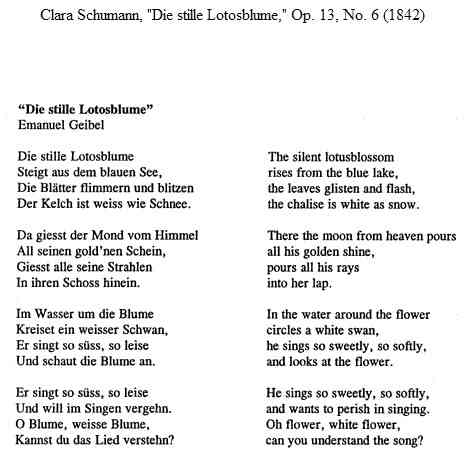
Emanual Geibel poem, Clara Schumann Op. 13; exile; liminality


Sunday, March 16, 2008

St. Patrick’s Mass Away from Home: Eric Sweeney, Minimalism, and Migrancy

 Eric Sweeney, photo ©  CMC 2001, Eugene Langan
I  like the percussive nature of keyboards. A lot of the techniques I use are contrapuntal: the idea of phasing different rhythms against one another ... that’s what attracted me to some of the minimalist techniques—which of course are derived from eastern music, which is about as far away as you can get from Darmstadt. More recently, I’ve written a lot of organ music. I’ve written a lot of orchestral music as well, but I think a lot of composers find writing for orchestra fairly frustrating, in that orchestras are geared towards playing the standard repertoire. As a performer, I like to live with a work, let it sink in, and maybe in a month or six months time get round to performing it. Obviously, orchestras can’t work like that. But I don't think it does much for contemporary music when you’re sitting on the edge of your chair wondering, ‘Are they going to be able to play the notes?’ ”
  —  Eric Sweeney, interview with Jonathan Grimes, Contemporary Music Centre Ireland, 22-JUN-2004.
T  he term minimalism, as John McLachlan correctly points out, has become outmoded as a means of stylistic definition&$151;and if we think of composers as diverse as John Adams, Arvo Pärt, Michael Nyman and John Tavener it is difficult to see what, if any, shared language their music illustrates... Interestingly, minimalist music is far from easy to write, and eager composers with their fingers poised on the Copy/Paste commands of Finale or Sibelius will find it is a technique that makes surprising demands. Yes, of course it’s easy to produce limitless streams of musical sounds at the touch of a button, but, to make musical sense, to create pieces which are well structured, to engage and to sustain the listener’s interest—is as difficult, if not more difficult, than ever. Minimalism is no easy cop-out: it demands a rigorous command of the composer’s self-limited material as well as a radically different approach from the listener, who must be prepared to delve below the surface of ‘seemingly similar’ patterns of sound to find out what really is going on. The importance of minimalism is that it has radically altered the way we create, assess, and listen to music—as well as the fact that it has pointed to a new, liberating way forward for so many composers who had found themselves in a creative cul-de-sac.”
  —  Eric Sweeney, letter, JMI, October 2007.
Eric Sweeney’s Mass of St. Patrick, performed on 16-MAR, at Christ Church Cathedral in Waterford is an excellent illustration of new music in the context of old. Sweeney’s Mass of St Patrick is a ‘minimalist’ SATB setting of the Mass with organ accompaniment, commissioned by the Friends of Saint Patrick’s Cathedral in Dublin in 2006.

In fact, there’s an inherent attraction to automatic compositional techniques and using structuring to constrain the range of possible choices for setting sacred texts like the Mass: cantus firmus melodies based on vowels in the text, transcendence beyond the literal text. Of course, all formal systems, whether they’re procedural or structural, are ways of externalizing some of the decision-making processes. The compositional forms—canon, fugue, rondo, sonata, cantata, etc.—are a framework for automating some decisions. They’re all generative forms. Sweeney’s choral writing here contains particularly beautiful ‘seeming similarities’.

But it’s clear that the Mass is also a vehicle for Sweeney’s personal world-view: the contemporary evolution of percussive cross-cultural dialogue in an Ireland that is engaged in the trans-national public sphere; the magisterial qualities in the organ part; a vision of a distinctly Irish utopia. In Sweeney’s erudite treatment, the traditional Roman Catholic liturgy harmonizes with new humanistic universalism; contingencies of dialogue, translation, and travel all participate in the construction of Irish national identity. The effect is reminiscent of Edward Said’s notion of the contrapuntal—‘contrapuntal reading’, ‘contrapuntal awareness’, the ‘contrapuntal exile’. (Sweeney himself has spent considerable time abroad: in North America he served variously as composer-in-residence at The Newport Festival, Rhode Island; at Memorial University in St John’s, Newfoundland; at the University of Illinois; at Indiana State University in Terre Haute; and at the University of Portland, Oregon. Hardly ‘exiles’, these experiences. But they were valuable nonetheless in informing his sense of difference and alterity.) Now well-ensconced in Waterford, Sweeney and his minimalistic tendencies as a composer are fully ‘at-home’ in setting the Mass.

For those of us experiencing Sweeney’s compositions while far from our own homes, the effect is vivid, animating, heart-warming. The effect is one of austerity and migrancy, unexpectedly abated. Home, away from home.

[Eric is organist and choirmaster of Christ Church Cathedral in Waterford. A native Dubliner, Sweeney has made Waterford his home since 1981. He is chairman of the Music Department at Waterford Institute of Technology. Previously he was a member of the faculty of Dublin Institute of Technology and Trinity College. Before that, he was Choral Director at RTE from 1978-1981. Eric is a member of Aosdána, the academy of creative artists in Ireland.]

C omparison of chant texts with the original scriptural texts shows that in a great number of cases—as much as half of the chants of the Mass Proper—the original is altered in order to provide a suitable chant text. This is the phenomenon of ‘textual adjustment’. The discrepancies are not just a matter of conflicting versions of the biblical text but are clearly deliberate adaptations on the part of those fashioning the chant texts. The changes range from some that transform an entire text, to others involving a single word or two. The most frequently encountered major change is the omission of a segment of the original.”
  —  James McKinnon, The Advent Project: 7th-Century Creation of the Roman Mass Proper, p. 103.