
T he quest for music that elevates the mind is an essential part of the mainstream of Chinese music. Over 8,000 years of the Chinese musical civilization, all types of influences have been experienced... These include the adoption and jettisoning—of various temperament systems, of a wide range of formal designs, and of wide ranges of acoustics. Global consumerism, however, is one influenc it had never encountered [before the 20th Century.”
— Sin-Yan Shen, Chinese Music in the 20th Century, p.189.
T o my mind, the origin of music should not be sought in linguistic communication. Of course, the drum and song have long been carriers of linguistic meaning. But there is no convincing theory of music as language. The attempts that have been made in that direction are no more than camouflages for a kind of naturalism or the most mundane kind of pedantry. The musical message has no meaning, even if one artificially assigns a (necessarily rudimentary) signification to certain sounds, a move that is almost always associated with a hierarchical discourse.”
— Jacques Attali, Noise, p. 25.
I t is true that I use compositional techniques from all of the cultures I have experienced and all the teachers I have learned from—Russian, French, German, Chinese, American. I do adapt Western classical techniques to express Chinese [sensibilities] and so on. ‘From the Path of Beauty’ does take Chinese folk songs as its primary material, but it [secondarily/indirectly] generates ideas that are universal. Music is, I think, a universal language.”I suppose that the main controversy has perennially been not whether music may evoke substantially the same emotions in all listeners/performers, but rather whether music can express propositions or specific questions or perform other representational linguistic functions that are associated with other textual or oral languages. In other words, the idea that musical gestures and harmonic colors and rhythmic textures can serve as signs and symbols that carry subjective emotional meaning is not tremendously controversial. But whether it can do more than this still is a source of disagreement.
— Chen Yi, 17-JAN-2009, Friends of Chamber Music Concert.


T he performance at Friends of Chamber Music last night by Shanghai Quartet and Chanticleer, of Chen Yi’s ‘From the Path of Beauty’ for mixed ensemble was a good opportunity to revisit that topic. The performance was flawless, extraordinarily beautiful. The balance between the voices and the strings (who often were played with mutes on) was exceptionally good.
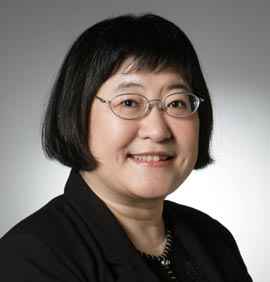
T he 7 movements of this piece include one a capella portion, one movement for string quartet alone, and the remaining 5 with the combined, mixed ensemble. The vocal parts have accompanying Chinese poems; however, the syllables did not signify anything to us who do not speak Chinese, and it was not clear whether the parts were wordless vocalizes or actual texts of poems.
- The Bronze Taotie (Shang Dynasty, 1600 – 1100 BCE; choir)
- The Dancing Ink (Tang Dynasty, 618 – 907 CE)
- The Ancient Totems
- The Rhymed Poems (Song Dynasty, 960 – 1279 CE; str qt)
- The Clay Figurines (Han Dynasty, 206 BCE – 220 CE)
- The Secluded Melody (Six Dynasties, 497 – 590 CE)
- The Village Band
T he third movement is entitle ‘Totems’, but, to me, the entire piece felt ‘totemic’, mantra-like, invocative, monumental. Totems, after all, are mnemonics—conveniences for social identification, invocation, and attachment. ‘From the Path of Beauty’ is like an elaborate ‘pole’ of totemic figures, stacked one after the other. There is no hierarchy; no particular ‘arc’ to the 7 movements—with the exception that the seventh and last one does feel like it is approaching a conclusion. The rest appear, one by one, in a sequence that seems like it is pretty malleable/flexible; each leaves its impression, conveys what it has to say, be it humorous or meditative or celebratory, and gives way to the next.
T he concept of mantra goes back to the pre-Vedic and early Buddhist traditions and to the primitive cults of magic, animism—and totemism. It has since been a continuing element one way or another in the religious traditions of the world and traces of it pervade to this day among the most modern of them. Practitioners of those believe that mantras have power over the deity and can make it confer the desired benefit. Is this piece, commissioned by Chanticleer, informed by a commission specification that aims at historical survey [of Chinese musical/poetical idioms], or is it instead Chen Yi’s invention as Chinese diaspora/teacher?
G urmantras, mantras imparted by gurus or teachers, are made meaningful by be whispered into the ear of the disciple by the guru. We disciples [in the audience; on the stage] repeat Chen Yi’s gurmantra … to achieve enlightenment.
T here are parts of ‘From the Path of Beauty’ that are luxuriant (esp. mvt. #6), but there are other parts that are arid, desolate, ascetic. In the Buddhist form of asceticism, there is no metaphysical dualism of God and the world, or of soul and the body. Phenomenal existence is viewed as characterized by suffering, impermanence and not-self. The aim of ascetic culture is to go beyond this sphere of conditioned phenomena. The keynote of the ascetic culture of Chen Yi is moderation; self-mortification is rejected altogether. Singers, string players, and audience members can simultaneously appreciate ascetic beauty and enjoyment.
T he community created in the space of the piece is not one of any essentialist definition of ‘chineseness’—taking Chen Yi’s introductory words about ‘universal language’ and assimilating compositional gestures from all over the world, I sense that this is as much an embodiment of diaspora culture as it is a celebration of Chinese music history.
S till, the practice of composing is presently something much more counter-cultural than other public acts, and the community created in Chen Yi’s composition is a quintessential exposition of cultural inversions, turning taboos into totems. Conspiratorial counter-tenors!
I t raises up the space of the ensemble to the realization of the China of the dream of racial and gender and class inclusion.
S yntactic music, notation-centric, rich with norms, expectations, surprises, tensions and resolutions, repetitions. Middleton (p.145ff) once wrote about this, as did Gilles Deleuze in Difference and Repetition (1994). Difference is the distance moved from a repeat and a repeat being the smallest difference. Difference is quantitative and qualitative — how far different and what type of difference.
C hen Yi’s movements are variations on classical form, revealing highly individual choices of tonal planning, melodic repetition, digression and reminiscence. Her techniques enable her to undertake compositional strategies quite different from the models of her contemporaries. Her construction is taut, and her subjects exhibit sharp polarities. A detailed account of digressions and reminiscences at different hierarchical levels in composing can be found in Lewin (1986).
S uch gestures of ‘poeticizing sound’ inflect the tonal design and expressive action of the songs—her primary folk song materials—and their repetitions. The ‘modus operandi’ of disjunct keys by side-slipping to a remote tonal area in the songs—the ambiguities of the modulations up a half-step; the choral dissonances—is not only replayed in the 7 movements of the suite, but is recontextualized within the paradigm of its overall form. It appears as a series of tonal digressions that delays the subsequent subjects on the large-scale. The tonal path shifts unexpectedly and repeatedly, via interrupted cadences, into other keys. The expressive effect is one of ‘remoteness’ and ‘out-of-timeness’—very apropos in view of the Dynasties theme. This is of course not unknown in Western canon—for example in Schubert.
T he year the mercury drops to the bottom line.
How I miss that year—
My wool jacket at the pawnshop,
Doors and windows sealed tight by a snowstorm.
Thenceforth even good friends were like
Mercury, dropping
To zero.”
— Zhen Chouyu, Thinking of a Friend at Year’s End.
- Chen Yi page at UMKC Conservatory
- Chanticleer website
- Shanghai Quartet website
- Society for Asian Music
- Central Conservatory of Music, Beijing
- CUHK Music Dept
- Modern Chinese Poetry Research Institute
- Journal of Music in China. Editor: Zhou Qinru. Published twice a year in Los Angeles. website (http://www.MusicInChina.org) seems to be defunct.
- de Andrade M. Poesias completas. Univ de São Paulo, 1987. (totemic poetics as a feature of writings by diasporic/displaced people)
- Attali J. Noise: The Political Economy of Music. Univ Minnesota, 1985.
- Cobussen M. Deconstruction in Music.
- Deleuze G. Difference and Repetition. Columbia Univ, 1995.
- Freud S. Totem & Taboo. Routledge, 2001 (1913).
- Jiayan Mi. Self-fashioning And Reflexive Modernity In Modern Chinese Poetry, 1919-1949. Mellen, 2004.
- Lerdahl F. Cognitive constraints on compositional systems. Contemp Mus Rev 1992; 6:97-121.
- Lewin D. Studies in Music with Text. Oxford Univ, 2006.
- Lewin D. Music, theory, phenomenology, and modes of perception. Music Perception 1986; 3:327-92.
- Liu C-C. A Critical History of New Music in China. Chinese Univ, 2009.
- Rees H, ed. Lives in Chinese Music. Univ Illinois, 2009.
- Sin-Yan Shen. Chinese Music in the 20th Century. Chinese Music Society, 2001.
- Yeh M, ed. & tr. Anthology of Modern Chinese Poetry. Yale, 1994.


