Showing posts with label home. Show all posts

Sunday, August 17, 2008

Memes of Exile: Composer vs. Performers/Listeners & Strategic Choice of Key

Allatson – McCormack book
H  ome’ is not just the place where we now live; it’s also the place where we first lived, and it’s the source of everything that our childhood meant to us.”
  —  Janet Schmalfeldt, keynote remarks at the 26th Society of Music Theory Conference, 2003.
Chopin’s piano Etude in G-flat major (6-flats key signature), Op. 10, No. 5 ‘lays so well’ under the hand. All black-keys and visually dense, sure. F-sharp (G-flat) major [D-sharp (E-flat) minor], all black keys, cognitively challenging. But, surprisingly, that Chopin Etude is as biomechanically natural as can be.

But what about timbrally and cadentially ‘natural’? What key signatures present expressive or rhetorical challenges, instead of cognitive or biomechanical ones? How about B minor (2-sharps key signature) for cello or viola? The tonic B puts this key a semitone below the pitch of the open bottom string on these instruments (C2 and C3, respectively). For a composer to sacrifice the gestural option of the low-note sonority on those instruments creates a unique sort of expressive tension or ‘challenge’.

I think a composer does not sacrifice the open low string unless the intent is specifically to deprive the player and the listeners of that sonority; unless the composer’s intent were to create an acoustic homeland where it is impossible to go, and to concomitantly make us aware of the land’s existence and attractiveness.

The ear and mind yearn to go to that note; the destination beckons. The transcultural naturalness of this is nearly universal. The metaphor of the tonic as a natural, cadential resolution is intuitive. Our familiarity with the timbres of each instrument makes us acutely aware of what registers are and are not being traversed; and the harmonies and voice-leading in the composition set up conditions that pull and pull toward the inevitable low. But the homeland stays impossibly beyond our reach. It is a powerful state of (psychic) exile.


    [50-sec clip, Aurora Quartet, Prokofiev String Quartet No. 1, Allegro, 1.4MB MP3]

And in fact Prokofiev’s String Quartet No. 1, Op. 50 (1931) was commissioned by the U.S. Library of Congress, during his period of ‘exile’ in Japan, the U.S., and Europe. The Andante is a tremendously veiled, circumspect thing. It has a ‘pinched’ quality about it, emotionally constrained, un-forthcoming, yet thin-skinned and approachable—we feel immediate empathy for the character embodied by each instrument’s part. The Quartet No. 1 is pensive in a way that is more ‘epic’ than the notes that comprise it.

Sergei Prokofiev
Compare the pensive, political effect to other B minor pieces for cello or viola:
  • Dvorák’s Cello Concerto in B minor, Op. 104
  • Casadesus’s Viola Concerto in B minor
  • Vivaldi’s Concerto in B minor for 4 Violins & Cello No. 10, Op. 3
  • Rota’s Intermezzo in B minor for Viola and Piano
  • Paganini’s Caprice No. 16 in B minor for Cello
  • Piatti’s Caprice No. 10 in B minor for Cello, Op. 25
  • Zemlinsky’s Quintet for Clarinet and String Quartet B minor, Op. 115.
The gesture of the Prokofiev quartet’s Andante—what strikes me as an ‘exile’ theme/meme—rises only to retrace its steps and return to a ‘form-fruste’ ledge in the lower register—hardly a home, psychologically, and barely a resting-place. More musical representations of exile and longing or ‘striving in vain’ take the form of motions from inner voices towards the main melody. Within the ascending arcs, an inner voice supporting the melody note begins a connecting motion to the next main melodic note. But it continues beyond this to reach into the octave above: the highpoint of the phrase and another tenuous ledge.


    [50-sec clip, Aurora Quartet, Prokofiev String Quartet No. 1, Andante, 1.4MB MP3]

Founding members of the Aurora String Quartet [Sharon Grebanier (violin), Mariko Smiley (violin), Margaret Tait (cello), Don Ehrlich (viola)] recorded a wonderful version of this Quartet in 1995. There are other versions, of course, but this one remains my favorite—for evoking this pensiveness and frustrated longing of diaspora, the boundary between what one wants and what can never ‘be’: the cadential low B of home.

Bard College’s Festival of Music this Fall is on Prokofiev. The Festival volume edited by Simon Morrison is a wonderful compilation of essays on topics that will be addressed at the Festival. Have a look, too, at the new book edited by Paul Allatson and Jo McCormack—for more ideas on the aesthetic theory of exile; David Goodman’s chapter on northwest China and ‘exile as quasi-nationality without a nation’ is especially good.

Morrison book

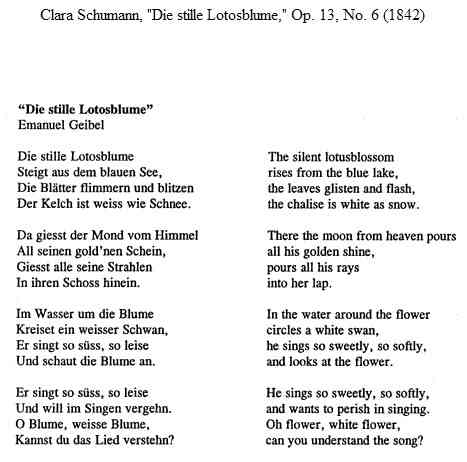
Emanual Geibel poem, Clara Schumann Op. 13; exile; liminality


Sunday, March 16, 2008

St. Patrick’s Mass Away from Home: Eric Sweeney, Minimalism, and Migrancy

 Eric Sweeney, photo ©  CMC 2001, Eugene Langan
I  like the percussive nature of keyboards. A lot of the techniques I use are contrapuntal: the idea of phasing different rhythms against one another ... that’s what attracted me to some of the minimalist techniques—which of course are derived from eastern music, which is about as far away as you can get from Darmstadt. More recently, I’ve written a lot of organ music. I’ve written a lot of orchestral music as well, but I think a lot of composers find writing for orchestra fairly frustrating, in that orchestras are geared towards playing the standard repertoire. As a performer, I like to live with a work, let it sink in, and maybe in a month or six months time get round to performing it. Obviously, orchestras can’t work like that. But I don't think it does much for contemporary music when you’re sitting on the edge of your chair wondering, ‘Are they going to be able to play the notes?’ ”
  —  Eric Sweeney, interview with Jonathan Grimes, Contemporary Music Centre Ireland, 22-JUN-2004.
T  he term minimalism, as John McLachlan correctly points out, has become outmoded as a means of stylistic definition&$151;and if we think of composers as diverse as John Adams, Arvo Pärt, Michael Nyman and John Tavener it is difficult to see what, if any, shared language their music illustrates... Interestingly, minimalist music is far from easy to write, and eager composers with their fingers poised on the Copy/Paste commands of Finale or Sibelius will find it is a technique that makes surprising demands. Yes, of course it’s easy to produce limitless streams of musical sounds at the touch of a button, but, to make musical sense, to create pieces which are well structured, to engage and to sustain the listener’s interest—is as difficult, if not more difficult, than ever. Minimalism is no easy cop-out: it demands a rigorous command of the composer’s self-limited material as well as a radically different approach from the listener, who must be prepared to delve below the surface of ‘seemingly similar’ patterns of sound to find out what really is going on. The importance of minimalism is that it has radically altered the way we create, assess, and listen to music—as well as the fact that it has pointed to a new, liberating way forward for so many composers who had found themselves in a creative cul-de-sac.”
  —  Eric Sweeney, letter, JMI, October 2007.
Eric Sweeney’s Mass of St. Patrick, performed on 16-MAR, at Christ Church Cathedral in Waterford is an excellent illustration of new music in the context of old. Sweeney’s Mass of St Patrick is a ‘minimalist’ SATB setting of the Mass with organ accompaniment, commissioned by the Friends of Saint Patrick’s Cathedral in Dublin in 2006.

In fact, there’s an inherent attraction to automatic compositional techniques and using structuring to constrain the range of possible choices for setting sacred texts like the Mass: cantus firmus melodies based on vowels in the text, transcendence beyond the literal text. Of course, all formal systems, whether they’re procedural or structural, are ways of externalizing some of the decision-making processes. The compositional forms—canon, fugue, rondo, sonata, cantata, etc.—are a framework for automating some decisions. They’re all generative forms. Sweeney’s choral writing here contains particularly beautiful ‘seeming similarities’.

But it’s clear that the Mass is also a vehicle for Sweeney’s personal world-view: the contemporary evolution of percussive cross-cultural dialogue in an Ireland that is engaged in the trans-national public sphere; the magisterial qualities in the organ part; a vision of a distinctly Irish utopia. In Sweeney’s erudite treatment, the traditional Roman Catholic liturgy harmonizes with new humanistic universalism; contingencies of dialogue, translation, and travel all participate in the construction of Irish national identity. The effect is reminiscent of Edward Said’s notion of the contrapuntal—‘contrapuntal reading’, ‘contrapuntal awareness’, the ‘contrapuntal exile’. (Sweeney himself has spent considerable time abroad: in North America he served variously as composer-in-residence at The Newport Festival, Rhode Island; at Memorial University in St John’s, Newfoundland; at the University of Illinois; at Indiana State University in Terre Haute; and at the University of Portland, Oregon. Hardly ‘exiles’, these experiences. But they were valuable nonetheless in informing his sense of difference and alterity.) Now well-ensconced in Waterford, Sweeney and his minimalistic tendencies as a composer are fully ‘at-home’ in setting the Mass.

For those of us experiencing Sweeney’s compositions while far from our own homes, the effect is vivid, animating, heart-warming. The effect is one of austerity and migrancy, unexpectedly abated. Home, away from home.

[Eric is organist and choirmaster of Christ Church Cathedral in Waterford. A native Dubliner, Sweeney has made Waterford his home since 1981. He is chairman of the Music Department at Waterford Institute of Technology. Previously he was a member of the faculty of Dublin Institute of Technology and Trinity College. Before that, he was Choral Director at RTE from 1978-1981. Eric is a member of Aosdána, the academy of creative artists in Ireland.]

C omparison of chant texts with the original scriptural texts shows that in a great number of cases—as much as half of the chants of the Mass Proper—the original is altered in order to provide a suitable chant text. This is the phenomenon of ‘textual adjustment’. The discrepancies are not just a matter of conflicting versions of the biblical text but are clearly deliberate adaptations on the part of those fashioning the chant texts. The changes range from some that transform an entire text, to others involving a single word or two. The most frequently encountered major change is the omission of a segment of the original.”
  —  James McKinnon, The Advent Project: 7th-Century Creation of the Roman Mass Proper, p. 103.