Showing posts with label itunes. Show all posts

Wednesday, June 27, 2007

To Forgetting-Forgiving! : Parker String Quartet and a Citron Cosmopolitan, Garçon!

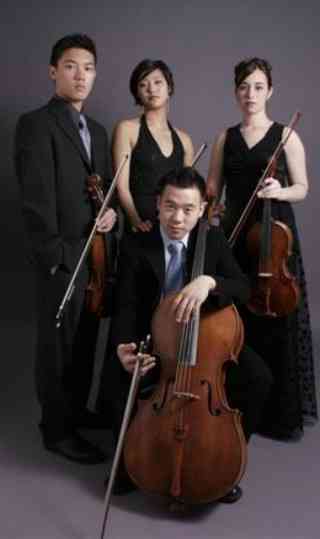
Parker String Quartet
CMT: The Parker String Quartet makes its recording debut with Bartók’s String Quartets Nos. 2 and 5, on the ZigZag label. The Second Quartet, composed between 1915 and 1917 and premiered on 03 March 1918 in Budapest, appeared ten years after the First Quartet. Had Bartók exhausted his lyricism and Romanticism with the Second Quartet, do you think?

DSM: He would’ve been 34 years old in 1915—how could it be that any part of his compositional imagination and enthusiasm had been exhausted at that stage? The influence of Debussy may have been waning a bit for him, yes. And the psychological effect of World War I should not be underestimated … The requirements and proclivities of the Waldbauer-Kerpely Quartet, who debuted the piece and to whom Bartók dedicated the work, may have entered in as well. And then there was the zeitgeist of atonal/12-tone writing. He was not writing in a vacuum! That, and the fact that he had found his own ‘chops’ by then . . .

CMT: The Fifth Quartet, commissioned in 1935, was a more tonal work again, evocative of—or responsive to—pre-war politics in Europe?

DSM: And the Parker Quartet’s account of the Fifth seems edgy enough and despairing enough to be an effective political communiqué. You know—later this year the Parker Quartet will record the complete string quartets of György Ligeti for Naxos . . .

CMT: What else? Some time ago the Parker String Quartet was selected for the prestigious Professional String Quartet Training Program at the New England Conservatory of Music, where the group was founded. All of the quartet’s members are all pursuing graduate degrees in performance and chamber music at NEC.

DSM: They’re noteworthy, too, for performing in bars and clubs up and down the East Coast. This Fall, the Parkers continue this with a “residency” at Barbès Bar and Performance Space in Brooklyn. Did you see Anne Midgette’s article about this in the New York Times on June 24? Barbès is owned by two French-born musicians, and its back room offers a diverse range of entertainment—from international film nights to authors’ readings to chamber music. Liquid entertainment as well . . .

French 75
  • 3 ounces (100 gm) crushed ice
  • 1 1/2 ounces (50 mL) dry gin
  • 1 tablespoon (15 mL) lemon juice
  • 1 teaspoon (5 gm) confectioners’ sugar
  • 6 ounces (20 cL) chilled champagne
  • 1 twist lemon
Half-fill a 14-ounce collins glass with crushed ice. Add the gin and lemon juice and stir in the sugar. Pour in the champagne.

Aperol 86
  • 2 ounces (60 mL) Aperol
  • 1 ounce lemon juice
  • 1 ounce (30 mL) lime juice
  • 1 1/2 ounces (45 mL) orange juice
  • 1 twist lemon
Shake ingredients in cocktail shaker. Strain into highball glass.

Dubonnet Negroni
  • 1 1/2 ounces (45 mL) Campari
  • 1 1/2 ounces (45 mL) Dubonnet blanc
  • 1 1/2 ounces (45 mL) gin
  • 1 twist lemon
Stir ingredients in a cocktail shaker with ice. Strain into a wine glass and add a lemon twist for garnish.

Citron Cosmopolitan
  • 2 ounces (60 mL) Absolut Citron vodka
  • 1 ounce (30 mL) triple sec
  • 1 ounce (30 mL) cranberry juice
  • 1 tablespoon (15 mL) lime juice
  • 1 twist lemon
Shake Absolut Citron, triple sec, and juices vigorously with ice. Strain and serve in a chilled American martini glass.

CMT: The Parker String Quartet’s upcoming performances—ones without such tasty refreshments as those available at Barbès, unfortunately—include:
  • July 4 : Theatre de Bordeaux : Mozart: String Quartet in G Major, K. 387; Ligeti: String Quartet No. 2 (“Métamorphoses Nocturnes”); Ravel: String Quartet in F Major
  • July 10-12 : Yellow Barn Residency : Amherst, MA and Putney, VT
  • July 19: Caramoor Center for Music and Arts : Katonah : Ligeti: Andante and Allegro; Auerbach: premiere of new music; Smetana: String Quartet in E Minor, No. 1 (“From My Life”)
  • July 27: Radio France : Montpellier : Karol Beffa: new music premiere; Smetana: String Quartet No.1 in E Minor, “From My Life”
  • August 1: Luberon Music Festival : Cabrieres d’Avignon : Haydn: String Quartet in G Minor, Op. 74 No. 3 (“The Reiter”); Ligeti: String Quartet No. 2; Smetana: String Quartet in E Minor, No. 1 (“From My Life”)
  • August 3: Luberon Music Festival : Roussillon : Haydn: String Quartet in G Minor, Op. 74 No. 3 (“The Reiter”); Ligeti: String Quartet No. 2; Smetana: String Quartet in E Minor, No. 1 (“From My Life”)
  • August 5: Luberon Music Festival : Abbaye de Silvacane : Haydn: String Quartet in G Minor, Op. 74 No. 3 (“The Reiter”); Ligeti: String Quartet No. 2; Smetana: String Quartet in E Minor, No. 1 (“From My Life”)
  • August 21-22: Avery Fisher Hall, Lincoln Center, New York : Haydn: String Quartet in G Minor, Op. 74 No. 3 (“The Reiter”)
  • September 16: Barbes Bar (‘Residency’), Brooklyn : Ligeti: Three Quartets

Forgiveness/Consolation
DSM: What do Ligeti’s Quartet No.2 (“Metamorphoses Nocturnes”) and Smetana’s Quartet No.1 (“From My Life”) have in common? What contrasts between these pieces could explain their cohesiveness on a program?

CMT: Well, there are lyrical and expressionistic features that in some ways resemble the Bartók quartets—so there’s a cohesiveness in the Parker’s repertoire in that sense. Ligeti’s material provides the performers an opportunity to express a wide range of human emotions—from introspection to rage; from humor to regret; from longing to acceptance. Remember that it was 1944—György Ligeti was just 21 when he composed the String Quartet No. 1 (‘Métamorphoses Nocturnes’) and he was yet to establish his reputation as a bad boy of classical music. He was a Jew, and in 1943 he was forced into labor by the Nazis. His brother was deported to the Mauthausen concentration camp. His parents were sent to Auschwitz. His mother was the only other survivor of the immediate family, besides György. This Métamorphoses Nocturnes quartet is understandably edgy, idealistic, angry, inconsolable, impatient. It’s punkish music with something to prove—it’s a young piece: it remembers everything, and forgives nothing! Why should it forgive? Why should it forget? How could it forget, even if it wanted to!

DSM: But the Smetana, like the Ligeti, is also dealing with metamorphoses—of middle age, of absurd personal loss and grief, of issues of youth coming to terms with the realities and conflicts and limitations of life. This quartet was composed in 1876, when Smetana was 52 years old. When he was 31, his beloved four-year-old daughter, Bedřiska, died. His third child died nine months later, and this is when Smetana committed himself to composition, producing the Piano Trio in G minor. This piece is full of sadness and despair, making use of phrases that are cut short, symbolically parallel to his children’s lives. And, like Beethoven, Smetana’s creativity was haunted by his tinnitus and progressive loss of hearing. His E minor Quartet (“From My Life”) might be considered to be his way of coping with his serial losses. Smetana’s psychological state is varying through this piece—in some places he seems deeply despondent. The fourth movement references his ‘fateful ringing in my ears... which announced the beginning of my cursèd deafness’, with the first violin’s piercing high E over the pianissimo tremolo in the other strings. There is after this some recovery or respite—passages that are positive and peaceful. So I think Smetana found here a resignation to ‘the catastrophe of my complete deafness’—a grudging acceptance, a coping that could not manage to forget or forgive the loss. Charles Griswold’s new book is, I’d say, the latest, greatest treatise on ethics of forgiving and forgetting.

CMT: So Smetana finds a consolation without lasting solace—and Ligeti finds solace that’s not lasting.

DSM: That’s what binds these pieces together, I think. At any rate, that’s some of what I hear in them. Smetana “up,” and Ligeti with a “twist.”

Barbes Bar, 376 9th Street, corner of 6th ave, Brooklyn, NY (Take the “F” train to 7th Avenue. From there, it’s one block ‘downslope’.)
O ne of the lessons of modernity is that there is no consolation in the human condition, unless perhaps it consists in somehow reconciling ourselves to evils so sublimely absurd that at each new moment they test our capacities for acceptance. In such a world, an understanding of forgiveness – the concept of it, the varieties, its human sources and limits – is more central to life than ever before.”
  —  Allen Wood, Stanford University.

Parker Quartet at Barbes Bar, Brooklyn (NYT Photo, Michael Nagle)

Barbes Bar, 376 9th Street, Brooklyn, NY
Long Island Iced Tea
  • 3 ounces (100 gm) ice cubes
  • 2/3 ounces (20 mL) dry gin
  • 2/3 ounces (20 mL) light rum
  • 2/3 ounces (20 mL) white tequila
  • 2/3 ounces (20 mL) triple sec
  • 2/3 ounces (20 mL) vodka
  • 3 ounces (10 cL) sour mix
  • 3 ounces (10 cL) cola
  • 1 dash bitters
  • 1 wedge lemon
Fill Collins glass with ice and add the alcohols. Fill 1/3 with sour mix, and the remainder with cola. Stir gently and top with lemon and bitters.


Saturday, May 12, 2007

Unplugged Folias & Romanescas: Acoustics Très Tendrement, Finances Très Tendres

Jordi Savall Trio
The viola da gamba is a chamber instrument with a soft, sweet tone, incapable of the dynamic extremes and brilliance of the violin. This helps to account for its decline.”

  —  Columbia Encyclopedia, 6th Edition

CMT: During the interval I had a chance to glance at some of the music that Jordi had left on his music stand and on the floor. Beautiful hand-prepared manuscripts! Based on some idiosyncrasies in his scores, he seems to have intended to maximize exploiting the possibilities presented by the viola da gamba’s extended range. The gamba’s seven-string guitar-like tuning allows the performer a range of almost three octaves without shifting or changing positions (compared to two octaves plus a step on the cello). And its seven-string setup is conducive to virtuosic, arpeggiated passages. In one of the Marin Marais muzettes last night where a range of four octaves is spanned in only a few bars, Jordi demonstrated the flexibility the instrument allowed the composer. Phenomenal! The extended range of the viola da gamba is an “enabling technology” for a really dramatic melodic lyricism.

DSM: Together with Montserrat Figueras, Jordi Savall has founded three ensembles—Hespèrion XX, La Capella Reial and Le Concert des Nations. Each has in its own way charted new waters in terms of expressive beauty and lyricism. Savall’s performance in Alain Corneau’s film Tous les Matins du Monde (All the Mornings of the World), which won a César award for the best soundtrack, also charted new waters.

Jordi Savall
CMT: Sitting just 3 meters from Jordi at last night’s Friends of Chamber Music concert allowed me to observe his technique in detail. I was especially fascinated by his dramatic treatment of these pieces. According to Stowell’s Cambridge Companion to Cello, among the viola da gamba players of the 17th Century vibrato was associated with a tender, passionate or wailing quality. Jordi seems to favor a ‘flattement’ style of vibrato—one that’s extremely moving in tender pieces and on long notes. There is an intimate, introspective, confessional aspect to Jordi’s rendering of the Ortiz Folias—a storyteller’s sentimentality in his account of the Marais pieces. Almost autobiographical, when you are in the front row in a stone cathedral like this.

  • Diego Ortiz—Recercadas sobre tenores (Folias, Passa mezzo moderno, Romanesca)
  • Tobias Hume—Musickal Humors (Whope doe me no harme)
  • Gaspar Sanz—Piezas para la Guitarra (Jacaras-Canarios)
  • Marin Marais—La Viole de Louis XIV (Prelude-Le Labyrinthe)
  • Mr. De Sainte-Colombe de Fils—Fantasie en Rondeau
  • Mr. De Sainte-Colombe de Fils—Les pleurs
  • J.S. Bach—Bourrèe
  • J.S. Bach—English Suite in A minor
  • Antoine Forqueray—La Marella
  • Antonio Martin y Coll—Diferencias sobre las Folias
  • Jean-Baptiste Forqueray—La du Vaucel (Très Tendrement)

DSM: The movement of playing should serve to illustrate the music. Jordi does this superbly and consistently. These scores read as though they had a verbal text—well, in some cases they did have a verbal text, since much consort music was vocal in conception. But to see and hear Jordi Savall play is to believe that the entirety of the music is vocal in conception! The player must be ready to use a light, heavy or medium bow stroke according to the demands of the music. The melancholic music should be bowed lightly and evenly, while the left hand can use a tasteful amount of ‘tremolo’ to enhance the melancholy. Cheerful music requires the bow to animate the instrument and animate the music. You can only really see this adequately in live performance, close up! These pieces make you wonder for whom were the pieces written. Just who were the viola da gamba players and cellists capable of playing these pieces? Whoever the original dedicatees were, the performers must have been ones of great talent in order to do justice to this music.

Jordi Savall
CMT: You’re referring to the fact that every one of these pieces reveals big biomechanics issues, for the performer? These issues arise not only with the viola da gamba but basically with all other fretted stringed instruments that have more than four strings. Gambas and lutes and are tremendously delicate instruments. The bridge curvature on the gamba is pretty modest, and this makes it very difficult to apply bow pressure on a single string without touching off adjacent strings. Jordi is a phenomenal gymnast when it comes to expert bowmanship in the face of such risks. In the 16th Century, the necks of viols had very little backward tilt, making it necessary for the necks to be thick, to withstand the string tension. They were also narrow at the nut, bringing the strings very close together. There’s tremendous difficulty with chords and double-stops, especially for a player with a large hand or thick fingers, who would have difficulty in holding chords without overlapping other strings.

DSM: Compared to a modern cello, the absence of an endpin also makes the gamba awkward to play—hard to stabilize and hold between your gambas, I imagine. This physical precariousness of the gamba accentuates the delicacy of the sound, I think. For audience members who are in close proximity to the performer, the precariousness is visually captivating—somewhat in the way that we are captivated by watching a tight-rope walker—or a gymnast, as you put it. I was wondering in one of the Marais pieces whether Jordi had alternate-tuned one of the strings—scordatura? By the way, the fretted members of the string family, like the viola da gamba, came to be regarded as musical relics by the mid- to late-18th Century and were way out of fashion by the 19th Century, didn’t they?

CMT: Well, yes. The dark timbre and limited volume were the main reasons why, I suppose, given the acoustic demands of larger concert halls. Notably, the bright tone of gifted harpsichordist Pierre Hantaï achieved a volume perfect for balance between the instruments last night. Theorboist-guitarist Xavier Diaz delivered an exquisite offering as well. The full-to-capacity audience at Grace & Holy Trinity Cathedral responded enthusiastically—an appreciative standing ovation for the deeply moving and technically superb performance.

DSM: But the acoustical properties of the viola da gamba and theorbo and harpsichord still have consequences in terms of the economics of live performance then, don’t they? It’s unreasonable to program this Trio into a venue with an audience of more than a few hundred—with an unamplified sound so delicate as this Trio has. And, after all, how much can you charge per seat? So it’s hard for the presenter to gross more than $20,000 for this kind of program. Therefore, for the artists the financial viability of this delicate music really depends upon CD sales and paid digital downloads—to augment the proceeds from performance fees. And for the presenters, the financial viability of this delicate music really depends upon interested donors/patrons and upon grants from public-sector agencies, foundations, and commercial benefactors—to augment the proceeds from ticket sales/subscriptions.

CMT: You were speaking of ‘physical precariousness’ of the instrument earlier. I suppose a correlate of that is the ‘financial precariousness’ of the artform itself. Just as there is an appreciation of beauty created against all odds by artists like Jordi and Pierre and Xavier—the adversity and risk that their chosen instruments present to them—there’s also an appreciation of beauty and rarity—conservation of endangered early music and chamber music species against all odds, by chamber music presenters and other organizations around the globe. Attending concerts or supporting organizations that nurture these species in the Arts, don’t we participate in a kind of beauty that’s somewhat like observing a rare orchid?—contributing to habitat preservation for the spotted owl? Aren’t the gesture and its internal rewards a little like supporting Nature Conservancy?

Jordi Savall

Jordi Savall


Sunday, December 17, 2006

Always Already New: iMix Playlist Sharing

iMix
CMT: Did you know you can share your playlists with others by publishing them to the iTunes Store? Published playlists are called iMixes.

DSM: Yes. iMixes include 30-second previews of the tracks in your playlist that’re available from the iTunes Store. By definition, tracks by performers/composers that aren’t available in the iTunes Store can’t appear in iMixes. There aren’t a lot of classical or chamber music iMixes out there yet, but there are more than 400,000 iMixes that’ve been published to-date overall.

CMT: I know that iMixes have been around for a couple of years. But I hadn’t really bothered with them until the new features in iTunes V.7. Your comment about 6,000 string quartet tracks in the iTunes Store the other day made me think again about iMix. I spent some time playing with iTunes’ new iMix feature in iTunes V.7, which allows users to embed playlists in a blog, a MySpace or Facebook or LinkedIn page, or any other web site.

DSM: When you’ve created your iMix, find it in the iTunes Music Store and click the link for “Publish to the Web.” You then get frame containing HTML code that you can paste into your blog or web page. Anyone will be able to click on any of the tracks in order to hear a 30-second sample within their iTunes software. I’ve had occasional problems getting an embedded iMix to work in this Blogspot CSS, and Apple’s iMix/iTunes Store doesn’t currently allow direct streaming from the page. But overall it’s pretty cool.

CMT: Yes, this is a viral marketing play by Apple, to pull users into the iTunes Store. But it’s not much different from the “share this song/playlist” features in Napster, Rhapsody, and other music services. So if you were imagining getting some valuable widget for free and being spared the commercial promotion, fuggettaboudit. An alternative of course is just to point your friends to your last.fm profile. That takes absolutely no effort and is commercial-free, but it’s got the disadvantage that last.fm doesn’t yet have an adequate catalog of classical music available. And it shares your entire last.fm profile, which you typically wouldn’t want to do, with all the non-chamber music things it’s probably got in it. And your last.fm profile is evolving over time, so the profile you share today won’t be what your friend who opens it next week or next month gets. It’s not a ‘publishing’ model at all. So I really prefer publishing and sharing a defined iMix playlist.

DSM: If you don’t like iTunes Store or don’t want to have Apple embedded iMix playlists force-launch iTunes, you might try HotListMaker . HotList enables playing 30-second MP3 clips, but, like iTunes, it too is commercial, steering the listener to digital music site Puretracks to buy the tracks. HotListMaker is currently in alpha, and it shows.

CMT: To publish your iMix:
  • Select the playlist you’ve created on your PC that you want to publish as an iMix and choose File > Create an iMix.
  • Enter the descriptive information about your playlist and click Publish (upload to the iTunes Store site).
  • (Changes you make to a published iMix aren’t updated updated automatically on the iTunes Store, so if you want to change your iMix you need to republish it after you make your updates.)
If you add or remove tracks from a playlist that you’ve published as an iMix in the iTunes Store, you need to update the iMix before others can see your new list. You can also edit the description or title of an iMix, or remove an iMix from the iTunes Store.

DSM: And here’s how to change an iMix that you’ve previously published:
  • To see a list of the playlists you’ve published or to remove an iMix from the iTunes Store, sign in to the iTunes Store and click View Account.
  • Select the playlist, click the arrow to the right of the playlist, and then click Update iMix. Make your changes and click Publish.
  • To see your iMix as it appears at the iTunes Store, click the arrow to the right of the playlist.
CMT: One main aim of playlist-sharing is for the sharee to discover new music that the sharee might not otherwise have encountered. Besides the playlist-sharing iMix stuff, there’s also the aspect of music-discovery. When looking at the iTunes website, I see that you can create a custom RSS feed to keep you apprised of new releases in your preferred genre(s). When I created one and plugged the URL into my RSS feed reader and it gives me a nice list of entries.

DSM: Well, the ‘surface’ aim isn’t the end of the matter. Publishing playlists is a cryptic way to communicate your identity, too. One of the more illuminating parts of Howard Rheingold’s book, Smart Mobs, is its discussion of the ways that technologies are being coopted by people to craft their social identities. Some readers might construe the lists of items we put at the bottom of each post in this blog that way. Of course, publishing playlists is a two-way street. The sharer can be critiqued by the sharees, or he/she can be ignored. Epinions, eBay buyer and seller feedback, and Slashdot contributor ratings—and now iMix ratings—are a few examples of how we’re now able to create public identities and social capital online. But that social capital and those identities are weighed in the balance of public opinion—they can appreciate in value, or they can go down in value.

CMT: So you’re anxious about people creating and publishing iMixes merely as ‘ornaments’ for their false, wanna-be persona? Poseurs? Social fraudsters?

DSM: No, not concerned—just an incidental thought that occurred to me. I’m more concerned about what intellectual property rights attach to these things called playlists when they’re published.

CMT: And I’m wondering how the lists will be curated so that the response-time of searching to discover iMixes that match my search criteria doesn’t deteriorate over the next few years. I wonder whether Apple iTunes Store will enable ‘best-if-used-by’ expiration dates, or maybe implement some sort of most-frequently-referenced ranking or generation-based garbage-collection regime or some other way of purging old or unpopular or orphaned iMix playlists. More than that, I wish they’d add a feature that would let me specify my own effectivity ‘start’ and ‘end’ dates. I’d like to be able to put an iMix up in a sequestered pre-press ‘staging’ area, pending my having my email or blog post or other collateral materials ready. As it is, it’s instantly in the public ‘available’ status as soon as I share it. So Apple really isn’t supporting any kind of ‘publishing’ model for us. I imagine that that doesn’t matter to all of the kids sharing playlists with each other. But for a not-for-profit organization or for a university or any type of serious entity that wants to use iMixes as part of their marketing and communication with their constituencies, it’s problematic.

DSM: I’m sure Apple’s got some VLDB (very large database) engineers working on that. Of course, all that’s needed is for Google to buy them…


iMix