Showing posts with label forgetting. Show all posts

Thursday, May 14, 2009

Jeff Herriott: ‘Dissipation of a Thought’, Emergence of Another, Yet Another

 Jeff Herriott
I    ’m working now with some very high-pitched material... It’s seeming likely that I’ll end up with something for two soprano saxes, with some high multiphonics cascading on top of one another. Right now, the form is seeming like it will consist of some close intervals that slowly open up and out, with focus on some intricate tuning adjustments or quarter-tones. There will likely also be a few little ascending and descending lines as the piece progresses, and the whole thing will probably end up being close to 100 seconds. My plan is to take my thin electronics part and try to flesh out the ‘live’ part a bit more.”
  —  Jeff Herriott blog, 28-APR-2009.
T  he thing that troubles me about the analysis in Peter Kivy’s new book is that it seems to crystallize both music and text—holds them, for the sake of analysis, to be ‘static’ when in fact they are dynamic and ‘emergent’, particularly when the material is new to us. Implicitly, the analysis undervalues the processes of remembering or forgetting—of retrieval, of dissipation. In other words, the ‘ancient quarrel’ between literature and music seems to depend on our ignoring major aspects of neurobiology and how our cognitive processes handle qualitative complexity. Dependent, too, on our ignoring not just the emergent aspects of reading, playing, and hearing the piece, but the emergent aspects of the compositional process itself—embodied by remarks like the ones that composer Jeff Herriott makes in his blog (blockquote above).

T  his thought occurred to me as I listened to Jeff Herriott’s ‘dissipation of a thought’, right after finishing reading Peter Kivy’s book.

H  erriott’s compositions are often surprisingly textual—even the ones that are wordless, instrumental pieces. How can we know this? Well, text linguistics studies structural and formal variants of textuality, for which separate descriptive and ontological models are developed beyond surface-level syntax. A ‘text’ is defined as an utterance or communicative occurrence that meets [most of] seven criteria of text-ness (Beaugrande & Dressler, 1981):
  • Expressive cohesion,
  • Coherence,
  • Intentionality,
  • Acceptability/Consensuality,
  • Informativity (conveying something or bringing about a change in [many of] the text’s readers/hearers),
  • Situationality, and
  • Intertextuality, including persistence and/or replication-publication.

[‘dissipation of a thought’, for flute, vibraphone, cymbals, crotales, voice and live electronics]

 Due East
T  he structure of ‘dissipation of a thought’ meets most if not all of the seven criteria above. It is not only a ‘text’ in the sense of a persistent, published, replicable, intertextual document. It is coherent, cohesive, and localized to a situation or context. The intentions... may be ambiguous, but the evocative title is enough to focus our reception of the piece, beyond what the music itself does.

T  he hermeneutic ambiguity in the first section of ‘dissipation’ arises in its complex harmonies, paradoxically at odds with the piece’s ‘primrose path’ development. It also arises in Herriott’s ingenious manipulation and deviation from prevailing electroacoustic topoi. Examples include a deviation from deceptive cadences and voice-leading, as well as Herriott’s use of subtle, remote tonal relationships—between the tonal base of ‘dissipation’ and the modulation in later sections.

E  ven the ambiguity that we experience can be assessed from the perspective of the seven standards of textuality:

  1. the musical text itself [‘dissipation’] as process and product, including harmonic relationships and voice-leading in cohesion and the relationships among underlying morphemes caused by the manipulated topoi in coherence (including novel, remote tonal relationships);
  2. the participants’ intentionality (manipulation and deviation from topoi) and the recipients’ [listeners’, performers’] acceptability concerning various approaching interests rather than contextual understanding (the reasons for the perceived ambiguity);
  3. the broader context of informativity (including the musical events based on the simulation of resolutions, the deception instead of fulfilling of expectations and the compensation for the deceptions as well as unexpected deviations from usual topoi), the situationality of the title ‘dissipation’ concerning its genre and intertextuality involving similarities to other mixed-ensemble electroacoustic compositions.
S  o how we interpret a piece while playing or listening should be decided not only by intuition but also by a contextual understanding of musical flow. We get clues from the application of rubato, for example; from the manipulation of expectation and deception in the management of rhythmic flows. Through the correlation of Herriott’s [explicit] ‘temporal management’ to his [implicit] ‘compositional plot’, the tension and relaxation of a composition become clear to us—become informative.

I    t may be crucial that some [sub-]systems stay constant or do not learn, whilst some must have ‘flexible-response’ characteristics, including learning and innovation and forgetting. Taken-for-granted movements of the hands and feet may be focused-on with uncustomary, acute consciousness in music, dance, visual art.”
  —  Jenks & Smith, p. 204.
T  o find a piece informative, we don’t need to posit a ‘persona’ or ‘personae’ who are engaged in a representational tableau. Nor do we need then to concede that a narrative piece that is not inhabited by personae is necessarily ‘program music’, a point that Kivy persuasively makes (Ch. 5). So here we have a case-in-point, this ‘dissipation of a thought’ by Jeff Herriott. Not that it doesn’t or couldn’t have personae represented by the parts; it could. My points are that we are not sure about this during our early engagements with it, and that our comprehension of the piece’s textuality ‘grows’ on us, emerges, is subject to ongoing revision as we absorb it.

P  eter Kivy is right in saying that there is nothing wrong with absolute music affording [empty] pleasure to the ear and mind—providing that and nothing more. Some music happily does precisely that. But it seems to me a mistake if we so narrowly define what a musical ‘text’ is in such a way as to rule out the possibility that it provides much, much more—define it so narrowly and statically as to rule out processes that routinely do happen to us… happen inside us as we perform or listen to absolute music, such as Jeff Herriott’s ‘dissipation of a thought’.

E  mergently, each thing leads to others.

O  ften [in a piece that is new to us, or that we have heard or played only a few times], we don’t appreciate what the meaning of a passage is until its successor is already upon us, or maybe not until much, much later. In some cases, our recognition of the meanings conveyed by a musical text takes a lifetime to emerge. How about you?

T   here is a kind of Gradgrindian mentality at work [when researchers report that listening to Mozart improves academic performance, etc], which must find a utility in every innocent pleasure, pleasure itself not being enough—perhaps a waste of time; worse still, harmful in some way or, at least the product of mere ‘amusement’, which Aristotle described as a form of rest, necessary ‘because we are not able to go on… and therefore not an end, since we take it as a means to further activity.”
  —  Peter Kivy.

U    nfinished Music’ draws its inspiration from the riddling aphorism by Walter Benjamin: ‘The work is the death mask of its conception.’ The work in its finished, perfected state conceals the enlivening process engaged in its creation… We need to rescue the experience of absolute music from the clutches of that damning word ‘pleasure’.”
  —  Richard Kramer.


Wednesday, June 27, 2007

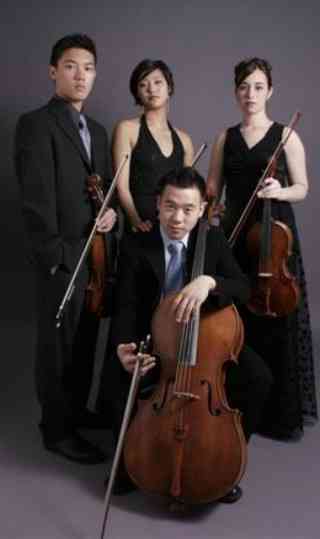
To Forgetting-Forgiving! : Parker String Quartet and a Citron Cosmopolitan, Garçon!

Parker String Quartet
CMT: The Parker String Quartet makes its recording debut with Bartók’s String Quartets Nos. 2 and 5, on the ZigZag label. The Second Quartet, composed between 1915 and 1917 and premiered on 03 March 1918 in Budapest, appeared ten years after the First Quartet. Had Bartók exhausted his lyricism and Romanticism with the Second Quartet, do you think?

DSM: He would’ve been 34 years old in 1915—how could it be that any part of his compositional imagination and enthusiasm had been exhausted at that stage? The influence of Debussy may have been waning a bit for him, yes. And the psychological effect of World War I should not be underestimated … The requirements and proclivities of the Waldbauer-Kerpely Quartet, who debuted the piece and to whom Bartók dedicated the work, may have entered in as well. And then there was the zeitgeist of atonal/12-tone writing. He was not writing in a vacuum! That, and the fact that he had found his own ‘chops’ by then . . .

CMT: The Fifth Quartet, commissioned in 1935, was a more tonal work again, evocative of—or responsive to—pre-war politics in Europe?

DSM: And the Parker Quartet’s account of the Fifth seems edgy enough and despairing enough to be an effective political communiqué. You know—later this year the Parker Quartet will record the complete string quartets of György Ligeti for Naxos . . .

CMT: What else? Some time ago the Parker String Quartet was selected for the prestigious Professional String Quartet Training Program at the New England Conservatory of Music, where the group was founded. All of the quartet’s members are all pursuing graduate degrees in performance and chamber music at NEC.

DSM: They’re noteworthy, too, for performing in bars and clubs up and down the East Coast. This Fall, the Parkers continue this with a “residency” at Barbès Bar and Performance Space in Brooklyn. Did you see Anne Midgette’s article about this in the New York Times on June 24? Barbès is owned by two French-born musicians, and its back room offers a diverse range of entertainment—from international film nights to authors’ readings to chamber music. Liquid entertainment as well . . .

French 75
  • 3 ounces (100 gm) crushed ice
  • 1 1/2 ounces (50 mL) dry gin
  • 1 tablespoon (15 mL) lemon juice
  • 1 teaspoon (5 gm) confectioners’ sugar
  • 6 ounces (20 cL) chilled champagne
  • 1 twist lemon
Half-fill a 14-ounce collins glass with crushed ice. Add the gin and lemon juice and stir in the sugar. Pour in the champagne.

Aperol 86
  • 2 ounces (60 mL) Aperol
  • 1 ounce lemon juice
  • 1 ounce (30 mL) lime juice
  • 1 1/2 ounces (45 mL) orange juice
  • 1 twist lemon
Shake ingredients in cocktail shaker. Strain into highball glass.

Dubonnet Negroni
  • 1 1/2 ounces (45 mL) Campari
  • 1 1/2 ounces (45 mL) Dubonnet blanc
  • 1 1/2 ounces (45 mL) gin
  • 1 twist lemon
Stir ingredients in a cocktail shaker with ice. Strain into a wine glass and add a lemon twist for garnish.

Citron Cosmopolitan
  • 2 ounces (60 mL) Absolut Citron vodka
  • 1 ounce (30 mL) triple sec
  • 1 ounce (30 mL) cranberry juice
  • 1 tablespoon (15 mL) lime juice
  • 1 twist lemon
Shake Absolut Citron, triple sec, and juices vigorously with ice. Strain and serve in a chilled American martini glass.

CMT: The Parker String Quartet’s upcoming performances—ones without such tasty refreshments as those available at Barbès, unfortunately—include:
  • July 4 : Theatre de Bordeaux : Mozart: String Quartet in G Major, K. 387; Ligeti: String Quartet No. 2 (“Métamorphoses Nocturnes”); Ravel: String Quartet in F Major
  • July 10-12 : Yellow Barn Residency : Amherst, MA and Putney, VT
  • July 19: Caramoor Center for Music and Arts : Katonah : Ligeti: Andante and Allegro; Auerbach: premiere of new music; Smetana: String Quartet in E Minor, No. 1 (“From My Life”)
  • July 27: Radio France : Montpellier : Karol Beffa: new music premiere; Smetana: String Quartet No.1 in E Minor, “From My Life”
  • August 1: Luberon Music Festival : Cabrieres d’Avignon : Haydn: String Quartet in G Minor, Op. 74 No. 3 (“The Reiter”); Ligeti: String Quartet No. 2; Smetana: String Quartet in E Minor, No. 1 (“From My Life”)
  • August 3: Luberon Music Festival : Roussillon : Haydn: String Quartet in G Minor, Op. 74 No. 3 (“The Reiter”); Ligeti: String Quartet No. 2; Smetana: String Quartet in E Minor, No. 1 (“From My Life”)
  • August 5: Luberon Music Festival : Abbaye de Silvacane : Haydn: String Quartet in G Minor, Op. 74 No. 3 (“The Reiter”); Ligeti: String Quartet No. 2; Smetana: String Quartet in E Minor, No. 1 (“From My Life”)
  • August 21-22: Avery Fisher Hall, Lincoln Center, New York : Haydn: String Quartet in G Minor, Op. 74 No. 3 (“The Reiter”)
  • September 16: Barbes Bar (‘Residency’), Brooklyn : Ligeti: Three Quartets

Forgiveness/Consolation
DSM: What do Ligeti’s Quartet No.2 (“Metamorphoses Nocturnes”) and Smetana’s Quartet No.1 (“From My Life”) have in common? What contrasts between these pieces could explain their cohesiveness on a program?

CMT: Well, there are lyrical and expressionistic features that in some ways resemble the Bartók quartets—so there’s a cohesiveness in the Parker’s repertoire in that sense. Ligeti’s material provides the performers an opportunity to express a wide range of human emotions—from introspection to rage; from humor to regret; from longing to acceptance. Remember that it was 1944—György Ligeti was just 21 when he composed the String Quartet No. 1 (‘Métamorphoses Nocturnes’) and he was yet to establish his reputation as a bad boy of classical music. He was a Jew, and in 1943 he was forced into labor by the Nazis. His brother was deported to the Mauthausen concentration camp. His parents were sent to Auschwitz. His mother was the only other survivor of the immediate family, besides György. This Métamorphoses Nocturnes quartet is understandably edgy, idealistic, angry, inconsolable, impatient. It’s punkish music with something to prove—it’s a young piece: it remembers everything, and forgives nothing! Why should it forgive? Why should it forget? How could it forget, even if it wanted to!

DSM: But the Smetana, like the Ligeti, is also dealing with metamorphoses—of middle age, of absurd personal loss and grief, of issues of youth coming to terms with the realities and conflicts and limitations of life. This quartet was composed in 1876, when Smetana was 52 years old. When he was 31, his beloved four-year-old daughter, Bedřiska, died. His third child died nine months later, and this is when Smetana committed himself to composition, producing the Piano Trio in G minor. This piece is full of sadness and despair, making use of phrases that are cut short, symbolically parallel to his children’s lives. And, like Beethoven, Smetana’s creativity was haunted by his tinnitus and progressive loss of hearing. His E minor Quartet (“From My Life”) might be considered to be his way of coping with his serial losses. Smetana’s psychological state is varying through this piece—in some places he seems deeply despondent. The fourth movement references his ‘fateful ringing in my ears... which announced the beginning of my cursèd deafness’, with the first violin’s piercing high E over the pianissimo tremolo in the other strings. There is after this some recovery or respite—passages that are positive and peaceful. So I think Smetana found here a resignation to ‘the catastrophe of my complete deafness’—a grudging acceptance, a coping that could not manage to forget or forgive the loss. Charles Griswold’s new book is, I’d say, the latest, greatest treatise on ethics of forgiving and forgetting.

CMT: So Smetana finds a consolation without lasting solace—and Ligeti finds solace that’s not lasting.

DSM: That’s what binds these pieces together, I think. At any rate, that’s some of what I hear in them. Smetana “up,” and Ligeti with a “twist.”

Barbes Bar, 376 9th Street, corner of 6th ave, Brooklyn, NY (Take the “F” train to 7th Avenue. From there, it’s one block ‘downslope’.)
O ne of the lessons of modernity is that there is no consolation in the human condition, unless perhaps it consists in somehow reconciling ourselves to evils so sublimely absurd that at each new moment they test our capacities for acceptance. In such a world, an understanding of forgiveness – the concept of it, the varieties, its human sources and limits – is more central to life than ever before.”
  —  Allen Wood, Stanford University.

Parker Quartet at Barbes Bar, Brooklyn (NYT Photo, Michael Nagle)

Barbes Bar, 376 9th Street, Brooklyn, NY
Long Island Iced Tea
  • 3 ounces (100 gm) ice cubes
  • 2/3 ounces (20 mL) dry gin
  • 2/3 ounces (20 mL) light rum
  • 2/3 ounces (20 mL) white tequila
  • 2/3 ounces (20 mL) triple sec
  • 2/3 ounces (20 mL) vodka
  • 3 ounces (10 cL) sour mix
  • 3 ounces (10 cL) cola
  • 1 dash bitters
  • 1 wedge lemon
Fill Collins glass with ice and add the alcohols. Fill 1/3 with sour mix, and the remainder with cola. Stir gently and top with lemon and bitters.