Showing posts with label irish. Show all posts

Wednesday, July 2, 2008

West Cork Chamber Music Festival: Intensive Week of (Life) Experiences

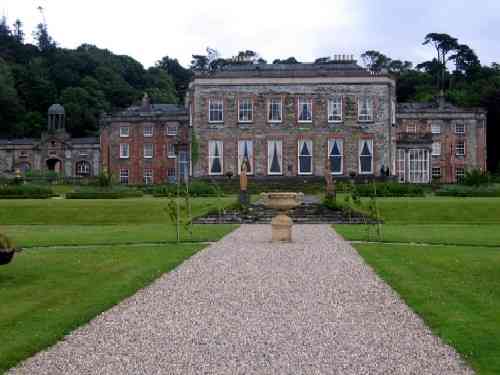
 Bantry House
G  uím rath ar lucht eagraithe na féile, ar an aos ceoil a bheidh ag glacadh páirte ann agus ar an lucht éisteachta a mbeidh d’ádh orthu a bheith i láthair. [Thank you to the organizers of the Festival, to the musicians who perform in it, and to the audience members who participate in it. (Táim cinnte gur fhág mé rud éigin tábhachtach ar lár! Taiscéalann DSM smaointe go samhlaíoch agus is féidir leis iad a úsáid le hiarmhairtí agus gníomhartha cruthaitheacha a dhéanamh; cuireann DSM a smaointe féin chun tosaigh le plé a choinneáil beo!)]”
  —  Cathal Goan, RTÉ.
The point of music, to most people, is to ‘move’ us (the listening audience; the musicians; others)—to move us emotionally and to convey insights of value—of value to us as individuals and as a society. Performers at the West Cork Chamber Music Festival in Bantry, Ireland, are doing just that.

Particularly vivid examples were the performances by Israeli violinist Vadim Gluzman and Romanian pianist Mihaela Ursuleasa yesterday afternoon and evening.

  • Ysaÿe, Sonata No. 2 in a minor, Op. 27/2
  • Brahms, Sonata No. 1 in G major, Op. 78
  • Brahms, Sonata No. 3 in d minor, Op. 108
The 1923 Ysaÿe sonata is more suspense-filled than perhaps any other work. It portrays the human condition as one in which we have little control over what will happen to us. Life dishes out a sequence of challenges to us; there is a ‘thrownness’ to life’s events that is hard to predict and resistant to change.

Raising the emotional stakes even higher, Gluzman’s and Ursuleasa’s performances of the Brahms sonatas were, essentially, exceptionally personal answers to the question: How shall we respond to life’s challenges?

Brahms dedicated Op. 78 to Clara Schumann’s son Felix, who had died of tuberculosis in 1879. The elegiac adagio has, naturally, that conventional-minded association, with regard to Brahms’s intention, motivations, and nominal meaning. But in Gluzman’s and Ursuleasa’s hands we hear far more. The adagio becomes fervent reportage on the human condition itself, and on what is our best course of action during the short years when each of us walks the planet.

Basically, you vehemently commit yourself head-long to each other—to other humans, to significant others. Against annihilation, you counter with positive, radiant confessions; against the abyss, you hold forth with unceasing protestations of love.

Brahms’s (and Gluzman’s and Ursuleasa’s) statement is, we now see, a comprehensive treatise on virtue ethics, disguised as violin sonatas.

The solidarity of their shared vision; the rare, deep empathy between Gluzman and Ursuleasa—these are evident throughout (including the Ysaÿe and also the Schnittke Suite, which was their contribution to the evening’s main 20:00 concert). But these qualities are epitomized in their treatment of the Brahms sonatas. The vivace and presto movements, for example, are not merely ‘playing for aesthetic integrity’ but are instead ‘playing as if one’s very life depended on it.’
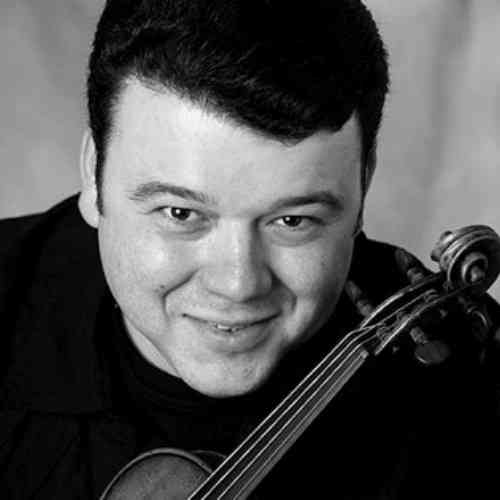
 Vadim Gluzman, photo © John Kringas
Gluzman’s commitment is all-consuming; the perspiration shed from his earnest brow accumulates in great pools on the stage in the Bantry House library. Ursuleasa is no less deeply invested emotionally, nor are her pyrotechnics or exertions any less prodigious than Gluzman’s.

 Mihaela Ursuleasa
These two achieve here a remarkable coherence—a depth and beauty so moving that many cheeks in the audience are well tear-dampened by the end of it all. One never expects this. It just happens. Reflexively, unavoidably, miraculously. And that, in a nutshell, is the whole point. What it is to be thoroughly human, revealed by music, in an early 18th-Century mansion in West Cork overlooking the sea.

 Bantry House
The annual West Cork Chamber Music Festival was begun in Bantry in 1995, with Francis Humphrys as its Artistic Director. Bantry is an easy, scenic 90 minutes’ drive from the airport in Cork via the N71 highway along the southwest coast. Now in its 13th year, the Festival has 70-odd musicians performing more than 35 concerts over 8 days’ time. Approximately 105 works by 65 different composers from 19 countries are represented, including quite a few pieces of new music by living composers. Most of the performances are held in the spacious library of Bantry House, which holds about 190 people. Some performances occur at St. Brendan’s church in town, about a 7-minute walk from Bantry house. This year the Festival includes a composition competition for young Irish composers, and winning entries are performed by masterclass ensembles at the Festival.

The Festival continues through this weekend. Check the Festival website for more information. If you are unable to attend in person, check out RTÉ’s live and streaming broadcasts from the Festival. (I’ll post additional remarks about the West Cork Chamber Music Festival on CMT later, probably after returning home to the U.S. I wish that internet access here were cheaper and better… )


Saturday, January 5, 2008

Irish New Music: Back to the Future—‘Folk music’ Elements in ‘Art music’

M  usic—the natural words in the natural order. Through that formula we go back to the people.
  Music will keep out temporary ideas, for music is the nations’ clothing of what is ancient and deathless.”
  —  W.B. Yeats, Letter to Lady Gregory, 08-FEB-1937.
New music in Ireland is neither an attempt to move away from traditional music nor a deliberate construction upon previous works. The ‘Irishness’ of recent chamber music compositions is as idiosyncratic as the Irish counties and their distinct cultures and histories. I recently had an opportunity to explore the Contemporary Music Centre in Dublin, in preparation for travel to Ireland later this year. The Contemporary Music Centre is funded by the Arts Council/An Chomhairle Ealaíon and the Arts Council of Northern Ireland, and also receives funding from the Ireland Department of Arts, Sport and Tourism and the Irish Music Rights Organisation (IMRO).

The diversity is phenomenal—throughout the musical genres really but especially so among chamber music idioms that the CMC-member composers represent. Some contemporary composers are clearly serial or atonal. Others among them are much more lyrical and tonal. Bodley especially inclines to settings of Irish poetry—which is especially appealing to a foreign visitor like me who craves the cultural ‘situatedness’ of compositions like Bodley’s. It is not inward-looking or insular; instead, this music just feels intensely, well, ‘Irish’.

S ee everything through music! Those chords yet to resound in you—they swim like fish in all the rivers of the world. You love their playful surge, their shadows flickering deep within you.”
  —  Susan Connolly.
The act of composing classical music is, I suppose, ultimately an assertion of creativity—a cairn placed by the composer as a marker of her/his—our—existence, against the fact of our mortality. Chamber music is inherently ‘serious’ as well as intimate, regardless of the humor or other emotions it may convey. But, over the years, informal Irish folk idioms—gatherings of friends, the clairseach—have been transformed into concert pieces. So one question as I listen to the output of these Irish composers of new music is, is there now a trend ‘back to the future’—reverting to more informal folk music themes and smaller orchestrations, chamber ensemble pieces?

With some difficulty, it could be so—and Bodley and other composers in the CMC stable do it regularly. Boydell, too, in his earlier years—String Quartet, Op. 31, for example. But there’s no business model for it (the ‘stick’). And, to be honest, the Gaelic tradition in literature and the arts does incline toward epic proportions anyhow (the ‘carrot’). So when we have Irish composers writing new music for small ensembles, it’s clearly done as a labor of love.

Brian Boydell (photo: Mortell)
Boydell passed away in NOV-2000. Along with fellow composer, Frederick May, he founded the Music Association of Ireland in 1948. Much of Boydell’s writing bears the influence of Bartók. Not that his work is entirely derivative of European traditions; it is not. But his avoiding incorporating Irish folk tune themes into his compositions is conspicuous, compared to other composers of Irish new music. Here’s a clip from his String Quartet No. 2, performed by Vanbrugh Quartet [Gregory Ellis (vn), Elizabeth Charleson (vn), Simon Aspell (va), Christopher Marwood (vc)].


    [40-sec clip, Boydell String Quartet No. 2, Vanbrugh Quartet, 0.5MB MP3]

I n the 1940s and early 1950s I was considered (in the Irish context) a very ‘modern’ composer. Now, about forty years later, my music could possibly be considered rather old-fashioned. This is largely due to a firm belief in artistic honesty: creating sounds that I like personally and refusing to follow fashions that might be more acceptable to the critics of the time.”
  —  Brian Boydell, 1996.

John Gibson (photo: Langan)
John Gibson was born in Dublin in 1951 and currently lives in Cork. His training/development included stints with Stockhausen and Lutoslawski. To date, he has five CDs released. Here’s a clip from his piece Sliabh Luachra, performed by Johnny McCarthy (trad fl) with the Crawford Piano Trio [Adrian Petcu (vn), Iosef Calef (vc), Jan Cáp (pf)].


    [40-sec clip, Gibson Sliabh Luachra, Crawford Piano Trio with J. McCarthy, 0.6MB MP3]

F or he had gone alone into the island
And brought back the whole thing.
The house throbbed like his full violin.”
  —  Seamus Heaney.

Seóirse Bodley (photo: Langan)
Seóirse Bodley was born in Dublin in 1933. His writing has been prolific and varied, ranging from avant-garde to Irish traditional music. Among other things, he’s a founder of Aosdána, Ireland’s government-sponsored academy of creative artists. Here’s a clip from his String Quartet No. 2, performed by Degani String Quartet [Alan Smale (vn), Elizabeth Leonard (vn), Padraig O’Connor (va), David James (vc)].


    [40-sec clip, Bodley String Quartet No. 2, Degani Quartet, 0.7MB MP3]

and a clip of his String Quartet No. 3, performed by the Vogler Quartet.


    [40-sec clip, Bodley String Quartet No. 3, Vogler Quartet, 0.9MB MP3]

I s iomaí sort ceoil atá ann, mar adúirt an fear a raibh an trúmpa maide aige.”
[There are many different sorts of music, as the man with the wooden trumpet said.]
  —  Seóirse Bodley.
In summary, there are many novel and exciting new chamber music works being written and performed here. I look forward very much to my next visit to Ireland. Maybe you, too, will have a chance to visit sometime soon. Meanwhile, browse what’s on CMC’s website (they have a wonderful Calendar of Events and other features), order yourself some of the CDs and scores, and enjoy!


Cox book