Showing posts with label bantry. Show all posts

Saturday, July 12, 2008

The Air from Other Planets: How Much Is Too Much?

 Eye
P  enderecki, that reliable old post-Schoenberg standby, evoking buzzing bees in the basement. I did not really like these pieces, but I would put them on every few months to see if the bizarre might one day morph into the familiar. I’ve been doing that for forty years now, and the compositions continue to sound harsh, unpleasant, gloomy, post-nuclear. It is not the composers’ fault that they wrote uncompromising music that was a direct response to the violence and stupidity of the 20th Century. But it is not my fault that I would rather listen to Bach. That is my way of responding to violence and stupidity.”
  —  Joe Queenan, ‘Admit It! You’re As Bored As I Am’, The Guardian, 09-JUL-2008, Arts, p. 24.
The afternoon and evening programming at the recent West Cork Chamber Music Festival in Bantry, Ireland, was initially a delight. I crave new music—even pieces that are hard to warm up to, hard to comprehend—and the program for this Festival was notable for the sheer number of recent compositions on the docket.

 Screen Test: Minions (Photo: Linus Gelber, 2008)
But 5 consecutive days into the Festival, I had reached the point of saturation. All of the inharmonic sawings and screechings from countless viols; all of the gnashings that can be elicited by knocking the bow against the bodies or tailpieces of violins; all of the scrapings of piano strings with coins and other hardware and bangings of keyboards with fists; all of the noteless, tempoless, ad hoc, arbitrary scratchings of nebulous pitch-envelope “suggestions” on the music staves—all of these eventually became too much for me.

 Chamber music al fresco, somewhere in Northern Italy
I am pretty sure I was not alone. The majority of the audiences at Bantry were conservative, middle-aged people, hoping and praying for some Baroque or Classical relief. Some people annoyedly folded and refolded their programs; others stared listlessly at their shoes through entire pieces. The performance of Schoenberg’s ‘Pierrot Lunaire’ which ran 35 minutes past the scheduled time was something of a ‘last straw’ in terms of trying the audience’s (and other ensembles’) patience.

While I very much admire Francis Humphry’s bravery and enthusiasm (and while I will gladly return to the West Cork Chamber Music Festival in future years), I do hope that future years’ Bantry programming will be devised so as to have more genre variation within-program, so as not to exceed so many audience-members’ appetites for new music.

With his setting of Stefan George’s poem “Ich fühle Luft von anderem Planeten” (‘I feel the air of another planet’) in the Second String Quartet, Op. 10 (1908), Arnold Schoenberg launched us into space, into new acoustical, mostly-musical realms. We continue on extra-terrestrial musical journeys because we want to, even to this day.

But the fact is, the amount of publicly offered music often has little relation to the quality of that music, let alone to the quality of the context in which it is presented. The quality of the context—and by this, I mean programming—is a crucial factor in the reception of any kind of repertoire. Programming (Irish: eagraithe) is a form of composing. The word ‘compose’ literally means ‘to put together’. I suggest that good programming consummates the composing process by arranging the elements so that they reinforce instead of oppose or beleaguer each other, preferably reinforcing in a way that’s conducive to reassessing and calibrating and illuminating—for us listeners, and for the performers. That way, each new piece is given a fair chance at a favorable reception. Ideally, a programmer/presenter is open to anything that leads to intriguing combinations. Ideally, a programmer/presenter aims to present the listener with ‘Happy New Ears!’, as John Cage calls them.

Healthy ‘fish’ (audience members; musicians) swim against the stream, but not obsessively or to the point of starvation. Healthy presenters do not program streams (Irish: an liosta casaidh) that torrentially roar down miles and miles of steep mountain slopes, in which even hardy fish cannot thrive.

 Ashby book


Thursday, July 3, 2008

Patricia Kopatchinskaja & Friends: Tigran Mansurian’s Four Serious Songs

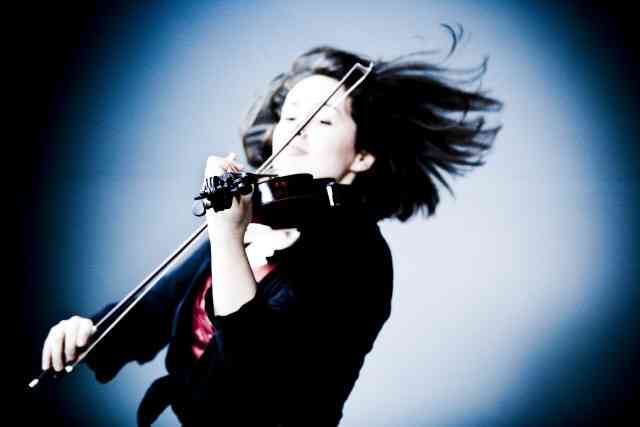
 Patricia Kopatchinskaja, performing barefoot at St. Brendan’s
F  or that which befalleth the sons of men befalleth beasts also.
Even one thing befalleth them all;
The one dieth, so dieth the other,
Yea, they have all one breath so that a man has no preeminence above a beast,
For all is vanity.
All go unto one place;
All are of the dust,
And all return to dust again.”
  —  Ecclesiastes 3:19-22.
Last night violinist Patricia Kopatchinskaja gave a brilliant Irish premier performance of the 2006 concerto by composer Tigran Mansurian entitled ‘Four Serious Songs’.

    Four Serious Songs (vioin concerto, after Brahms, Vier ernste Gesänge, Op. 121)
  • For that which befalleth (Eccl. 3:19-22), 6-min
  • So I returned and considered all the oppressions (Eccl. 4:1-3), 7-min
  • O Death, how bitter is the remembrance of thee to a man that lives in his possessions (Eccl. 41:1-2), 2-min
  • I am become as sounding brass or a tinkling cymbal (1 Cor 13:1-3,12-13), 5-min
This concerto is way beyond ‘serious’: it is full-blown tragedy. The first movement is haunted with foreboding: ominous half-note chromatics in the double-bass and eery glisses in the other strings. The second movement is hemmed-in, expectant of the unrelenting oppressions that the Ecclesiastes text suggests. The third movement is genuinely bitter, more or less renouncing the rest of humanity in its addiction to materialistic pursuits; defiant strings give an angry-despondent recitative.

Finally, the concluding fourth movement: in the beginning, it is ethereal, vaporescent. Violins and violas in ultra-high registers; close encounters at the upper extremities of their fingerboards. The cellos hold forth with whisperings that emulate a cold wind, utterly heartless—strings damped by the fingers so as to produce a pitchless sound, gray noise of the bow drawn lightly, on-edge against the string. Law of the Universe, the die has been cast; things in motion tend to stay (heartlessly) in motion; no reprieves. A more desolate, time-beyond-humankind effect would be hard to imagine.

Then the strings, together as a choir, respond in a subdued major key. Maybe there is hope after all, for humans and for other species as well…

But, no, it’s not to be. The major-key chordal writing gives way to impassioned, violent atonal passages and a resolution in a dour, uncertain minor. Agonal gasps; the length of the bow is consumed, millisecond by millisecond: kinesthetically an analogue of lung capacity, the bow with its limits to inspiration (up-bow) and expiration (down-bow). Struggling for breath, exhausting what little is left of the length of your bow-stroke. All species may go down together, but that does not mean that no one is guilty, that no one is to blame for this destruction. We humans are irredeemably at fault: thus spake the prophet Mansurian.

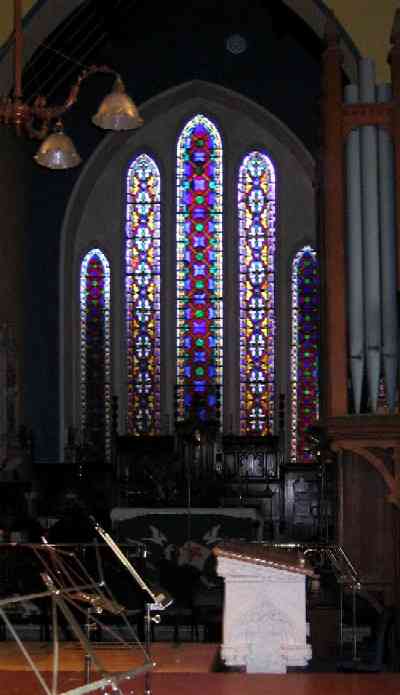
 St. Brendan’s, Bantry, Co. Cork, Ireland
Kopatchinskaja’s treatment was superb. The bare feet under Patricia’s red gown were a bit unconventional, although I can readily understand how the sensation of the cold floor under the soles and toes may be crucial to informing her interpretation. If one wants to be forcibly grounded in the decumbent, ascetic, prostratory mood of this apocalyptic ecopolitical Mansurian piece, then one should play one’s violin barefoot on a cold floor in an old, cold church!

 St. Brendan the Navigator
Kopatchinskaja has recently served as guest director and soloist with the Australian Chamber Orchestra. She was born in Moldova.

 Tigran Mansurian
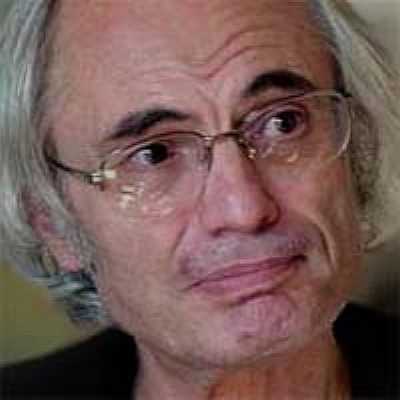
Born in Beirut in 1938, in 1947 Mansurian’s family moved to Armenia. Mansurian took his PhD at the Yerevan State Musical Conservatory where he later taught contemporary music analysis. Now prominent among Armenian composers, Mansurian’s output includes orchestral works, seven concerti for strings and orchestra, sonatas for cello and piano, three string quartets, madrigals, chamber music and works for solo instruments.

 Patricia Kopatchinskaja
  • Violins: Katherine Hunka, Karl Sweeney, Róisin Walters, Ionana Petcu-Colan, Maria Ryan, David O Leary, Siún Milne
  • Violas: Joachim Roewer, Ruth Gibson, Lucy Nolan
  • Cellos: Eoin Quinlan, Peggy Nolan
  • Double-bass: Malachy Robinson

 Durrus, County Cork


Wednesday, July 2, 2008

West Cork Chamber Music Festival: Intensive Week of (Life) Experiences

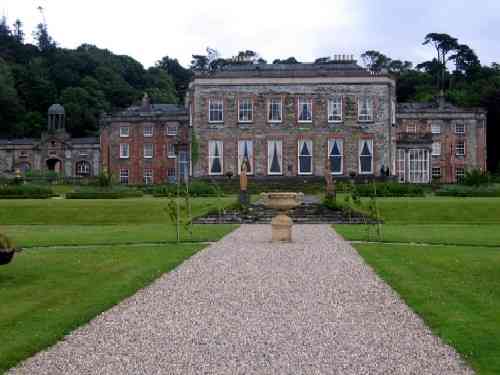
 Bantry House
G  uím rath ar lucht eagraithe na féile, ar an aos ceoil a bheidh ag glacadh páirte ann agus ar an lucht éisteachta a mbeidh d’ádh orthu a bheith i láthair. [Thank you to the organizers of the Festival, to the musicians who perform in it, and to the audience members who participate in it. (Táim cinnte gur fhág mé rud éigin tábhachtach ar lár! Taiscéalann DSM smaointe go samhlaíoch agus is féidir leis iad a úsáid le hiarmhairtí agus gníomhartha cruthaitheacha a dhéanamh; cuireann DSM a smaointe féin chun tosaigh le plé a choinneáil beo!)]”
  —  Cathal Goan, RTÉ.
The point of music, to most people, is to ‘move’ us (the listening audience; the musicians; others)—to move us emotionally and to convey insights of value—of value to us as individuals and as a society. Performers at the West Cork Chamber Music Festival in Bantry, Ireland, are doing just that.

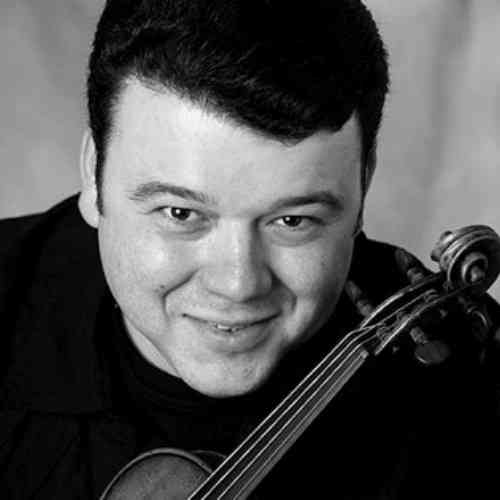
Particularly vivid examples were the performances by Israeli violinist Vadim Gluzman and Romanian pianist Mihaela Ursuleasa yesterday afternoon and evening.

  • Ysaÿe, Sonata No. 2 in a minor, Op. 27/2
  • Brahms, Sonata No. 1 in G major, Op. 78
  • Brahms, Sonata No. 3 in d minor, Op. 108
The 1923 Ysaÿe sonata is more suspense-filled than perhaps any other work. It portrays the human condition as one in which we have little control over what will happen to us. Life dishes out a sequence of challenges to us; there is a ‘thrownness’ to life’s events that is hard to predict and resistant to change.

Raising the emotional stakes even higher, Gluzman’s and Ursuleasa’s performances of the Brahms sonatas were, essentially, exceptionally personal answers to the question: How shall we respond to life’s challenges?

Brahms dedicated Op. 78 to Clara Schumann’s son Felix, who had died of tuberculosis in 1879. The elegiac adagio has, naturally, that conventional-minded association, with regard to Brahms’s intention, motivations, and nominal meaning. But in Gluzman’s and Ursuleasa’s hands we hear far more. The adagio becomes fervent reportage on the human condition itself, and on what is our best course of action during the short years when each of us walks the planet.

Basically, you vehemently commit yourself head-long to each other—to other humans, to significant others. Against annihilation, you counter with positive, radiant confessions; against the abyss, you hold forth with unceasing protestations of love.

Brahms’s (and Gluzman’s and Ursuleasa’s) statement is, we now see, a comprehensive treatise on virtue ethics, disguised as violin sonatas.

The solidarity of their shared vision; the rare, deep empathy between Gluzman and Ursuleasa—these are evident throughout (including the Ysaÿe and also the Schnittke Suite, which was their contribution to the evening’s main 20:00 concert). But these qualities are epitomized in their treatment of the Brahms sonatas. The vivace and presto movements, for example, are not merely ‘playing for aesthetic integrity’ but are instead ‘playing as if one’s very life depended on it.’

 Vadim Gluzman, photo © John Kringas
Gluzman’s commitment is all-consuming; the perspiration shed from his earnest brow accumulates in great pools on the stage in the Bantry House library. Ursuleasa is no less deeply invested emotionally, nor are her pyrotechnics or exertions any less prodigious than Gluzman’s.

 Mihaela Ursuleasa
These two achieve here a remarkable coherence—a depth and beauty so moving that many cheeks in the audience are well tear-dampened by the end of it all. One never expects this. It just happens. Reflexively, unavoidably, miraculously. And that, in a nutshell, is the whole point. What it is to be thoroughly human, revealed by music, in an early 18th-Century mansion in West Cork overlooking the sea.

 Bantry House
The annual West Cork Chamber Music Festival was begun in Bantry in 1995, with Francis Humphrys as its Artistic Director. Bantry is an easy, scenic 90 minutes’ drive from the airport in Cork via the N71 highway along the southwest coast. Now in its 13th year, the Festival has 70-odd musicians performing more than 35 concerts over 8 days’ time. Approximately 105 works by 65 different composers from 19 countries are represented, including quite a few pieces of new music by living composers. Most of the performances are held in the spacious library of Bantry House, which holds about 190 people. Some performances occur at St. Brendan’s church in town, about a 7-minute walk from Bantry house. This year the Festival includes a composition competition for young Irish composers, and winning entries are performed by masterclass ensembles at the Festival.

The Festival continues through this weekend. Check the Festival website for more information. If you are unable to attend in person, check out RTÉ’s live and streaming broadcasts from the Festival. (I’ll post additional remarks about the West Cork Chamber Music Festival on CMT later, probably after returning home to the U.S. I wish that internet access here were cheaper and better… )