Showing posts with label presenter. Show all posts

Saturday, March 14, 2009

Richard Egarr and Academy of Ancient Music’s Brandenburgs: Once and Future Youth

 Richard Egarr
W    e have heard these popular concertos many times, though never with as much clarity or joie de vivre as the Academy of Ancient Music's expert, one-to-a-part reading, where every line and timbre is as distinct and perfectly balanced as it must have been in the composer's imagination.”
  —  Elissa Poole, The Globe and Mail (Toronto), commenting on AAM’s just-released recording of the Brandenburges on Harmonia Mundi.
T he Academy of Ancient Music’s gave a phenomenal performance of the Brandenburg Concertos last night in Kansas City, one of the stops on their U.S. tour. Richard Egarr, the group’s current director, has won enthusiastic praise from critics and audiences. The sold-out audience in K.C. surely agreed.

T he inscription of 24-MAR-1721 on the dedication manuscript to Chistian Ludwig, the Margrave of Brandenburg-Schwedt, is the nominal date of composition. But most likely the Brandenburgs had been written earlier, over the span of Bach’s service as Kapellmeister at Köthen. Some think they are even earlier, maybe 1708 to 1715—when Bach was in his 20s. These are, as Egarr told us last night, “really youthful pieces”, composed in the midst of ‘Vivaldi Fever’.

 Academy of Ancient Music
T he one that intrigued me most last night was the #6: Concerto 6to à due Viole da Braccio, due Viole da Gamba, Violoncello, Violone e Cembalo (Allegro; Adagio ma non troppo; Allegro), scored for two violas da braccio, two violas da gamba, cello, violone, and harpsichord.

T he lack of violins is itself unusual. Viola da braccio is specifically a ‘modern’ viola, not the older viola da gamba. And the #6 is thought to be the oldest one—the one Bach composed when he was the youngest.

O ther theories hold that, since the viola da braccio was typically played by servants or others of lower social standing (‘pick-up’ ensembles), Bach’s intent was a political/desultory one—to thumb his nose at the musical establishment by giving a lead part to a then-supposedly inferior instrument and its players. He wanted to piss-off Prince Leopold? He was trying to get himself ‘fired’?

T he two violas start the first movement with parts in close canon. Then we get developments where the parts are seduced into melodic inventions. The two violas da gamba keep quiet in the second movement, creating a back-handed quasi-trio sonata for the two violas and continuo. “Young whipper-snappers.”

I n the third movement of the No. 6, the spirit of the gigue underlies everything, but it’s not motoric and ebullient like other of the concertos.

T he texture of the No. 6 is dark, especially in the first two movements. Surprisingly dark, despite the ‘one-instrument-per-part’ orchestration that AAM maintains—and the openness of the articulation that is associated with this orchestration.

B -flat major, yes, but the timbre has a ‘twenty-something’ darkness/brooding/melancholiness about it—yet without petulance or moroseness or narcissism.

N ice to see the whipper-snapper violas switching back and forth and swapping parts in the No. 6. We can’t hear that exchange on recordings—especially ones where the violas maintain nearly identical tone and bowing style—but with AAM the visual effect on-stage is amusing. It’s like some Noel Coward farce—the rapscallious violas getting away with a trick—obfuscating their identities; each one taking turns masquerading/impersonating the other.

    Bach - Brandenburg Concertos
  • Concerto No. 1 in F major, BWV 1046a
  • Concerto No. 6 in B-flat major, BWV 1051
  • Concerto No. 2 in F major, BWV 1047
  • Concerto No. 5 in D major, BWV 1050a
  • Concerto No. 3 in G major, BWV 1048
  • Concerto No. 4 in G major, BWV 1049
B ravo! (By the way, the valveless Baroque trumpet on the #2 was the best I have ever heard, ever. Pyrotechnical-yet-tasteful, if that’s possible. Who is this guy?!?! The program-notes don’t say, nor does the AAM website! Arrggh. David Blackadder, I think. The wizardry of Egarr’s harpsichord solo in #5, also easily the most masterful I’ve ever heard. Jump for (youthful) joy! Faster! Higher!)

 Academy of Ancient Music, Brandenburg No. 2 trumpet solo


Sunday, July 27, 2008

Chamber Music & Norman Dello Joio

 Norman Dello Joio
I  n the cool of the night time
The clocks pick off the points
And the mainsprings loosen.
They will need winding
One of these days.
Rabelais, in red boards—
Walt Whitman in green,
Hugo in ten-cent paper covers:
Here they stand on shelves
In the cool of the night time
And there is nothing
To be said against them...”
  —  Carl Sandburg, ‘Cornhuskers’, 1918 (one of the texts/epigrams for Dello Joio’s 1940 ‘Suite for Piano’, premiered at Carnegie Hall on 09-MAR-1941).
The lyricism of Norman Dello Joio, who died last week at age 95 on 24-JUL, is treasured by all who have performed or listened to his works.

In 1939, he received a scholarship to Juilliard, where he studied composition with Bernard Wagenaar. And in 1941 he began studying with Paul Hindemith, who encouraged him to follow his own lyrical inclinations, instead of pursuing atonal or 12-tone systems. By the late 40s, he was highly-regarded among American composers and prolific in a variety of genres, especially choral music. He served on the faculty at Sarah Lawrence College in the late 40s, and later at Mannes College of Music. He was professor and dean at Boston University until retiring in 1978, when he moved to Long Island. Throughout his career he was devoted to music education, and his ‘Comprehensive Musicianship’ pedagogical materials and advocacy helped to guide and calibrate subsequent generations of authors/composers of curricula, method books and etudes.

Here are some of his chamber music pieces.
  • Piano Trio, 1937
  • Suite for Piano (Sandburg’s Phrases), 1940
  • Sextet for Three Recorders & String Trio, 1944
  • Duo Concertato for Cello & Piano, 1945
  • Sonata No. 1 for Piano, 1947
  • Sonata No. 2 for Piano, 1948
  • Sonata No. 3 for Piano, 1948
  • Trio for Flute, Cello & Piano, 1948
  • Fantasia on a Gregorian Theme for Violin & Piano, 1949
  • Variations and Capriccio for Violin & Piano, 1949
  • Nocturne in E for Piano, 1950
  • Nocturne in F-sharp for Piano, 1950
  • Aria and Toccata for Two Pianos, 1955
  • Colloquies for Violin & Piano, 1964
  • Bagatelles for Harp, 1969
  • Capriccio on the Interval of a Second for piano, 1969
  • Three Essays for Clarinet & Piano, 1974
  • Lyric Fantasies for Viola and String Quintet, 1975
  • Sonata for Trumpet and Piano, 1980
  • Concert Variants for Piano, 1983


[Dello Joio, ‘Trio for Flute, Cello & Piano’, 1948]

 Dello Joio, Concert Variants for Piano, 1983, mm. 6 - 11
Norman’s open harmonies and engaging writing style somehow fit well with the often-weighty subject matter of his compositions. It’s unfortunate that in recent years many of these pieces have not been more frequently performed and recorded. Although not warhorses for sheer technical virtuosic display, they present the performer with challenges of a different sort—conveying depth/complexity of emotion through phrasing and thoughtful gesture. These pieces have great expressive potential, and deserve to be included more often in the chamber music repertoire.


[Dello Joio, ‘Piano Sonata No. 3’, 1948]

 Dello Joio, Piano Sonata No. 3, 1948, mm. 8 - 15
Although sight-singing, keyboard harmony, theory, and so on, are part of development of musicianship, Dello Joio’s emphasis and major concern focused on those skills that are mainly cognitive—that is, music concepts and interpretive and analytical skills that are not predominantly developed through psychomotor (performance) drill. By nature he was opposed to performance-practice ‘tricks’, and he was impervious to the seductions of celebrity and technical virtuosity that have attained such popular cachet in recent years. Dello Joio’s traditional artistic values and teaching—and his compositions—are and will remain important guides for us going forward.

N  orman Dello Joio is outstanding for an outgoing directness of expression and simplicity of manner ... which have an intentionally broad appeal. A strong melodic vein; a rhythmic vitality; a relatively restrained harmonic vocabulary; an infectious brio and freshness of invention—these are among the earmarks of his style. Inseparable from this style is Dello Joio’s conviction—resembling almost an ethical attitude—that his music should communicate with a broad, contemporary public——not merely with an alert avant garde, not with a few fellow composers, not with some hypothetical future public.”
  —  Edward Downes, The music of Norman Dello Joio. The Musical Quarterly 1962; 48:149-72.


 Norman Dello Joio


Saturday, July 26, 2008

Some Resources for Timpani Chamber Music

 Timpani melody
T  he performances by Steven Merrill and Kyle Zerna at Tanglewood were spectacular. The music was almost like it was floating—it was fluid and virtuosic and amazingly tuneful. I’d never realized there was chamber music for timpani—a shortcoming of my training, I suppose, but there you are. Where might I go to find more of these—not just Carter’s chamber works and solo pieces for timpani, but other chamber works for timpani too, where the composer writes for timpani so the melodic and conversational capabilities of the instrument are featured? This [performance at Tanglewood] was way beyond ‘timpani-as-percussion’ [and I’d like to find and program other chamber pieces like these].”
  —  Anonymous.
The BSO’s Festival of Contemporary Music at Tanglewood (Elliott Carter Centenary) was consciousness-raising in many ways, and not just as a showcase for virtuosic solo timpani (reader comment above).

  • Saeta (1949) and Canaries (1949) [Steven Merrill (timpani)]
  • Canto (1966) and March (1949) [Kyle Zerna (timpani)]
Here are a few mp3 clips from several available recordings of other timpanists, to give you a flavor for some of the literature that’s out there:


    [30-sec clip, Jonathan Faralli, Carter, ‘Canto’, 1MB MP3]


    [30-sec clip, Staffan Borseman with Danmarks Radiosymfoniorkester members, Holmboe, ‘Chamber Concerto No. 1, Molto allegro’, 1MB MP3]


    [30-sec clip, Alexander Peter with Dresden Phil Chamber Orch, Sammartini, ‘Symphony in g minor, for 2 Horns, 2 Violins, Viola, Double-Bass & Timpani, IV. Bouree’, 1MB MP3]

And here is a short list of some of the literature you may or may not be familiar with. There are some solo timpani works in here, but most of these are for ensembles consisting of timpani plus one or more non-percussion instruments.
  • Adams - Concerto for Timpani, Percussion & Winds
  • Andersen - Pirun Polska, Op. 49, for 2 Bassoons, 2 Horns, 2 Trumpets, Trombone, Timpani & Triangle
  • Arevalo - Meridian for Timpani, Cello & Piano
  • Badings - Passacaglia for Timpani & Organ
  • Bartók - Sonata for 2 Pianos & Percussion
  • Batigne - caracteres for Timpani & Piano
  • Beck - Sonata for Timpani; Three Episodes for Timpani
  • Biber - Sonatae tam Ares, for Trumpets, Strings, Timpani & Continuo
  • Bolcom - Dark Music for Timpani & Cello
  • Bovey - Tombeau d’Antenor
  • Britten - Concert Piece for Jimmy (Timpani & Piano)
  • Bump - Studie II: Epthyic for Percussion Quartet
  • Buss - Capriccio
  • Carroll - Chaconne
  • Carter - 8 Pieces for 4 Timpani
  • Chavez - Partita for Solo Timpani
  • Cheadle - Melodic Movements for Timpani
  • Cirone - Sonata No. 1 for Timpani & Piano
  • Denisov - Music for 11 Wind Instruments and Timpani, Op. 13
  • Druschetzky - Timpani Concerto, Partita in C, etc.
  • Firth - Solo Impressions for Timpani & Piano
  • Granados - Escena religiosa for Violin, Organ, Piano & Timpani
  • Graupner - Symphony in D major for 2 Trumpets, 4 Timpani, 2 Violins, Viola & Basso continuo (GWV 520-534); Symphony in G major for 2 Horns, 4 Timpani, 2 Violins, Viola & Basso continuo (GWV 596-599); Symphony in A major for 2 Horns, 4 Timpani, 2 Violins, Viola & Basso continuo (GWV 612).
  • Haydn - The Seven Last Words; others …
  • Helble - Night Music
  • Holmboe - Chamber Concerto for Piano, Strings & Timpani, Op. 17, No. 1 (molto allegro)
  • Houllif - Four Verses for Timpani
  • Kellogg - Ben, for Chamber Orchestra (Piccolo, 2 Flutes, 2 Oboes, English horn, 3 Clarinets, 3 Bassoons, 4 Horns, 3 Trumpets, 3 Trombones, Tuba, Timpani, Percussion, and Strings)
  • Kessner - Sonata for 4 Timpani
  • Kloppers - Concerto for Organ, Timpani & Strings
  • Kohler - Concertino fur Pauken und Streicher
  • Kraft - Concerto for Percussion and Chamber Ensemble; Brazen for Timpani, Brass & Organ; Concerto for Timpani & Orchestra (arr. for Piano)
  • Leonard - Canticle for Solo Timpani
  • Lindberg - Marea Sinfonietta (2 Flutes, Oboe, English horn, Clarinet, Bass Clarinet, Bassoon, Contrabassoon, 2 Horns, Trumpet, Trombone, Tuba, Timpani, Percussion & Strings); Fanfare for Arne Wessberg (4 Horns, 3 Trumpets, 3 Trombones, Tuba & Timpani)
  • Muczynski - Designs for 3 Timpani, Op. 11, No. 2
  • Paliev - 19 Pieces Bulgares
  • Richter - Düsseldorf Concerto for Flute, Harp, Timpani, Percussion & Strings (chamber version)
  • Sagnier - Six Pieces for Timpani & Piano
  • Sammartini - Symphony in G minor, for 2 Horns, 2 Violins, Viola, Double-Bass & Timpani
  • Schinstein - Tympendium for Timpani & Piano; Sonata no. 1 for Timpani & Piano
  • Schmitz - Spiritual Excursion for Viola, Vibraphone & Timpani
  • Schnittke - 4 Hymns, No. 4, (Septet for Timpani, Cello, Double-bass, Bassoon, Harp, Harpsichord & Tubular bells)
  • Schwantner - From a Dark Millennium
  • Scriabin - Deux Morceaux, Op. 57, for 2 Horns, 2 Trumpets, 3 Trombones, Tuba, Timpani, Harp & Strings
  • Sibelius - Andante Festivo (JS 34b) for Strings & Timpani; Rakastava Op. 14, for 2 Violins, Viola, Cello, Basso, Timpani & Triangle.
  • van Slyck - Octet for Flute, Clarinet, Horn, Violin, Viola, Cello, Timpani & Piano
  • Surinach - Tientos for English Horn, Timpani & Piano
  • Takemitsu - Rain Tree
  • Tcherepnin - Sonatina for Two or Three Timpani & Piano
  • Thoresen - Lop, Lokk Og Linjar
  • Utvolskaya - Concerto for Piano, String Orchestra & Timpani
  • Vinao - Khan Variations
  • Vivaldi - Concerto for Violin, 2 Oboes, 2 Horns, Timpani, Strings & Basso continuo
  • Whaley - Scherzo for Timpani; Statement for Timpani
  • Wuebold - Fantasy for Timpani & Piano
  • Wuorinen - Percussion Quartet
  • Zivkovic - Cadenza for 5 Timpani; Trio per Uno
There are probably plenty more pieces, but the above list is what just a quick hour or two of web searching turns up.

Besides a trip to your nearest friendly local Conservatory’s library, the list of links below may offer some additional help.

S  o often, great artists, soloists, and orchestral instrumentalists have remarked to me after a performance that they never realized before that it was possible to hear from the timpani such clear defined pitch, tone quality and such a musical sound. Previously, they had the concept that timpani could sound only noisy, with no musical potential. This brings us to the unhappy recognition that too often today timpani are being played with a snare drum technique, and as such, has no relation to true timpani technique. Often this happens because a percussionist———who has never studied timpani at all—or, if he has, never with a professional timpanist—but who does know all the rest of the percussion———applies the snare drum technique to the timpani because of the similarity of wrist action and rhythmical requirements. This style of playing, almost mechanically pointed and rhythmical—staccato: we play this way when it is especially called for; but many performers play this way all the time. Missing is the knowledge of how to achieve tone quality, resonance and a noble full sound with an artistic touch. The nature of the timpani is to ring—full and resonant—so this should be developed to its full capability.”
  —  Cloyd Duff, 1966.
 American Drum, Mk XIV
S  o, how do you make your timpani sound like musical instruments? How do you get timpani to blend with other instruments? Start by eliminating as many variables as possible.
1) The timpano bowl should be free of large dents and must be in-round.
2) The lip of the bowl (the bearing edge) must be smooth, level and free of any nicks, dents and imperfections and create an air-tight seal between the bowl and head.
3) The counterhoop must be flush and in-round.
4) The head must be centered in the counterhoop.
5) The head must be true, free of dirt and defects and be centered on the drum.
6) The mechanics of the timpano must be functioning so that a uniform or equal tension can be maintained at all lug points throughout the range of the drum.
7) The proper MSR for the size of the drum must set.”
  —  Richard Jones, Nebraska Wesleyan Univ, 2006.
There are some challenges for scoring for timpani—as with practical realities for any instrument. Many of those challenges involve the narrow range of pitches achievable by tuning each size; the speed with which the head tension and pitch can be changed on any one timpano; and (if the harmonic complexity desired and tuned-pitches-per-second velocity are great, and therefore can’t be accommodated by pedaling a smaller set) the space required for a set of 5 or more timpani.

 Timpano pedal
Passages where the timpanist has to change the pitch of a drum while playing—for example, playing two consecutive notes of different pitches on the same drum—require pedaling. To do this on Dresden-type timpani, the timpanist has to disengage the clutch with the foot, adjust the pedal to change the pitch of the drum, and reengage the clutch. Doing this with musical precision takes time. The faster the changes are as-scored, the more risk for the timpanist in performance. One clutch or pedal adjustment screw-up can demolish the melodic/harmonic effects and ruin the piece. So, for very rapid figures, you need a bigger set of more timpani—and that requires more floor space; you need a longer, even acrobatic reach for the timpanist to strike the desired sticking spots on the drum heads that are furthest away; you need more pre-event time for the more finicky gear set-ups on-stage prior to performance; and so on.

 Timpani tuning gauge
What else? Prior to performance, the timpanist has to clear the heads by equalizing the tension at each tuning screw. When the head is ‘clear’, the timpano intonation is acceptable and blends reasonably well with other instruments. If the head is not clear, the pitch will bend after the initial mallet impact. The drum will also give different pitches at different dynamics: not something you want, in general. Clearing requires a similar level of care as piano tuning. The rental expense, or the complexity of shipping, or the pre-event tensioning/clearing, or relative shortage of timpanists accessible to chamber music ensembles, or other logistical challenges, though, are surely not the reasons for the rarity of timpani in chamber music performances. Probably instead it’s mainly that non-percussionist composers don’t think to write for timpani very often--which is a shame.

 American Drum, Mk XI
For safety’s sake and healthy composer-timpanist relations, a composer might do well to observe the red brackets in the figure below (from Dwight Thomas’s website) that circumscribe a portion of the nominal range for each head and show the extent of the best notes in the range for that head size. These ranges can vary a fair amount depending upon the manufacturer and the design of the instruments, but Dwight’s suggestions are good guides for composers who’d dare to write chamber works for these challenging instruments.

 Timpani pitch-ranges
Even if due care is taken, there can be some inherent intonation challenges that can restrict the music’s practical harmonic possibilities. The tensioning/tuning to a predominant (1,1) head vibration mode as suggested by Richard Jones and others can mitigate some of these challenges. Using cross-tuning, the timpanist tightens each pair of diametrically-opposing tension lugs to get a uniform pitch with an electronic tuner. Basically, you want to get the head into a (1,1) vibrating mode, from which the purest ‘fundamental’ pitch of the head is generated. But even in (1,1) mode, there are residual extraneous harmonics that may interfere with the timbre of other instruments, and those harmonics are impossible to eliminate entirely. But, in fact, maybe that’s the beauty of timpani: it makes them what they are. The safe harmonic choices for timpani are a bit like scoring for carillon and all its complex bell harmonics.

 Timpano head acoustic vibration mode (2,2)
No matter. Despite those challenges, the good fun that timpani, expertly tuned and virtuosically played, bring to the ensemble is really hard to resist, as the CMT commenter put it and as those of us at Tanglewood this past week experienced. There’s no reason why the chamber timpani literature—however big or small it may be—can’t be performed more. There’s considerable diversity to it, in terms of periods and genres and orchestrations, as the cursory list above suggests. Presenters, how about considering that possibility, with an eye toward audience development and marketing? There might even be room in your programming next year for a ‘Percussion Masters’ series?

Thank you again for your CMT comments. Thank you, Steven and Kyle, for your illustrious and beautiful performances this week.


 German timpani hand-tuner


Thursday, July 17, 2008

Non-Profit Chamber Music Orgs and the Recession

 U.S. Dept. of Commerce, Bureau of Economic Analysis, Balance of Trade, 1Q2004-2Q2008, seasonally adjusted (no CPI or other adj)
C  ore June retail sales fell 0.7%, versus the Federal Government's report of 0.1% core retail sales gain. June data showed payrolls turned negative 2008-over-2007. Monthly payrolls dropped by 147,000 net of concurrent seasonal adjustment bias. Broadest Unemployment Rate jumped by 0.2%. Purchasing Managers Manufacturing Index (PMMI) ‘gain’ reported in June was due to [the government’s gratuitous—] re-weightings of the Index’s components [for the June reporting interval].”
  —  John Williams, Shadow Government Statistics newsletter, 15-JUL-2008.
The economy looks grim. And here in the U.S. you can see signs of radically altering consumer spending of disposable income. You see it in every restaurant—many of them with only one or two tables occupied during prime suppertime hours. You see it in mostly-empty retail-shopping car parks. You see it in drycleaners’ rotating racks, half-empty. You see it in dramatically lower attendance at sports and arts events. Will chamber music presenters see the effect this Fall, in terms of decreased subscription renewals? Almost certainly, yes.

Part of the frustration here in the U.S. is that the current government administration has for years persistently denied and obfuscated the economic facts, presumably for political reasons. Not conspiracy or malfeasance, exactly. Just a succession of convenient restatements of the rules for how the indicators are calculated and which data shall henceforth be excluded from which metrics.

Housing prices going up? Take them out of the calc and insert a bogus government-agency estimated 'equivalent rent'. Food and energy going through the roof? Exclude them and call the remainder 'core inflation', as if food and energy were not inconvenient core truths. Unemployment surging? Quit counting people who've given up looking for work. Averages higher than you'd prefer? Then use geometric means [e.g., Nth root of the product (a(1) * a(2) * ... * a(N))] instead, which will deemphasize high values and give extra weight to low ones. Presto! More favorable-looking numbers!

Federal Reserve Bank Chairman Ben Bernanke’s testimony before the U.S. Senate Banking Committee this week is perhaps the first forthright admission by a government official, that the economy in the U.S. is seriously troubled and will not likely recover anytime soon.

Non-profit executives have the skills and resilience to cope with economic down-turns, even prolonged ones. But their operational planning and financial planning depend on having factual information. Rosy, erroneous economic data from the federal government seriously undermine any manager’s effort to plan and manage an enterprise rationally.

One alternative is to utilize John Williams’ ShadowStats.com and other sources of independent data that are not susceptible to gratuitous political manipulation.

 ShadowStats.com: CPI trend, 1980-2008, under evolving Federal policies for calculating CPI; vs. CPI trend for same period using same calc method as Federal govt used in 1992
Another alternative is to follow the international foreign-exchange and other indicators and commentary that reflect how other countries perceive the economic situation in the U.S., in a way that is entirely independent from U.S. government messaging (for example, the USD-EUR exchange rate, below).

 USD-EUR Exchange rate trend
Yet another alternative is to follow the Financial ‘prediction futures markets’, on InTrade or similar web-based services. Still another alternative is to utilize financial measures that are decoupled from the markets themselves, such as the Silicon Valley Venture Capital Index. The Silicon Valley Venture Capitalist Confidence Index (Bloomberg ticker symbol: USFSVVCI) is based on a quarterly survey of 27 San Francisco Bay Area venture capital firms. The Index measures and reports the opinions of professional venture capitalists in their estimation of the highgrowth venture entrepreneurial environment in the San Francisco Bay Area over the next 6 - 18 months. The Silicon Valley Venture Capitalist Confidence Index for the second quarter of 2008, based on a June 2008 survey measured 3.07 on a scale with 5 denoting high confidence and 1 low confidence. In just 3 quarters’ time, by the end of the quarter just completed (2Q2008), the USFSVVCI index has fallen 32% from its 2004-2007 average, to a third consecutive new low since the Index’s inception. (The 32% is referenced to bottom = 1, since there is no zero score possible.)

 Univ San Francisco Silicon Valley Venture Cap Index trend
It’s a recession. We feel it. We see it all around us. We smell it. Don’t keep misleading us with conveniently-revised, ever-evolving economic indicators. Call the recession by its proper factual name, please—won’t you?—you in the media and government. And do something major about it, quickly!

I  t’s a Recession when your neighbor loses his job; it’s a Depression when you lose yours.”
  —  President Harry Truman, 1948.
 Towse book
The alacritously-repeated claims in the media—to the effect that ‘These are un-charted [economic] waters. No one can predict what will happen. No one knows how these [economic] things work.’—are disempowering and inertia-enabling, and interfere with managers’ planning as well.

T  his is the worst financial crisis since the Great Depression and the worst U.S. recession in decades.”
  —  Nouriel Roubini, 16-JUL-2008 on BloombergTV.
There are past deep recessions and inflationary periods about which we do know quite a lot, to which we can turn for clues and predictions and ideas as to what we should do and what results we should expect and how soon. Ruth Towse’s excellent book, for example, shows how the non-profit economy contracted from 1991 to 1994 (see esp. pp. 144ff) before recovering. Similar economic and inflationary trends between 1978 and 1983 are also germane. For the authorities and media pundits to bloviate on about “No one could’ve predicted … No one can say …” disserves the entire society. Non-profit organizations are probably among those most vulnerable during such periods.

S  ocial capital [represented by the arts] ... is largely forgotten by governments pressurized to treat the arts in the short to medium term as a set of sectors within a creative or cultural industry, for economic gain mostly.”
  —  Lorelei Loveridge, 2008.
 Steinberg, Fig. 5.1
Have a look at the book co-edited by Steinberg and Powell. Steinberg continues his extensions of Weisbrod’s work, identifying and characterizing three types of economic failures in the non-profit sector:
  • Market failure;
  • Voluntary failure; and
  • Government failure.
The choices (for possible actions that chamber music orgs’ executive teams and Boards of Directors can take) are substantially different for addressing each of these three failure types. Therefore, it’s wise to have a clear notion of what’s happening and what failures are in-play as you plan and execute your operating plan in these tough times.

I  n uncertain economic times—especially when the airwaves and the front pages are abuzz with talk of recession—non-profit executives may overreact. Under pressure from their boards of directors, they all too frequently take ‘cost-cutting’ too far. The greatest victims are new-donor acquisition, which is often sharply cut back or even eliminated temporarily, and donor cultivation programs such as donor acknowledgments communications.”
  —  Mal Warwick & Dan Doyle, NonProfitTimes, MAR-2008.
Adverse economic conditions affect fundraising results in multiple ways and do not hit all nonprofits equally. For example, the rise and fall of the stock market strongly correlates with the ability and willingness of foundations and big individual donors to give to the arts. Foundation grants are especially prone to dramatic curtailment, since most foundation assets tend to be in equities, and U.S. nonprofit regulations and foundation boards tend to limit their annual giving to five percent of assets at the most. This effect tends also to kick in later than the economic downturn itself, as grants are typically made on the basis of the previous year’s asset valuations.

Corporate giving to nonprofits shrinks as corporate profits decline. This is a big deal as the spend on energy and materials has skyrocketed in the months past. But the impact of a poor economy will affect different companies in very different ways. Many companies manage to preserve their profits for many quarters through cost-cutting, even in a prolonged ‘down’ economy. And there are some businesses in “countercyclical” industries—ones that serve basic human needs such as groceries and gasoline and heating that don’t go away in a recession—which are profiting from a downturn despite the adverse impact on everybody else. Corporate donors (or big individual donors) associated with such businesses might increase giving. So you might look to cultivate those donors this year. Probably you won’t be looking to see big giving to non-profits by, say, banks and other hard-hit businesses this year.

In summary, if you’re a chamber music presenter or other non-profit arts manager, factually fore-warned is fore-armed. Avail yourself of the trustworthy, untampered-with data that are out there. Become a more discriminating data-consumer, as Prof. Menzie Chinn says. And start looking to potential donors whose businesses are maybe more resilient than your traditional donors, or to some whose businesses may somehow be backhandedly benefiting from the economic pox that’s upon us.

E  xcept in cases of severe economic downturns, the effects tend to be much less pronounced on membership renewal rates, average gifts in direct mail and telefundraising ... and other barometers of giving by people who aren’t necessarily wealthy. However, as a recession drags on, donor acquisition efforts may become even more challenging than they already are. Even those people whose day-to-day finances aren’t curtailed by a recession tend to become more cautious, and response rates in acquisition may shrink because donors hesitate to expand their giving choices. Shrinking personal income and a bear market on Wall Street take their toll.”
  —  Mal Warwick & Dan Doyle, NonProfitTimes, MAR-2008.
 Hrywna book

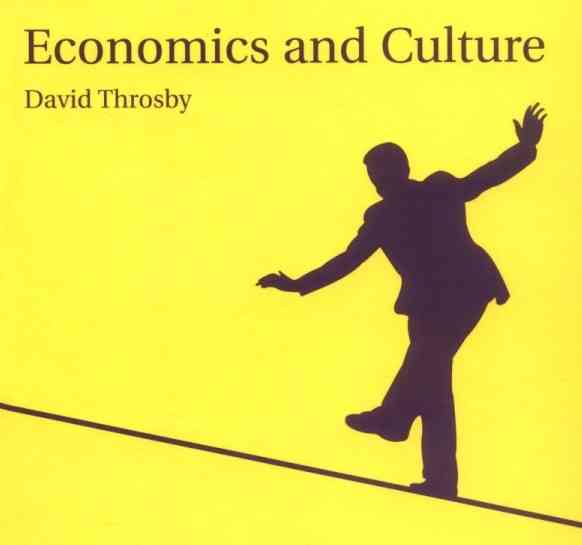
 Throsby book


Saturday, July 12, 2008

The Air from Other Planets: How Much Is Too Much?

 Eye
P  enderecki, that reliable old post-Schoenberg standby, evoking buzzing bees in the basement. I did not really like these pieces, but I would put them on every few months to see if the bizarre might one day morph into the familiar. I’ve been doing that for forty years now, and the compositions continue to sound harsh, unpleasant, gloomy, post-nuclear. It is not the composers’ fault that they wrote uncompromising music that was a direct response to the violence and stupidity of the 20th Century. But it is not my fault that I would rather listen to Bach. That is my way of responding to violence and stupidity.”
  —  Joe Queenan, ‘Admit It! You’re As Bored As I Am’, The Guardian, 09-JUL-2008, Arts, p. 24.
The afternoon and evening programming at the recent West Cork Chamber Music Festival in Bantry, Ireland, was initially a delight. I crave new music—even pieces that are hard to warm up to, hard to comprehend—and the program for this Festival was notable for the sheer number of recent compositions on the docket.

 Screen Test: Minions (Photo: Linus Gelber, 2008)
But 5 consecutive days into the Festival, I had reached the point of saturation. All of the inharmonic sawings and screechings from countless viols; all of the gnashings that can be elicited by knocking the bow against the bodies or tailpieces of violins; all of the scrapings of piano strings with coins and other hardware and bangings of keyboards with fists; all of the noteless, tempoless, ad hoc, arbitrary scratchings of nebulous pitch-envelope “suggestions” on the music staves—all of these eventually became too much for me.

 Chamber music al fresco, somewhere in Northern Italy
I am pretty sure I was not alone. The majority of the audiences at Bantry were conservative, middle-aged people, hoping and praying for some Baroque or Classical relief. Some people annoyedly folded and refolded their programs; others stared listlessly at their shoes through entire pieces. The performance of Schoenberg’s ‘Pierrot Lunaire’ which ran 35 minutes past the scheduled time was something of a ‘last straw’ in terms of trying the audience’s (and other ensembles’) patience.

While I very much admire Francis Humphry’s bravery and enthusiasm (and while I will gladly return to the West Cork Chamber Music Festival in future years), I do hope that future years’ Bantry programming will be devised so as to have more genre variation within-program, so as not to exceed so many audience-members’ appetites for new music.

With his setting of Stefan George’s poem “Ich fühle Luft von anderem Planeten” (‘I feel the air of another planet’) in the Second String Quartet, Op. 10 (1908), Arnold Schoenberg launched us into space, into new acoustical, mostly-musical realms. We continue on extra-terrestrial musical journeys because we want to, even to this day.

But the fact is, the amount of publicly offered music often has little relation to the quality of that music, let alone to the quality of the context in which it is presented. The quality of the context—and by this, I mean programming—is a crucial factor in the reception of any kind of repertoire. Programming (Irish: eagraithe) is a form of composing. The word ‘compose’ literally means ‘to put together’. I suggest that good programming consummates the composing process by arranging the elements so that they reinforce instead of oppose or beleaguer each other, preferably reinforcing in a way that’s conducive to reassessing and calibrating and illuminating—for us listeners, and for the performers. That way, each new piece is given a fair chance at a favorable reception. Ideally, a programmer/presenter is open to anything that leads to intriguing combinations. Ideally, a programmer/presenter aims to present the listener with ‘Happy New Ears!’, as John Cage calls them.

Healthy ‘fish’ (audience members; musicians) swim against the stream, but not obsessively or to the point of starvation. Healthy presenters do not program streams (Irish: an liosta casaidh) that torrentially roar down miles and miles of steep mountain slopes, in which even hardy fish cannot thrive.

 Ashby book