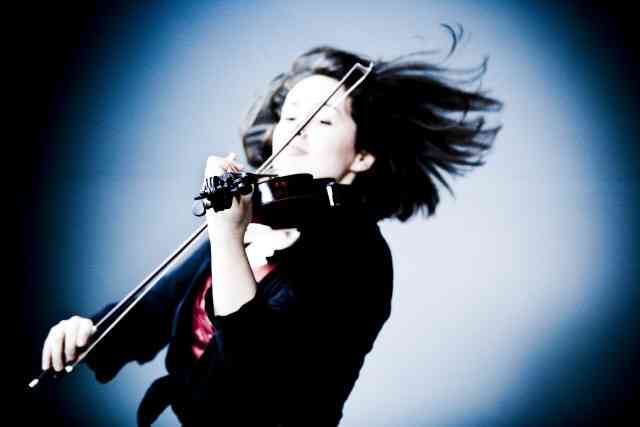
I want people to feel that it’s not just a kur but something like art. I hope people have a physical feeling as they hear the music—for me it is so special. I want them to be excited as they listen and watch. I think there’s a lot of emotion in it... My music before was mostly French, and this kur has some international music, but I’m also using some music by Polish composers... It’s difficult to put a name to this music, but it’s like a mix of classical with trance.”T his November 2011 post about the Spanish Riding School in Vienna has in 6 weeks’ time received a surprisingly large number of pageviews and outclicks.
— Michal Rapcewicz, FEI World Cup 2009.
M ost of these new visitors to CMT (and searchers who land on CMT) are equestrians, dressage riders looking for suitable music with tempi in the 140 to 160 bpm range that will suit the biomechanics of their horse and that will offer a chance to dramatically differentiate themselves from the other competitors… these are horse people who are tired to death of riding trite ‘pop’ music for their dressage tests.
B ut some of the horsey CMT visitors landing on that November lippizaner blogpost have come from TCP/IP addresses that indicate they are from Conservatories and from chamber music ensembles’ websites. Are these visitors merely musicians who in their spare time are hobbyist dressage amateurs? Or are they instead seriously looking to program new repertoire for dressage and thereby expand the market for their chamber performances and recordings? Are any of them composers, I wonder?
A nyhow, the traffic does stimulate thought! Possibly some composers would be intrigued by the prospect of writing for dressage... consider it in the same way you would composing for ballet! It is far easier to get commissioned by serious dressage riders to do some ‘miniatures’ than it is to get hired to write a ballet score. [Typically, there is a very brief leader or intro (the rider must enter the arena within 20 sec of the start of the music) to establish the mood/atmosphere and tempo and rhythmic structure of the piece—enough to cue the horse and rider. The dressage rules stipulate that the maximum length is 5 minutes of music. In many jurisdictions, there is no minimum time limit; however, most kür music is a bit longer than 3 min. Depending on the choreography, saying what you want to say in 3’30’’ or 4’20’’, say, is far more crisp, focused and dramatic (and competition-winning) than pointlessly dilating the piece to the max 4’59’’.]
A nd possibly some chamber music ensembles would be interested in recording such works... providing CDs or MP3s for dressage tests.
P ossibly ACF or other sponsors of new music would set ‘dressage to music’/‘freestyle’/‘kür’ as a subject for a future competition and call-for-compositions. Possibly one of the national dressage organizations would commission some compositions for kür.
T hink Bach WTC Bk 1, Prelude and Fugue No. 2 in C minor, BWV 847 (prelude), with a dark-angel Sviatoslav Richter-esque tempo. Nothing too delicate! Nothing too subtle! The music will be amplified, typically in a large echoic arena or open space—so you need clear orchestration with not too much polyphony or rhythmic complexity. Think confident, ebullient, full of impulsion! Think music that is emblematic of divine almighty beauty, whatever you conceive that to be! Think intimate and individualistic sound that will showcase the equine dancer! Think ‘What music would a beautiful, balletic horse love to dance to?’
- Lilley C. Dressage to Music: Build a Freestyle from Choreography to Competition. Allen, 2008.
- Patin F. Beat detection algorithms whitepaper. 2003.
- Rasin B. Fantastic freestyles: Steffen Peters. Chronicle of the Horse, 03-APR-2009.
- Walker J. The magic (and talent) behind the freestyle. Chronicle of the Horse, 14-SEP-2007.
- Welsh G. Creating Musical Freestyles Start To Finish . USDF, 2000.
- Freestyle search on Dressage page at HorseRadioNetwork
- Kür music at Woodwind Studios
- Equikur.co.uk
- Kür page at Wikipedia
- BritishDressage.co.uk page on dressage to music
- USDF.org page on musical freestyle
- FreestyleDressage.co.uk
- Article about freestyle dressage to music at Equiworld.net
- The Chronicle of the Horse
- BPMdatabase.com 150 bpm search
- JogTunes.com 150 bpm search
- BPM4DJs 150 bpm search
- BestWorkoutMusic.com 150 bpm search
- Tangerine software
- BeatScanner software
- MixMeister BPManalyzer software
- Podrunner app at iTunes
- BPM detection software at mmartins.com