Showing posts with label transcendence. Show all posts

Friday, April 13, 2012

Jonathan Biss: Proairetic & Hermeneutic Codes In Action, Realtime Beethoven-Janáček Message-Passing Protocol

Jonathan Biss
I  ’ve done all-Mozart, all-Beethoven, all-Schubert programs, but there is always the danger of a stylistic sameness, or rather a lack of confrontation between the pieces. Concerts of works of two composers are great because they still offer enough music of each to create a sense of immersion in the composers’ sonic worlds, and yet the concert becomes a dialogue between the two, which often moves in surprising directions. The question of which composers work well together (and which don’t) is particularly alchemical, and I think it is one of both similarity and difference. The success of Beethoven and Janáček as a pairing relies in part on the terrific intensity that characterizes both... The intensity may be similar, but the language is utterly different... Beethoven’s sonatas are incredibly tightly argued... Janáček, by contrast, is perhaps the greatest master of the musical non-sequitur... Beethoven and Janáček could not be more different, which makes the similarities in temperament between the two all the more fascinating.”
  — Jonathan Biss, 2012 essay.
N ot ‘non-sequiturs’ exactly. More like the worldview of peoples who have for centuries lived along a foggy seacoast and whose language now innately reflects their inability to see or predict what will loom into view in front of them from one moment to the next.

F orgetting, the renunciation of cause-and-effect and the obverse of forgiving. Beethoven afflicted with abject loss and despair (as in the Adagio of Op. 27 No. 2); Janáček surprised by optimism, welling up from where?

I just returned from Jonathan Biss’s Beethoven-Janáček recital at Kansas City’s Folly Theater (Sonata No. 5, Op. 10, No. 1; Sonata No. 14, Op. 27, No. 2; Sonata No. 26, Op. 81a; V mlhách, JW 8/22; Sonata 1.X.1905, Z Ulice, JW 8/19).

T he ‘affective’ content and contrasts of these intense works—both the composers’ affect or psychological state and intentions, and the performer’s affect—are what makes the program spellbinding—emotionally compelling to experience (confirming what Biss has written in his essays; see blockquote above)!

T here may be elements that denote a similar state of mind or parallels in terms of Beethoven’s temperament and Janáček’s temperament, as Biss says. But the orderliness and certitude of Beethoven—contrasted with the randomness and the existential acceptance of doubt and uncertainy, even the recklessness of Janáček—these features make us think about our differences, not just the differences between these composers or their respective eras.

T hese antithetical qualities—and how such personalities or such ‘stances’ that we adopt influence what happens to us in life—are constitutional, innate, inherited styles. Well, they are partly inherited and partly learned/habitual.

E very mixture, every conciliation, every passage through the barrier of our inherited and habitual style is a transgression with self-discovery.

N ot every transgression is transcendent or momentous. Some of them are ironic, trivial, or tame—much like when a belovèd pet cat trips and experiences embarrassment at its clumsiness, so out-of-character and façade-dropping. Sometimes events bring out the best in us. We appear virtuous and do and express commendable things. At other times, our undesirable qualities come out.

A nd some transgressions are outrageous or transformative. Putting these two composers next to each other makes for an intense two-way street—stylistically and emotionally. This program forces/enables the two to ‘mediate’ each other’s views and to rhetorically critique the other.

I t is as though Biss has learned from literary theorist Roland Barthes and reveals the “hermeneutic code” that governs the semantics of each of the two composers’ worldviews, the “semiotic code” of the musical motives of each, the “proairetic code” that governs the formal structure (or, for Janacek, the renunciation of cause-and-effect structure), and the “referential code”—musical abstractions and metaphors and borrowings.

T he ‘next-to-ness’ Biss creates in formulating this program conjures the main forces that drive the narrative—and that drive our own desires to listen attentively.

T he “hermeneutic code” (see links below) refers to those plot elements that raise questions on the part of the reader of a text or the viewer of a film or the listener to a program of music. For example, in the Beethoven Op. 10, we get tragedy—the anxiety becoming mourning, weeping, descending (Movement 1, Theme 1, Phrase 1) leading to violence (Movement 3, Theme 1)—which leads us to wonder about the reasons for these traumatic events. Then, in the Janáček, we get a fatalistic indifference to a world in which cause-and-effect processes break down, or in which some events can’t be prevented or explained. We need the ‘loose ends’ of the narrative ‘tied up’ in order to feel satisfied, like a good detective story—and that is what Biss does for us by the end of the concert. The entire narrative of a story like this operates via hermeneutic encoding. We witness a murder, and we enthusiastically spend the rest of the concert learning answers to the questions that were raised by the initial Beethoven scenes of violence. That is one half of how this concert program works.

P roairetic code”, on the other hand, refers to ordinary actions—those musical phrases or plot events that simply lead to yet other phrases/consequences/actions. Suspense is driven by action rather than by a reader’s or a listener’s desire to have unsolved mysteries solved. This “proairetic code” is the other half of how or why this particular concert program works—event or ‘message-passing’ between the works, in a fashion resembling what happens with remote procedure calls (RPC) and protocol buffers in software systems.

B iss’s idea of programming this seemingly-disparate-but-narratively-confrontational repertoire is really an excellent one—attractive, interest-holding, suspenseful—provoking us to reach a deeper understanding of the human condition, as well as deeper understanding of the mental states of two specific composers and of the nature of the works made to confront each other in this way. One could hardly wish for a higher form of “fun” than this. Bravo!
C  an a piano work convey a bustling ‘severalness’, or the sense of many people congregated in a social gathering, as convincingly as a chamber work? I think so — parts of Schumann’s ‘Carneval’, Mussorgsky’s ‘Marketplace at Limoges’, and Ravel’s ‘La Valse’ spring to mind as trivial examples. One tempting view is that the composer is aiming to depict the entirety of the human condition: everything is in here and, just as in the real world, the profound and the banal are constantly rubbing shoulders. I don’t think this is wrong, but the truth may go further... By presenting a unified work in which the high and the low aspects of humankind are contained together, the composer invites the listener to find these worlds contained inside each other, not merely nearby. The piano sonatas may have a touch of this ‘adjacent’ humor—the riotous trio in the second movement of opus 110, or the manic dotted-rhythm variation in opus 111.”
  — Jonathan Biss, 2012 essay.

Saturday, November 19, 2011

REBEL Baroque with Rufus Müller: Luminous, Numinous

Henry Ossawa Tanner, Annunciation
G    ood art reveals what we are usually too selfish and too timid to recognize—the minute and absolutely random detail of the World—and reveals it together with a sense of unity and form... the belief that the work of art reveals something of which the natural world is an imperfect image or symbol, and can reveal it more luminously if not more truly than [inartistic; uninterpreted] Nature.”
  —  Richard Elfyn Jones, p. 29.
L ast night’s Friends of Chamber Music REBEL performance with Rufus Müller (tenor)—a program entitled ‘Out of the Eclipse: Music of Transformation and Revelation’—was really excellent.

T he program was a meditation on Baroque idioms in terms of the Baroque chronotope of formation, the dynamics of space-time/dark-light interactions. Such interactions test the boundaries between truth and fiction, creation and destruction, conformity and iconoclasm.
  • Handel – Overture to Agrippina in G minor, HWV 6
  • Vivaldi – Sinfonia al Santo Sepolcro in B minor, RV 169
  • Handel – ‘Total Eclipse’ and ‘Your Charms to Ruin’ from Samson, HWV 57
  • Purcell – Chacony in G minor, Z 730
  • Telemann – ‘Wie? Kehren sich bei Jesus Krippen’ from Cantata No. 2 in C minor, TWV 1:1625
  • Bach – Concerto in A major, BWV 1055
  • Bach – ‘Zerschmettert mich, ihr Felsen und ihr Hügel’ from St. John Passion, BWV 245
  • Vivaldi – Sonata à quartetto al Santo Sepolcro in E-flat major, RV 130
  • Telemann – ‘Bei heißer Tränen dickem Regen’ from Cantata No. 13 in B minor, TWV 1:862a
  • Blow – Chacony in G major
  • Telemann – ‘Was gleicht dem Adel wahrer Christen’ from Cantata in F major, TWV 1:1511
  • Purcell – Fantasia No. 13 in F major ‘upon one note’, Z 745
  • Handel – ‘Tune Your Harps’ from Esther, HWV 50a
  • Handel – ‘His Mighty Arm’ from Jephtha, HWV 70
Q uestion’ figurations in ‘Wie? Kehren’ and ‘Bei heißer Tränen’ and elsewhere [much like mm. 8-9 of the tenor recitative ‘Wie hast du dich, mein Gott’ (Bach’s Cantata No. 21) or mm. 7-8 of the tenor recitative ‘Der Heiland ist gekommen’ (Bach’s Cantata No. 61] involve exchanges between the tenor part and the ‘contratenor’ line (viola in TWV 1:1625; violin in TWV 1:862a; oboe in TWV 1:1511). The questions—and the accompaniments to the answers—unfold a contrasting melodic pattern and a contrasting rhythmic pattern—which is how the composer creates structural contrasts among the motivic statements and develops depth. Constructing contrapuntal links out of the countersubject is a powerful method—a canon use-case that evokes a ‘receptive’ posture in the audience.

L eading/leaning tones abound, as we heard in the pre-concert lecture—especially in the pieces in the ‘dark’ keys (more than 2 sharps or flats), but the effect is not a cadential one. Instead, the melodic line moves in a peripatetic way... voice-leading that captures our attention by suggesting a self who has not made up her/his mind, or who is still discovering or questioning Life and the Divine... interrupted cadences on a large, “meta” scale that transcends the scope of individual works. This program—juxtaposing these pieces, strung together with hardly a pause between them—generates ‘hypercadences’, cosmic-scale implied plagal cadences. (Am I stupid for only now figuring out that that is what we mean by an excellent program or a good playlist?)

H andel’s cantatas have the women characters speaking/singing in their own voices, revealing a lot about their inner mental state, while the men tend to be detached, obscured by form and narrative. Stereotypically circumspect male, voluble woman. Lucrezia, Armida, Clori, or Diana, for example, versus Samson or Abdolonymus or Ruspoli [Harris, p. 51; presents arguments for interpreting the encoding and restraint used to veil same-sex meanings, while presenting alternative interpretations as well]. Müller’s Bach, Telemann, and Handel were powerful, inspiring, luminous.

I ndeed, as we listened our thoughts were wingèd, full of luminous hopes and dreams. And the dramatic changes in lighting in the darkened Grace & Holy Trinity sanctuary where REBEL performed helped to construct and reinforce the narrative authority that the music revealed to us... Revelations: by definition, novel; like dreams, they are subjective, and not readily corroborated by ‘evidence’. They persuaded us listeners to all-out belief, rather than reasoned with us or prove a specific predicate. One of my favorite performances! Bravo!

O  , zerschmettert mich, ihr Felsen und ihr Hügel! Wirf, Himmel, deinen Strahl auf mich! [O, crush me, ye rocks and mountains! O, Heaven, cast your bright beam upon me!]”   —  Bach, aria from St. John Passion.
T his is a peculiar passage that occurs several places in the Bible, notably Revelation 6:16... I imagine that Karen Marie Marmer (REBEL violinist who curated this ‘Transformation & Revelation’ program) selected this aria for inclusion in part because of this (compare Isaiah 2:19). This is not some Romantic, intellectual, filial, reverent ‘Crush me, please!’ This is a servile, prostrate Fear-of-the-Almighty-consuming-fire-and-brimstone-before-whose-alienness-and-majesty-none-can-stand ‘Crush me now, then!’ wish of a prey animal for the predator to just finish it off. The voice grows silent, no protection or security for her/him. Because Christ is now unfurling the once and future scroll that had been closed with seven seals. William Cowper (1731-1800) was fascinated by this same passage and used it in his poem ‘Truth’. I wonder whether the pietistic, Lutheran Bach ever read Cowper.
P   ieces of music are like any other form of human construction: whatever the patterns of intention lying behind them [sacred or secular], they instantaneously acquire an element of autonomy whether we wish them to or not... music, or any art for that matter, can affect us in ways that we could not expect—not because they have some secret property that only posterity reveals, or purely because our climate of reception predisposes us to see or value something that was irrelevant before, but because there is an unpredictable and circulating relation between the piece and its reception—it is not a one-way process.”   —  John Butt, p. 27.

Wednesday, July 2, 2008

West Cork Chamber Music Festival: Intensive Week of (Life) Experiences

 Bantry House
G  uím rath ar lucht eagraithe na féile, ar an aos ceoil a bheidh ag glacadh páirte ann agus ar an lucht éisteachta a mbeidh d’ádh orthu a bheith i láthair. [Thank you to the organizers of the Festival, to the musicians who perform in it, and to the audience members who participate in it. (Táim cinnte gur fhág mé rud éigin tábhachtach ar lár! Taiscéalann DSM smaointe go samhlaíoch agus is féidir leis iad a úsáid le hiarmhairtí agus gníomhartha cruthaitheacha a dhéanamh; cuireann DSM a smaointe féin chun tosaigh le plé a choinneáil beo!)]”
  —  Cathal Goan, RTÉ.
The point of music, to most people, is to ‘move’ us (the listening audience; the musicians; others)—to move us emotionally and to convey insights of value—of value to us as individuals and as a society. Performers at the West Cork Chamber Music Festival in Bantry, Ireland, are doing just that.

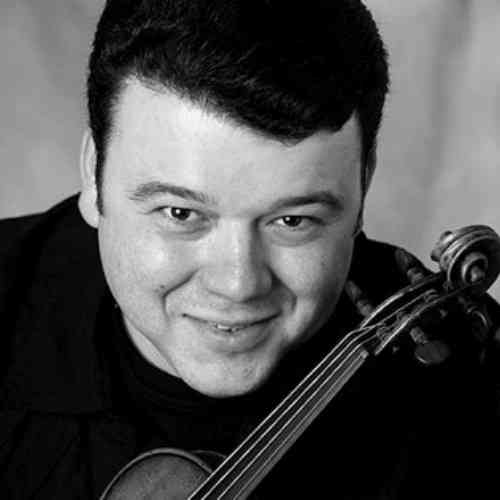
Particularly vivid examples were the performances by Israeli violinist Vadim Gluzman and Romanian pianist Mihaela Ursuleasa yesterday afternoon and evening.

  • Ysaÿe, Sonata No. 2 in a minor, Op. 27/2
  • Brahms, Sonata No. 1 in G major, Op. 78
  • Brahms, Sonata No. 3 in d minor, Op. 108
The 1923 Ysaÿe sonata is more suspense-filled than perhaps any other work. It portrays the human condition as one in which we have little control over what will happen to us. Life dishes out a sequence of challenges to us; there is a ‘thrownness’ to life’s events that is hard to predict and resistant to change.

Raising the emotional stakes even higher, Gluzman’s and Ursuleasa’s performances of the Brahms sonatas were, essentially, exceptionally personal answers to the question: How shall we respond to life’s challenges?

Brahms dedicated Op. 78 to Clara Schumann’s son Felix, who had died of tuberculosis in 1879. The elegiac adagio has, naturally, that conventional-minded association, with regard to Brahms’s intention, motivations, and nominal meaning. But in Gluzman’s and Ursuleasa’s hands we hear far more. The adagio becomes fervent reportage on the human condition itself, and on what is our best course of action during the short years when each of us walks the planet.

Basically, you vehemently commit yourself head-long to each other—to other humans, to significant others. Against annihilation, you counter with positive, radiant confessions; against the abyss, you hold forth with unceasing protestations of love.

Brahms’s (and Gluzman’s and Ursuleasa’s) statement is, we now see, a comprehensive treatise on virtue ethics, disguised as violin sonatas.

The solidarity of their shared vision; the rare, deep empathy between Gluzman and Ursuleasa—these are evident throughout (including the Ysaÿe and also the Schnittke Suite, which was their contribution to the evening’s main 20:00 concert). But these qualities are epitomized in their treatment of the Brahms sonatas. The vivace and presto movements, for example, are not merely ‘playing for aesthetic integrity’ but are instead ‘playing as if one’s very life depended on it.’

 Vadim Gluzman, photo © John Kringas
Gluzman’s commitment is all-consuming; the perspiration shed from his earnest brow accumulates in great pools on the stage in the Bantry House library. Ursuleasa is no less deeply invested emotionally, nor are her pyrotechnics or exertions any less prodigious than Gluzman’s.

 Mihaela Ursuleasa
These two achieve here a remarkable coherence—a depth and beauty so moving that many cheeks in the audience are well tear-dampened by the end of it all. One never expects this. It just happens. Reflexively, unavoidably, miraculously. And that, in a nutshell, is the whole point. What it is to be thoroughly human, revealed by music, in an early 18th-Century mansion in West Cork overlooking the sea.

 Bantry House
The annual West Cork Chamber Music Festival was begun in Bantry in 1995, with Francis Humphrys as its Artistic Director. Bantry is an easy, scenic 90 minutes’ drive from the airport in Cork via the N71 highway along the southwest coast. Now in its 13th year, the Festival has 70-odd musicians performing more than 35 concerts over 8 days’ time. Approximately 105 works by 65 different composers from 19 countries are represented, including quite a few pieces of new music by living composers. Most of the performances are held in the spacious library of Bantry House, which holds about 190 people. Some performances occur at St. Brendan’s church in town, about a 7-minute walk from Bantry house. This year the Festival includes a composition competition for young Irish composers, and winning entries are performed by masterclass ensembles at the Festival.

The Festival continues through this weekend. Check the Festival website for more information. If you are unable to attend in person, check out RTÉ’s live and streaming broadcasts from the Festival. (I’ll post additional remarks about the West Cork Chamber Music Festival on CMT later, probably after returning home to the U.S. I wish that internet access here were cheaper and better… )


Saturday, March 1, 2008

Excellence in Being For the Good: James Ehnes, Neo-Fiction, and the Many Faces of Virtuosity

 James Ehnes
T  his is the best sort of virtuosity that you will hear tonight—because of its nuances, its extraordinary sensitivity and elegance!”
  —  Cynthia Siebert, prefatory remarks, introducing James Ehnes’s and Andrew Armstrong’s performance in Kansas City.
I  ncredible mix of action, special effects, and story!”
  —  DSM, after James Ehnes’s and Andrew Armstrong’s performance in Kansas City.
I  f I read one more review that says that something or someone is ‘virtuosic’—that their playing was ‘virtuosic’—my head will explode. It’s the lamest, laziest excuse for a compliment that a reviewer can write. It tells us nothing, in 300 words or less. Instead, I wanna read about whether he/she plays like Keanu Reeves fights in the original ‘The Matrix’. I wanna know details about how the fight went, note by note. I’ve got all the attention span in the world; I’ve got all night. Tell me. I wanna know whether his/her playing can save the World, and I wanna know how this can really happen. I wanna know whether this is The One. Make me believe!”
  —  Anonymous.
J   ust in case you were hoping to make it back, they’ve reconfigured the culture so there are hardly any phone booth [portals] left. We’re gonna need guns. Lots of guns. And an endless supply of logic, humor, tenderness, disobedience, defiance, and argumentative tenacity. The surviving members of the old crew are still on board, along with some new recruits, freshly located, unplugged, and debugged. Are you with us? You’ve already made your choice. Now you have to understand WHY you made it.”
  —  Jacket blurb, William Irwin book, The Matrix and Philosophy.
It’s astonishing how much we expect of the Arts—especially of music. How can it possibly deliver us out of the desert-like banality that comprises so much of modern life?

And yet it can and, surprisingly often, does. It awakens us, enables us to feel how alive we and others around us are, makes us feel deeply, truly human—immersed. Nobody ‘taught’ us this, in school or in out-reach programs. We haven’t succumbed to some seductive marketing scheme to make us consume this stuff. The music doesn’t exist to separate us from our money and divert us for an hour or two. The music we’re after may at times be sensual and escapist (that is, it can be part of The Matrix, for those who prefer the Blue Pill). Or the music can at times propel us into a novel and unexpected reality—one that may or may not be pleasurable but is, regardless, inherently meaningful (that is, it can be part of the Real World, for those of us exponents who take the Red Pill). In either case, we honestly and truly resonate with it and identify deeply with it. If you don’t want to call music that succeeds in doing this ‘virtuosic’, maybe the word you’re looking for is ‘engrossing’ or ‘profound’.

T  he public doesn’t need educating [about classical music]. It doesn’t need sexy marketing, or publicists, or icons [to save classical music markets]. It wants music it can enjoy or at least respect. Composers ... should have a long, hard think about why there is a far larger appetite for the music of [list of names #1] than there is for [list of names #2].”
  —  Christopher Pugh, Gramophone, 2008 March; 85: 8.
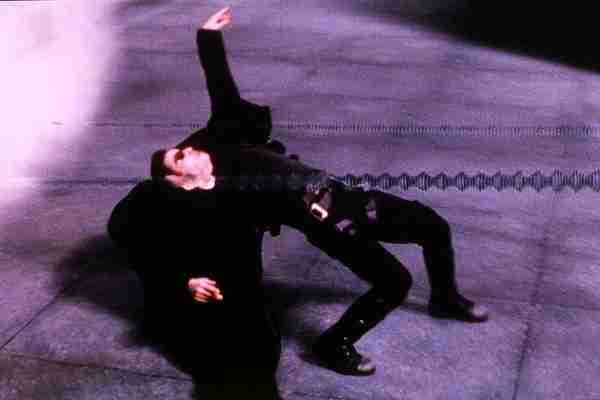
 Keanu Reeves, dodging bullets
The classical music repertoire that sells—both old and new; both live and recorded—is not all righteous, redemptive, heroic ‘Matrix-oid’ stuff of course. Sometimes what we want is serene and pacifistic, so long as it’s not namby-pamby or face-losing. We desperately want to believe in the possibility of peace, and we crave music that consoles us and dramatically restores our hope. No mean feat, that. So, if you don’t want to call music that succeeds in doing this ‘virtuosic’, maybe the word you want is ‘irenic’.

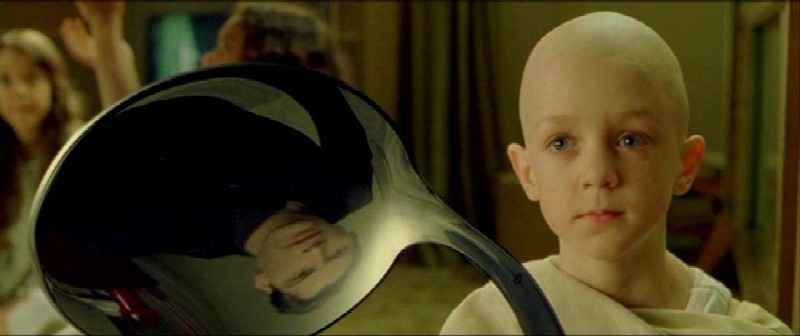
 The Matrix, the Oracle’s Appartment, Psychokinesis, ‘This is not a spoon’
F  or me the Regenlied [Song of the Rain, Brahms Sonata for Piano and Violin, Op. 78] is like a dear and true friend whom I would never forsake for anyone else. In its soft, contemplatively dreaming feeling and its wondrously consoling strength, it is one of a kind.”
  —  Eduard Hanslick, 19th-Century music critic.
The chamber music repertoire is rife with intimate narrative between parts. In that regard, we want desperately to be reminded that human beings can be beneficent and responsive. We want music that will remind us of friends and family who have loved us and helped us and who have worked for the public good. And, equally often, we want music that will remind us of our own good-heartedness and steadfastness—of our own radical devotedness to those we love. We want music that helps us plumb the depths of our aspirations to frenzied sacrifice for significant others: we would never forsake them, even if it costs us our lives. Most mothers feel such a love for their children—a ferocity that’s a natural correlate of childbearing and biology. Others of us have to get our other-centered ferocity in other ways. So, if you don’t want to call music that succeeds in helping us do this ‘virtuosic’, maybe the word you want is ‘altruistic’ or ‘rapt’ or just ‘berserk’ (in the Norse sense of that word).

O  f course you are aware—that no one can help loving it more than anything in the world, and that one becomes addicted to it by just studying and understanding it, by listening to it as in a dream, and by becoming completely absorbed by it ... When I play the last page of the E-flat major Adagio, I always think to myself that [Brahms] can only be a thoroughly good-hearted man.”
  —  Elisabeth von Herzogenberg, 19th-Century singer, remarking on Brahms’s Op. 78.
  • Virtuous—commendable, ethically laudable, venerable, redemptive;
  • Proficient—elite level of technic and interpretation;
  • Incredible, illuminating, transcendant—giftedness defying mortality and the triviality of human existence; fluency beggaring belief; super-human, exceeding known limits; god-like omniscience and omnipotence;
  • Courageous—scoffing at danger; gambling and winning against terrific odds; dynamic and processual; continuously (re-)earned, not a static ‘attribute’ of character;
  • Strenuous—the virtue of sweat and ‘dirty hands’; self-sacrifice to others / to humankind or to the professional guild (see Godlovitch, pp. 74-78); extraordinary exertion on behalf of public goods;
  • Orthodoxastic—integrity; embodying what the field believes or idealizes; beneficience; advocacy and regulatory role in opposition to wickedness or maleficence and mediocrity.
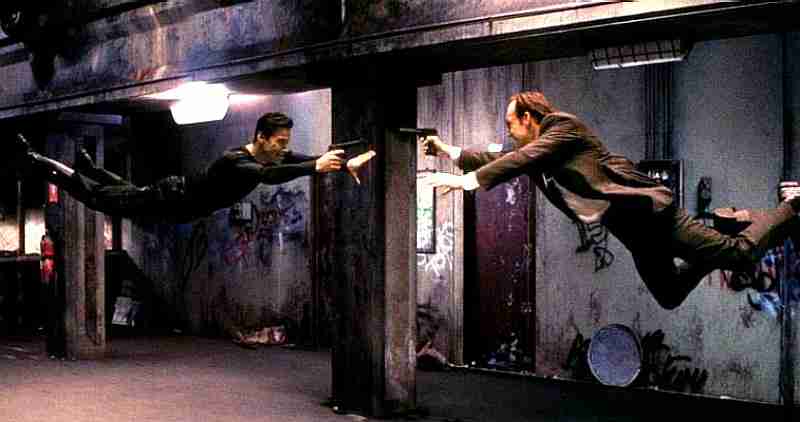
 The Matrix, Subway Hyper-fight
Oh, that last bullet, in the bulleted list above! Consider the plight of the arts in the U.S., and of art music in particular. The recently announced $16M cut in this year’s funding for the National Endowment for the Arts (NEA) is outrageous. “It means we must redouble our efforts to raise the arts consciousness of those who are seeking elective office in the coming year… On VoteUsa candidates are compared on 35 important issues: foreign policy, environment, … I clicked on ‘Education’ and found 56 sub-topics; number 53 was ‘Art and Music,’ and 6 out of the original 7 major candidates had no statement at all on it, ” says Magaret Lioi, CEO of Chamber Music America, in her editorial in this month’s issue of Chamber Music magazine (March 2008; 25(2):7). Currently the candidates “have no platform on the arts… the word ‘art’ doesn’t even appear on their websites.”

But every thinking human takes pride in seeing humankind flourish, and in knowing that the cultural legacy that has been bestowed upon us has been successfully passed on to the next generation. So ‘virtuosity’ is partly about Dawkins’s self-conserving (‘selfish’) gene: H. sapiens appreciating that what we have been as a people will endure beyond our life on the planet as individuals. Therefore, playing and composing that (a) significantly advance the cause of the arts and (b) serve as emblems of what civilized governments’ policies should support—must surely be ‘virtuosic’ as well.

James Ehnes’s concert tonight ran the gamut from rapt, to altruistic, to irenic (in the Brahms Op. 78, Vivace ma non troppo and Adagio), to engrossing (in the LeClair Sonata in D Major, Opus 9, No. 3), to profound, to transcendent, to redemptive, to fantastical (in the Bartók Rhapsody No. 2), to berserk—beyond courageous. The playing was righteous throughout, with highly accessible, visceral, and addictive elements. Ehnes was uncanny in his technical proficiency, oracular in both ‘red pill’ (Bartók) and ‘blue pill’ (Richard Strauss Sonata in E-flat, Op. 18) phrasing: clearly capable of taking the guild of musicians and each of us as individuals yet farther. Pyrotechnical, yes; iconic, yes; prodigious, yes; and at times near-miraculous (Brahms Scherzo, Sonatensatz). Segulah (“well-choosing,” “sustaining learning,” “Samek-Gimel-Lamed,” “לּגּסּ”) ! Tenth Dan! Jinlong Golden Dragon!

Virtuosic? T’would be damning by faint praise.

But how would you know if I’m right about this? Check out Ehnes’s recordings. Attend one of his forthcoming concerts yourself. Check out the several links below—on the epistemology of ideals and on virtue ethics. You don’t have to be a card-carrying philosopher to find these things fascinating. You don’t have to be Morpheus to know virtue when you hear it.

 Irwin book
C  onfucian virtues have been predominantly a perception of what it is to be a human being and how one should behave to fulfill the meaning of Life... recorded in Analects (Lu Yu) ... operating in a continually evolving process with no permanence or limit ... even the unknown is [a type of] knowledge [concerning which one can have, or not have, virtuosic mastery]. To Confucians, learning and discovery are themselves essential virtues ... not static but requiring interaction with others.”
  —  Tsung-I Dow, in Tymieniecka, p. 3.

 Kupfer book