Showing posts with label statecraft. Show all posts

Tuesday, November 25, 2008

Imani Quintet: Synthetic Homelands, Statecraft & Hierarchies of Belonging

Imani Winds
S   tandpoint theory’ … asks: could you do science [, or computing, or music or other of the arts] differently if you did not ‘erase’ [disenfranchise] those people outside the [conventionally-enforced] institutional representation? ... Women in science can more sharply expose [science’s] assumptions because they are not party to the prior agreements [of the prevailing Establishment authorities]. And precisely because they are not part of the prior agreements, they may freely prioritize other agreements, including agreements about strategies for dealing with the actual world that are different from those used by institutional science [or institutional music, etc.]; strategies with a different understanding about power relations between the observer and the observed and generating different kinds of knowledge.”
  —  Lynette Hunter, Situated Textualities, p. 163.
E   verybody thinks that classical music is the music of the European canon. But when you go to children [in public schools in the U.S.] now, they don’t know what ‘classical music’ is, period.”
  —  Toyin Spellman-Diaz, Imani Winds oboist, quoted in Vivien Schweitzer NYT 14-NOV-2008.
A  nd so those kids are growing up not imagining that these musical ‘homelands’ exist. They are growing up not knowing that they ‘belong’ and have the possibility of a home within the many communities of classical music including chamber music. Community outreach programs to address that problem are tremendously important, to the kids and to each society as a whole. The Imanis are wonderful ambassadors—Secretaries of State from what, to those kids, are unknown (and what, once they discover them, are revealed to be exciting and congenial—) ‘lands’. Thank you, Imani Winds, for all of your efforts to de-mystify chamber music through your community outreach programs!”
  —  DSM.
The ‘Thanksgiving’ U.S. holiday seems to me a perfect occasion to point out the recent, festive performances and recordings of the wind quintet, Imani.

  • Valerie Coleman, flute
  • Mariam Adam, clarinet
  • Toyin Spellman-Diaz, oboe
  • Jeff Scott, French horn
  • Monica Ellis, bassoon
M embers of the Imani Winds ensemble all have graduate degrees from conservatories like the Juilliard School and the Manhattan School of Music. But, prior to their illustrious achievements in those settings and subsequently, each of them attended public schools in the U.S., and experienced the limitations that that generally entails. With that as prologue, the ensemble and its members do now perform pro bono and ‘community outreach’ work as a focus of many of their programs. Their own personal experiences in this way inform and propel their natural, generous response to the still-unmet, ever-more-unmet needs, especially for music education opportunities for underserved inner-city kids. This aspect was covered in Vivien Schweitzer’s article on the Imanis in the NYT a couple of weeks ago. It is inspiring and truly wonderful to see the Imanis ‘giving back’ in this way. Please be sure to thank them and acknowledge their efforts. (And, of course, one way of tangibly doing that is to attend their performances and buy their CDs.)

Have a listen to a couple of MP3 clips from two of their recent recordings:

    [50-sec clip, Imani Quintet, Ástor Piazzolla, ‘Fuga e Misterio’, 1.2MB MP3]

    [50-sec clip, Imani Quintet, ‘The Holly and The Ivy’ traditional carol, 1.2MB MP3]

The Piazzolla is especially characteristic, I think, of the Imanis’ chamber music ‘fusion’ interpretive approach. In his chamber compositions Piazzolla notoriously ‘borrowed’ elements of jazz (esp, its harmonies and dissonances)—plus elements of tango, baroque counterpoint, and a variety of other idioms. Essentially, he created a ethnomusicological ‘country’ or ‘territory’ in which to ground his own individualism. The Imanis make a ‘home’ out of it. In fact, they make every sonic-space they enter their ‘home’.

Piazzolla’s—and the Imanis’—style transcends all of the borrowed influences: they don’t merely ‘appropriate’ the influences or ‘reference’ them. For example, the passacaglia form with its circulating continuo line entraining/entrained-in a recursive harmonic sequence was idiomatic for 17th and 18th Century baroque music, but it’s also fundamental to jazz progressions. Another example from baroque composition idioms is the complex and often virtuosic counterpoint that epitomizes formal, collectivistic fugal gestures but which in Piazzolla/Imani Winds incarnations becomes a vehicle for individualistic discourse by each chamber artist in turn.

M ore obviously ‘democratic’ and autonomy-related are the improvisational elements. Improvisation might nominally be borrowed from jazz, but in practice it entails different tonal and rhythmic palettes that, despite how extensible and varied they are, do stay within the boundaries of the ‘homesteaded’ sonic territory.

  • Property rights;
  • Autonomy and equality;
  • Enfranchisement;
  • Social justice;
  • Decolonizing the colonized;
  • Becoming anti-colonial musical activists.
Yeah, all of that. Thankful are we, for these beautiful and interesting real worlds and virtual worlds.

Our notions of ‘belonging’ and nation-ness may have mutated in these recent years of globalization, but the issue of belonging is no less important than it ever was—and the Imani Winds sound reminds us of that fact. Thanksgiving is a holiday (in the U.S., Canada, and other places) that is associated, perhaps more than any other holiday, with concepts of nation and family and unity and equality. But it’s also an occasion for remembering and celebrating difference—for affirming the stories that we hold in common with each other, and for remembering and meditating upon the narratives that make us diverse or that, for better and worse, still separate us or colonize us. The Imanis cross genre boundaries as though they weren’t there—one big borderless E.U. as far as the performing arts are concerned.

Shall I put one of the Imani CDs on to play when my own family assembles to celebrate this Thursday? In think yes. The group or family forms a focus for our sense of belonging—and how we move our sense of attachments and identity from place to place. Members of my own family live far apart and travel abroad frequently; we don’t have opportunities to see each other very often. Our processes of ‘identification’ aren’t constant, and they surely aren’t frozen in-time as they once seemed when we were not all so far-flung. The processes are renewed and altered at times of holiday celebrations; they are contingent and fleeting, expressed in relation to our group and its customary holiday foods, and music, and other cultural genres and artifacts. We ‘transcend’ whatever our identities may have been in the past, as we create new experiences together. In a way, Imani Winds is ‘trans-national’ and ‘contingent’ as much as it is transcendent in its repertoire and interpretations. And it is so in much the same way, I think, as what I believe families do, including my own.

All of us are, in the process, avoiding artistic ‘essentialism’ and artistic ‘determinism’ or passivity—and instead actively migrating into or creating new areas. Or at least that is what listening to the Imanis makes me feel.

Their warmth and exciting virtuosity are captivating. To hear Imani Winds perform is to want to be(come) a member of their family...

Upcoming Imani Winds performances include the following:
  • 01-DEC-2008 19:00 at Borders Bookstore, 461 Park Av, New York NY
  • 02-DEC-2008 20:00 at Carnegie Hall Stern Auditorium, New York
  • 09-DEC-2008 19:00 at Borders Bookstore, 3700 Torrance Blvd, L.A.
  • 10-DEC-2008 20:00 at Walt Disney Concert Hall in Los Angeles CA
  • 12-DEC-2008 20:00 at the Performing Arts Center in South Orange NJ
Imani Woodwind Quintet


Thursday, June 14, 2007

Suitte d’un Goût Etranger: International Relations in Pierlot’s Evocative Marais


L uxury is the situation of a society in which riches have become the principal passion. As soon as money has become the exclusive object of the greatest number of society, there can be no more powerful motive than the desire to acquire it. There is no enthusiasm but that of opulence; there is no other emulation but to procure by the swiftest of routes those signs which are admitted by all to represent power, pleasures, and felicity.”
  —  Baron d'Holbach, Politique Naturelle, 1773, p. 130.

DSM: We in the twenty-first century may regard 12-tone music as if we had invented it, inhaled it, and thoroughly identify with the modern aporias that it expresses. But the Baroque literature could and should be equally resonant. The Baroque poets speak to us when they respond to the Thirty Years War and other tensions, insofar as such destructive wars and plutocracies are also leaving their mark on our own time—international relations gone awry, and, in the U.S., the longing for a return to effective statecraft.

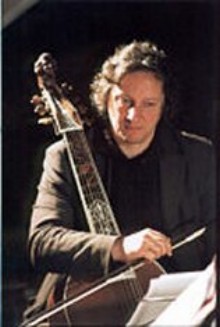
CMT: Philippe Pierlot illustrated this inter-epochal concept beautifully last night at the Boston Early Music Festival, in his performance ‘Les Festes Galantes’ with harpsichordist Jan Willem Jansen. The entire program was technically superb, but the Marais pieces especially were particularly moving. Pierlot is Professor in the Hochscule fûr Musik, Trossingen, Germany. He lives in the belgian Ardennes and, among other things, directs the Ricercar Consort. In his account of these Baroque pieces, Marais’ Suittes, there’s a sensitivity to international relations — a reflet d’une perspective étrangère.

DSM: Contrast the expressions in Pierlot’s account of Marais’ Suittes last night with those of the film, Tous les Matins du Monde—with Gérard Depardieu cast as Marais. The film follows Marais from highly talented but self-centered student, through his personal follies with Sainte-Colombe’s daughter, to Marais’ old age, troubled by the realization that music—his talent, n’importe quoi—was so much greater than his ego had allowed him to explore. The film delivers a sense of real authenticity, but it’s an authenticity of an introverted sort. By contrast, these Suittes in Pierlot’s hands have a distinctly outward-directed, transnational flavor.

CMT: I’ve never heard anybody produce a tone like Pierlot’s, starting a long note so tenuously as to be more like whitespace, empty and begging for its fulfillment yet so clear and prophetic—clairvoyant even. Pierlot’s playing is the sheer epitome of Truth in a viol. We learn a lot from Pierlot—about the human condition, not just about musical expression.

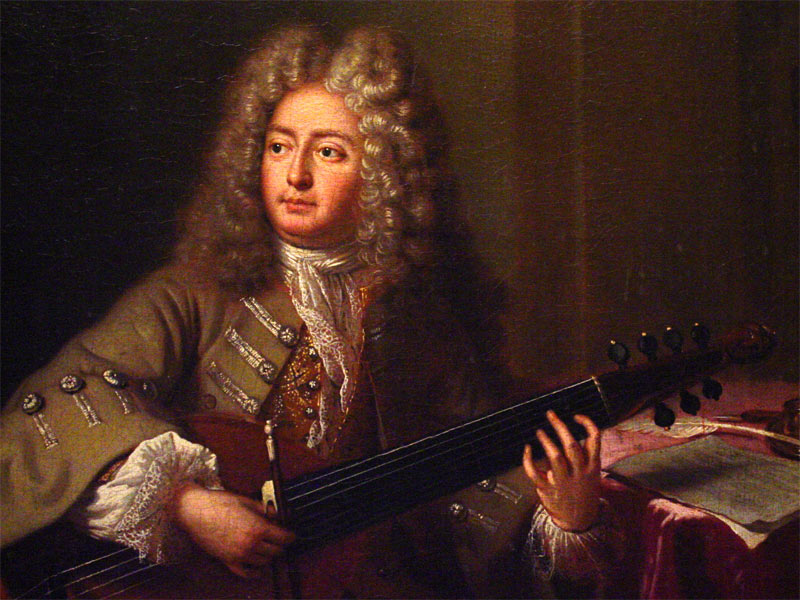
DSM: This Marais music (1656-1728) presages Claude Helvétius’s writing on eighteenth century materialism. He knew courtly society, he knew the world of the financiers, and he saw the limitations of it all. For Helvétius (1715-1771), ennui and the various remedies proposed for it varied according to nations and their constitutions and temperaments. Helvétius’s book, de l’Homme, critiques an aesthetic of pleasure based on sensationalism: “The object of art ... is to please and consequently to excite sensations in us which, without being painful, are yet lively and strong. When a work produces such effects it is applauded.” Beauty is what strikes us sufficiently to enliven our soul. The sublime makes for stronger effects since it may evoke terror and fear—so much better than being bored or meaningless! The Arts were to be judged not by rules articulated by social hierarchy and convention but by genuine and spontaneous individual sentiment—individual responsible judgment and thoughtful action. Marais' music was a harbinger of this . . .


Philippe Pierlot

Marin Marais

Wednesday, June 13, 2007

Psyché: Jean-Baptiste Lully’s Puissance Autoriale

Psyche, Furies
  • Psyché, production by BEMF
  • Music by Jean-Baptiste Lully, 1671-8 (1632-1687)
  • Libretto by Thomas Corneille (1625-1709)
  • Paul O’Dette & Stephen Stubbs, Music Directors
  • Gilbert Blin, Stage Director
  • Lucy Graham, Choreographer
  • Ellen Hargis, Vocal & Gesture Director
  • Caleb Wertenbaker, Set Designer
  • Lenore Doxsee, Lighting Designer
  • Anna Watkins, Costume Designer
  • Kathleen Fay, Executive Producer
  • Abbie Katz, Associate Producer

DSM: You know, there’s a conventional notion of French classicism – that the Arts moved in the 17th Century toward purity and increasing standardization, and that French as a language was elevated such that it came to rival ancient languages in its expressive richness. Though it’s usually associated with Louis XIV’s Versailles and such figures as Molière, La Fontaine, La Bruyère, and Racine, the formative period of classicism was a bit earlier, and writers like Corneille were its vanguard. A caricature of French classicism goes further and implies that the development of the absolute monarchy, the pacification of the realm, the rising prestige and power of France in Europe, and the emergence of classicism are all “of a piece”. But it’s precisely this latter-day conclusory tone – the tacitly assumed inevitability of the association between political and social order, on the one hand, and aesthetic order in the Arts, on the other – that this Lully opera with the Corneille libretto calls into question. Christian Jouhaud’s 2000 book, Les Pouvoirs de la Littérature: Histoire d’un Paradoxe, is an excellent analysis of French Seventeenth Century literature and music and art, as revealing features and changes in the exercise of political power during that era.

CMT: Jouhaud’s book is a kind of sociological analysis of classicism, arguing that the affinity of classicism with royal power was an illusion. Rather than emphasize the commanding influence of the monarchy and patronage in creating classicism, or at least in ensuring its success, Jouhaud speaks instead of the ‘writer’ or ‘literature’. His book shows that in the seventeenth century that writers were seeking and getting increasing autonomy.

DSM: In that connection, Bourdieu once wrote that the Arts are not only situated in a social context but he asserted that this context was necessary for its emergence – debunking the claims for the universality and timelessness of classical expression. One aspect of this social context was a public of readers and chamber music listeners whose interests and level of culture enabled them to participate in these Arts, thereby fueling their development.

CMT: This reminds me of Habermas’ notion of a public sphere, but Jouhaud objects to the claim that a public emerged only in the eighteenth century. He says it was earlier, in the seventeenth century with Corneille and Lully. The modern entity of a public emerged then, he says — a public concerned with eloquence and expression, as intensely as the court was.

DSM: And at that time there were, of course, competing versions of eloquence — Jesuit and Gallican, say — in seventeenth-century France. The Jesuit style championed a thoroughly French rhetoric of images, and a not-too-challenging level of learning that was congenial to a nobility with limited educational aspirations and resources. Gallican eloquence, on the other hand, was cultivated by the magistrates of the parlement, who were bearers of more erudition — a Latinate humanism of the late Renaissance.

CMT: In Lully’s Psyché (see-shay'), we have an example of a humanistic interest in the ‘modernity’ of Ciceronianism that was at the heart of French culture then — in the generations following the wars of religion. The Jesuits’ style won the day by appealing to the gens de la cour, but their victory didn’t come from the public itself.

DSM: Yes, that’s part of Jouhaud’s argument. Jouhaud begins by considering a paradox, insofar as the Arts’ dependence on power actually created the conditions for its construction, and ultimately its autonomy, as a field or realm of human activity and culture production. To frame culture in paradoxical terms conforms to a contradiction, one that transcends the literary realm. Early seventeenth-century France was characterized by two tendencies. On one level was the consolidation of royal power and the consensus that emerged across elite society behind the continuing need for a powerful monarchy. On the other was the new bourgeois cultural realm marked by disparate trends — ones that suggest a scattering, ‘centrifugal’ dynamic in contrast to the crown’s ‘centripetal’ force.

Baroque Opera Orchetra Pit
CMT: The arrangement of the baroque orchestra to accompany the opera manifests some of this centrifugal tension too, I think – sitting as the performers do on opposite sides of a picnic-table-like layout in the orchestra pit. The principal violinist actually projects his/her sound predominantly toward the stage, toward the singers, not toward the audience. There is an egalitarian aspect to the musicians’ performance in baroque opera that, unlike other opera or orchestral forms, retains the dialogue-among-equals, discursive character of smaller chamber music idioms. Very interesting, compared to eighteenth and nineteenth century opera. You know, Jouhaud’s focus doesn’t dwell on Paris in the decades following the religious wars, a city that had become a haven for cosmopolitan elites, humanists, and various eccentrics. But his concentration on a handful of literati, and on the paradoxical nature of contemporary culture, yields ideas that brings these contradictory things—power and culture—into a clear and informative relationship. Jouhaud’s method is to see the relationship between power and the Arts as a series of exchanges – to see it as a process that serves to construct each. Political power and literature don’t confront one another as fully constituted entities. Rather, each feeds off the other. In this Lully opera, we have music in service of statecraft, or as an artifact of statecraft.

DSM: In Jouhaud’s words, we get a “littérarisation” of politics and a “politicization” of literature. Does this exchange suggest parity between the two? Although Jouhaud acknowledges that in the eighteenth century it would lead to the autonomy of literature as an independent discursive venue for the first time, he insists that in the early seventeenth century, at its birth, a dependency characterized the Arts’ relationship to power.

CMT: Looked at in this way, there’s an abstract quality to Jouhaud’s idea that, even in the detailed case studies he provides, threatens to obscure his argument. To start with, it’s helpful to know that his concern isn’t primarily with the simple connections between politics and literature and music and other art that come to mind when we think of the seventeenth century: not the exploitation of literary forms to exalt the monarch; not the control of literature through patronage or censorship; not the appropriation of political subjects by literati—although all of these do find a place in Jouhaud’s analysis. So what does he mean by the “littérarisation” of politics and the “politicization” of literature, and what are the implications of this process?

DSM: One place not to begin, Jouhaud says, is with the institution that traditionally stands at the center of discussions of literary life in the early seventeenth century, the Académie Française. That would give a misleading view of writers and composers and artists (who previously had no formal standing in the “society of orders” of the Old Regime) as having gained autonomy and protection through its establishment.

CMT: Jouhaud argues that writers and composers and others were defined by their exceptional nature—as individuals and an activity lacking a corporate identity. “Fundamentally, their status was not to have one,” he says. This feature was both a weakness and an advantage: a weakness because it left them vulnerable and in need of protection; an advantage because as relatively free agents they were uniquely suited to the ad hoc service that aristocrats, ministers, and monarchy required.

DSM: So Jouhaud holds forth with a social analysis of writers’ anomalous position in the society of orders, and suggests that the novelty of literature and the Arts in the early seventeenth century—or of composing music—was not only its promotion of writing and composing in the vernacular. The novelty of the Arts consisted in the artists’ unique social position as well. Jouhaud implies that writers embodied a modern predicament: individuals, lacking any traditional moorings and support, engaged in a novel enterprise, in need of legitimizing for the sustainability of their social status and livelihood and practice. They naturally gravitated to the service and patronage of the wealthy and powerful, whom they were uniquely equipped to serve because of their adaptable skills. Surely has face-validity as modern — sounds like today, in fact.

CMT: Far into Jouhaud’s book we learn why politicians and royalty were so interested in artists of this sort. It wasn’t so much the intrinsic nature of their writings and compositions as the position they occupied on the sociocultural landscape. They were valued as an alternative and, even more, as a counterforce to the rising bourgeoisie whose legitimacy and expertise represented obstacles to both the crown’s authority and its latitude of maneuverability. He writes: ‘Between the development of these new forms of literary authority and the development of a power that sought to confine the privileges of corporations and to deny them the right to dispute political matters, there would thus be agreement, harmony . . . perhaps even a solidarity in expansion’ (p. 330).

DSM: So writers and composers served to domesticate—the term is not necessarily pejorative one—a cultural field which the rulers did not wish to see emancipated. They recalibrated the norms of comportment and limited the authority of the ‘learned’ bourgeois members of society while simultaneously giving lessons in pleasure and good taste (p. 368).

CMT: It’s in this way thaqt the subject of Jouhaud’s analysis is really a theory of the origins of “the public”, although it’s not Habermas’s notion of a public characterized by an independence from the court and crown. Just the same, Jouhaud addresses autonomy as part of the culture of a developing modern civil society. And Jouhaud’s public fundamentally intersects and overlaps with the court, instead of being fully independent from it.

DSM: And in the case of Lully’s operas, we can read them as reactions to, and at the same time intertwined with, court culture itself. It’s consistent with Jouhaud’s warning us against reifying the idea of a “public” as a space or a cultural arena fundamentally characterized by autonomy from royal control and manipulation. It’s still intertwined with the emerging political consolidation and intersections with self-referential royal, ministerial, and aristocratic power. The wedding festivities and Bacchanalia in Act V of Psyché are good illustrations of that!

CMT: But still, even if we set aside the problematic idea of a ‘public’ we can examine the idea of the term ‘publicity’, indicating a dynamic of representation and disclosure through the discourse of literature and music and the Arts. Insofar as a public coincides with court culture, or the court itself, the analysis is fraught with ambiguity.

DSM: But if you consider outsiders and bourgeois citizens – contemporaries who would have viewed the court in terms of secrecy and power not yet attained – the analysis of disclosure and publicity is straight-forward. This is certainly the prescriptive characterization of apologists for reasons of state—the view of statecraft that, as Jouhaud notes and as Ross suggests in his new book, was shared by members of the Arts community.

CMT: The Arts of the early seventeenth century—based on the vernacular and aimed at somewhat educated aristocrats—were pretty transparent and accessible. And it must be that a desire to appeal to a broader ‘public’ was not limited just to literature but would’ve been a factor for all of the Arts.

DSM: Erudite magistrates were also looking to enlarge the appeal of ‘eloquence’ through a so-called Ciceronianism that would synthesize the rival camps of courtly cultures. So the move to broaden public discourse—to make it in fact public—was shared by others, including Lully’s circle.

CMT: In conflating public and court, Jouhaud finesses differences between aristocracy and crown that play a central role in this period. Intertwined, inseparable, but different.

DSM: One aspect concerns me. Jouhaud does seem to under-appreciate the literary text or the musical text as imparting ‘political ideas.’ Instead, he emphasizes the textuality of political commentary and its reality as a literary performance with political implications. For Jouhaud, the ‘text’ serves to demonstrate that the realm of political power can be penetrated by a ‘puissance autoriale.’ This puissance, this intertwined reactionary independence — is surely part of what Lully accomplished in Psyché.

CMT: The BEMF team’s brilliant insights into seventeenth-century culture; their extraordinarily astute, sensitive, and learned reading of a whole range of musical texts, some well known but many obscure, make this production of Psyché an important resource for anyone interested in the relationship between the Arts and politics in the Ancien Regime. The discourse of power is never so simple as a tool of state at the service of a royal or ministerial absolutist regime, nor is opera or literature or any other art form every confined to a handful of writers whose texts meet the criterion of having political import. In this period, when literature and literary sociability permeated so much of elite culture, especially in Paris, surely there was more to the ‘powers of literature’ than this. Bravo to the BEMF in imparting these subtleties to this production of Psyché!


Cutler Majestic Theatre