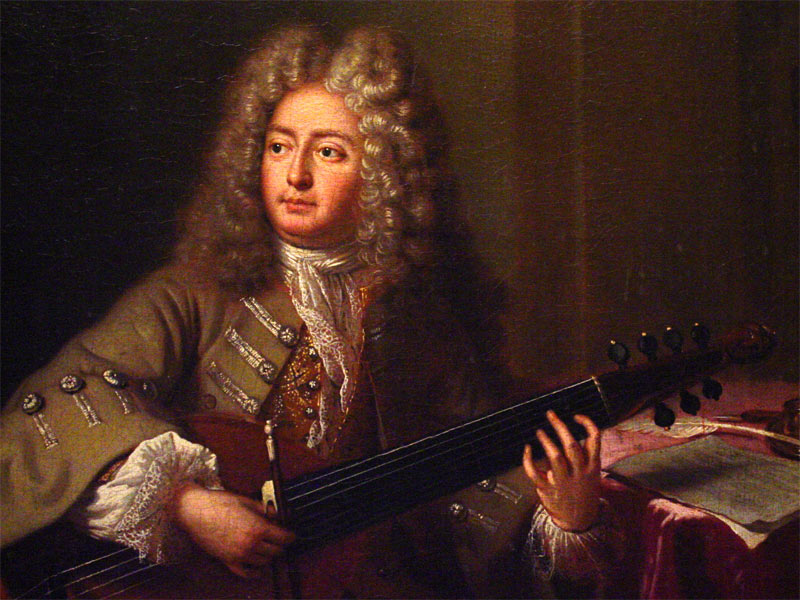
L uxury is the situation of a society in which riches have become the principal passion. As soon as money has become the exclusive object of the greatest number of society, there can be no more powerful motive than the desire to acquire it. There is no enthusiasm but that of opulence; there is no other emulation but to procure by the swiftest of routes those signs which are admitted by all to represent power, pleasures, and felicity.”
— Baron d'Holbach, Politique Naturelle, 1773, p. 130.
DSM: We in the twenty-first century may regard 12-tone music as if we had invented it, inhaled it, and thoroughly identify with the modern aporias that it expresses. But the Baroque literature could and should be equally resonant. The Baroque poets speak to us when they respond to the Thirty Years War and other tensions, insofar as such destructive wars and plutocracies are also leaving their mark on our own time—international relations gone awry, and, in the U.S., the longing for a return to effective statecraft.
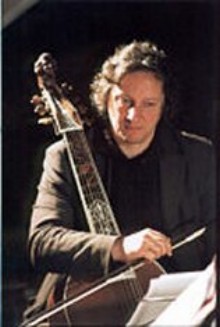
CMT: Philippe Pierlot illustrated this inter-epochal concept beautifully last night at the Boston Early Music Festival, in his performance ‘Les Festes Galantes’ with harpsichordist Jan Willem Jansen. The entire program was technically superb, but the Marais pieces especially were particularly moving. Pierlot is Professor in the Hochscule fûr Musik, Trossingen, Germany. He lives in the belgian Ardennes and, among other things, directs the Ricercar Consort. In his account of these Baroque pieces, Marais’ Suittes, there’s a sensitivity to international relations — a reflet d’une perspective étrangère.
DSM: Contrast the expressions in Pierlot’s account of Marais’ Suittes last night with those of the film, Tous les Matins du Monde—with Gérard Depardieu cast as Marais. The film follows Marais from highly talented but self-centered student, through his personal follies with Sainte-Colombe’s daughter, to Marais’ old age, troubled by the realization that music—his talent, n’importe quoi—was so much greater than his ego had allowed him to explore. The film delivers a sense of real authenticity, but it’s an authenticity of an introverted sort. By contrast, these Suittes in Pierlot’s hands have a distinctly outward-directed, transnational flavor.
CMT: I’ve never heard anybody produce a tone like Pierlot’s, starting a long note so tenuously as to be more like whitespace, empty and begging for its fulfillment yet so clear and prophetic—clairvoyant even. Pierlot’s playing is the sheer epitome of Truth in a viol. We learn a lot from Pierlot—about the human condition, not just about musical expression.
DSM: This Marais music (1656-1728) presages Claude Helvétius’s writing on eighteenth century materialism. He knew courtly society, he knew the world of the financiers, and he saw the limitations of it all. For Helvétius (1715-1771), ennui and the various remedies proposed for it varied according to nations and their constitutions and temperaments. Helvétius’s book, de l’Homme, critiques an aesthetic of pleasure based on sensationalism: “The object of art ... is to please and consequently to excite sensations in us which, without being painful, are yet lively and strong. When a work produces such effects it is applauded.” Beauty is what strikes us sufficiently to enliven our soul. The sublime makes for stronger effects since it may evoke terror and fear—so much better than being bored or meaningless! The Arts were to be judged not by rules articulated by social hierarchy and convention but by genuine and spontaneous individual sentiment—individual responsible judgment and thoughtful action. Marais' music was a harbinger of this . . .
- Marin Marais scores at Werner Icking Music Archive
- Pierlot P, et al. Marin Marais: Pièces de Viole du Second Livre, 1701. (Alia Vox Spain, 2000.)
- Savall J, Pierlot P, et al. Marin Marais: Suitte d'un Goût Etranger. (Alia Vox Spain, 2000.)
- Anthony J. French Baroque Music from Beaujoyeulx to Rameau. Amadeus, 2003.
- Appiah K. Cosmopolitanism: Ethics in a World of Strangers. Norton, 2006.
- Bianconi L. Music in the Seventeenth Century. Cambridge Univ, 1987.
- Helvetius C. D L'homme. Thoemmes, 1999.
- Kristeva J. Desire in Language: A Semiotic Approach to Literature and Art. Columbia Univ, 1980.
- Kristeva J. Powers of Horror. Columbia Univ, 1982.
- Pierlot biographical note, on Goldberg website
- Pierlot, Ricercar Consort website
- Statecraft. Lecture by Dennis Ross, International Relations Council Kansas City, 06-JUN-2007.