Showing posts with label forte. Show all posts

Wednesday, March 19, 2008

Dallapiccola on Children’s Rights and Duties: Quaderno di Annalibera

 Fearn book, Dallapiccola photo
Luigi Dallapiccola was was 48 years old when Quaderno was composed, nominally as a gift for the eponymous Annalibera, his daughter, on the occasion of her eighth birthday. [Annalibera Dallapiccola was born on the day of the liberation of Italy, whence the ‘libera’. Prof. Annalibera Dallapiccola is now a scholar in Asian and Indian art and is an Honorary Professor of Fine Arts at University of Pennsylvania and the University of Edinburgh. Formerly she was Professor of Art History, South Asian Institute, Heidelberg University.] The Quaderno is composed of eleven variations on a twelve-tone sequence based on the name B-A-C-H (the pitches B-flat, A, C, and B).

Surely we can wonder whether Luigi meant Quaderno as a veiled criticism of government: projecting children as analogous to the general public (under Mussolini, or under subsequent regimes). After all, other of Luigi’s compositions were famously political.

But there is plenty of evidence that we should take Quaderno at face value—as a collection of etudes addressed by father to daughter. For one thing, the title ‘Quaderno’ recalls Johann Sebastian Bach’s ‘Notebook’ for his daughter, Anna Magdalena. Other correspondences include Dallapiccola’s recapitulation of Bach’s contrapunctus subtitles for movements in strict canon, as in Art of the Fugue.

Quaderno’s movement titles are (in English) as follows:
  • Symbol;
  • Accents;
  • First Counterpoint;
  • Lines;
  • Second Counterpoint (Canon in contrary motion);
  • Friezes;
  • Andantino amoroso and Third Counterpoint (Canon cancrizans);
  • Rhythms;
  • Colors;
  • Shadows; and
  • Quatrain.
These movements are lovingly didactic in a fatherly way—their names and their playful, thematically-expansive musical content are difficult to construe as covert political polemic.

Some 15 years ago David Lewin published a detailed transformational analysis of the Simbolo movement. Simbolo is marked ‘Quasi lento, misterioso’ and fully lives up to the misterioso. Regarding Simbolo, Lewin said: “The group [of transformations] is not a list of immediate aural intuitions or intentions ... Rather than trying to make our transformations denote phenomenological presences in a blow-by-blow narrative, we can more comfortably regard them as ways of structuring an abstract space ... through which the piece moves” (Lewin, p. 34).

If Dallapiccola wrote that the tone row in Simbolo isn’t meant to be perceptible to the listener, then we should take him at his word. He was, at the ripe age of 48, in a period of rapid change and learning—we hear plenty of discovery and exploratory gestures in these ‘etudes’. We can also readily conceive of what the intense, inquisitive Annalibera may have been like at that age—and imagine the motives that may have been at work in the father, trying to create something beautiful and highly symbolic ‘for her’, to be hers. It is one hell of a birthday gift. And, as things go in the Age of Reason—late in childhood and before the onset of adolescence—it was the perfect time for Luigi to make such a gesture. Misterioso—one of the duties of a composer (of a musician; of any artist) is to trade on the novel and non-obvious. Il Luigi ci istruisce così!

There is no reason why music theorists should give undue emphasis to tone-row or other serial compositional methods—giving priority to the ‘system’ seriously mis-represents the compositional process. It does violence to the music and dishonor to the composer! Dallapiccola especially was no slave to the [twelve-tone, serialist] ‘system’.

Even in Quaderno where a tone-row is perceptible, it does not dominate. As the canon or other variations progress, the role of the tone-row becomes less and less clear. Or, more accurately, the force of the ‘system’—the thematic mechanics—begins to cope with the accretion of other equally-legitimate guiding principles, other thematic genera. How like a Bach fugue this is! Once a theme is developed, it is absorbed into layers upon layers, variation upon variation. Futile to analyze a fugue by exhaustively identifying subject, counter-subject, and so on! Dried insects preserved in an entomologist’s collection have more fidelity to nature than this!

Based on the evidence we see in Quaderno, I don’t believe Dallapiccola relied on twelve-tone rows compulsively. There are so many other factors, that present themselves to the ear, that should inform a faithful analysis true to Dallapiccola’s motives and intentions. Above all, analysis should enlighten the performer and the listener.

So my speculation is this: Luigi Dallapiccola created Quaderno not only as a special gift, but also as a way of memorializing his sentiment(ality) about childhood. He was concerned about children as well as other members of society, both before the war and in the post-War period. A highly private man, he maintained a traditional idea that what went on in the family was nobody’s business, least of all government’s. But he was not a traditionalist as concerns the rights and duties of children, from what we can tell in his writings. Poverty and social exclusion may be resistant to solution by public means, but that simply implies that individual families must redouble their efforts. Children, too, have moral standing and therefore have duties commensurate with their rights. The childhood privilege of engaging in fanciful, creative and artistic pursuits carries with it, for example, an obligation to exert effort in good faith, to pay attention—for the children to avail themselves of the opportunities that the parents set before them.

If there is a better way to talk about this than through the notions of ethics and children’s rights, perhaps Luigi Dallapiccola knew such a way. The embarrassingly prevalent and pernicious (U.S.?) ideology—which insists that parents should be like gods to their children and that children are basically property, in a status of utter subjection to the will of the parents; and which defers to some distant time in adolescence any accountability by children for their acts—surely had no place in Luigi’s world-view.

Of course under U.N. and E.U. resolutions, children are emphatically not property, but they are nonetheless ‘extensions’ of the parents’ identities. Emotionally and biologically, this is natural. And, legally, this is true as well. Children progressively acquire autonomy or sovereignty—increasing rights, commensurate with increasing responsibilities and abilities. They discover and progressively grow beyond the parents’ identities. Quaderno is a gentle exhortation, by Luigi to Annalibera, to have serious fun in this process—of finding her own identity, of finding her own voice, of finding the good in the world and in other individuals and other cultures.

In summary, children are by nature ‘becoming’, not yet arrived into the fullness of identity. Of course, all of us are all always still ‘becoming’ no matter how old we may be, but children are more so. To Luigi Dallapiccola, children were persons to be taken seriously, as subjects with moral standing who have complex and evolving interests that merit public concern and complex and evolving duties that require the attention of the children as well as the attention of their parents and of society. Etudes are at this boundary: they are emblems of the social duty to give (parents’ and society’s duty of care), and they are emblems of a complementary duty to receive (the child’s duty of care). In a way, Quaderno is a meditation on ‘children as children’ and ‘parents as parents’ instead of as proto-adults and gods, respectively.


 Prof. Anna L. Dallapiccola


Monday, April 16, 2007

Marcus du Sautoy: Dark Side of Mathematics Populism

Marcus du Sautoy, Tessellated
DSM: On Friday, 27 April, Marcus du Sautoy will give a lecture, at 5:15pm at the University of California Berkeley, in the Valley Life Sciences Building, Room 2050. Marcus is Professor of Mathematics at the University of Oxford, a Fellow of Wadham College. Also, he’s served as a visiting Professor at the École Normale Supérieure in Paris, the Max Planck Institute in Bonn, the Hebrew University in Jerusalem and the Australian National University in Canberra.

CMT: Notable among his other achievements was winning the Berwick Prize of the London Mathematical Society. But his activities in popularizing mathematics are extensive and are perhaps what has gained him the most notoriety. He’s a Senior Media Fellow at the EPSRC and has many involvements in print and broadcast journalism. Marcus writes for the London Times, the Daily Telegraph, the Independent and the Guardian and is a frequent guest on BBC radio and television programmes. And he’s the popular presenter of BBC4’s TV game show ‘Mind Games.’ His book, The Music of the Primes, has been widely acclaimed, and a one hour documentary based on his book was recently broadcast on BBC4. The lecture he’s giving at Berkeley on the 27th will be for an audience that will include some music theory faculty and students and mathematics people—but still it’s substantially similar to his offerings for lay non-specialist audiences.

Music of the Primes
DSM: It might be a bit much to say I look forward to attending Marcus’ lecture. It’s not that I don’t see why his style is so popular. Marcus’ flamboyance, his sensational attempts to bring ‘mathematics to the masses’ as he puts it—I find these hard to accept. Like Srinivasa Ramanujan, a mathematical Mozart who spent most of his career in Cambridge, Sautoy’s discussions of mathematical concepts lapse into atmospheric narrative that entertains but doesn’t really illuminate much. Pages 77 through 79, 84, and a few others in his book actually purport to be about music as such. But the following, for example, is dumbed-down to the point of being factually incorrect at multiple, multiple levels. It is not correct with regard to the two instruments’ waveforms. It is not correct with regard to Fourier analysis of the harmonics. It is overly-simplistic with regard to the physics of sound production in both of the instruments. It talks down to the reader by presuming that the reader doesn’t know what a square-wave is—while simultaneously presuming that such a stupefied reader does know what a ‘crenellation’ is. It’s appalling. Marcus’ popular journalistic writing is simply awful and panders to the consumeristic pseudo-science dramatization norm. It’s emblematic of the style of careless “page-turner” science writing that has filled the shelves since Dava Sobel’s 1996 book, ‘Longitude’. Doug Hofstadter’s 1980 ‘Gödel, Escher and Bach’ was a far better book, while still in the ‘popularizing’ idiom.

W hy does a clarinet sound so characteristically different to the sound of a violin playing the same note? The graph of the sound wave created by the clarinet looks like a square-wave function, like the crenellation of the top of a castle wall, instead of the spiky graph of the violin. The reason for the difference is that the clarinet is open at one end, whereas the string in the violin is fixed at both ends. This means that the harmonics produced by the clarinet vary from those of the violin, so the graph depicting the sound of the clarinet is built from sine waves oscillating at different frequencies.”
  —  Marcus du Sautoy, Music of the Primes, p. 95

CMT: Books like this trade on the mythology of “The Lone Genius Who Solved the Greatest Scientific Problem of His Time, By Means of an Other-Worldly Intelligence that Shall Never Be Equaled.” It’s a bit like the cult of Mozart. Breathless and uncritical worship of the Lone Virtuoso does nothing to advance the valuable participation of ordinary people in the field.

DSM: Do you suppose that this is partly why the mathematics of music theory has developed so slowly? –because of the back-handed discouragement of workmanly contributions by ordinary musicians who are not virtuoso mathematicians and ordinary mathematicians who are not virtuoso musicians, I mean. Musicians being misled to think that Mathematics is too complex for them. And mathematicians being misled to think that Music is not more broadly suitable for the formalisms and methods of analysis that they have developed for the ‘physical’ sciences.

CMT: Maybe a little. But I think it has more to do with temperament in both disciplines. There’s progress, yes—things you see published in Music Analysis and Computer Music Journal, things from IRCAM, from Guerino Mazzola and his students, and so on—but it strikes me that there are many branches of mathematics that could reasonably be applied to classical music analysis that have not yet ever been used. At least they haven’t yet appeared in published articles and books. Functional analysis; operator algebra; noncommutative geometry and matrix theoretic compactification; metric cohomologies for understanding rhythms and repetitions—lots of things.

DSM: There were a couple of the papers presented at this weekend’s Music Theory Midwest Conference (Music Theory Midwest (MTMW2007), Lawrence, Kansas) that included some functional analysis—for instance, Clare Sher Ling Eng’s paper, Being & Becoming: Rhythmic Function Analysis Applied to Brahms’ Alto Rhapsody, op. 53.  Clare is currently at Yale, one of Allen Forte’s students. She presented an innovative and powerful analysis of the repetitive structures in the Brahms, in which she proposes two function-classes, with a real-valued index denoting (1) a scalar by which the duration of each motivic element is multiplied upon the application of the function, for the geometric function-class or (2) the duration of each motivic element to be added or elided, for the arithmetic function-class.

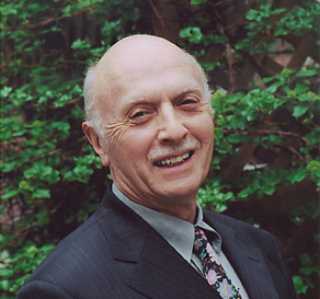
Marcus du Sautoy
CMT: And yet, despite the elegance of her function-classes and her analysis, Clare nonetheless received some uncharitable feedback during the Q&A session after she read her paper. Her critic asserted that the index must be integer-valued or, at most, a rational number. He called it ‘infelicitous’. Hmmm. He couldn’t understand how a real-valued index on her functions would be useful—especially for electroacoustic or computer or other new music whose meter is not necessarily tightly periodic or a normal time-signature. More than that, he seemed to be holding himself forward in that Conference as an authority on mathematics—but the obtuseness of his argument made it abundantly clear that, as a musicologist, he actually had little understanding of operator algebra or functional analysis. Clare did an excellent job of responding in a positive way. But it was discouraging to see this dilettante musicologist/mathematician-poseur attack her work, attempting to build up his own ego at her expense.


Wednesday, December 20, 2006

Cosmopolitanism and Endangered Species: Geek to Learn, Learn to Geek

Allen Forte, Geek Extraordinaire
DSM: A music theory geek friend of mine noticed our conversation last time and sent me this list. You might be a theory geek if . . .
  1. you whistle in style bris.
  2. your favorite pickup line is, “What’s your favorite augmented sixth chord?”
  3. your second favorite pickup line is, “Would you like to raise my leading tone?”
  4. you have ever played the ‘how-many-episodes-is-too-many-episodes’ fugue game.
  5. you have a poster of Allen Forte in your bedroom.
  6. you know who Allen Forte is.
  7. you dream in four parts.
  8. your biological clock follows a non-retrogradable isorhythm.
  9. you can improvise 16th-century counterpoint with no trouble, but you frequently forget how to tie your shoes.
  10. you look at a piece by Bach and say, “You know, I think he could have gotten a better effect this way . . . ”
  11. you expected something quite different out of The Matrix.
  12. you can answer your phone with a tonal or a real answer.
  13. you like to tease your friends and loved ones with deceptive cadences.
  14. you know how many cents a major 23rd is without having to count.
  15. you say you only drink fifths, and then you laugh at your lame pun anyway.
  16. you feel the need to end Tchaikovsky’s Pathétique Symphony with a picardy third.
  17. your favorite characteristic of Brahms’ music is the subcutaneous motivic play.
  18. instead of counting sheep to get to sleep, you count sequences.
  19. you find free counterpoint too liberal.
  20. Moussorgsky’s “Hopak” gives you nightmares.
  21. you wonder what a Danish sixth would sound like.
  22. you long for the good old days of movable G-clefs.
  23. the Corelli Clash gives you goosebumps, every single time.
  24. you can hear an enharmonic modulation coming a mile away.
  25. you can hear Berg’s lover’s dog coming a mile away.
  26. you have had to be forced to stop labeling motives.
  27. you confuse fishsticks with ground bass.
  28. you have ever quoted Walter Piston.
  29. you like to march to the rhythm of L’histoire du soldat.
  30. your license plate says: PNTONL.
  31. you have ever defended yourself with “But Gesualdo did it!”
  32. you have ever tried to do a Schenkerian analysis on “Three Blind Mice.”
  33. you have ever tried to do a Schenkerian analysis on Cage’s 4'33''.
  34. you have ever thrown a Gebrauchsmusik party.
  35. you have ever tried to hop onto the omnibus.
  36. you like to wake up to a Petrushkated version of “Reveille.”
  37. you lament the decline of serialism.
  38. you know what the ninth overtone of the harmonic series is off the top of your head.
  39. you keep the writings of Boethius on the coffee table.
  40. you have ever dressed up as a counterpoint for Halloween.
  41. you have ever written a musical palindrome and given it a witty title.
  42. you can name ten of Palestrina’s contemporaries.
  43. you have ever found a typographical error in a score by Ives, Nancarrow, or Babbitt.
  44. you have ever heard a wrong note in a performance of a composition by Ives, Nancarrow, or Babbitt.
  45. you already sensed that if this list had been written by Bartok, this would be the funniest item.
  46. you enjoy the tang of a tritone whenever you can.
  47. you’ve let the rule of the octave determine how you go from one event of the day to the next.
  48. you have ever played through your music as if the fingering markings were figured bass symbols.
  49. you suspiciously check all the music you play for dangling sevenths.
  50. you have devised your own tuning method.
  51. you keep a notebook of useful diminutions.
  52. you have composed variations on a theme by Anton Webern.
  53. you know the difference between a Courante and a Corrente.
  54. you have trained your dog to jump through a flaming circle of fifths.
  55. you have ever used the word fortspinnung in polite conversation.
  56. you feel cheated by ‘evaded cadences’.
  57. you organize your phone numbers based on their prime form.
  58. you find it amusing to refer to your ear-training course sections as your “pitch classes.”
  59. every now and again you like to kick back and play a tune in hypophrygian mode.
  60. you wonder why there aren’t more types of seventh chords.
  61. you deeply wish you had twelve fingers.
  62. you like polytonal music because, hey, the more keys the merrier.
  63. you abbreviate your shopping list using figured bass symbols.
  64. you always make sure to invert your counterpoint, just in case.
  65. you have ever concluded a joke with the punchline “Because it was polyphonic!”
  66. you have ever named a pet, boat, car or child ‘Zarlino’.
  67. you have an <0 1 4> tattoo.
  68. your lips may say “perfect fourth,” but in your heart it will always be “diatessaron.”
  69. you have ever said, “Yes, didn’t Scriabin use that sonority in... ”
  70. you know lewd mnemonics for the order of sharps in key signatures.
  71. you can name relatives of the “Grandmother Chord.”
  72. you’re still wondering where is the “must-resolve-the-dominant-seventh-before-going-to-bed” indicator.
  73. you not only can identify any of Bach’s 371 Harmonized Chorales by ear, but you also know what page each one is on in the Riemenschneider edition and how many suspensions it has in its first four bars.
Hah! It takes a geek to know a geek!

CMT: Well, some of our tastes here are pretty esoteric. But no more so than other arcane things people pursue—sport, for example. Having the inner confidence and security to poke fun at ourselves is good—the list is honestly amusing. But the list-joke begs the question, does modern mass-culture inherently ostracize or disenfranchise us—does it reject anything that is ‘other’, anything different from itself? If we are true to our geekiness, are we inevitably disempowered? In other words, is there a need for a new cosmopolitanism and a greater toleration in society these days? Seyla Benhabib has written about this…

DSM: You’re right. There’s no reason to think of xenophobia as scoped only to geographic or ethnic boundaries. ‘Cosmopolitan’ should encompass distributive justice and toleration not just of citizens of various disparate nations, but also of members of classes whose membership is founded on interests or beliefs, which may be trans-national and trans-ethnic. And of course it’s not just conflict between musicologists/theorists and a hegemonic mass-culture. There’s conflict too among music theorists of different stripes. The mistake armchair anthropologists frequently fall into—taking a complicated concept, like music, and reifying it as if it were a single, simple thing. A static, time-invariant thing. But naturally theory evolves over time. And composers’ technique and materials evolve over time. And critics’ and analyst-geeks’ propensities evolve over time, in unpredictable jumps—Richard Selfish-Gene Dawkins-style.

CMT: We could instead put forward theories of compositional intention as if the evolution of composers’ technique were logically analogous to Darwin or Mendel’s wrinkled garden peas. There’s a self-evident truth here that any serious musician recognizes—anyone who has experienced that moment when the execution shifts from working memory to procedural muscle memory. My favorite aspect of playing the piano is reaching the jump where my hindbrain is carrying the piece along. Then I can enjoy the music in a different way, without thinking as much about the technical mechanics of making my body perform the piece, making my fingers navigate the keyboard, and so on. Anybody who has performed music at this level knows also that that is the moment when inspiration can enter—when you can deeply surprise yourself, when new layers of meaning become apparent. On some occasions, I’ve had actually an ‘out-of-body’ experience, as though I were looking down from the ceiling, looking down on myself at the piano. That’s pretty rare. More commonly, though, the loss of a consciousness of ‘self’ is more subtle. The interpretive gestures that’ve been internalized and which unfold almost automatically become during a performance quite foreign, as if they were being executed by someone who is not me—and the separation [of that part of me that’s observing this and applying additional adjustments as the playing proceeds] is complete. I wonder whether, in the theater, actors who are in-character experience their art in this way…

DSM: The exoticness of that experience is part of what creates social distance: your having experiences that you clearly value but which the mass monoculture doesn’t understand or regards as deviant—defines and reinforces your otherness. This seems to me to be a feature of globalization—or at least the harms to individual communicative freedom and [full] citizenship and justice are made worse by globalization trends. According to Benhabib, the homogenization, standardization, mass-ification, and so on—are not inadvertent consequences of globalization. They are fundamental preconditions for the possibility of the kind of interaction and interconnectivity that make globalization a reality. The obverse is also true. Heterogenization, hybridization, carnivalization, and mestizaje are also not unintended consequences of globalization—they breed novelty and long-tail niches, and support increasing amounts of novelty, exotics, differénce, and authenticity. Benhabib says that cultures are inherently and continually contested and unstable. They are always in the process of transforming and being transformed. Cultures and specific subcultures (like classical music, or chamber music, or music theory, or sub-subcultures of these) survive or perish in a sort of Darwinian natural selection. Culture is the horizon within which each of us social agents is socialized and individualized.

“... it is only the presumption of each individual’s equal claim to develop the conditions of his or her self-hood within certain webs of interlocution that gives the politics of recognition its normative bite. Claims to authenticity presuppose claims to justice—or the pursuit of differences presupposes a framework sustained by premises of individual equality.”
  —  Seyla Benhabib, Claims of Culture, p. 57.


CMT: And Wellmer is (along with Klaus Günther) one of the philosophers in the Frankfurt School critical theory tradition who has sought to translate discourse ethics’ reformulation of human freedom into communicative freedom.

“Solidarity in a post-conventional sense demands that we want a space for everybody else’s negative freedom, a space which is the precondition for determining and taking responsibility for one’s own life, and which, by the same token, is a space for the freedom to say ‘no’ and to act accordingly. Only on the basis of such freedom are symmetrical forms of mutual recognition, voluntary agreements, and rational concensus among equals conceivable.”
  —  Albrecht Wellmer, Endgames, p.33.


“VI.[14] Mihi vero licet et semper licebit dignitatem tueri, mortem contemnere. Potestas modo veniendi in hunc locum sit: dicendi periculum non recuso.

[15] Quae, malum, est ista voluntaria servitus? Fuerit quaedam necessaria; neque ego hoc ab omnibus eis desidero qui sententiam consulari loco dicunt. Alia causa est eorum quorum silentio ignosco; alia eorum, quorum vocem requiro. quos quidem doleo in suspicionem populo Romano venire non metu, quod ipsum esset turpe, sed alium alia de causa deesse dignitati suae.”

(VI.[14] It is in my power, and it always will be in my power, to uphold my own dignity and to despise death. Let me have only the power to come into this house, and I will never shrink from the danger or declaring my opinion!

[15] What, in the name of all that is horrible, is the meaning of this voluntary slavery? Some submission may have been unavoidable: nor do I require this from every one of the men who deliver their opinions from the consular bench; the case of those men whose silence I pardon is different from that of those whose expression of their sentiments I require; and I do grieve that those men have fallen under the suspicion of the Roman people, not only as being afraid--which of itself would be shameful enough--but as having different private causes for being wanting to their proper dignity.)
  —  Cicero. Fourteen Orations against Marcus Antonius (Philippics 1), 44 BCE.


Milton Babbitt, Celebrated Geek