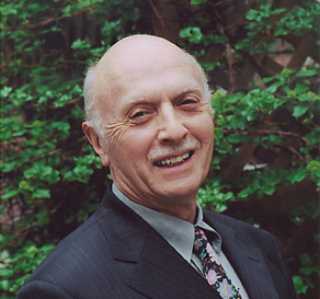
CMT: Founded by composer Gabriel Prokofiev (grandson of Sergei Prokofiev) in 2004, Nonclassical is an ‘alternative’ classical record label. Its business premise is that releasing music that is both classical and ‘non-classical’ will be financially viable, able to attract enough yoof to make it sustainable and profitable.
DSM: If it’s to succeed in being sustainable and profitable, then won’t it inherently have to demolish the conventional notion of what classical music is?
CMT: Well, yes. Despite the growth in the volume of classical CD sales and the popularity of classical MP3 sales, the necessary ‘critical mass’ will be difficult to come by. Nonclassical aims to take ‘composed’/’classical’ music to more diverse audiences than existing classical labels cater to. They aim to do this by fusing different genres, innovating new ones. Some of Gabriel Prokofiev’s own writing explicitly cultivates ‘re-mixes’ by hip-hop and other artists, to create versions that will appeal to new markets—markets who otherwise would never attend classical performances or buy classical recordings. But it isn’t mass-market stuff by any means.
I ’m always looking for originality and trying to develop whatever genre I’m composing in.”
— Gabriel Prokofiev.

DSM: When he was still in his teens, Gabriel put on gigs at the Blackheath Concert Halls. Then, at Birmingham University he specialized in Electroacoustic Compostion and Ethnomusicology, after which he took his Masters at York University. He did a residency in Seattle at the Bourges International Electroacoustic Music Academy. Gabriel has enjoyed working on his commission from the Elysian Quartet even though string quartet wasn’t his first choice. He says he’s inspired by the Elysian’s creativity and craving for category-busting music.
[30-sec clip, Elysian Quartet, Prokofiev Quartet No.1, Movement 1, 0.4MB MP3]
[30-sec clip, Elysian Quartet, Prokofiev Quartet No.1, Movement 2, 0.4MB MP3]
[30-sec clip, Elysian Quartet, Prokofiev Quartet No.1, Movement 3, 0.4MB MP3]
[30-sec clip, Elysian Quartet, Prokofiev Quartet No.1, Movement 4, 0.4MB MP3]
[30-sec clip, Elysian Quartet, Prokofiev Quartet No.1, Movement 4, Laliq Remix, 0.4MB MP3]
[30-sec clip, Elysian Quartet, Prokofiev Quartet No.1, Movement 4, Schweitzer Remix, 0.4MB MP3]
CMT: These movements exhibit digital time-stretching techniques—‘windowing’ the sound into short segments. Within these segments, Prokofiev can change the timescale of the sound without varying its frequency spectrum or timbre. By changing the timescale of a particular sound he changes our perception of it. Slowing down a phrase, for instance, draws attention to the patterns of inflection as melodies, or, alternately, suppresses our attention to certain patterns. Extreme stretching—where we hear a nearly steady sound, changing almost imperceptibly slowly—makes the passage more like an environmental sound and draws the ear’s attention to the timbre of it. Given an arbitrarily long time to perceive a sound, we can abandon our wholistic perceptual tendencies and revert to more analytical, inquisitive ones—we listen ‘inside’ the sound to its spectral evolution. And we notice ourselves doing this. And notice ourselves noticing. In other words, these compositional and recording production techniques drive a kind of listening—a kind of interiority—that Prokofiev and his collaborators think is valuable and interesting and exciting for us. Cool.
DSM: At the level of musical time beyond rhythm, there is musical structure and form—where repetition and variation take on a different role. It’s here that electroacoustic music seems to offer a very wide range of possibilities. By having an expanded repertoire of timbral and textural resources, electroacoustic music can shape its structures extensively. I like to think of each piece as creating its own form based on the interactions of the different sonic layers.
CMT: In other words, ‘form’ is an emergent or immanent feature, rather than a predetermined shape. If that’s true, then each piece generates its own sense of time, surely different from elapsed wall-clock time. That’s surely true if you listen to the Prokofiev Quartet No. 1—the Elysians alone, and then the various re-mixes. The percussion totally changes the rhythmic sense of the movements. There are hypermeter pulses in the re-mixes that are, I believe, absent in the original ‘quartet-only’ versions.
DSM: When I’m caught up in the temporal experience of a piece, I always underestimate its length and ‘lose track’ of time, whereas when I’m unengaged by a piece, I overestimate its length because of my lack of cognitive and emotional involvement. You have only to think of the different experiences of time—in the work of post-conceptualists David Behrman, Alvin Curran, and Frederic Rzewski or of postmodernists William Bolcom and John Corigliano—to realize how varied temporal experience of music can be. I actually like the Laliq and Schweitzer re-mixes of Prokofiev’s Quartet No. 1.
CMT: You, maybe. But who else? This is just total lunacy, the idea of this being commercially successful! This is missionary work by Prokofiev. Nonclassical.co.uk is a lifestyle company, not a Company! Musical pioneers of whatever genre will always be a fringe element of the market. The ‘classical music must become part of pop culture or become extinct’ meme is the monster that refuses to die. No way does classical music ‘have to’ become relevant to young mass-market audiences. It’s total bullshit. You need to identify your genre and whatever demographics accurately. You need to serve that genre and its natural audience ferociously. Period. If it’s a small market, fine. Accept it.
DSM: But I don’t think Prokofiev has ever said that classical music ‘has to’ become pop. I don’t think he has any delusions at all about the mass-market potential for what he’s writing and producing. I think that the media are spinning this, using the ‘classical music is dying’ meme. It’s the only thing members of the media know—or the only thing their editors will buy anyhow. It’s the media, not Prokofiev. Prokofiev’s not dreaming that this will become the next hip-hop, say.
CMT: Well, then, why would you create an indie label today, when the risks of financial failure are so great? What could’ve compelled Gabriel to do this? What would make anyone do such a thing these days?
DSM: Several possibilities include: (1) Self-publishing your own work, which may not fit into an existing genre or market niche that existing record labels understand and support. In other words, innovating without depending on getting signed by a regular label. Innovating against the odds, when there’s no chance that your product and your aesthetics would be supported by an existing label. Artistic freedom. Control. That’s what Gabriel’s doing. Honest innovation of new stuff, seeking a market that doesn’t exist yet—at least doesn’t yet exist in numbers sufficient for commercial viability. (2) Producing your own product to sell at your ensemble’s performances or, if you’re a composer, to use to pitch your capabilities for film and TV. In other words, light-weight promotion. This is very easy and relatively cheap to do these days with inexpensive studio gear and digital recording and editing software and CD replicating equipment. You need a decent engineer (or a member of your ensemble who has or acquires adequate recording engineering skills), but very doable. And if you do this for others for a fee as an indie label, then you can recover the investment that you made for what was initially motivated by the need for light-weight promotion of your own work.
CMT: And you have (3) using your indie label as a vehicle for discovering and developing new artists who otherwise might not readily find a label willing to produce them. In other words, business development and arts advocacy—this is incidentally a big part of Gabriel’s motivation: an unmet need; filling an unmet need.
DSM: Or (4) using the corporation you create for your label operating company for the tax and legal / liability advantages afforded by incorporating, compared to just operating as a ‘sole proprietor’. Do it as an LLC instead of as an individual.
CMT: Then there’s (5) objecting to the terms and conditions of contracts used by conventional record labels, in terms of financials, digital rights, or other aspects. In other words, intellectual property activism. (6) Angling to develop a new market that you think is large enough to be attractive to an existing large label. Merger & Acquisition exit.
DSM: And, in Gabriel Prokofiev’s case, you might add (7) because you can. He has his grandfather’s name and connections and is therefore a lower-risk proposition. He’s maybe more likely to succeed than others, on account of his famous surname.
W hen you look at market share, collectively the independently distributed labels are a huge segment of the business. After Universal, they’re the second biggest segment. They’re bigger in the U.S. than the next four majors.”
— Michael Ellis, Billboard.
CMT: And you don’t need a Label Manager, an A&R (Artist & Repertoire) Director, Publicity, Marketing, Sales—you don’t need a big headcount to do this. In fact, it’s simply not financially feasible to support a staff of full-time people. If you’ve got the right skillset and a good business head, one person can do it. One or two people, part-time.
DSM: It depends, too, on how many CDs you intend to produce per year, and what your financial objectives are, based on your investment and overhang. The number of person-hours will depend on what the nature of your productions is and what your production volume is each year. Prokofiev’s operation seems to be very nimble and lean. How many people does Newport Classic have? Two?

- Nonclassical.co.uk (Gabriel Prokofiev indie record label) website
- Gabriel Prokofiev on MySpace
- Bourges Electroacoustic Music Festival 2007.
- Bourges International Electroacoustic Music Academy (IMEB).
- EARS Electroacoustic Resource Site, de Montfort University, Leicester.
- Newport Classic website
- Elysian Quartet website
- Elysian Quartet on MySpace
- Elysian Quartet on SoundScotland
- Elysian Quartet. Gabriel Prokofief: Quartet No. 1. (Nonclassical, 2004.)
- Nielsen SoundScan
- Middle-class wankers in dinner suits. TheOvergrownPath, 28-JUL-2007. [Be sure to access the link at the bottom and read the 'Comments'.]
- Gabriel Prokofiev, Classical Crossover and some YouTube Treats. BigIdeas, 29-JUL-2007.
- DigitalMusicArchives.com
- Naylor T. Prokofiev junior will make you care about classical music. Guardian, 28-JUL-2007.
- The Purists Are Not Going to Like This. The Guardian, 28-JUL-2007, reposted in ArtsJournal.
- Britt S. The Independent Record Label's Plain and Simple Guide to Contracting. iUniverse, 2004.
- Broadhurst S. Liminal Acts: A Critical Overview of Contemporary Performance and Theory. Cassell, 1999.
- Gilleylen S. In the Right Direction: A Beginner's Guide to Starting a Record Label. Future Mix, 2002.
- Hutchinson T, Macy A, Allen P. Record Label Marketing. Focal, 2005.
- Kalmar V. Label Launch: A Guide to Independent Record Recording, Promotion, and Distribution. St. Martins Griffin, 2002.
- Musgraves L. Lifetime Contracts: Ideas for Running Your Own Independent Record Label. Trafford, 2005.
- Pressing J. Relations between musical and scientific properties of time. Contemporary Performance 1993; 7: 105-22.
- Rudenske J. Music Business Made Simple: Start An Independent Record Label. Schirmer, 2005.
- Schwartz D. Start and Run Your Own Record Label. Billboard, 2003.
- Spariosu M. Wreath of Wild Olive: Play, Liminality, and the Study of Literature. SUNY, 1997.
- Rolf Wallin: How to Build an Audience Through More Iconoclasm, Not Less. CMT, 29-JUL-2007.