Friday, January 4, 2008

Stage Fright: More Treatment Options

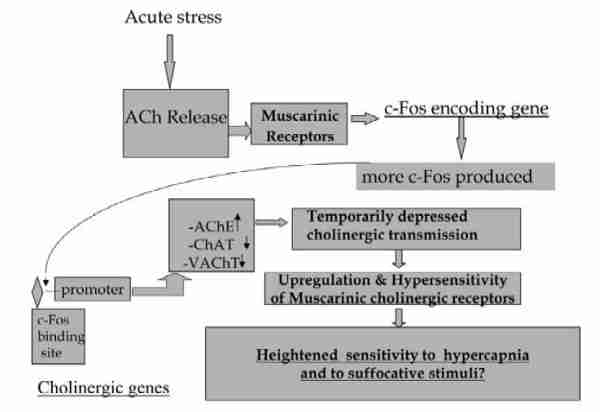
Battaglia 2002, Fig. 1
A fter an episode of anxiety associated with performing, I feel strange—like I’m empty and numb. It feels like I am watching everyone else, but at a distance. It’s not an ‘out-of-body experience’ or anything like that. Not light-headed or dizzy. But I do feel short of breath—my breathing is fast, and my heart-rate is still fast—even though the performance is over and the reason for the anxiety is over. It’s really weird. I just feel like there’s a ‘distance’—like the other people are real and I am somehow not real. It makes me feel so alone. It goes on for hours. Usually I have to go to sleep, and when I wake up the next day I feel completely normal. Is this some ‘after-effect’ of anxiety or what? Is this what it feels like after a seizure or something?”
  —  Anonymous.
Since my previous posts on the stage-fright topic, I’ve received several comments/questions similar to the one above.

The neurologic state associated with an episode of stage fright is not an epileptic one. But the sensations afterward can feel almost ‘inter-ictal’, with some qualities similar to what people who’ve experienced a seizure feel. And Panic Disorder and PTSD share many clinical features—such as ‘anticipatory anxiety’ and depression and ‘intrusive imagery’—imagined potential scenarios that bug you. Functional MRI and other studies of regional cerebral blood flow are beginning to show similarities, too. So the after-effects of a solo concert—feeling like you may have PTSD—aren’t really that surprising, neurologically or physiologically speaking.

Some of you who’ve sent me comments have wondered whether there are objective ways to measure the severity of the anxiety you’ve experienced. Clinically, there are a variety of scores that are used, but most of them are lengthy questionnaires, and very few of them have been designed to be self-administered. The one by Snaith and colleagues is short, intended for self-admin, and it does address ‘panic attacks’. This is different from stage-fright per se, but it nonetheless might be a helpful and relevant gauge, for those of you who’ve asked about this. Here’s a spreadsheet I’ve prepared. You can download it by clicking on this screenshot.


Spreadsheet version of Clinical Anxiety Scale (CAS) of Snaith
Panic Disorder (in the DSM-IV diagnostic nomenclature) is characterized by recurrent panic attacks—that is, periods of intense anxiety—in which 4 (or more) of the following symptoms develop abruptly and reach a peak within 10 minutes:
  • palpitations, pounding heart, or accelerated heart rate;
  • sweating;
  • trembling or shaking;
  • sensations of shortness of breath;
  • feeling of choking or dry mouth and dry throat;
  • chest pain or discomfort;
  • nausea or abdominal distress;
  • feeling dizzy, unsteady, lightheaded, or faint;
  • de-realization (feelings of unreality) or de-personalization (being detached from oneself);
  • fear of losing control;
  • fear of collapsing or dying;
  • paresthesias (numbness or tingling sensations);
  • chills or hot flashes.
Keep in mind that Panic Disorder isn’t the same as stage-fright. But some people who are susceptible to panic attacks are performing artists. Diagnostically, there’s an “overlap” between the conditions. So empirically the approach to managing stage-fright might include cognitive behavioral therapy (CBT), deep-breathing and yoga, and medications that are used in full-blown panic disorder.

It turns out that central (brain) muscarinic cholinergic receptors are involved in our physiologic reactions to these stimuli (see the Battaglia chapter in Silman’s book for a short summary), including slight increases in CO2 in the bloodstream. The slight elevation of CO2 (hypercapnia) is what triggers the faster breathing and the racing heartbeat. And the acute stress causes an increase in the release of acetylcholine in the hippocampus in the brain (see Kaufer paper) that has a several-hours duration. Concomitantly, about 70% of people subject to panic attacks have increased sensitivity to lactate in the bloodstream, compared to healthy normals (Rosenbaum, p. 63). And that triggers faster breathing at lower blood lactic acid concentrations—at far lower levels of lactate than would cause hyperventilation in ‘normal’ unstressed people.

Also, recent research has shown that in panic attacks there’s an up-regulation of gene expression of cholinergic muscarinic receptors, cFOS, and other gene products. That up-regulation also lasts for hours—and is related to the increased sensitivity to CO2 and lactate.

In fact, since I’m not personally affected by panic attacks or stage-fright and since I don’t have any work-related reason to intensively follow the medical literature on the subject, I hadn’t previously seen the articles on anticholinergic drugs and panic attacks. But there’s actually quite a lot of new evidence for cholinergic causation of panic—accumulating evidence over the past 5 to 8 years or so. It’s not the sort of thing that your average GP would know about.

Curiously, inhibitors of the enzyme acetylcholinesterase (AChE) [for example, Alzheimer’s drugs, like donepezil (Aricept™), rivastigmine (Exelon™) and galantamine (Reminyl™); also neostigmine (Prostigmin™), pyridostigmine (Mestinon™) and other various cholinergic drugs used to treat myasthenia gravis] may induce sensations and cognitive changes that are reminiscent of post-traumatic stress disorder (PTSD), including de-personalization or feeling ‘distanced’ or unreal—very much like the symptoms described by the conservatory-student commenter above.

In other words, you can increase the number of acetylcholine receptors, or you can increase the sensitivity or binding affinity of the existing receptors, or you can increase the concentration of acetylcholine molecules available to bind to those receptors (by inhibiting AChE, the enzyme that metabolizes acetylcholine)—any of these changes can produce the same distinctive cognitive symptoms.

And, logically, you might think that doing the opposite—for example, using a drug that inhibits the binding of acetylcholine to the receptors, or a drug that enhances the activity of the AChE enzyme, or a drug that down-regulates the gene expression of the receptor or that post-transcriptionally changes the sensitivity of the receptors expressed—might offer some relief or prevent such symptoms. Yes, it’s been tried. Transdermal scopolamine and other strong anticholinergics don’t necessarily help panic attacks, though. But Battaglia’s work in Italy suggests that low doses of Akineton™ (biperiden, a weak anticholinergic drug) can help [see 2001 paper published in Arch Gen Psych ]. Anecdotal reports of the off-label use of biperiden for stage-fright also exist, although they’re not nearly as common as ones reporting the use of beta-blockers.

Of the various options, the biperiden should be relatively less likely to cause performance problems, compared to the others—compared to SSRIs, say. But, hours after the performance, brain cholinergic activity decreases below baseline. And then biperiden’s lingering activity (it has a 18 to 24-hour half-life) might be annoying—the day after your performance.

A  noradrenergic (catecholamine) mechanism of panic has been substantially repudiated in the past 15 years. Clonidine and other alpha-blockers are ineffective—that’s part of the evidence. And plasma and urine MHPG levels are not usually abnormal in the way one would expect if noradrenergic overactivity were the cause. And SSRIs are effective in panic attacks, which one would not expect if noradrenergic overactivity were the cause. In other words, the catecholamines in panic attacks seem to be the ‘effect’, not the ‘cause’. The beta-blockers mentioned in previous posts essentially address these ‘effects’, not the ‘causes’.

Serotonergic abnormalities are at least partly implicated—especially the 5-HT(1A) receptor—and this is the basis for the use of buspirone (Buspar™) or risperidone (Risperdal™) in panic disorder. GABAA / Benzodiazepine receptors (see Goddard, Gorman & Charney in Rosenbaum, pp. 57-92) have also been implicated—and that fact gives rise to another avenue of treatment/prevention possibilities.

The information on this page is not intended as medical advice and is not meant to be a substitute for individual medical judgment by a physician or other medical healthcare professional. The aim is to provide information and help in suggesting considerations for preventive care. The medications listed below should be used only after a medical examination and under the supervision of a doctor. Always consult a licensed healthcare provider for individualized advice on your health decisions.

    Medications that have been used in Panic Disorder
  • Anticonvulsants [levetiracetam (Keppra™, 500 mg bid)]
  • Serotoninergics [risperidone (Risperdal™, 4 mg qd, 5-HT(1A) and 5-HT(2) antagonist), buspirone (Buspar™, 10 mg bid, partial 5-HT(1A) agonist)]
  • SSRIs [paroxetine (Paxil™, 20 mg qd), sertraline (Zoloft™, 50 mg qd), fluoxetine (Prozac™, 20 mg qd), fluvoxamine (100 mg qd), citalopram (Celexa™, 20 mg qd), escitalopram (Lexapro™, 10 mg qd)]
  • Benzodiazepines [alprazolam (Xanax™, 1 to 4 mg qd), lorazepam (Ativan™, 2 mg qd), clonazepam (Klonopin™, 1 mg qd). ]
  • Anticholinergics [biperiden (Akineton™, 2 mg qd), possibly trihexyphenidyl (Artane™, 1 mg qd)]
Benztropine (Cogentin™, 1 mg qd) has a 36-hour half-life, far too long to be relevant to the stage-fright application. But trihexyphenidyl (Artane™, 1 mg qd) or other similar compounds should work effectively like Akineton™. The short 4-hour half-life of Artane might be an advantage. But there’s no journal literature on its use in Panic Disorder or stage fright, so far as I can tell. In any case, it would be prescribed off-label, low-dose.

Hope this helps. Let me know how things go, if you decide to pursue any of these things.

Incidentally, it’s unknown how occasional stressful events [like recitals] might mediate long-term neuronal plasticity in the brain. And it’s unknown whether repeated high-anxiety episodes of the sort experienced by some performing chamber musicians could lead to PTSD or, if they can in some cases lead to PTSD, how frequent or severe the episodes have to be to have a high probability of doing so. We won’t worry about it, since it seems not to have been examined in clinical trials or other studies. But the absence of evidence is not evidence of absence, and all that…


Prisoner Updates

30 Oct 07

For man is a man and master of his fate.
-Alfred, 1st Lord Tennyson “The Marriage of Geraint”

O fortune, fortune, thou art a bitch!-Sir John Vanbrugh The Relapse

Here’s what’s going on with most of the prisoners written about in this blog.

Repo is facing the death penalty for the recent murder of a prisoner on Yard 3. He is in the hole.

Iron Man is working toward his goal of becoming a fitness trainer. His earliest release is in March, 2010. He hopes to open an athletic center, and to become more proficient in mixed martial arts.

Xena is in the hole. Acting in self defense, Xena’s cellmate, Savage, was sent to the hole for breaking the jaw of an Aryan Brother (whose teeth had to be wired together and had to be fed through a straw). With Savage gone, Xena received threats of a sexual nature and was moved to the hole.

T-Bone is staying focused on the Bible and working out. His earliest release is in November, 2009. He hopes to become a construction manager.

Shane is receiving Interferon treatment for hepatitis C. His viral load is undetectable, and he hopes to be completely cured. His earliest release is in April, 2012, but he has asked the U.S. District Court to overturn one of his sentences, which, if successful, would get him out in 2010. He was recently moved back to Yard 4 after refusing to work in Yard 1’s kitchen.

Max is living in Las Vegas. He is working as an office coordinator for AppleOne.

Slingblade has been eligible for parole for the past three years, but he doesn’t have the competency or outside help to facilitate his release. He has written numerous letters to John McCain requesting help getting out of prison, and he recently wrote to Queen Elizabeth.

Kenny recently arrived at Yard 1, had his life threatened over unpaid drug debts, and was moved to the hole for his own safety. In the hole he had a seizure, which the nurse, Cornrows, accused him of faking.

Junior Bull Gravano had a fight with Duke, was sent to the hole, and is now on Yard 2. He is hoping to be moved to a federal prison to serve the remainder of his sentence for the Ecstasy case.

Duke is living with his wife in Phoenix.

Gina was moved to Buckeye prison after receiving sexual threats at Yard 4. Gina is fighting for hormone therapy and would eventually like vaginoplasty.

Weird Al has applied for clemency on the grounds that if he doesn’t get a liver transplant soon he may die. His earliest release is in June, 2008.

Long Island was set free and is rumoured by the inmates to have fallen in with the Russian Mafia.

Two Tonys was sent to the hole for refusing to share a cell with a certain murderer. From the hole he was transported to a maximum-security unit at Buckeye prison.

Ogre is at the same prison as his nemesis, Two Tonys. Ogre was moved after receiving multiple tickets, including testing positive for drugs.

Midnight was accepted by a halfway house in Tucson (Old Pueblo Community Foundation’s Casa Santa Clara http://www.oldpueblofoundation.org/ ). He hopes to be living there in January, 2008. He was recently diagnosed as SMI (Severely Mentally Impaired).

Frankie is still at a supermaximum prison due to the numerous violations he committed on Yard 4, including heroin possession and trying to incite a riot in the kitchen. When he gets out, he wants to establish himself as a leading pimp in England.

Kat’s earliest release is in March, 2009. He intends to live in Phoenix and to own and operate a greeting-card business.

Slope sees the parole board in September, 2008. He would like to work as a maintenanceperson at a hospital. Further out, he hopes to own a handyman business and to do tattooing on the side.

As for me, I’d like to express how I’m feeling by quoting from Tolstoy’s War and Peace.

‘Everybody says that adversity means suffering,’ said Pierre.‘But if you asked me now, at this moment, whether I wanted to stay as I was before I was taken prisoner, or go through it all again, my God, I’d sooner be a prisoner and eat horse-meat again. We all think we only have to be knocked a little bit off course and we’ve lost everything, but it’s only the start of something new and good. Where there is life, there is happiness. There is a huge amount yet to come…’


Let’s take a look at what else is going on here. An inmate on Yard 4 was recently gang raped and moved to the hole. A guard shot himself in the hand while holstering his gun. Getting high on cough syrup (sold at the inmate store) is all the rage. Heroin and crystal meth continue to flood this place and the prisoners remain far from rehabilitated. The taxpayers continue to be fleeced by prison contractors whose political contributions guarantee them contracts to provide shoddy or nonexistant goods and services at top-dollar prices. When and how will it all end?

Email comments to writeinside@hotmail.com or post them below

Copyright © 2006-2007 Shaun P. Attwood

Wednesday, January 2, 2008

02 Jan 08

Happy New Year!

I've been in London for three days. My sister, Karen, had a New Year's Eve party at her flat. About twenty people showed up. We watched the fireworks over London, and sipped champagne into the small hours.

On New Year's Day, in an attempt to shake off our hangovers, Karen, her husband and I walked along the Thames Pathway. There wasn't much river to look at, just plenty of mud, moored boats and seagulls. We stopped at The Dove, an old-fashioned pub. The thought of alcohol made me feel ill, so I drank sparkling water.
"My New Year's resolution," Karen said,"is not to drink alcohol for one month. But I don't know if it is possible as the longest I've ever gone before was three days."

I'm returning home on the train tomorrow. I intend to post some prison blogs including an update on most of the inmates I've covered in this blog.

Tuesday, January 1, 2008

Miking a Violin

White, Fig. 14.1
B asic technique:
1. Place a mic slightly above and about 2 meters in front of the violin;
2. Place a ribbon mic over the player’s [right] shoulder;
3. Position a mic [5 cm to 15 cm] underneath the violin;
4. Position a mic behind the violinist so that the head and body of the violinist are partially obstructing the direct path between the mic and the instrument.”
  —  Owsinski, p. 150.
To this, consider adding #5: a ‘near-coincident’ pair—two cardioid-pattern mics spaced about 15 cm apart horizontally (about as far apart as your ears) and with their axes angling away from each other at about 120 degrees—can improve depth and phasing without adding reverb confusion. You can set this up on a normal mic stand or mic boom with a Sabra Som ST4 Mic Bar or equivalent. Depending on the orientation of the two mics with respect to the instrument, the physical (acoustic) time-delay associated with the 15 cm between them (i.e., between the centers of the two mics’ cardioids) will be as much as 0.5 msec for normal chamber music concert hall sound velocities, room temperatures and humidity levels.

Some might think that adding more mics like this is too complex, too many degrees-of-freedom, too many choices in mixing, too much bother.

But I think it’s not overly complex. And there’s physiology and acoustics underlying a rationale for doing it. The results can be worth the effort if you’ve got the time to do it. In fact, in comparison to so many other aspects of sound engineering that have changed dramatically over the decades, it’s a bit surprising that miking practice has changed so little.

To figure out how ‘near-coincident mic pair’ and other mic array techniques work, it’s useful to consider binaural physiology of hearing—specifically, the psychoacoustical phenomenon known as the ‘precedence effect’. The precedence effect is when reflected signals are neurologically ‘inhibited’ for a period ranging from hundreds of microseconds to a few milliseconds after a direct signal is received by a human listener in a reverberant room.

Multi-microphone digital processing schemes have of course been used for years in connection with adaptive noise canceling (ANC) and other sound engineering techniques to remove noise and reverberation distortion. The individual microphone signals are divided into frequency bands whose corresponding outputs are co-phased (delayed differences are compensated) and summed. The gain of each band is set according to the degree of correlation between microphone signals in that band. ANC operations are equivalent to a time-varying linear filter whose properties depend on the short-term spectra of the two (or more) input channels. This approach can help improve coloration (early echoes that contribute spectral distortion) and reverberant tails (late echoes). But ANC isn’t what I’m talking about.

Human binaural hearing’s ability to localize a sound when there are delayed reflections of the original sound that interfere with the localization process has been termed the ‘precedence effect’ or the ‘first wavefront’ effect. The precedence effect is how human binaural hearing tends to base the judgments of localization and pitch predominantly on inter-aural cues carried by earlier, direct sound—and it contributes quite a bit to our perception of the depth and timbre of stringed instruments’ sounds. In general, the precedence effect affects pairs of coherent acoustic wavefronts that differ in arrival time at the ear by from less than 1 millisecond up to about 10 milliseconds. Conventional wisdom is that the precedence effect arises because of both ipsilateral (same-side) and contralateral (opposite-sides) neural inhibition in the conduction pathways for each ear. Colburn and Durlach (1978) gave a good, early summary of this.

Sayers and Cherry (1957) were among the first to quantitatively describe binaural hearing directly in terms of interaural correlation in terms of a running crosscorrelation function:
Running Cross-correlation
where xl and xr are the left and right signals respectively and Ï„ is the time delay between the signals at time t.

Lindemann also used a model of binaural hearing based on a running crosscorrelation function. Lindemann’s model, which provides a quantitative basis for the precendence effect, proposed two different criteria that are associated with accurately perceiving the lateral displacement of auditory events: location of the centroid, and location of the maximum. These criteria both relied on the information in the running inhibited crosscorrelation function Ψ.

While violin and other string sounds contain continuous excitations, they aren’t flute-like; they aren’t uniform excitation of pure sinusoids—which is why somewhat esoteric miking techniques might be helpful for strings but offer no noticeable advantage for other instruments.

Basically, I suggest that the natural correlation and inhibition mechanism can be profitably leveraged by thoughtfully placing ‘near-coincident’ dual mics, to supplement the more conventional schemes described in the blockquote above. Use your normal mics just as you routinely do. But add a ‘near-coincident’ dual-mic pair as well. For recording, the dual-mic signals should ideally be sampled at high KHz rates, to be consistent with capturing the sub-millisecond precedence effect.

(In terms of post-processing and mixing, a set of parallel independent delay lines with a 0.5 millisec-or-better resolution of delay times may be helpful to tweak the high-bandwidth-sampled multi-mic signals—but I have not experimented with that myself.)

Just a thought… Try it and see what you think. Happy New Year.


Weber: New Year’s Invitation to a Pensive Dance

Constance Keene
I  t was wonderful [just as you played it], but you should speed up at the end... [because doing so would make for— ] good ‘box-office’.”
  —  Vladimir Horowitz, responding to Keene’s query about the rationale for his suggestion concerning Keene’s interpretation of Rachmaninov’s Prelude in E flat minor.
Charm, wit, optimism, comedy, and grace are what music for celebrating the New Year needs. And, for some, maybe this means Blue Danube and other waltzes, polkas, galopps, quadrilles and marches, csárdáses, mazurkas—Eduard Strauss, Josef Strauss, Johann Strauss I, Johann Strauss II. Not my thing.

Renoir, Dance at Bougival
So, for a New Year’s get-together with friends, how about Weber’s Sonata No. 2—just the Menuetto and Rondo movements of it? It’s not an easy piece to carry off successfully—there is tremendous risk that self-conscious, mannered or inappropriate nuances could wreck it. But, overall, the movements of this Sonata have a range of qualities that make them interesting as encores—or as short ‘character pieces’ for an informal gathering.

Carl Maria von Weber
They’re sparkling and not necessarily virtuosic—and they have an impromptu, almost improvisatory sense to them. But, more than this, they are not oblivious to the reality that there are serious problems in the world.

In this respect they’re unlike Weber’s Aufforderung zum Tanz (Invitation to the Dance), which is too self-absorbed and coy. Aufforderung is about wooing. The suitor declares his passionate love for the woman, the couple exchange parting words, and then part ways. It is full of evasiveness, flirting, uncertainty, ambition. And, yes, it’s sometimes performed for New Year’s. But, by contrast, Sonata No.2 feels pensive—as though we are dancing while guardedly mindful of other, more important events.

A  rt perhaps begins with the animal—with the animal at least who carves a territory.”
  —  Gilles Deleuze, in What is Philosophy?, p. 183
Character pieces like this require projection—decent acting ability and a good sense for the part—maybe as much so as more serious pieces. Performing a character piece with the intention of trivializing it would be inappropriate—life is too short. In immersing myself in this Sonata over the past several weeks, I revisited some well-known recordings of it. I especially admire Contance Keene’s and Mariaclara Monetti von Slawik’s. I think of Keene’s performance of this Sonata as a biographical sketch of Weber. Every ‘person’ she mentions gets a quick, sharp, devastatingly exact sketch.

Carl Maria von Weber
And, in Keene’s hands, the Rondo is clearly ‘about’ the audience not the performer. Admittedly, mine is an aberrant notion of ‘biography’, embracing not merely the conventional conceit of a life in book form but also less formal forms that life stories now take in movies, plays, and on the Internet and in music. Is the purpose of biography to celebrate the lives of the famous and notable and to provide exemplars for the rest of us, or to reduce them to their mere humanity and to comfort us in the knowledge that the too are imperfect? Keene’s account of this Sonata is no hagiography—no worshipful biography of Weber as a saint. It’s a tale of Weber and his likely views of the society in which he lived.

May auld acquaintance be not forgot!

van Gogh, Dancehall
Carl Maria von Weber composed the No. 2 Sonata in A flat major at age 30, with a 30 year old’s aspirations. The Menuetto capriccioso is fast and enthusiastic, the Rondo is lyrical and full of aspiration. I wonder whether Pavel Haas, Hans Krása, Viktor Ullman, Gideon Klein, or others imprisoned at Terezin ever wrote quite this way. I doubt it.

A  fter the Holocaust there can be no Art... experiences [are] superficial and unworthy of expression.”
  —  Joseph Amato, Victims and Values, p. 183.
In a Nazi propaganda documentary film about Terezin, Haas takes a bow after the performance of his Study for Strings. The propaganda project concluded, and Haas was shipped off along with 18,000 other prisoners—to Auschwitz where he was murdered in the gas chamber on 17-OCT-1944.

Producing complex but beautiful music under duress was (and is) a defiant and meaningful thing, in context. Music is emancipatory and powerful—much in the way that Cy Twombly’s abstract paintings are powerful and historical and contextual. Music is a valuable response to these times—better than any propaganda. And character pieces are needed now because they can be a force for humanity and sensitivity, against the lies and violence of our time.

T  he traditions of avante-garde art must be seen as responding to an unwanted and intolerable burden of autonomy through gestures that seek to either collapse the distinction between the institution of art and the world outside or to directly bring the political and moral concerns of social life into the center of the work of art itself... Conversely, each attempt to establish the social meaningfulness of art has been met with an equally pointed artistic critique that seeks to demonstrate that the value of aesthetic objects cannot be derived from their moral and political content.”
  —  J. M. Bernstein, in Kemal & Gaskell, Politics & Aesthetics in the Arts, p.53
By learning ‘balance’ in the face of everything inside and outside, we develop a healthy detachment. This detachment isn’t escapism or indifference to the problems of the world. It is a sort of zen-like meditation. That’s what this Weber Sonata enables. That is why I think it makes an especially fitting New Year’s piece, to help us transcend the banal capitalistic world and give a wider vision of an ethics and politics that is inclusive of private spiritual and humanistic themes in each of us.

Carl Maria von Weber
Weber, Sonata No. 2, Op. 39, Menuetto, mm. 1 - 8

    [50-sec clip, Keene, Weber Sonata No. 2, Op. 39, Mvt. 3, Menuetto Capricciosa Presto Assai, 1.2MB MP3]

Constance Keene
Weber, Sonata No. 2, Op. 39, Rondo, mm. 1 - 9

    [50-sec clip, Keene, Weber Sonata No. 2, Op. 39, Mvt. 4, Rondo, 1.2MB MP3]

I  was flabbergasted by the fantastic color, sweep and imagination, and last but not least, by the incredible technique ... I cannot imagine anybody, including Rachmaninoff, playing the piano so beautifully.”
  —  Artur Rubinstein, remarking on Keene’s playing.


Muller, Garden of Eden in Hell