T he basic purpose of story-telling ... is not just to entertain but to illuminate life. It doesn’t matter if we deal in the symbolism of supernatural beings such as vampires, zombies, ghosts, werecreatures, and unknowable cosmic entities. If horror is done right—and we have only to look at the stories withstanding the test of time to identify which ones are done right—then it provides a psychological roadmap through the trials of life.”To many, Halloween is a perfect ‘holiday’, relatively free of the social stresses that burden other celebrations during the year. And, to celebrate Halloween, it’s always good to have some appropriate atmospheric music to mark the occasion. If you and your string quartet friends are looking for something new to put you and your Halloween audiences in the spirit, you can surely do no better than Stacy Garrop’s String Quartet No. 2, ‘Demons & Angels’.
— Matthew Warner, Horror Isn’t a 4-Letter Word, p. 14.
[50-sec clip, Stacy Garrop, String Quartet No. 2 ‘Demons & Angels’, Mvt. 3, ‘Inner Demons’, 1.2MB MP3]
Music in the Loft commissioned the first two movements of ‘Demons and Angels’ for performance by the Biava Quartet on its 2004/2005 concert series. The Loft subsequently commissioned the rest of the piece, premiered by the Biava Quartet at Yale University in November 2005. The 4-movment complete work received its premiere at Music in the Loft in October, 2006.
An assemblage of unrelenting demons, unreliable angels, and gothic humanity, String Quartet No. 2 tells the story of a devout man who confidently and self-righteously thought his actions were guided by God, only to discover that he was mistaken—he has in fact heinously murdered five people. The first two movements elucidate the deluded personality of this character. The first, ‘Demonic Spirits’, addresses the darkness that’s inherent in his pious self-deception. The movement begins with a jarring chord played five times, each one representing a murder. These chords return as violent interruptions throughout the piece. This movement has two main themes: the first theme is martial/militaristic; the second theme is sinister in its arrogant impishness. The second movement, ‘Song of the Angels’, contemplates the goodness in the protagonist before his personality is transformed by delusional piety. The cello has a long solo created by blending elements of the first movement’s themes, representing how evil is spawned from good intentions that are oblivious to reality.
The third movement, ‘Inner Demons’, is a vivid account of this character as he descends into psychosis. This movement contains four themes: a tarantella, a demented waltz, a scherzo, and the Kentucky pentecostal folk hymn ‘The Wayfaring Stranger.’ Finally, the eerie hymn asserts itself above all, and we hear the man commit the five murders that opened the first movement. The piece concludes with IV. ‘Broken Spirit.’ This movement explores his realization of what he has done. The man is caught and sentenced to life in prison. With a festinating four-note motive, the man paces in his cell while his mental state alternates between psychotic violence and spasms of remorseful hope that, through contrition, he can be saved by angels.
I am a poor Wayfaring Stranger,
A-trav’lin’ [you betcha!] through this land of woe.
And there’s no sickness, toil or danger
In that bright world to which I go.
I know dark clouds will gather ‘round me;
I know my way is [darn] rough and steep.
But beauteous fields lie just beyond me [my friends],
Where souls redeemed their vigil keep.
I want to wear a crown of glory
When I get home to that bright land;
I want to shout Salvation’s story
In concert with that blood-washed band.”
— Appalachian Folk Hymn.

Of course, a composer’s decision to write a string quartet is fateful in its own right, linking one to the great European tradition, including veneration of glorious, deceased masters. At the outset the composer always believes in her/his own mind that the quartet-writing enterprise is a just and righteous one. Mindful of the risk of self-deception, however, Garrop dissects her corpses carefully and finds her own funereal path. ‘Demons & Angels’ is a pestilential object lesson in terror—for listeners, performers, and maybe other composers. She discovers her quartetly ‘path’ both musically and theatrically, incorporating diverse elements and exploiting the dimly-lit concert environment in suspenseful bubonic ways. Musically, Garrop’s works are distinguished by the mordant quality of their realization. The Second Quartet embodies a well-(de)composed ‘working out’ of the implications of these various morbidly-contrasting motivic ideas and Ichabodleian gestures with a traditional arch form, galloping repeated psycho-rhythms, and a cadaveric approach to thematic development. ;)
Stacy Garrop has won several orchestra competitions resulting in performances by the Civic Orchestra, Omaha Symphony, New England Philharmonic, the Women’s Philharmonic, and readings by the Minnesota Orchestra and the American Composers Orchestra. She was also selected for the Dale Warland Singers 2000-2001 New Choral Music Program. She was a finalist for the 2001 Rome Prize, and received a 2001 Barlow Endowment commission, as well as a 2002 Artists Fellowship Award from the Illinois Arts Council.
Her works have been recently performed by the Charleston Symphony Orchestra, San Francisco Chamber Singers, EARPLAY. Other performances includes ones given by the National Repertory Orchestra and the new music ensembles Third Angle and SoundsNew.
She has held fellowships/residencies at the Banff Centre for the Arts, MacDowell Colony, Millay Colony, Atlantic Center for the Arts, Yaddo, and Wellesley Composers Conference.
Garrop completed her Doctorate in Music at Indiana University in 2000; she also holds an M.A. from the University of Chicago (1995) and a B.M. from University of Michigan (1992).
Stacy is currently an Assistant Professor in Composition at the Chicago College of the Performing Arts at Roosevelt University.
Other Halloween-ish pieces you might consider include these:
- B. Bartók - String Quartet No. 4
- L. Beethoven - String Quartet in C minor, Op. 18 No. 4
- V. Ho - String Quartet No. 1
- H. Purcell - Chacony in G minor (Z730)
- C. Saint-Saëns, Danse Macabre, Op. 40, arr. for string quartet by Matt Kingston
- D. Shostakovich - String Quartet No. 8 in C minor
- I. Xenakis - ST/10
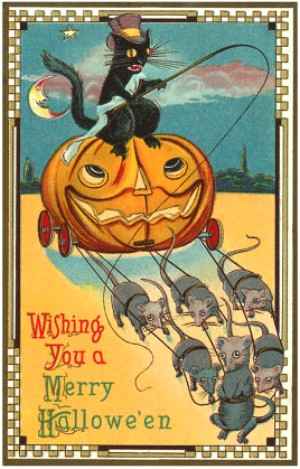
Z ig et zig et zag, la mort crie cadenceThe archetype for the Halloween spooky trope is no doubt the grotesque poem by Henri Cazalis that Saint-Saëns set for his ‘Danse Macabre’: ‘Zig et zig et zig, la Mort in cadence.’ Death, the violinist: summoning skeletons from their graves at midnight for a dance. Ghastly merriment, with interruptions. The poem’s two themes—one: osseous, clacking; the other: benighted, desolate.
Frappant une tombe avec son talon,
La mort à minuit joue un air de danse,
Zig et zig et zag, sur son violon.
Le vent d'hiver souffle, et la nuit est sombre,
Des gémissements sortent des tilleuls ;
Les squelettes blancs vont à travers l'ombre
Courant et sautant sous leurs grands linceuls,
Zig et zig et zag, chacun se trémousse,
On entend claquer les os des danseurs,
Un couple lascif s'asseoit sur la mousse
Comme pour goûter d'anciennes douceurs.
Zig et zig et zag, la mort continue
De racler sans fin son aigre instrument.
Un voile est tombé ! La danseuse est nue!
Son danseur la serre amoureusement.
La dame est, dit-on, marquise ou baronne.
Et le vert galant un pauvre charron - Horreur!
Et voilà qu'elle s'abandonne
Comme si le rustre était un baron!
Zig et zig et zig, quelle sarabande!
Quels cercles de morts se donnant la main!
Zig et zig et zag, on voit dans la bande
Le roi gambader auprès du vilain!
Mais psit ! tout à coup on quitte la ronde,
On se pousse, on fuit, le coq a chanté
Oh! La belle nuit pour le pauvre monde!
Et vive la mort et l'égalité!
[Zig … zig … zag, Death in cadence
Striking a tomb with his heel,
Death on the stroke of midnight plays a dance-tune,
Zig … zig … zag, on his violin.
The winter wind blows, and the night is dark,
Groans are heard in the lindens;
Through the gloom, white skeletons pass,
Running and leaping in their shrouds.
Zig … zig … zag: each one is frisking,
The bones of the dancers are heard to crack—
A lustful couple sits on pillows
As if to relish a remembrance of softness that they knew in life.
Zig … zig … zag, Death continues
to scrape endlessly his sour instrument.
A shroud fell! The dancer is nude!
The dancers embrace, squeezing each other in withered love.
The lady was, says one, a marquise or baroness.
And the gallant lover was but a poor cartwright – Horror!
Look how wantonly she bonily abandons herself
As if the uncouth one was a baron!
Zig … zig … zig, which sarabande!
Circles of deaths giving each other the hand!
Zig … zig … zag, one sees in the band
The beauteous gambol with the ugly!
But psit! all of a sudden they quit the round ,
They push forward, they fly; the cock has crowed.
Oh! How exquisite is this night for the poor world!
And how lively Death and Equality!]
— Henri Cazalis (1840-1909), ‘Danse Macabre’.
If your quartet’s cellist is game, you might find Kaija Saariaho’s ‘Petals’ especially fitting as an addition to your play list. The tremendous abjection of it is deeply scary [click on the link to hear a YouTube clip of it]; very different from Danse Macabre.
It’s a challenge for composer and performers alike to achieve the grotesque without devolving into cheap pastiche. Garrop’s quartet orchestration is robust, balanced in a way that does not present excessive risks in performance. Kingston’s arrangement of the Saint-Saëns is vivid and serviceable. And Saariaho’s cello solo will leave everyone hesitant to shake the scary cellist’s hand after the performance. Bwwaah-ha-ha-ha-ha.
P etals für Violoncello solo wurde in wenigen Tagen komponiert; eine lange, unbewußte Vorbereitung war diesem Stück jedoch vorangegangen. Das Material stammt direkt von meinem Stück Nymphea für Streichquartett und Elektronik. Der Name Petals (Blumenblätter) ist ebenfalls aus dieser Beziehung abgeleitet. Die gegensätzlichen Elemente darin sind sehr zerbrechlich, es sind farbenprächtige Passagen, die energischere Ereignisse mit klarem rhythmischen und melodischen Charakter hervorbringen. Diese scharf umrissenen Figuren werden verschiedenen Veränderungen unterworfen und versinken schließlich in einem dynamisch reduzierten, aber nicht weniger intensiven Filigranmuster. Mit der Kombination dieser beiden gegensätzlichen Ausdrucksarten wollte ich den Interpreten zu einer Ausweitung seiner körperlichen Sensibilität zwingen.
[‘Petals’ was composed in just a few days; a long, unconscious incubation preceded this, however. The material comes directly from my piece ‘Nymphea’ for string quartet and electronics. The name ‘Petals’ is derived also out of this relation—the Nymphs; the string/electronics orchestration. The moribund frailty of it all, of the petals! The opposing elements: passages that are very fragile with ambiguous character and rhythm oppose colorful passages evoking vigorous events with clear rhythmic and melodic character. These sharply outlined figures are subjected to different variations; they sink, and are dynamically reduced in the end to just one, but with still-intensive filigreed patterns. With the combination of opposing expression types, I wanted to force the performer to expand her/his sensitivity to the corporeal limits.”
— Kaija Saariaho.
- Stacy Garrop page at Theodore Presser Co.
- Stacy Garrop website
- Stacy Garrop page at Roosevelt University
- DSM. Spooky piano. CMT blog, 15-OCT-2006.
- DSM. Subterranean Venetian epidemiology and 16th-Century compositional creativity . CMT blog, 18-OCT-2007.
- Bice J. A 21st Century Rationalist in Medieval America: Essays on Religion, Science, Morality, and the Bush Administration. Chelydra Bay, 2007.
- Botting F. Limits of Horror: Technology, Bodies, Gothic. Manchester Univ, 2008.
- Daniel C. Voracious Children: Who Eats Whom in Children's Literature. Routledge, 2006.
- Dennett D. Breaking the Spell: Religion as a Natural Phenomenon. Penguin, 2007.
- Harris S. The End of Faith: Religion, Terror, and the Future of Reason. Norton, 2005.
- Kristeva J. Powers of Horror: An Essay on Abjection. Columbia Univ, 1982.
- Kriwaczek R. An Incomplete History of the Art of the Funerary Violin. Overlook, 2006.
- Leitch V. Living with Theory. Wiley, 2008.
- Magistrale A. The Moral Voyages of Stephen King. Borgo, 2008.
- Proulx K, ed. Fear to the World: Eleven Voices in a Chorus of Horror. Borgo, 1991.
- Warner M. Horror Isn't a 4-Letter Word. GuideDog, 2008.
- Composers in the Loft. (Cedille, 2007.) [scarier than bats in the belfry]
- Arnalds Ó. Eulogy for Evolution. (ErasedTapes, 2008.)
- Arnalds Ó. Variations of Static. (ErasedTapes, 2007.)
- Tyler B. Soundtrack - Frailty. (OCF, 2002.)