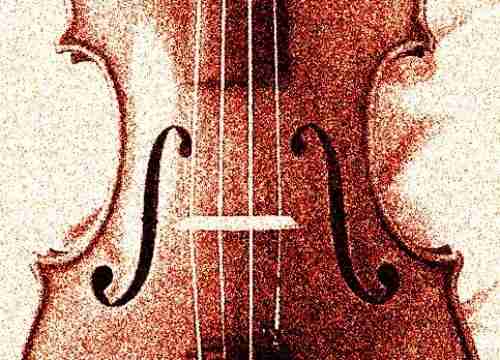
T he Jasper String Quartet gave an outstanding performance this past Tuesday at Oberlin College. JSQ is J. Freivogel (violin), Sae Niwa (violin), Sam Quintal (viola), and Rachel Henderson Freivogel (cello). They won the silver medal at the 2009 Fischoff Chamber Music Competition and have recently served as graduate quartet-in-residence at the Yale School of Music. They are just now beginning a residency at Oberlin this Fall.
T heir accounts of Schubert’s Quartettsatz in C minor (D. 703) [the first movement of a 12th string quartet that was uncompleted before Schubert’s death] and the Beethoven “Razoumovsky” quartet (Op. 59, No. 3) were both strong and received enthusiastic applause from those who attended in the nearly sold-out, packed hall.
T he work that especially captivated me, though, was Aaron Jay Kernis’s String Quartet No. 2, which I’d never heard before. This was composed by Kernis in 1996-1997 and won him the Pulitzer Prize in 1998 when he was only 38 years old.
[45-sec clip #1, Lark String Quartet, Aaron Jay Kernis, String Quartet No. 2, second movement (sarabande), 1998, 1.4MB MP3]
[50-sec clip #2, Lark String Quartet, Aaron Jay Kernis, String Quartet No. 2, second movement (sarabande), 1998, 1.6MB MP3]
T he 17-minute-long sarabande progresses at a slow tempo at first, intense but with a smooth surface, not unlike Samuel Barber’s Adagio for Strings (second movement of String Quartet, Op. 11, which Barber composed at age 26). Later on there are faster passages that are often dense and dissonant, wailing. The result is a predominantly complex texture, relieved by intermittent solo passages. At around the 12-minute mark in Tuesday’s JSQ performance of the Kernis sarabande, a fff unison passage tugged at our heartstrings and ultimately broke them. After this the viola and cello solo resumed a more modest, contained, controlled grieving.

L ike Barber’s Adagio, Kernis’s orchestration in this quartet has tense intertwined voice-leading in each part. Like Barber’s Adagio, after the violent bits, we are recovered by the low strings who bring us in for some sort of a [dramatic, wounded] landing.
A nd, like Barber’s Adagio, there is something ‘archaic’ about the rhetorical structure of Kernis’s sarabande—the relentless, rhapsodic, pneumatic phrasing rising to the climax, then fading into silence. This gradual build-up and slow release of tension—the classic “arch” form—we know this; we recognize what it is doing to us; we cannot resist the viceral, physiologic, primitive effects it has on us.
I f at first we didn’t understand what the quartet’s first movement means, this devastating second movement leaves no doubt, and it provides context for the third movement. The whole construction provides sonic symbolic proof of the permanence that’s within us, as contrasted with the violence and transience of the outer reality.
I nstead of the long melody, our emotions get shortened to just four notes. Finally, the notes slow down, twice as slow. We can't emote any longer. Then we hear that final note for a split second, and then that chord is taken as the only possible resolution. We would have never dreamed that this is where acceptance lies. The whole piece has just been reduced to just those two chords. The simplicity of the logic makes you feel the universality of the journey: from the simple note, to the high emotional wailing, to release and to final acceptance, but never the place you thought it was going to lead you to.”K ernis prepared this work as a personal, individual elegy in 1997, but he has subsequently commented on the significance that this quartet and his later arrangement of it for string orchestra have for him in the light of the events of 9/11. The vehemence of the quartet might seem over-the-top for personal mourning of one individual—well, maybe not if the loss were a child or a spouse or belovèd parent. But it is definitely not excessively vehement for collective, public mourning. In that respect, too, this Kernis quartet sarabande movement resembles Barber’s Adagio.
— Rob Kapilow, remarks on Barber’s Adagio, NPR, 09-MAR-2010.
E legy’s peculiar characteristic is a tender and querulous idea... and so long as this is thoroughly sustained, admits of a variety of subjects; which by its manner of treating them it renders its own. It throws its melancholy stole over different objects, which, like dresses at a funeral procession, gives them all a kind of solemn and uniform appearance.”T here’s a moment in the midst of the sarabande when everything changes. Photographers experience this routinely—if you miss the moment, if you blink or don’t see it coming, or if you fail to press the shutter release during the fraction of a second before the change hits, it is gone forever. It feels like our calculus of the future was incomplete or faulty. We who are grieving evidently hadn’t previously appreciated adequately how transient each of us is. We had thought that, if we could just be heroic enough, we might save the person who is now gone. We feel that we have failed. Further, we who are grieving previously imagined that we were the authors of our own lives, and only just now dimly recognize that our selves have in fact been the project of the other person and many others. This profound lack of control shocks us. The evidence is incompatible with our previous beliefs.
— William Shenstone, 1768.
I t’s a strange relationship we have with objects that belonged to the dead—in the ‘knit’ of their atoms, their touch is left behind.”W e painfully discover that we have been inscribed by the person every bit as much as her/his left-behind objects. We find that we are like ornately carved netsuke, with through-and-through holes in us that have been burrowed and whittled by years of relationship, and we are shocked to find that only just now do we realize this. How could we have been so blind and stupid!
— Anne Michaels, Fugitive Pieces.
T he precursor to grief is always ‘connection’. We do not grieve that which we have merely appreciated or admired... Anticipatory grief is like being in a small sailboat in a storm at sea. The turbulence and unpredictability have to be dealt with, and they are not under your control... You will not be able to do everything you want to do to help your dying loved one. Give what you can, as creatively as you can, and then forgive yourself for not being able to do more. Your sense of helplessness does not mean you have failed.”W e naïvely imagined that we were in charge of something that has clearly escaped our mastery’s grasp. And the true nature of elegy seems to have escaped us as well. Elegy is supposed to be a way to arrive at some sort of solace or closure at times of loss. That’s its aim, its overt purpose, and, as a result, elegiac texts are ‘complicit’ in the effects of the ‘pageant’ that they also analyze. By design, elegies are transcendence portals. We had thought that we would have a choice; we thought that we would enter a portal of elegy under our own power, when we decided the time was right, deliberately. Here, time is compressed, and we find that the portal opens up and swallows us. We may not fight it; we may go along with it. But the involuntariness of being transported emotionally like this shocks us.
— Donna Davenport, Singing Mother Home, pp. 114, 119, 131.
T he very notion of time compressed requires something like elegiac machinery to decompress it.”W hen we hear elegiac music (or elegiac poetry, or other art forms) that leads us to realize this, it is natural to say that it was ‘moving’ or ‘dramatic’ or ‘powerful’. Understatement, to say the least. Life-changing? Maybe. Frankly, words simply fail. Which I suspect may have something to do with why this quartet won Kernis a Pulitzer.
— David Rigbee, Styles of Ruin, p. 150.
S omehow, Kernis keeps this sarabande balanced—keeps the whole 3-movement work balanced. It is his lamentation; he, the composer, and his emotions are his own subject. It is devilishly difficult to build up a convincing account of grief and to sustain it authentically when you yourself are the subject. Over the centuries, there has been lots of bad elegiac poetry that fails because it couldn’t achieve or sustain balance. Yet Kernis delivered it, and the Jasper String Quartet delivered it as well in their beautiful performance.
T he piece is not merely beautiful to listen to or merely emotionally moving. On Tuesday night it became for me a miraculous elegy machine—one whose elegant mechanics are beautiful to hear and see and admire as they move. Through its transparent exterior, we see how this tugging at our heartstrings works. It struck me a bit like procedural [conscious] sedation, with digital video so we patients can see and hear most everything the doctor is doing while she/he operates on us. This ability even to experience the mechanics of what we are experiencing while we are experiencing it is radical, disorienting, uncanny, unsettling, very dramatic.
S ome structural/mechanical things that I noticed while listening... Widely-spaced blocks of short and long passages have the effect of distancing the mourner from the subject (death; the idea of death); they place the traumatic event far enough away to re-present and reevaluate it.
W hat is the truth of the ninety-year old woman waiting for me at the house, who is changed beyond recognition and yet who is still my mother? ... It has taken me years to learn that reality is far more than meets the human eye, or ear, or mind... The Greeks have a word for this realness of things... ’ousia’ [οὐσία].”O ut of sight, out of mind? Not really. The recollection-at-a-distance through these passages has instead the effect of maintaining the mind’s focus on the event, albeit at arms’ length. The phrases that hark back to earlier ones—the canon-type transferring of a phrase from one part to others—lend a backward-reaching intimacy to the experience of this Quartet. Since the thing recalled is always longing for yet another future recollection, the phrases that look backward look forward as well. Kernis throws an ‘arch’ forward, and the performers (and we) face our own future, with some species of hope, as we simultaneously reflect on the departed or the about-to-depart.
— Madeleine L’Engle, 1984, p. 49.
K ernis’s chain of phrases is like a chain of rhymes. Often the second or third one is slightly imperfect or impatient—humanly so, as if for reasons of human frailty. In some places, one of the four lines can’t wait and urgently adds what it must say, interjecting what it must—earlier than we might think it should, were it observing the civilities of normal quartet discourse. Or, say, in other cases one of the four lines is unexpectedly delayed. The imperfections are a poetical sign that things are far from ‘normal’; mourning in extremis. Shocking.
T he ‘chiasmus’, the marching along of melodically and rhythmically similar lines and similar bowing, go relentlessly toward some kind of apotheosis, which arrives in the third movement. The dramatic power of the second movement substantially derives from the emulation of controlled pausing and breathing, and stretches where grief causes the loss of control. The phrases are like lines in a poem, built up into stanzas. The mourner’s pain is compacted into the pneumatics of breathing, much as we feel in the elegies of Milton or Keats or Shelley.
T he ‘breathing’ of the quartet members’ bows involves drawing them and expending their length in multiple, pained, successive stresses. There are series of eighth-notes that suggest what would be ‘transitive’ participles if this quartet had lyrics: com-pell-ing, de-spair-ing. Other series’ accents suggest defiantly ‘intransitive’ participles: ach-ing, burst-ing. The latter—diffuse and not referring to anything done-to or done-by—evoke a persisting existential ‘melancholia’ more than an event-driven ‘melancholy’. Song without words!
A Romantic-period elegist would have been a ‘confident’ visionary—would have served up a confident, strong mourner. Here in Kernis’s No. 2 quartet we have anguish and insurmountable tentativeness as well as unabashed outrage at the loss. In fact, the multidimensional mixture of pastoral, confessional, romantic, and modern underscores the visceralness and urgency of the quartet. This in turn reinforces how authentic we perceive this quartet’s expressions to be.
A t times, grieving for a loved one begins considerably before the end of life, premonition of the impact of high-velocity bullets. Each setback in the loved one’s health triggers an emotional reaction in us—one that feels like a shot from a gun, a cannon even: explosive anxiety; 2,800 foot-per-second ballistic sadness; projectile vulnerability. Each fleeting recovery reloads the chamber and cocks the trigger of the testamentary gun again. Kernis’s quartet does this repeatedly, this ‘anticipatory’ grieving.
W ith the impending loss of the loved one, a weird, horrific beauty unfolds—the unstoppable specifics of the events, the terribleness of the muzzle, the abjectness and universality of the ordeal and time. Stomachs in knots, we discover that we are owned by our relationship, by our caring. We comprehend as if for the first time the 'accidentalness' of who we each are—ourselves and the loved one. There is no conceivable relief from these realizations.
A ccording to modern convention in Western society, grieving is supposed to be orderly and not too long. ‘Acceptance’ is the goal; anything less is ‘incomplete’, a deficiency for which the griever is blameworthy. ‘Moving on’ and reinvesting emotional energy in new attachments are the evidence of healthy completion or closure of the grieving process.
T o many grievers, though, these social norms feel wrong, coercive, impossible to comply with. The norms threaten to deprive us of our right to grieve, at the very moment when we are losing (or have recently lost—) the loved one. The outrage in the ascending passages of the second movement of Kernis’s second quartet seems directed against this normative social violence against grievers...
D enial; bargaining; and what follows. Kübler-Ross was the first or one of the first to identify anger as a ‘stage’ in the process of preparing for death. I am reminded of this at the 12-minute mark in the Kernis quartet No. 2 sarabande. When we see a loved one hurting, it’s natural to feel waves of protective anger, protesting what is happening and the harm that is occurring. Guilt and regret are often mixed in—when the loved one’s condition keeps getting worse despite everything you are doing to prevent that, or when you have to override their objections and take away their car keys or place them in a nursing home.
J ane and I] went back to the poets of grief and outrage, as far back as ‘Gilgamesh’... Poetry gives the griever not release from grief but companionship in grief. Poetry embodies the complexity of feelings at their most intense and entangled and therefore offers (over centuries, or over no time at all) the company of tears.”
— Donald Hall, The Best Day the Worst Day, 2006, p. 118.
T hey wept and affirmedU ltimately, near the end, when you are with the loved one for long periods of time and when there is little change of facial expression and almost no communication, we feel alienation, not only from the loved one and the relationship we have shared, but also from ourselves. We lose our bearings and part of our own identity. The face of the other is no longer functioning as a ‘mirror’ of ourselves. Kernis and JSQ elegantly lead us to this simple but important insight. You may be interested to read Chapter 6 of W. David Shaw’s book. The chapter is entitled ‘Does Good Grief Therapy Make Good Art? The Paradox of Strong and Weak Mourners’ (link below).
their love for each other, witlessly,
over and over again.
When it snowed one morning Jane gazed
at the darkness blurred
with flakes. They pushed the I.V. pump
which she called Igor
slowly past the nurses' pods, as far
as the outside door
so that she could smell the snowy air.”
— Donald Hall, ‘Her Long Illness’, Without, 1999.
F or me, the basic source from which all my work flows is a belief in the inexhaustible number of things music can do—its ability to spring from the inexhaustibility of the thoughts and emotions of human beings.”
— Aaron Jay Kernis, interview with Joshua Kosman, Strings Magazine, JUL-1999.
I t’s elegiac and mournful and pleading and screaming for so long, and then comes redemption. He builds you up and then creates a release that’s so moving, you don’t realize that the time has gone by. I recognized that from the audience reaction—you can feel that they’re not breathing [while you play], and that’s really good. People only realize afterward that it’s not a short piece—it’s 30 minutes long. But it has such incredible line, and the intensity doesn’t let up for a second. So you’re hanging on every note, waiting to see what happens. That element of suspense is a very unusual compositional technique.”
— Aaron Jay Kernis, interview with Joshua Kosman, Strings Magazine, JUL-1999.
- Jasper String Quartet website
- Aaron Jay Kernis page at Schirmer
- Duffie B. Conversation with Aaron Jay Kernis, 2002.
- Kernis A. String Quartet No. 2. Schirmer, 1997.
- Arthur C. Irish Elegies. Palgrave-Macmillan, 2009.
- Cobb N. In Lieu of Flowers. Pantheon, 2000.
- Couser T. Recovering Bodies: Illness, Disability and Life Writing. Univ Wisconsin, 1997.
- Davenport D. Singing Mother Home: A Psychologist’s Journey through Anticipatory Grief. Univ North Texas, 2003.
- Frank A. The Wounded Storyteller: Body, Illness, and Ethics. Univ Chicago, 1995.
- Gilbert S. Inventions of Farewell: A Book of Elegies. Norton, 2001.
- Hall D. Without. Mariner, 1999.
- Hall D. The Best Day the Worst Day: Life with Jane Kenyon. Mariner, 2006.
- Hawkins A. Reconstructing Illness: Studies in Pathography. 2e. Purdue Univ, 1999.
- Kennedy D. Elegy. Routledge, 2007.
- Kristeva J. Powers of Horror: An Essay on Abjection. Columbia Univ, 1982.
- Lark Quartet. Kernis: String Quartets Nos. 1 & 2. (Arabesque, 1998.)
- L’Engle M. Summer of the Great-Grandmother. Harper-Collins, 1984.
- Lerner N, Straus J, eds. Sounding Off: Theorizing Disability in Music. Routledge, 2006.
- Michaels A. Fugitive Pieces. Vintage, 1998.
- Neimeyer R. Meaning Reconstruction and the Experience of Loss. APA, 2001.
- Rando T. How to Go On Living When Someone You Love Dies. Doubleday, 1991.
- Rando T. Anticipatory grief. J Palliative Care 1988;4:70-3.
- Rigsbee D. Styles of Ruin: Joseph Brodsky and the Postmodernist Elegy. Praeger, 1999.
- Sacks P. The English Elegy: Studies in the Genre from Spenser to Yeats. Johns Hopkins Univ, 1987.
- Shaw W. Elegy & Paradox. Johns Hopkins Univ, 1994.
- Stroebe M, et al., eds. Handbook of Bereavement Research. APA, 2001.
- Living with Loss magazine
- Supportive Care Coalition
- "Last Acts" Robert Wood Johnson Foundation
- Australian Centre for Grief and Bereavement
- Virgil’s Georgics at ThoughtCast.org
- Virgil’s Georgics at MIT.edu