Saturday, January 12, 2008

Portuguese Baroque: A não perder!

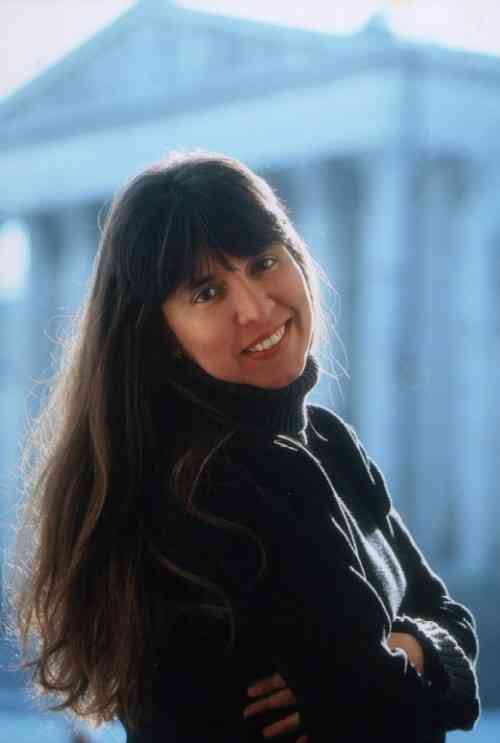
 Débora Halász
E mbora condicionado pelo idioma cravístico italiano, Seixas exibe em algumas sonatas uma técnica idiossincrática plenamente desenvolvida e extremamente exigente, de características paralelas à técnica desenvolvida mais tarde por Domenico Scarlatti. A sua inspiração canaliza-se frequentemente para o domínio da invenção melódica, em especial nos andamentos lentos e em certos minuetes, onde não raras vezes perpassa um característico afecto melancólico ou, talvez, saudoso.
[Although conditioned by the Italian vernacular, Seixas shows in some of his harpsichord sonatas a technical idiosyncrasy, a fully developed virtuosity on a par with the one developed later by Domenico Scarlatti. Seixas’s muse often channels itself in the service of melodic invention, especially in the slow movements and in minuets, where it evokes a characteristic melancholy or, perhaps, a saudades-type wistfulness for what once was—for what we are as human beings, in light of what we once were or have the possibility yet to become.]”
  —  João Pedro D’Alvarenga, 2003.

    [50-sec clip, Carlos Seixas, Piano Sonata No. 18, Largo, Débora Halász, 1.5MB MP3]

    [50-sec clip, Carlos Seixas, Piano Sonata No. 18, Allegro, Débora Halász, 1.7MB MP3]

    [30-sec clip, Carlos Seixas, Piano Sonata No. 18, Adagio, Débora Halász, 0.8MB MP3]

    [50-sec clip, Carlos Seixas, Piano Sonata No. 18, Allegro, Débora Halász, 1.5MB MP3]

Carlos Seixas’s works reveal a surprisingly original and international sensibility, and this is evident in Débora Halász’s recent recordings and performances. How ‘new’ these Seixas compositions must’ve sounded when they were new! Seixas succeeded in transmuting contemporary influences of the Italian and French baroque with a saudades-like, fado-style nostalgia. Débora Halász’s performances have a forthrightness, a directness—an angularity!—that is consonant with the characteristic cosmopolitan-realist Lusitanian outlook. She is Brasilian, but she plays with this consummate Portuguese feeling—presença do temperamento lusitano.

E que dizer das brutalmente honestas e francas Allegros; do enigmaticamente desalentado e desanimado Largo; ou da liberdade agónica e tragica do Adagio? Deve dizer que são distintamente portugueses! [And what can one say of the brutally honest Allegros (the MP3 clips above); or of the enigmatically despondent Largo; or of the tragic, unabashed impulsiveness of the Adagio? One must say they are, at bottom, Portuguese!]

Coimbra
Carlos Seixas (1704-1742) was born in Coimbra, the son of organist Francisco Vaz. He replaced his father as organist when his father died in 1718. And, from there, Seixas went on to become a renowned composer, knighted and famous throughout Europe. But, prodigy though he may have been, we know that child prodigies don’t always succeed and they don’t succeed on their own. The early premières for illuminati and sponsors tend inevitably to give way to less charitable (ambivalent or even hostile) receptions later on.

T oque áspero de Débora Halász confere vitalidade.
[The ‘rough’ touch of Débora Halász on the keyboard imparts a certain vitality to the music.]”
  —  Indice, Folha de São Paulo, Quinta-feira, 30-MAR-2000.
Carlos Seixas
So, if we accept the idea that musical culture derives from natural social processes and infrastructure, then the free flow of information, goods and people made possible by the political regime during Seixas’s adulthood were what permitted the diversity of influences we hear in his music—permitted these to find their audience, permitted him to find success. Likewise, we find now in Portugal a diversity of government programs that support (albeit in variable and tenuous ways) new music composition and performance. The Gulbenkian, for example, and other state-backed centres’ programs are to be commended for their sponsorship of music as a public good.

N  esta viagem, como no vasto oceano, a linha do horizonte encontra-se sempre à mesma distância, por muito que na sua direcção caminhemos. Viagem sem rumo nem fim.
[In this musical journey, as on the vast ocean, the horizon remains always the same distance away from us, however much we travel toward it. Journeys don’t necessarily have endings. The duty of the composer and performer is not necessarily to bring us into a port-of-call. Truly significant music is emotionally like blue-water sailing or like deep intergalactic space travel—boundless. It causes us to feel out of our ‘depth’. It forces us to confront existential and spiritual realities.]”
  —  Sérgio Azevedo, 2007, A poesia dentro de um piano.
Seixas has a quality of self-criticism and insight, and this, too, must have helped him. His social skills and insight are partly what enabled him to successfully manage the transition from child prodigy to mature successful artist and composer. Correlates of his capacity for self-criticism, Seixas’s ‘modesty’ of orchestration and the ‘openness’ of his polyphony do present daunting expressive risks for the performer, and Halász rises beautifully to each of these challenges. Halász performs on a reproduction of a 1734 Hieronymus Haas instrument on this CD. The production values and equalization on the Naxos recording are excellent. And the combination of fine instrument plus fine engineering/production makes Halász’s playing here especially vivid.

Seixas Sonatas, Halász
It has been now two years since I was last in Lisboa and experienced the music and culture there. Hearing Débora Halász’s playing makes me realize it’s time to start planning another visit to Portugal. Irá, também?

Coimbra

Coimbra


12 Jan 08

Question Time With A Crip

Trixare4kids wrote:

To both the Blood and the Crip: Do you believe that the gang lifestyle was the only one available to you due to your upbringing in a particular neighborhood or your particular circumstances? Does race play a part? What about the people in your neighborhoods who don’t join gangs? What did they do or think differently? Without going into specific details, of course, did you ever feel bad about any of your actions or crimes? If you could rewind your life and go back, would you still join the gang? Why or why not? If you had a little brother about to get “jumped in” - knowing what you know now, would you want him to join? If not, what would you tell him to do instead? What would you tell him to dissuade him?

The Crip wrote:

This is C-Ducc the Savage.

I was exposed to numerous gangs because I’ve got family from different hoods. I was more comfortable with 99 Mafia Crip because they always looked out for me and my brother is from there. Race does not play a part. Look at me. I’m an Oglala Lakota from Pine Ridge, South Dakota. I’m 6ft 3in tall, 240 pounds, tattoos from my neck to my stomach. I’ve got native and gang tattoos. I don’t act like a black man, cuz I’m very into my native traditional ways. However my teenage years have led me to the life of Crips. It’s not just a gang, it’s a way of life. In order for anyone to understand they’d have to walk those blue chucc shoes.

The people from the hood that don’t claim the hood are usually connected to us anyway. We grew up with them and looked out for them. To an enemy, they’d be guilty by association anyway. But if they cross over and bang another hood then they would be in trouble. If he’s got a lot going for him like school, college or going to the army or something, we’d be proud cuz he is one from the hood that is becoming somebody and we’d respect that. Just cuz we are bangers don’t mean we ain’t patriotic.

As far as feeling bad for the crimes we’ve done, I can only speak for myself. They say if you kill a man, you have to be his servant in the afterlife. Don’t know who came up with that saying but I’m nobody’s servant. I only feel bad for not protecting the people in my hood the way we were supposed to. A gang, a true gang, would help out their hood. If someone is in need of school clothes or rent money. If we are the ones claiming the hood it’s our responsibility to help and protect it.

If I could rewind and go back to the past I would not have shot my best friend I grew up with. My brother was shot by some people and my best friend had family from the people who did it. He decided to side with his family, ain’t no wrong in that but my anger and pride set in so I had to do what I was told. The homies from the hood labeled him as a traitor and since I was closest to him I had to delete him. I would’ve still joined 99 Mafia Crip cuz I was grown into it so I am very knowledgable to the lifestyle.

If my little brother wanted to join the hood I wouldn’t stop him. He grew up watching me so he knows what to expect. I’m not trying to sound like I’m hard or anything but I’m only being honest. The more people who join, the more powerful we get. We are out here in Phoenix, Arizona. Don’t get it twisted, we bang out here for real.

I have some shout outs to my fellow comrades who bang the true blue, Cane & Baby dub from West Side City Crips, Maniac from C-C live, Dopey & Grumpy & lil Johnny from East Side Crip XV3 Street, my homeboys from Mountain Top Crip Gang, Dope Man Association Crip Mob, Head Hunter Crip. All my Crip family if you see another Crip, shake his hand with pride cuz we bangin the same thing. We all family like it or not.

R.I.P. Gumby VHHB, Playboy WSC’s LXIV, Nino WBP XXI
Pirros WBP XV3, Smoker VSPL XXII, Crazy C ESC XV3,
Carlos Makil South Side Chandler

99 Mafia Crip Gang Phoenix, Arizona Chapter
much love to all my nationwide rip ridaz
Big OG C-Ducc tha Savage locc’d out till I die
Crips 4 life


Email comments to writeinside@hotmail.com or post them below

Copyright © 2006-2007 Shaun P. Attwood

Friday, January 11, 2008

11 Jan 08

From Weird Al (Letter 1)

Dear Jon,

I hope this letter finds you safely nestled back amongst your loving family.

You did not get to say “toodle-oo” the day you left. As fate would have it, someone at Santa Rita was found dead sometime during the night, prior to your departure that morning, so we were locked down for a day or so. I believe it was some type of a drug overdose. A sad but unfortunate fact of life here, been one more since then.

Hopefully you are now on the dole, and ensconced in the garage (en suite of course!)

Take good care of your parents – time robs us of those we love, sometimes with no warning. Be good to them, Jon

Not much new here but I will tell you this: your timing was good – dorm living is not something you would likely care for.

I know this little note is not up to my usual sarcastic standards – I’ll save that for another time.

My prediction – in not too much time, all you went through here will seem like nothing more than a long, bad dream. In truth, that’s all it was.

Remember this, we seldom grow in the ways we need to during good times. It most often takes adversity to spur this needed growth. That’s always been the case with me.

I’ve not heard a thing from the governor here (clemency). Please contact the Queen and have Her Majesty put in a good word for me. Absent that, it looks like I’ll go home on July 10, 2008.

Anyway, Philosophical Al will sign off for now. Weird Al will garner his wits and make a magnanimous return.

Write if ya get a chance – if not, don’t worry about it. Get on with your life. I’ll be in touch once my fan club members storm the bastille here, free me, and place me in a position of importance equal to my prominent place within the community of intelligentsia, my stunning good looks and physical prowess, and of course my incommensurate modesty.

Take care of yourself!

Love

Al

Email comments to writeinside@hotmail.com or post them below

Copyright © 2006-2007 Shaun P. Attwood

Thursday, January 10, 2008

Dr. Atomic: John Adams’s Photographer’s Gaze

Dr. Atomic
It is useful to think of chamber music as ] a narrow deep area between the novel and film.”
  —  Lewis Baltz.
There was a time when we thought it was enough just to photograph objects at eye level, standing with both feet on the ground. But then we began to move around, to climb mountains, to fly in space, to go to the bottom of the sea—and to document what was there and our responses to what was there. John Adams’s compositional ‘concision’ is tremendous—he is able to imply so much with so few notes, with so few compositional gestures! He is not satisfied with things apprehended at eye level.

 Still Life with Fish, Kleinschmidt
Adams’s opera, Dr. Atomic, is nominally about the history of J. Robert Oppenheimer and others who participated in the Manhattan Project in the 1940s, to create the atomic bomb. But the text fragments that were incorporated into the opera or adapted to become part of its libretto offer close-ups so extreme as to become abstract—studies of textures, microscopic studies of the ethos of the period. In places, it’s as though we have waveform-sampled, electroacoustic still-lives of Oppenheimer and colleagues. The opera is painterly—or, more accurately I think, photographerly.

 Still Life with Fish, Claesz
The images affect us on the physical level, the depictive level, the mythic level. The setting of a John Donne sonnet is made to sound archaic by Adams’s choice of a slow, solemn D minor chaconne. All the typical 17th-century ingredients of a breakfast still-life painting are here. On the left is a large römer, a green wine glass with prunts on the stem. Next to it is a salt cellar with a Chinese porcelain dish on top. It contains capers, which go well with fish. The still-life is subdued in color—only the yellow of the lemon grabs the eye. Delightful details, such as the curling lemon peel and pewter plates jutting out from the table, divert our attention. Dr. Atomic has still-life compositional qualities like these.

R eality has started to be understood as a type of writing—one that can be decoded [through photographs]… Photographs are not so much an instrument of memory as an invention of it, a replacement for it.”
  —  Susan Sontag, On Photography.
This type of still-life is sometimes called a ‘vanitas painting’, in which arrangements of fruit and flowers, or lavish banquet tables with fine silver and crystal, are accompanied by symbolic reminders of mortality. A skull, an hourglass or pocket watch, a candle burning down, a book with pages turning, serve as a moralizing message on how short life is. Look! The fruits and flowers themselves are starting to spoil and droop. Look! The boy comes to get a glass of milk from the nanny! Look! The bomb!

D r. Atomic came out very fluidly, and largely without my analyzing it [in the process of composing it]. [Don’t] make the mistake of walking through the kitchen to get to the restroom—and come back having lost your appetite. [Don’t] look in my kitchen here, but for the moment just enjoy what’s on the plate.”
  —  John Adams, in interview with Thomas May, FEB-2005, p. 233.

Still Life with Skull, Claesz
Interplay among the levels of experience that Adams devises for us is what creates tension and meaning in this opera. The collapsing of depth, foreshortening of events, telescoping of time by way of the festinating micro-marches that Oppy and Groves make together across the stage—these create new relationships; they don’t just reveal and characterize existing historical ones.

Some of the moral or ethical implication of Dr. Atomic is diminished by the libretto’s obsessing over trivial and self-absorbed dialogue of the scientists and military characters. But this, too, is a choice on Adams’s and Sellars’s part. Possibly their intent is to portray the Americans’ inhumanity and hubris even more brutally, by downplaying the characters’ attention to the destructive implications and casualties that the bomb will have. But the effect of this choice—minimizing the characters’ attention—also tends to reduce our own.

Dr. Atomic, ‘Batter My Heart, Three-Personed God
General Groves’s candy-bar eating and weight management issues—his recitative about the 200-calorie brownies and three pieces of chocolate cake—are maybe genuine historical artifacts, but their inclusion here is conspicuous for the vacuousness and/or sociopathy they imply.

John Adams, photo O’Grady
Kitty Oppenheimer spends the majority of the second half of the opera on center stage, passed out in her chair from consuming too much scotch whiskey. This, too, may be historically accurate. But the choice to have one character inert and stationary—whether due to psychological strain or moral incontinence or some other cause—is a curious one for the composer and librettist to make.

Dr. Atomic
T he photographer can identify with the circumstances. Choosing is the final, essential act of creativity. If, as Poincaré suggests, the subconscious brings up ideas in pairs or in crowds, then it is up to us to choose what makes sense to us. If, as he suggests, this bringing into consciousness is directed by an aesthetic force, the best one can do is not undo it but take it as it is... What I call imagination is simply that active link between intuition and rationality.”
  —  David Travis, p.77.

 Still Life with Fish, Peeters
Dr. Atomic is a work that can hold special significance to people of a certain age, say, those who are today 55 years and older and who have a clear personal recollection of the milieu of the 1950s or of the 1940s. Adams and Sellars take imagery and texts from that period and make them more complex and multi-layered by injecting them into this latter-day composition. Although in many ways the historicism of the quoted texts and images makes them ‘stay the same’, the farther we go in this process the more different they become and the more intriguing the results are—and the more those results play to our imagination and compound the complexity. There’s a ‘fractal’ quality of memory that Adams evokes in us—and we’re led to recognize a mathematically recursive quality of our memory—led to recognize the inherently, unavoidably ‘revisionist’ nature of our human cognitive process. Our minds continually re-contextualize everything! We cannot help it!

V ertov is right. The task of cinema and of the camera is not to imitate the human eye, but to see and record what the human eye normally does not see. The cinema and photo-eye can show us things from unexpected viewpoints and in unusual configurations, and we should exploit this possibility.”
  —  Ossip Brik, in Wells, p. 90.

 Still Life with Fish
This opera is chock-full of implication—open-ended imagery that empowers the audience to enter into constructing individualized meanings. Adams is aiding and abetting curiosity and conjecture. This is not mere ‘optical’ fidelity—a claim to correctly transcribe visual appearances (‘It happened, and it looked this way.’). It’s emotional fidelity—accurate, in part, because we’re engaged by Adams in actively generating its truth. That said, this is not an opera for anyone incurious—anyone who’s unprepared to be engaged and unwilling to be actively implicated.

The sparseness of the set, its raising and lowering mountains-scrim and bomb and gantry/scaffolds, and the repetitiousness of the choreographed movements all present challenges to audience members who are expecting activity on-stage to have a purpose, advance the story, or make a point. In many ways, the point seems to be the utter lack of a point—the absurdity of the process of making the bomb, the impersonal and unstoppable momentum that the process has when it is underway, the existential horror that that zombie-like activity has.

Cumberland, photo Pieter Ombregt
Unexpectedly, the imagery in the Dr. Atomic production was reminiscent of the Pieter Ombregt XYZ photographs I had seen earlier in the day, at the Columbia College Chicago exhibit at the Water Tower on Michigan Ave.

Harelbeke II, photo Pieter Ombregt
Angular, inhuman geometry and architecture. Harsh, inhuman light bathing depersonalized human figures as morally impoverished objects, not subjects. Entering and exiting doors and apertures, to fulfill purposes unknown or no purpose at all.

Still Life with Glasses
Found Art’ can be the epitome of a consumptive, exploitative capitalistic political economy. But this opera is not ‘Found Art’. It’s not shameless appropriation and naked, direct presentation of historical texts set to music. Instead, it creates new connections, creates an aura—empowers us to find these connections, discover our own aura. The aura may be ugly and disheartening, though. The quiet recorded Japanese voices that percolate down on us from the balconies as we wait for the bomb test detonation in the final 5 minutes of Dr. Atomic are terrible reminders of how needless, how cruel, and how avoidable the deployment of these weapons was. There is no catharsis here. And it is difficult to applaud afterward. Dr. Atomic might be best done with instructions to the audience to exit the theater silently, to go home and meditate on how to make amends and how to be better human beings.

I  have never attempted to squelch the kind of energies inherent in my music in order to avoid a catharsis or ‘crisis’ or climax. I don’t view my expressive world as teleological. Rather, I try to allow what’s latent in the material to flower naturally. I think a lot of being a good composer is like being a good gardener. You have to know when to wter something, to cultivate it, and also when something needs judicious pruning.”
  —  John Adams, in interview with Thomas May, FEB-2005, p. 28.

Still Life with Sharkfin, Isaacs
Adams is—in this opera and in other of his work—a specialist in creating quasi-historical scenic wonderment for the audience. It’s as though, say, he (re-)introduces the mid-Century concept of phosphorescence, as it was before the era of television and fluorescent lights—before the wide public experience of phosphors and phosphorescence had expunged the cultural remembrance of what ‘phosphorescence’ had been in the literary age that went before.

T he concept of revelation—one hears, one does not seek; one accepts, one does not ask who gives... Everything happens involuntarily but, as in a gale of a feeling of freedom... The involuntariness of image and metaphor is strangest of all: one no longer has any notion of what is an image or a metaphor... It actually seems as if the things themselves approached and offered themselves as metaphors.”
  —  Friedrich Nietzsche, Ecce Homo.

Mushroom Cloud
Adams’s detached, clinical observation—leads him to compose still-lives of these carefully selected and edited ‘found’ objects. His material and inspiration lead him to construct views through barn doors and beyond relay-racks filled with arrays of meters and glowing pilot-lights, to mountains and prairie grass and historical people outside. It is very much in the aesthetic realm between the novel and the film, as photographer Lewis Baltz once said. Very much like the objectification that happens in the Ombregt photographs.

Porch Shadows, Strand, 1916
Adams’s wife, Deborah O’Grady, is a photographer. I wonder whether she sees photographerly influences in his work, with regard to John’s compositions and compositional techniques. I wonder if harmonious ways of seeing are part of what brought them together.

Truth in photography may involve some degree of verisimilitude to the objects seen, but the primary reference shifts from object to subject. Truth now refers not to accurate representation of the objects but rather to accurate representation of the artist’s response or interpretation of the object. Truth now means fidelity to the subjective experience, of the artist and the viewer.”
  —  Jerry Thompson, p.22.

Music Hall, Madison Ave, Szarkowski, 1943

Still Life with Fish, Bazille


Wednesday, January 9, 2008

09 Jan 08

New Clothes

When I first lived in America in 1991 I went to a gym wearing clothes from England and people looked at me as if I’d committed the crime of the century. The unwanted attention, explained a friend, was due to my black socks. So, I got rid of the black socks and for sixteen-and-a-half years wore white. Upon returning to England last month, I met various friends who were horrified to see my white socks.
“In England, we wear black socks,” Hammy said.
“Even with sneakers?” I asked.
“Yes, even with white trainers. Don’t worry we’ll soon cure you of that habit.”
Now I’m back to black again.

My aunt Sue took one look at my clothes – prison blues and sportswear fashionable in America over half a decade ago – and said, “We’re going shopping for clothes. We’ll take my son Mike. He knows all the latest fashions.”
Mike guided me through three stores: Barometer, Blueprint, and Burton. The shoes in Blueprint were narrow and curled up at the toes.
Mike recommended a pair, and said, “They’re dead trendy them.”
Trying them on, I felt like one of Santa’s elves. I opted for two pairs not so heavy on the curl.
As far as tops go, stripes are popular here. I chose three striped tops including a Lacoste shirt. Lacoste was popular when I was a teenager and according to Mike it is back in fashion.
I replaced my prison blues with a pair of VOI jeans, and Sue picked out some dress pants. I traded in my Alien Workshop beanie for a reversible beanie from Burton that is black on one side and striped on the other.

Thanks, Sue, for decking me out, and Mike for the sound advice. I feel swanky in the pointy shoes. Thanks also to Barry in Tonopah for the jacket filled with white down feathers - it is like wearing a sleeping bag in this cold weather.

Email comments to writeinside@hotmail.com or post them below

Copyright © 2006-2007 Shaun P. Attwood

Monday, January 7, 2008

07 Jan 08

On Shanks (Part 2)

“To make a shank using paper, you soak the paper in glue, roll it up real tight, and make a long thin pointed stabbing implement. Some will put a needle at the point of it, or some kind of pushpin, so it has a sharp metal point. Once the metal point breaks the skin it goes right in.”
“With one hit?” I asked.
“It’s a one-hit deal.”
“Aiming for the heart?”
“They aim just below the breast bone, and the shank goes in and up. Once it’s in they move it from side to side, and either break it off or pull it out. The thing is, ’cause going in it makes such a small-diameter wound, if you pull it out there’s not a lot of blood. With a small diameter the skin will close in, but because they wiggle it, it’s done damage to the heart or aorta, and you bleed internally.”
“And die?”
“Yeah. You die a long time before the prison can get you to a hospital.”
“You mentioned stabbing shanks and slicing shanks, what’s the deal with slicing shanks?”
“With a slicing shank they’ll go for the neck if they’re intending to kill you. If they can slice either the jugular or the carotid, odds are you’re gonna bleed out and die. They may go for the inner thigh. If the femoral artery is cut with a slicing blade, it’ll cause you to bleed out. Anyone shanked there should put pressure on it and get to the hospital.”
“If you’ve been shanked in the neck, what are the chances of the prison getting you to a hospital in time to save your life?”
“Slim – but it can happen.”
“Slicing shanks are made out of what?”
“Any kind of flat metal or round metal.”
“I’ve heard about people making shanks from fence.”
“Yeah, just straighten it out and sharpen the end of it – make it into an ice pick.”
“Can we talk for a little bit about how to reduce your chances of getting shanked?”
“OK.”


Email comments to writeinside@hotmail.com or post them below

Copyright © 2006-2007 Shaun P. Attwood

Saturday, January 5, 2008

Irish New Music: Back to the Future—‘Folk music’ Elements in ‘Art music’

M  usic—the natural words in the natural order. Through that formula we go back to the people.
  Music will keep out temporary ideas, for music is the nations’ clothing of what is ancient and deathless.”
  —  W.B. Yeats, Letter to Lady Gregory, 08-FEB-1937.
New music in Ireland is neither an attempt to move away from traditional music nor a deliberate construction upon previous works. The ‘Irishness’ of recent chamber music compositions is as idiosyncratic as the Irish counties and their distinct cultures and histories. I recently had an opportunity to explore the Contemporary Music Centre in Dublin, in preparation for travel to Ireland later this year. The Contemporary Music Centre is funded by the Arts Council/An Chomhairle Ealaíon and the Arts Council of Northern Ireland, and also receives funding from the Ireland Department of Arts, Sport and Tourism and the Irish Music Rights Organisation (IMRO).

The diversity is phenomenal—throughout the musical genres really but especially so among chamber music idioms that the CMC-member composers represent. Some contemporary composers are clearly serial or atonal. Others among them are much more lyrical and tonal. Bodley especially inclines to settings of Irish poetry—which is especially appealing to a foreign visitor like me who craves the cultural ‘situatedness’ of compositions like Bodley’s. It is not inward-looking or insular; instead, this music just feels intensely, well, ‘Irish’.

S ee everything through music! Those chords yet to resound in you—they swim like fish in all the rivers of the world. You love their playful surge, their shadows flickering deep within you.”
  —  Susan Connolly.
The act of composing classical music is, I suppose, ultimately an assertion of creativity—a cairn placed by the composer as a marker of her/his—our—existence, against the fact of our mortality. Chamber music is inherently ‘serious’ as well as intimate, regardless of the humor or other emotions it may convey. But, over the years, informal Irish folk idioms—gatherings of friends, the clairseach—have been transformed into concert pieces. So one question as I listen to the output of these Irish composers of new music is, is there now a trend ‘back to the future’—reverting to more informal folk music themes and smaller orchestrations, chamber ensemble pieces?

With some difficulty, it could be so—and Bodley and other composers in the CMC stable do it regularly. Boydell, too, in his earlier years—String Quartet, Op. 31, for example. But there’s no business model for it (the ‘stick’). And, to be honest, the Gaelic tradition in literature and the arts does incline toward epic proportions anyhow (the ‘carrot’). So when we have Irish composers writing new music for small ensembles, it’s clearly done as a labor of love.

Brian Boydell (photo: Mortell)
Boydell passed away in NOV-2000. Along with fellow composer, Frederick May, he founded the Music Association of Ireland in 1948. Much of Boydell’s writing bears the influence of Bartók. Not that his work is entirely derivative of European traditions; it is not. But his avoiding incorporating Irish folk tune themes into his compositions is conspicuous, compared to other composers of Irish new music. Here’s a clip from his String Quartet No. 2, performed by Vanbrugh Quartet [Gregory Ellis (vn), Elizabeth Charleson (vn), Simon Aspell (va), Christopher Marwood (vc)].


    [40-sec clip, Boydell String Quartet No. 2, Vanbrugh Quartet, 0.5MB MP3]

I n the 1940s and early 1950s I was considered (in the Irish context) a very ‘modern’ composer. Now, about forty years later, my music could possibly be considered rather old-fashioned. This is largely due to a firm belief in artistic honesty: creating sounds that I like personally and refusing to follow fashions that might be more acceptable to the critics of the time.”
  —  Brian Boydell, 1996.

John Gibson (photo: Langan)
John Gibson was born in Dublin in 1951 and currently lives in Cork. His training/development included stints with Stockhausen and Lutoslawski. To date, he has five CDs released. Here’s a clip from his piece Sliabh Luachra, performed by Johnny McCarthy (trad fl) with the Crawford Piano Trio [Adrian Petcu (vn), Iosef Calef (vc), Jan Cáp (pf)].


    [40-sec clip, Gibson Sliabh Luachra, Crawford Piano Trio with J. McCarthy, 0.6MB MP3]

F or he had gone alone into the island
And brought back the whole thing.
The house throbbed like his full violin.”
  —  Seamus Heaney.

Seóirse Bodley (photo: Langan)
Seóirse Bodley was born in Dublin in 1933. His writing has been prolific and varied, ranging from avant-garde to Irish traditional music. Among other things, he’s a founder of Aosdána, Ireland’s government-sponsored academy of creative artists. Here’s a clip from his String Quartet No. 2, performed by Degani String Quartet [Alan Smale (vn), Elizabeth Leonard (vn), Padraig O’Connor (va), David James (vc)].


    [40-sec clip, Bodley String Quartet No. 2, Degani Quartet, 0.7MB MP3]

and a clip of his String Quartet No. 3, performed by the Vogler Quartet.


    [40-sec clip, Bodley String Quartet No. 3, Vogler Quartet, 0.9MB MP3]

I s iomaí sort ceoil atá ann, mar adúirt an fear a raibh an trúmpa maide aige.”
[There are many different sorts of music, as the man with the wooden trumpet said.]
  —  Seóirse Bodley.
In summary, there are many novel and exciting new chamber music works being written and performed here. I look forward very much to my next visit to Ireland. Maybe you, too, will have a chance to visit sometime soon. Meanwhile, browse what’s on CMC’s website (they have a wonderful Calendar of Events and other features), order yourself some of the CDs and scores, and enjoy!


Cox book