Showing posts with label portugal. Show all posts

Wednesday, June 24, 2009

Adina Spire: Music of Universal Devotion, Protest, Ecstasy

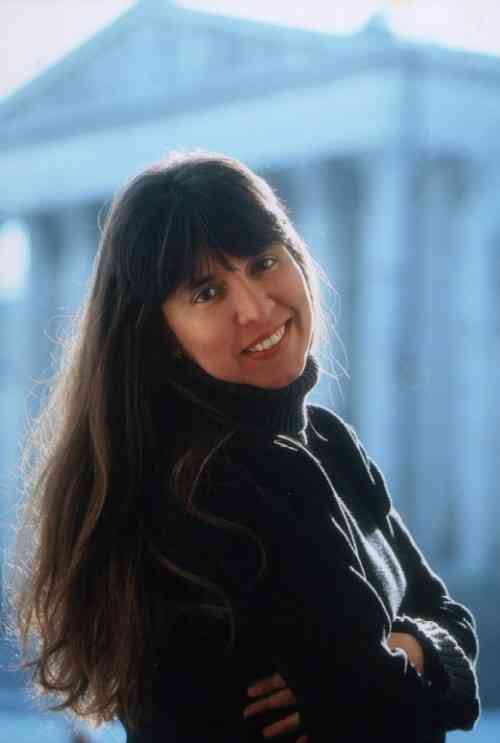
 Adina Spire
D    ark brightness’... the music of a contemporary Romanian gypsy girl... Born in Romania in 1977, Adina Spire is a classical composer of sacred music for Catholic and Orthodox liturgies. An attempt to put any interpretation on her music has to make references to the mysterious Romanian old culture and the context of recent history... The context of Adina Spire’s compositions is the 1989 the revolution of Romania against the totalitarian government and the suffering of the people during the subsequent civil war—including the Adina’s own suffering as a little girl, suddenly orphaned and displaced to the orphanage associated with a monastery near Arad. Her music dwells on a complex of interrelated themes: grief, fear, solitude, vigil, memory, nostalgia, innocence, sensuality, intolerance, protest, violence—each piece approaching this view from a different angle, insistent upon perfecting a coded way of talking about something either unmentionable or impossible to express... This is ‘rebel’ music—the protest of the soul against soullessness, of the poor and defenseless against unfeeling poverty and aggression and intolerance.”
  —  Institutul Cultural Român, 2009.
A dina Spire’s music is brilliant—evocative, lyrical, and incisive. Intensely political. It is also ‘doctrinal’—expressing doctrines of the once-and-future displaced, disenfranchised, and disabused... each note now aspiring to live.


    [50-sec clip, Adina Spire, ‘Kontakion’, 1.6MB MP3]

M any of Adina’s compositions are calibrated by Romanian tradition and informed by Orthodox liturgy or explore notions of religious practice and the Divine. But her vision is delocalized from her native Romania and draws upon materials that are pan-European and span a period from Medieval times up to the present.

T he very old ‘borrowed’ elements and the instantaneous ‘ambient’ elements mingle and give rise to a fantastical sort of ‘bricolage’ that calls into question the very concepts of time and civilization. In a manner similar to Jorge Luis Borges stories, Adina’s compositions can make you wonder whether human history—any of it—is to be trusted. This disorienting effect can be both beautiful and moving.

A dina Spire is a teacher at the conservatory in Arad, Arader Musik Conservatorium. She is also an accomplished conductor and cellist.

T he example MP3 clip above is representative of her modus operandi—generating new expressions from materials that are simultaneously familiar and exotic, archaic and radically new: her compositions are, like Kontakion, invariably novel and surprising. The execution is passionate, with deeply-felt flourishes. Adina’s music suggests Renaissance or Baroque performance practices of elaborating from the written music, and it is hard to know where Adina’s score leaves off and the performers’ ‘improvvisaziones’ begin.

A    dina Spire’s ... harmonic and dynamic designs reflect a paradoxical vision of intense feeling behind a frozen and fearful facade. Thus, tempos are mostly so slow as to give the impression of motionlessness, an effect sustained, even when short note-values are in play, by the use of small and very simple progressions, tense pedal-points, and agonized suspensions.... In parallel to orthodox modulation, the composer cuts abruptly between keys or slowly dissolves one chord into another by accumulating their pitches into blurred clusters. Since the tonic at any given point in Adina Spire’s score is a disputed issue (often brusquely dictated by the orchestra, often completely absent), these arpeggio-clusters—which have their precedents in the cinematographic soundtrack genre of terror movies—also amount to significant polytonal ambiguities in themselves... At the level of general design, Adina Spire works repeatedly with extreme contrasts between moments of tonal delicacy and cataclysmic avalanches of atonal sound... Spire’s three-dimensional orchestration scores and interpretations are intrinsic to these gradual transitions, tone-colour in what amounts to a quasi-cinematographic conception of timbre as light and sound positioning as ‘viewpoint’.”
  —  Institutul Cultural Român, 2009.
I n the case of this example, ‘Kontakion’ (Greek: κοντάκιον) is a kind of hymn that has for many centuries been performed in the Eastern Orthodox Church. The Greek word is ‘kontax’ (κόνταξ), a ‘pole’—specifically the pole around which a sacred scroll text is coiled. The term describes the way in which the words on a scroll unfurl as the scroll is read in worship. The word ‘kontakion’ originally referred to a Byzantine poetic form, whose origins date back as far as the 6th century CE or probably earlier. Based in Syriac hymnographical traditions that underwent mutations in Greek-speaking Byzantium, it’s really a “sermon in verse accompanied by music”. The meter and music accentuate the rhetorical beauty of the speaker’s meditation.

A  Kontakion is fundamentally a ‘funerary’ form—usually comprised of 18 to 24 metrically identical stanzas called oikoi (“houses”), each preceded by a short prelude (in a different meter), called a koukoulion (“cowl”). If the ‘cowl’ is, say, in a duple meter, then the ‘house’ may be in triple meter. The first letters of each of the stanzas form an acrostic, which frequently includes the name of the poet... not unlike, say, J.S. Bach and his fascination with numerology and acrostics (e.g., incipits that spell out B-A-C-H). The last line of a Kontakion prelude introduces a refrain, which is repeated at the end of all the stanzas. The stanzas are not unlike Baroque chaconne or passacaglia or ‘folia’ forms, with their dozens of variations that obsess upon a theme until the point of ecstasy or emotional transcendence.

T his Kontakion by Adina Spire has reverential yet aggressive aspects to it. It is contemplative, brooding—as is fitting for a ‘Hymn for the Dead’ or requiem. But it’s also punctuated with explosive electroacoustic effects. Listen carefully. Are some of these recorded segments played backwards, reversed tracks? Maybe so. What we have is a delirious mix of ambient-aleatoric material with Baroque variations. (I pull my copy of Robin Stowell’s book from the shelf, look at p. 140.)

I n the midst of the ambient-aleatoric edifice that’s going up, we hear... the cello playing a version of ... ‘La Folia’? The ‘La Folia’ meter is either in 1 [4+2] or 3, depending on what era you're speaking of and depending on whether the ‘La Folia’ performance was a vernacular music of common people or was instead a co-opted, stately dance of the aristocracy. Its chord progression is the ubiquitous/eternal i-V-i-VII / III-VII-[i or VI]-V / i-V-i-VII / III-VII-[i or VI7]-IV[4-3sus]-i.

R encontre entre la tradition de la basse obstinée du 17e siècle et le jazz, sur fond d’improvisation et de plaisir pur?

F olia’ is pronounced “foh-LEE-ah,” conventionally thought to mean ‘crazy’ or ‘empty-headed’ or ‘revelrous’. But is this correct? Well, no, not really. It seems to have been uncritically repeated in the musicology literature, by non-Iberians who neither know Portuguese nor have any deep understanding of the politics of 16th-Century Iberians who likely were the originators of ‘La Folia’.

I t’s a sort of hemipedalian waltz that carries the feeling of lament with a slow, percussion-marked processional feeling—not a jolly dance, really; more like a reckless PTSD dance of refugees and casualties from a war—like Adina. Yes, the ‘folia’ was a musical framework used during the Baroque period for songs, dances and sets of variations. But the early versions embody, I think, a valedictory spirit ... of the Portuguese who were busy fighting and eventually defeating the Moors? It is an aesthetic that acknowledges the real possibility of premature, sudden death—the unpredictability of troubled times. It is ‘mannerist’ and ‘historical materialist’ in outlook.

I n other words, ‘La Folia’ bears the same aesthetic ‘marks’ as the epic and autumnal ‘Tarantella’—furious, ecstatic dancing in defiance of fate and death. Its rollicking is not orgiastic but reckless in its psychological regressiveness. I could die tomorrow, as could you... as did he.

I n 1611, Sebastiàn de Covarrubias (Tesoro de la lengua castellana) described the folia as a Portuguese dance, very noisy, performed with tambourines and other instruments by disguised street-porters carrying young men dressed in women’s clothing on their shoulder. He said nothing about moroseness... it is a defiantly celebratory requiem dance. Have a look at the books by Hauser and Maniates.

T he musical design of a 16th or an early 17th-century folia consists of an upper melodic framework (although the precise melody varies) and a lower staff that yields a simple continuo accompaniment. The opening two beats of anacrusis are sometimes omitted, but in any case the first accent always falls on the V chord. The stroke pattern continually emphasizes 3/4 meter, but both the melody and the harmonic changes often oscillate between 3/2 and 6/4—as seems to be the case in Adina Spire’s ‘Kontakion’.

T hen in the 1670s the ‘folia’ was co-opted by the aristocracy and was mutated into a slow and stately dance, akin to a sarabande. All second beats still were dotted... the prominent secondary ‘folia’-type accent.

W hat is so special about this tune? Why has it been borrowed so extensively, by many western composers over the past 500 years?
  1. Does its appeal derive from its satisfying human beings’ love of rhythmic ‘balance’ and harmonic ‘parity’ among multiple parts? The fact that ‘folia’ form has a high degree of symmetry and equitable harmonic layering suggests that this might be so.
  2. Does ‘folia’ embody some hard-wired pattern that our brains have evolved to prefer? It even sounds familiar when you have never heard the piece before.
  3. Is its perennial popularity a consequence of a peculiarly wide latitude that the ‘folia’ chord progression affords for textural adaptation and variations? La Folia form provides lots of freedom because there are no fixed numbers of variations to complete nor has there to be any structure between the variations. Vamp away!
  4. Is ‘folia’ popularity driven by politics? Consider the social phenomenon that the ‘folia’ had its roots in popular ‘rebel’ culture and developed into a stately court dance but, more than this, a vehicle for courtly flirtation. Consider, too, that in some cultures it was a funerary piece or requiem but in other cultures was primarily a fertility dance for the people. The ambiguities enable all sorts of interpretations, all sorts of transgressions.
  5. Is ‘folia’ popularity a Richard Dawkins-like ‘selfish gene’, popularity that begets more popularity and repetition/borrowing? A tune that we grow up with, and that each composer grows up with—strongly associated with culture and personal memories—and this is what invites yet more borrowing?
T he performer needs to be aware of the transformations of the basic four-note subject. Not only does the subject repeat almost relentlessly, but it’s restated and transformed in successive variations, in sixteenth and eighth notes. These segments divide the music into discrete sentences/statements. This approach generates ‘micro-pieces’ played one after the other. Kaleidoscopic!

L ike a chaconne or passacaglia or romanesca, the ‘folia’ form involves a short subject (usually four measures) that’s relentlessly repeated and varied... Symmetric thematic transformations of transposition, inversion, retrograde, and retrograde inversion. These are normally supplemented with diminution, augmentation, interpolation, fragmentation, octave displacements, and elision operations. The relentlessness of it is, I think, what lends the funereal aspect to what is otherwise (or can be) a pretty vigorous dance.

W hat we have here amounts to a kind of ‘multiple-encryption’. From the elements of a supposedly Orthodox liturgy, Adina Spire’s incorporation of symbolic components of secular origin enables her to protest recent political events and cultural trends. Conversely, from the notation of a supposedly ‘secular’ music Bach and other Renaissance and Baroque composers who ‘borrowed’ ‘La Folia’ encrypted texts of the Latin liturgy, we get [Bach's] customary incorporation of symbolically numbers of biblical origin that were significant in [Lutheran] doctrine (for example, Bach's multiform signatures, B-A-C-H, etc.). Hidden chorale citations embedded in the developing variations.

B    ach used antithesis, conceit and paradox to ‘instruct and familiarize the reader with basic concepts of faith in highly condensed form’. Also called paradoxa, a typical epigram included juxtapositions of passages such as ‘God wills that all men should be saved’ with ‘Few are chosen’ (1 Timothy 2:4 and Matthew 22:14)... With enigmatical notations such as ‘mi contra fa, concordia discors’, ‘cross/crown’, and ‘beginning/ending’, Bach associates his canons with a peculiarly Lutheran dialectic in which antithesis (what Augustine called ‘antinomy’) is a symbol for the cross of Christ.”
  —  Eric Chafe, Symbolum, p. 14.
D id ‘La Folia’ arise out of the valedictory spirit in Portugal, during and after the conflicts with the Moors in 1500s? Is this music a product of the same milieu that prompted Camões to write the epic ‘Os Lusíadas’? I find tidbits of evidence, for and against. I am unsatisfied with the facile accounts given and repeated uncritically in the musicology literature [which trivialize the history of ‘La Folia’ as ‘mad revelry’... as either a peasant dance or courtly dance], but I have not found (yet) anything definitive to support my conjecture of more serious origins of the tune--involving, say, political/aesthetic correspondences between ‘Os Lusíadas’ and ‘La Folia’.

 Camões, Os Lusíadas
T his beautiful ambient, aleatoric ‘Kontakion’ is wholly compatible with the epic, ecstatic, improvisatory, protestful, funerary idiom of ‘La Folia’. Adina’s decision to incorporate it here is, I think, brilliant.

T he compass of Adina Spire’s music cannot be adequately grasped in one reading. I have ‘read’ it and admire it and am excited about it to want to write about it here. I recognize that I have only so far scratched its surface, but I hope the ideas above may excite you to explore her work. Adina’s music is playful. It manages to be intensely political without being angry. Expect to read it with an attitude that questions the status quo—or even, say, the notion of ‘reverence.’ Discover ‘sacred’ music that respects reverential postures but asks you to critically reevaluate your reverential stance and the moral implication that reverence has for us as individuals and as societies. Very cool.

Therapeutic Tarantella: Bruegel the Elder, ‘Epileptic Women’
T    o prepare for [a friend’s funeral] service, I had been practicing the Chaconne every day — fussing over individual phrases, searching for better ways to string them together, and wondering about the very nature of the piece, at its core an old dance form that had been around for centuries. After the many times I had heard and played the Chaconne, I had hoped it would fall relatively easily into place by now, but it appeared to be taunting me. The more I worked, the more I saw; the more I saw, the further away it drifted from my grasp. Perhaps that is in the nature of every masterpiece. But more than that, the Chaconne seemed to exude shadows over its grandeur and artful design. Exactly what was hidden there I could not say, but I would lose myself for long stretches of time exploring the work’s repeating four-bar phrases, which rose and fell and marched solemnly forward in ever-changing patterns.”
  —  Arnold Steinhardt, Violin Dreams.


Saturday, April 26, 2008

Sound Art: Beyond Mere Music

 Christopher Biggs; Rebecca Ashe
Interactive Gestures, a performance of electroacoustic music and multimedia works, with guest artist João Pedro Paiva de Oliveira, was held last night at La Esquina, in Kansas City, co-sponsored by the American Institute of Architects (AIA) and by the UMKC Conservatory. One could say that it was a healing of the wound between ‘fixed-media’ and ‘live’ electroacoustic performance. The unity of the aesthetic effect of the musicians who performed live and the composers who engineered their fixed-media playback was among the best I’ve ever heard.

Composers who create works for fixed-media (recorded and edited in the studio; replayed in performance halls) are maybe more comfortable in the studio than on-stage. For them, performance is in the studio, but probably not more so than for traditional composers. The spatialization that’s achieved in concert may be subject to many environmental variables and interpretive choices that are out of the composer’s control, just as any chamber or orchestral work is out of the composer’s control at the moment of performance. Last night, as in other electroacoustic events, we had the composers as performers——at the mixer control board, conducting the performance and responding (by improvisatory actions on their MIDI keyboards and controllers) to the playing of the live performers.

Although the array of 8 Mackie SR-450 speakers and the excellent mixing mitigated a number of problems, the La Esquina performance venue lacks acoustic features that are essential to the transparency and crispness of delicate, wide-spectrum works like the ones last night. (That La Esquina is an AIA venue is ironic.)

By contrast, NOVARS at Manchester University uses chilled-water cooling of the structural steel to silence the architecture of the studio and performance spaces. The total absence of architectural sounds arising from thermal expansion-contraction of the building frame—unwanted noises—is a great advantage for electro-acoustic performances at NOVARS. La Esquina, though, is a 20 x 40 meter warehouse ‘box’ with the railroad across the street, less than 50 meters away. Freight trains rumbled by every few minutes during the Interactive Gestures performance last night, an intrusive aleatoric element that seriously impaired the sonic integrity of several of the works. The roaring Burlington Northern diesel engine can ruin your ‘Time Spell’, for example, unless you happen to be casting a magical abjuration against a wizard who has morphed into a train.

Probably the works that were least affected by these complications were de Oliveira’s. The 8-channel pieces were at a sound pressure level that exceeded the ambient distractions, and the timbral and rhythmic diversity of them were riveting. The spatial articulation of sound was dramatic: we were listening to a master storyteller. The title of the event, ‘Interactive Gestures’: clinically correct. Gestures, comma, interactive, comma, in your face.

That the sound reinforcement gear and the building itself can interfere with pre-composed material is no surprise, just as the concert hall architecture and ‘system’ can interfere with traditional acoustic performance. In fact, anytime you perform a piece you transform it—its tone colors, reverb, spatialization among the channels/speakers, and amplitude shaping are different in ways that are idiosyncratic to that performance and that venue, even if the equipment is the same and the controls’ settings are the same as on a previous occasion or the same as when the piece was composed in the studio. We get a great degree of variability in the timbre, in the directed spatial distribution or trajectory of sound from the monitors, in the acoustic morphology, and in the temporal structure as perceived by members in the audience.

In the de Oliveira pieces, the acoustic spatial diffusion that was rendered via the 8-channel playback through the Mackie SR-450 300W monitors (8 loudspeakers, placed on 5-meter centers, 4 on the left side and 4 on the right side of the audience) revealed the works’ rich internal spaces. Oliveira creates a wide range of textural and gestural acoustic shapes, with semantics and phrasing that have trajectories from milliseconds to tens of seconds long—very much like intense conversation.

From sub-50Hz to sounds above 5KHz, Oliveira establishes a captivating ‘spectral occupancy’ with figures that serve as anchors to his composition/story. He structures processes around these to ‘articulate’ or define interactions of his implied ‘characters’ within the performance space.

Fluctuations are then introduced into the acoustic material either locally (at individual loudspeakers or clusters of speakers, via EQ or layering of channels and phasing effects between channels) or globally (via pitch morphing; granulation; splintering; master output from mixing console; replaying/looping; interrupting/restarting; montage). These sonic gestures evoke dynamic relationships between the elements—imply characters/actors and processes amongst them, musically.

A particular textural motion leads the live musician who plays with the fixed-media to react and respond with her own spatial and musical trajectory. Rebecca Ashe’s interpretive sense in this regard was superb. The human responses in turn introduce yet further mutations of timbral coloring, and then meta-articulations of the textural/spatial/motion arise.

For example, Rebecca Ashe introduced a sforzando spatial articulation, and this was ‘answered’ by de Oliveira in Channels 1 and 2 in response to the gesture, not only by increasing the levels to these on the console, but with chunkier density via delay and transposition layering.

 Licht book
Each interpretation creates a unique realization of a piece, just as any other chamber music performance generates a unique realization. Some reshapings were vehement and improvisational, bordering on realtime recomposition. Other reshapings were gentle and dutiful—especially those near the compositions’ ends, where the composer and performers are providing acoustic gestural ‘cues’ to the piece’s ending. Electro-acoustic may be a different language than you are used to, and the under-40 median age of the audience may be a different culture than you are used to in classical music performance, but the semantics are just as understandable and trustworthy as Beethoven.

That said, the risks in electroacoustic performance are clear. Like traditional performance practice, there is the chance that a multi-channel fixed-media interpretation that is not well-planned, or that is executed poorly, will work against a piece, no matter how fancy the performance venue architecture is and no matter how state-of-the-art the sound reinforcement gear is. All performance practice carries huge risk of error or misinterpretation. Jacob Gotlib and his collaborators did an excellent job of insuring that the performance risks were minimized. Wonderful!

Admittedly, these composers’ and performers’ works are often closer to cinema or theater than to conventional music. Whether the stories they create are conscious or unconscious, narratives are implicit in the sampling and aleatory. Every story leads to another story to another story to another story. Some of these stories are, I think, surreal or ‘pre-linguistic’ ones, in the way that de Oliveira confesses. In all, a very enjoyable evening was had by the 50 or so attendees at La Esquina last night. Bravo!

 Kahn book


Friday, April 25, 2008

Conversation Pieces: Electro-acoustic Music and Open-Ended Dialogue

 João Pedro de Oliveira
M  y music will not break with the past or confront it … It only tries to communicate something very personal, something which may even not be communicable. I try to create something that may eventually have a glimpse of beauty.”
  —  João Pedro Paiva de Oliveira.
T  here is a small left-shift, to a position where sound becomes an expression of equivocal encounters with technology’s pervasive presence ... The ‘emblem book’ is a quirky kind of hypertext that reached its peak in Europe in the mid-17th Century. Each emblem is composed of three elements: a motto, a visual symbol, and some epigrammatic prose ... The assemblage of poetic/acoustic, visual, and literary spaces invites personal reflection on the analogies to be made between its separate components. As a form, it invites readings from several directions and offers the opportunity for each reader to reach their own individual conclusions. The various metaphors, symbols, and digressions allow room for internal flight within the space of interpretation. There is freedom to travel back and forth.”
  —  Katharine Norman, Sounding Art, p. 29.
Interactive Gestures, an evening of electroacoustic music and multimedia works, with guest artist João Pedro Paiva de Oliveira, will take place tonight, Friday, April 25 at 8:00 pm at La Esquina, at 1000 West 25th Street, Kansas City, Missouri. The event is co-sponsored by the American Institute of Architects (AIA) and by the UMKC Conservatory.

Portuguese composer João Pedro Paiva de Oliveira, visiting professor at the UMKC Conservatory, will be a featured artist. Oliveira has written in a variety of idioms, including chamber opera, requiem, orchestral, string quartet and other chamber and solo instrumental ensembles, and electroacoustic music. He currently serves as Senior Professor at Universidade de Aveiro where he teaches composition, music theory and analysis.

Interactive Gestures will include the following works by Oliveira:
  • ‘A Escaba Estreita’ (winner of Musica Nova, Czech Republic, 2005), Rebecca Ashe, alto flute;
  • ‘Time Spell’ for clarinet and tape, Cheryl Melfi, clarinet;
  • ‘Aphar’ for eight channel playback (winner of the Concours International de Musique et d’ Art Sonore Electroacoustique de Bourges, France, 2007); and
  • ‘Bloomy Girls’ for fixed media and video.
The program will also include:
  • ‘MHCHAOS’, Chris Biggs, computer, Rebecca Ashe, flute;
  • ‘Tone Goblin’ for fixed media and video, Noah Keesecker;
  • ‘Infested Readings’, Nihan Yesil;
  • ‘Tower of Babel’ for eight channel digital playback, Jacob Gotlib; and
  • ‘Third Option’, Jon Robertson, narrator, Joey Crane, guitar.
These are tremendously ‘open-ended’ pieces, as is typical for electro-acoustic music. It’s especially apropos to unite the acoustic experience with architecture and art—both of which similarly place substantial interpretive responsibilities on the viewer. Here’s an example. You’re standing in front of the Vermeer painting, one with a woman in it. Looking through a doorway, the woman is holding a lute. She has just been handed a letter by another woman. Naturally, you vicariously construct narratives in your mind, in which you contemplate the contents of the letter and confabulate the relationship between its author and the woman who is beginning to read it. (This natural human tendency is specifically what Paul Lansky’s ‘Things She Carried’ is about. And it’s also characteristic of Oliveira and other of the composers whose works are represented this evening.)

 Mary Simoni book
It’s paradigmatic in electro-acoustic music that very little is explicitly stated and that much is left to chance. But the drama is every bit as rich as more traditional forms. The music situates you in a pleasant altered state of awareness, peering as it were into your own subconscious, watching your mind form thoughts and associations.

Socially, this is not a solitary thing. Instead, it can be a shared experience that is every bit as much a stimulus to conversation and convivial speculation as any other chamber music event can be. The audience arranges itself in the midst of 8 loudspeakers, surrounded by 8 channels of exquisitely-mixed stimulations. Private confabulations become shared conversations, on topics that would never have arisen in any other way. That’s very much the spirit of the event at La Esquina this evening. Promoted on ClassicalLounge.com, it promises to be an exciting gathering. See you there!

 Katharine Norman book

 Collins-d’Escrivan book


Saturday, January 12, 2008

Portuguese Baroque: A não perder!

 Débora Halász
E mbora condicionado pelo idioma cravístico italiano, Seixas exibe em algumas sonatas uma técnica idiossincrática plenamente desenvolvida e extremamente exigente, de características paralelas à técnica desenvolvida mais tarde por Domenico Scarlatti. A sua inspiração canaliza-se frequentemente para o domínio da invenção melódica, em especial nos andamentos lentos e em certos minuetes, onde não raras vezes perpassa um característico afecto melancólico ou, talvez, saudoso.
[Although conditioned by the Italian vernacular, Seixas shows in some of his harpsichord sonatas a technical idiosyncrasy, a fully developed virtuosity on a par with the one developed later by Domenico Scarlatti. Seixas’s muse often channels itself in the service of melodic invention, especially in the slow movements and in minuets, where it evokes a characteristic melancholy or, perhaps, a saudades-type wistfulness for what once was—for what we are as human beings, in light of what we once were or have the possibility yet to become.]”
  —  João Pedro D’Alvarenga, 2003.

    [50-sec clip, Carlos Seixas, Piano Sonata No. 18, Largo, Débora Halász, 1.5MB MP3]

    [50-sec clip, Carlos Seixas, Piano Sonata No. 18, Allegro, Débora Halász, 1.7MB MP3]

    [30-sec clip, Carlos Seixas, Piano Sonata No. 18, Adagio, Débora Halász, 0.8MB MP3]

    [50-sec clip, Carlos Seixas, Piano Sonata No. 18, Allegro, Débora Halász, 1.5MB MP3]

Carlos Seixas’s works reveal a surprisingly original and international sensibility, and this is evident in Débora Halász’s recent recordings and performances. How ‘new’ these Seixas compositions must’ve sounded when they were new! Seixas succeeded in transmuting contemporary influences of the Italian and French baroque with a saudades-like, fado-style nostalgia. Débora Halász’s performances have a forthrightness, a directness—an angularity!—that is consonant with the characteristic cosmopolitan-realist Lusitanian outlook. She is Brasilian, but she plays with this consummate Portuguese feeling—presença do temperamento lusitano.

E que dizer das brutalmente honestas e francas Allegros; do enigmaticamente desalentado e desanimado Largo; ou da liberdade agónica e tragica do Adagio? Deve dizer que são distintamente portugueses! [And what can one say of the brutally honest Allegros (the MP3 clips above); or of the enigmatically despondent Largo; or of the tragic, unabashed impulsiveness of the Adagio? One must say they are, at bottom, Portuguese!]

Coimbra
Carlos Seixas (1704-1742) was born in Coimbra, the son of organist Francisco Vaz. He replaced his father as organist when his father died in 1718. And, from there, Seixas went on to become a renowned composer, knighted and famous throughout Europe. But, prodigy though he may have been, we know that child prodigies don’t always succeed and they don’t succeed on their own. The early premières for illuminati and sponsors tend inevitably to give way to less charitable (ambivalent or even hostile) receptions later on.

T oque áspero de Débora Halász confere vitalidade.
[The ‘rough’ touch of Débora Halász on the keyboard imparts a certain vitality to the music.]”
  —  Indice, Folha de São Paulo, Quinta-feira, 30-MAR-2000.
Carlos Seixas
So, if we accept the idea that musical culture derives from natural social processes and infrastructure, then the free flow of information, goods and people made possible by the political regime during Seixas’s adulthood were what permitted the diversity of influences we hear in his music—permitted these to find their audience, permitted him to find success. Likewise, we find now in Portugal a diversity of government programs that support (albeit in variable and tenuous ways) new music composition and performance. The Gulbenkian, for example, and other state-backed centres’ programs are to be commended for their sponsorship of music as a public good.

N  esta viagem, como no vasto oceano, a linha do horizonte encontra-se sempre à mesma distância, por muito que na sua direcção caminhemos. Viagem sem rumo nem fim.
[In this musical journey, as on the vast ocean, the horizon remains always the same distance away from us, however much we travel toward it. Journeys don’t necessarily have endings. The duty of the composer and performer is not necessarily to bring us into a port-of-call. Truly significant music is emotionally like blue-water sailing or like deep intergalactic space travel—boundless. It causes us to feel out of our ‘depth’. It forces us to confront existential and spiritual realities.]”
  —  Sérgio Azevedo, 2007, A poesia dentro de um piano.
Seixas has a quality of self-criticism and insight, and this, too, must have helped him. His social skills and insight are partly what enabled him to successfully manage the transition from child prodigy to mature successful artist and composer. Correlates of his capacity for self-criticism, Seixas’s ‘modesty’ of orchestration and the ‘openness’ of his polyphony do present daunting expressive risks for the performer, and Halász rises beautifully to each of these challenges. Halász performs on a reproduction of a 1734 Hieronymus Haas instrument on this CD. The production values and equalization on the Naxos recording are excellent. And the combination of fine instrument plus fine engineering/production makes Halász’s playing here especially vivid.

Seixas Sonatas, Halász
It has been now two years since I was last in Lisboa and experienced the music and culture there. Hearing Débora Halász’s playing makes me realize it’s time to start planning another visit to Portugal. Irá, também?

Coimbra

Coimbra