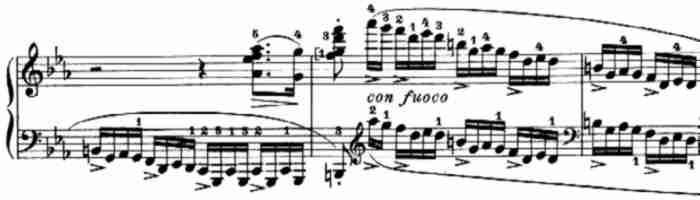
Besides Schumann, who else? What other notable composers have suffered with bipolar disorder? Ives, Tchaikovsky, Berlioz, Mahler, Saint-Saens, Rossini, possibly Beethoven and Mozart… and Ivor Gurney. Probably lots of others, too—ones whose renown has been narrower, or whose biographers have been less given to disclose behavioral issues.
Ivor Gurney (28-AUG-1890 - 26-DEC-1937) suffered from bipolar disorder—symptomatic during his mid-teens and leading to his first documented breakdown in 1913, followed by a major breakdown in the spring of 1918 after his service in WWI. He never had PTSD nor schizophrenia. Gurney did admit to lying about PTSD (Post-traumatic Stress Disorder; ‘shell shock’) on a pension application, and the ascription of PTSD to Gurney was perpetuated by Marion Scott in the Grove’s Dictionary of Music and Musicians entry on Gurney—in part because of the coherence of the ‘legend’ of Gurney qua WWI poet. But convenience and coherence of a fable doesn’t make the story true. As a result of alacritous repetition and plausibility, the PTSD label ‘stuck’ even though it’s spurious, and the psychiatrists’ diagnosis of Gurney’s condition, not as PTSD but instead as manic-depressive illness (now called bipolar disorder), is today little known. Gurney is arguably the greatest of the English World War I poets, and like the others of them, such as Edward Thomas whom he admired, he often contrasted the ‘populated’ horrors of war with the ‘de-populated’ pastoral beauty and tranquility of the Severn valley and other parts of his native English countryside.
I vor Gurney was a brilliant man who really suffered. It is a very touching and sad story. He had the same teacher as Arthur Bliss at the Royal College - Stanford - and he said that Gurney was the most brilliant of all of his pupils, and, bearing in mind Stanford taught a lot of the Twentieth Century British composers, including Herbert Howells and Walton, Gurney was a big thing at the Royal College. There’re lots of British composers who went through that system, but Stanford reckoned that Gurney was the most creative. He wrote a huge number of songs - I think it is something like 500 songs. Many of them are unpublished, and some of them do not really make very much sense, but some of them are absolute masterpieces. There is also a lot of chamber music that he wrote which has never really been performed. It is all sitting in a box in Gloucester City Library, in an archive. This particular piece that we are playing tonight dates from 1924. He was gassed in 1917. He came out of the Army, and he went into hospital, and then into a mental hospital. He then went back to the Royal College for a couple of years, and then went back to Gloucester, where he was from, very close to where Elgar lived and worked in Worcester, but he could not find any work. He had a total breakdown, and his family put him into a mental hospital. He ended up being transferred, in 1920, to the City of London Mental Hospital, which is in Dartford, and he died there in 1937 of tuberculosis. I am actually playing off a photocopy of his 1924 manuscript, and it is written in impeccably neat writing. The music seemed to just flow from his pen. It is not something that he spent days and days chewing over and crossing out and re-writing. It is something that just literally flowed out of his pen. But on the last page it says, ‘I am in agony’ at the bottom. So it is a very touching and sad story about him. But, what we hear in this music, which is great, is again in Gurney’s music this influence of Brahms and the German romantics, the influence of Elgar.”
— Thomas Kemp, Gresham College.

Listening to recordings of Ivor Gurney compositions recently, I was led to go look and see what, if any, new research there’s been on the connection between psychopathology and artistic creativity. And it turns out there’ve been some significant new studies, especially those by Terrence Ketter, Connie Strong, Cecylia Nowakowska, Claudia Santosa and colleagues at Stanford University.
In particular, the possible influences of bipolar disorder and other affective ‘mood disorder spectrum’ conditions on artistic creativity have been examined in detail—not just a handful of famous cases examined via stale correspondence and ambiguous biographical clues, but instead in more than 150 living subjects by performing detailed quantitative psychometric testing.

Ketter’s group has not studied any ‘quality-vs-quantity’ aspect of the creative output of the ‘highly creative’ subjects and the ‘healthy control’ subjects who were enrolled in the study. However, the controlled design of the study and the extent of the testing are impressive and novel. While assaying the character and qualities of ‘fruits’ of the artistic creativity are deferred until potential future studies, the new information about the nature of the cognitive and affective attributes that dispose an individual toward creating those ‘fruits’ is valuable in its own right. Participants completed the following well-established instruments:
- Revised NEO Personality Inventory (NEO-PI-R);
- Temperament Evaluation of the Memphis, Pisa, Paris, and San Diego Autoquestionnaire (TEMPS-A); and
- Temperament and Character Inventory (TCI).
- Barron–Welsh Art Scale (BWAS);
- Adjective Checklist Creative Personality Scale (ACL-CPS); and
- Torrance Tests of Creative Thinking – Figural (TTCT-F) and Verbal (TTCT-V) versions.
This landmark psychometric study is corroborative of the many retrospective studies by various researchers in the past—based on biographies of famous persons with high creative achievements, based on qualitative and uncontrolled psychiatric examinations of living writers and artists, based on individual examples of geniuses in the light of their mental status and work output correlations, and based on qualitative surveys of creative traits and skills in diagnosed psychiatric patient populations.

Ketter’s and other recent studies actually lead to some clear conclusions—ones that may positively influence how gifted creative people are treated. Beyond the practical experiences and informal impressions [regarding psychiatric correlates of artistic creativity] that have held sway for hundreds of years, the new scientific analyses indicate that psychopathological symptoms, especially those belonging to the family of bipolar mood disorders (bipolar Type I and II)—plus major depression and cyclothymia categories—do occur more frequently among productive professional writers, poets, visual artists and composers, compared to the rates in the general population.
Comparing to the general population, bipolar mood disorder is statistically more prevalent among composers and writers and artists. Ketter and coworkers do note, as others have done, that the cognitive and other psychological features of artistic creativity resemble many aspects of hypomanic symptomatology. They conjecture how bipolar mood traits might contribute to highly creative achievements in the field of art. At the same time, considering the risks, the need of timely, increased medical care cannot be discounted.
But, unlike many other authors, the Stanford team don’t write about these things from a perspective of backhandedly ‘medicalizing’ the creative condition and its psychiatric diagnostic correlates. They do not opine as to whether the smoldering suffering of gifted creative people should be medically treated. In a parallel and complementary way, neither do they opine that gifted people should be ‘under-treated’, as a means of deliberately optimizing the volume of their creative output or the intensity or affective quality of the works’ content and the innovative originality of it. That would be a matter for the individual and their family to decide—with autonomy, beneficence, nonmaleficence, distributive justice, and other ethical principles and paradigms as guides. Ketter and colleagues maintain a neutral stance as to the concomitant ‘endowment-plus-disability’ nature of creativity that derives from cognitive and affective abnormalities.
A paper last year by Zoltán Rihmer and colleagues at Pszichiátriai Osztály és Kedélybetegségek Szakambulanciája, Budapest, Hungary, likewise concludes that creativity is statistically associated with psychiatric conditions—specifically with affective, and more specifically with bipolar affective illness, and not with schizophrenia or other psychoses.
And, evidently, it isn’t the acute affective (depressive and manic) episodes that are important, but the interludes—the chronic hypomanic periods and the hyperthymic or cyclothymic temperament—that are the context for productive creativity.
This is important news! Regarding mood, an ‘inverted U’ notion has been proposed to characterize how there is a “sweet spot”—an optimum elevation of mood that facilitates creativity to a certain point. Lower mood levels or higher elevations of mood on either side of the “sweet spot” tend to have an adverse effect on creative productivity rates, on creative output amount, creative quality, and on cumulative achievement by the creative person as assessed by others perceiving the created works.
So, suppose you have these traits. Suppose, too, that your livelihood hangs upon your creative output, and you recognize from year-to-year observation of your own work output that there’s a positive correlation between your creative productivity and your hypomanic symptoms. In other words, suppose that you’ve discovered the shape of your own ‘inverted U’ curve. Maybe you’ve tried various medications—antidepressants in your depressed phases, and lithium or aripiprazole or other drugs in your acute manic phases.
Anecdotally, there is reluctance on the part of musicians to seek psychiatric help. This may be due to a misperception that the process of therapy and/or the medications that may be offered will impede the creative muse. More frequently I suspect the reluctance to access behavior health services has to do with financial constraints that the musicians and their families face.
The point of this blog post is this: How far would you go in avoiding care, in order to have more days per year in your “sweet spot”? How far would you go to finagle certain prescriptions that you find enhance your creative performance? In this age of EPO and anabolic steroids for athletes who have their own distinctive physical gifts and who are subject to certain societal and legal norms with regard to the use of performance enhancing measures, are there limits to what you would do—pharmacologically, say—to optimize your own [cognitive, affective, creative] gifts? How would you go about making and defending your choice?
T hanks to a few successes I managed to achieve, I have regained courage. And depression, which could intensify to the point of hallucinations and delusionary ideas, now seldom afflicts me.”
— Pyotr Ilyich Tchaikovsky, 28-MAR-1877 letter to Nadezhda von Meck, quoted in Neumayr, p. 242.
U nnatural and grotesque like the witch, humorally unbalanced like the melancholic or madman, these musicians gained power throught their innovations, simultaneously inciting audience fascination and revulsion.”
— Amanda Winkler, O Let Us Howle Some Heavy Note, p. 17.
B ut for the unquiet heart and brain,
A use in measured language lies;
The sad mechanic exercise,
Like dull narcotics, numbing pain.
In [words/notes], like weeds, I’ll wrap me o’er,
Like coarsest clothes against the cold:
But that large grief which these enfold
Is given in outline and no more.”
— Tennyson, In Memoriam, Sec. 5, Lines 5-12, p. 481.
T he ascription of genius is not inalienable but varies over the years with the number and fervor of one’s appreciators... Genius is not an attribute: it is a dynamic relationship between its possessor and society. It indicates, in a general way, what society expects of the genius and how society responds to that person... There are no unrecognized geniuses. A genius is, by definition, someone who is acknowledged as such.”
— D. Jablow Hershman, p. 7.
T he blocks and periods of inspiration that creative people experience are not simply similar or parallel to periods of depression and mania: they are the manifestations of depression and mania as they appear in the course of creative work.”
— D. Jablow Hershman, p. 12.
T he premise that bipolar disorder can provide specific advantages has been supported by Kretschmer, Brain, Andreasen, Fieve, and others. Assume that two people of equal talent graduate from a music conservatory with the intention of becoming composers and that one of them is a manic-depressive. The composer who works harder, has more ideas, is more original, and is also a perfectionist will produce greater, better output.”
— D. Jablow Hershman, p. 11.
I nspiration is neither the invariant starting point of the creative process, nor is it necessarily the most critical aspect, public testimonials notwithstanding. It has become important to assert this not only for scientific reasons, but also because erroneous notions about inspiration have in modern times led to an almost dangerous situation... Since drug-induced experiences seem to be similar in some ways to inspiration, it is assumed that drug experiences will produce creations. Inspiration refers to an intrinsically dramatic experience. It indicates more than the simple achievement of a good idea.”
— Albert Rothenberg, p. 39.
I t may be that Neuroticism/Cyclothymia/Dysthymia provides a creative advantage by increasing access to a range of affective experience... Despite its potential emotional and personal complications, the ability to experience unusually intense (Neuroticism) and varied (Cyclothymia) affects might propel innovation in talented individuals dissatisfied with the current status of art, science, or industry. In contrast, the cognitive flexibility associated with openness may be an asset not only for creative achievement but also for interpersonal relationships. Cognitive flexibility associated with openness permits subjects to better appreciate complexity and symmetry... Although openness was consistently correlated with creativity measures, it has also been related to mood swings... It is possible that increased Neuroticism and Dysthymia provide modest nonspecific affective creativity advantages for patients with both bipolar disorder and major depression, while the combination of this with Cyclothymia in bipolar disorder provides an additional or synergistic creativity advantage that allows the creativity in the bipolar group to exceed that of healthy controls.”
— Connie Strong, Cecylia Nowakowska, Claudia Santosa, Po Wang, Helena Kraemer, Terence Ketter; Journal of Affective Disorders, 2007.
A nd who loves Joy as he
That dwells in shadows?
Do not forget me quite,
O Severn Meadows.”
— Ivor Gurney.
O ut of my sorrow
have I made these songs,
Out of my sorrow;
Though somewhat
of the making’s eager pain
From Joy did borrow.”
— Ivor Gurney.
- Strong C, Nowakowska C, Santosa C, Wang P, Kraemer H, Ketter T. Temperament-creativity relationships in mood disorder patients, healthy controls, and highly creative individuals. J Affective Disord 2007; 100: 41-8. [1MB pdf]
- Santosa C, Strong C, Nowakowska C, Wang P, Rennicke C, Ketter T. Enhanced creativity in bipolar disorder patients: a controlled study. J Affect Disord 2007; 100: 31-9. [1MB pdf]
- Terence Ketter, Professor & Chief, Bipolar Disorders Clinic, Stanford Univ Dept of Psychiatry.
- Chamber Domaine. Music from the Western Front. Gresham College, Holborn, London, U.K., 26-SEP-2007.
- Ivor Gurney Society U.K.
- Ivor Gurney Society U.S.
- Bibliography of Ivor Gurney scores
- DSM. Zehetmair Quartet’s Schumann. CMT, 11-NOV-2007.
- Gurney I. The Springs of Music. Musical Quarterly 1922; 8: 319-22.
- Anon. A Creative Edge. Ouch!: BBC Disabilities Blog, 27-AUG-2007.
- _______. Songs in the Key of Z, Vols. 1-2. (CherryRed, 2005.)
- Bacic J. Music and medicine team up in diagnosing the mind of a master. Canadian Psych Aujourd’hui 2007; 3: 2-5.
- Bebbington M. Piano Music by Ivor Gurney & Howard Ferguson. (Somm, 2005.)
- Bradley R, Harris A, Jenner P, eds. Neurobiology of Painting. Academic, 2006.
- Chusid I. Songs in the Key of Z: The Curious Universe of Outsider Music. Chicago Review, 2000.
- Drake J, Agnew P. Severn Meadows: Songs by Ivor Gurney. (Hyperion, 2001.)
- Ferguson S, ed. Temporal Lobe Epilepsy and the Mind-Brain Relationship: A New Perspective. Academic, 2003.
- Fineberg J. Classical Music, Why Bother?: Hearing the World of Contemporary Culture Through a Composer's Ears. Routledge, 2006.
- Frey D. Creativity and Mental Illness: Is there a link between the two>? NY CityVoices, April/June 2004.
- Fruhwirth D, Sigfridsson H. Trails of Creativity 1918-1938 -- Music from between the wars, Vienna-London-Berlin 1918-1938. [Gurney, Scherzo.] (Avie, 2004.)
- Gouk P, Hills H, eds. Representing Emotions: New Connections in the Histories of Art, Music, and Medicine. Ashgate, 2005.
- Hershman D, Lieb J. Manic Depression and Creativity. Prometheus, 1998.
- Jamison K. Touched with Fire: Manic-Depressive Illness and the Artistic Temperament. Free Press, 1996.
- Jamison K. An Unquiet Mind. Knopf, 1995.
- Jamison K, Winter R. National Symphony Orchestra: Works by Five Manic-Depressive Composers, NOV-1988.
- Kavanagh P, ed. Selected Poems of IVor Gurney. Oxford Univ, 1990.
- LaPlante E. Seized: Temporal Lobe Epilepsy As a Medical, Historical, and Artistic Phenomenon . Harper, 1993.
- Leonard S, Veira J, Martineau M. A Century of English Song, Vol. 3. (Somm, 2006.)
- Ludwig A. The Price of Greatness: Resolving the Creativity and Madness Controversy. Guilford, 1996.
- Miklowitz D. The Bipolar Disorder Survival Guide: What You and Your Family Need to Know. Guilford, 2002.
- Nettle D. Strong Imagination: Madness, Creativity and Human Nature. Oxford Univ, 2001.
- Neumayr A. Music and Medicine Volume 3: Chopin, Smetana, Tschaikovsky, Notes on Their Lives, Works, and Medical Histories. Medi-Ed, 1997.
- Pickover C. Strange Brains and Genius. Harper, 1999.
- Plummer P, Vale N. Love's Voice. (Somm, 2007.)
- Rosen P. Richard Kogan: Music, A Window to the Soul. Education Update, AUG-2003.
- Rihmer Z, Gonda X, Rihmer A. Creativity and Mental Illness. Psychiatr Hung. 2006. 21:288-94.
- Zoltán Rihmer contact info at OPNI, Budapest, Hungary.
- Rothenberg A. Creativity and Madness: New Findings and Old Stereotypes. Johns Hopkins Univ, 1994.
- Runco M, Richards R. Eminent Creativity, Everyday Creativity, and Health. Ablex, 1998.
- Sandblom P. Creativity and Disease: How Illness Affects Literature, Art, and Music. 12e. Marion Boyars, 1995.
- Shaw M, Runco M. Creativity and Affect. Ablex, 1994.
- Sternberg R, Kaufman J, Pretz J. The Creativity Conundrum. Psychology Press, 2001.
- Storr A. Dynamics of Creation. Ballantine, 1993.
- Szegedy-Maszak M. The Sound of Unsound Minds: Interview with Psychiatrist-Pianist Richard Kogan. U.S. News & World Report. 05-JAN-2003.
- Terfel B. A Song in My Heart. (The "Elizas" - Elizabethan Songs for Voice & Piano: No. 4: Sleep) (Deutsche Grammophon, 2007.)
- Tubiana R, Amadio P, eds. Medical Problems of the Instrumentalist Musician. Informa, 2000.
- Weeks D, James J. Eccentrics: A Study of Sanity and Strangeness. Kodansha, 1997.
- Weiner R. Creativity and Beyond. SUNY, 2000.
- Williams R, Allan S. Severn & Somme. (Somm, 2007.)
- Winkler A. O Let Us Howle Some Heavy Note: Music for Witches, the Melancholic, and the Mad on the Seventeenth-Century English Stage. Indiana Univ, 2006.
- Wright T. Creativity and Bipolar Disorder. Med Problems Perform Art 1997; 12: 82-9.
- York G. 'The cerebral localization of creativity,' in Rose F, ed., Neurology of the Arts. Imperial College, 2004, pp. 1-11.
- American Soc for Suicide Prevention website. Creativity and Depression.