T he new recording of Gene Pritsker’s ‘William James’s Varieties of Religious Experience: A Chamber Opera’ is beautiful—musically and dramatically.
W illiam James was fascinated by what he termed our ‘selective interest’—our harmoniously adjusting ourselves to things seen and unseen. In the sea of evolving, conflicting stimuli in which we are immersed, we pay attention to a small subset of things... mostly things that match our predispositions and expectations: our interests and beliefs. A renowned psychologist and pragmatist and empiricist philosopher, James in the late 19th Century set about to assemble evidence that could reveal whether and how experiences that are gated by interests and beliefs in things unseen can catalyze positive changes in people—especially when people attach symbolic or emotional/spiritual importance to the experiences. “Explore the peculiarities of this attitude... All our attitudes... are due to the objects of our consciousness... the things we believe to exist. We feel a presence in the room... definitely localized... coming suddenly, and suddenly gone... I felt myself to be the less ‘real’ of the two...”
I n VRE (p. 55), James says “so far as religious conceptions are able to touch this reality-feeling [of objective presence of the Other] they would be believed in spite of criticism, even though they might be so vague and remote as to be almost unimaginable... even though they might be such non-entities in point of ‘whatness’...”
Gene Pritsker, guitar
Greg Baker, guitar
Dan Barrett, cello
Larry Goldman, contra bass
Lynn Norris, soprano
Chanda Rule, mezzo soprano
Marc Molomot, tenor
Charles Coleman, baritone
Chester Layman, narrator
Kim Pritsker, narrator
D elicate, taut, and incisive writing. Beautiful interplay between instruments and voices, between the rhythm/melodies/harmonies and the text. ‘Synaptic’ guitar picking; a really elegant solo improvisation on Track 5.
T he guitars-cello-bass instrumental ‘presence’ pervades the whole—this fact plus the fact that the voices in the foreground are so crisp and tangible make it seem as though the instrumental parts must collectively be ‘God’. But then the timbre of the voice changes, and I’m doubting that my sense of that was right. Maybe this is sonic evidence for some sort of pantheism? Everything is divine... everything that’s not being deceptive, anyway.
P ritsker’s ‘William James’s VRE’ is not a contemporary event-centric historical opera per se (not a “headline opera” about a famous historical figure and a famous moment in history, a la John Adams’s ‘Doctor Atomic’, on J. Robert Oppenheimer and the Manhattan Project to create the atomic bomb). Sometimes event-centric works feel too self-referential—‘program music’ or a suite of ad hoc ‘concept’ compositions that are too overtly seeking adherents.
T his chamber opera is not like that. It’s far too unpredictable! It does, though, share with historical operas an attractive ‘topicality’ in terms of (a) dramatizing interrelated subjects (spirituality; religion; multiculturalism; tolerance) that have plenty of currency these days and (b) grounding these in the life of one well-known historical protagonist.
I really admire the judicious excerpting of William James VRE texts for this libretto! Attention to the unbiddenness of how we recall things: verses, that bubble up in our minds, contrary to our ambitions or plans.
M any passages from James’s book (VRE) are dense and literary: the sentence structure was meant to be read by readers of 100+ years ago. When spoken aloud in this opera, these words engage our minds in provocative ways that highlight the finiteness of our attention as well as the alienness of the century-ago culture that produced the notions in VRE. Our relation to the music that is being performed while the voice-over narration is going on is altered, far more than happens in ‘conventional’ opera.
W hat’s more, some of the narrators/texts are more ‘reliable’ as narrators than others. Each is clearly earnest in his/her own way, and yet some of them make statements that are more accessible or less accessible to us, given our own beliefs and style and inclinations/disinclinations to share our feelings in ways that resemble what the narrator is doing. Listening to these different narrators/singers, we’re led to recognize more of what we ourselves are doing: selectively filtering, giving and getting, allowing and forbidding.
T he opera and the ‘arc’ of the 8 tracks of the recording ably convey dramatic tension of setting out on a journey to explore the diversity of spirituality; of encountering many instances and types of experience; of empirically assessing each of these; and finally integrating and summarizing what we’ve found out.
T he 43-min performance time is just sufficient to develop the ideas and the ambience and characterizations, and bring things in for a satisfying “landing”.
T he sound has warmth and intimacy throughout, perfectly matched to the subject and content. Beautiful performances by all, plus excellent engineering and production values on the recording.
I ’m uplifted by this new Pritsker CD—impressed by the authenticity of music that “had to come out”, had to be composed, had to exist. There is a wonderful ‘meta-meta’ aspect to the work as well. It is as though Pritsker has created a sonic picture of ‘William James’s Red Mood’ (see Arthur Danto’s famous book of 30 years ago, link below)—plus a further picture, an abstract minimalist exemplar of geometrical art which happens to be lush and sensuous and red and pulsating—plus yet a further picture, a metaphysical painting based on the fact that James knew the Nirvanic and Samsara orders are identical and that the Samsara world is fondly called the Red Dust by its deprecators.
J ames near the end of VRE says “Religious mysticism... is much less unanimous than I have allowed... It is dualistic in Sankhya and monistic in Vedanta” (VRE p. 336). He maintains that, rather than being adversarial or conflictual, the varieties of spiritual experience can in fact be harmonious with each other... there can be rapproachment between individuals and religions that hold what appear to be incompatible ‘over-beliefs’. James says that this can be done by looking to everyday feelings and to everyday acts—however unplanned and discordant with ambitions and ideologies as they may be—looking to these as comprising the essence of real religion (VRE p. 397).
T his opera by Gene Pritsker honors that Jamesian notion. The opera—and this recording—are a welcome invitation to self-discovery, to mutual respect and tolerance for the spirituality (or lack thereof) of others, and to joyous, mindful living in community. Look for the CD when it’s released in February. Very worth your listening!
R eligion...is a person’s total reaction upon life.” — William James, ‘Varieties of Religious Experience’, 1902.
A genuine first-hand religious experience like this is bound to be a heterodoxy to its witnesses, the prophet appearing as a mere lonely madman. If his doctrine prove contagious enough to spread to any others, it becomes a definite and labeled heresy. But if it then still prove contagious enough to triumph over persecution, it becomes itself an orthodoxy; and when a religion has become an orthodoxy, its day of inwardness is over.” — William James, ‘Varieties of Religious Experience’, 1902.
Y ou will enjoy and be inspired by the new recording by guitarist/composer Gene Pritsker and his ensemble, SoundLiberation.
Gene Pritsker, electric guitar
Greg Baker, electric guitar
David Gotay, cello
Mat Fieldes, double-bass and electric bass
Joe Abba, percussion
T he original chamber opera from which this VRE Suite derives was orchestrated for narrator, tenor, soprano, mezzo soprano, baritone, 2 guitars, cello, and double-bass.
[50-sec clip, SoundLiberation Ensemble, Gene Pritsker, Varieties of Religious Experience, ‘Everything Else Might Be a Dream’ (track 3), 2010, 1.6MB MP3]
T he Suite progresses in 8 tracks (64 min) from ‘Introduction’, a musical exposition of William James’ early views on psychology of religion, through James’ subsequent reconsiderations of his thought (‘Closer to Me than My Own Breath’, track 5), to an account of Tolstoy’s spirituality, to William James’ “conclusion” (track 8). There are myriad textures here that invite meditation. Accessible, stimulating chamber music throughout—although I do hope someday to experience the VRE opera. The theatrical gestures in here make me curious about the VRE libretto and staging. What texts did Pritsker choose, I wonder?
T he last peculiarity of consciousness to which attention is to be drawn in this first rough description of its stream is that it is always interested more in one part of its object than in another, and welcomes and rejects, or chooses, all the while it thinks.” — William James, ‘Principles of Psychology’, 1890.
M any of the published reviews of Pritsker’s work note that he challenges musical boundaries. Uh, yes he does. Exceptionally curious and inclusive rather than aggressive or confrontational, Pritsker and his collaborators explore passionate new expressions based on jazz, world rhythms, machine rhythms, lyricism, and the spirit.
W hat interest, zest, or excitement can there be in achieving the right way, unless we are enabled to feel that the wrong way is also a possible and a natural way?” — William James, ‘Dilemma of Determinism’, 1884.
T he VRE Suite is full of tasteful improvisation, sturdy melodies and voice-leading, strong ‘grooves’. Mystical it may be, but VRE Suite is far from ‘enigmatic’. It positively asserts that your cosmic, mystical experience is as genuine as my mystical experience; or as genuine as that of any organized religion.
R eligion, therefore, as I now ask you arbitrarily to take it, shall mean for us the feelings, acts, and experiences of individual men and women in their solitude, so far as they apprehend themselves to stand in relation to whatever they may consider the divine.” — William James, ‘Varieties of Religious Experience’, 1902.
A ccording to theists’ Argument from Religious Experience, people have “religious experiences” — mystical or supernatural experiences, like angels or ghosts. Theists say that, because we believe other experiential claims people make — that they ate spaghetti last night, or they have a pet cat — then we should believe these claims as well. Theists say that, when skeptics insist on different, more stringent standards for assessing the veracity of claims based on religious experiences than they do for claims based on other experiences, they are prejudiced against religious claims. This prevents them from understanding and believing. William James entertained this argument in his Varieties of Religious Experience. He proposed that all normal persons do have religious experience and, since empirical experience is the final arbiter of truth, then God—as one object of religious experiences—must be accepted as factually true. A problem, though, arises in the variety of religious experiences: if there were just one true God, why is there such wide variety in religious experiences? They are mutually inconsistent, so at least some experiences must be false. There are no independent criteria we can use to separate true experiences from false experiences — not only others’, but our own. There are no independent criteria; there can be no independent criteria; all criteria rely upon the validity of some religious system, a Bible or the Koran, or some other sacred text—some of them, or all of them, must be false.
R eligions have approved themselves; they have ministered to sundry vital needs which they found reigning. When they violated other needs too strongly, or when other faiths came which served the same needs better, the first religions were supplanted.” — William James, ‘Varieties of Religious Experience’, 1902.
F or any who are unfamiliar with William James (1842-1910), I should point out that James was not a Christian. He was religious in his own way, but he was hardly a monotheist. William James published his ‘Varieties of Religious Experience’ in 1902 and, subsequently, many theists have taken bits of his writings out of context to support their arguments. But at bottom James was a Rationalist, and he did not believe in a personal God who enters history or personally responds to people’s prayers. Gene Pritsker’s VRE Suite likewise evokes a diverse range of spirituality while broadly extending respect and tolerance to all forms.
A n act has no ethical quality whatever unless it be chosen out of several all equally possible.” — William James, ‘Principles of Psychology’, 1890.
P ritsker offers a unique look at trans-textual relationships between the poetic text and musical text; between the chamber music creative tradition and new ways of crossing boundaries of genres and orchestration; between the Western canon of chamber music thought and non-traditional, jazz-derived ways of intimacy; and between the ideology of chamber for chamber’s sake and the opposite: the ideology of chamber musicians’ active ethical engagement in, and attention to, social issues.
T he total possible consciousness may be split into parts which co-exist but may mutually ignore each other.” — William James, ‘Principles of Psychology’, 1890.
Chamber operas are a good example of new “ideological,” stylistic and technological approaches to composition. They are emblematic of a transition from musical thinking that was orthodox and conservative to more heterodox, multi-layered forms.
T he Hell to be endured hereafter, of which theology tells, is no worse than the hell we make for ourselves in this world by habitually fashioning our characters in the wrong way.” — William James, ‘Principles of Psychology’, 1890.
P ritsker uses isorhythmic patterns in the first several tracks, retrogrades in ‘The Less Real of the Two’, and allusions to the rondo form in ‘William James’ Conclusion’.
G enius, in truth, means little more than the faculty of perceiving in an unhabitual way.” — William James, ‘Principles of Psychology’, 1890.
T he predominant texture in the VRE Suite is ‘pointillistic’ and tense, but not in the acoustic sense of guitars or pizzicato passages in the cello or double-bass. VRE Suite is organized through a contrapuntal juxtaposition and alternation of single notes, short gestures, and gestural ‘units’ that are based on certain ‘privileged’ pitches and intervals and chosen beat-divisions. Complex linear constructs are mostly melismas—especially exposed in the guitars, but also in the cello part.
T he transition from tenseness, self-responsibility, and worry, to equanimity, receptivity, and peace, is the most wonderful of all those shiftings of inner equilibrium.” — William James, ‘Varieties of Religious Experience’, 1902.
I t is interesting that in the first parts of the Suite the individual notes and gestures are distributed across the whole available range in each instrument, with emphasis given to irregular, “nervous” rotations of leaps and step-wise motion. A kind of self-less, anonymous, transcendent texture emerges as a result. Such an approach has a lot to do with post-serialist compositional methods, even if Pritsker would be happier to disavow this.
I ntegrity—a unified/unifying collective voice that is robust against the ensemble members individuality and rhythmic complexity—is assured by a technique based on manipulations of similar timbral and gestural units (motives, minimalistic ones or otherwise). The groups of repeated units establish a sonic architectural continuum and create a durable terrain governed by intervals and timbres of desire between consenting adults.
R omeo wants Juliet as the filings want the magnet; and if no obstacles intervene he moves towards her by as straight a line as the filings. But Romeo and Juliet, if a wall be built between them, do not remain idiotically pressing their faces against its opposite sides like the magnet and the filings. Romeo soon finds a circuitous way, by scaling the wall or otherwise, of touching Juliet’s lips directly. With the filings the path is fixed; whether it reaches the end depends on accidents. With the lover it is the end which is fixed; the path may be modified indefinitely.” — William James, quoted by Mortimer Adler.
B eyond the ‘Introduction’, VRE Suite becomes more and moredialectical, but in a good way. Gestures of disparate provenance react against each other, animating each other not killing each other off, bringing passages to life (?reincarnating them). The gestures (revealed by guitars, cello, and drums) alternate against a double-bass ostinato. There is much joy and comfort to be had in this...
P ritsker’s use of unusual cello-electric guitar timbres should be considered from a psychological rather than a technological point of view. “Technical” in nature, these timbres intensify the poetic metaphor or enhance the emotional power the music exerts on us, inscribing us, carving us as it goes...
W e are spinning our own fates, good or evil, and never to be undone. Every smallest stroke of virtue or of vice leaves its never-so-little scar.” — William James, ‘Principles of Psychology’, 1890.
I n James’ writing, Pritsker has found a congenial source of conceptual and artistic inspiration. William James himself embodies the contradiction of a spiritual man and rationalist. There is something of the prophet as well as a “martyr” in him, despite his wealth and Harvard credentials and social standing... He was aware of the necessity to combine intellectual effort with social intervention and his own convictions. His writings are humorous, perhaps inadvertently so. His entirely serious meanings are embedded in an “innocent”, “childish, “naïve”, “life-is-short-so-what-the-hell” surface. His psychological writings amount to an exotic kind of poetry influenced by folk literature, supernatural beauty, pain of life, and religion.
T ake the happiest man or woman, the one most envied by the world, and in nine cases out of ten his/her inmost consciousness is one of failure. Either his/her ideals in the line of his/her achievements are pitched far higher than the achievements themselves, or else he/she has secret ideals of which the world knows nothing, and in regard to which he/she inwardly knows himself/herself to be found wanting.” — William James, ‘Varieties of Religious Experience’, 1902.
T he complexity of James’ poetic texture and his multi-spectral style must appeal deeply to Pritsker. It is amazing how masterfully Pritsker explored the opportunities offered by James’ poetic vocabulary.
P ritsker’s compositions (including chamber music, chamber operas, electroacoustic and orchestral works, rock, and hip-hop) have been performed widely (Berlin Philharmonic; Adelaide Symphony; Brooklyn Philharmonic; Athens Camerata; and others). He has also collaborated with Joe Zawinul on film scoring projects.
C reatures extremely low in the intellectual scale may have conception. All that is required is that they should recognize the same experience again. A polyp would be a conceptual thinker if a feeling of ‘Hello! Thing-um-a-bob again!’ ever flitted through its mind.” — William James, ‘Principles of Psychology’, 1890.
I believe that we stand in much the same relation to the whole of the Universe as our canine and feline pets do to the whole of human life. They inhabit our drawing rooms and libraries... They are tangent to curves of history the beginnings and ends and forms of which pass wholly beyond their ken. Just so, we are tangent to the wider life of things.” — William James, ‘Pragmatism: A New Name for Some Old Ways of Thinking’, 1907.
Michael Smetanin’s ‘Obsession’ for tenor saxophone, electric guitar, cello, double bass, piano, and drumkit (1995)
Irinel Anghel’s ‘El Enigmes II’ for electric guitar, cello (with processing), bass guitar, and tape (2001)
James Tenney’s ‘Septet’ for 6 electric guitars and bass guitar (1981)
Salvatore Macchia’s ‘Onde’ for double bass and guitar (2000)
Brian Ferneyhough’s ‘Trittico per G.S.’ for double bass (1989); Seven ‘Tableaux Vivants’ depicting the Angel of History as Melancholia; Stelæ for Failed Time)
T he melodies themselves go from sound to sound, but the internals are empty abysses—because the notes are lacking in sonic energy. The inner space is itself empty.” — Giacinto Scelsi.
T he ways that the organ emulates the human voice are familiar enough. But minimalist, textural compositions can lead us to re-examine what is the voice, what is the self? Exhibit “A”: Christoph Maria Moosman’s 2009 recording (link below) of pieces by Giacinto Scelsi, Arvo Pärt, and John Cage.
[50-sec clip, Christoph Maria Moosmann, Giacinto Scelsi, ‘In Nomine Lucis’, 1974, 1.6MB MP3]
T here are sudden variations in the dynamics and texture, giving a sense of suppleness and surprising vitality. The beat-frequencies of minor seconds leave impressions of quarter-tones. Frequently there appear string-like vibrato effects and pulsations within a single tone. These qualities mimic ‘vocal’ improvisations—things that piano and other instruments simply could not do. It isn’t plausible that Scelsi created these improvisations with certain ‘models’ in mind, even ‘ritual music’ of Tibetan Buddhism.
T he creation of music is an event full of differentiation and multiple transfers. The composer intuits something ungraspable, as yet not definable and gives it a sort of shape. The result, the musical score, isn’t music yet, is not audible yet. If a person is able to imagine the soundscape that is hidden in a sheet of music, to ‘hear’ in his/her mind the sound and rhythms as yet to be expressed by instruments, then that person is capable of a feat that hardly anyone can master. We are utterly dependent on mediators who transform the visible-but-not-audible sheet of music into an audible-but-not-visible music.” — Christa Maysenhölder.
W e might naturally assume that, if Scelsi was deliberate in his improvisations, he must have had some plan or sketch or idea of what he was aiming to create. Yet this ‘In Nomine Lucis’ and other pieces lead us to suspect otherwise: the music generates itself, its own form, its own trajectory. We know that it is the product of human creative activity, but it is, despite this, more like a natural object, a stream, a branch of a tree, moving but subjectless.
A fter Scelsi’s improvisations were recorded, he typically had collaborators help him realize and notate the final product: Scelsi believed that the processes of transcription and notation were not jobs for the ‘artist’ but should be instead given over to ‘craftsmen.’ He collaborated with various trusted friends and colleagues—Roman Blood, Sergio Caferro, Alvin Curran, Frances-Marie Uitti, Vieru Tosatti, others. Third-party transcription as a fundamental part of his method: Scelsi’s compositions feel even more ‘organic’ or more distanced from the composer on account of this.
F or me, this evokes the same sort of distancing or suspense that we feel when we hear laryngectomees using electrolarynx prostheses. The pitch and timbral variations that TruTone™ and Servox™ and other digital prosthetic devices are now capable of are considerable. But their nuances are still inevitably less than the natural voice would have. The prostheses embody restrictions, road-blocks, performance risk.
A nd these features lead us to discover in the boundaries-pushing, constraints-challenging, indomitable performance under duress: new dimensions of the person—of the ‘subject’, of embodiment, of ensoulment in the living body.
A t the end of the nineteen-fifties, Giacinto Scelsi, a self-taught Italian composer and erstwhile playboy Count who had dabbled in Eastern religions and Theosophy, had the extraordinary idea of writing an entire work—the ‘Four Pieces’ for chamber orchestra—that consisted of only single tones, one for each movement. Scelsi was not the first to hit on this concept: Elliott Carter had ventured it in his ‘Eight Études and a Fantasy’ in 1950. Nor is the scheme followed literally—the instruments often bend away from the parent note, shifting by microtones, semitones, or larger intervals. But by the end of the work a paradigm shift has taken place: the Tone is all-powerful once more. Music returns to its primitive origins: melody formed from noise.” — Alex Ross.
C hristoph Maria Moosmann was born in 1960 in Riedlingen, Germany. He studied Catholic Church Music at Freiburg Conservatory and subsequently studied for the Kapellmeister diploma in Basel and Zurich. From 1982 to 1988 he was organist at University Church in Freiburg and Artistic Dirctor of Musiktage at University of Freiburg. From 1988 to 1994 he served as organist of the City Church in Wil, Switzerland, and since 1995 he has been the principal organist of the Church Maria Frieden in Zurich-Dubendorf.
Co•na•tiv•i•ty (kō-nā-tiv'-ə-tee) n. The aspect of mental processes or behavior directed toward change, including impulse, desire, volition, and striving.”
To-date, the analytical attention that’s been paid to Fibonacci series and other mathematical constructs in the compositions of Sofia Gubaidulina (София Асгатовна Губайдулина) has mainly concerned the role of mathematics in devising her melodies and harmonies and in guiding her voice-leading. Actually, it’s unclear whether Sofia actually uses the words ‘numerology’ or ‘gematria’ in discussing her own compositional methods. Her methods are in any case deeply associated with her Russian Orthodox religious beliefs and spiritual practices.
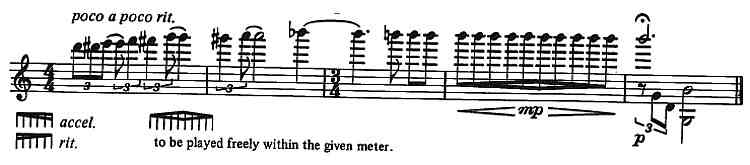
But besides the mathematical origins of her choices of pitches, she also creates ‘ambient’ fields of multi-rate polyrhythms that are based on the recursive Fibonacci and other mathematically derived series. Becomingness. ‘Change we can believe in,’ to borrow a phrase from the just-completed political election process in the U.S. I’ve recently been exploring recordings of Gubaidulina’s compositions, to discover Fibonacci-accelerando and Fibonacci-ritardando patterns—rhythmic counterparts to her number-theory-based polyphony. This CMT post is meant to tell you a little about what I am finding so far.
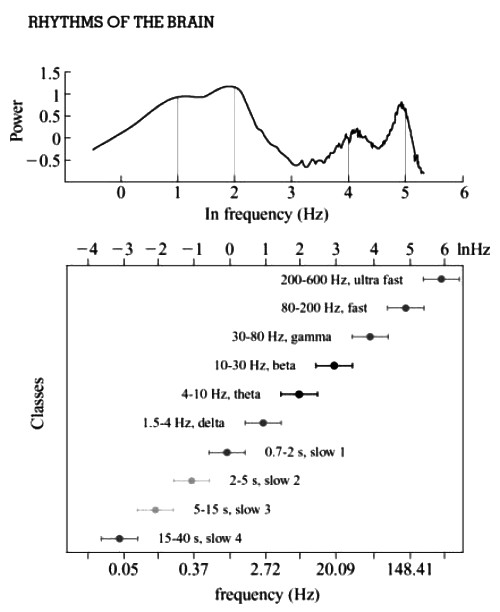
T hree hippocampal rhythms: theta rhythms (4-10 Hz), gamma rhythms (30-80 Hz), and a fast oscillation (140-200 Hz). These rhythms are independently generated; we have observed that gamma oscillations persist without theta and compete with fast oscillation... There is a definable relationship among all brain oscillators: a geometric progression from band to band with a roughly constant ratio of e— the natural (Naperian) logarithm. Since e is an irrational number, the phases of coupled oscillators of the various frequency bands will vary on each cycle forever, resulting in nonrepeating, quasi-periodic, or weakly chaotic pattern: this is the main characteristic of the EEG. [But] why are there so many oscillators [in the brain]? Why can the brain not use a single, fixed-frequency clock for all of its computing functions? There are multiple answers to these questions... Once a slow oscillator appeared in simple animals, faster ones could be added as needed in subsequent evolutionary stages [for controlling functions on faster timescales]. We observe the continued coexistence of all of those independent clocks in the neurophysiology and neuroanatomy of brains today. The brain is not like a single, precise, fast clock and time-division [to produce a series of slower clock rates from the fast master clock] as is seen in digital computers. [‘Intelligent Design’ zealots notwithstanding,] the human brain did not appear de novo. The myriad independent clocks are the residue of evolution of the brain over many millennia. There is extra resilience and survival fitness that comes from the multiplicity of biological clocks, from the N-fold redundancy” — Gyorgy Buzsaki, Rhythms of the Brain, p. 113.
O nce the hippocampus has been primed by stimuli that come down the perforant pathway, its own subsequent responses are greatly enhanced. Three seconds after granule cells in the hippocampus receive their first priming burst from above, they open up the ‘gates’. They transmit impulses much more efficiently across their synapses. This enhancing effect rises to its peak 15 to 20 seconds later. What is the most effective rate at which to deliver these brief trains of potentiating stimuli? Stimulating at the natural theta frequency: 5-7 Hz. Why is the result called ‘long-term potentiation’? Because transmission remains increased for as long as three weeks after the stimulation. Where does the theta rhythm come from? Chiefly from the medial septal region. Medial septal cells are ‘pacemaker’ cells. Their temporal pattern of acetylcholine release drives theta rhythms throughout the hippocampal formation.” — James Austin, Zen and the Brain, p. 181.
Since the 1980s Gubaidulina’s work has been deeply informed by her Orthodox faith and her ‘zahlenmystik’, or the use of gematria, numerology, mystical mathematical formulae such as the Fibonacci series and the Golden Ratio. Sofia began to use the Fibonacci sequence as a way of structuring the form of the work. The sequence was especially appealing because it provides a basis for composition while still allowing the form to ‘breathe’—the naturalism referred to above. It plays a prominent role in such pieces as ‘Perception’, ‘Im Anfang war der Rhythmus’, ‘Quasi hoketus’ and the symphony ‘Stimmen... Verstummen...’ ). Later the Lucas series and Evangelist series, sequences derived from that of Fibonacci, were added to her repertoire. These compositional devices and effects are easiest to study in Gubaidulina’s chamber works.
There’s a naturalness ... an innate and almost inevitable quality to Gubaidulina’s rhythmic structures. The proportions of the durations and the statistical distributions of the durations of notes feel like ratios and distributions that we are deeply familiar with from phenomena that occur in Nature. When things ‘wind-up’ toward a climax in a Gubaidulina composition, they wind-up in the manner that we see when gravity accelerates a falling object. When things ‘wind-down’, they wind-down in a progressively diminishing pace that we see in dissipative processes in Nature. The music of Sofia Gubaidulina imparts a distinct impression that it complies with the Laws of Thermodynamics and other physical principles. Mass and Energy are conserved, neither created nor destroyed in the course of performing the music. Entropy increases slightly from the beginning to the end of each piece. It can be measured, if you are inclined to do so. But even if you don’t measure it, you feel it. The Universe is proceeding as it should.
Apart from the Orthodox spirituality that Gubaidulina intended to confer on her compositions, all listeners can at least apprehend the ‘organic’ cosmology that her compositional designs embody—the internal consistency and balanced energy and entropy budgets.
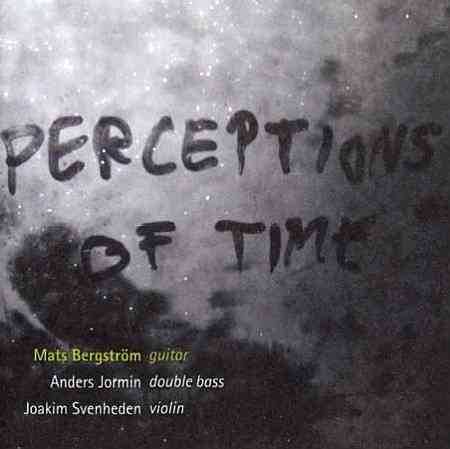
Okay. Measure it? Sure. Take one of her simpler pieces, like ‘Serenade’—the Swedish guitarist Mats Bergström (jpeg above) has a nice recording of this piece. It’s clear and the polyphony and rhythmic complexity are not too daunting. The Gibbs-Shannon entropy of a random variable that takes on values i with probability pi is defined as:
If the rhythmic lines’ clock-rates are arranged so as to be Poisson-distributed, then the entropy of the Poisson distribution is given in terms of an infinite sum:
where λ is the time-constant of the distribution. For long values of λ, the asymptotic form of this expression is:
Or, in a slightly different formulation, the Renyi entropy of order α where α varies between 0 and 1 is defined as:
Obviously, if a composer sticks scrupulously to a mathematical construct in devising rhythms and orchestration, the result may be too complex to be playable. So there are compromises and simplifying decisions to make—collapsing the complexity into something that retains the feel of the programmatically-generated structure but omits things that inject too much variability or impose cognitive demands that are excessive. There’s a need to write forms that support ‘mutual entrainment’ of the disparate rhythms, re-syncing them on some regular basis. I try computing statistical copulas, to do multivariate measurement of synchronization/association between clocks...
C ommunities of Clocks... ‘Mutual entrainment’ is a theme that recurs again and again throughout the physiology of coupled rhythmic systems... [The systems’] ‘phase-scatter’ is altered in proportion to the derivatives of new clock-phase with the old phase and the magnitude of the perturbing stimulus, as characterized by the following differential equation: — Arthur Winfree, The Geometry of Biological Time, p. 119.
Based on my measurements thus far, it looks like Gubaidulina’s ‘Fibonacci N-tuplets’ (? Fib-tuplets) and other rhythmic figures are hard for humans to play in a perfectly Fibonacci-timed way. With the note-durations normalized to the duration in milliseconds of each N-tuplet, the 10:3, 11:3, and 12:3 Fib-tuplets in ‘Serenade’ have as-written theoretical Shannon entropies of -2.06, -1.78, and -1.58, respectively.
As performed by Bergström, we get average values of -2.11, -1.85, and -1.72——entropy values slightly lower (more ‘ordered’) than the theoretical as-written values, owing to the [neurophysiology of entrainment that gives the--] plateauing of durations in the middle. (N-tuplets comprised of notes of perfectly identical durations would have Shannon entropies of -2.30, -2.18, and -2.07, for the 10:3, 11:3, and 12:3, respectively.) Interesting...
The ‘clocks’ in our brain that control our muscle function evidently tend to rush the accelerando beginning and ritardando ending just a little, and have a rate ‘plateau’ in the middle where the durations of the notes do not change as much from note-to-note as they should if they were strict, perfect Fibonacci.
It’s just how we're ‘built’, part of our innate physiology—beyond our interpretive control, really. What Gubaidulina reveals in these Fib-tuplets is a boundary between our humanity and our animality; between our conscious, sapient nature and our unconscious, instinctual nature; between things under our control and things that are beyond the possibility of human mastery. It is a fine and beautiful thing she does, reminding us performers and listeners of these things—we are stewards, not owners, of our mortal, animal bodies; we should be mindful of other animals with whom we share the planet; and so on. The Fib-tuplets induce a rhythmic meditation on humility, a spiritual posture that is receptive to grace... Have a listen to the MP3 clip below and you will see what I mean.
And the spiritual effect of these naturalistic, physiologically propelled rhythmic structures is what I would say is this: ‘instantaneous epiphanies’ during neural pulse-entrainment. Maybe not on the first performance or the first casual listening. But if you do these pieces with intensely focused repetition, as part of a meditative practice? Wow! How long does an epiphany take to reach? And, once arrived, how long does the moment last? Try it and see!
So Gubaidulina’s music can induce dramatically altered perceptions of time, and transport the listener or performer to ecstatic, mystical, sufi-like states. Try it when you’re alone with your ‘significant other’. Maybe you will get to some exotic tantric, transfigurational, mutual-entrainment place you’ve never been to before. Change you can believe in! The tantric, ecstatic quality of Gubaidulina’s writing is maybe related to ‘theosis’ or the ‘Doctrine of Deification’ and ‘participatory union’ with God in the orthodox patristic tradition (see Russell, Tatakis, and Zizioulas links below).
Mats Bergström is a graduate of the Royal University College of Music (RCM) in Stockholm and Juilliard in New York. He made his recital debut at the Wigmore Hall in London in 1983 and has since pursued a career as soloist, accompanist and ensemble player in various genres. In 2006, he was elected member of the Royal Swedish Academy of Music. He performs solo recitals as well as the standard works for guitar and orchestra, and collaborates with artists such as singers Malena Ernman, Annika Skoglund, Olle Persson and Mikael Samuelson, flautist Anders Johnhäll and violinist Joakim Svenheden. He stretches the concept of chamber music in much of his work. Beautiful, fascinating. Mats currently lives with his wife and 3 kids in an old schoolhouse 30 km northeast of Uppsala.
[50-sec clip, Mats Bergström; Sofia Gubaidulina, ‘Serenade’, mm. 22-35 1.2MB MP3]
Here is a little spreadsheet I put together, which shows the Fibonacci-prescribed accelerando and ritardando timings for Gubaidulina Fib-tuplets that appear in ‘Serenade’ and other of her compositions. You can click on the screenshot to explore or download a copy to play with. Enjoy!
A student doing a practicum in a nursing home reported to me an incident. She was walking with a resident along the hall where there were pictures of various bucolic, relaxing, unobtrusive scenes. One was a painting of a blacksmith shoeing a horse while a small boy looked on. The patient stopped at this picture and told the student, ‘This is a picture of me and Dad.’ The student asked me if, in fact, the picture was of the resident and his father. I told her that the patient's father had indeed been a farrier and that when he was young the son had often helped his father, but this was merely coincidental. The mid-19th Century Currier & Ives ‘Village Blacksmith’ picture was certainly not a depiction of this particular man and his father in 1925.” — Allen Edwards, A Psychology of Orientation: Time Awareness Across the Life Stages and in Dementia, p. 208.
[This moment was for the elderly man ‘epiphanic’. And his fugue-like behaviors and experiences were these days continuously filled with small epiphanies. How brutal it would be to dispute his statement. How utterly awful to try forcibly to ‘correct’ the patient’s ‘mistake’ by compelling him to acknowledge it is Currier & Ives’s picture of some generic blacksmith, as a part of a cruel regime of medicalizing and treating the patient’s ‘confusion’ or ‘disorientation’. The old man’s variant, epiphanic reality must be permitted to stand——must be allowed anyhow if one cares a jot about his psychological condition and spiritual future. —— dsm.]
 T he new recording of Gene Pritsker’s ‘William James’s Varieties of Religious Experience: A Chamber Opera’ is beautiful—musically and dramatically.