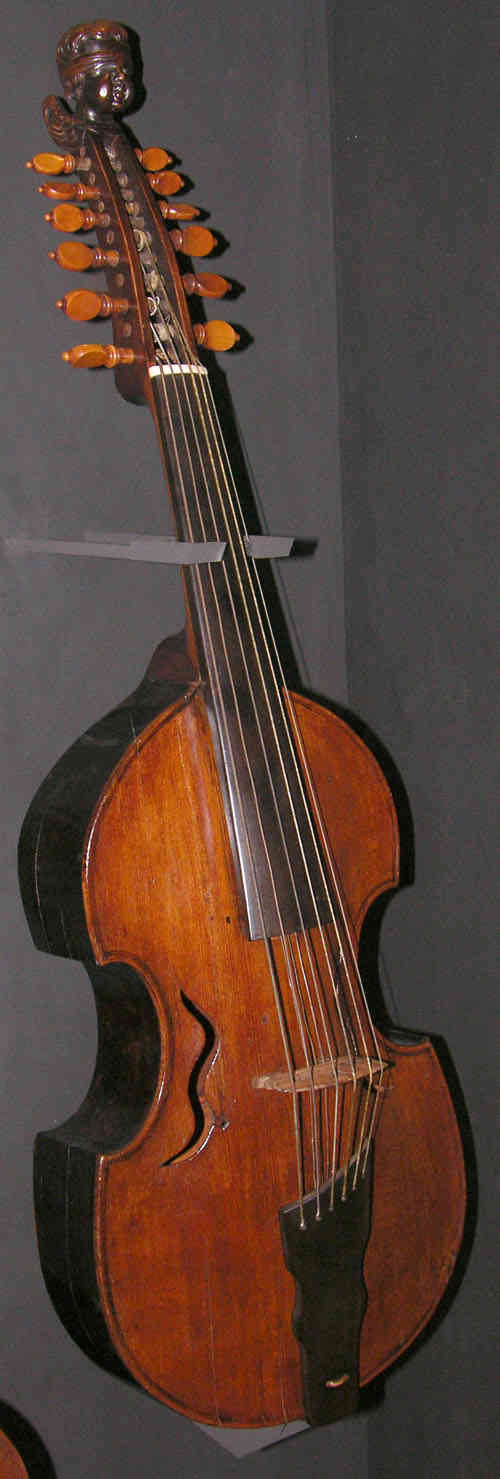
A m•a•tive (æm´•ə•tɪ v)
adjective: disposed to love; amorous; symbolizing amorous intent.
1630–40; < ML amātīvus, equiv. to amāt(us) [ptp. of amāre to love] + -īvus –ive.
S cores of Love’, a piece by
Catherine McMichael for alto saxophone, tenor voice, and piano—is a fine Valentine’s Day chamber work you may like to try. As is the case with many art songs, this piece draws attention to how music is able to ‘mean’ things—how the intertextuality between the words and the music works; how the ‘representation’ of the emotions happens, specifically, the constellation of sentiments that denote love.
[30-sec clip, Catherine McMichael, ‘Scores of Love…, Love at 20: Love Is Not All, Lynn Klock (saxophone), Jon Humphrey (tenor), 1.0MB MP3]
[30-sec clip, Catherine McMichael, ‘Scores of Love…, Love at 40: April Rain Song, Lynn Klock (saxophone), Jon Humphrey (tenor), 1.0MB MP3]
[30-sec clip, Catherine McMichael, ‘Scores of Love…, Love at 60: Send Her a Valentine, Lynn Klock (saxophone), Jon Humphrey (tenor), 1.0MB MP3]
I n some ways, this piece is in the great tradition of Robert Schumann… the ‘Spanisches Liebes-Lieder’ (Spanish Love Songs), op. 138. But with Catherine McMichael’s piece we have the three-way interaction of voice and sax and piano. The relationship of music to words is cultivated with great intimacy in each of the three movements, and there is a meta-intimacy that comes from the juxtaposition of three ‘chapters’ of life, advancing 20 years at a time (hence, the word-play of the title ‘Scores’ = spanning 20 years), represented by the texts of the three poets. The result is a kind of declamation that is propelled as much by the music as by the poetry. The colors and rhythms in the instrumental parts are not mere accompaniment—they disclose propositions of their own, on a par with the expressions of the tenor’s words—and this fact leads me to revisit my uneasiness with the question of whether and how deeply and accurately musical motifs can represent or allude to specific things.
L ove is not all: It is not meat nor drink
Nor slumber nor a roof against the rain,
Nor yet a floating spar to men that sink
and rise and sink and rise and sink again.
Love cannot fill the thickened lung with breath
Nor clean the blood, nor set the fractured bone;
Yet many a man is making friends with death
even as I speak, for lack of love alone.
It well may be that in a difficult hour,
pinned down by need and moaning for release
or nagged by want past resolution's power,
I might be driven to sell your love for peace,
Or trade the memory of this night for food.
It may well be. I do not think I would.”
— Edna St. Vincent Millay, ‘Love Is Not All’ (age 20).
L et the rain kiss you
Let the rain beat upon your head with silver liquid drops
Let the rain sing you a lullaby
The rain makes still pools on the sidewalk
The rain makes running pools in the gutter
The rain plays a little sleep song on our roof at night
And I love the rain.”
— Langston Hughes, ‘April Rain Song’ (age 40).
S end her a valentine to say
You love her in the same old way.
Just drop the long familiar ways
And live again the old-time days
When love was new and youth was bright
And all was laughter and delight—
And treat her as you would if she
Were still the girl that used to be.
Pretend that all the years have passed
Without one cold and wintry blast;
That you are coming still to woo
Your sweetheart as you used to do.
Forget that you have walked along
The paths of life where right and wrong
And joy and grief in battle are,
And play the heart without a scar.
Be what you were when youth was fine
And send to her a valentine;
Forget the burdens and the woe
That have been given you to know
And to the wife, so fond and true,
The pledges of the past renew
‘Twill cure her life of every ill
To find that you’re her sweetheart still.”
— Edgar A. Guest, ‘Send Her a Valentine’ (age 60).
A llusions, like symbols, strengthen and localize the cognitive and emotional experience for the performer or listener. In literary theory, allusions fall under the rubric of ‘intertextuality’. Intertextuality refers to the relationships between two or more texts that refer to each other. “Intertextuality is therefore the textual exploitation of another text. It would include satire, parody, pastiche, imitatio, refacimento, reference, allusion, modeling, borrowing…” as William Rothstein has written. The synthesis or reconstruction of narratives is a fundamental part of the interpretive process and performance practice. If you’re interested, have a look at Rothstein’s ‘Analysis and the Act of Performance,’ in John Rink, ed., ‘The Practice of Performance’, pp. 217-40. An extended thread assessing these issues runs through Kendall Walton’s writings as well, which are a joy to read.
H ave a look, for comparison, at Roger Scruton’s ‘Aesthetics of Music’. After ending his sojourn in the U.S. at Boston University and repairing to his native Wiltshire English countryside, Scruton has in recent years been somewhat notorious as a conservative political philosopher and ruralist, but Scruton is also an amateur composer. “When we hear music, we do not hear sound only; we hear something in sound, something which moves with a force of its own.”
O ne might imagine from his expressions in this vein that Scruton would hold that music can be representational. After all, he says that metaphors in music are “indispensable ... because we are using them to describe something other than the material world; in particular because we are attempting to describe how the world seems, from the point of view of active imagination ... The indispensable metaphor occurs when the way the world seems depends upon an imaginative involvement with it, rather than on our ordinary cognitive goals. And this is the case when we listen to music” (p. 92). And he asserts that “We are all to some extent sentimentalists” (p. 488). But sentimentality in Scruton’s reading turns out to be a kind of defense against the postmodern world by way of ‘make-believe’ or ‘language games’. In this respect, Scruton’s view intersects with Kendall Walton’s.
W alton famously holds that all effective fictions arise from our playful use of symbols and signifiers: what Wittgenstein once called ‘language games’ or ‘language-play’. When we experience fiction, we suspend our disbelief, enter into the realm of play, and act as if the fictional world were real. Walton charts what amounts to an epistemology of fiction, a virtual world where ‘it is fictionally present’ is equivalent to ‘it is true’ in the real world.
W ollheim’s purpose in connecting ‘seeing-in’ with seeing depth in flat surfaces is not so much to clarify seeing-in as to indicate the range of cases in which it occurs. In viewing many paintings regarded as non-representational, one sees one plane or shape or line in front of another. Many of the works of such artists as Hans Hoffman, Piet Mondrian, and Mark Rothko demand ‘seeing-in’, Wollheim claims, and qualify as representational along with portraits and landscapes, although the former are not ‘figurative’ as the latter are... [Audience members] participate in what I call perceptual games of make-believe. ‘Seeing-in’ ... [is] an experience characterized by the phenomenology of twofoldness: an experience with two aspects—a ‘recognitional’ aspect and a ‘configurational’ one.”
— Kendall Walton, Marvelous Images, p. 136.
A century ago ‘Vom Musikalish-Schönen’, Eduard Hanslick argued that it’s impossible to represent emotions in music because music can’t provide enough specificity—can’t convey the specific cognitive content associated with emotions. “The feeling of hope cannot be separated from the representation of a future happy state which we compare to the present ... Love cannot be thought without the representation of a belovèd person, without desire and striving after felicity, glorification and possession of a particular object.” If music can’t represent these ideas or objects but only some ‘dynamic’ aspects of emotional life, then (according to Hanslick) it can’t be seriously representational at all.
S usanne Langer maintained this conservative view, too, in the mid-20
th Century. And, in his own way, so now, it seems, does Scruton. By contrast, Peter Kivy is an exponent of the view that music can indeed express particular emotions. [I have had in these past few days more Scrutonization than is probably healthy; I think I (and, maybe, you) can find the antidote by rereading and being re-persuaded by Kivy, just in time for Valentine’s Day.]
T he expressive character of art is connected with its role in the Entäußerung or ‘realization’ of our feelings. We encounter works of art as perfected icons of our felt potential, and we appropriate them in order to bring form, lucidity, and self-knowledge to our inner life. The human psyche is transformed by art, but only because art provides us with the expressive gestures towards which our emotions themselves lean in their search for sympathy—gestures which we seize, when we encounter them, with a sense of being carried at last to a destination that we could not reach alone...”
— Roger Scruton, Aesthetics of Music, p. 352.
T o be a proper ‘representation’, a work must ‘express specific thoughts about its subject’. To be interested in the work is to be interested in ‘understanding those thoughts.’ By ‘thoughts’, Scruton means, “the sense or content of a declarative sentence,” which can either be true or false. A representational work must generate propositions with truth-values that are accessible to and, by consensus, agreed upon by [a majority of] those who experience the work: “Representation... is essentially propositional.” N.B.: Wittgensteinian language-games, ballast even on philosophers’ social networks, positively fatal on Valentine’s Day.
P eter Kivy elegantly rebuts Scruton’s arguments that music can’t be representational. Kivy accepts Scruton’s criteria for something to be representational and for a representation to be aesthetically relevant, but disagrees that music fails to meet these criteria.

A traditional painting depicts something, and if the painting is a good one, every part of the canvas contributes to the effectiveness of the visual message that the artist is trying to convey. In traditional literature every passage has its purpose – fleshing out a character, setting the mood, developing the plot, and so on. The same is generally true of music in the European tradition: the composition is considered to be greater than the sum of its parts, a work of art in which each passage has a function that is vital to the overall plan of a work. Think of any tonal work that you know well, and imagine what it would be like if its parts, themes, transitions and so forth—were randomly rearranged. It might be interesting to see how it would turn out, but the piece would almost certainly not be as effective as a whole.”
— Stefan Kostka, Materials and Techniques of Twentieth-Century Music, p. 152.
 S
S cores of Love’ by Catherine McMichael is a composition through which the respective contributions of the vocal text and instrumental parts to the work’s meaning can be dissected and understood, maybe more clearly or dramatically than other examples allow. Here’s an experiment for you: Have a viola perform the tenor part—preferrably while reading from the tenor part—or transposed to alto clef, but with the lyric retained below the staves for the violist to see. Better yet, use a viola d’amore—one with an anatomically correct carved head at the top of the peg box, complete with the blindfolded eyes to represent Love. See if the sense of the piece doesn’t convey substantially the same meaning as it does when the words are sung. Do you not agree that it is as fine and precisely evocative a Valentine when arranged in that way, as it would be in its original mixed trio form?
I t’s like my violin teacher periodically reminds me (odious keyboard/brass/woodwind player and erstwhile tenor that I am): “The string contact-point ... is, at best, like your vocal cords. The instrument and the bow should be your voice. You must remember to make them sing; every note must sing.” The tone quality or sound color of viola can be a wonderful substitute for the tenor voice. Your make-believe mind (the mind of your listener as well) imagines the fictional words and automatically fills in the correct representations, the accurate intertextual truths. It’s enough to know the poems that inspired the setting—that caused the music to be constructed as it is...
I have performed the piece with viola (in place of the saxophone, not the singer), and it’s just as effective. In fact, the tenor at that performance was 60. His wife was in the audience, and it was his valedictory performance ... Several people came up to me at the intermission, literally weeping, exclaiming how grateful they were that contemporary music by a living composer could still be beautiful and moving.”
— Catherine McMichael, email to CMT.

I have to pour unrequited love into bar 100 and not forget a touch of fear and loathing at bar 210.”
— Jonathan Dunsby, Performing Music: Shared Concerns, p. 24. [an interesting on-point quote, I thought; has nothing to do with McMichael’s ‘Scores of Love’, though]
- Catherine McMichael website
- Search for ‘Love’ on the Lied and Art Song Texts website
- Klock L, Humphrey J, et al. Macchia, McMichael, Shen: Song Cycles. (Gasparo, 2003.)

- Boghossian P. Content and Justification: Philosophical Papers. Oxford Univ, 2008.
- Bruhn S. Messiaen’s Language of Mystical Love. Garland, 1998.
- Burkhart C, Rothstein W. Anthology for Musical Analysis. Schirmer, 2007.
- Currie G, Ravenscroft I. Recreative Minds: Imagination in Philosophy and Psychology. Oxford Univ, 2003.
- Dunsby J. Performing Music: Shared Concerns. Oxford Univ, 1996.
- Farkas K. The Subject's Point of View. Oxford Univ, 2008.
- Fodor J. LOT 2: The Language of Thought Revisited. Oxford Univ, 2008.
- Garcia-Carpintero M, Kolbel M, eds. Relative Truth. Oxford Univ, 2008.
- Goodman N. Languages of Art. 2e. Hackett, 1976.
- Groll D. Can music represent? Prolegomena, 2001.
- Hallmark R. German Lieder in the Nineteenth Century. 2e. Schirmer, 2009.
- Karl G, Robinson J. Musical expression of cognitively comlex emotions. in Music & Meaning. Robinson J, ed. Cornell Univ, 1997, pp. 154ff.
- Kivy P. Introduction to a Philosophy of Music. Oxford Univ, 2002.
- Kivy P. Sound and Semblance. Cornell Univ, 1991.
- Kivy P. Sound Sentiment. Temple Univ, 1989.
- Kostka S. Materials and Techniques of Twentieth-Century Music. 2e. Prentice-Hall, 1999.
- Kruger D. A philosopher turns rural. [Roger Scruton] Telegraph 11-JUN-2004.
- Langer S. Philosphy in a New Key. 3e. Harvard Univ, 1957.
- Levinson J. 'Hope in the Hebrides', in Music, Art, and Metaphysics. Cornell Univ, 1991, pp. 336-75.
- Lidov D. Musical semiotics: Science, letters, or art? Integral 1996; 10:125-53.
- Mendola J. Anti-Externalism. Oxford Univ, 2009.
- Millar A. Understanding People: Normativity and Rationalizing Explanation. Oxford Univ, 2009.
- Mitchell W. What Do Pictures Want?: The Lives and Loves of Images. Univ Chicago, 2006.
- Monelle R. The Sense of Music: Semiotic Essays. Princeton Univ, 2000.
- Nattiez J. Is a descriptive semiotics of music possible? Language Sciences 1972; 23: 1-7.
- Nichols S, ed. The Architecture of the Imagination: New Essays on Pretence, Possibility, and Fiction. Oxford Univ, 2006.
- Parsons J. The Cambridge Companion to the Lied. Cambridge Univ, 2004.
- Raffman D. Language, Music, and Mind. MIT, 1993.
- Rink J, ed. The Practice of Performance. Cambridge Univ, 2005.
- Scruton R. Understanding Music. Continuum, 2009.
- Scruton S. 'Representation in music', in Aesthetics: A Reader in the Philosophy of the Arts. Goldblatt D, Brown L, eds. 2e. Prentice Hall, 2004, pp. 236ff.
- Scruton's Aesthetics Conference, Durham Univ, 22-24 JUL 2008.
- Scruton R. The Aesthetics of Music. Oxford Univ, 1999.
- Scruton R. Art and Imagination. Routledge, 1982.
- Smith N. Vagueness and Degrees of Truth. Oxford Univ, 2009.
- Stafford B. Echo Objects: The Cognitive Work of Images. Univ Chicago, 2009.
- Stalnaker R. Our Knowledge of the Internal World. Oxford Univ, 2008.
- Stock K, Thomson-Jones K, eds. New Waves in Aesthetics. BFI, 2008.
- Tarasti E. Signs of Music: A Guide to Musical Semiotics. de Gruyter, 2002.
- Turkle S, ed. Evocative Objects: Things We Think With. MIT, 2007.
- Vahid H. The Epistemology of Belief. Palgrave-Macmillan, 2008.
- Kendall Walton page at Univ Michigan Philosophy Dept.
- Walton K. Marvelous Images: On Values and the Arts. Oxford Univ, 2008.
- Walton K. Mimesis as Make-Believe: On the Foundations of the Representational Arts. Harvard Univ, 2006.
- Walton K. Projectivism, empathy and musical tension. [1MB pdf]
- Walton K. Listening with imagination: Is music representational? Journal of Aesthetics and Art Criticism 1994; 52:47-61.
- Young J. The cognitive value of music. J Aesthetics Art Crit 1999; 57:1-14.
- Karl Stumpf viola d’amore scores at N.Y. Public Library.
- Viola d'amore Society of America