A previous CMT post about inter-part communication and diffusion phenomena between parts caused one reader to ask whether I’d ever looked at Brian Ferneyhough’s ‘Chûte d’Icare’, a 10-minute septet (clarinet, flute, oboe, vibraphone/marimba, piano, violin, and cello) composed in 1987-88. It’s a fascinating and, to me, beautiful piece…
[50-sec clip, Nieuw Ensemble, Brian Ferneyhough, ‘Chûte d’Icare’, 1.6MB MP3]
E ach individual part ‘clings’ for a time to its idiosyncratic ‘status quo’, and then it decamps for elsewhere, perturbed by utterances emitted by its neighbors. There is a threshold of temporal and spatial ‘proximity’ that allows one part to affect others. If you are further away than that proximity limit, then you continue on your autonomous way. But if you are within the proximity radius, then you will likely be ‘infected’ by your neighbor(s).
T he ‘infection’ (with the expressive motif(s) emitted by adjacent part(s)) takes hold, lasts for awhile (and alters the affected part’s own utterances), and then subsides. The ‘infected’ part recovers. Or, alternately, it does not recover (“mortality”) and is reincarnated with new ideas, new expressions some bars later.
H ere is a little spreadsheet that illustrates a simple 3-state “S-I-R” (susceptible-infected-recovered) simulation of epidemic spread—the sort of contagion we hear in ‘Chûte d’Icare’. You can click on the screenshot to download it and play around with it.
T he point of doing simulations and mathematical analyses like these is not to get lucky and say “Aha! I get how it works!” or “The composer employed an algorithmic/formulaic tool to compose this!” Instead, the point is to be able to figure out a new gambit that could go into a composer’s toolbox, to deliberately create a visceral, real sensation of diffusion, or contagion, or some other natural process in her/his compositions—as part of a palette that can embody/represent Nature and call into question our roles in life and the cosmic [non-]scheme. Something that could be used either as an aid to composing, or as a convenience for testing and editing a work-in-progress, to confirm that the work does in fact accurately embody or emulate the intended natural process that is the subject or expressive element of the overall work. Alternatively, the point may be to help [some of us] find deeper meanings in the work, or prepare for listening/performing in such a way that we feel more at home with its expressions or patterns.
I s such musical representation ‘depiction’? Is the listener to imagine perceiving a struggle, [or a lover’s kiss]? The mode of perception may be indeterminate. It need not be fictional that it is, for example, by a combination of introspection, kinesthetic sensation, and vision that one perceives the struggle (one’s own), nor that one merely sees and hears it occurring (a struggle among others). It might still be fictional that in some manner or other one does perceive the struggle. One has a sense of it occurring here and now… — Kendall Walton, Mimesis as Make-Believe, p. 341.
I f you happen to be in New York next Friday, on Valentine’s Eve, you might like to go to the Whitney Museum of American Art (945 Madison Ave at 75th Street), to hear Knights Chamber Orchestra and soprano Susan Narucki perform Lisa Bielawa’s composition, ‘Chance Encounter’. The event is Friday, February 13, with two performances, one at 6:50 pm and the other at 8:05 pm. It’s free with admission to the Whitney under their ‘pay-what-you-wish’ policy on Fridays. No tickets or reservations are required.
C hance Encounter’ is a 35-minute piece in, and about, transient public space with texts overheard in transient, public spaces. Susan Narucki and 12 instrumentalists converge and diverge, one or several at a time, in the context of a public space that contains whatever [transient] objects and [transient] occupants (including you, if you attend) as it may—plus whatever occurrences and ambient environmental sounds arise spontaneously in the space during the performance. Susan will sing songs and arias constructed of extemporaneous utterances that were collected in transient public spaces. The interaction of these vocal utterances/sung texts and the instrumental parts amounts to a re-enactment of a private (yet collective) experience of the then-current performance space itself— as well as a meta-enactment of the original eavesdropped utterances (texts) and spaces. The effect is an exciting, haptically-rich chamber music experience—new and different each time it is performed.
I don’t do anything to it – it just comes out like this. I’m trying to catch my breath. I hope they know what they’re doing. I found a place where we can sit together… — Lisa Bielawa and Susan Narucki, text excerpt from ‘Chance Encounter’, ambient remarks, overheard in a public space.
C ontinuing my thread on intertextuality and representation from the previous CMT post, I want to suggest that even a composition like ‘Chance Encounter’ can be considered ‘representational’. At least it would be if we agree with the analysis of philosopher Kendall Walton.
F ictional representation’ would point clearly to the exclusion of non-fiction. But I resist the implication that [the category we shall discuss] is a species of a larger class of ‘representations’ … ‘Mimesis’, with its distinguished history, can be understood to correspond roughly to ‘representation’ in my sense … but I disavow any implied commitment either to a ‘picture theory’ of language (or ‘symbols’) or a ‘correspondence theory’ of truth, or to an ‘imitation theory’ of depiction. — Kendall Walton, Mimesis as Make-Believe, p. 3.
T ransient, stochastic, ambient qualities don’t get explicit treatment in Walton’s book, ‘Mimesis’. But some of the examples he uses to illustrate some of his arguments do have those qualities. Just have to extrapolate a little bit; read between the lines.
I f a piece of music is ambient and aleatoric, it’s impossible to ‘know the piece well’ in Walton’s sense. The stochastic performance-time indirection inherent in transient configurations of listeners and passers-by in the performance space preempts listeners’ forming any expectations—other than maybe expecting nothing in particular, or expecting, say, to be surprised by unpredictable rhythmic and harmonic/timbral textures and chance interactions between the text and the music. Lisa and the chamber artists place you in a state of persistent anticipation and collaborative mimesis ...
A ny ‘non-figurative’ or ‘non-objective’ painting that is to be seen in some figure-ground will qualify [as representational]. So, probably, will any design making use of what Gestalt psychologists call ‘closure’: such a design will mandate our imagining a square, for example, when it contains only hints of one. Jackson Pollock’s dripped and splashed paintings may turn out to generate fictional truths about [the processes of--] dripping and splashing. Most or even all music will likely have to be considered representational, for analogous reasons. — Kendall Walton, Mimesis as Make-Believe, p. 56.
C hance Encounter’ was co-conceived by Lisa with Susan Narucki. Lisa composed the piece for Susan and the New York-based Knights Chamber Orchestra. The overheard texts that were selected and transcribed may be ‘found’ objects, but they’re not ‘random’ ones—and their orchestration isn’t mechanical or haphazard or chaotic; they were selected in such a way so as to be capable of forming a coherent narrative arc and being emotionally parsed—by first-time participants/listeners as well as by those who have prior acquaintance with the work. The conceit is a non-figurative ‘ambience and transience as inescapable elements of the human condition’ that acknowledges and includes the space and the ad hoc, transient listeners and passers-by as quasi-performers.
B ut Bielawa clearly had a specific, coherent vision—one that’s beautifully and ably rendered here, with apt, if variable, emotional impact on virtually everyone present. The personnel for any particular performance can change; the sequence and timing can change; the ambient sounds are different each time; the visual and acoustic elements of the performance space are different each time—and all this ‘run-time indirection’ contributes to the representation ... of the human impossibility of mastering or controlling or insuring or preventing any aspect of life, or death. Linguists might term Lisa’s compositional grammar in this piece ‘agglutinative’, because of the multiple [transient] affixes/morphemes per phrase ...
A central thesis of Leonard Meyer’s ‘Emotion and Meaning in Music’ is that ‘affect or emotion is aroused when an expectation—a tendency to respond—activated by the musical stimulus, is temporarily inhibited or permanently blocked.’ (p. 31) The appreciation of music derives largely, he claims, from frustrations of expectations about how the music will proceed. In the case of a deceptive cadence, listeners expect the tonic to follow the dominant, and they experience ‘affect’ when it does not. This may be an accurate description of the experience of the first-time listener, but what about the listener who knows the piece well? … It is fictional that the listener expects the tonic, regardless of what she actually expects, and it is fictional that she is surprised to hear the submediant or whatever occurs instead. This makes music a ‘prop’ in a game of make-believe and, hence, representational in our sense, in much the way that non-figurative painting is representational. — Kendall Walton, Mimesis as Make-Believe, p. 262.
T he piece is nominally ‘in and about transient public space’, as Lisa puts it in her program notes. But it’s also and more deeply about our relationships with each other and with the world. The effect you experience when immersed in a performance of ‘Chance Encounter’ is one of intense ‘expectancy’. It does have a ‘beginning’, a ‘middle’, and an ‘end’. It is possible, were ‘Chance Encounter’ extended to several hours or more in length—like an ultra-long Morton Feldman or John Cage or Karlheinz Stockhausen experiment (instead of Chance Encounter’s 35 minutes, as-composed)—that the effect would wear off, or that the narrative arc would be lost—or that the cognitive and attentional demands, becoming after awhile unsustainable, would cause our emotional response to mutate and the meaning of the piece to shift.
B ut, as-composed, ‘Chance Encounter’ is just the right length—poignant, amusing, thought-provoking, uplifting, satisfyingly listenable. It precipitates something of a ‘tikkun olam’ / ‘repair the broken world, one shard at a time’ / ‘if not us, who? if not now, when?’ sizzle in the audience. The displacement of classically-trained musicians, out of venerable-dear-ossified concert halls and into up-close contact with broader society with more socioeconomic and ethnic diversity, like chamber music in bars or like some of what Greg Sandow exhorts us to do, to make serious music more vibrant and accessible.
I n Haydn’s String Quartet ‘The Bird’, op. 32, it is fictional that one hears the chirping of birds… A ‘depiction’, then, is a representation whose function is to serve as a ‘prop’ in rich and vivid perceptual games of make-believe. — Kendall Walton, Mimesis as Make-Believe, p. 296.
W hen music is representational, is it [necessarily] ‘depictive’? Music and painting appear to be alike in being ‘perceptual’ arts, in contrast to literature… If music is a perceptual art, won’t musical works [always] be ‘props’ in perceptual games? The answer is, often not… In the case of much ‘expressive’ music, it may be fictional not that one sees or hears or otherwise perceives external things, but that one experiences or is aware of (one’s own) feelings or emotions or sensations or sentiments or moods. The listener imagines experiencing excitement, passion, fervor, … It may be fictional of one’s actual awareness of auditory sensations that it is an awareness of such feelings. In place of fictional perception of external objects, then, we have fictional introspection or fictional self-awareness. If I am right, this is likely to be true even of such stalwarts of musical purity as Bach’s ‘Art of the Fugue’. And to whatever extent introspection is analogous to the ‘external’, it will be reasonable to expand our understanding of ‘depiction’ to include this. — Kendall Walton, Mimesis as Make-Believe, p. 334.
susan narucki, soprano
kyle armbrust, viola
mike atkinson, horn
christina courtin, violin
gareth flowers, trumpet
josh frank, trumpet
adam hollander, oboe
colin jacobsen, violin
eric jacobsen, cello
stephen menotti, trombone
alex sopp, flute
lance suzuki, flute.
Y ou can get a sense of the beauty of the indeterminacy that Lisa and her collaborators achieve by looking at this segment of ‘Chance Encounters’ from a 2007 performance, on YouTube:
G ame worlds are paramount in music in a way that they are not in painting. The music still qualifies as representational in our sense: its function is to serve as a ‘prop’ in the listeners’ [introspective fictions and] games. … Listening to music [and performing it--] is thus more like dreaming; one’s imaginative activity is largely solitary [even when it is done in the company of others]. You and I will not, fictionally, notice or learn about something and later compare … when we attend a concert together, we might explain to each other what fictionally we feel; this is like telling our dreams to each other at breakfast. And it can be fictional that we compare notes on what we feel when we hear [perform] the music. But we cannot fictionally compare what we feel about such-and-such a mutually observed event or situation or person. We end up talking about the music, rather than participating verbally together in a game of make-believe using the music as a prop. — Kendall Walton, Mimesis as Make-Believe, p. 337.
C hance Encounter’ songs and arias are made up entirely of speech overheard in transient public spaces including airports, sidewalks, streets, parks, cafes, buses and the subway. Bielawa blogged about her ‘eavesdropping existence’ during the period when she was composing ‘Chance Encounter’. You can read her blog here.
M usical depictions are ‘weak’ in point-of-view [compared to paintings or literature]. When sounds are depicted, very little is fictional, usually, with respect to the angle and distance… When it is fictional of the listener that she hears in the musical motifs a brook gurgling, is it fictional that she hears it from upstream or downstream, from the side or from above, from near or from afar? — Kendall Walton, Mimesis as Make-Believe, p. 340.
Y es, there is the composer’s/eavesdropper’s viewpoint—the issue of privacy. But it is not at all like capturing ‘found sound’ waveforms in the field, and then reproducing them in some mash-up, like some composers of electroacoustic would do. Nor is it like representational art that generifies and refers to extraneous utterances of anonymous any-woman/every-man. Nor are there any ‘mondegreens’ or misheard phrases, at least not in this ‘Chance Encounter’. Bielawa’s composerly role is not at all like a detached observer of a gurgling brook, rendering a representation of those sounds in music.
I nstead, it is musical anthropology in the era of Web 2.0—and the anthropologist is never ‘neutral’ or purely ‘reportorial’, something Margaret Mead used to point out. In ‘Chance Encounter’, anthropology becomes art… we become installation art, and participate in the uniqueness and immediacy of whatever, musically, is created. It reminds me of some of the classical music events I have attended in Second Life, where performers and other virtual attendees array themselves in unpredictable configurations, and ambient sounds and moving imagery are variable.
F rom what I have heard of it, ‘Chance Encounter’ does not seek to subvert the natural expressive properties of the vocal or instrumental parts into a chaotic process or renounce the traditional control that the composer over the material as deep or ‘radical’ indeterminists (like Cage) do. Lisa is not a ‘radical indeterminist’: sounds and utterances do not have equal value, nor is their placement in time or pitch or timbre fungible. Sounds are chosen according to aesthetic principles by the composer and by the performers, and the choices are guided by the narrative and other intentions that they share, with humanly-varying comprehension and faithfulness. So it seems to me that ‘Chance Encounter’ probably embodies an in-between stance, somewhere between ‘moderate indeterminacy’ and ‘moderate aleatorics’. (In ‘strong aleatorics’ or ‘radical aleatorics’, the indeterminacy is controlled more explicitly by the composer—usually by offering the performers a smaller number of possibilities to choose from, and usually not treating the transient performance space or the transient audience and passers-by as part of the acoustic ‘palette’.)
A ttend the event at the Whitney next Friday if you can. I’m sure you’ll enjoy it. Say ‘Hi’ to Lisa and Susan and the Knights or, alternatively, gift them with some ambient original art-utterance that’s worth their overhearing/eavesdropping.
I remember the following: four hundred drunken Finns swarming through the Soviet passport control [pushing and cursing in the Tallinn, Estonia, airport] ... their boots making the noise of dried blood... the metaphysical noise [can only, I think, be] called ‘the edge of Night’. — Stephen Kuusisto, ‘Eavesdropping: A Memoir of Blindness and Listening’, p. 180 (Kuusisto is blind)
D o Jackson Pollock’s [drip-and-splatter] paintings represent the actions by which they were made? Should we allow that ‘expressive’ music ‘represents’ emotions or the experiencing of emotions? Is expression a species of representation? Program music is representational, no doubt, but what about background/ambient music in film? How shall we classify Stravinsky’s ‘Pulcinella Suite’, Jasper Johns’s targets and flags, Duchamp’s ready-mades, or happenings? The existence of borderline or undecidable cases, even vast numbers of them, is not the problem. What is of concern is the fact that we cannot easily say why something does or does not count as representational. — Kendall Walton, Mimesis as Make-Believe, p. 2.
Am•a•tive (æm´•ə•tɪ v) adjective: disposed to love; amorous; symbolizing amorous intent. 1630–40; < ML amātīvus, equiv. to amāt(us) [ptp. of amāre to love] + -īvus –ive.
S cores of Love’, a piece by Catherine McMichael for alto saxophone, tenor voice, and piano—is a fine Valentine’s Day chamber work you may like to try. As is the case with many art songs, this piece draws attention to how music is able to ‘mean’ things—how the intertextuality between the words and the music works; how the ‘representation’ of the emotions happens, specifically, the constellation of sentiments that denote love.
[30-sec clip, Catherine McMichael, ‘Scores of Love…, Love at 20: Love Is Not All, Lynn Klock (saxophone), Jon Humphrey (tenor), 1.0MB MP3]
[30-sec clip, Catherine McMichael, ‘Scores of Love…, Love at 40: April Rain Song, Lynn Klock (saxophone), Jon Humphrey (tenor), 1.0MB MP3]
[30-sec clip, Catherine McMichael, ‘Scores of Love…, Love at 60: Send Her a Valentine, Lynn Klock (saxophone), Jon Humphrey (tenor), 1.0MB MP3]
I n some ways, this piece is in the great tradition of Robert Schumann… the ‘Spanisches Liebes-Lieder’ (Spanish Love Songs), op. 138. But with Catherine McMichael’s piece we have the three-way interaction of voice and sax and piano. The relationship of music to words is cultivated with great intimacy in each of the three movements, and there is a meta-intimacy that comes from the juxtaposition of three ‘chapters’ of life, advancing 20 years at a time (hence, the word-play of the title ‘Scores’ = spanning 20 years), represented by the texts of the three poets. The result is a kind of declamation that is propelled as much by the music as by the poetry. The colors and rhythms in the instrumental parts are not mere accompaniment—they disclose propositions of their own, on a par with the expressions of the tenor’s words—and this fact leads me to revisit my uneasiness with the question of whether and how deeply and accurately musical motifs can represent or allude to specific things.
L ove is not all: It is not meat nor drink Nor slumber nor a roof against the rain, Nor yet a floating spar to men that sink and rise and sink and rise and sink again. Love cannot fill the thickened lung with breath Nor clean the blood, nor set the fractured bone; Yet many a man is making friends with death even as I speak, for lack of love alone. It well may be that in a difficult hour, pinned down by need and moaning for release or nagged by want past resolution's power, I might be driven to sell your love for peace, Or trade the memory of this night for food. It may well be. I do not think I would.” — Edna St. Vincent Millay, ‘Love Is Not All’ (age 20).
L et the rain kiss you Let the rain beat upon your head with silver liquid drops Let the rain sing you a lullaby The rain makes still pools on the sidewalk The rain makes running pools in the gutter The rain plays a little sleep song on our roof at night And I love the rain.” — Langston Hughes, ‘April Rain Song’ (age 40).
S end her a valentine to say You love her in the same old way. Just drop the long familiar ways And live again the old-time days When love was new and youth was bright And all was laughter and delight— And treat her as you would if she Were still the girl that used to be.
Pretend that all the years have passed Without one cold and wintry blast; That you are coming still to woo Your sweetheart as you used to do. Forget that you have walked along The paths of life where right and wrong And joy and grief in battle are, And play the heart without a scar.
Be what you were when youth was fine And send to her a valentine; Forget the burdens and the woe That have been given you to know And to the wife, so fond and true, The pledges of the past renew ‘Twill cure her life of every ill To find that you’re her sweetheart still.” — Edgar A. Guest, ‘Send Her a Valentine’ (age 60).
A llusions, like symbols, strengthen and localize the cognitive and emotional experience for the performer or listener. In literary theory, allusions fall under the rubric of ‘intertextuality’. Intertextuality refers to the relationships between two or more texts that refer to each other. “Intertextuality is therefore the textual exploitation of another text. It would include satire, parody, pastiche, imitatio, refacimento, reference, allusion, modeling, borrowing…” as William Rothstein has written. The synthesis or reconstruction of narratives is a fundamental part of the interpretive process and performance practice. If you’re interested, have a look at Rothstein’s ‘Analysis and the Act of Performance,’ in John Rink, ed., ‘The Practice of Performance’, pp. 217-40. An extended thread assessing these issues runs through Kendall Walton’s writings as well, which are a joy to read.
H ave a look, for comparison, at Roger Scruton’s ‘Aesthetics of Music’. After ending his sojourn in the U.S. at Boston University and repairing to his native Wiltshire English countryside, Scruton has in recent years been somewhat notorious as a conservative political philosopher and ruralist, but Scruton is also an amateur composer. “When we hear music, we do not hear sound only; we hear something in sound, something which moves with a force of its own.”
O ne might imagine from his expressions in this vein that Scruton would hold that music can be representational. After all, he says that metaphors in music are “indispensable ... because we are using them to describe something other than the material world; in particular because we are attempting to describe how the world seems, from the point of view of active imagination ... The indispensable metaphor occurs when the way the world seems depends upon an imaginative involvement with it, rather than on our ordinary cognitive goals. And this is the case when we listen to music” (p. 92). And he asserts that “We are all to some extent sentimentalists” (p. 488). But sentimentality in Scruton’s reading turns out to be a kind of defense against the postmodern world by way of ‘make-believe’ or ‘language games’. In this respect, Scruton’s view intersects with Kendall Walton’s.
W alton famously holds that all effective fictions arise from our playful use of symbols and signifiers: what Wittgenstein once called ‘language games’ or ‘language-play’. When we experience fiction, we suspend our disbelief, enter into the realm of play, and act as if the fictional world were real. Walton charts what amounts to an epistemology of fiction, a virtual world where ‘it is fictionally present’ is equivalent to ‘it is true’ in the real world.
W ollheim’s purpose in connecting ‘seeing-in’ with seeing depth in flat surfaces is not so much to clarify seeing-in as to indicate the range of cases in which it occurs. In viewing many paintings regarded as non-representational, one sees one plane or shape or line in front of another. Many of the works of such artists as Hans Hoffman, Piet Mondrian, and Mark Rothko demand ‘seeing-in’, Wollheim claims, and qualify as representational along with portraits and landscapes, although the former are not ‘figurative’ as the latter are... [Audience members] participate in what I call perceptual games of make-believe. ‘Seeing-in’ ... [is] an experience characterized by the phenomenology of twofoldness: an experience with two aspects—a ‘recognitional’ aspect and a ‘configurational’ one.” — Kendall Walton, Marvelous Images, p. 136.
A century ago ‘Vom Musikalish-Schönen’, Eduard Hanslick argued that it’s impossible to represent emotions in music because music can’t provide enough specificity—can’t convey the specific cognitive content associated with emotions. “The feeling of hope cannot be separated from the representation of a future happy state which we compare to the present ... Love cannot be thought without the representation of a belovèd person, without desire and striving after felicity, glorification and possession of a particular object.” If music can’t represent these ideas or objects but only some ‘dynamic’ aspects of emotional life, then (according to Hanslick) it can’t be seriously representational at all.
S usanne Langer maintained this conservative view, too, in the mid-20th Century. And, in his own way, so now, it seems, does Scruton. By contrast, Peter Kivy is an exponent of the view that music can indeed express particular emotions. [I have had in these past few days more Scrutonization than is probably healthy; I think I (and, maybe, you) can find the antidote by rereading and being re-persuaded by Kivy, just in time for Valentine’s Day.]
T he expressive character of art is connected with its role in the Entäußerung or ‘realization’ of our feelings. We encounter works of art as perfected icons of our felt potential, and we appropriate them in order to bring form, lucidity, and self-knowledge to our inner life. The human psyche is transformed by art, but only because art provides us with the expressive gestures towards which our emotions themselves lean in their search for sympathy—gestures which we seize, when we encounter them, with a sense of being carried at last to a destination that we could not reach alone...” — Roger Scruton, Aesthetics of Music, p. 352.
T o be a proper ‘representation’, a work must ‘express specific thoughts about its subject’. To be interested in the work is to be interested in ‘understanding those thoughts.’ By ‘thoughts’, Scruton means, “the sense or content of a declarative sentence,” which can either be true or false. A representational work must generate propositions with truth-values that are accessible to and, by consensus, agreed upon by [a majority of] those who experience the work: “Representation... is essentially propositional.” N.B.: Wittgensteinian language-games, ballast even on philosophers’ social networks, positively fatal on Valentine’s Day.
P eter Kivy elegantly rebuts Scruton’s arguments that music can’t be representational. Kivy accepts Scruton’s criteria for something to be representational and for a representation to be aesthetically relevant, but disagrees that music fails to meet these criteria.
A traditional painting depicts something, and if the painting is a good one, every part of the canvas contributes to the effectiveness of the visual message that the artist is trying to convey. In traditional literature every passage has its purpose – fleshing out a character, setting the mood, developing the plot, and so on. The same is generally true of music in the European tradition: the composition is considered to be greater than the sum of its parts, a work of art in which each passage has a function that is vital to the overall plan of a work. Think of any tonal work that you know well, and imagine what it would be like if its parts, themes, transitions and so forth—were randomly rearranged. It might be interesting to see how it would turn out, but the piece would almost certainly not be as effective as a whole.” — Stefan Kostka, Materials and Techniques of Twentieth-Century Music, p. 152.
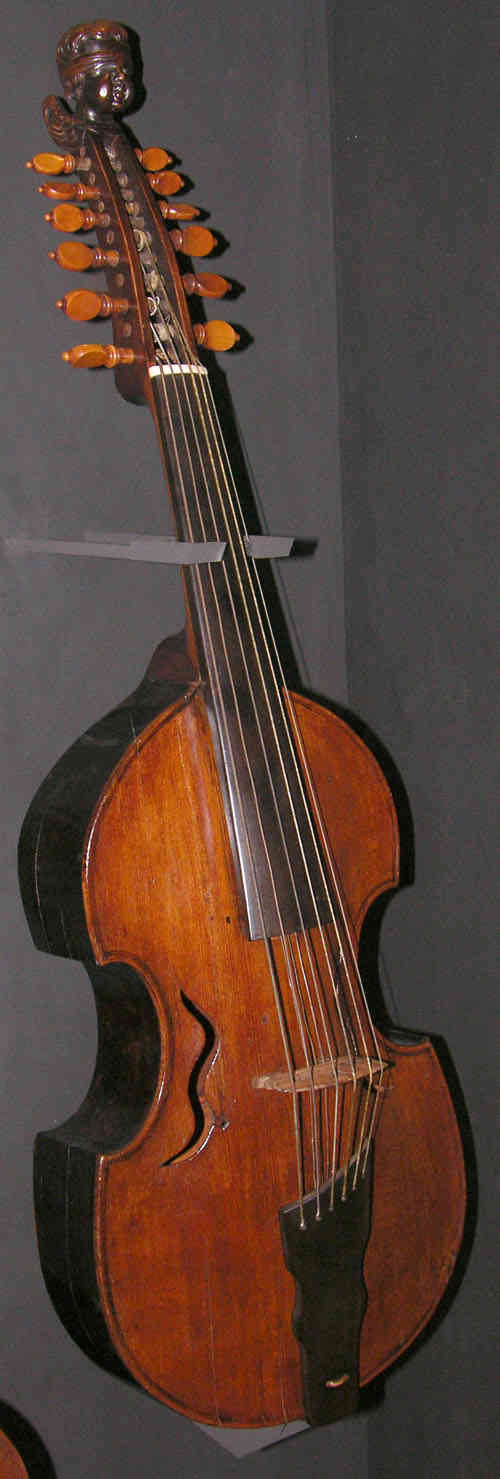
S cores of Love’ by Catherine McMichael is a composition through which the respective contributions of the vocal text and instrumental parts to the work’s meaning can be dissected and understood, maybe more clearly or dramatically than other examples allow. Here’s an experiment for you: Have a viola perform the tenor part—preferrably while reading from the tenor part—or transposed to alto clef, but with the lyric retained below the staves for the violist to see. Better yet, use a viola d’amore—one with an anatomically correct carved head at the top of the peg box, complete with the blindfolded eyes to represent Love. See if the sense of the piece doesn’t convey substantially the same meaning as it does when the words are sung. Do you not agree that it is as fine and precisely evocative a Valentine when arranged in that way, as it would be in its original mixed trio form?
I t’s like my violin teacher periodically reminds me (odious keyboard/brass/woodwind player and erstwhile tenor that I am): “The string contact-point ... is, at best, like your vocal cords. The instrument and the bow should be your voice. You must remember to make them sing; every note must sing.” The tone quality or sound color of viola can be a wonderful substitute for the tenor voice. Your make-believe mind (the mind of your listener as well) imagines the fictional words and automatically fills in the correct representations, the accurate intertextual truths. It’s enough to know the poems that inspired the setting—that caused the music to be constructed as it is...
I have performed the piece with viola (in place of the saxophone, not the singer), and it’s just as effective. In fact, the tenor at that performance was 60. His wife was in the audience, and it was his valedictory performance ... Several people came up to me at the intermission, literally weeping, exclaiming how grateful they were that contemporary music by a living composer could still be beautiful and moving.” — Catherine McMichael, email to CMT.
I have to pour unrequited love into bar 100 and not forget a touch of fear and loathing at bar 210.” — Jonathan Dunsby, Performing Music: Shared Concerns, p. 24. [an interesting on-point quote, I thought; has nothing to do with McMichael’s ‘Scores of Love’, though]