Wednesday, March 5, 2008

Robert Taub: Aesthetics, Quantum Tunneling, and the Musical Path of Most Resistance

 Mountain Paths of Greater and Lesser Resistance
R  obert Taub, a Babbitt champion, played ‘Reflections’ (1974), a stunning work for piano and synthesized tape, and ‘Canonical Form’ (1983), a seminal piano work in which contrapuntal lines get put through innumerable combinations and permutations. Yet on the surface, the piano piece captivates with its bold shifts of mood and texture: incisive and clipped one moment, delicate and pensive the next.”
  —  Anthony Tommasini, NYT, 12-MAY-2006.
I  recently heard a portion of Robert Taub’s account of Beethoven’s Sonata in F minor, Op. 2, No. 1, on NPR’s Morning Edition program while in the car, on my way driving to work. Robert Taub is a Princeton- (class of 1977) and Juilliard-trained American pianist known for his performance of contemporary classical music. He has performed and recorded many of the works of Babbitt, Powell, Persichetti, and Brümmer—as well as Beethoven, Scriabin, and others. Robert Taub was Artist-in-Residence at Princeton’s Institute for Advanced Study from 1994 through 2000. Robert Taub appeared in November 2005 with Rob Kapilow at the Folly Theater in Kansas City on the Friends of Chamber Music’s ‘What Makes It Great?’ series. And I had heard him play many years ago, when Taub was at the Institute for Advanced Study in Princeton. But I have not heard him perform live for a long while. Hearing him on the radio prompted me to revisit Taub’s recordings and try to understand why I admire his playing so much.

Robert Taub
M y conclusion is that, while he creates an illusion of relative ease, Robert does not take any ‘easy’ routes—not in the Sessions or Babbitt, and not in the Beethoven. In fact, he seems always to cleave to paths less traveled. He takes the ‘path of most resistance’, not the ‘path of least resistance.’

W hy? I would ask Robert if I get the opportunity. But for now, and in view of the previous post’s reflections on Andrew Armstrong’s playing, I think the reason—for Robert, for Andrew, for many others—has to do with personal temperament and avidity for risk, and with personal motivations and how music comes to be a prominent part of one’s life. After all, this playing is not a ‘job’. Artistic integrity is not about free-will, choosing, and then cohering with one’s choice—as if one could simply decide what one is or could be, pull oneself up by one’s bootstraps, and become that. Instead, it’s about discovery—of the truth in the music, and of one’s own ‘chops’—and acceptance of what one has been given or what one has found out.

In his ‘Principia Ethica,’ G. E. Moore asserted that the property ‘Good’ is simple, indefinable, and non-natural [timeless]. Good has an immediacy and immanence that are impervious to analysis: the indisputable aesthetic unity of the fine wine in the glass. That’s what I hear in Taub’s playing, just as I hear it in Armstrong’s playing. The playing is beautifully crafted, yes, and with no unnecessary tension—only the amounts and types necessary to accomplish the aesthetic and expressive purposes. But there is their clear musical ‘vision’ and this burning desire to express it. The fact that the need to express it entails arduous treks up very high peaks—or tunneling straight through them—that’s just the way things are.

W hat is a ‘path of most resistance’? Well, the path of least resistance describes the physical or metaphorical pathway that provides the smallest resistance to forward motion by a given object or entity, among a set of alternative paths. In physics, the concept is often used to explain why an object or entity (electrons, for the flow of electricity) follows a given path. So the path of most resistance is the opposite: the one path among the set of alternatives that presents the maximum obstacle or energy requirement, the most improbable path.

But in quantum physics there is the possibility of ‘tunneling’, where particles behave in a probabilistic rather than deterministic manner. My impressions of Taub’s playing of Sessions or Babbitt are that he is engaging in quantum tunneling, phrase to phrase.

A n aphorism is not a mere fragment, a morsel of thought: it is a proposition which only makes sense in relation to the state of forces that it expresses, and which changes sense, which must change sense, according to the new forces which it is capable of attracting.”
  —  Gilles Deleuze, Nietzsche & Philosophy, p. xiii.
T   aub plays Babbitt as though the phrases were quantum Nietzschean aphorisms—a totally different way of doing philosophy, and a totally different way of doing aesthetics: this is maybe the difference in how Taub enters into this music so beautifully, how he makes it his own.”
  —  DSM.
In a manner reminiscent of Jacques Lacan’s, Jacques Derrida’s or Hélène Cixous’s sense of ‘performing,’ Taub’s playing is like a text that resists stereotypical acts of reading by acting-out his own idiomatic identity. Some may think his taste ‘out-of-step’ with conventional wisdom, but that waywardness and deviance are the basis for his originality and timeless [non-natural] beauty. He’s a musicians’ musician, but one whose diverse, novel, and sometimes dissident styles of playing are accessible to almost anyone with the inclination to listen.

W hat else? There is an innocence about his tone and his phrasing that belies his scholarship and worldliness. There is no law of physics against what he is about to do, and so he does it. Whatever is not forbidden is permitted! A barrier looms in front of him—a musical passage that presents formidable technical challenges—and quantum tunneling kicks in. Suddenly, he is on the other side.

His pedaling technic, among other things, is noteworthy. Listening to it, I was led to revisit the papers that Bruno Repp at Yale published about ten years ago. In that research, Bruno studied conservatory pianists and the biomechanics of their pedal depressions and pedal releases as a function of tempo and musical style. Excerpts from Beethoven and Brahms sonatas were a particular focus of Repp’s research.

adapted from Repp 1997, Fig. 1
Repp found that there was no stable or consistent aspect of personal pedaling style that generalized among the pianists he studied. There was no constant phase-relationship between the periodic key depressions and either peda depressions or pedal releases, nor was there a consistent delay of pedal actions relative to manual actions.

But pedal-change time (PCT) can’t decrease indefinitely as tempo increases. And the kinematics of hand and foot actions changes with global changes in tempo—the velocity of pedal depressions and releases tends to increase with tempo, and the depth of pedal depressions tends to decrease—so that motor delays (both absolute, in milliseconds, and relative, as a percentage of inter-onset interval (IOI) ) are a function of tempo.

Repp found that there were different individual tolerances for overlap between successive sonorities. Long PRT and long key overlaps result in more appealing legato and tend to be mastered relatively late in a pianist’s development. In terms of the neurophysiology, the longer these intervals are, the harder they are to control, according to Repp. But the skill to achieve long PRT and long key-pedal overlap enables elite pianists to systematically vary these times over wider and wider ranges to achieve their expressive purposes—one of the ‘secrets’ of elite legato technic that we hear in Taub’s playing—the Beethoven Sonata in F minor, Op. 2, No. 1, that I heard on the radio, for example.

adapted from Repp 1997, Table. 1
T   he sense of disappointment philosophers suffer from becomes the fundament of profoundly reformist religious and political philosophies called ideologies. Because ideologues radically underestimate the amount of value that is contained—that could be contained—by the world, they suffer from a deep-seated, ever-to-be-frustrated feeling that the world stands in need of a special kind of transformation, or that it must somehow be transcended if human life is to be made worth living. The unique feature of the sought-for change is that it depends on a thoroughgoing reconception of the world. Their thought is that, since the value of the things in the world as we presently conceive it to be is insufficient, we must conceive it wholly anew as the first step toward remaking it—if we are ever to discover the things that would give it sufficient value. Moore responds to this by arguing that such a reconception is not merely unnecessary and self-defeating, but the cause of great unhappiness. Whatever value is to be had by new things results from their being things human beings have known to be good from time immemorial. To try to make any of these things into something never before beheld is to try to make something into what it is not... Our attitude toward the [real things in the world in its current configuration] must then be one of inadvertent denigration rather than enjoyment.”
  —  Brian Hutchinson, G.E. Moore’s Ethical Theory, p. 172.
M   oore’s argument for the indivisibility of Good leaves no room for regret upon the sacrifice of a smaller good for the sake of a greater good. More importantly, although his doctrine of organic unities leaves it open for him to say that the greatest of goods depends on something bad, this is a possibility he explicitly rejects. Immediately, this is suprising, as he finds tragedy—the artistic representation of suffering and evil—to be a very great good. But he maintains that the actions and emotions that art displays for our wonderment (in its presentation of the eternal struggle between good and evil) can rest on make-believe rather than reflect anything real... Moore’s thought is an exercise in the dialectic of innocence rather than of lost innocence itself.”
  —  Brian Hutchinson, G.E. Moore’s Ethical Theory, p. 175.
T   o be completely innocent is to be unaware that there is any perspective or condition in opposition to which a case for innocence needs to be made—it is to be unaware even of the tricks of thought that lead the misguided to deny innocence. It follows then that anyone who attempts to diagnose those tricks of thought in order to make the case for innocence cannot be completely innocent. But if only someone who is no longer innocent can make the case for innocence, then to make the case is to guarantee its defeat. The possibility of innocence as a permanent condition of life cannot be said. But because it could only be done against a backdrop that is impossible, it also cannot be shown. For it even to occur to someone to try to state Moore’s [theory of innocence], he must consider that a simple and easily recoverable misunderstanding lies behind the thought of those who see the world as standing in need of redemption. The impulse to see the world falsely ... must be of the depth of a simple arithmetical mistake.”
  —  Brian Hutchinson, G.E. Moore’s Ethical Theory, p. 176.
Robert Taub recording of Scriabin sonatas

Berger book


Sunday, March 2, 2008

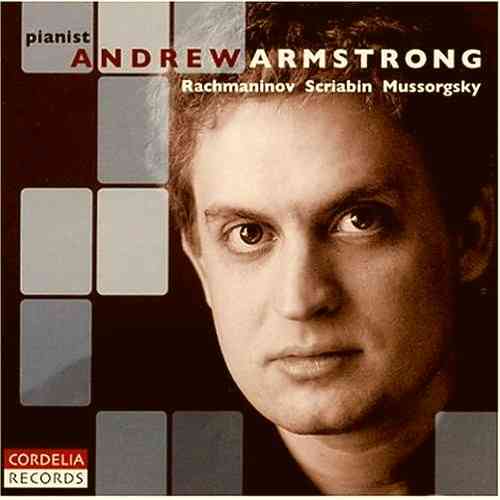
Andrew Armstrong is to Piano as Fine Wine is to Vessel?

 Andrew Armstrong, photo Checchia 2004
I   really feel I’m living on the edge a lot, and I think I’m a bit of a junkie in that respect. I think I’m a junkie in the way that I play, too. Because generally, if there’s a place in the music where there’s a choice of taking a risk and risking missing notes in order to create a certain tempo or a certain sound quality, as opposed to playing safer, I always choose the former, probably to a fault.”
  —  Andrew Armstrong, interview with Stephen Sawicki, NewCanaan-Darien, April 2007.

M   ost playing of melodies should be done with the una corda [left] pedal down so that the hammers strike only two of the three strings for each note in the  register where there are three strings per note. The sympathetic vibration of the unstruck string gives a penetrating and ‘carrying’ quality to the tone.”
  —  Thomas Manshardt, p. 86.
I’ve never before heard that Steinway yield up the clarity that it did last night in Andrew Armstrong’s performance, in concert with James Ehnes. Armstrong’s accomplishment has its origins deep within; his artistic sense is impeccable. But details of his technic are there in full view. From the box stage-right, I was able to observe his pedaling throughout. Fascinating, and quite unlike anyone else’s so far as I can tell.

The LeClaire piece required especially delicate balancing with the violin——and Armstrong performed almost the entirety of the Sonata in D Major, Op. 9, No. 3, with the una corda pedal depressed. At most, there were several ligatures where Armstrong allowed that left-pedal to come part-way up, with the associated effect on the resonant second and third strings, for each key that was depressed. The quality of the tone was crystalline, bell-like.

In the Brahms Sonata No. 1 in G Major for Piano and Violin, Op. 78 ‘Regenlied’, we again had extensive una corda pedalling. Expressive, in a way that heightens the drama through the dynamics. Armstrong’s face tells the story of where his motives lie. You can see his mouth and eyes reveal the turning wheels in his mind and the earnestness of his heart. Quite wonderful to watch from a vantage point not 15 meters away…

A  nother use of the una corda pedal occurs in the plotting of long crescendos. The basic plan is as follows: with the una corda pedal engaged, the melodic voice should increase in volume. When no further crescendo is [desirable] then the inner voices should expand, followed by the bass. When no further ‘unforced’ crescendo is possible, the una corda pedal can be raised—giving the effect of almost doubling the volume.”
  —  Thomas Manshardt, p. 87.
Manshardt’s book is the only written account that I can find that explains what Andrew was doing in the Brahms. Maybe this is old-hat to elite pianists; maybe only amateurs like me find this novel. But, if so, why do we not hear other performers doing what Andrew does? Why is his sound so astonishing? I begin to think it is because Andrew Armstrong understands the pedals better than some others do. No, let me correct myself. He concerns himself with the entire instrument; he concerns himself with his entire body. He plays as though the piano were one instrument, not an assemblage of a thousand mechanical parts. He plays as though his body were one unified thing. Most of all, he lets us know that the feet are not second-class citizens!

I  n performance of running passages. the pedal is in the position where it just barely begins to raise the dampers off the strings, the quarter-pedal. Quarter-pedalling prevents scale passages from sounding dry and colourless.”
  —  Thomas Manshardt, p. 88.
And it isn’t just what he does with his una corda technic: his insight into the other pedals’ artful uses is remarkable as well. In one concert it is possible to learn more from him than from months with other teachers who focus on the hands and upper-extremities … Thank you, Andrew, for your risk-taking and generosity!


 Andrew Armstrong


2 March 08

Mother’s Day

“What are you going to eat tonight at the Indian restaurant for your Mother’s Day meal?" I asked Mum.
“I’ll start with poppadums, and then garlic mushroom puri. For my main course I’ll probably have vegetable pathia. Hot and sweet. The thought of it's making my mouth water.”
“Did you enjoy helping me with the radio interview on Friday?”
“I didn’t expect to be asked anything. We thought it was just you they would be interviewing, but I didn’t mind.”
“You gave it the family touch.”
“Well, people are interested in a mother’s viewpoint. You have to experience it to really know how it feels.”
“How does it feel now in relation to how you felt when I was in prison?”
“Have you got three hours to spare?”
“Can’t you just summarise your feelings?”
Mum sighed heavily, and said, “I don’t know where to start.”
“You’re avoiding the question.”
“Now at this very moment, I feel happy about the outcome and that you are home and we are a family again, and you’re here for the first Mother’s Day in seventeen years. I love us all eating together round the table and chatting or watching movies. But I’ve had a lot of ups and downs since you got home, which you may not have realised.”
“Did hitting me on the head with the frying pan help?”
“Yes, Definitely. My counsellor said that I’ve got unexpressed anger towards you.”
“Don’t express it too much.”
“Not with the Frying pan anyway.”
"Now that I’m free, how come you’re still having ups and downs?”
“Me and your dad spent the last six years working towards your release. A release that we were never sure would happen. The stress was immense. At times I dealt with it better than at others. I was often close to a breakdown.”
“But I’m here now.”
“Yes, and when you arrived, greeting you at the airport, hugging you and kissing you as a free person back with us was one of my happiest moments. We were all euphoric the weekend we spent in London after picking you up. And when we took you home that euphoria lasted for weeks. I’d look at you sometimes and think I was dreaming and that you weren’t really here.”
“Why are you feeling down?”
“It was the anti-climax. After the initial few weeks, my mood plummeted and the realisation of all that had happened to us came back to me. I felt as bad as when you were first arrested. I felt back to square one. I wanted it all to go away. I wanted it all to have never happened, and your presence in the house reminded me of everything we had been through. I wanted to escape from the house.To be away from you.”
“Aren’t these Buddhist texts you are studying helping train your mind to let go of things in the past that may depress you.”
“Yes. Over the years of your incarceration I worked hard on my meditation and tried to be positive. And for a lot of the time it worked. I know all the theory but sometimes the depression was so bad I couldn’t put it into practise. Obviously my meditation wasn’t strong enough and I need to keep working at it.”
“People are always asking how I’m adjusting, well, how are you and Dad adjusting to having me in the house?”
“Apart from eating us out of house and home, it’s not too bad. The only row we’ve had is over your female following.”
“So I’ve been well behaved?”
“Yes, you are very well behaved and very polite.”
“More polite than when I left?”
"You were always polite. That’s the way we brought you up. But when you first came back you would do everything I told you to do. You were institutionalised. You had difficulty making decisions and would ask me what you should do every time you had to choose. The doing everything I told you was nice, but unfortunately that didn’t last long.”
“It’s got to be a bit weird having me in your house as an adult after all these years, even if I am stuck away in the garage or on the computer upstairs?”
“It was strange having you back, and dependent on us. It was like having a thirty-nine-year old child in the house. You appeared very vulnerable. You made me feel as though I wanted to protect you. I feared that people may not accept you or that you would have difficulty being around people, and the pressure of these worries made me feel down. The thoughts of you having to start your life over again troubled me. I tried to be cheerful with you. I hope I never made you feel as though you were a burden to us?”
“No. I’ve not.”
“So, did you never realise that I felt down?”
“You can see it in your face. It’s unpreventable. It’s like my friend Jack when he’s depressed. He can’t hide it.”
“Getting you off the computer was one of my main worries as you sat for hours white faced and bleary eyed oblivious to everything going on around you.”
“I still do. To succeed as a writer I’ve got to put the hours in.”
“Yes, it’s fine now, but when you arrived you weren't well. You were tired and you hadn’t recovered from the horrors of your transportation and the journey home. We were very concerned about your mental and physical health. Now you are having a social life as well as working on the computer. You are more adjusted to the outside now, and my worries about you are lessening.”
“So, do you approve of my wild nights out with Hammy and Posh Bird? Is that part of my rehabilitation?”
“It certainly is. Posh Bird! Bet you can’t believe your luck! She's lovely. And I think the way your old friends rallied round and took you out was heart warming. Hammy dropping in with a bottle of champagne to celebrate your release and Aza taking you Christmas shopping in Liverpool. They have been great. When you have nothing material to give in return and people still want to be with you that is when you know you have genuine friends. I do worry about Hammy though, and wish he didn't drink so much. As for the wild goings on in the Bells, I’d like to come and see this for myself if you’d let me.”
Aza loves reading your blog. I think you need to get on the computer and start blogging again. Why did you stop and when are you going to continue?”
“You want the truth?”
“Of course.”
“I stopped blogging because I felt so depressed. I didn’t want to write about my sadness because I felt guilty about feeling down, when I should have felt so happy and grateful for your safe return. I didn’t want my readers to think I was going crazy. I couldn’t explain or understand my feelings at that time, so I couldn’t make up happy blogs because they would have been a lie.”
“When will you blog again?”
“I’d like to start blogging again, but I’ve got out of the habit.”
“Are you going to use that as an excuse?”
“No. I like writing. I think writing the blog during last year helped me to cope with all that was going on, even though we couldn’t blog everything for fear of causing problems with your release. It was good reading the comments and they helped me as well. We have both met some lovely people through our blogs. I will start blogging again, perhaps when I come back off holiday after Easter.”
“If there’s a piece of advice you could give to the parents of someone who’s just gone into jail or prison what would it be?”
“To tell people. First of all tell those close to you and your friends. When you were first incarcerated I didn’t tell anyone. I was in a state of shock. I couldn’t deal with it. I made your dad and sister promise not to tell anyone. I went into work every day and pretended it hadn’t happened. I’m a psychology tutor and should have known better, but I didn’t, and keeping this locked inside of me caused me to break down. I thought people would turn against me, that I would lose my job and that people would throw bricks through our windows and daub ‘drug dealers’ on the walls. It was only when I started to tell my relations, friends and then colleagues at work that I realised how wonderful and supportive people could be. That support helped me through the trauma of the following years. I’d always advise anyone in that situation to share their worries and concerns. It eases the pain. I was lucky to have an amazing husband and daughter, but people shouldn’t be afraid of telling the world.
They shouldn’t blame themselves. Although it’s a thing parents always do when things go wrong. Guilt and shame are negative emotions that dragged me down, until I accepted the situation. They need to accept what has happened and do whatever they can to help their child. But they can only do this if they forgive. No matter what their child has done, it’s happened and nothing can change that. You’ve often said that without our support you wouldn’t have got through it so well. Your Dad and I felt we had no choice. You were our son and we had to stand by you.”
“I appreciate everything you and Dad did other than you hitting me over the head with the frying pan.”
“I’ll do it again if I have to.”

For Mother’s Day, I gave Mum an orchid.


Email comments to writeinside@hotmail.com or post them below

Copyright © 2007-2008 Shaun P. Attwood

Saturday, March 1, 2008

Excellence in Being For the Good: James Ehnes, Neo-Fiction, and the Many Faces of Virtuosity

 James Ehnes
T  his is the best sort of virtuosity that you will hear tonight—because of its nuances, its extraordinary sensitivity and elegance!”
  —  Cynthia Siebert, prefatory remarks, introducing James Ehnes’s and Andrew Armstrong’s performance in Kansas City.
I  ncredible mix of action, special effects, and story!”
  —  DSM, after James Ehnes’s and Andrew Armstrong’s performance in Kansas City.
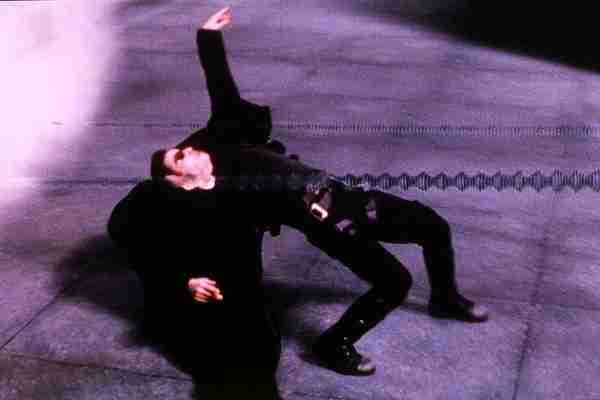
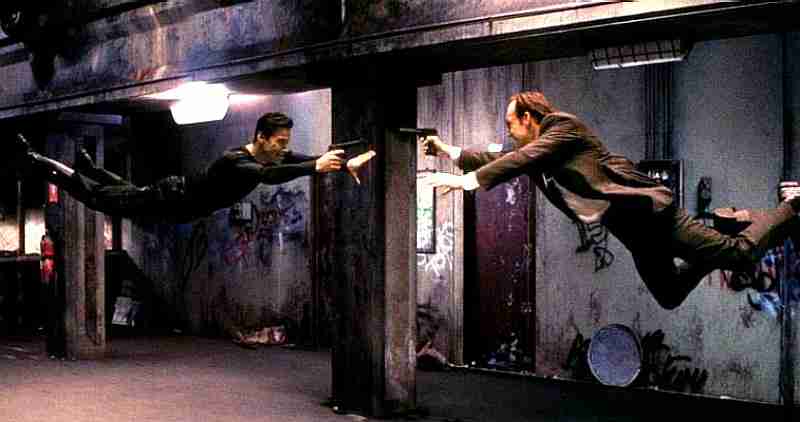
I  f I read one more review that says that something or someone is ‘virtuosic’—that their playing was ‘virtuosic’—my head will explode. It’s the lamest, laziest excuse for a compliment that a reviewer can write. It tells us nothing, in 300 words or less. Instead, I wanna read about whether he/she plays like Keanu Reeves fights in the original ‘The Matrix’. I wanna know details about how the fight went, note by note. I’ve got all the attention span in the world; I’ve got all night. Tell me. I wanna know whether his/her playing can save the World, and I wanna know how this can really happen. I wanna know whether this is The One. Make me believe!”
  —  Anonymous.
J   ust in case you were hoping to make it back, they’ve reconfigured the culture so there are hardly any phone booth [portals] left. We’re gonna need guns. Lots of guns. And an endless supply of logic, humor, tenderness, disobedience, defiance, and argumentative tenacity. The surviving members of the old crew are still on board, along with some new recruits, freshly located, unplugged, and debugged. Are you with us? You’ve already made your choice. Now you have to understand WHY you made it.”
  —  Jacket blurb, William Irwin book, The Matrix and Philosophy.
It’s astonishing how much we expect of the Arts—especially of music. How can it possibly deliver us out of the desert-like banality that comprises so much of modern life?

And yet it can and, surprisingly often, does. It awakens us, enables us to feel how alive we and others around us are, makes us feel deeply, truly human—immersed. Nobody ‘taught’ us this, in school or in out-reach programs. We haven’t succumbed to some seductive marketing scheme to make us consume this stuff. The music doesn’t exist to separate us from our money and divert us for an hour or two. The music we’re after may at times be sensual and escapist (that is, it can be part of The Matrix, for those who prefer the Blue Pill). Or the music can at times propel us into a novel and unexpected reality—one that may or may not be pleasurable but is, regardless, inherently meaningful (that is, it can be part of the Real World, for those of us exponents who take the Red Pill). In either case, we honestly and truly resonate with it and identify deeply with it. If you don’t want to call music that succeeds in doing this ‘virtuosic’, maybe the word you’re looking for is ‘engrossing’ or ‘profound’.

T  he public doesn’t need educating [about classical music]. It doesn’t need sexy marketing, or publicists, or icons [to save classical music markets]. It wants music it can enjoy or at least respect. Composers ... should have a long, hard think about why there is a far larger appetite for the music of [list of names #1] than there is for [list of names #2].”
  —  Christopher Pugh, Gramophone, 2008 March; 85: 8.
 Keanu Reeves, dodging bullets
The classical music repertoire that sells—both old and new; both live and recorded—is not all righteous, redemptive, heroic ‘Matrix-oid’ stuff of course. Sometimes what we want is serene and pacifistic, so long as it’s not namby-pamby or face-losing. We desperately want to believe in the possibility of peace, and we crave music that consoles us and dramatically restores our hope. No mean feat, that. So, if you don’t want to call music that succeeds in doing this ‘virtuosic’, maybe the word you want is ‘irenic’.

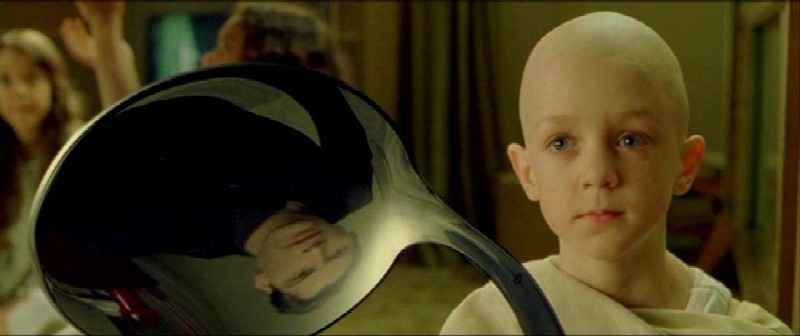
 The Matrix, the Oracle’s Appartment, Psychokinesis, ‘This is not a spoon’
F  or me the Regenlied [Song of the Rain, Brahms Sonata for Piano and Violin, Op. 78] is like a dear and true friend whom I would never forsake for anyone else. In its soft, contemplatively dreaming feeling and its wondrously consoling strength, it is one of a kind.”
  —  Eduard Hanslick, 19th-Century music critic.
The chamber music repertoire is rife with intimate narrative between parts. In that regard, we want desperately to be reminded that human beings can be beneficent and responsive. We want music that will remind us of friends and family who have loved us and helped us and who have worked for the public good. And, equally often, we want music that will remind us of our own good-heartedness and steadfastness—of our own radical devotedness to those we love. We want music that helps us plumb the depths of our aspirations to frenzied sacrifice for significant others: we would never forsake them, even if it costs us our lives. Most mothers feel such a love for their children—a ferocity that’s a natural correlate of childbearing and biology. Others of us have to get our other-centered ferocity in other ways. So, if you don’t want to call music that succeeds in helping us do this ‘virtuosic’, maybe the word you want is ‘altruistic’ or ‘rapt’ or just ‘berserk’ (in the Norse sense of that word).

O  f course you are aware—that no one can help loving it more than anything in the world, and that one becomes addicted to it by just studying and understanding it, by listening to it as in a dream, and by becoming completely absorbed by it ... When I play the last page of the E-flat major Adagio, I always think to myself that [Brahms] can only be a thoroughly good-hearted man.”
  —  Elisabeth von Herzogenberg, 19th-Century singer, remarking on Brahms’s Op. 78.
  • Virtuous—commendable, ethically laudable, venerable, redemptive;
  • Proficient—elite level of technic and interpretation;
  • Incredible, illuminating, transcendant—giftedness defying mortality and the triviality of human existence; fluency beggaring belief; super-human, exceeding known limits; god-like omniscience and omnipotence;
  • Courageous—scoffing at danger; gambling and winning against terrific odds; dynamic and processual; continuously (re-)earned, not a static ‘attribute’ of character;
  • Strenuous—the virtue of sweat and ‘dirty hands’; self-sacrifice to others / to humankind or to the professional guild (see Godlovitch, pp. 74-78); extraordinary exertion on behalf of public goods;
  • Orthodoxastic—integrity; embodying what the field believes or idealizes; beneficience; advocacy and regulatory role in opposition to wickedness or maleficence and mediocrity.
 The Matrix, Subway Hyper-fight
Oh, that last bullet, in the bulleted list above! Consider the plight of the arts in the U.S., and of art music in particular. The recently announced $16M cut in this year’s funding for the National Endowment for the Arts (NEA) is outrageous. “It means we must redouble our efforts to raise the arts consciousness of those who are seeking elective office in the coming year… On VoteUsa candidates are compared on 35 important issues: foreign policy, environment, … I clicked on ‘Education’ and found 56 sub-topics; number 53 was ‘Art and Music,’ and 6 out of the original 7 major candidates had no statement at all on it, ” says Magaret Lioi, CEO of Chamber Music America, in her editorial in this month’s issue of Chamber Music magazine (March 2008; 25(2):7). Currently the candidates “have no platform on the arts… the word ‘art’ doesn’t even appear on their websites.”

But every thinking human takes pride in seeing humankind flourish, and in knowing that the cultural legacy that has been bestowed upon us has been successfully passed on to the next generation. So ‘virtuosity’ is partly about Dawkins’s self-conserving (‘selfish’) gene: H. sapiens appreciating that what we have been as a people will endure beyond our life on the planet as individuals. Therefore, playing and composing that (a) significantly advance the cause of the arts and (b) serve as emblems of what civilized governments’ policies should support—must surely be ‘virtuosic’ as well.

James Ehnes’s concert tonight ran the gamut from rapt, to altruistic, to irenic (in the Brahms Op. 78, Vivace ma non troppo and Adagio), to engrossing (in the LeClair Sonata in D Major, Opus 9, No. 3), to profound, to transcendent, to redemptive, to fantastical (in the Bartók Rhapsody No. 2), to berserk—beyond courageous. The playing was righteous throughout, with highly accessible, visceral, and addictive elements. Ehnes was uncanny in his technical proficiency, oracular in both ‘red pill’ (Bartók) and ‘blue pill’ (Richard Strauss Sonata in E-flat, Op. 18) phrasing: clearly capable of taking the guild of musicians and each of us as individuals yet farther. Pyrotechnical, yes; iconic, yes; prodigious, yes; and at times near-miraculous (Brahms Scherzo, Sonatensatz). Segulah (“well-choosing,” “sustaining learning,” “Samek-Gimel-Lamed,” “לּגּסּ”) ! Tenth Dan! Jinlong Golden Dragon!

Virtuosic? T’would be damning by faint praise.

But how would you know if I’m right about this? Check out Ehnes’s recordings. Attend one of his forthcoming concerts yourself. Check out the several links below—on the epistemology of ideals and on virtue ethics. You don’t have to be a card-carrying philosopher to find these things fascinating. You don’t have to be Morpheus to know virtue when you hear it.

 Irwin book
C  onfucian virtues have been predominantly a perception of what it is to be a human being and how one should behave to fulfill the meaning of Life... recorded in Analects (Lu Yu) ... operating in a continually evolving process with no permanence or limit ... even the unknown is [a type of] knowledge [concerning which one can have, or not have, virtuosic mastery]. To Confucians, learning and discovery are themselves essential virtues ... not static but requiring interaction with others.”
  —  Tsung-I Dow, in Tymieniecka, p. 3.

 Kupfer book