R obert Taub, a Babbitt champion, played ‘Reflections’ (1974), a stunning work for piano and synthesized tape, and ‘Canonical Form’ (1983), a seminal piano work in which contrapuntal lines get put through innumerable combinations and permutations. Yet on the surface, the piano piece captivates with its bold shifts of mood and texture: incisive and clipped one moment, delicate and pensive the next.”I recently heard a portion of Robert Taub’s account of Beethoven’s Sonata in F minor, Op. 2, No. 1, on NPR’s Morning Edition program while in the car, on my way driving to work. Robert Taub is a Princeton- (class of 1977) and Juilliard-trained American pianist known for his performance of contemporary classical music. He has performed and recorded many of the works of Babbitt, Powell, Persichetti, and Brümmer—as well as Beethoven, Scriabin, and others. Robert Taub was Artist-in-Residence at Princeton’s Institute for Advanced Study from 1994 through 2000. Robert Taub appeared in November 2005 with Rob Kapilow at the Folly Theater in Kansas City on the Friends of Chamber Music’s ‘What Makes It Great?’ series. And I had heard him play many years ago, when Taub was at the Institute for Advanced Study in Princeton. But I have not heard him perform live for a long while. Hearing him on the radio prompted me to revisit Taub’s recordings and try to understand why I admire his playing so much.
— Anthony Tommasini, NYT, 12-MAY-2006.

M y conclusion is that, while he creates an illusion of relative ease, Robert does not take any ‘easy’ routes—not in the Sessions or Babbitt, and not in the Beethoven. In fact, he seems always to cleave to paths less traveled. He takes the ‘path of most resistance’, not the ‘path of least resistance.’
W hy? I would ask Robert if I get the opportunity. But for now, and in view of the previous post’s reflections on Andrew Armstrong’s playing, I think the reason—for Robert, for Andrew, for many others—has to do with personal temperament and avidity for risk, and with personal motivations and how music comes to be a prominent part of one’s life. After all, this playing is not a ‘job’. Artistic integrity is not about free-will, choosing, and then cohering with one’s choice—as if one could simply decide what one is or could be, pull oneself up by one’s bootstraps, and become that. Instead, it’s about discovery—of the truth in the music, and of one’s own ‘chops’—and acceptance of what one has been given or what one has found out.
In his ‘Principia Ethica,’ G. E. Moore asserted that the property ‘Good’ is simple, indefinable, and non-natural [timeless]. Good has an immediacy and immanence that are impervious to analysis: the indisputable aesthetic unity of the fine wine in the glass. That’s what I hear in Taub’s playing, just as I hear it in Armstrong’s playing. The playing is beautifully crafted, yes, and with no unnecessary tension—only the amounts and types necessary to accomplish the aesthetic and expressive purposes. But there is their clear musical ‘vision’ and this burning desire to express it. The fact that the need to express it entails arduous treks up very high peaks—or tunneling straight through them—that’s just the way things are.
W hat is a ‘path of most resistance’? Well, the path of least resistance describes the physical or metaphorical pathway that provides the smallest resistance to forward motion by a given object or entity, among a set of alternative paths. In physics, the concept is often used to explain why an object or entity (electrons, for the flow of electricity) follows a given path. So the path of most resistance is the opposite: the one path among the set of alternatives that presents the maximum obstacle or energy requirement, the most improbable path.
But in quantum physics there is the possibility of ‘tunneling’, where particles behave in a probabilistic rather than deterministic manner. My impressions of Taub’s playing of Sessions or Babbitt are that he is engaging in quantum tunneling, phrase to phrase.
A n aphorism is not a mere fragment, a morsel of thought: it is a proposition which only makes sense in relation to the state of forces that it expresses, and which changes sense, which must change sense, according to the new forces which it is capable of attracting.”
— Gilles Deleuze, Nietzsche & Philosophy, p. xiii.
T aub plays Babbitt as though the phrases were quantum Nietzschean aphorisms—a totally different way of doing philosophy, and a totally different way of doing aesthetics: this is maybe the difference in how Taub enters into this music so beautifully, how he makes it his own.”In a manner reminiscent of Jacques Lacan’s, Jacques Derrida’s or Hélène Cixous’s sense of ‘performing,’ Taub’s playing is like a text that resists stereotypical acts of reading by acting-out his own idiomatic identity. Some may think his taste ‘out-of-step’ with conventional wisdom, but that waywardness and deviance are the basis for his originality and timeless [non-natural] beauty. He’s a musicians’ musician, but one whose diverse, novel, and sometimes dissident styles of playing are accessible to almost anyone with the inclination to listen.
— DSM.
W hat else? There is an innocence about his tone and his phrasing that belies his scholarship and worldliness. There is no law of physics against what he is about to do, and so he does it. Whatever is not forbidden is permitted! A barrier looms in front of him—a musical passage that presents formidable technical challenges—and quantum tunneling kicks in. Suddenly, he is on the other side.
His pedaling technic, among other things, is noteworthy. Listening to it, I was led to revisit the papers that Bruno Repp at Yale published about ten years ago. In that research, Bruno studied conservatory pianists and the biomechanics of their pedal depressions and pedal releases as a function of tempo and musical style. Excerpts from Beethoven and Brahms sonatas were a particular focus of Repp’s research.

Repp found that there was no stable or consistent aspect of personal pedaling style that generalized among the pianists he studied. There was no constant phase-relationship between the periodic key depressions and either peda depressions or pedal releases, nor was there a consistent delay of pedal actions relative to manual actions.
But pedal-change time (PCT) can’t decrease indefinitely as tempo increases. And the kinematics of hand and foot actions changes with global changes in tempo—the velocity of pedal depressions and releases tends to increase with tempo, and the depth of pedal depressions tends to decrease—so that motor delays (both absolute, in milliseconds, and relative, as a percentage of inter-onset interval (IOI) ) are a function of tempo.
Repp found that there were different individual tolerances for overlap between successive sonorities. Long PRT and long key overlaps result in more appealing legato and tend to be mastered relatively late in a pianist’s development. In terms of the neurophysiology, the longer these intervals are, the harder they are to control, according to Repp. But the skill to achieve long PRT and long key-pedal overlap enables elite pianists to systematically vary these times over wider and wider ranges to achieve their expressive purposes—one of the ‘secrets’ of elite legato technic that we hear in Taub’s playing—the Beethoven Sonata in F minor, Op. 2, No. 1, that I heard on the radio, for example.

T he sense of disappointment philosophers suffer from becomes the fundament of profoundly reformist religious and political philosophies called ideologies. Because ideologues radically underestimate the amount of value that is contained—that could be contained—by the world, they suffer from a deep-seated, ever-to-be-frustrated feeling that the world stands in need of a special kind of transformation, or that it must somehow be transcended if human life is to be made worth living. The unique feature of the sought-for change is that it depends on a thoroughgoing reconception of the world. Their thought is that, since the value of the things in the world as we presently conceive it to be is insufficient, we must conceive it wholly anew as the first step toward remaking it—if we are ever to discover the things that would give it sufficient value. Moore responds to this by arguing that such a reconception is not merely unnecessary and self-defeating, but the cause of great unhappiness. Whatever value is to be had by new things results from their being things human beings have known to be good from time immemorial. To try to make any of these things into something never before beheld is to try to make something into what it is not... Our attitude toward the [real things in the world in its current configuration] must then be one of inadvertent denigration rather than enjoyment.”
— Brian Hutchinson, G.E. Moore’s Ethical Theory, p. 172.
M oore’s argument for the indivisibility of Good leaves no room for regret upon the sacrifice of a smaller good for the sake of a greater good. More importantly, although his doctrine of organic unities leaves it open for him to say that the greatest of goods depends on something bad, this is a possibility he explicitly rejects. Immediately, this is suprising, as he finds tragedy—the artistic representation of suffering and evil—to be a very great good. But he maintains that the actions and emotions that art displays for our wonderment (in its presentation of the eternal struggle between good and evil) can rest on make-believe rather than reflect anything real... Moore’s thought is an exercise in the dialectic of innocence rather than of lost innocence itself.”
— Brian Hutchinson, G.E. Moore’s Ethical Theory, p. 175.
T o be completely innocent is to be unaware that there is any perspective or condition in opposition to which a case for innocence needs to be made—it is to be unaware even of the tricks of thought that lead the misguided to deny innocence. It follows then that anyone who attempts to diagnose those tricks of thought in order to make the case for innocence cannot be completely innocent. But if only someone who is no longer innocent can make the case for innocence, then to make the case is to guarantee its defeat. The possibility of innocence as a permanent condition of life cannot be said. But because it could only be done against a backdrop that is impossible, it also cannot be shown. For it even to occur to someone to try to state Moore’s [theory of innocence], he must consider that a simple and easily recoverable misunderstanding lies behind the thought of those who see the world as standing in need of redemption. The impulse to see the world falsely ... must be of the depth of a simple arithmetical mistake.”
— Brian Hutchinson, G.E. Moore’s Ethical Theory, p. 176.

- Robert Taub page at California Artists Management
- Robert Taub, 'The Performer's Perspective: Beethoven's Laboratory', NYPR, 12-OCT-2006.
- Robert Taub discography at Amazon.com
- Path of Least Resistance, at Wikipedia
- Beiner R. Philosophy in a Time of Lost Spirit. Univ Toronto, 1997.
- Berger J. Hold Everything Dear: Dispatches on Survival and Resistance. Pantheon, 2007.
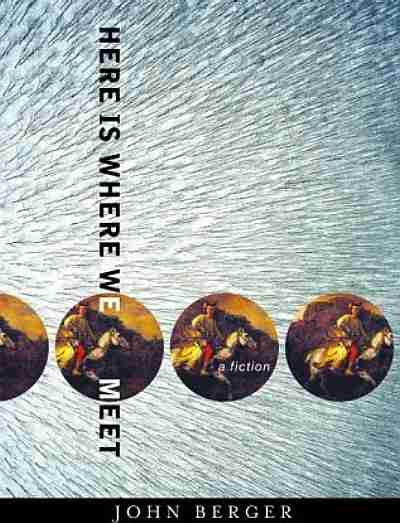
- Berger J. Here Is Where We Meet: A Story of Crossing Paths. Vintage, 2006.
- Critchley S. Infinitely Demanding: Ethics of Commitment, Politics of Resistance. Verso, 2007.
- Deleuze G. Nietzsche & Philosophy. Athlone, 1983.
- De Man P. Aesthetic Ideology. Univ Minnesota, 1996.
- Derrida J. The Animal that Therefore I Am. Fordham Univ, 2008.
- Derrida J, Dutoit T, Pasanen O. Sovereignties in Question: The Poetics of Paul Celan. Fordham Univ, 2005.
- Doyle L, Silverman H, eds. Bodies of Resistance: New Phenomenologies of Politics, Agency, and Culture. Northwestern Univ, 2001.
- Hoy D. Critical Resistance: From Poststructuralism to Post-Critique. MIT, 2004.
- Olkowski D. Resistance, Flight, Creation: Feminist Enactments of French Philosophy. Cornell Univ, 2000.
- Repp B. The effect of tempo on pedal timing in piano performance. Psychol Res. 1997; 60:164-72.
- Roth M. The Poetics of Resistance. Northwestern Univ, 1996.
- Smith B. Belief and Resistance: Dynamics of Contemporary Intellectual Controversy. Harvard Univ, 1997.
- Taub R. Playing the Beethoven Piano Sonatas. Amadeus, 2003.
- Taub R, Oppens U, Westchester Philharmonic. Francis Thorne, Roger Sessions: Piano Concertos. (New World, 1994.)
- Taub R. Milton Babbitt: Piano Works. (Harmonia Mundi, 1992.)
- Wolfreys J. The Rhetoric of Affirmative Resistance: Dissonant Identities from Carroll to Derrida. Palgrave Macmillan, 1997.
- DSM. Andrew Armstrong is to Piano as Fine Wine is to Vessel? CMT blog, 02-MAR-2008. (pedaling technic)