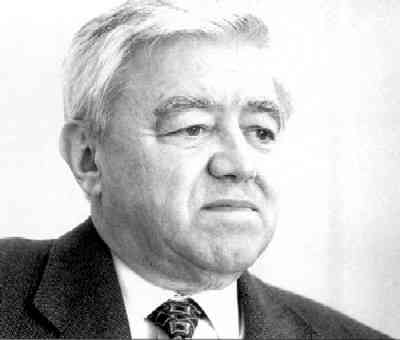
L abels, such as ‘traditional’, ‘modern’ and ‘post-modern’ are not oriented toward opposing ‘music in Slovenia’ and ‘Slovenian music’, but toward much more perplexed relations of the ‘cultural economy’—an economy of distributing certain values to the phenomena under discussion... In Slovenia, one could not speak of extreme examples of a ‘bricolage’ after whatever exists. It is not Cagean, but rather Feyerabend-esque ‘anything goes’: thus, we can rather speak of doubts regarding the slogans as ‘cross the border’ and ‘close the gap’. Nevertheless, the idea of openness is significant as an epistemological orientation point. If in fact the demand for differentiatedness is for the Slovenian composers permeated with a kind of (at least imaginary) ‘oceanic feeling’ of attachment to the world and its past, this Freudian metaphor seems ... to be increasingly shrinking the notion about oceans, often quite imaginary and, as a rule, partial. Hence, instead of a demand—there is a wish, or rather a necessity, for recasting the already-recognized ‘aesthetic capital’ by making use of one’s own creative potential through idiosyncratically understood cultural, ideological, aesthetic, or spiritual impulses.”Dubravka Tomšič (link to page on agent’s website here) gave a spectacular performance last night in Kansas City, to an appreciative crowd who began standing to applaud even before the interval. Her program included a performance of Macedonian Dances (1974), by her husband, the renowned Slovenian composer Alojz Srebotnjak.
— Leon Stefanija, On the ‘National’ in Music: The Sloveneness of Slovenian Music, 2006.
Srebotnjak is best known for his film music from the 1960s and 1970s (see IMDB and Slovenian Film Fund links below), more than 60 scores in all. But he has written considerable choral music and a number of important twelve-tone and serialist pieces (link to Slovenian Composer’s Society website here).
There is Slovenian music (domača) and non-Slovenian music (tuja), but there is also music that is neither. This is “ex-home” music (bivša domača): suspenseful and ambiguous, at the boundary of Slovenian otherness. Macedonian Dances are pure Balkan “ex-home”.
The Macedonian Dances are rich with irregular rhythm patterns. These dances, intense and pointillistic, have figures that are, at times, reminiscent of Prokofiev, evoking frenzied Serbian-Macedonian feet striking the floor. Each of these pieces is highly motoric, with accentuated pulse and widely varied dramatic dynamics and tonal colors.
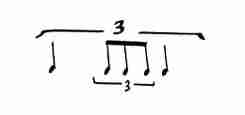
The ostinato repetition of a single, insistent note—a sort of ethnic motivic minimalism—is a fascinating feature of these Dances. The first dance (Allegro vivace) is positively seismic, with percussive rhythms in 7/8 ? The next dance features a pensive motif in major seconds, fit into a bitonal (two different key signatures concurrently) context. The wandering melodic line moves in narrow intervals above the ostinato dance rhythms underneath.

The third dance (Vivacissimo) is tremendously percussive—the sesquipedalian celebrants never trip, no matter how intricate their emphatic ‘steps’. The fourth dance (Adagio) is dark, ruminative, brooding—a meditation on a single note, drumming.
The fifth dance (Allegro rustico) boldly concludes Srebotnjak’s homage to Macedonian culture. This is not a sanitized ‘nice’ representational account of ‘folk music’ or of ‘Serbian-Macedonianness’. This is a raw, documentaristic collage of a cultural psyche in situ, the ‘real deal’, and we now realize that we have been, for these minutes just past, inadvertent anthropologist-observers of something very private, exotic-esoteric, and maybe taboo.
Presenters who wonder about the breadth of the appeal that a rhythmically esoteric and intermittently bitonal piece like Macedonian Dances may have for their audiences need not fear. This conservative Kansas City Friends of Chamber Music audience leapt to their feet in applause.

The Macedonian Dances ‘export’ succeeds, not only as a compelling ‘new music’ statement but also as an intercultural political-economic one. The ‘central banker’ in this polyrhythmic ‘economy of passion’, Dubravka and her interpretive ‘monetary’ powers are well-matched by Alojz and his creative and appropriational ‘musico-fiscal’ powers. It was a magical bivša domača evening, beginning to end: a most favorable balance-of-trade. Thank you, Dubravka. Thank you, Alojz.

- Alojz Srebotnjak page at IMDB.com
- Alojz Srebotnjak page at Slovenian Film Fund
- Alojz Srebotnjak page at Slovenian Composers’ Society
- Srebotnjak's 'Macedonian Dances' at G. Schirmer
- Dept. of Musicology, Univ Ljubljana.
- ENVL.net PolyPulse app
- Jens Johansson Polyrhythm generator app
- Anheier H. Isar Y, eds. Cultures and Globalization: The Cultural Economy. Sage, 2008.
- Chaffee G. Rhythm and Meter Patterns. Alfred, 2000.
- Dahlhaus C. Foundations of Music History. Cambridge Univ, 1983.
- du Gay P, Pryke M, eds. Cultural Economy: Cultural Analysis and Commercial Life. Sage, 2002.
- Groys B. Über das Neue. Hanser GmbH, 2007.
- Harrison G. Rhythmic Illusions. Alfred, 1999.
- O’Loughlin N. Music in Slovenia. The Musical Times, 1993; 134:130-3.
- Magadini P. Polyrhythms: The Musician’s Guide. Hal Leonard, 2001.
- Reti R. Tonality, Atonality, Pantonality: A Study of Some Trends in Twentieth Century Music. Greenwood, 1978.
- Stefanija L. On the 'National' in Music: The Sloveneness of Slovenian Music. The Slovenian (magazine), 2006.

F irst of all, how many people off the street know who ‘Rach’ is? This uninformed notion that everyone likes Rach and no one likes ‘new stuff’ is annoying. The problem begins with the notion that ‘broad appeal’ is necessary for great art.”
— Greg Robin, Univ Alabama, NMB, 23-MAR-2008.
H ave what it takes to write a Rach 2? Commission me and find out.”
— Phil Fried, ClassicalLounge.com, on the oppression of canonical works and people who obsess over them.