
S tart the tone spontaneously by impulse through correct action; in doing so, think and feel as though the tone placed and reflected at the same instant, forward against the roof of the mouth and on the chest—as though the contact or impingement of the tone were felt at both places simultaneously. Of course the high forward placing in mouth and face is the true placing, and the sensation on the chest is the action or reflection of the true placing. This can be done through flexible vitalized action alone. With a tight throat or local muscular effort it is impossible. This is perfect attack, and in this way all force and push are avoided. In this way freedom and inflation are secured, that condition which unites head and chest resonance.”
— Edmund Myer, Renaissance of the Vocal Art, 1902.
DSM: This year’s Utrecht Festival included a remarkable performance of Scarlatti sonatas by Pierre Hantaï. In 1985 Hantaï founded the chamber group Le Concert Français with his brothers Marc Hantaï and Jérome Hantaï and violinist François Fernandez. He’s also performed extensively with conductors Philippe Herreweghe and his former teacher Gustav Leonhardt.
CMT: Today Hantaï mostly performs as a soloist. He often appears as a guest with Jordi Savall.
DSM: Hantaï’s recordings of works of J.S. Bach have won him critical acclaim, in particular his two recordings of the Goldberg Variations (BWV 988), made in 1992 and 2002, respectively. His performance of one of these Variations as an encore at the Geertekerk in Utrecht the other night was truly inspired.
CMT: Scarlatti, a contemporary of Bach and Handel, around age 35 moved himself from Italy to Portugal. He went there to teach harpsichord to Princess Maria Barbara and, when she married the future King of Spain, Scarlatti followed her to Spain, where he lived the rest of his life. There are particular guitaristic sounds in his harpsichord sonatas from this period, and Hantaï renders these nicely. Scarlatti wrote an astonishing 555 sonatas for harpsichord. With such prolific composing one might anticipate a formulaic quality...
DSM: The term sonata for Scarlatti is not at all like the later, classical definition. Scarlatti’s sonatas are brief, most just a few minutes long. They have intense rhythms; they are all based on dance movements, as were most baroque harpsichord pieces, and Scarlatti rarely composed introspective music, slow sonatas that gave time to think. Scarlatti is Mr. Energy, Mr. Unremitting Verve and Liveliness.
CMT: Hantaï’s phrasing is wonderful. His legato is superb. He imparts balance to the voices in each hand. He provided inflected tempo and rhythm to these sonatas, fully humanizing them.
DSM: I think this performance surpassed even Horowitz’s famous interpretations. The music at the Geertekerk in Utrecht unfolded as a totally fresh experience. Hantaï made every moment meaningful, and every moment convincing.
CMT: ‘Anything goes’ was the order of the evening. And it all arose directly and naturally out of the Scarlatti musical scores—nothing seemed contrived. It sounds as if Hantaï’s having a great time. From his facial gestures, it looks as if he’s having a great time. Without doubt, he is having a great time.
DSM: This declamatory approach suits him—and it also seemed a good fit for the Scarlatti. I suppose there may be some who assert that the approach is not necessarily historically proper, not sufficiently dry and objective—but who’s to say?
CMT: I think we can deduce the effects of Leonhardt in Hantaï’s Scarlatti performance. The breakthrough was Leonhardt’s transformation of harpsichord technique from undifferentiated, monotonous dynamics—to colorful, delicate, rich, differentiated dynamics. He really transformed harpsichord tone, refined ornaments, redefined chord technique, and so on. Through his students, the ‘Leonhardt style’ continues to make headway against its competitors.
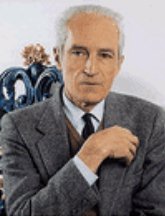
DSM: Leonhardt’s analytical way of playing—sensitive to detail, mindful of the musical and formal perspective of the music’s historical origins, but flexible to variant interpretations—has brought about a revival of harpsichord performance art.
CMT: The large Franco-Flemish harpsichord (about 93 x 37 inches, with Swiss Pine soundboard and lime wood case) that Hantaï played was also conducive to the effectiveness of his performance. In the candle-lit church sanctuary, the tone he achieved was confessional, highly personal.

DSM: You know, after more than 100 years ‘Tone Placement’ is still a controversial concept. In singing pedagogy, it refers to the arrangement of facial and pharyngeal and other anatomical structures so as to project a musically pleasing and effective tone. But it’s a concept that’s meaningful in instrumental performance practice, too. Learning the facts about tone placement and resonance makes a huge difference in the abilities of a singer and in the abilities of an instrumentalist. In simple terms, a singer has various body cavities (nasal cavity, chest cavity, etc.) and conductors (bones, ligaments, etc.) that each have acoustic spectral properties—resonances and impedances. Focusing the vocal tone through favorable resonating chamber(s) with proper support is important with regard to controlling and developing your tone as a singer. The instrumentalist does the same, but with an eye toward the acoustic spectral properties of the anatomy of the instrument, not the anatomy of the body. The keyboardist knows the particular acoustic qualities of the soundboard in various registers; knows the acoustic spectrum of the strings under different conditions of attack velocity and force; knows the timbres of the instrument throughout its range. The keyboardist knows how to manage tone placement through touch—finger and pedal technique—to achieve the desired tone. Hantaï does this as though by second nature. Superb.
I n searching for tone quality—the second most difficult factor in playing—it is helpful to think of the instruments of the orchestra... if one thinks of the quality or the sonority of the various instruments, one is helped to play more beautifully.”
— Vladimir Horowitz, Technic: The Outgrowth of Musical Thought, Etude, MAR-1932.
- Oude Muziek Festival, Utrecht
- Pierre Hantaï page on GoldbergWeb.com
- Les Passions Orchestre Baroque
- Concerts Parisiens (Aude Leriche, agent)
- Pierre Hantaï discography on Amazon
- Hantaï P. Scarlatti Vol 3. (Mirare, 2006.)
- Hantaï P. Scarlatti, Vol 2. (Mirare, 2005.)
- Hantaï P. Scarlatti Vol 1. (Mirare, 2003.)
- Hantaï P. Scarlatti: 22 Sonates pour clavecin. (Astrae Naive, 2001.)
- Hantaï P. Bach Goldberg Variations. (Mirare, 2004.)
- Hantaï P. Scarlatti Harpsichord Sonatas. (Ambrosie, 2002.)
- Donington R. Baroque Music, Style and Performance. Norton, 1982.
- Kirkpatrick R. Domenico Scarlatti. Princeton Univ, 1983.
- Neumann F. Ornamentation in Baroque and Post-Baroque Music. Princeton Univ, 1983.
- Zuckermann Harpsichords International
- CMT. Unplugged Folias. 12-MAY-2007.


