 Have you attended a concert or heard a recording by Gao Hong, nicknamed ‘Flying Dragon’?
 Chinese pipa artist and composer Gao Hong is featured in this month’s issue of Sounding Board, the newsletter of American Composers Forum. When she was 22, she was one of just two pipa players who were selected to train at China’s premier school of music, the Central Conservatory of Music in Beijing, where she studied with Lin Shicheng, the great master of Pudong style pipa. Currently, Gao is Adjunct Instructor at Carleton College in Northfield, Minnesota.
 The pipa is essentially a ‘bowl lute’. In Chinese, ‘Pi’ means ‘to play forward’ and ‘Pa’ means ‘to play backward’. In China the instrument dates to at least the 4th century C.E., but it had its origins more than 2000 years ago in Central Asia and the Middle East. The pipa has normally either 4 or 5 strings. The number of frets has gradually been increased over the centuries (now with 23 to 30 frets), giving the modern pipa greater chromatic possibilities over a three-and-a-half octave range. The pipa player tapes picks (fake fingernails) to all fingers and, optionally, to the thumb. (Do a mouse roll-over Chinese images to see translations of the texts below.)
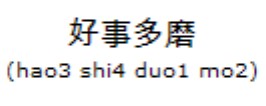 Gao Hong has lived in the U.S. since 1993. Her playing and composing have won her much recognition, including:
- Meet The Composer Fund New York, 2005-6
- Subito award from the American Composers Forum, 2005
- Emerging Composer Commission from the Jerome Foundation, 2002
- American Composers Forum’s Performance Incentive Fund, 1998
- McKnight Artist Fellowship for Performing Musicians, 1997
- Fellowship from Minnesota State Arts Board, 1997
- Walker Art Center Community Partnership Fund, 1996
- First Prize in Hebei Young Music Performers’ Competition, 1984.
 Gao continues to travel a great deal. So much so that I am reminded of Jacques Attali, who talks about ‘hypernomads’ in his work, L’homme nomade. Hypernomads are voluntary nomads, as distinct from involuntary nomads (infranomads), whom Attali separates into ‘nomads by custom’ and ‘nomads by constraint’. The latter includes refugees, migrant workers, homeless people, exiles. For Attali, hypernomads are a constitutionally peripatetic class of creative individuals, whose discoveries and art works influence the sedentary non-nomads. Gao Hong must, by all reckoning, be a hypernomad. Look up ‘hypernomad’ in the dictionary, and we imagine to see a picture of Gao—successful diaspora of the Chinese Cultural Revolution. Flying Dragon!
 Gao expresses her admiration and gratitude for her experiences learning from pipa master, Lin Shicheng, who died two years ago. Gao is by nature modest and makes special effort to attribute her own accomplishments to the teaching and generosity of Lin Shicheng. It is a striking and characteristic feature of her personality, for her to so consistently and earnestly do this. She does Lin Shicheng great honor.
[ Lin Shicheng and Gao Hong, pipa; video 1996 ]
Sonic signs of Spring include birds singing at dawn, chipmunks emerging from hibernation chirping to each other from rocky outcrops. We hear this in Gao Hong’s playing, on YouTube here and here.
 Aphorisms are an oblique acknowledgement of difference—of crisis—and opposing nomadism and passivity by acting to redeem or recover culture from fragmentation and nihilism. Is this part of Gao Hong’s intention?
 If you haven’t lived in many places, you may not be able to identify an association between sound and place.
![Today we have wine [tomorrow, maybe not], so let’s drink today](http://gapyx.com/cmt/2008/03/today_we_have_wine_so_lets_drink_today.jpg) Listeners make of music what they will, based on their prior experiences and contexts that they’ve known. From all possible interpretations, they select ones to which their own experiences give priority. Gao Hong offers a wider range of experiences than most of us will ever know…
Listeners make of music what they will, based on their prior experiences and contexts that they’ve known. From all possible interpretations, they select ones to which their own experiences give priority. Gao Hong offers a wider range of experiences than most of us will ever know… People who haven’t ever been displaced—who haven’t moved around a lot, who haven’t experienced periods of separation from family and place—think of this music as ‘fantastic’ or ‘alien’. To Gao Hong, it’s utterly concrete. The timbral and rhythmic textures are concrete. Except for echo, except for reverberation. Hear it on her recordings. It is the abstraction of distance in the Chinese landscape, of mountains in the distance.
 Epic migrations over long distances—marking the chapters of one individual’s life; marking the chapters of a people’s existence as a society.
![Indigo [student] is bluer than the plant it comes from [master]](http://gapyx.com/cmt/2008/03/indigo_student_bluer_than_the_plant_master.jpg) It is by now evident that Gao Hong is very blue, probably bluer than her master, Lin Shicheng—even though Gao is too modest to even contemplate that possibility. Lin Shicheng’s blues were, admittedly, of a different hue—of a different generation.
It is by now evident that Gao Hong is very blue, probably bluer than her master, Lin Shicheng—even though Gao is too modest to even contemplate that possibility. Lin Shicheng’s blues were, admittedly, of a different hue—of a different generation. Gao permits herself and her music to become ‘inscribed’ by the culture within which she lives. Minnesota and North America have been hospitable, for some 15 years now. But Nature is not ‘kind’ or ‘hospitable’. Her 7 year-old daughter’s leukemia is a case-in-point. How can a parent not be ‘inscribed’ by the life-threatening illness of her child. Where water flows, a channel is formed. Yes, a channel. An indelible gash is eroded. No one’s fault. How to cope?
![A cornered dog will leap over a high wall [do seemingly impossible things in extremis]](http://gapyx.com/cmt/2008/03/cornered_dog_will_leap_over_wall.jpg) And life goes on. Hardship and suffering are the human condition, as well as joy and treasured remembrance. It makes us become extraordinary things, leap unleapable barriers, makes us do unbelievable deeds. Things that ought to be impossible, and that one should never wish to befall any of one’s enemies. You think pipa is ‘alien’? Think again! Listen to Gao Hong’s music.
And life goes on. Hardship and suffering are the human condition, as well as joy and treasured remembrance. It makes us become extraordinary things, leap unleapable barriers, makes us do unbelievable deeds. Things that ought to be impossible, and that one should never wish to befall any of one’s enemies. You think pipa is ‘alien’? Think again! Listen to Gao Hong’s music. What does not kill us makes us stronger?
 Gao Hong, fine ambassador for the human species.
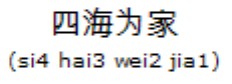 Gao, cheerful and friendly, makes everyone feel welcome. Given the challenges she has faced, how can we not be inspired by her example?
 Layer upon layer in her instrumental and choral writing, reflecting the classical influences of her conservatory training and regard for traditional Chinese forms—and yet bearing the marks of her own sense of what is happening now and what lies ahead.
![Words escape from the lips [in a Freudian-slip way]](http://gapyx.com/cmt/2008/03/words_escape_from_lips.jpg) The spontaneity of Gao Hong’s playing sometimes astonishes us. She seems fearless. She lets the ‘chips’ fall, even if what they contain is an inconvenient truth.
The spontaneity of Gao Hong’s playing sometimes astonishes us. She seems fearless. She lets the ‘chips’ fall, even if what they contain is an inconvenient truth.![One hand cannot [without help from others] clap to make a sound](http://gapyx.com/cmt/2008/03/one_hand_cannot_clap_to_make_sound.jpg) Collaboration with Shubhendra Rao and other Asian chamber musicians is a hallmark of recent Gao projects.
Collaboration with Shubhendra Rao and other Asian chamber musicians is a hallmark of recent Gao projects. When she was young, her mother told her “that I had a terrible singing voice. When I sang she said it sounded like someone stepping on a rooster’s neck… Writing a choral work now has made me the happiest person in the world. Even if I don’t sing it, I enjoy hearing others perform it. I’m so happy … with the incredible luck of having my piece as one of five selected to be premiered with VocalEssence.” [interview with Amy Boxrud, ACF, SoundingBoard, MAR-2008]
 What is most important is to keep going, to never give up.
 And to use compositional materials and instruments that are best-suited to the expressive goals at hand.
C ontrary to the objective evidence, it is the ‘we’ of all people who feel more insecure and more passionate about everything related to security than people of most other societies on record. This is the puzzle that needs a resolution if the twists and turns of the popular sensitivity to danger ... are to be comprehended.”Gao will perform at Ted Mann Concert Hall, Univ Minnesota, 2128 Fourth St South, Minneapolis at 8:00 p.m. on Saturday, 19 April.
— Zygmunt Bauman, Uncertainty and Other Liquid-Modern Fears, in Priban, p. 17.
- Gao Hong website
- Gao Hong page at ACF
- Pipa page at Wikipedia
- Music Faculty at Carleton College
- Attali J. L’Homme Nomade. Artheme Fayard, 2003.
- Cavell S. This New Yet Unapproachable America: Essays after Emerson after Wittgenstein. Living Batch, 1994.
- Humphrey C, Sneath D. The End of Nomadism? : Society, State, and the Environment in Inner Asia. Duke Univ, 1999.
- Myers J. The Way of the Pipa: Structure and Imagery in Chinese Lute Music. Kent Stat Univ, 1992.
- Priban J, ed. Liquid Society and Its Law. Ashgate, 2007.
- Thrasher A. Chinese Musical Instruments. Oxford Univ, 2001.
- Yung B, Rawski E, Watson R, eds. Harmony and Counterpoint: Ritual Music in Chinese Context. Stanford Univ, 1996.


