Showing posts with label discovery. Show all posts

Saturday, May 29, 2010

Phoenix Ensemble: Feldman and Babbitt Clarinet Quintets, Security/Acquiescence, Insecurity/Dissent, Morphogenesis

 Phoenix Ensemble
R    enoir said that the same color, applied by two different hands, would give us two different tones. But in music, the same note, written by two different composers, gives us the same note. When I write a B-flat, and Berio a B-flat, what you get is always B-flat. By contrast, the painter must create his medium as he works. That’s what gives his work that ‘hesitancy’—that ‘insecurity’ so crucial to painting.”
  —  Morton Feldman.
M   usicians are used to spinning a phrase or rhythm in a certain way. There is a kind of common grammar to the musical language that we all get used to. Babbitt seems to knowingly throw a wrench in it, intentionally pulling or tugging the musicians in very uncomfortable directions. It’s frustrating, but in the end it makes you think in completely new and different ways and causes a kind of wonderful tension in the music. As scary as it was, I grew to like the feeling. I think for all of the musicians in the group, this was the most difficult piece we had ever worked on. Babbitt made himself available whenever we had specific questions about the score... In [Feldman’s] clarinet quintet, and most of his late music especially, he has a way of sustaining this beautiful world and keeping it interesting over very long stretches of time, and for some reason it works. It’s a real challenge for the musicians because there is never any technique or ‘flash’ to grab onto or hide behind. It’s just this ‘stripped-to-the-bone’ musical expression, and our ability to spin a phrase at a constant ppp.”
  —  Mark Lieb, interview with Robert Carl.
L isten to these excerpts:


    [50-sec clip, Phoenix Ensemble, Morton Feldman, ‘Clarinet and String Quartet, m. 283’, 1983, 1.6MB MP3]


    [50-sec clip, Phoenix Ensemble, Milton Babbitt, ‘Clarinet Quintet, m. 1’, 1996, 1.6MB MP3]

F eldman’s quintet is like a window—a car window or a window on a train—and you can experience what goes by, what is happening outside: it is the epitome of passive observation.

B y contrast, Babbitt’s quintet is caring-but-confrontational: possibly an intense dialogue between fellow passengers who are on the train.

F eldman, instinctive; Babbitt methodical, mathematical.

B    abbitt’s elegant contours—clarinet and string quartet lines thickly folded into each other at the opening, gradually becoming sparser, with reflective pockets of unaccompanied clarinet—radiate genteel yet incisive whimsy, and his pleasure at creating such delicate musical mechanisms expresses itself shamelessly.”
  —  Philip Clark, Gramophone, MAR-2010.
T he aim of each piece seems to be to convince the performers that they won’t be able to get it ‘right’ unless they’ve understood and accepted the composer’s point of view—even when that point of view is that you have no hope of ‘mastering’ the situation—of “winning”; of living forever; of getting your way. You can influence things while you are alive; you can initiate and change the patterns that develop; you can contribute, laugh, cry. But you are not getting out of here alive.

BlindWatchmaker biomorph generator
T he trick in the Feldman piece—with one instrument starting the bar, the next entering on the second beat, and so on until the final note is a chord made up of the motif—is to allow the textural device to do its job. ‘Let it go’ as soon as your note has been played. Otherwise, the building ‘chord’ will tie down the hand and the mind.

I   f you are going to try to learn these pieces, it would be advisable to have a surgeon standing by.”
  —  Ludwig Rellstab (1799-1860), commenting on Chopin’s Etudes.
L aunched into the world, the compositions make their way... wild animals, just weaned. (It’s not like their composer-parent releases them with any didactic or political intention, right?)

A    t this first meeting I brought John a string quartet. He looked at it a long time and then said, ‘How did you make this?’ I thought of my constant quarrels with (Stefan) Wolpe, and how just a week before, after showing a composition of mine to Milton Babbitt and answering his questions as intelligently as I could, he said to me, ‘Morton, I don’t understand a word you’re saying.’ And so, in a very weak voice I answered John, ‘I don’t know how I made it.’ The response to this was startling. John jumped up and down, and with a kind of high monkey squeal, screeched, ‘Isn’t that marvelous! Isn’t that wonderful! It’s so beautiful, and yet he doesn’t know how he made it.’ ”
  —  Morton Feldman, recalling his first meeting with John Cage.
  • Mark Lieb (clarinet), Aaron Boyd (violin), Kristi Helberg (violin), Cyrus Beroukhim (viola), Alberto Parrini (cello), on Feldman
  • Mark Lieb (clarinet), Aaron Boyd (violin), Alicia Edelberg (violin), Cyrus Beroukhim (viola), Bruce Wang (cello), on Babbitt
T his recording is an absorbing, totally engaging performance by Lieb and his colleagues and a superb, intimate exposition of Feldman’s and Babbitt’s ideas—about music, about life.


Thursday, February 25, 2010

Idealized, Totemic Love: Godfrey Winham and Bethany Beardslee before the Age of AutoTune

 Godfrey Winham and Bethany Beardslee, 1955
L    et me not to the marriage of true minds
Admit impediments; love is not Love
Which alters when it alteration finds,
Or bends with the remover to remove.
Oh, no!

It is an ever fixèd Mark
That looks on tempests, never shaken;
It is the star to every wand’ring barque,
Whose worth’s unknown though His height be taken.

Love’s not Time’s fool, though rosy lips and cheeks
Within His bending sickle’s compass come;
Love alters not with His brief hours and weeks,
Love bears it out to the edge of Doom.

If this be error and upon me prov’d,
I never writ nor no man [or woman] ever lov’d.”
  —  William Shakespeare, Sonnet CXVI.
L isten to this excerpt:


    [50-sec clip, Bethany Beardslee & Robert Helps, Godfrey Winham, ‘To Prove My Love’, III, 1974, 1.6MB MP3]

O ver the past month I have been reading Leslie Blasius’s 1997 monograph on Godfrey Winham (link below), especially passages about Winham’s composition for soprano and string quartet, ‘Habit of Perfection’.

D uring this month I have also been listening and re-listening to the CRI disc, ‘Tribute to Bethany Beardslee’, who was Godfrey’s wife. The disc contains a recording of Bethany singing Winham’s composition, ‘To Prove My Love’, accompanied by Robert Helps on piano.

T he piece is published by Boelke-Bomart Inc in Hillsdale, New York, but the score for it was originally published in memoriam, in volume 13 (1975) of the journal, Perspectives of New Music, immediately after Winham’s death.

T he phrasing and perfection of the intervals that Beardslee sings are amazing. The voice-leading that Winham wrote for her is tight-rope like—no, more like virtuosic, risky ballet “choreography” for the voice.

L ove bears it out to the edge of Doom, as Shakespeare’s Sonnet 116 has it.

W hat were these three sonnets—to Godfrey; to Bethany? The piece was composed during the first several years of their marriage, but on this recording it is performed when they had been married 19 years, still in their 40s, near the end of Godfrey’s long illness, youthful but within a few months of his dying and aged way beyond their years...

T here is a maturity and expressive clarity of Beardslee’s and Helps’s performance that poignantly manifests the vulnerability of the soprano wife gazing into the abyss of her husband’s fast-approaching terminal phase. It simultaneously bears the marks of bravery and devotion, defiant strength and tragic fragility. Frailty with advancing illness. Glenn Gould’s last recordings of the Goldberg Variations in 1981, compared to the ones from 1955? Well, no.

O r Johnny Cash’s last recordings? No, but still.

W    hen we first went back and listened to the recordings after he had passed, it really just felt like this voice, coming back from another ‘place’. It had all this weight and gravity to it. Scary. You can hear good days and bad days in the voice. Sometimes, it’s weak—as if Cash were struggling for breath. Other times it’s stronger.”
  —  Rick Rubin, interview with David Bauder on new Cash CD.
W inham’s frailty and inner strength, projected vicariously through the piano part that Robert Helps executes beautifully. We suspect that ‘bearing it out to the edge of Doom’ meant something a bit different in June, 1974, when the piece was recorded than it meant in 1956 when the piece was composed. In 1974, Doom was plainly visible.

A  lapse in sense happens between the twelfth and thirteenth lines of the sonnet. Most of the words are monosyllables; only three contain more syllables than two. Poetic diction is ruptured. The language is now concrete, not abstract or metaphysical. There are run-on lines and the pair of double-endings. There is, as Brooke put it, “a happy blending of open and closed vowels, and of liquids, nasals, and stops.” No Antares AutoTune® or vocoder processing. Only human pitch-shifting and formant correction that defies the impermanence of the flesh. The res-o-lute, fixèd accents in the quatrains give way finally to progressively more vulnerable, unrelieved iambic feet—ones that accept the reality of the soul stuck in the unreliable flesh. The thing converges on silence and ends. The ending is a meditative silence, a ‘hanging’ sonic [non-]event. Runic, millennial, catastrophic.

W    hat is needed is a definition of ‘hanging’ which makes use of the notion of ‘effective context’, with the result that a tone is not ‘hanging’ before it occurs. An event x may be said to be ‘effective’ at the time of an event y if and only if x belongs to the effective context of y. An event x may be said to be ‘closed-off’ from y if it is subordinate to another sonic event z which occurs between x and y in time. An event x is ‘hanging’ at the time of an event y if it belongs to the effective context of y and is not closed-off from y, although there is a superior stage at which it is closed-off from y.”
  —  Godfrey Winham writings, Container VIII, page *26d.
L istening to the piece over and over, I sense a sort of adult willfulness that is out-of-sync with an inner childlike sense of reality. The complex personality who wrote such complex, chaotic music theory, all stored in 6.7 linear feet in the Princeton University Library in 16 archival boxes of cross-indexed papers and notebooks... still had this child inside, who was true and who hoped for everything. Who loved these sonnets, not as worthy artistic vehicles for creating prestigious, commendable academic compositions, but as totems erected to honor a love that defined him. Standing stones.

“Will Bethany be able to do this? Will I be able to do this?”

C hords with more upper structure notes, sounding more active compared to ones with more basic chord tones, which become points of resolution. Idiomatic and fluent writing; the beginning of each movement asks a question and so drives our interest; natural flow to focal points and climaxes; appropriate and sensitive realization of the text; effective and resourceful use of texture, with many imaginative challenges. This is the composer who in the 1960s imagined elegant computer-synthesized soprano voice, long before the technology could fulfill the fantasy. This is the soprano who could sing whatever notes are on the page, the fantasy who inspired the composer’s imagination.

M ost people don’t think of Winham as a contrapuntist, and it is true that one does not find much in the way of imitative counterpoint in his music. He never composed any fugues, and there are not many canons by Winham. However it can, and should, be said that Winham’s counterpoint is exquisite.

L eslie David Blasius is currently Professor of Music Theory at the University of Wisconsin-Madison. His book includes a set of complete excerpts of materials and an index for the entire Winham archive, which is housed at Princeton University. The book also contains a series of photographs, of Godfrey and Bethany and friends (including the one above).

T o read Blasius’s book and to listen to this CD is to wish to have known these wonderful human beings. I will plan to visit the 6.7 linear feet of Winham boxes the next time I am in Princeton...


H    ow can you make a new revolution when your last statement already said that anything goes?”
  —  Charles Wuorinen.


Wednesday, July 8, 2009

New Music for Harpsichord: Terra no longer ‘Incognita’

 Jane Chapman CD
S    peed creates ‘pure’ [sonic] objects. Speed is itself a pure object, since it cancels out the ground and territorial reference points, since it runs ahead of time to annul time itself, since it moves more quickly than its own cause and obliterates that cause by outstripping it. Speed [such as that of which virtuosic harpsichord is emblematic—] is a triumph of ‘effect’ over ‘cause’, a triumph of ‘instantaneity’ over ‘Time as depth’—the triumph of the ‘surface’ and pure ‘objectality’ over the profoundness of desire. Speed creates a space of initiation which may be lethal; its only rule is to leave no trace behind... Triumph of forgetting over memory, an uncultivated amnesic intoxication!”
  —  Paul Dolden, program notes for ‘Physics of Seduction, Invocation #2’, performed by Vivienne Spiteri [comme si l’hydrogène… the desert speaks (1992)].
T he Boston Early Music Festival and the Utrecht Oudemuziek Festival and other festivals are important for presenting a variety of Baroque harpsichord music. But they are also important as convocations of harpsichord artists and fine instruments, enabling a lot of new music for harpsichord to be performed and heard. The recent BEMF festival, for example, had several ‘fringe’ events that were devoted to harpsichord new music.

A nd that led me to immerse myself in harpsichord, listening to all the recordings I could get my hands on—anything composed in the last 30 years. My intent in this CMT blog post is not to ‘review’ anything but, rather, just to confess my amateur excitement about the whole of it.

T here are a variety of recent compositions where the harpsichord is part of an electroacoustic ensemble, the harpsichord’s piercing timbre and steep attack contributing to and ‘holding its own’ with the overall ‘spikiness’ of the rest of the instrumental textures. Some works adopt Baroque compositional practices and earnestly reveal that we still today have Baroque thoughts that are best (or maybe ‘only’) expressible with harpsichord and Baroque idioms. There are other compositions where the harpsichord’s association with Baroque ideas and gestures is calculatedly used to impart an anachronism or disorienting effect to the piece. The hesitancy of the plastic plectra against the strings, the increasing strain/deformation of each plectrum before it finally yields and plucks its string, can convey a mechanical rhetoric of foreboding—hyper-rationality to the verge of obsession/compulsion and beyond.

T here are yet other works where the harpsichord’s motoric tendencies—the fact that the plucked strings’ sound dies out relatively quickly, inviting them to be struck again soon, sixteenth notes begetting sixteenth notes—are used to impart a psychology of sheer organic activity.

A ll of this is incredibly fun to hear, to play—and, presumably, to write.

E lisabeth Chojnacka, Jane Chapman, Jukka Tiensuu, and other performers clearly delight in the imaginative use of the harpsichord’s vast variety of timbres, its rhythmic drive, its motoristic movements of all shades of neo-Classicism. The joy of my past 4 weeks of listening is finding how many of these ultimately achieve cognitively and emotionally accessible expressions. (Ad hoc lists below are not imagined to be anywhere close to ‘complete’. Only meant to suggest how many there are, how much there is... Tip of proverbial ‘iceberg’.)

    Baroque styles
  • Hendrik Bouman
  • Grant Colburn
  • Miguel Robaina
  • Fernando de Luca
  • Gianluca Bersanetti
  • Claude Arrieu [pseudonym for Louise Marie Simon]
  • John Fodi ‘Sonata’, ‘Toccata’, and ‘Divisions II’
  • Jean Papineau-Couture ‘Nocturnes’ and ‘Dyarchie’
  • Bernard Naylor
  • Bengt Hambraeus ‘Capriccio I’
  • Rudolf Komorous ‘At Your Memory the Transparent Tears Fall Like Molten Lead’ (viola da gamba and harpsichord)
    Modern [sic] styles
  • György Ligeti
  • Henri Dutilleux ‘Les Citations’
  • Elliott Carter ‘Double Concerto’ [harpsichord, piano, and 2 chamber orchestras]
  • John Cage ‘HPSCHD’ and ‘Untitled’
  • Louis Andriessen
  • Iannis Xenakis
  • Frank Oteri ‘Machunas’, 3 solo works, ‘Six of One, Half a Dozen of Another’, ‘e.e.cummings song cycle’
  • Douglas Boyce ‘Concerto grosso’ (strings, clarinet, harpsichord)
  • Marti Epstein (alto sax, harpsichord)
  • Kyoko Abe ‘Metamorphose’, ‘Solo’
  • Maria d’Agnesi-Pinottini’s 3 concertos [harpsichord, 2 vn, db or string qt], ‘Allegro ou presto’ and 3 sonatas [harpsichord solo]
  • Liana Alexandra
  • Isabel Aretz
  • Zygmunt Krauze
  • Maurice Ohana
  • Henryk Górecki
  • Toshi Ichiyanagi
  • Franco Donatoni
  • Cristobal Hallfter
  • François-Bernard Mâche
  • Graciane Finzi
  • Stephen Montague
  • Yves Prin
  • Tomàs Marco
  • Cristobal Halffter
  • Mauricio Sotelo
  • Grant McLachlan
  • Ástor Piazzolla
  • Marius Constant
  • Luc Ferrari
  • André Boucourechliev
  • Aldo Clementi
  • Roberto Carnevale
  • Betsy Jolas
  • Joseph Horovitz
  • Roberto Sierra
  • Krzystof Knittel
  • Gustavo Beytelmann
  • Jean Wiener
  • Krzysztof Meyer
  • Dimitri Yanov-Yanovski
  • Kaija Saariaho
  • Jukka Tiensuu
  • Lou Harrison
  • Ellen Taaffe Zwilich
  • Gardner Read
  • Walter Piston
  • Robert Starer
  • Lester Trimble
  • Timothy Brady
  • Micheline Coulombe Saint-Marcoux
  • Ton de Leeuw
  • Bengt Hambraeus
  • Hope Lee
  • Rodney Sharman ‘Kore’
  • Denis Gougeon ‘Rondeaujour d’hui’
  • Ka Nin Chan ‘Phantasmagoria’
  • Hope Lee ‘Melboac’
  • Jan Jarvlepp
  • David Eagle ‘Toccare’
  • Alice Ho ‘Arc’
  • Jean Lesage ‘La Tentation d’Arlequin’, ‘Thanatopsis’
  • André Villeneuve ‘Vers la Quatrième Terre’
  • Wendy Prezament
  • Pierre Desrochers ‘Cinema-mode d’emploi’
  • Linda C. Smith ‘Gravity’
  • Brian Cherney ‘Déploration’, ‘Hommage à Morton Feldman’
  • François Rose ‘A perte d’espace’
  • Bruce Mather ‘Saumur’
  • Tim Brady
  • Serge Provost ‘Crètes’
  • Denis Lorrain ‘La Nuova Ricordanza’ (two harpsichords)
  • Bruce Pennycook ‘The Desert Speaks’
  • David Keane ‘Turbo Toccata’
  • Stéphane Volet ‘Retors’
  • Micheline Coulombe Saint-Marcoux ‘Miroirs’
    Electroacoustic styles
  • Paul Dibley
  • James Dillon
  • Paul Dolden ‘Physics of Seduction’ (harpsichord and tape)
  • Sam Hayden
  • Paul Newland
  • Roger Redgate
  • Sohrab Uduman
  • Mike Faughan
  • Paul Whitty
F rom the recent harpsichord compositions that have engaged my ears over the past month, I find it harder and harder to understand why the piano had ever so totally eclipsed the harpsichord by the early 1800s. Fashion; the dynamics of the ‘market’ for public performances in larger halls, where more ‘volume’ was needed; the preferences of famous performing artists favoring piano over harpsichord... We tend to think of the homogenizing effect that mass-market pop culture has had on music in recent decades, but how about the eclipse of harpsichord by piano? Similar pressures, even 150+ years ago?

T he originality of the recent writing for harpsichord is phenomenal. Very few composers writing for the instrument leverage archaisms of color, orchestration, technique. Instead, everybody’s been tremendously busy exploiting the natural textures and sonorities of harpsichord sound in the myriad contemporary idioms that they call ‘home’.

    Just a few of the performers who have championed new music for harpsichord
  • Elisabeth Chojnacka
  • Vivienne Spiteri
  • Christopher Lewis
  • Annelie de Man
  • Jane Chapman
  • Laura Tivendale
  • Carole Cerasi
  • Pamela Nash
T o summarize, I am delighted to have immersed myself in recent works for harpsichord this past month, and I enthusiastically recommend that you try it, too. For me, an amateur with (at best) modest amounts of time to spend, the experience has been long-overdue. It’s like a view has opened for me onto a big continent that I hadn’t previously known about. I feel a peculiar mix of embarrassment at my ignorance and enthusiasm for exploring these unfamiliar harpsichord territories and all who inhabit them. Sheepish first-world anthropologist? They were here on the globe all along, industrious, prospering, but I’d never before spun the ‘globe’ around to look (hear).


    [50-sec clip, Elisabeth Chojnacka, Gyorgy Ligeti, ‘Passacaglia’, 1.6MB MP3]


    [50-sec clip, Elisabeth Chojnacka, Gyorgy Ligeti, ‘Continuum’, 1.6MB MP3]


    [50-sec clip, Arditti Quartet, Jukka Tiensuu, ‘Arsenic & Old Lace for String Quartet and Microtonal Harpsichord’, 1.6MB MP3]


    [50-sec clip, Jane Chapman, Paul Dibley, ‘INV I’, 1.6MB MP3]


    [50-sec clip, Jane Chapman, Paul Dibley, ‘INV III’, 1.6MB MP3]


Sunday, December 14, 2008

Latent Meaning: Performances as Authorship, Transcriptions as Intrepid Exploring

 Rachlin-Maisky-Imai CD
C    an Bach’s famous keyboard variations actually be improved? . . . it depends what you mean by ‘improved’. If ‘given a fresh new perspective’ qualifies, then the answer, according to this CD, is a resounding ‘Yes’! Hearing three distinct voices instead of one truly enhances the experience of listening to this classic. So how did Dmitry Sitkovetsky transcribe it? Violin & viola for the right hand, cello for the left? It would be nice if it were that simple. Sometimes the treble line involves the viola and violin, sometimes just the violin. In the case of Variation 19, Sitkovetsky does something quite impish. He sneaks pizzicato figures into the counterpoint mixture, so that when the violin and viola are conversing, the cello provides background plucking. But wait! That’s not all! A few bars later, the pizzicato is traded back and forth among the instruments, only to fade in and out of prominence. And it all happens in less than two minutes. Other dazzling feats occur in this performance. The centerpiece is the haunting Variation 25, the longest (7:39) adagio in the piece. Harpsichordist Wanda Landowska called it ‘The Black Pearl’, perhaps for its deeply affecting, melancholic beauty. The trioists inject it with an impressive array of dramatic techniques, like deft shifts from pianissimo to mezzo-forte and slight shadings in tempo. It almost sounds like a string trio piece from the late classical period. Why does this arrangement of the Goldberg Variations succeed so well? … the structure of the piece lends itself to three instruments, not one. When played on keyboard instruments, the two upper voices are virtually indistinguishable [but in string trio the voices are each more distinct].”
  —  Peter Bates, review of Rachlin et al., AudiophileAudition, 11-JAN-2008.
I f you haven’t previously heard Dimitry Sitkovetsky’s transcription of Bach’s ‘Goldberg Variations’ (BWV 988) for string trio [see links below], you will, I think, be pleasantly surprised. I particularly like the Deutsche Grammophon recording of the performance of it by Julian Rachlin (violin), Mischa Maisky (cello), and Nobuko Imai (viola).


    [50-sec clip, Julian Rachlin et al, Sitkovetsky transcription of Bach’s Goldberg Variations for String Trio, ‘Aria’, 1.2MB MP3]

It is amazing how well-suited the variations turn out to be for strings. Sitkovetsky’s transcription is an expecially thoughtful and innovative one, which teases out new expressive elements that previously have been only ‘latent’ and never realized when played on a harpsichord or a piano.

New meanings that have lurked in Bach’s text for almost 270 years become apparent, even obvious. New kinds of tension—melodic, harmonic, textural, and metrical—that contribute to the music’s overall effect begin to take hold of us.

Dmitry Sitkovetsky was born in Baku, Azerbaijan in 1954 and is a Russian violinist and conductor. He grew up in Moscow, studying at the Moscow Conservatory. When he wanted to leave the Soviet Union in 1977, he feigned mentally illness, was granted permission to emigrate to the U.S. and studied at Juilliard. In 1979 he won first prize in the Kreisler Competition in Vienna. From then on he has appeared as soloist with renowned orchestras around the world. He was the Principal Conductor and Artistic Advisor of the Ulster Orchestra from 1996 to 2001 and was Conductor Laureate of the orchestra during 2002. Since 2003, he is Music Director of the Greensboro Symphony Orchestra and Principal Guest Conductor of the Russian State Symphony in Moscow.

 Dimitry Sitkovetsky
Each of the trio parts avails the player the opportunity for an expansive response to the text, as well as challenges to maintain a good blend and ensemble. Rachlin sounds especially intense and personal here, which is what one always wants from a performer. The prodigious insight of Sitkovetsky’s compositional decisions is ample justification for what might otherwise have been thought to be an ‘unnecessary’ transcription of ‘Goldberg’. Once you have it, you realize that you needed it all along...

Bach’s two- and three-part keyboard writing for most of the ‘Goldberg’, so double-stops might be thought to be the natural approach to a string trio transcription that would render the harmonies in the original text. But there is far more here than that. Sitkovetsky emphasizes the dialogues in the counterpoint by exquisitely leveraging the timbral differences between the instruments. Rachlin, Maisky, and Imai are genuinely inspired by the ideas that Sitkovetsky has provided, as you will readily hear in their superb Deutsche Grammophon recording.

Variation 18 ending
 J.S. Bach, Goldberg Variations, V.18 mm. 23 - 32

    [50-sec clip, Julian Rachlin et al, Sitkovetsky transcription of Bach’s Goldberg Variations for String Trio, ‘Variation 18’, 1.2MB MP3]

Variation 19 opening
 J.S. Bach, Goldberg Variations, V.19 mm. 1 - 5
Variation 19 ending
 J.S. Bach, Goldberg Variations, V.19 mm. 28 - 32

    [50-sec clip, Julian Rachlin et al, Sitkovetsky transcription of Bach’s Goldberg Variations for String Trio, ‘Variation 19’, 1.2MB MP3]

Variation 20 opening
 J.S. Bach, Goldberg Variations, V.20 mm. 1 - 6

    [50-sec clip, Julian Rachlin et al, Sitkovetsky transcription of Bach’s Goldberg Variations for String Trio, ‘Variation 20’, 1.2MB MP3]

In trying to understand why the Sitkovetsky string trio transcription of the ‘Goldberg’—and the Rachlin et al. performance of it—are so novel and genuinely illuminating, I recall that Peter Kivy once noted that “the quality that persists through [Landowska’s] various performances of the ‘Goldberg Variations’: performance is to be valued not as process but for the interpretation it embodies.” Kivy argued that performances are full-fledged ‘versions’ of works in precisely the same sense as arrangements are—performance becomes a vicarious act of composing. It is that full-fledged creativity that we hear here.

S    o in the case of the Goldberg, there is in fact one pulse, which—with a few very minor modifications—mostly modifications which I think take their cue from ritards at the end of the preceding variation, something like that—one pulse that runs all the way throughout.”
  —  Glenn Gould, interview with Tim Page, 1982.
Rachlin plays the opening aria with what feels to me to be just the ‘right amount’ of circumspection. The introspective sensitivity and exquisite variety of touch that Maisky and Imai achieve are a joy to hear as well. The transitions between Variations are well thought-out and deliver a perfectly coherent, consistent sense of ‘pulse’ from one Variation to the next—consummately Bach-like. The rhythmic alignments, Variation-to-Variation, amount to a kind of [64-bar] hypermeter that threads its way throughout the aria, the 30 variations in all their diverse 2-beat and 3-beat and 4-beat meters, and the da capo restatement of the aria. Click on the image below to open an Excel spreadsheet showing color-coded alignments of the tempi between Variations, as they are rendered in the Rachlin et al. recording of the Sitkovetsky transcription for string trio.

 Raichlin et al., Goldberg Variations, Pulse Transitions between Variations (click image for Excel spreadsheet showing alignments)
To Kivy, music is never dominated by the text in front of us; music is performance and is therefore irreducibly ‘social’. It involves a direct and private communication from composer/transcriber to listener. The intelligibility of the piece is negotiated in real-time—none of the social participants has ‘omniscience’, or a privileged perspective of meaning and intelligibility.

How, after all, could we know would we know what Bach intended? All sorts of evidence, sure—some of it fragmentary, some flawed. So the musical text is under-determined with regard to performance practice, and performance interpretation can never be a matter of absolute ‘correctness’ but rather one of rigorous ‘coherence’ and thoroughgoing ‘genuineness’.

W hich is what we get here, in the Sitkovetsky played by Rachlin et al. Performers-as-composers/improvisers. Performers and transcribers as explorers, discovering new [historically informed] territory as they go.

This wonderful string trio transcription of ‘Goldberg’ convinces us that a piece of music is better considered as a ‘script’ rather than a ‘text’. We must not be relentlessly clinical or obsessively literal, focusing on the text as the ultimate source of truth and aesthetic value. To do that would be ruthlessly sterile and anti-musical, as Glenn Gould once said. This Sitkovetsky strikes me as one of the most ‘genuine’ transcriptions of anything, ever. Absolutely wonderful, and a fine ‘tool’ by means of which it’s possible to discover yet more meanings in a work that we might previously’ve thought we pretty thoroughly understood…

  • Julian Rachlin—Born in 1974 in Vilnius, Lithuania, his parents emmigrated in 1978 to Austria. In 1983, he entered the Konservatorium Wien and studied with Boris Kuschnir and Pinchas Zukerman. In 2005, Rachlin made his Carnegie Hall debut when he performed with the New York Philharmonic under Maazel. Rachlin also performs chamber music with such artists as Martha Argerich, Itamar Golan, Natalia Gutman, Gidon Kremer, and used to perform with Mstislav Rostropovich. In 2000, he joined Rostropovich and Yuri Bashmet, among others, in the premiere of Krzysztof Penderecki’s Sextet. The same year, Rachlin also founded his own music festival in Dubrovnik, ‘Julian Rachlin and Friends’. In 2000, he was rewarded with the prestigious International Prize of the Accademia Musicale Chigiana of Siena. Julian Rachlin plays the 1741 ‘ex Carrodus’ Guarnerius del Gesù violin.
  • Mischa Maisky—Born in 1948 in Riga, Latvia, Mischa Maisky began his musical training at Riga’s Music School and Conservatory. In 1962 he enters the Leningrad Conservatory. In 1966 he won first prize at the International Tchaikovsky Competition in Moscow and began his studies with Rostropovich at the Moscow Conservatory. He was imprisoned by USSR authorities for 18 months and emigrated to Israel in 1973. He has maintained a busy and illustrious performing and recording career ever since.
  • Nobuko Imai—Born in 1943 in Tokyo, Imai began her training at Tokyo’s Toho Gakuen School of Music and soon after came to the United States where she studied at the Juilliard School and Yale University. She won first prize at both the Geneva International Music Competition and ARD International Music Competition at Munich. She taught as a Professor at the Detmold Academy of Music from 1983 to 2003, and currently teaches at the Conservatories of Amsterdam and Geneva, and at Conservatoire Supérieur et Académie de Musique Tibor Varga in Sion.


Sunday, February 11, 2007

Expecting the Unexpected: Extemporizing in Theory and Performance Practice

Piano Quartet
J oseph Gingold was coaching a student string quartet at Indiana University. He noticed that the first violinist, in addition to the first-violin part on his stand, also had a heavily annotated score to which he referred frequently. Gingold, a marvelous violinist, genuinely decent person, and wonderful teacher, picked up the score and asked the first violinist, ‘What are these markings on the score?’ The violinist dutifully replied, ‘Mr. Gingold, I’m a double major, violin and theory. I wrote my analysis in the score.’ Gingold perused the score, closed it, put it down on a table on the other side of the room, and turned back to the quartet, ‘That’s a nice hobby. Now let’s get back to music.’ ”
DSM: At one point, at dinner last night with Josh Gindele, the cellist of the Miró Quartet, the conversation touched on interpretive spontaneity during performances. The emotional context, the ambience of the recital hall, how the players are feeling, what has happened to each of them in the days and minutes preceding a given performance, the mood of the audience telegraphed to the performers on the stage, the idiosyncrasies of the players’ well-traveled instruments—all of these things conspire to impart something unique and unexpected in each rendering of a piece.

CMT: Yes, Josh talked at length about this, and about his fascination with artists who have recorded multiple accounts of certain works over the span of their careers; about how their interpretations evolved over the years.

DSM: John Largess, the Miró Quartet’s violist, also said a bit about this at dinner. His comments, though, had more to do with broadly localizing the reading—had to do with establishing an overall conception of a piece when rehearsing or performing it. If performers choose one fingering, bowing, or tonguing over another; if composers use a chord because they ‘like’ it; if listeners respond to passages—in all these acts and decisions, I believe that they are doing what music theorists do. Performers may not realize that their choices of fingering or bowing are guided by analysis. But those choices do affect the projection of the music’s structure and voice, and they have the same interpretive force as any analytic notations that a theorist might apply.

CMT: Other musicians find many theorists off-putting because the theorists insist on setting the ground rules. They insist that the conversation will be conducted using a theoretical framework and abstruse idioms, and refuse to use kinesthetic frames of reference that other musicians use to address their interpretions and performance practice.

DSM: But the reason for that is not the theorists’ personalities, you know. There’s the relentless academic pressure on theorists to continually publish novel findings, things that lack any precedent in the theoretical literature. The compulsion to scholarly novelty is what often causes theory to neglect or run roughshod over performers’ and composers’ interpretations. The theorist opines as to how a piece should be projected in performance or how a composer must have conceived of it. This is what’s required to get published. As a result, most of the journal literature that relates analysis to performance presumes that we analyze a passage in such and such a way, and therefore performers should play it so as to project what the theorist found in it. The asymmetry of power and authority between theorists and other musicians is an inadvertent consequence, not of theorists’ alleged hubris, but of acadème and pressures on the theorists to survive. It’s the injustice that’s inherent in the system!

CMT: But if the conversation ever gets so far as performers or composer objecting to theorists’ performance directions, the theorist characteristically responds by asking them to provide an alternative analysis. That’s not hubris, but it can be offensive nonetheless. Rather than acquiesce to the theorist’s demand, the composer or performers reject the framing of the question, reject the presumption that the theorist should be the one choosing the language that shall be used to understand the piece. The conversation breaks down. More theorists need to find more appealing ways to engage with other musicians!

A doctoral student in Music Theory stood up and asked: ‘Mr. Crumb, I noticed in the opening flute vocalise that you use a gapped scale—that is, a scale with bunched semitones separated by augmented seconds and other larger intervals. I was wondering, was this an ethnic or exotic scale that you adopted or adapted, or did you invent it? And could you tell us about your motivations for using that scale?’ I sat quietly for a considerable time and then answered, ‘Well . . . I suppose one could consider it a scale . . . but I never did!’ ”
  —  George Crumb with Da Capo Chamber Players, Carnegie Hall, after a 1973 performance of Voice of the Whale
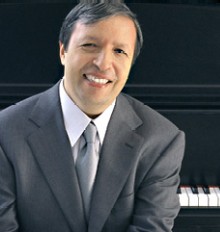
DSM: Murray Perahia is one of those rare concert artists who not only works out analyses but even admits it—admits that he’s a theorist as well as a performer. But it’s not clear how his performance is affected by his analysis and graphing of a piece—or that his performances of a piece are necessarily more consistent or homogeneous because of his analysis. His performance is informed by his analysis, no doubt. But it’s as if the analysis were just another form of rehearsal or practice for him, a meditation on the piece in anticipation of performing it, a critical consideration of the structure of it so as to more deliberately endow the performance with the voice it should have.

Murray Perahia
CMT: But the analysis-as-rehearsal doesn’t impair Perahia’s ability to make discoveries in each performance, doesn’t impair his freedom to deviate from his analytical assessment, doesn’t impair his realtime inspiration. Performers communicate musical structure through performance, not through words and graphs.

DSM: You’re right. You can hear Perahia continuing to make discoveries each time he encounters a piece, even ones that he has performed hundreds of times. You could hear Miró Quartet members continuing to make discoveries as they performed the Shostakovich Quartet No. 8 yesterday, even though they have performed it many, many times before.

Murray Perahia
CMT: But theorists are musicians. They make continuing discoveries, too, just like anybody else. And if the theorists’ discoveries are to achieve a deep and lasting relevance, they must, I think, find new ways of communicating with other musicians. They shouldn’t merely announce their positions, but should directly engage other musicians in matters of performance practice and interpretation. Nicholas Cook is one of the best examples of how to do this. Nicholas Cook’s essays on semiotics raise myriad questions of analysis and music theory, but they all suggest answers regarding how one might play or hear a piece differently.

DSM: Think about it: literary criticism these days no longer bears any relation to the reading of books. This is not the way it was 40 years ago. Just as much contemporary literary theorizing seems to have little to do with reading and writing, much of the music theory literature I read is not directed to creating, performing, and listening to music, even when those articles and books are deeply pertinent to those activities. Theorists should, I believe, communicate their discoveries in practical terms to performers, composers, and listeners. Literary critics and theorists should do that, too, as they did once upon a time. But it’s much more urgent that music theorists do this.

A theorist who held advanced degrees in both performance and theory remarked to me that he no longer wished to be called a performer. ‘Theory is a legitimate field that needs to be respected,’ he asserted, ‘and, by insisting on calling myself a theorist, I am making a statement.’ I replied, ‘Why not call yourself a musician?’ ”
  —  Joel Lester, Mannes College of Music, New York

Ken Ueno
CMT: There is in what you’ve said about spontaneity and interpretation a focus on ‘particularity’ or individualism, of individual free-will—the ‘authorial’ voice of the individual composer or individual performer and his or her specific history. But there can be spontaneity that is transcendent and universal, that begs the question of individuality or even of humanity. The piece ‘all moments stop here and together we become every memory that has ever been’ (2003) is a 13-min work for 14 instruments and 15 hand-cranked music boxes. That’s a good example of universalist music. It was written by Ken Ueno for the Boston Modern Orchestra Project (Gil Rose, conductor). The title was borrowed from an artwork by Ugo Rondinone. The spaces between sounds are dramatic for me (“all moments stop here”). But the silences energize me, as a listener, to participate in each forthcoming sound, including the ones emitted by the music boxes. After the moment of greatest density, we arrive at a spectral world, embodied by the delicate cacophony of the music boxes. If you crank a music box very slowly, so that you isolate each note of a melody, the melody disappears. This happens even if the melody is one that is universally known (e.g. “Twinkle, twinkle little star,” “Row, row, row your boat,” “Happy Birthday”). You experience each note as a sound in itself, rather than as melody. Your mind also begins to “fill in” fleeting references to familiar tunes. Sometimes your mind, so hungry as it is to find familiar patterns, “fills in” with a reference that’s incorrect. And then as the music proceeds you notice that your “fill in” was wrong, but the music is continuing and you have no time to go back and revise or resolve the error. The river has flowed on. You go on in the ‘now’.

DSM: Additionally, if we experience a large collection of music boxes playing simultaneously, the melodic identity of each music box is buried in the aggregate sound. A society of music boxes. Within this aggregate sound, you “pick out” fragments of melodies, but you never completely grasp them. You abandon the conventional notion of composer-as-author, when the mass of sound that confronts your ears is caused by this pile of automata. This piece is not a despairing comment on our identity in a post-industrial digital world, though. It is not to say, “We are all music boxes. We are all genetically and culturally pre-conditioned automata. We labor in a deterministic world where creativity and moral responsibility are dead.” Instead, it’s a meditation on the perplexity of our society and the universe; on the protean voices whose different dialects and different paces and spatial and temporal isolation prevent them from resonating and interacting meaningfully or understanding each other; on the different dimensions of sentience of various life forms; on the timeless, cosmic “organism” that individual living beings including humans contribute to.

Ken Ueno
CMT: Ken is an Assistant Professor and Director of the Electronic Music Studios at the University Massachussetts Dartmouth. Previously, he was an Assistant Professor at the Berklee College of Music. As the character ‘DJ Moderne’ he has for some years hosted and produced a Boston-based weekly live half-hour public-access television show devoted to introducing new music and new music composers and performers to the public at large. He attended Berklee College of Music, where it was his first exposure to Bartók’s Fourth String Quartet that propelled him toward new music composition. After Berklee, he attended Boston University, Yale, and Harvard. His teachers have included John Bavicchi, Bernard Rands, and Mario Davidovsky.

I didn’t work out the analytical relations among any of those chords! Analysis did not precede or accompany the writing. I just put down the sounds that I liked!”
  —  Miriam Gideon, upon finding out that a composer/theorist was spuriously using pitch-class set analysis to parse one of her works
DSM: Even with someone like Ken Ueno, though, you still want to focus on live performance, the live narrative, the spontaneous authenticity of it. One criticism that Charles Rosen has made is that the obsession with ‘authentic performance’ has depended very heavily on the recording industry. This results from two factors, for older music anyhow. First, the lower volume of authentic performance instruments means they tend to be ineffective in large modern concert halls, so that live performance is difficult to sustain financially. The same could be said for 100 music boxes or 100 metronomes. Second, the unstable intonation and lesser reliability of early instruments means that a high-quality performance is most feasible in the recording studio, where multiple takes can be spliced together to iron out mistakes, and it is possible to interrupt the music frequently to retune the instruments. Totally impossible in a recital hall. A musical culture based predominantly on recordings is arguably an expressively impoverished one, compared to listeners gathered together in a recital hall responding intensely to a live performance. Miró Quartet’s performance yesterday of the Shostakovich Quartet No. 8 for the audience of several hundred kids; the kids’ rapt involvement in the work! Everyone in that hall was changed, transformed by the work, by Miró’s rendering of it, by the interactions among everyone who was present.