Showing posts with label debussy. Show all posts

Saturday, January 30, 2010

Quatuor Ebène Play as Though They Were a Fifth Person, or an Entire World

 Quatuor Ebène
S    ie spielen, als ob sie eine fünfte Person wurden.” [The quartet plays as though they were a fifth person.]
  —  Ensemble—Magazin für Kammermusik, JUN-2007.
O r, alternatively, when I listen to Quatuor Ebène perform Debussy’s String Quartet in G minor, it makes me think that they play as though the quartet were not a human person at all but instead were Nature herself.

 Debussy, Op. 10, III, ‘Andantino’, mm. 16-19

    [50-sec clip, Quatuor Ebène, Debussy, String Quartet in G minor, Op. 10, III, ‘Andantino’, mm. 16-27, 1.6MB MP3]

T he quartet’s love of jazz and affinity for an immersive aesthetic is partly what I mean. They untangle this piece and make it far more ‘declarative’ [in the sense that a software developer would use that word; ] than ‘procedural.’

 Debussy, Op. 10, III, ‘Andantino’, mm. 29-36

    [40-sec clip, Quatuor Ebène, Debussy, String Quartet in G minor, Op. 10, III, ‘Andantino’, mm. 28-40, 1.1MB MP3]

T hey impart the impression that old works were somehow composed yesterday. To call it spontaneity would under-call it for what it is, or—worse—invoke again the idea of conversation, which it is not. Freshly fallen rain is more what I have in mind...

 Debussy, Op. 10, III, ‘Andantino’, mm. 49-53

    [40-sec clip, Quatuor Ebène, Debussy, String Quartet in G minor, Op. 10, III, ‘Andantino’, mm. 41-54, 1.1MB MP3]

S ome years ago Naomi Cumming discussed “syntactic frames,” such as phrase endings, with regard to how they affect us listeners/performers (link below). And frames are the salient feature of the musical structure of this Op. 10—salient feature of what Debussy wrote, and of what the Ebènes play here.

T he Ebènes do not, though, ask questions [of each other, as they are performing the work] about how Op. 10’s frames are declared in the first place, nor how instantiations of frames classes make Op. 10’s musical structures function as an “app.”

 Debussy, Op. 10, III, ‘Andantino’, mm. 64-67

    [40-sec clip, Quatuor Ebène, Debussy, String Quartet in G minor, Op. 10, III, ‘Andantino’, mm. 55-69, 1.1MB MP3]

F or Kant and for critics whose aesthetics and methods are descended from Kant (like Edward Cone) the “app” is the embodiment of “beautiful form.”

K ant’s view was that “beautiful form” is ideally intention-free: it shows nothing, represents nothing, it encapsulates everything; it is the “play of sensations in time,” whose internal “design [datastructure] constitute[s] the object of the judgment of taste”.

S ilence can be a musical frame, just as a datastructure in a computer’s memory that has been initialized to all zeros can be a frame. Part of what is going on in mm. 41 to 60 of the third movement of Op. 10 is the non-discursive, declarative independence of the parts, which nonetheless function as a whole. Like a flock of birds flying in formation.

T he border of the music feels “absorptive”—it captures and dispels the energy of the quartet’s preceding sounds.

F or Edward Cone, frames are the constructors/destructors of musical worlds, fictive or real ones. It is not that each world has nothing to say and nothing to see. Instead, it is simply the case that each is an environment that is intention-free, proposition-free, primeval (see Cone 1966, p. 16, link below).

E ach remains unchanged as a result of actions or events or temporal processes that transpire within it.

R esembling the way in which the programs and datastructures that comprise a computer’s operating system are primeval (links below)? Anyhow, this is what Quatuor Ebène’s account of Debussy’s Op. 10 feels like to me. Organic, primeval—‘ambient’ even—not ‘discursive’ like most string quartets are discursive. This was a new idea for me this week; maybe not new or revolutionary for you, but new at least for me.

  • Pierre Colombet, violin
  • Gabriel Le Magadure, violin
  • Mathieu Herzog, viola
  • Raphaël Merlin, cello
Q uatuor Ebène has studied extensively with the Ysäye Quartet, with Gábor Takács, and with Eberhard Feltz and György Kurtág. The Ebènes won in 2004 the ARD international competition in Munich and the Forberg-Schneider Foundation’s Belmont Prize in 2005.

T hey are performing in the U.S. and Canada during February. Somehow I must arrange to be in one of those cities on the same date as Quatuor Ebène is! Drive to experience more intention-free primeval newness...

 Quatuor Ebène


Wednesday, September 24, 2008

More Encores: Debussy’s Arabesque No. 1 in E Major

Bavouzet
Thiollier
Fiercely energised yet superfine, [Jean-Efflam Bavouzet’s] performances are not for those with comfortable ‘drawing-room’ notions of Debussy.”
  —  Gramophone Magazine, JUL-2008.
F rançois-Joel Thiollier’s soft-grained virtuosity taps into the music’s alluring sonorities and harmonic beauty, bringing out plenty of color with no more aid from the sustain pedal than necessary. As a technician, Thiollier doesn’t offer the bedrock security that typifies Pollini’s double notes, Uchida’s firmly-centered rhythms, or Gieseking’s utterly-even fingerings in ‘Pour Les Huits Doigts’. Yet while his timid chord-to-octave leaps in the daunting 12th etude slow down when the going gets tough, Thiollier compensates with as sexy and curvaceous a middle section as you’ll ever hear. He also plays the three-against-two rhythm during the opening etude’s introduction as-written, rather than slightly rushing the right-hand triplet as nearly everyone else does... Thiollier’s gentle touch and keen ear for nuance also inform the sundry short works filling out this disc.”
  —  Jed Distler, Grammophone Magazine.
I’m not quite sure why the previous CMT post elicited a flurry of responses/requests, regarding ‘atmospheric’ miniatures. Anyhow, here is another favorite of mine, a solo piano one.


    [50-sec clip, Jean-Efflam Bavouzet, Debussy, ‘Arabesque No. 1’, 0.9MB MP3]

    [60-sec clip, François-Joel Thiollier, Debussy, ‘Arabesque No. 1’, 1.2MB MP3]

François-Joel Thiollier studied in France with Robert Casadesus and faculty of the Paris Conservatoire and with Sascha Gorodnitzki at the Juilliard School of Music. He won eight Grands Prix in international piano competitions. His recordings include the complete piano music of Debussy, the complete piano music of Ravel, and works by de Falla, d’Indy, and Franck. In 2003, Thiollier was named Officier des Arts et Lettres by the French Ministry of Culture and Communication.

Jean-Efflam Bavouzet was a student of Pierre Sancan at the Paris Conservatoire, as well as Alexander Edelman and Dimitri Bashkirov. He has won Grans Prix in various international competitions, including the International Beethoven Competition in Cologne in 1986, the Honens International Piano Competition in Canada in 1992, and the Steven de Groote Chamber Music Prize at the Van Cliburn Competition. With a style that some critics have called ‘mercurial’, Bavouzet has performed with many international orchestras. In 2002 he performed with the Boston Symphony Orchestra under the direction of Ingo Metzmacher, and in 2003 he appeared with the Berliner Sinfonie Orchester. He is presently with Orchestre de Paris and Professor in the Piano Department of the Hochschule für Musik in Detmold, Germany.

Juxtaposing these two clips gives a good idea of the performance possibilities. Jean-Efflam Bavouzet’s version averages a faster tempo, but with wider variations than Thiollier’s. And the texture Bavouzet creates in this delicate piece exhibits a more ‘restrained’ pianissimo control than Thiollier’s, but Bavouzet alternates between understatement and exuberant reverie, and the sense of Bavouzet’s account is more one of solitary reminiscence—compared to Thiollier’s recording, which comes across as more ‘story-telling-to-intimate-partner’ rather than ‘solitary-meditation-to-onesself’. Your possibilities for reasonable tempi, accents, dynamics, and balances are endless—as illustrated by these two masterful examples.

The balance of the ‘3-against-2’, RH vs. LH, is risky—heck, the entire piece is so delicate that it’s quite a ‘gauntlet’ to run, aesthetically.

Enjoy!

Debussy, Arabesque No. 1 motif, ‘3-against-2’ RH-LH rhythm
I am fascinated by Debussy’s ability to use tones and sounds to paint the colours of nature and convey its moods registering all its nuances of varying light, the elusiveness and boundlessness of it all.”
  —  Marie Bengtsson.


Monday, June 2, 2008

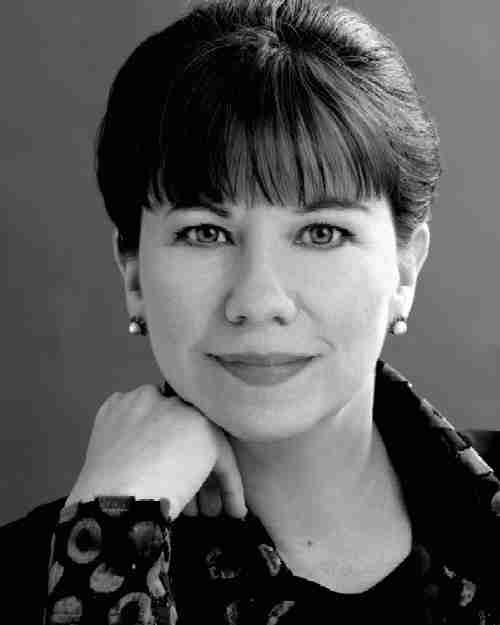
Terry Eder: Lawyer, Romantic

 Terry Eder
T  he traditional configuration of the keyboard—its arrangement of black and white keys—has had a largely unrecognized influence on the history of harmony, because of most composers’ dependence on the piano for inspiration, an influence that may perhaps not be considered entirely benign... Playing a melody in C major feels very different under the hand from playing it in [all black keys— ] F-sharp major. We are physically in a different realm.”
  —  Charles Rosen, Piano Notes, p. 229.
D  ebussy’s music is different from any other. It was a leap into a new region of art. It is like the music of another planet.”
  —  Claudio Arrau, in Dubal, p. 14.
A  t the heart of Romanticism lies transformation, a magic act conferring promethean powers on the artist.”
  —  Benita Eisler, Chopin’s Funeral, p. 120.
Terry Eder delivered a wonderful, inspired-and-inspiring recital last night at Zankel Hall. The thoughtful program was comprised of innovative romantic works. Each one in its day precipitated innovations in piano technic.

  • Chopin—Barcarolle in F-sharp, Op. 60
  • Messiaen—Prelude: Chant d’extase dans un paysage triste
  • Beethoven—Sonata No. 32 in c minor, Op. 111
  • Bartók—Mikrokosmos 6, Nos. 148-153 (Six Dances in Bulgarian Rhythm); Sonatina; Three Folksongs from the Csík District
  • Debussy—Estampes; l’Isle joyeuse
Eder went straight to the heart of Chopin’s world-view, and gave insight not only into the artist himself—the interiority of an exile—but solid commentary on his technique and interpretation as well. Eder renders the Barcarolle’s natural rhythm as one more of ‘breathing’ than of ‘water flowing’—a legal theory for which there is reliable precedent.

In a moderate 6/8 or 12/8 meter (lilting; waltz-like triplets), the title ‘barcarolle’ (boating song) was used for many character pieces, by various Romantic composers. The ephemeral, liminal effects evoked in Op. 60 are informed by the hopes and dreams of the tubercular Chopin, who was within 3 years of his death at 39 and in the midst of ongoing difficulties with his lover, George Sand, at the time this piece was composed. One of Chopin’s last works, Barcarolle in Eder’s hands is laden with the passion that the piece demands. Eder’s light, dry pedal technique kept the gunwales well above the waterline.

The right-hand enjoys considerable independence from the left-hand, which Eder manages with ease. The pulse in the left-hand cannot be resisted by the right forever, though—the effect is evocative of small ‘eddies’ in the margins of a serene river. Particles caught up in an eddy may circulate for awhile but are eventually compelled to continue the course downstream, captured by current/hypermeter with a longer timescale than the activity in the eddy. With Eder as the boatman at the helm, this piece ‘pushes off’ not for a round-trip boatride in the present but instead a transformative one-way adventure into the future. River of no return, such is Life. Last night’s performance by Eder is the first time I have imagined that this is what Chopin may really have intended to say in this piece—in effect a much ‘darker’, ‘realist’ breed of Romanticism than Barcarolle is normally given credit for.

The Debussy l’Isle joyeuse, composed in 1903, was superb. One of its inspirations was Antoine Watteau’s (1684-1721) painting, L’embarquement pour Cythère. But Debussy eloped with his mistress, Emma Bardac, to Jersey in 1904, and he revised this piece after that visit—so it’s likely that this is more autobiographical essay than arms-length character piece. The piece’s close correspondence to D’un cahier d’esquisses has also been pointed out. The two pieces are sometimes performed as a single lyrical work, without a break (or even lifting the pedal) between them—much as Chopin’s Barcarolle is often played back-to-back with Berceuse.

Eder’s account of the Bartók was admirable for its coloristic depth, pensiveness—phlegmatic, festinating bagpipers and all. Her treatment of Messiaen yielded a fatalism that was fascinating for its existential qualities—despondency that still has energy to speak with friends and friends still gathered around with whom to speak; youthful ‘tristesse’ that gives way to a growing-up and taking measure of what one has learned; newly-attained worldliness that is not endangered or ‘damaged goods’. Eder’s topicality is genuine and persuasive.

Terry Eder made her Lincoln Center recital debut in April, 2006. She was a Recipient of Artists International’s Outstanding Alumni-Winners Award in Piano. She received her Bachelor of Music degree from Oberlin Conservatory and her Master of Music degree from Indiana University at Bloomington. She served one year residencies at the Franz Liszt Academy in Budapest (under the guidance of acclaimed pianist and conductor, Zoltán Kocsis, where she also learned to speak Hungarian) and at the Banff Centre in Alberta. Ms. Eder is a practicing lawyer with special interests in international human rights practice. She received her J.D. from Fordham Law School in 1999. (As a musician-lawyer, she follows in the footsteps of such other musicians as Telemann, Tartini, Marcello, Schumann, Tchaikovsky, and Stravinsky, each of whom studied law.)

Eder’s wonderful piano performance makes one yearn for lawyering so skillful and committed and storied as this. Eder lives with her architect-husband and their daughter in an 1861 brownstone in New York City.

 Terry Eder, Zankel Hall, 01-JUN-2008

 Dubal book