V
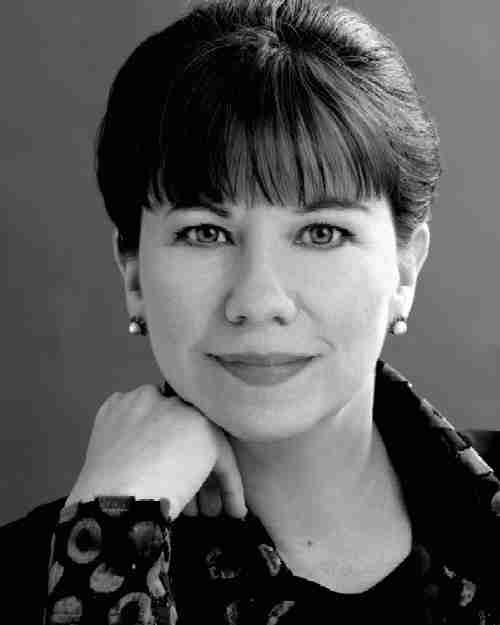
V ladimir Feltsman’s performance in the concert that opened
Friends’ of Chamber Music new season was powerful and moving. Besides this, he illuminated dimensions we hadn’t realized existed in these pieces.
- Mozart - Fantasia in D Minor, K. 397
- Schubert - 4 Impromptus, Op. 90, D. 899
- Liszt - Sonata in B minor, S. 178
I found the Liszt sonata especially engaging.
I imagine what it might’ve been like to start with blank sheets of manuscript paper and compose this sonata... You have a thought, privately. You think about the idea; it seems interesting. It’s a new thought. At least, it’s an interesting one—interesting enough for you to write down. And it rapidly leads to other thoughts.
Y ou come back to the original thought a moment later, or several minutes later. It still is novel, interesting. You mull it over and see how it connects to other thoughts, in odd, ironical, happenstantial, stimulating ways. An oddly ‘self-referential’ thought—about you, and about your habit of thinking, privately, pianistically. A thought about a self having a thought and thinking about itself thinking, while connected to a piano.
B ut the thought calls into question who exactly is the self who is referring to itself. About how it is that we remember who we have been and are able to retrace the trajectories of how we felt about things an hour ago or yesterday or the month before. About how it is that we speak to ourselves and carry on these inner dialogues. And who is this piano I am connected to? Its personality is here, too!
A h, it was the great Liszt who listened, listened to his inner voice. They said he was ‘inspired’. But he was simply listening to himself.”
— Vladimir de Pachmann, on pianistic originality.
A nd you are furiously writing your ideas down. It just happens to be music. The original thought was not that difficult or monumental a thought—not ‘heroic’ anyhow. If anything, it was kind of an ‘organic’ thought, like something you just happened to find and decided to keep, or something that sprouted as a ‘volunteer’ in your garden and you watered it and it happened to grow exuberantly.
T hat’s the sense I have of this Liszt sonata, S. 178. And it is how I experienced Vladimir Feltsman’s performance of it tonight.
H e has played this piece—for many years—and there was still more to discover in it, last night, in Kansas City.
T here’s a tremendous amount of experimentation and exploration in this sonata, trying different ideas on “for size” and testing them.
I t’s something. Some expressions in it are almost anticipating... Late Modernism? Complexities of, maybe Ferneyhough; maybe Rzewski; others? Sort of like reinventing virtuosity without the heroism. Or a hero who is inadvertently a hero, who denies being brave and says he/she just ‘lived’.
C learly, Vladimir Feltsman likes this piece. It is a piece of music that asserts that solo piano music is mostly individualistic performance art. The score feels like an improvisational essay, less prescriptive than previously taught; the composer’s narrative is not the putative narrative but instead—How could we doubt it?—the performer’s own. Vladimir likes this about it.
W ith Liszt we have a bold navigator who throws himself into the sea with his boat and sail... who seeks his route in the stars of the sky, but if the sky gets cloudy... M. Thalberg, for his part, carries a compass.”
— Review of Liszt performance, Le Monde, 29-JAN-1837.
V ladimir Feltsman does carry a highly precise compass. And an old-school sextant; and his precise chronometer. But it is bad form to obsessively look at any damned compass, or watch, or sextant. It’s blue-water sailing; you came here to be away from the shore and to not see anything but water and sky for long stretches of time, and to see what happens. You will take your sights and do your celestial nav and re-plot your course at the appointed times. But you will not be ruled by your tools. You’re here to experiment, to take risks, to discover things.
I have been continuing writing in proportion as ideas come to me, and I fancy I have arrived at last at that point where the style is adequate to the thought.”
— Franz Liszt, Letters (coll. & ed. La Mara, tr. Constance Bach), 1894, Vol. 1, p. 130.
I s his route exhaustively planned in advance? Or is each journey, each performance, one of deep discovery? Last night, Feltsman displayed no worries about “clouds” or uncertainties. They are part of the challenge, part of the expressive/interpretive attraction that a piece can have. Part of his native Russian mien...
L iszt’s chromatic gestures aggressively explore what the colors can do—to himself, to the performer, to the audience... And then I wonder: What tuning (temperament) was used on the piano Liszt composed this on?
A n augmented second—look at measures 740-744 of this sonata—enharmonically equivalent to a minor third in modern equal temperament, but it is not the same interval in other tunings. In any tuning close to quarter-comma meantone it will be close to the 7:6 ratio of the septimal minor third. What colors was Liszt listening to? And Vladimir: has he experimented with playing this sonata in a well-temperament instead of equal temperament?
 S
S o, if twelve-tone equal temperament was just emerging in Liszt’s time and various well-temperments were still in-use, then maybe some of his pianistic ideas in this sonata may indicate his ongoing fascination with them, his explorations of them—what they allowed, what they mutated beyond recognition, what they (including equal temperament) ‘forbid’.
O ne can confidently assert that, with the single exception of the harp, no modern instrument ... has been so radically altered in conception as the piano. The techniques presently applied to this instrument are poles removed from conventional keyboard methodology. It is not that the piano has become even more solidly entrenched as a percussive instrument, but rather that today’s experimental composers have a thorough awareness of its tone-color potential.”
— Hugh Davies, ‘Instrumentation & Orchestration’, New Grove Dictionary of Music and Musicians, Vol 12, p. 401 (2001).
W as this piece composed on a piano that had departed from the well-temperament of Liszt’s youth? (The late Owen Jorgensen [
Jorgenson O. Tuning the Historical Temperaments by Ear. Northern Michigan Univ, 1977, p. xii] evidently thought so.)
O n some days—on some piano tunings; on some particular instruments—the harmonic “waters” of an augmented second could seem optimistic and azure-colored. And on other days the same interval was mysterious—glowing an ominous aquamarine, with flashes of nervous herring swimming fast just under the surface. And not for no reason. A toothy predator pursues them. S. 178: emphatic, violent passages interspersed with serene, azure ones...
E qual temperament is, as they say, like an architect’s drawing: prescriptive; precise; every detail laid-out explicitly. Well-temperament is... an impressionist artist’s painting. So much is implicit; liberties are being taken. Equal temperament is this singular “color” or “in-tuneness” for all like intervals; well-temperaments instead give you a shocking palette of diverse harmonic hues. The “character of the keys” and differences in modulation make for color changes that just don’t arise in equal temperament. Was S.178 part of Liszt’s experiments with voicing in well-temperaments on the eve of equal temperament?
W here is his lab notebook containing his results? Some pianists emphasize the ‘text’ they are performing and exercise their pianos’ notes, their tuning. By contrast, Feltsman explores the “voicing” of this piano, as though it is a witness to be interrogated. This one could be reliable and it could provide valuable evidence. Or it could be a perpetrator.
T he piano technician has made all the notes very even and the sound as clear as possible in each register. Feltsman finds out ‘whose’ voice it is that is in there. He knows whether or not they are lying or holding back. He makes the piano confess things. Beautiful, true things.
C harles Smith wrote a famous article on “extravagance” in composing. He said that chromaticism is a “convergence” of harmonic and contrapuntal motion. S. 178 is nothing if not extravagant. And wild, wild harmonies and counterpoint, converging and then diverging again.
T his sonata is so full of convergences—the measures 740-744 are among the tamest of them... enharmonic reincarnations of harmonic colors... The convergences make me wonder about the narrative ‘overload’ of the piece.
R ichard Bass at UConn (link below) examined how half-diminished sevenths unhinge us. Our minds expect them to be the product of sensible counterpoint, but then they do something out-of-character (in contexts other than vii
ϕ7 or ii
ϕ7). Their alibi is not really plausible; it’s too emphatic, too aggressively ‘testamental’ for its own good. It means something, but we can’t be sure what, exactly. We can’t entirely trust it.
I f you transported a pianist from 30 years ago and had him/her play on one of the mellower-sounding pianos we’re voicing today, he wouldn’t like it because he wouldn’t think it sounded aggressive enough.”
— Sibin Zlatkovic, expert piano voicer.
T he #2 is a regular element in dominant sonorities and is not without its usual dramatic purposes and emotional tension (Smith, p. 124). But here in this measure, #2 is a perpetrator infiltrating an otherwise law-abiding chord, doing something nefarious probably, impersonating a minor third or even a diminshed third, depending on the way the piano is tuned—starting some kind of trouble or other, probably; covering its own vulnerability, certainly—and demanding that we have now a major-triad resolution, okay?
F eltsman has just the sort of temperament to love this kind of suspense and color and ‘lurking microtonality’, and he is just the experimental sort to reanimate it and show us how curious and lovable it is.
U ltimately, Liszt’s Sonata in B minor, S. 178, will forever be too difficult for my amateur fingers, but that doesn’t mean that I would be able to banish the piece from my dreams.
I n fact, if a piece is totally beyond my ability to attempt it, like this one is, I tend to become fascinated with studying the score, with playing the bits of it that I can manage—with playing and re-playing those bits to hear their voice. I try to see what they do and how they work. (My apologies to my wife for what this racket sounds like.) It leads me to questions and discoveries—to things that are new for me, at any rate. It amuses me to think that maybe even Liszt pottered about like this, in a microbial manner, on his way to discoveries that he then wrote down and fashioned into this epic, experimental piece.
- Vladimir Feltsman website
- Feltsman recordings at ArkivMusic.com
- Feltsman V. Liszt: Piano Sonata in B minor. (Sony, 1989.)

- Bass R. Half-diminished functions and transformations in late Romantic music. Music Theory Spectrum 2001;23:41–60.
- Richard Bass webpage at UConn
- Score of S.178 at IMSLP.org
- Augmented second at Wikipedia
- Gann K. Introduction to historical tunings. 1997.
- Claudio di Veroli's unequal temperaments website
- Veritune user manual on p. 89, quoting the late Owen Jorgensen, asserts that ET in the 19th century was actually one of several varieties of well-temperaments and that true ET was post-1917.
- Jorgensen O. The historical temperaments: An introduction. Piano Technicians Journal, NOV-1994, pp. 35-38.
- Well-temperament page at Wikipedia
- CelestialNavigation.net
- Dahlhaus C. Analysis and Value Judgement. Pendragon, 2009.
- Gibbs C, Gooley D, eds. Franz Liszt and His World. Princeton Univ, 2006.
- Jerger W, ed. The Piano Master Classes of Franz Liszt, 1884--1886: Diary Notes of August Göllerich. Indiana Univ, 2010.
- Kregor J. Liszt as Transcriber. Cambridge Univ, 2010.
- Samson J. Virtuosity and the Musical Work: The Transcendental Studies of Liszt. Cambridge Univ, 2007.
- Sethares W. Tuning, Timbre, Spectrum, Scale. 2e. Springer, 2004.
- Smith C. The functional extravagance of chromatic chords. Music Theory Spectrum 1986; 8:94–139.
- Tibor Szasz’s essays about S. 178
- Vande Moortele S. Two-Dimensional Sonata Form: Form and Cycle in Single-Movement Instrumental Works. Leuven Univ, 2009.
- Walker A, ed. The Death of Franz Liszt: Based on the Unpublished Diary of His Pupil, Lina Schmalhausen. Cornell Univ, 2002. (excellent macabre Halloween reading)
- Walker A, ed. Living With Liszt: From the Diary of Carl Lachmund, an American Pupil of Liszt, 1882-1884. 2e. Pendragon, 2010. (slightly less macabre)
- Winklhofer S. Liszt’s Sonata in B minor: A Study of Autograph Sources and Documents. PhD dissertation. UMI Research Press, 1980.
- American Liszt Society website
- Hochschule für Musik ‘Franz Liszt’ Weimar
- Andre Ooorebeek’s “Voice of the Piano” website, and book and DVD about voicing
- PianoforteSupply.com
- Piano Technicians’ Guild (K.C., USA WHQ)
- International Association of Piano Builders & Technicians (Seoul, Korea WHQ)
- Swick A, et al. Computer-aided piano voicing. U.S. Pat. 7,196,257, 27-MAR-2007.


 G abriel Urbain Fauré was, shall we say, an erstwhile compiler engineer who lived, oh, about 100 years “before his time”.