Showing posts with label intentionality. Show all posts

Saturday, April 12, 2008

Dubravka Tomšič and Beethoven’s Appassionata: How (Why) Does the Andante con Moto Work?

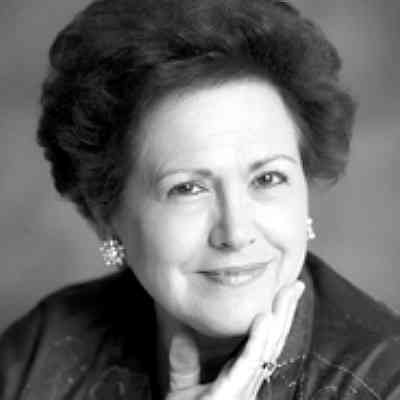
 Dubravka Tomšič
I  f experiences and only experiences have ‘intrinsic’ value, then it would seem that playing Beethoven’s Appassionata with great pleasure is no better, intrinsically, than a perfect hallucination.”
  —  Robert Audi, The Architecture of Reason, p. 99.
T  he ‘Appassionata,’ in common with most of the works Beethoven wrote in the first decade of the 19th century, is a study in thematic tenacity. His conceit at this period was to create mammoth structures from material that, in lesser hands, would scarcely have afforded a good sixteen-bar introduction. The themes, as such, are usually of minimal interest but are often of such primal urgency that one wonders why it took a Beethoven to think them up.”
  —  Glenn Gould, 1974 liner notes.
Dubravka Tomšič performs this evening in Kansas City. Among the works on the program is Beethoven’s Piano Sonata No. 23, Op. 57, ‘Appassionata’. Her performance and interpretation of this belovèd piece manifest a charming, distinctly Slovenian perspective.

Slovenia is this beautiful, mountainous place with about 2 million people—83% Slovenian, 2% Serb, 2% Croat, 1% Bosnian, a few Hungarians, Italians, and miscellaneous others. Approximately one third of them live in towns with more than 10,000 inhabitants—Ljubljana, Maribor, Kranj, Celje. The rest live in 6,000 villages—remarkably rural-alpinaceous (just 99.1 inhabitants per square km), a people whose birthright includes a vehement sense of individuality, urgency, and intense interiority. Not coincidentally, Gustav Mahler began his artistic career in Ljubljana, as conductor of the then Stanovsko gledališce (State Theatre) …

But the Slovenian ‘outward’ perspective is very much in sway today. Slovenia has the presidency of the Council of the EU during the first half of 2008, for one thing. It is the first post-communist country to hold the EU presidency, highly symbolic. And there are a phenomenal number of arts and cultural exchange events initiated by the Slovenian Culture Ministry, in this first half of 2008. It is part of the broader European Year of Intercultural Dialogue 2008.

 European Year of Inter-Cultural Dialogue 2008
And Dubravka Tomšič has, in years past, taken time out from her busy performing schedule to speak about her life in eastern Europe and about “Coping with Crisis: International Responses to Instability and Conflict in Eastern Europe and Eurasia” and the role of international music commissioning and touring and cultural exchanges in the sustainability of cities and societies. She is a veritable one-woman International Relations Council.

Each piece, each performance, is imbued with a remarkable inter-cultural wisdom that vivifies our understanding and appreciation of the piece. Beethoven’s Op. 57: the massive first movement; the brief, rapt variations in the middle; the massive bookend of a last movement—in Dubravka’s hands these have the effect of altering our perception of time. The fleeting middle movement makes me aware of the transitoriness of everything; makes me wonder how we humans can ever think that anything of value will last, at all. And yet, here is this sonata, standing as a testament to the durable, intrinsic value—in human endeavor, and in this music—transcending many generations. It’s an astonishingly optimistic feeling that Dubravka conveys to us through this Beethoven.

 Robert Hatten book
If there are intrinsically valuable things other than experiences, then our awareness of their value must be achieved through experience: what is ‘good’ in the Appassionata is appreciated in hearing it or playing it. In itself, it doesn’t enter our lives except by performance. And, if it’s unperformed, then (at least part of—) its value is unrealized. So non-experiential goods have ‘inherent value’, distinct from ‘intrinsic value’ and ‘instrumental value’. Robert Audi, a philosopher who has written about these topics, says that rationality allows, but does not require, that there are things of intrinsic value other than ‘experiences’. I rationally desire the intrinsic value of this belief in the durability of humanity that Dubravka expounds; I urgently want it. But there is this dramatic tension, a worry that it may not be so, a worry that some accident might prevent it. Dubravka the Acrobat, on a Beethovenian ‘tight-rope’, defies the odds, scoffs at danger.
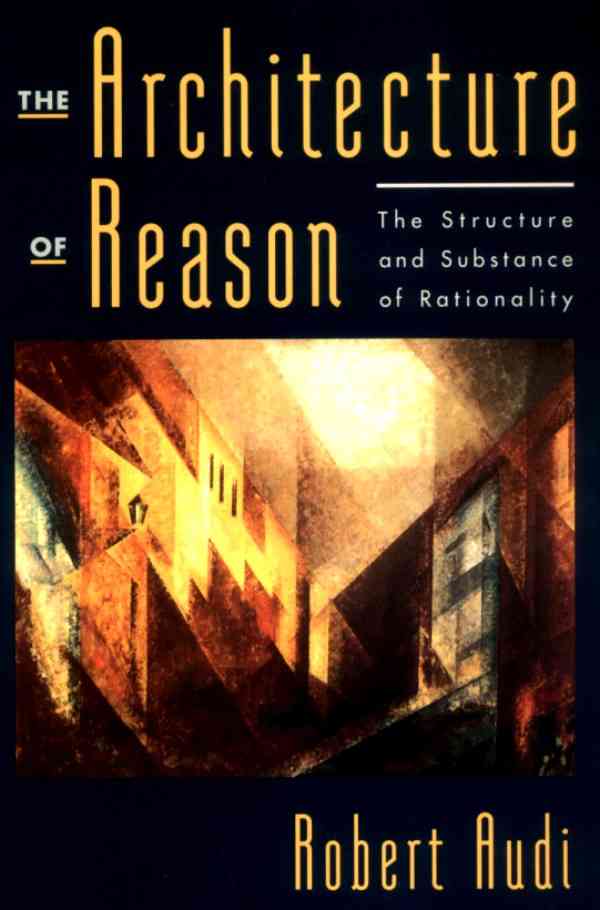
 Robert Audi rationality book
O  ne way to see how construing some intrinsic desires as ‘rational’ makes sense is to consider how we assess rationality in people. Can we even conceive of rational persons who are indifferent to their own physical freedom or to their own happiness or suffering—not in the sense that they cannot sacrifice freedom or happiness or endure suffering for certain reasons, but in a sense that implies having no desire to achieve the former and to avoid the latter? It may be that we can be manipulated so as to have no desires whatever, at least for a time. But the question is whether one can conceive a rational person who has desires, but none that are both rational and intrinsic. This seems doubtful … The question here is whether there are rational intrinsic desires, not whether there are any that are non-egoistic.”
  —  Robert Audi, The Architecture of Reason, p. 72.
Just as a defensible belief need not be ‘knowledge’, rational action need not be ‘successful’—need not achieve the goals and intentions of the actor. Rational values and rational desires need not be ‘correct’. Just as one can rationally believe a falsehood or rationally seek a goal by insufficient means, one can rationally value or have a rational desire for something that turns out to have a different value or, ultimately, be unworthy of desiring. This thought occurs to us during this sonata…

N  ature is at once psychologically economical and normatively generous. Perception under-determines belief, producing far fewer beliefs than it can support. But it over-determines justification, providing justifying grounds for far more beliefs than we normally form and yielding far more justification than we need as warrant for the many beliefs that we do form. Hearing is quite like seeing in all this. There is the auditory experience of the music; there are certain beliefs evoked by it; and there are dispositions to form beliefs should appropriate needs arise.”
  —  Robert Audi, The Architecture of Reason, p. 14.
David Greene temporality book
And the thrills and spills in this piece get even more harrowing. The time-shifting in the second movement of the Appassionata is not ‘apocalyptic’ per se but it is intensely eventful, and it reveals to us the radical non-necessity of the human condition and the occurrences within a given life. Nothing has to happen. Everything is contingent. Some of it happens logically and is amenable to rational desire and action. And other of it happens illogically, uncontrollably, unpredictably. Dubravka launches herself from the platform, executing three turns in mid-air…

T  o say that Hegel and sonata-allegro form rejected Newtonian temporality is not to say that either one presented change as ‘apocalyptic’. Where one fears or hopes that change will be apocalyptic, the past is seen to have been completely repudiated and the future is regarded as a radically new beginning... The very popularity of sonata-allegro form suggests that most middle-class people of the time [1770s - 1830s] did not feel they were undergoing an apocalypse. In the temporality projected by sonata-allegro form, the present calls a future into being. This future is genuinely responsive to the past, unlike the future in an apocalyptic temporality. Yet it also feels like a fresh occurrence, an eventful occurrence, and not one that happens by logical or mechanical necessity—i.e., unlike future occurrences in Newtonian deterministic temporality... The thrust of Newtonian temporality is to see all occurrences as predictable and ‘uneventful’—as occurrences that cannot not happen.”
  —  David Greene, Temporal Processes in Beethoven’s Music, p. 18.
 Beethoven, Piano Sonata No. 23, Op. 57, Second Movement, mm. 1 - 4
The second movement, the Andante con Moto: a short theme and variations on a slow, reverential tune in D-flat, comprising two eight-bar sections with repeats. The second ‘section’ starts in A-flat major, with variations as follows:
  • derivative of the original theme, with the l.h. playing up-beats;
  • elaboration of this theme, in sixteenth notes;
  • embellishments, in thirty-second notes; and
  • a reprise of the original theme, with small, destabilizing changes.
Instead of resolving peaceably, the closing pair of diminished 7th chords, the first pianissimo and the second fortissimo, propel us right away into the third movement, quite unexpectedly, even though we have heard this and played it ourselves often. How is it possible that this can perpetually captivate us as it does?

 Beethoven, Piano Sonata No. 23, Op. 57, Second Movement
It does it, I think, by creating a special urgency—a sense that something eventful is ‘next’; a futurity that we feel intense desire to be part of and to find out about; something that we wish intensely to know or believe, and we don’t know what it is yet. Beethoven (Tomšič) will tell us, and we look forward to this, urgently.

T  he key to feeling the powerful pull of the future in the first movement of Op. 59 [and in Op. 57 and other works] is recognizing the shape of the first theme, of the exposition as a whole, and of the movement as a whole, and then realizing that these shapes are identical. The key to hearing this shape is to notice the discrepancy between the places where the note-to-note continuity is broken. In the sonata forms of Beethoven’s predecessors, the points where the flow halts usually coincide with the points where change occurs, and it is precisely these coincidences that create the identifiable entities or sections that are analogous to one another in the various sonata-allegro movements. In Op. 59 Beethoven gives his listeners clues enough to assure them that they are hearing a sonata-form movement, yet he deviates from the expectations the form implies by putting strong caesuras [half-notes, held, as though a pause in development, as though on one end of the arc of a trapeze ... ] in the middle of themes and in the bridges, while the note-to-note continuity is so strong that one does not hear articulated ‘sections’ that could be identified as a ‘bridge’ or as an ‘exposition closing’.”
  —  David Greene, Temporal Processes in Beethoven’s Music, p. 73.
You see, some things we believe are believed ‘through’ (and on the basis of—) one or more other things we believe. The former beliefs are indirect, ‘inferential’ beliefs. But what we believe non-inferentially through, say, perception is not believed on the basis of some other belief. We believe it directly, from the experience. These beliefs are ‘perceptual’ beliefs. Something outside us produces belief without needing any prerequisite justification. The priority isn’t temporal, although there may be (and often is) a temporal gap—the rapt variations of this second movement, bookended by the first and the third movements of the Appassionata. The first movement is an arc; the second movement is executed in mid-air; the third movement is the trapeze caught and a new arc again.

But each of us different people has different capabilities—different capacities for action and for belief-formation. It seems evident that the virtuosic playing of which Dubravka Tomsic is capable enables her to believe ‘directly’ and ‘perceptually’ what others of us can only come to believe ‘inferentially’. We marvel at this. The virtuosic acrobat, the mighty Dubravka, intuits directly where the trapeze will be, at the instant when it will be needed and met. By contrast, any acrobat who anticipates the trapeze through inferential belief is a bad, soon-to-be-injured acrobat. More than mere musical virtuosity, Dubravka’s account of the Appassionata is a consummate demonstration of the importance of primal urgency, and of mindfulness of time and of the future. She shows us that, in this era of inter-cultural flux and globalization, it is possible and desirable (necessary?) to be a virtuosically urgent futurist. Working without a net.

 Max Beckmann, Acrobat on Trapeze, 1940

 Slovenian coat of arms


Thursday, October 26, 2006

Playful Illocutionary Acts in E-Flat

Moliere – Femmes Savants
CMT: In the first movement of Haydn’s Piano Sonata, Hob. XVI:49—the Allegro—the writing “lies beautifully under the player’s hands,” doesn't it? There’s an elegant appropriateness to the biomechanics of what's physiologically possible and what’s artistically comfortable. Rather than creating a virtuosic gauntlet to run—a high-wire ordeal filled with dangers that are hardly repaid by expressive rewards—Haydn writes things that are organic and natural. He is, of course, writing this piece for his 29 year-old dedicatee, Frau Marianne von Genzinger, and so his knowledge of her strengths and limitations may have played a big part in his compositional choices in this sonata. But other of his writing also exhibits this same naturalness.

DSM: Look! There isn’t any marking of the dynamics at the beginning of this movement. I know some people hold that, for a piece from this period, the absence of a marking here means an implied forte. But, given that this is allegro, what kind of forte is it? Assertive? Playful? Vladimir Feltsman’s interpretation places it somewhere between jesting and puckish. ( Feltsman, Kansas City, October 2006, Friends of Chamber Music )

CMT: And these two-note slurs in the upbeat groups of sixteenth notes in the first movement are somewhat controversial. What do they mean? If they’re articulated with deliberate detachments at the end of each slur, the effect is obsessive or even histrionic. It draws attention to the player and portrays almost a cartoonish quality—surely not what Haydn would've intended. So a problem is how to handle the articulation cleanly but not excessively. Linguists’ theories of language have assumed that there’s a hierarchy to the elements of language—such that certain constructions, rules, and features are unmarked while others are marked; “play” for example, is unmarked or neutral, while “played” or “player” is marked. This opposition, referred to as ‘markedness’, is one of the things that both Chomsky’s generative grammar and Jakobs’ structuralism share.

DSM: You think that the two-note slurs are not just a cue as to the motif (G, A-flat, B-flat in the upbeat to m.1; answered by G, D, E-flat in the next upbeat)?

CMT: There’re some players who elect to ignore the two-beat slurs entirely. This might be like ignoring the diacritical marks and accents in Gerard Manley Hopkins’ poems—ignoring a central feature. The words are the same, but the effect and emphasis would be quite different without his hallmark articulation. These are what are called illocutionary acts—the illocutionary acts of the composer, and the (perhaps discrepant— ) illocutionary acts of the player-interpreter.

DSM: The philosopher J.L. Austin identifies three distinct levels of action beyond the act of utterance itself—in music no less than in ordinary speech. He distinguishes (1) the act of saying something, (2) what one does in saying it, and (3) what one does by saying it—and dubs these the ‘locutionary’ act, the ‘illocutionary’ act, and the ‘perlocutionary’ act, respectively. Suppose, for example, that a bartender utters the words, “The bar is closing in five minutes,” reported by direct quotation. He’s thereby performing the locutionary act of saying that the bar (i.e., the one he's/she's tending) will be closed in five minutes (from the time of his/her uttering this), and what’s said is reported by indirect quotation. Notice that what the bartender’s saying, the content of his locutionary act, is not fully determined by the words he is using—they don’t specify the bar in question or the time of the utterance. In saying this, the bartender’s performing the illocutionary act of informing the patrons about the bar’s imminent closing and maybe also performing the act of urging them to order a last drink. Whereas the upshot of illocutionary acts is understanding on the part of the audience, perlocutionary acts are performed with the intention of producing a further response or actions, beyond understanding. The bartender intends to be performing the perlocutionary acts of causing the patrons to believe that the bar is about to close and of getting them to want one more drink and to order that one last drink. He is performing all these speech acts, at all three levels, just by uttering certain words. What do you imagine Haydn's intentions toward Marianne von Genzinger were in this sonata, especially in this first movement? And how did she respond?

CMT: Let's hold that speculation for a minute, shall we? Now, there seems to be a straightforward relationship in your example between the words uttered (“The bar closes in five minutes”)—that is, what's said out loud—and the act of informing the patrons that the bar will close in five minutes. Less direct is the connection between what’s said and the act of urging the drinkers to buy one last drink. There’s no linguistic connection here—the words make no explicit mention of drinks or of ordering. The indirect connection’s inferential. The patrons must be sober enough and bright enough to infer that the bartender intends to be urging them to leave soon and, more than this, it seems that the reason his utterance counts as an act of that sort is that he’s speaking with this likely intention. There’s a similarly oblique connection when an utterance of “It's getting cold in here” is made not merely as a statement about the temperature but as a request to raise the thermostat setting or as a proposal to go someplace warmer. Whether it’s intended (and taken) as a request or as a proposal depends on contextual information that the speaker relies on the audience to rely on. This is true even when the connection between word and deed is more direct than in this example—the form of the sentence uttered may fail to precisely and unambiguously determine just which sort of illocutionary act is being performed. Happens all the time, and we mean for it to be this way. So too did Haydn mean and intend these ambiguities. Consider this: the fact that in shaking hands we can, depending on the circumstances, do any of a bunch of things—introduce ourselves, greet each other, close a deal, signal a warning that a contract has been taken out on the hand-shakee’s life, or say a simple goodbye. How one intends it determines the sort of act it is. The potential for multiple entendres is what makes conversations so interesting—sonatas, too!

DSM: These examples mean that performing a speech act—in particular, an illocutionary speech act—is a matter of having a specific communicative intention in uttering certain words or playing a certain musical phrase. The act succeeds—the intention with which it is performed is fulfilled—if the audience grasps that intention and responds with that understanding. This isn’t magic, of course. You must choose your expressions in such a way that their utterance makes your intention clear under the circumstances. But each utterance you make needn’t “encode” your intention. So, in general, understanding an utterance isn’t merely a matter of “decoding” or syntactically parsing it on the surface level. You’re meant to unwrap it. It’ a gift! It’s a richer, more content-ful gesture!

CMT: Now Austin didn’t take into account the central role of speakers’ intentions and hearers’ inferences. He believed that successful performance of an illocutionary act is a matter of convention, not intention. Indeed, he held that using a sentence with a certain illocutionary force is “conventional” in the peculiar sense that this force can be “made explicit by the performative formula.” P. F. Strawson argues that in making this claim Austin was overly impressed by the special case of utterances that affect public states of affairs, and shouldn't have taken them as a model of illocutionary acts in general. Austin was especially struck by the character of explicit performative utterances, where you use a verb that names the very type of act you're performing. For them he developed an account of what it takes for such acts to be performed successfully—classifying the various things that can go wrong as “flaws”, “hitches”, and “infelicities”. It's only in some conventional circumstances (and a speaker's conventional relation to specific hearers) that certain utterances can have the force they do. Strawson argues most illocutionary acts succeed not by conforming to convention but by the hearer’s highly personal and context-dependent recognition of the speaker’s intention. They're not ‘conventional’ except in the trivial sense that the words and sentences being used have their linguistic meanings by virtue of convention.

DSM: Take the case of an apology. If I say, “I’m sorry I didn't call you back” and intend this as an apology, then I’m expressing regret for something, in this case for not returning your phone call. An apology is just the act of expressing regret for (and thereby acknowledging) something I did that might've annoyed you. An apology is illocutionary because it's intended to be taken as expressing a contrite attitude, a posture remorse, an implicature. It succeeds as such if it's taken as such. In general, an act of communication succeeds if it's taken as intended. Using a special device such as the performative “I apologize” may of course facilitate understanding (understanding is correlative with communicating). But in general this is unnecessary. And in fact it may be a bit too forceful, like over-playing the upbeat slurs in this first movement of the E-flat sonata. Communicative success is achieved if the speaker chooses his words in such a way that the hearer will, under the circumstances, recognize the communicative intention. So, for example, if I spill some wine on you and say “Oops” in the right way, maybe my utterance will be taken as a genuine apology for what I did. If I say it infelicitously, well, then my mileage may vary!

CMT: In saying something, one usually intends more than just to communicate—getting yourself understood is meant to produce some effect on the listener, or else why would we waste our breath? But our speech act vocabulary can obscure this fact! When you apologize, for example, you may intend not merely to express regret but also to seek my forgiveness. Your seeking forgiveness is, strictly speaking, distinct from apologizing, even though one utterance is performing an act of both types. As an apology, your utterance succeeds if it’s taken as expressing regret for the deed in question; as an act of seeking forgiveness, it succeeds if forgiveness is granted. Speech acts, being perlocutionary as well as illocutionary, generally have some ulterior purpose—I’m thinking of Haydn here—but they’re distinguished primarily by their illocutionary type, such as asserting, requesting, promising and apologizing. These types in turn are distinguished by the type of attitude expressed. A perlocutionary act is a matter of trying to get the hearer to form some correlative attitude and to respond in a certain way. For example, a statement expresses a belief and normally has the further purpose of getting the addressee to adopt the same belief—something like what I’m doing with you right now. A request expresses a desire for the addressee to do a certain thing and normally aims for the addressee to intend to and, indeed, actually do that thing. A promise expresses the speaker’s firm intention to do something, together with the belief that by his utterance he’s obligated to do it, and normally aims further for the addressee to expect, and to feel entitled to expect, the speaker to do it.

DSM: Statements, requests, promises and apologies are examples of the four major categories of communicative illocutionary acts: constatives, directives, commissives and acknowledgments. This is the nomenclature introduced by Kent Bach and Michael Harnish several years ago. They put forward a classification in which each type of illocutionary act is characterized by the attitude expressed—in some cases there are constraints on the content as well. There’s no generally accepted terminology here, and Bach and Harnish borrow the terms ‘constative and ‘commissive’ from Austin and ‘directive’ from Searle. Here are assorted examples of each type:

  • Constatives: affirming, alleging, announcing, answering, attributing, claiming, classifying, concurring, confirming, conjecturing, denying, disagreeing, disclosing, disputing, identifying, informing, insisting, predicting, ranking, reporting, stating, stipulating, teasing, jesting;
  • Directives: advising, admonishing, asking, begging, dismissing, excusing, forbidding, instructing, ordering, permitting, requesting, requiring, suggesting, cajoling, urging, warning;
  • Commissives: agreeing, guaranteeing, inviting, offering, promising, swearing, volunteering; and
  • Acknowledgments: apologizing, condoling, congratulating, greeting, thanking, accepting (acknowledging an acknowledgment).

What’s said doesn’t uniquely determine the illocutionary acts being performed. I can perform a speech act (1) directly or indirectly, by way of performing another speech act, (2) literally or nonliterally, depending on how I’m using my words, and (3) explicitly or inexplicitly, depending on whether I fully spell out what I mean.

CMT: These contrasts are distinct and have close counterparts in music. The first two are about the relation between the utterance and the speech acts performed. With indirection, a single utterance is the performance of one illocutionary act by way of performing another one. For example, I can make a request or give permission by way of making a statement, say by uttering “I’m getting tired” or “It doesn't matter to me”, and I can make a statement or give an order by way of asking a question, such as “Will the sun rise tomorrow?” or “Can you rescue me?” When an illocutionary act is performed indirectly, it’s performed by way of performing some other one directly. In the case of nonliteral utterances, we don’t mean what our words mean but something else instead. With nonliterality, the illocutionary act we’re performing isn’t the one that would be predicted just from the meanings of the words being used, as with likely utterances of “My mind got derailed” or “You can stick that in your ear”. Occasionally, utterances are both nonliteral and indirect. For example, one might utter “I love the sound of your voice” to tell someone sarcastically that she can’t stand the sound of his voice and thereby indirectly to ask him to stop humming.

DSM: So nonliterality and indirection are the two main ways in which the semantic content of an expression can fail to unambiguously determine the force and content of the illocutionary act being performed by speaking or playing a phrase. They rely on the same sorts of processes that Grice discovered—with what he called 'conversational implicature.' This is just a special case of nonliteral or indirect constatives made with the use of indicative sentences. The ambiguity that emboldens some players to not play the slurs in this sonata's first movement is a possibility that’s supported by the inconsistency through Haydn’s score. There’s a four-note slur in the upbeat to m.5, and two two-note slurs in the upbeat to m.6. Possibly Haydn intended that this should be played with a more active, crescendo thrust—different from the upbeat to m.2? And look at m.137. Some of the editors have tried to “clean up” or make these inconsistencies uniform. But I think they’re wrong. Haydn didn’t forget, and he wasn’t sloppy. The ambiguities were his intention—not just for us but for Marianne von Genzinger as well. And of course it’s possible that his markings were meant as a reminder to himself, of the subtleties of varying meanings that had occurred to him as he wrote this sonata.

Sonata E-flat, m.1

CMT: The second theme, m. 37-41, is full of irony and mischief. Possibly Haydn intended this passage as a droll joke for his friend and student, Frau von Genzinger. The eighth notes are delicately detached. But the notation is overloaded, and some ambiguities arise because of that. The arc of the triplet marking (for example, in m. 40) is convex like the arc of a slur. But the contour of the right-hand line here is exuberant, so that we have to conclude that the arc above the triplet is just that—a triplet—and these three eighth notes must not be slurred, or else they would sound comical.

Sonata E-flat, m.36

DSM: And the rests in m. 52-53 and elsewhere in this sonata are suspenseful—the listener is left on tenterhooks, wondering what the next statement will be. It’s a moment of ambiguous mood and intent. The silence is a mark of speakerly power. Incidentally, the effect of political power on acoustic variables has been examined in political speeches—given by François Mitterrand and by others before and after leaving office. The temporal organization of speech acts mirrors the politician’s power or distance from office. The pause structure reflects the place of the politician—or a performer or composer—within the social hierarchy in such a way that, the higher the status, the longer the pauses can be. There seems to be a balance between what is being said and what’s left unsaid: silence becomes a symbol for and a rhetorical device of power, but it’s one that’s available mainly to those who possess power and is less available to those who lack it. This is Haydn writing at age 58 years, right?

Sonata E-flat, m.51

CMT: The fundamental idea of this approach is that illocutionary acts can only be deduced from the analysis of the agents’ mental states. The illocutionary act of informing and jesting is defined as an attempt by which the speaker (agent A) is committed (in the sense of persistent goal) to the addressee’s knowing that A knows proposition p and is amused by the jest. In other words, agent A is committed to the addressee’s knowing in which mental state A is. Although A is committed to getting the addressee to believe something about its goals, what A hopes to achieve is for the addressee to come to know p . To achieve this goal, it is necessary that the addressee B shares with A the mutual belief that B knows that A knows that p is true. It’s really wonderful to think about Haydn (A) writing these elegant witticisms for his friend Frau von Genzinger (B), knowing that she would understand and be delighted by them. Composer A understood the mental state of B and devised a wonderful entertainment for her, in the key of E-flat Major! To me, these look like the locutionary acts of a teacher, informing his student and friend of the bar’s imminent closing and perhaps also the illocutionary act of urging her to order a last drink or adjourn and continue the conversation elsewhere. Forgiveness comes in a later movement, or in a later sonata.

Here are some useful resources regarding the idea:


Agent A informs Agent B