Showing posts with label fundraising. Show all posts

Monday, July 23, 2012

Music in the Vineyards: Rheingau Festival ‘Musiker in Weingütern’

Wildes Holz, 22-JUL-2012
D   rei Musiker - eine Mission: Die Befreiung der Blockflöte vom schäbigen Ruf eines Kinderspielzeugs! [Three musicians, one mission: Liberation of the recorder from its seedy reputation as a children’s toy!]”
  — Wildes Holz.

S ometimes an event is just so good you have to pinch yourself to check whether or not you are dreaming. That is surely the case for the ‘Musiker in Weingütern’ events, part of the Rheingau Festival near Frankfurt/Wiesbaden. The performance I attended yesterday at Weingut Baron von Knyphausen was full, approximately 2,000 people attending at 32 euro each = €64K ticket sales, plus concession sales.

S eating was at well-shaded picnic tables with benches seating 8 persons per bench, 16 persons per table. The picnic tables were arranged under a U-shaped configuration of large wind- and weather-proof tents, with the stage in the center of the U. On each side of the U, the tables were deployed with their long axis pointing toward the stage. The grass aisles between adjoining tables were wide enough to enable attendees to quietly and easily come and go without disturbing their neighbors. Each table was numbered, and each numbered seat was assigned and ticketed—so that attendees purchasing tickets were able to select the location and price-level of seating they preferred, in just the same way as they would for a concert in a concerthall—with the assurance and peace-of-mind that they will not be subjected to a jostling free-for-all, of the sort that is associated with ‘general admission’ to a sold-out performance.

T he geometry of the tables and benches arranged in this manner meant that every member of the audience had one shoulder toward the stage (or else straddled the bench or rode the bench side-saddle to face the stage) and had a fine view of the performers throughout.

T he performance began at 16:00 sharp and continued until 20:00. Children played in the grassy space in front of the stage. Despite vigorous play, not once was there noise or rough-housing; not once did a parent have to collar a child to stop any misbehavior. The adults consumed generous quantities of wine but not one became loutish or disruptive. In short, a wonderful afternoon was had by all!

Wildes Holz, 22-JUL-2012

E ach of 4 ensembles played for 35 minutes with 25 minutes interval for set-up and sound-checks for the next group, during which the attendees had ample time to go to the concession tables and buy food, wine, and water. Sound reinforcement was expertly done, with excellent miking and engineering from the mixing deck, and sufficient monitor speakers arrayed all around the tent area.

T he tents and awnings were of extremely heavy-weight vinyl-coated materials, so that even in a 5km/hr light breeze they made absolutely no flapping or extraneous noise.

T o make this sort of a 4-hour collaboration succeed, the following elements are essential:

  • Musical repertoire must be relatively robust (not ‘loud’ surely, but with tempi and phrasing that will be gesturally clear even under less-than-ideal acoustical conditions), so that the sound reinforcement will be adequate to enable the performers to be understood without listener annoyance, even if there is some wind.
  • Musicians must possess abundant poise and confidence to face unexpected contingencies gracefully and with humor.
  • Catering and front-of-house staff must be knowledgeable, skillful, and energetic in their roles. They must behave as though their employment depends on their performance. Presenters: Do not imagine attempting an event of this size and complexity with volunteer or trainee resources or staff who have a laid-back or entitlement attitude, or who cop a touchy ‘artistic temperament’ when they are in contact with the public.
  • Food and beverage concessions must offer a menu with a wide variety of choices ranging from small snacks to mains and desserts, deliver them rapidly to customers (from steam-tables and other logistically efficient equipment), and handle cashier operations swiftly.
  • Lavatory facilities should be dispersed throughout the periphery of the venue, so that access is quick and reasonably dignified for all attendees regardless of their seating location and queues do not form. Wineries are accustomed to catering large events with substantial ingress and egress of fluids and are expert in maintaining appealing aesthetics with these necessary functions. This is no time for cheap, smelly temporary johnny-on-the-spot sheds.

A n event like this has, I would say, approximately equal opportunities and risks for the winery and for the performers. The attendees and their word-of-mouth social network communications about their wine-music experience are a portal to viral opinions about both products—the wine and the music. Both products face intense competition and market-saturation. And, to be honest, both products tend to address market segments that are somewhat older—35 years and up. There should be more music-wine events like this! (There are a few, such as Music in theVineyards Festival in St. Helena, California, and Huntington Estate Festival in New South Wales.) But there is an unmet need here. There should be far more events like these! In summary, [chamber/small-ensemble] music-in-vineyards is a perfect blend, and Weingut Baron Knyphausen and the ensembles yesterday harmonized perfectly on this sunny Sunday in July, to the total pleasure and memorable benefit of all.

Wildes Holz, 22-JUL-2012

Sunday, January 30, 2011

Chamber Music Ensemble Finance: Incorporating as a Non-Profit

United States Artists
W   e have thought about incorporating and/or becoming a not-for-profit but just haven’t made the time to speak with someone about the technicalities of it all, while adding up the pros and cons... If we had our way, practicing, playing, teaching, and performing would be all that filled our days! Each of us in the quartet feels anxious about how we can make a ‘go’ of it, financially. This adds to the stress in our lives. And stress no doubt affects the practicing, playing, teaching, and performing. So I’m not really sure why we haven’t yet made the time to speak to someone about creating a nonprofit org to help the quartet’s finances...”
  — Anonymous, first violin, leading string quartet, via email.
T he weeks my wife and I spent in England last November revealed to us just how prevalent forming non-profit ‘friends’ or ‘affinity’ organizations has become, for soloists and small chamber ensembles and composers, in the wake of recent years’ public-sector budget cuts and lower concert ticket sales during the recession. Standing chamber orchestras and choirs and annual music festivals and presenters and the like have typically had non-profit friends orgs for fund-raising and financial support, but what we saw in England, in concert after concert, was that individual artists and trios and quartets, etc., now had formed them as well.

I n the U.S., finances for people in the arts are at least as tenuous as elsewhere, but there has not yet, so far as I can tell, been such a move en masse to incorporate as a nonprofit organization and to use this org as a vehicle for increasing and stabilizing a group’s finances as is being so frequently done by chamber performers and composers in the U.K.

B ut the trend in the U.S. has begun. The variety of purposes and budgets is quite large. For example, composer friend of mine has recently used her 501(c)(3) to successfully raise the funds necessary for having a new work performed and recorded in Europe. A quartet I know has recently had their 501(c)(3) run a campaign to raise the money needed to cover expenses for an Asian performance tour. Campaigns like these entail extra effort for the artists above and beyond their existing commitments—‘Friends Association’ gatherings, green-room and aprés-performance meet-and-greet activities, and so on. But the process can be far more successful financially—and far faster—than trying to raise money through grant applications, residencies, adding yet more performances to already-packed schedules, and so on.

T his CMT blog post gathers together some resources/links that may be of interest to you if you are considering incorporating as a nonprofit 501(c)(3) org. Here is a list of the basic steps:
  • Determine what type of nonprofit organization you are. Some links below provide information needed to establish a new non-profit.
  • Write your mission statement. The mission statement is a concise expression that covers in one or two sentences who the organization is, what it does, your purpose, services and values.
  • Form your Board of Directors. Each state has regulations that set the minimum size of a Board (typically, three) but the best number of people for you should be determined by the needs of your organization. Based on what your organization would like to accomplish, you should decide what skills you need the people on your Board to have. You want qualified individuals who are passionate about your mission, who are willing to give of their talents and time and money, and who will be able to effectively attract other people to do the same.
  • File your Articles of Incorporation. These are written statements of creation of an organization files with the appropriate state agency. They protect both you and your Board members from legal liabilities that may be incurred by your organization, making your corporation the holder of debts and liabilities, not yourself or other individuals and officers who work for your organization. In the U.S., the specific requirements governing how to incorporate are determined by each state. You can obtain the information you need to proceed with this step from your state Attorney General’s office or your Secretary of State’s office. I highly recommend consulting with an attorney who is experienced in the area of nonprofit law so that you do not make one of the many mistakes that people make when they try to incorporate by themselves. In most cases, this should cost less than $1,000 to do, money well-spent.
  • Draft your Bylaws. Bylaws are the written rules that say how the organization operates. Although bylaws are not required to file for 501(c)(3) status, they will help you in governing your nonprofit org. Bylaws should be drafted with the help of an attorney and approved by your Board early in your organization’s development.
  • Prepare a written budget document for your non-profit org for the current year, in an Excel or OpenOffice or GoogleDocs spreadsheet. A budget is the dollars in anticipated income and expenses, for your operating plan--the cashflows to achieve the objectives of your organization. Your new org may create a budget by projecting potential income and expenses: figure out how much money you have to raise and spend to accomplish what you intend to do during the current year.
  • Establish a record-keeping system for your non-profit org, separate from the record-keeping for your group or for each of you as individuals. Legally, you must save all Board documents including your meetings’ minutes, your financial statements, Bylaws, Articles of Incorporation, financial reports, and other records. You should contact your appropriate state agency for more information on what records you are required to keep in your files and for how many years you are required to retain them.
  • Establish an accounting system for your nonprofit group. QuickBooks®, Quicken®, or other software can help.
  • Apply for your federal Employer Identification Number. Regardless of whether or not you have employees, nonprofits are required to obtain a federal Employer Identification Number (EIN), also referred to as the federal ID number. Available from the IRS, this number is used to identify the organization when tax documents are filed. You use Form SS-4 when applying for your EIN.
  • File for 501(c)(3) status for your org. To apply for recognition of tax-exempt, public charity status, obtain Form 1023 and Publication 557 (links below) from the local IRS. The filing fee depends upon the size of the organization’s budget. I strongly recommend getting the assistance of a certified public accountant (CPA) to help you prepare your Form 1023 filing.
  • File for state and local tax-exempt status for your org. Contact your state Department of Revenue, your county or municipal Department of Revenue, local Departments of Revenue, and county or municipal clerk’s offices for information on how to do this in your jurisdictions. Your lawyer or your CPA can help you with this.
  • Fulfill the applicable ‘charitable solicitation law’ requirements. Your organization’s plans include fundraising, so be aware that many states and a few counties and cities regulate organizations that solicit funds within their borders. Usually compliance involves getting a permit or license and then filing an annual report and financial statement. Contact your state Attorney General’s office, your state Department of Commerce, your state and local Departments of Revenue and your county or municipal clerk’s offices to get more information. Save copies of the letters you sent to these offices in your org’s files, plus copies of whatever correspondence you receive back from those offices.
  • Apply for a nonprofit mailing permit. Second- and third-class rates are substantially less when nonprofits mail to a large number of addresses. For more information on eligibility, download a copy of U.S. Postal Service Publication 417, ‘Nonprofit Standard Mail Eligibility’ (link below). In order to qualify for nonprofit rates, your mailings must be soliciting monetary donations and not promoting or otherwise facilitating the sale of any goods (e.g., CDs) or services.


Sunday, May 18, 2008

Biava String Quartet: Too Much Is Never Enough

 Biava String Quartet
T  oo much is never enough.”
  —  Mick Jagger.
However big the repertoire for string quartets gets, it is not possible to have too many string quartets.

The Biava Quartet performed Saturday night at the annual black-tie gala/soiree benefiting the Friends of Chamber Music in Kansas City. Approximately 250 attendees enjoyed the concert-dinner-auction event in the Kirk Hall of the Kansas City Public (Central) Library, a 1906 historic building which was renovated/restored in 2004.

The Biava Quartet was founded in 1998 at the Cleveland Institute of Music. Its members were trained at the New England Conservatory of Music, the University of Southern California, Yale University, and The Juilliard School. Currently the Biavas are the Lisa Arnhold Quartet-in-Residence at Juilliard. They were also the winners of the Naumburg Chamber Music Award in 2003.

The Quartet is named after violinist and conductor Luis Biava, who has been a mentor to members of the group. Biava is Professor at Temple University Boyer College of Music and was previously Conductor-in-Residence with the Philadelphia Orchestra. A native of Colombia, Biava was a founding member of the Philarte String Quartet and continues to play first violin with the Philadelphia Chamber Ensemble.

The Biava Quartet’s repertoire features American composers John Harbison, Mason Bates, William Bolcom, and Ezra Laderman. Last year the Quartet premiered and recorded composer Stacy Garrop’s String Quartet No. 2 ‘Demons and Angels’.


    [50-sec clip, Stacy Garrop, String Quartet No. 2 ‘Demons and Angels’, Biava String Quartet, 1.2MB MP3]

The Biavas last night gave the gala attendees a dazzling 30 minutes of ‘bon-bons’.

  • Schnittke—Polka, 1980 (arr. Sergei Dreznin): parts alternately take on serious and jesting poses; extreme rubato propels the circus theatrics; sheet music available from Sikorski; 2 minutes 30 seconds of ironical hilarity in B minor;
  • Puccini—Crisantemi (chrysanthemums), 1890: a G minor caricature written in a single night, in memory of duke Amadeo of Savoy; Puccini later reused this work in his opera Manon Lescaut; ‘pneumatic’ phrasing heightens the lyrical and dramatic effects, which alternately call into question the authenticity of theatre and of so-called ‘real’ life; Biavas’ incisiveness succeeds in animating these questions in just 5 minutes; sheet music available from MusicForStrings;
  • Turina—Oración del Torero (Bullfighter’s Prayer), 1925: opens quietly with stealthy pizzicato (What is this bullfighter praying for?); pace progresses impulsively and reveals out-of-control impetuosity and narcissism, then gets a grip in an expansive and calming melody; sheet music available from MusicRoom;
  • Beach—Theme and Variations for Flute and String Quartet, Op. 80, 1916: sometimes paired with readings from poet Emily Dickinson or American Indian folk literature; coloristic American/Macdowellian whimsy at its finest; sheet music available from RecitalPublications.com;
  • Shostakovich—Age of Gold Polka (arr. Jason Calloway): incongruous dissonances that opine that ‘stuff happens’, humans are never really ‘in control’ of anything.
The Biava Quartet’s pacing is edgy and precise, neat, white-knuckled—exciting. Passages played expressively in other settings (conventional concerts; recordings) here come across as paradoxically stern (watch violinist Hyunsu Ko furrow her brow!), whereas rigid sections are in a festive mood read more lyrically and infused with humor and theatricality. The Biava Quartet devises a program that is perfect for a gala benefit!

The Biava Quartet’s members are:
  • Austin Hartman, violin;
  • Hyunsu Ko, violin;
  • Mary Persin, viola;
  • Jason Calloway, cello
This coming week the Biavas will be performing at the Juilliard String Quartet Seminar in New York. (Probably the repertoire there will be not quite so jocular as at the gala?)

It should go without saying that there is no ‘affluenza’ of string quartets, anymore than there is an affluenza of paintings or photographs or films: the threshhold of unmet market demand for excellent string quartets is still higher than the current supply. Instead of the growing classical musical wealth freeing us from ‘materialist’ preoccupations, it has the opposite effect—of making us more conscious of how much more there is to create and to have, and more conscious and less accepting of mediocrity. Not ‘acquisitiveness’ really; just a hedonistic joy in seeking out more of the experiences that the Biavas are providing!

Would there ever be ‘Enough’? If ‘enough’ means ‘satisfying desire’, ‘adequate to meet the need’, ‘sufficient’, I doubt it. What we have right now is, at best ‘in a tolerable but not super-abundant degree, denoting mere acceptableness or acquiescence, and implying a degree or quantity rather less than is desired’. As in, “This quartet was well enough, but I’m still hungry for more.”

There can never be too many string quartets—not compositions; not ensembles; not performances—especially when carried off with such panache. The Biava Quartet’s wonderful performance contributed significantly to reaching the Friends of Chamber Music’s fund-raising goals. A heart-felt thanks to the Quartet members for generously making a place for these sorts of promotional events in their busy schedule of teaching and concertizing! (It’s hard maybe for performing artists to place a value on promotion and audience development. But presenters know well how vital and valuable promotional events are. Without such events there would not be nearly so many commissions for composers, not nearly so many opportunities for up-and-coming performers and ensembles, and, ultimately, a less vibrant community in which publishers, recording companies, and presenters and other stakeholders also can thrive.)

Gala promotional events may not be ideal from acoustic or musical aesthetic perspectives, but they are a life-blood to the classical music community and privately funding chamber music in the U.S. These events are vital not only for retention and bonding with the usual, older philanthropist-patrons in the community; they are also vital for attracting new corporate sponsors, for whom the events have a certain desirable cachet.

F  ind an ‘in’. Find a Board member or even a LinkedIn connection who can introduce you [to the business person you intend to solicit for sponsorship of your chamber music organization] so you’re not ‘cold calling’. I always respond to people who come recommended by someone I know, and businesspeople do, too. Start your sentences [addressing potential corporate sponsors] in the right way. Instead of ‘This is what we do,’ say ‘[Look at this.] This is what we can do for you.’ ”
  —  Katya Andresen, NetworkingForGood, 17-MAR-2008.
Besides this, gala events also attract a fair number of under-40s who see black-tie experiences as a sort of musical ‘adventure travel’. (‘Tourism’ would be the wrong word; too passive. To this group, gala cultural events are ‘expeditions’—opportunities to visit an esoteric place and society that few members of the group would encounter otherwise; a cross-genre dual art of ‘elegant conversation and dining’-plus-‘chamber music’, ‘hybrid art’ as the Australians would say; an ‘extreme contact sport’.) Participating in a civic cultural event, clustered in dinner tables of ten, these under-40s actively create memories. The uncertainties and risks and thrills involved are very much the same sort as arise in travel abroad, to places where you don’t speak the language.

A  spirited and thoughtful volume. One of Bruner’s greatest contributions is his constructivist position, from which he views cultures as continually reinventing themselves. Tourist practices are seen as neither simulacra nor ersatz, but as active social performances in their own right. This position allows Bruner to free anthropologists from their previous impasse of thinking along the binary of authenticity-inauthenticity, a persistent focus of tourism scholarship ever since Dean MacCannell’s 1970s writing on ‘staged authenticity.’ Because culture is always emergent, alive, and in process, every cultural act is authentic.”
  —  Miriam Kahn, review of Bruner’s book, in American Anthropologist, 2004.
Not merely sight-seeing or posing as explorers, they immerse themselves; they talk with the Biavas and bid against socialites for choice live-auction items. Respectful amateur anthropologists, they conduct themselves politely and with earnestness and interest, as they would do when abroad in a foreign country. ‘Destination Culture’ enthusiasts, they take ‘tribal’ photos of the scene and of each other (discreetly on cell phone cameras, to be uploaded later and virally shared), recording the historical facts of their night’s expedition.

This sort of high-touch ‘face-to-face’ audience development (of Bruner-style active destination-cultural ‘explorers’) just doesn’t happen in conventional concert hall settings or tamer pre-/post-concert ‘socials’. There is no doubt that encounters like these are healthy for all concerned—the ‘natives’ and the ‘explorers’.

W  hat we have is a circuit of embodiments and disembodiments, a passage of vivid sensations through bodies—first extracted from perceptions and affections, then rendered perceptible in the expressive matter of the artwork, then engaged by audiences swept up into the artwork.”
  —  Ronald Boque, Deleuze on Music, Painting, and the Arts, p. 170.
Basically, vigorous, civic-minded ensembles like the Biava Quartet are, through gestures like their superb, unusual performance in Kansas City last night, helping to insure the future of chamber music in this country—by revealing wider, more improvisatory, and less ‘serious’ dimensions of chamber music—to a wider audience, many of whom never imagined that these dimensions existed. Too much gratitude from us for their generosity is impossible—too much is never ‘Enough’.

 Kansas City Central Library

 MacCannell book


Tuesday, December 26, 2006

Gewinnspiele für Frieden

Carnegie tsunami benefit, 2005
“Music is the language of the spirit. It opens the secret of life bringing peace, abolishing strife.”
  — Kahlil Gibran
“We make a living by what we get, but we make a life by what we give.”
  — Winston Churchill


DSM: Two years have passed since the tsunami hit Southeast Asia, extinguishing thousands of lives on Boxing Day, 26-DEC-2004, devastating the shores and coastal regions of Sri Lanka, Sumatra, Indonesia and Thailand. And this morning we have the coincidence of the earthquake in Taiwan with worries of a tsunami again.

Déjà vu, Boxing Day, 2006
CMT: It was remarkable how many classical and chamber music artists, composers, presenters, concert halls, and other organizations contributed to the 2005 relief effort, with their donations, benefit programs, and other gifts. In an era when the market size and relevance of classical music are in doubt, the tsunami relief efforts mounted by the classical music community affirmed the continuing social importance of classical music and its advocates.

Galle lacemakers, Power of Hands Foundation, 2005
DSM: The epithet ‘high-brow music’ was nowhere to be heard then. In fact, at certain moments in a people’s history there are no expressions that are more fitting or symbolically appropriate than those conveyed by classical works or chamber music. The
Verdi Requiem performed as a tsunami relief benefit in Leeds
was one example. All performers, engineers and manufacturers gave their time and facilities for free, and the CD was sold with all profits to the Tsunami appeal.

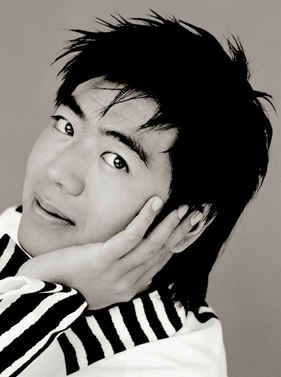
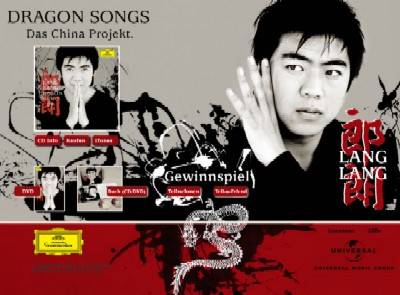
CMT: And what about things like Lang Lang’s Gewinnspiel? Who did that benefit? I realize that, in German law, there’s the distinction between “Glücksspiel” (gambling) and “Gewinnspiel” (lottery), the latter being gambling without money being wagered. Since gambling is, in most jurisdictions, not legally permitted for not-for-profit organizations and “benefit” programs, it’s important that fund-raising efforts be set up as “Gewinnspielen”. In California and other U.S. states, charities and other private nonprofit organizations may conduct raffles to raise funds for beneficial or charitable purposes in the state provided that at least 90 percent of the gross receipts from these raffles go directly to beneficial or charitable purposes in the state of California. In other words, can be used to cover the NFP’s operating expenses that are payable to entities within the state, but evidently cannot be used to pay agencies’ fees for artists outside the state. In California, a nonprofit organization must register with the Attorney General’s Registry of Charitable Trusts prior to conducting the raffle and file financial disclosure reports on each raffle event. Defining the raffle or auction to avoid giving rise to a tax liability under 26 U.S.C.A. § 4945 (Internal Revenue Code) is essential, to prevent jeopardizing the nonprofit status. This has mostly to do with making sure that the use of raffle/auction proceeds conforms to the requirements of 501(c)(3).

Lang Lang
DSM: I notice that Lang Lang’s Dragon Song Geschenkedition is in book form and contains the CD plus a Dragon Song DVD with documentation, interview, and music clips. Das Gewinnspiel is bereits beendet!

Lang Lang Dragon Song webpage
CMT: You may want to have a look at these recent Working Papers, which evaluate mathematical models for charity fundraising auctions and raffles:

Tsunami Wreckage
DSM: And you may want to have a look at these other non-raffle, non-auction resources:

Tsunami Fundraising Debacle

Tsunami Wreckage