11 April 07
Every Empire Has its Day in the Sun
“All y’all Limeys,” Slope said, “are one bottle away from France. You tip the bottle and your ass goes up. Who hasn’t occupied France?”
“Good day to you too, Slope,” I said. “And you Bones.”
“Bones loves me today,” Xena said.
“Limey!” Slope said. “We oughta make you wipe your royal ass with a piece of jumpin’ cactus. Even your dogs are fucked up. The British bulldog can’t breath properly and it’s got an underbite. If you Limeys had took baths, you never woulda got the bubonic plague. Your women’s armpits are so hairy they look like they’ve got motherfuckers in headlocks.”
“What’s with all the Brit-bashing?”
“They’re just expressing their love,” Xena said.
“Are you gonna be here for the Fourth of July?” Slope asked.
“Yeah. Why?”
“’Cause Short Dog’s gotcha more bread and water.”
“Good one,” I said.
An announcement came over the peakers: “If it’s not your cell, don’t be in it!”
“Y’all,” Slope said, “can’t drink no coffee, or do no dry tobacco. It’s all tea and crumpets.”
“Are you gonna back me up, Xena?” I said.
“No,” Xena said. “I’m gonna go play D&D.”
“Great,” I said.
“No big daddy is gonna come save your ass,” Slope said. “We’ll keep kickin’ your butt just like we kicked the goddamn Limeys’ butts at Bunker Hill.”
“I thought the Brits won the Battle of Bunker Hill?”
“Bowlshit. A buncha old sodbusters put it on the Englishes' asses, causin’ your Limey cousins to evacuate Boston.”
“I see, and what are sodbusters?”
“Hillbilly farmboy motherfuckers,” Slope said. “I think we should tat the Declaration of Independence on your back and send you on back home. That way we can read it while we tag-team your ass. What’s that I hear? The redcoats are comin’! They didn’t even get to come. They just got chased out. They got their manhood pulled out of their assholes. The weak-kneed fuckin’ fairies.”
“What about the UK pulling some troops out of Iraq?” I said.
“Tony Blair’s a yella-belly. The only thang he’s capable of colonisin’ is France - in order to take over that fine French tradition.”
“Which is?”
“Givin’ the keys to the city away to anyone who shows up with a gun.”
“You wouldn’t say that if Napoleon was here.”
“He wasn’t French. He was Corsican.”
“He gave you guys a deal on the western part of the Mississippi Valley though, with the Louisiana Purchase.”
“And if he’d of stayed at home, he wouldn’t have lost all his soil.”
“Every empire has its day in the sun, and yours is being destroyed from within,” I said.
“You’re a goddam pond-skipper, but I couldn’t agree with you more.”
Email comments to writeinside@hotmail.com or post them below
Copyright © 2006-2007 Shaun P. Attwood
Wednesday, May 9, 2007

Monday, May 7, 2007
08 April 07
The Distaste Harboured By Two Tonys For Modern America
I asked Two Tonys what he meant when he said “the world is slowly becoming an insane asylum.”
“My point,” Two Tonys said, “ – to anyone who gives a flyin’ fuck – is that people have gotta start livin’ their own lives, and to quit wonderin’ whether Britney Spears or Paris Hilton are wearin’ panties or not. Motherfuckers seekin’ escapism oughta grab a good book, and they can start by readin’ the two Toms: Wolfe and Sharpe. People’s brains aren’t rollin’ right these days. They’re too plugged into shit like Entertainment Tonight, to see if Paris has her underwear on. It wasn’t always so fucked up as this. There was a time when families ate together, fathers worked, and mothers stayed at home. The milkman brought the milk right to your fuckin’ door and set it on the porch and nobody stole it. The newspaper boy put the newspaper on the doorstep and nobody stole it. Those were the good ol’ days – and they’re long gone now. It ain’t the same place.
Now we’ve got fuckin’ havoc. Everyone up on Capitol Hill is lyin’. Some of 'em are pokin’ page boys or coverin’ up for their chomo buddies who are fuckin’ around with page boys.
The good ol’ days of Harry Truman are gone, bro. The world is becomin’ an insane-asylum planet. And if by some chance we’re an experiment by aliens who planted us here to see howthafuck we’d turn out, the aliens have got endless shits and giggles lookin’ at us motherfuckers. It’s gonna get even worse if we bomb North Korea or Iran or anywhere else in Bush’s Axis of Evil. And we’ve got shithead congressmen like Tom Tancredo sayin’ we should bomb Mecca if al-Qaeda hits us again. Come on now!”
“So how do you keep your mind off the madness?”
“By takin’ responsibility for my fuckin’ life. Look, I’m a sixty-six-year-old motherfucker who doesn’t get out until the twenty-third century, but at least I have a fuckin’ life. I’m into what I’m doin’. Tonight, I’m gonna play a casino card game with Frankie. I’m gonna have me some pasta with marinara sauce. I’m gonna sit down and watch Michigan kick the shit outta USC at the Rosebowl. I’m gonna eat some chocolate-covered peanuts watchin’ Detroit play Dallas. The last thing on my fuckin’ mind is what kinda car Jay Leno is drivin’ or if Britney and Paris are wearin’ fuckin’ panties.”
Email comments to writeinside@hotmail.com or post them below
Copyright © 2006-2007 Shaun P. Attwood
The Distaste Harboured By Two Tonys For Modern America
I asked Two Tonys what he meant when he said “the world is slowly becoming an insane asylum.”
“My point,” Two Tonys said, “ – to anyone who gives a flyin’ fuck – is that people have gotta start livin’ their own lives, and to quit wonderin’ whether Britney Spears or Paris Hilton are wearin’ panties or not. Motherfuckers seekin’ escapism oughta grab a good book, and they can start by readin’ the two Toms: Wolfe and Sharpe. People’s brains aren’t rollin’ right these days. They’re too plugged into shit like Entertainment Tonight, to see if Paris has her underwear on. It wasn’t always so fucked up as this. There was a time when families ate together, fathers worked, and mothers stayed at home. The milkman brought the milk right to your fuckin’ door and set it on the porch and nobody stole it. The newspaper boy put the newspaper on the doorstep and nobody stole it. Those were the good ol’ days – and they’re long gone now. It ain’t the same place.
Now we’ve got fuckin’ havoc. Everyone up on Capitol Hill is lyin’. Some of 'em are pokin’ page boys or coverin’ up for their chomo buddies who are fuckin’ around with page boys.
The good ol’ days of Harry Truman are gone, bro. The world is becomin’ an insane-asylum planet. And if by some chance we’re an experiment by aliens who planted us here to see howthafuck we’d turn out, the aliens have got endless shits and giggles lookin’ at us motherfuckers. It’s gonna get even worse if we bomb North Korea or Iran or anywhere else in Bush’s Axis of Evil. And we’ve got shithead congressmen like Tom Tancredo sayin’ we should bomb Mecca if al-Qaeda hits us again. Come on now!”
“So how do you keep your mind off the madness?”
“By takin’ responsibility for my fuckin’ life. Look, I’m a sixty-six-year-old motherfucker who doesn’t get out until the twenty-third century, but at least I have a fuckin’ life. I’m into what I’m doin’. Tonight, I’m gonna play a casino card game with Frankie. I’m gonna have me some pasta with marinara sauce. I’m gonna sit down and watch Michigan kick the shit outta USC at the Rosebowl. I’m gonna eat some chocolate-covered peanuts watchin’ Detroit play Dallas. The last thing on my fuckin’ mind is what kinda car Jay Leno is drivin’ or if Britney and Paris are wearin’ fuckin’ panties.”
Email comments to writeinside@hotmail.com or post them below
Copyright © 2006-2007 Shaun P. Attwood
Sunday, May 6, 2007
Sehr Lebhaft (Very Lively): Dimitri Murrath

DSM: Dimitri (“Dima”) Murrath gave a wonderful performance this afternoon at the Gardner, beautifully met by pianist Vincent Planès! Both are recently studying at the New England Conservatory.
CMT: Yes. And I was pleased to see the good Sunday afternoon turn-out of about 100 people—the ISGM Tapestry Room was nearly full to capacity. You know, at the moment there’s only one CD that’s available with Murrath’s playing on it. I really didn’t have any idea what we were likely to hear from him, prior to attending the event at the Gardner today. But of course his reputation did precede him! In 2006, Murrath won the Philip & Dorothy Green Award for Young Concert Artists, a British prize that funds musicians early in their careers (instrumentalists under 28 and singers under 32) to obtain performance experience throughout the U.K. Indirectly, that funding also helps the winners to stretch their other financial resources to do yet more, both at home and in other countries. Dimitri’s performance at the Gardner today is an example of that. The 2007 AYCA Award Winners are Alec Frank-Gemmill (horn), Diana Galvydyte (violin), Daniela Lehner (mezzo soprano), Katie Lockhart (clarinet), Amandine Savary (piano), and Dmitri Torchinsky (violin). About 100 artists have received the Award for Young Concert Artists since it began in 1961.
DSM: The 1939 Hindemith Sonata for viola and piano is a perfect showcase for Dimitri’s talent. The 1919 Sonata (Op. 11) was composed in 1918-1919 when Hindemith was just 24 years old, and there’s a certain coherence of the composer’s age and temperament with Dimitri’s, I think. Both the Op. 11 and Hindemith’s 1939 Sonata have a more romantic character than his other, more austere viola works, so Murrath’s viola has many opportunities here to show off its luster. The difficult last movement has Dimitri all over the fingerboard. As you know, this thing is a masterwork Hindemith meant to illustrate the his own superb skills as a violist, but Murrath truly makes the piece his own. Dimitri’s poise in the diverse, musical styles sounds entirely natural and authentic, belying some of the grueling finger work that this composition has.
CMT: Hindemith was without doubt one of the most significant German composers of his time, and yet his compositional techniques resist easy classification. His early works like Op. 11 are hard to pigeonhole. Is this in a late romantic idiom, or expressionist? It’s clearly not in the style of early Schoenberg, nor is it Hindemith’s contrapuntal, lean style of the later 1920s. Is it neoclassical? If so, it’s clearly not what we mean by ‘neoclassical’ in Igor Stravinsky’s works that are labeled with that term. In fact, we hear aspects of the contrapuntal language of Bach here. The 1939 Sonata that Dima and Vincent performed this afternoon was very contrapuntal, too, but the textures were even richer.
DSM: In the Sonata, Op. 11 No. 4, we hear a 24-year-old Hindemith just finding his voice. We hear his ambition; we hear his introspectiveness; we hear his experimentality. In the Sonata of 1939, we hear a more trenchant, mature Hindemith. This afternoon we had a virtuosic but introspective Murrath exploring, too, at a still early stage in his career. Remember it was Hindemith who, along with Lionel Tertis (1876-1975) and William Primrose (1904-1982), raised the status of the viola as a solo instrument to the position it now enjoys. Surely Dima will raise it yet further! And it was through the premiere of the Sonata for Viola and Piano, Op. 11, No. 4, that Hindemith began his career as a concert violist and a significant composer of music for the instrument. So here is now Dima Murrath, advancing the art, pushing the envelope for viola—at a similar moment in his career, very much like the phase that Hindemith was at in his own career. The first movement in the Sonata—‘Breit, mit Kraft’—was sweet, with poignant reversals. Bursts of objection gave way to acceptance. The second movement—‘Sehr lebhaft’—was delivered with an urgency and directness so convincing that one might wonder whether the piece was written in anticipation of Murrath’s arrival. Sehr lebhaft! The third movement—‘Phantasie’—featured wonderful spectral arpeggios by Murrath and spring-like water effects by Planès in the upper register of the piano. The Finale movement was gorgeous, belying the technical difficulties that it presents to the performers.
CMT: Besides the Hindemith, Murrath delivered an admirable interpretation of Dvoràk’s Sonatine in G Major for violin and piano, Op. 100, transcribed for viola. Dark, dense, very cinematic. And the Gardner is a very good, intimate venue for a duet performance like this. The informality of the setting is conducive to engaging museum-going patrons who might not otherwise attend a recital in a traditional concert hall. Someone sitting to your left remarked that the Tapestry Room feels like a home, fireplace and all. And the informality of the ISGM setting underscores the living, breathing vitality of chamber music idioms. The form is alive and vibrant and exciting! The hand-crafted bespokeness of it, the in-your-face relevance and accessibility of it! Very attractive!
DSM: Dimitri was born in Belgium in 1982. His handling of these pieces is utterly fearless. These pieces present huge problems for the performer, and yet he takes the work in stride. I like his dancing eyebrows and his open-mouthed expressions. His warm sound inflected with micro-tones—all of these things remind me of the courageous, open, in-your-face ethos of Belgium, the way we’ve encountered it in our travels there. There is a naturalness that’s entirely Dimitri’s own, of course. But his playing conveys an outgoingness, a cheerfulness that’s far broader, more universal—Belgian or otherwise. It’s that universality and youthful optimism that make his playing that much more attractive. Vincent, too, is a very animated player. These two are very well-matched!
CMT: The Alberto Ginastera, Carlos Guastavino, Xavier Monsalvatge, and Carlos Buchardo pieces were a valuable taste of relatively new Spanish and Argentinian music (transcribed for viola and piano by Robert Levin). Buchardo’s ‘Oye mi llanto’ (Hear My Cry) was very moving—lyrical, elegiac, brooding, dramatic. Well-suited to Murrath’s interpretive gift.
DSM: And Ginastera’s ‘Canción a la Luna Lunanca’ (Moonstruck / Song to the Cockeyed Moon) was a delightful contrast—humorous, bright, playful—proving that it’s possible to be ambitious without being serious or virtuosic every single moment!
T here are people who are uncanny, who are finished products at a very young age.”
— Itzhak Perlman.
- Isabella Stewart Gardner Museum, Music at the Gardner
- ISGM podcasts
- AYCA, Making Music website, U.K.
- New England Conservatory website
- Murrath D, et al. Music of Jeremy Dale Roberts. (Lorelt, 2005.)
- Bartlett D, Verebes R. Hindemith Complete Sonatas for Viola. (SNE, 1998.)
- Bruhn S. The Temptation of Paul Hindemith. Pendragon, 1998.
- Cortese P. Hindemith: Music for Viola, Vol. 3. (ASV, 1997.)
- Imai N, Pöntinen R. Hindemith Viola Sonatas. (Bis, 1994.)
- Kashkashian K. Hindemith: Sonatas for Viola/Piano & Viola Alone. (ECM, 2000.)
- Luttmann S. Paul Hindemith: Guide to Research. Routledge, 2004.
- Noss L. Paul Hindemith in the United States. Univ Illinois, 1989.
- Stehle W, et al. Hindemith: Sonata, Op. 11; Dvorak: Sonatine, Op. 100. (Nimbus, 1996.)
- International Viola Society (IVS) website


Saturday, May 5, 2007
The Fabulous Invalid at Last? Virtual Instruments Undermining/Supporting Classical Music
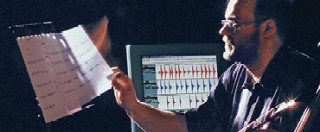
A human professional musician is of course faster than our sounds. We have 1.5 million samples, but real musicians have more. I don’t think we’ll ever get them all. I don’t think orchestras are threatened. In the TV industry, for example, they don’t have the budgets for orchestras anyway. And there are still live performances. Nobody goes to a concert to listen to a computer.”
— Herb Tucmandl, Vienna Symphonic Library, 2006.
DSM: Working for Vienna Symphonic Library would have to be the ultimate conflict of interest for a musician—helping to build a digital sound library that can reduce the need to have a full complement of live musicians. Live performing gigs are plentiful in Europe, but aren’t so abundant in North America.
CMT: Classical musicians have long opposed replacing live artists with computers in concert performances. This has gotta be one of the most compelling reasons why. The VSL sounds are that good! I never thought I would say so but, yes, the digitally sampled waveform libraries, like VSL, and all of the articulation and technic options are finally that good!
DSM: Today’s Wall Street Journal has an article describing the plan of conductor Paul Henry Smith to produce three Beethoven symphonies back-to-back in a concert with an "orchestra" having no live musicians—just sequenced waveforms from the Vienna Symphonic Library.
CMT: The conventional stance has musicians opposing the substitution of digital virtual instruments and sequencers for live musicians in orchestras, ballets and opera houses.
DSM: But yet some composers, conductors, musicians and engineers actually feel that embracing the use of virtual instruments holds promise for keeping classical music alive.
CMT: And of course touring musicals and acts like Cirque du Soleil have used virtual instruments for a number of years. Those incursions are harmful enough, but the impact is modest—simply because the number of shows and engagements per year is relatively small. And the musicians’ unions’ efforts do keep virtual orchestras out of Broadway orchestra pits so far. But in London a virtual orchestra has been used in Cameron Mackintosh’s revival of ‘Les Misérables.’ We seem now to finally be on the slippery slope. It’s not hypothetical anymore. The worry has a basis in reality. Even a paranoid has real enemies!

DSM: It’s true that composers of new music who couldn't otherwise afford to have their compositions performed by a live orchestra can now commission a high-quality software-generated recording for a few thousand dollars.
CMT: But what about communities that stand to lose their orchestra due to negative cashflow? A digital waveform library and sequencer-based virtual orchestra stands in for half the players? It’s a drink, but it’s not the martini I wanted!
DSM: I’ve got a copy of GIGA Virtual Instrument and a copy of VSL. I use both with Finale, as a way to hear what I’ve written and revise it or change my voice-leading to make sure I’ve got the texture right. The quality of the libraries is definitely good enough for that purpose. And good enough to record a demo, so that I can get string quartets interested in playing what I’ve written. But—I agree—playing a sequencer in front of a paying audience seems like a travesty. It’s not the martini they wanted.
CMT: There’s a big difference between theatre where the musicians are hidden and theatergoers are mainly buying an experience with live actors, and concerts where concertgoers are mainly buying an experience with live musicians. Would theatergoers be satisfied with holographic, sequenced digital imagery of a play onstage? I doubt it! There’s no intimacy in it. There’s no risk or uncertainty. So why should a concertgoer be any different, with regard to virtual instruments? Where is the intimacy? Where’s the authenticity? Where’s the real-time interaction with an audience?
DSM: Herb Tucmandl, founder of the Vienna Symphonic Library, acknowledges that virtual instruments do change the competitive landscape. Nothing is value-neutral. In an era obsessed with driving out cost and optimizing efficiency the virtual instruments aid and abet the buyer and undermine the musician-seller. But classical musicians should take control and become fluent in this technology instead of complaining about it or ignoring it. It’s not possible to turn back the clock. In that way, the new virtual instrument trend is just an extension of the MIDI and synthesizer boom that began in the 1980s. Many keyboardists adapted to that and became proficient in using synths. But many older ones did not. So the ‘digital divide’ is not just about internet access or web-enabled social networking. It’s the more general process of technology disenfranchising human beings and eroding the number and the value of the opportunities still available to human beings.

CMT: You have to admit, though, that the virtual instruments are pretty good these days as far as the sound qualities are concerned—the attacks and decays and timbre and other parameters. Virtual instruments should provide satisfying control over sound—comparable to the control that an expert musician has over a fine acoustic instrument. These elements are necessary for virtual instruments: low latency of only a few milliseconds; virtually no jitter; realistic representation of all of the technic and artifacts of actual performance on the instrument in each of its registers; precise and accurate sensing; reproducibility; and reliability. Current-generation virtual instruments and sequencers have got all that. But what about silence? It’s not yet possible for virtual instruments and sequencers to deliver fully realistic and many-timbred silences as powerful as we normally get in live performances. This is the kind of musicmaking one expects in concert.
DSM: It’s difficult to produce a variable delay for an audio signal without pitch shifting or complex granular techniques, if you think in terms of an event representation such as MIDI output by a keyboard. Synthesized sounds with sharp attacks illustrate what I mean. The question is: how large of a range of latency can the sequencer-driven system impose without adversely affecting the rhythm that the remaining human performers play? Builders of sensor-based instruments should experiment for themselves with the tolerability of different amounts of jitter. The musically acceptable amount of jitter depends on the kinds of sounds you’re producing. At one extreme are examples such as dense textures and timbral changes in sustaining sounds, where latency and jitter up to even 200ms may have very little impact in the musical result. In the middle is the common case of each gesture causing an individual note to be played. For a skilled performer, jitter of around 10 ms makes the difference between feeling that she does or does not have complete control of rhythms played on the instrument. The other extreme is illustrated by strings of notes played in very rapid succession on the same instrument. Unevenness of just one millisecond of jitter in that situation is audible.
CMT: In this age of email and instant messaging and video games, it’s a treat to savor the wit and eloquence of live artists in an intimate and revealing dialogue. That’s the main beauty and appeal of chamber music. And while the issue discussed in the WSJ article seems mainly one that concerns symphonic or large orchestral productions right now, you can’t help but feel that slippery slope underfoot. What’s next? In the future, will we be confronted with smaller chamber ensembles, with some members substituted with virtual instruments controlled by sequencer applications?
DSM: Did the unions have objections to Music Concrète and electroacoustic music? Years ago, were there lawsuits about the incorporation of tape-loop or other machine sound effects?
CMT: I don’t believe the issue was a prominent one in past decades, mainly because the nature of those effects was outside the realm of traditional performance—a human musician could not make those sounds on a conventional instrument. The other aspect was that the performance required a human operator to man the console—and as long as that person was union, then it was regarded as just another ‘instrument’ among many. Not like it is now, with virtual instruments and a sequencer able to replace an entire orchestra.
DSM: While there are beneficial uses for the virtual instruments (like some we’ve mentioned above), it’s hard to think of their intrusion into concerts or other live performance contexts as anything other than a commodifying influence, depressing wages for musicians and reducing the overall number of gigs per year. The AFM and MU positions on this trend are therefore readily understandable. Think about it. If lawyering is a performance art, then would lawyers sit still for software and artificial intelligence application software preparing virtual briefs and arguing before the court, eliminating many human lawyer engagements per year? I doubt it!
CMT: Right. Their years of preparation as lawyers are aimed at delivering live human legal acumen and insight. Our years of preparation as musicians are aimed at knowing and loving the music so well that we inhabit it as we play. To offer it in performance to an audience opens the possibility of their being drawn into its orbit and understanding it and loving it. A virtual instrument forecloses on that interpersonal offering, to about the same degree—no more, no less—that a recording does.
DSM: For string players, it’s astonishing that any novice has the perseverance to persist past the out-of-tune, scratchy-tone stage. No frets to mark the notes, so the left-hand fingers must learn their spacing to the accuracy of a millimeter in order to create decent pitches. It usually takes many years before reliable accuracy is developed, and it requires constant vigilance to retain it. Precise spatial memory must be coupled with strength, suppleness, speed and stamina—the athleticism of that is partly what the audience sees in live performance. Meanwhile the right arm and hand must learn the movements required, too, a butter-smooth fluidity to set the strings vibrating evenly. The bow not only coaxes the sound from the instrument, but also conjures the colors and emotions in the sound and traces the contours of the phrases—you give voice to the music itself. The right hand must know the action of the bow on the strings, constantly adjusting its speed and weight. And of course, both hands must be perfectly coordinated. Where is that in a performance involving virtual instruments of sampled waveforms of anonymous performers in a studio?
CMT: Even when your technic is under control, each piece of music demands technical and expressive understanding, the hands learning to negotiate the notes and then committing them to kinesthetic memory. With virtual instruments, all of that’s bypassed. The audience knows it. That’s part of why I think a virtual performance lacks authenticity.
DSM: Your kinesthetic memory point is true enough, but there’s an obverse side as well. To be emotionally open as a live performer means avoiding reflexive playing. The reflexes are there: they’re what your kinesthetic conditioning establishes. But the muscle-memory is what frees you in performance to switch your autopilot off. We’re living at a time when intensity in performance is considered obligatory. But great art doesn’t shout all the time. It knows that there is enormous power in gentleness and understatement. Some pieces even require a dry, cold detachment to accurately convey their meaning. The problem with many of the excellent virtual instrument libraries available these days is that the sounds are too wet, too intense. They shout ‘virtuoso’! It’s doubtful that the myriad options available to you when you lay down your GVI tracks adequately cover the dry-and-detached end of the spectrum.
CMT: And music isn’t always earnest and serious. A mature work of art often reflects an integrated view of life and contains humor and wit and irony. I can’t readily find humorous or witty bowings in the Vienna Symphonic Library.
DSM: No matter how many times the music is played, we need to be able to capture the spontaneity of the moment. The virtual performance will never come alive the way that a live performance will, no matter how much you improve the digital “jacket” sensors and artificial-intelligence algorithms for modulating the dynamics and articulations based on the remaining humans’ motions.
CMT: Our duty as musicians is to breathe life into the music, to re-create it with all the excitement and commitment of the composer, or to reinterpret it in valid ways that the composer may not have thought of. It’s an act that renders us both humble and powerful. The paradox is that it is only by being intensely alive as ourselves that we can be entirely at the service of the music and the audience.
DSM: I agree. And your point illustrates another aspect of what seems to me inauthentic about virtual instruments: the absence of community. A sequencing of virtual instruments is typically arranged by a single musician, and the track(s) that result reflect the aesthetic and technical judgments of just that one person. By contrast, the beauty of chamber ensembles derives from the real-time conversational interactions and freedom of several distinct personalities and intellects. With virtual instruments, what we get is one person’s account of the meanings that the music contains. We miss the tension and disputes and surprises.
CMT: Ultimately, with virtual instruments, it’s hard for me to see how either the performer or the listener could be lifted into an enchanted space where diverse shades of emotion are brought into play. ‘Authenticity’ to me means reconnecting to our innermost being. That’s the drink that I ordered! Virtual instruments are a boon for composers, but not for many others.
- Informatica Musicale, Univ Padova, Italy [CreativeCommons pdf files]
- Russell J, Jurgensen J. Fugue for Man & Machine. Wall Street Journal, P1, 05-MAY-2007.
- Vienna Symphonic Library
- IRCAM Virtual Orchestra website
- American Federation of Musicians (AFM) union website
- Lennon D. [Virtual Orchestra] Perpetrator Turns Into ‘Victim.’ AFM Local 802 newsletter. Allegro 2004 April;104(4) [HTML article]
- Musicians' Union, U.K.
- Picard R. Affective Computing. MIT, 2000.
T o obtain an exception to the minimum musician requirement, a League member must demonstrate that there are legitimate artistic reasons why the production should be permitted to use fewer than the required number of musicians. An application for an exception is first reviewed by a Special Situations Committee (“Committee”), comprised of experts in the field of theatrical production, who are chosen in advance by the Parties. (Pet. ¶ 10, Ex. A at 11.) FN3 Both Parties may present documentary evidence and call witnesses when they appear before the Committee. (Pet.¶ 10.) The Committee is required under the Agreement to “decide the issue primarily on artistic considerations.” (Pet. Ex. A at 12.) Specifically, the Committee is to consider four factors:After considering the Parties’ presentations, the Committee must render a written decision explaining in detail the basis for its conclusions within forty-eight hours after the Parties have submitted their positions. (Pet. ¶ 10, Ex. A at 12.).”
- the musical concepts expressed by the composer and/or orchestrator;
- whether the production is of a definable musical genre different from a traditional Broadway musical;
- the production concept expressed by the director and/or choreographer; and/or
- whether the production recreates a pre-existing size band or band’s sound (on or offstage). (Pet. Ex. A at 12.)
— United States District Court, S.D. New York, ASSOCIATED MUSICIANS OF GREATER NEW YORK, LOCAL 802, AFM, Petitioner v. The LEAGUE OF AMERICAN THEATRES AND PRODUCERS, INC., Respondent. Slip Copy, 2006 WL 3039995, No. 05-CV-2769 (KMK), Oct. 25, 2006.
Friday, May 4, 2007
05 April 07
The Gatekeepers
Attending this evening’s church service was like being at Andrew Lloyd-Webber’s Jesus Christ Superstar. The hosts were The Gatekeepers – a band of missionaries that includes eight siblings.
Initially, they performed with their eyes closed, and I feared we were too ugly an audience for them to behold. Then someone explained they were Holy Ghost dancing, shifting the glory of their mission to the Lord. The room filled with energy in no time at all. There was clapping, feet tapping, and hands in the air. With great difficulty, I held at bay the urge to jump on the JBL speakers and dance. Some of the band pulled off dance moves that would have stirred Justin Timberlake. Most intense was the saxophonist. It was obvious we were in for a treat when he strapped on the sax with the grim face of a Navy Seal arranging a weapon. His solo generated numerous rounds of applause – with the crowd at its loudest when he played in the limbo position. The women’s voices were angelic. Toward the end, the choir brought the house down with a song about the Walls of Jericho. Superb.
Kudos to The Gatekeepers of Ironwood Hills Church, Tucson, for sacrificing their Saturday evenings to save our sorry souls.
Email comments to writeinside@hotmail.com or post them below
Copyright © 2006-2007 Shaun P. Attwood
The Gatekeepers
Attending this evening’s church service was like being at Andrew Lloyd-Webber’s Jesus Christ Superstar. The hosts were The Gatekeepers – a band of missionaries that includes eight siblings.
Initially, they performed with their eyes closed, and I feared we were too ugly an audience for them to behold. Then someone explained they were Holy Ghost dancing, shifting the glory of their mission to the Lord. The room filled with energy in no time at all. There was clapping, feet tapping, and hands in the air. With great difficulty, I held at bay the urge to jump on the JBL speakers and dance. Some of the band pulled off dance moves that would have stirred Justin Timberlake. Most intense was the saxophonist. It was obvious we were in for a treat when he strapped on the sax with the grim face of a Navy Seal arranging a weapon. His solo generated numerous rounds of applause – with the crowd at its loudest when he played in the limbo position. The women’s voices were angelic. Toward the end, the choir brought the house down with a song about the Walls of Jericho. Superb.
Kudos to The Gatekeepers of Ironwood Hills Church, Tucson, for sacrificing their Saturday evenings to save our sorry souls.
Email comments to writeinside@hotmail.com or post them below
Copyright © 2006-2007 Shaun P. Attwood
Wednesday, May 2, 2007
02 April 07
Kat (Part 2)
Kat asked whether I had a crush on him.
“No,” I replied. “Although I can see how attractive you are, I know where I stand with my sexuality.”
“Well,” Kat said, “someone said, 'Jon thinks you’re very attractive.'”
“I can see you’re very attractive, but I never said that to anyone. Someone is trying to stir up a love interest between us.”
“Well, I’m sorry, but I already have a boyfriend.”
“Damn! I guess I won’t be crossing that line anytime soon then.”
We laughed.
“So what’s it like being a queen in prison?”
“When I first came in I knew queens were taken advantage of in prison. But guys were kinda afraid to approach me 'cause I have this attitude. I’m told I carry myself in a way that doesn’t make me a target. I’ve seen other queens act so very out there – like they were asking for it – and they were constantly picked on. In here, it’s almost like your attitude controls your surroundings. As time went on, people understood they’d rather have me as a friend than have a sexual relationship with me.”
“Has anyone tried to rape you?”
“In prison, gays are open to being raped, but I’ve never experienced anything like that.”
“Is prison easier for homosexuals or heterosexuals?”
“For gays because officers look at gays as being more trustworthy. Prisoners say, ‘How come gays get away with everything?’ It’s because we’re less threatening, and we tend to befriend the female COs.”
“Has prison been an education for you?”
“Yes. It’s been a very good experience in numerous ways.”
“Such as?”
“Gratitude. Now I know what gratitude is. When I was out there in the world, I took things for granted – including my parents. They were just two people in the world that I saw. Now I don’t see them, I miss them. I’m so grateful that I have these two people in my life. They’re my rock of unconditional love.”
“I can relate to that.”
“I have also realised that I can overcome anything no matter what the situation.”
“That’s good.”
Kat gave me his latest W magazine. I enjoyed pictures of Lindsay Lohan in Gucci, and Sienna Miller in a Zara skirt, knee-high gold python Devi Kroell boots, a bondage harness from Coco de Mer strapped across her chest, and silk chiffon briefs from agentprovocateur.com.
Email comments to writeinside@hotmail.com or post them below
Copyright © 2006-2007 Shaun P. Attwood
Kat (Part 2)
Kat asked whether I had a crush on him.
“No,” I replied. “Although I can see how attractive you are, I know where I stand with my sexuality.”
“Well,” Kat said, “someone said, 'Jon thinks you’re very attractive.'”
“I can see you’re very attractive, but I never said that to anyone. Someone is trying to stir up a love interest between us.”
“Well, I’m sorry, but I already have a boyfriend.”
“Damn! I guess I won’t be crossing that line anytime soon then.”
We laughed.
“So what’s it like being a queen in prison?”
“When I first came in I knew queens were taken advantage of in prison. But guys were kinda afraid to approach me 'cause I have this attitude. I’m told I carry myself in a way that doesn’t make me a target. I’ve seen other queens act so very out there – like they were asking for it – and they were constantly picked on. In here, it’s almost like your attitude controls your surroundings. As time went on, people understood they’d rather have me as a friend than have a sexual relationship with me.”
“Has anyone tried to rape you?”
“In prison, gays are open to being raped, but I’ve never experienced anything like that.”
“Is prison easier for homosexuals or heterosexuals?”
“For gays because officers look at gays as being more trustworthy. Prisoners say, ‘How come gays get away with everything?’ It’s because we’re less threatening, and we tend to befriend the female COs.”
“Has prison been an education for you?”
“Yes. It’s been a very good experience in numerous ways.”
“Such as?”
“Gratitude. Now I know what gratitude is. When I was out there in the world, I took things for granted – including my parents. They were just two people in the world that I saw. Now I don’t see them, I miss them. I’m so grateful that I have these two people in my life. They’re my rock of unconditional love.”
“I can relate to that.”
“I have also realised that I can overcome anything no matter what the situation.”
“That’s good.”
Kat gave me his latest W magazine. I enjoyed pictures of Lindsay Lohan in Gucci, and Sienna Miller in a Zara skirt, knee-high gold python Devi Kroell boots, a bondage harness from Coco de Mer strapped across her chest, and silk chiffon briefs from agentprovocateur.com.
Email comments to writeinside@hotmail.com or post them below
Copyright © 2006-2007 Shaun P. Attwood
Tuesday, May 1, 2007
28 Mar 07
Email comments to writeinside@hotmail.com or post them below
Copyright © 2006-2007 Shaun P. Attwood
Email comments to writeinside@hotmail.com or post them below
Copyright © 2006-2007 Shaun P. Attwood
Subscribe to:
Posts (Atom)