DSM:
DSM: My friend, RMC, died—testicular cancer, 20 kg metastatic mass in his abdomen; died in the operating room while the surgeons were trying to remove it. I’d visited him 2 days before the operation, at his home. He’d just come from a visit with his oncologist, and he had a very clear notion of the risk he was facing. In fact, the oncologist had tried to dissuade RMC from going forward with the surgery. But RMC was adamant. He didn’t want to acquiesce to that fate, simply letting the tumor eat him alive over a period of several months. He wanted to fight it. And now he’s gone, 33 years old, a dear friend of mine and a coworker for 6 years . . .
CMT: I’m sorry for your loss.
DSM: Know any good Requiems I could put in the CD player? What’s good for farewells? I’m craving very, very sad pieces of chamber music right now.
CMT: Fauré’s Requiem in D Minor? Shostakovich’s 15th; Duruflé’s Requiem; Silvestrov’s Requiem for Larissa? Mozart’s unfinished Requiem in D minor? Among Romantic Era composers who composed Requiems, you could do some Hector Berlioz, Anton Bruckner, Carl Czerny, Gaetano Donizetti, Antonín Dvořák, Charles Gounod, Max Reger, Camille Saint-Saëns, Robert Schumann, Franz von Suppé, and Richard Wetz. They all wrote requiems. And Edvard Grieg’s ‘Sorgemarsj over Rikad Nordraak’ is, I think, acoustically ‘sparse’ enough to be suitable for your remembrance of RMC.
And, among 20th Century composers, you have Vyacheslav Artyomov, Alfred Desenclos, Herbert Howells—his ‘Master Tallis’s Testament’ is atmospheric and well-matched to the spirit of a brave RMC who refused to give up. Or, what about Cyrillus Kreek, György Ligeti, or Meredith Monk? Their elegiac compositions might be a good fit. Or Knut Nystedt’s ‘Pia Memoria’? How about Krzysztof Penderecki, or Terry Riley’s ‘Requiem for Adam’? Or the Finns! Einojuhani Rautavaara—the Lacrimosa movement of his ‘Requiem in Our Time’? Or Erkki-Sven Tüür’s ‘Elegy for String Quartet’?
DSM: Those are all good choices. Schnittke’s Requiem is too angst-filled and thematically explicit. Stravinsky’s, too. The ones you named are good, though.
CMT: Some elegiac pieces are too large and grand. Not intimate enough—many choral pieces are like that. After all, we’re considering who the person was, and how wide or narrow was the scope of the lives that the person touched.
DSM: And some elegiac pieces are quite appropriate for a person of advanced age, but don’t fit at all with a young or middle-aged person or a child. Brahms’s Requiem is beautiful, but it doesn’t match the personality of my friend.
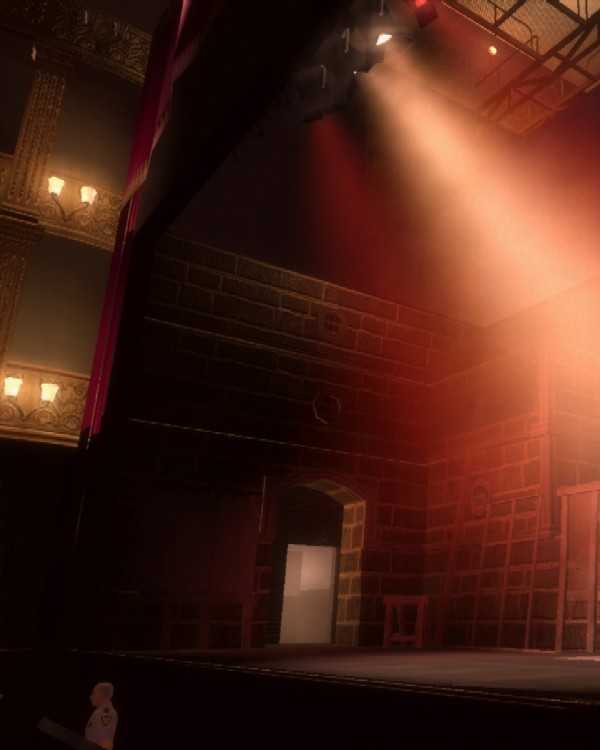
CMT: Schnittke’s Requiem is sufficiently abstract to be a match for your friend, but it’s too thematic and punitive. Same with the Stravinsky. Your friend was a software developer? What about Jesper Kyd—Denmark-born composer of soundtracks for computer games and films. He’s composed several Requiem pieces—in fact, some of them are embedded in the games. Techno-atmospheric requiems!
 DSM:
DSM: ‘Winter Night’ on his Hitman Contracts soundtrack; or ‘Meditation of the Oracle’ on his soundtrack for Spellborn; or even his ‘Splinter Cell: Chaos Theory’. Kyd’s writing is not so much ‘thematic’ as it is ‘ambient’. There’s a minimalism that’s consistent with his nominal purpose of composing music for a computer game. But it’s a minimalism that’s open-ended—it can propel introspection and reflection, a focused expectancy. Yes, Kyd’s writing is in a vein that my friend RMC would’ve liked, particularly the railing against the absurdity and waste of a life cut short.
CMT: But I suppose Kyd’s music is far darker and moodier than would be healthy. Rich and very dark. You oughtn’t to stay immersed in it too long . . .
DSM: Well, healthy is in the eye of the beholder. Who’s to say what I need, or what music’s helpful or appropriate, or how long grieving should continue? If I were on a pure diet of Kyd six months from now, or even two weeks from now, that would be unhealthy. You know, the Mourners’ Kaddish is said as part of the Jewish mourning rituals, and, when people speak of ‘saying Kaddish’, it means performing the rituals of mourning, broadly construed. The opening words of the prayer are inspired by Ezekiel 38:23, a vision of God despairing of the nations, a cosmic despair—and God extemporizes a response. With regard to RMC, his loss may be a modest human one, but for those of us who were good friends of RMC, it feels pretty cosmic right now. And we must just extemporize a response that seems right, each one of us, day by day.
CMT: Jesper Kyd’s music creates the atmosphere within the games, and it dynamically changes to fit the players’ extemporaneous action—adding suspense and tension, punctuated with resolution and denouement as events unfold/conclude. Instead of live musicians, he primarily uses
GIGAstudio™ Virtual Instruments—understandable, I suppose, because, in Kyd’s game soundtracks, the musical score is non-deterministic—its aleatory varies depending on how the gamer plays the level. The gamer can play the same level repeatedly without ever hearing the same music score twice. But it’s precisely that aleatoric quality that seems very appropriate to your friend RMC’s approach to life, even up to the very brave, defiant end. Kyd’s requiems could be fitting way to remember a software developer, filled with run-time indirection and stochastic flow-of-control branching. Ditch the game imagery, though; keep just Kyd’s music.
The connection is a kind of ‘valediction’: RMC’s life and his writing code, becoming clearer and clearer as a person in the wake of an anticipated, imminent departure. Maybe best if the music is accompanied by reading a poem in suitably gruff Gaelic accent, like RMC’s—say, from the traditional ballad of Sir Patrick Spens, in which sailors drown in a storm.
O , our Scots nobles wer richt laith -
To weet their cork-heild schoone;
Bot lang owre a’ the play wer play’d,
Their hats, they swam aboone.”
CMT: Right. Rather than speculating on what the sailors’ thoughts might have been as they died, the verse merely has their hats on the sea’s cruel surface. While the pathos is there, the image isn’t a sentimental or maudlin one. Sort of like RMC . . .

- Jesper Kyd website
- Confronting Cancer Through Art, Arthur Ross Gallery, University of Pennsylvania.
- University of Pennsylvania Oncology, Patient Art Gallery.
- Eli Lilly ‘Oncology on Canvas’ Art Competition. (More than 2,000 works of art entered, from 43 countries, in 2006.)
- Acton C. Grief in Wartime: Private Pain, Public Discourse. Palgrave, 2007.

- Ames Piano Quartet. Faure: Elegy for Cello and Piano, Op. 24. (Brilliant, 2004.)
- ASKO Ensemble. Ligeti Project, Vol 4.: Hamburgisches Konzert. (Teldec, 2003.)
- Blen L. Poems of the Grieving Soul. Vantage, 2006.
- Boston Baroque. Cherubini: Requiem in C Minor. (Telarc, 2007.)
- Brass Partout. Playground for Angels: Rautavaara, Grieg, Nystedt. (Naxos, 2004)
- Bream J. Baroque Guitar: Tombeau sur la mort de Monsieur Comte de Logy. (RCA, 1991.)
- Byock I. The Four Things that Matter Most: A Book About Living. Free Press, 2004.
- Clemencic Consort. Fux: Requiem. (Arte Nova, 2005.)
- Dann S. Mendelssohn: Requiem für Fanny. (Atma Classique, 2007.)
- Duggey T, ed. Creative Interventions in Grief and Loss Therapy: When the Music Stops, a Dream Dies. Haworth, 2007.
- Emerson String Quartet. Intimate Voices: Nielsen: At the Bier of a Young Artist. (Deutsche Grammophon, 2006.)
- Ensemble Baroque. Zelenka: Requiem, Miserere. (Supraphon, 1995.)
- Gewandhaus Orchestra. Mozart: Requiem in D Minor. (Rondeau, 2007.)
- Greenspan M. Healing Through the Dark Emotions: The Wisdom of Grief, Fear, and Despair. Shambhala, 2003.
- Hetzler M, Leonard L. Trombone & Piano: Serious Songs, Sad Faces. (Summit, 2003.) Meredith Monk
- Keeley M, Yingling J. Final Conversations: Helping the Living and the Dying Talk to Each Other. Vanderwyk & Burnham, 2007.
- Kronos Quartet with Terry Riley. Riley: Requiem for Adam. (Nonesuch, 2001.)
- Kubler-Ross E. On Grief and Grieving: Finding the Meaning of Grief Through the Five Stages of Loss. Scribner, 2005.
- Kuhl D. What Dying People Want: Practical Wisdom for the End of Life. Public Affairs, 2002.
- Lamm M. Consolation: The Spiritual Journey Beyond Grief. Jewish Publication Society, 2004.
- London Sinfonietta. Górecki: Kleines Requiem. (Nonesuch, 1995.)
- Lynn J, Harrold J. Handbook for Mortals: Guidance for People Facing Serious Illness. Oxford Univ, 2001.
- Malkinson R. Cognitive Grief Therapy: Constructing a Rational Meaning to Life Following Loss. Norton, 2007.
- Pro Cantione Antiqua. Tears & Lamentations. (Regis, 2007.)
- Quinn I. Howells: Master Tallis’s Testament. Cathedral Organ. (Pro Organo, 2007.)
- Savall J, et al. Biber: Requiem à 15. (Alia Vox, 2002.)
- Schaeffer G. A Labor of Love: How to Write a Eulogy. GMS, 2006.
- Serendipity. Jenkins: Requiem. (EMI, 2005)
- Shames L, Barton P. Not Fade Away. Rodale, 2003.
- Sheeler J. Obit: Inspiring Stories of Ordinary People who Led Extraordinary Lives. Pruitt, 2007.
- Siegel M, ed. The Last Word: The New York Times Book of Obituaries and Farewells - A Celebration of Unusual Lives . Quill, 1999.
- Sinfonia Varsovia. Faure: Requiem. (Mirare, 2007.)
- Spargo R. The Ethics of Mourning: Grief and Responsibility in Elegiac Literature. Johns Hopkins Univ, 2004.
- Talinn String Quartet. Eduard Tubin: Elegy for String Quartet. (BIS, 1994.)
- Thüringsches Kammerorchester Weimar. Wetz: Requiem in B Minor, Op. 50. (CPO, 2006.)
- Vainmaa L. Sisask: Starry Sky; Tüür: Insula Deserta; Saikkola: Song without Words. Northern Lights. (Finlandia, 1995.)
- Waldman A. In the Room of Never Grieve: New and Selected Poems, 1985-2003. Coffee House, 2003.
- Westberg G. Good Grief. Augsburg Fortress, 2004.
- Whitson S. How To Help A Grieving Friend: A Candid Guide For Those Who Care. Navpress, 2005.
- Wray T, Price A. Grief Dreams: How They Help Us Heal After the Death of a Loved One. Jossey-Bass, 2005.
- Zeiger M. Beyond Consolation: Death, Sexuality, and the Changing Shapes of Elegy. Cornell Univ, 1998.


 T here is a manneristic thread that runs through the Op. 13 sonata, maybe deriving from Grieg’s Norwegian nationalism?